

P0442 on 2011-2018 Chevrolet Cruze: EVAP Small Leak Causes and Fixes
On a 2011-2018 Chevy Cruze, the P0442 code is most often caused by a faulty EVAP purge valve solenoid located on top of the engine. This is a common failure item that is inexpensive and very easy to replace, often requiring no tools. Expect to pay $20-$50 for the part. This issue is especially prevalent on the first-generation (2011-2016) 1.4L Turbo engine.
- For a P0442 on a Chevy Cruze, the most likely culprit is a bad purge valve solenoid on the engine.
- Before buying any parts, check that your gas cap is tight and the seal is in good condition.
- You can test the purge valve yourself in minutes: if it has suction at idle, it's bad and needs to be replaced.
- Replacing the purge valve is a very simple DIY job that usually requires no tools and can save you a significant amount over a shop repair.
- If a new purge valve and gas cap do not fix the issue, a professional smoke test is the next step to find the leak.
What's Unique About the 2011-2018 Chevrolet CRUZE

For the first-generation Chevy Cruze (2011-2016) with the 1.4L Turbo engine, the EVAP purge valve solenoid is a notoriously common failure point that leads directly to a P0442 code. Unlike many other vehicles where the cause can be hard to trace, on the Cruze, this specific part fails so frequently that it's often the first and only part that needs to be replaced. The part is conveniently located right on top of the engine and is exceptionally easy to change, making this a very common DIY repair for Cruze owners. 🎬 Watch this easy home repair guide for the purge valve. Many owners report successfully fixing the code by replacing this valve for under $30, avoiding a more expensive diagnostic smoke test.
Diagnostic Flowchart

Tap your situation to follow the diagnostic path that matches what you're seeing on this vehicle.
Generation note: The 2011-2018 year range covers two generations of the Chevrolet Cruze. The first generation runs from 2011-2016 (including the 'Cruze Limited'). The second generation began in 2016. The EVAP purge valve, a primary cause of this code, is designed differently and located in a slightly different position between the two generations, so ensure you buy the correct part for your specific model year. The purge valve on the Gen 1 1.4L is on the top of the intake manifold, while on the Gen 2 1.4L it is located behind the engine.
🎬 See how to replace the purge valve on Gen 2 models.Symptoms You May Notice
- Check Engine Light is on
- A faint smell of fuel, especially around the outside of the car.
- Slightly rough idle, sometimes only upon first starting the car.
- Difficulty starting the engine immediately after refueling (may crank for a long time or stall).
- A minor reduction in fuel mileage.
- Surging or hesitant acceleration.
- Replacing the O2 sensors. O2 sensors are not related to the EVAP system and will not fix a P0442 code.
- Immediately paying for a smoke test. On the Gen 1 Cruze, the purge valve is such a common, cheap, and easy-to-replace part that it's often more cost-effective to replace it first (especially if code P0496 is also present) before paying $100-$200 for a diagnostic smoke test.
Most Likely Causes

- Faulty EVAP Purge Valve Solenoid 🔴 High Probability This specific component is a well-documented, high-failure item on the 1.4L and 1.8L engines used in the first-generation Cruze and its platform mates (Sonic, Trax, Encore). The internal valve fails and gets stuck open, creating a constant small vacuum leak that the ECU detects and flags as P0442.
How to confirm: With the engine off, disconnect the EVAP line from the purge valve on the engine. Start the engine and place your fingertip over the valve's port. If you feel any suction or vacuum, the valve is stuck open and must be replaced. This is the most definitive and simple test for this part.
Typical fix: Replace the purge valve solenoid assembly. This is often a tool-free job that involves disconnecting two quick-connect hoses and an electrical connector, then swapping the part. Some owners report the entire job takes less than 15 minutes.
Est. part cost: $20-$60 - Loose or Faulty Gas Cap 🟡 Medium Probability This is a common cause on all vehicles. The cap's seal can degrade and crack over time, or the cap may simply not have been tightened properly after refueling. Some owners have fixed the P0442 code with a new gas cap after a purge valve replacement did not solve it.
How to confirm: First, ensure the gas cap is tightened until it clicks at least once. If the code returns, remove the cap and inspect the rubber O-ring seal for any cracks, stiffness, or damage. Also inspect the fuel filler neck for rust or debris that could prevent a good seal.
Typical fix: If the cap was loose, tightening it and clearing the code may be enough. If the seal is damaged or the filler neck is corroded, replace the gas cap with a new, preferably OEM, part and clean the filler neck surface.
Est. part cost: $15-$30 - Blown EVAP System Fuse ⚪ Low Probability
How to confirm: Check the under-hood fuse box. On a first-generation Cruze, the relevant fuses may be in positions F3 or F13. Your owner's manual will show the location for the fuses related to the emissions or EVAP system. Visually inspect the fuse or test it for continuity with a multimeter.
Typical fix: Replace the blown fuse with a new one of the same amperage.
Est. part cost: $1-$5 - Cracked or Disconnected EVAP Hose ⚪ Low Probability The plastic and rubber lines in the EVAP system can become brittle with age and heat cycles, leading to small cracks. The connections, especially the quick-connect fittings, can also fail to seat properly.
How to confirm: A visual inspection may reveal an obvious crack, especially on the lines connected to the purge valve. However, because the leak is small, a definitive diagnosis usually requires a professional smoke test, which forces smoke through the EVAP system to reveal the leak's location. TSB 21-NA-124 specifically advises checking that all EVAP line connections are fully seated before performing other tests.
Typical fix: Replace the cracked section of hose or the entire line assembly.
Est. part cost: $20-$100
Rare But Worth Checking
- Leaking EVAP Vent Valve/Solenoid: This valve is located at the rear of the car near the charcoal canister. While it can fail and cause a P0442, it is a much less common culprit than the engine-mounted purge valve on the Cruze. TSB 21-NA-124 suggests checking the vent valve for a stuck-open condition if line connections are good.
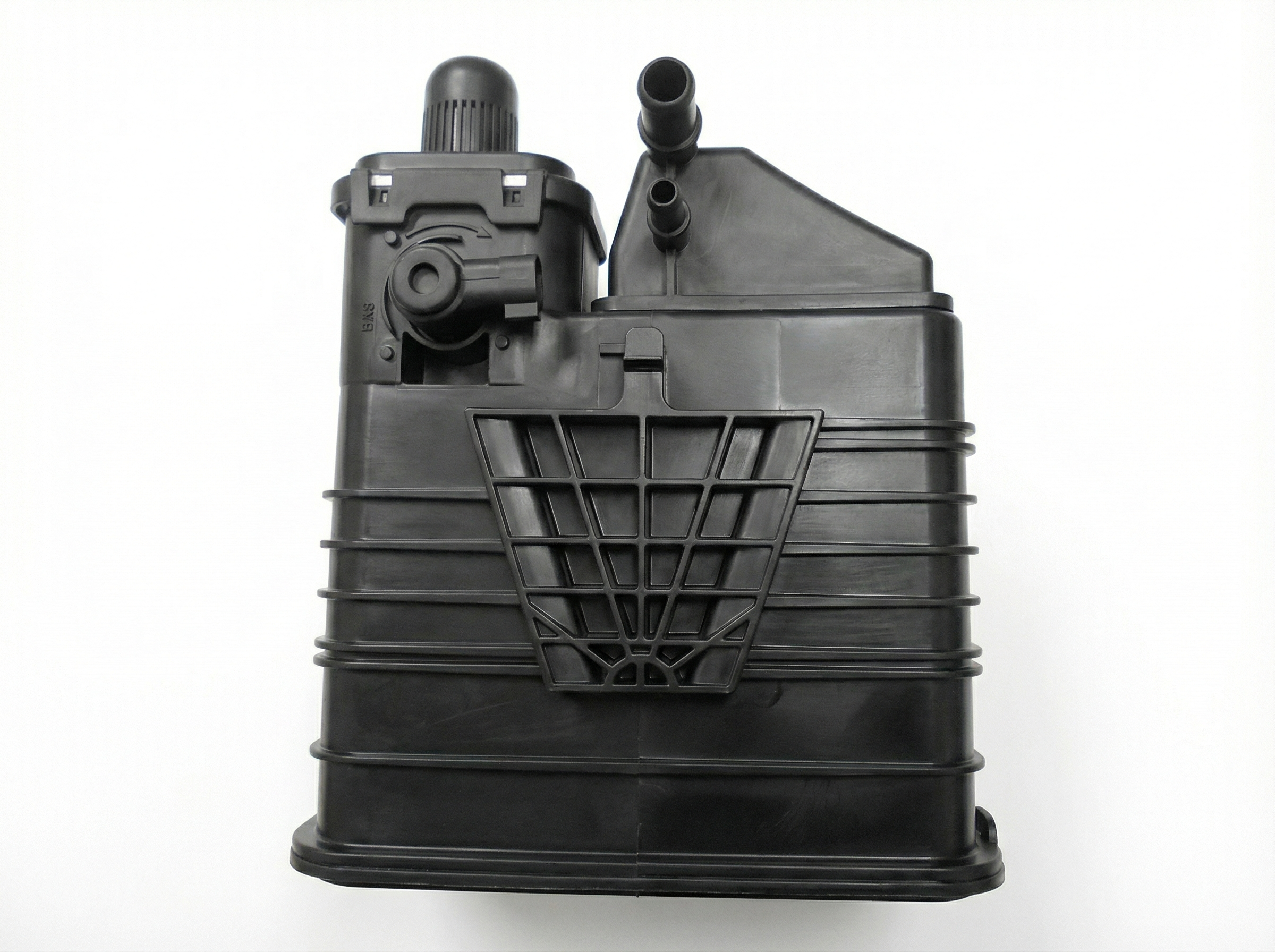
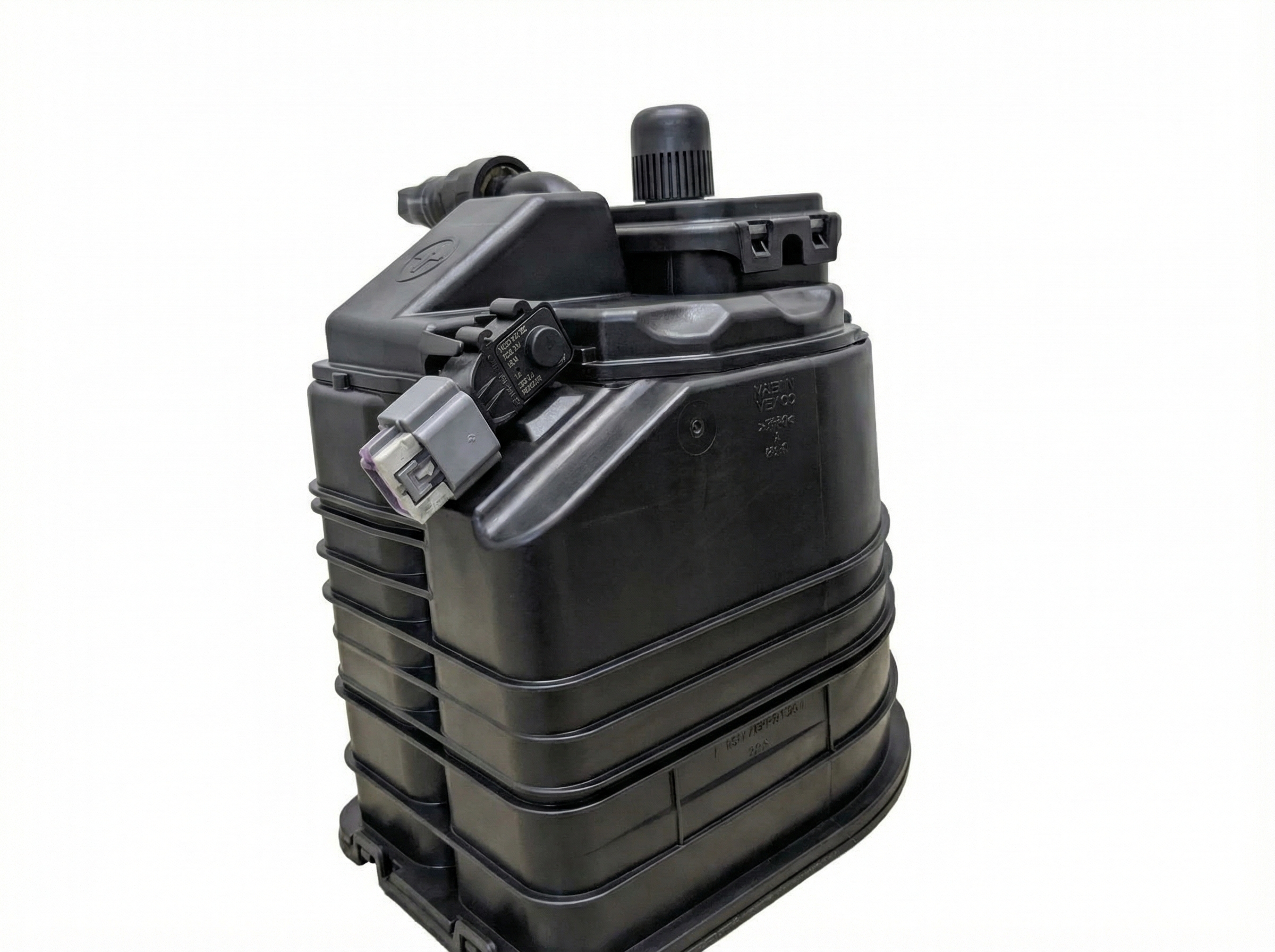
- Cracked Charcoal Canister: Physical damage from road debris or age can cause the plastic housing of the charcoal canister to crack, creating a leak. This is usually found during a smoke test. Topping off the fuel tank after the pump clicks off can also saturate the canister with liquid fuel, damaging it and other EVAP components.
Diagnosis Steps
- Read the code with an OBD-II scanner to confirm P0442. Check for other related codes like P0496 or P0455.
- Check the gas cap. Ensure it is tight and clicks. Remove it and inspect the rubber seal for cracks or damage. Also check the fuel filler neck for corrosion.
- Test the EVAP purge valve solenoid. This is the most likely culprit on a Gen 1 Cruze. With the engine off, disconnect the vapor line. Start the engine and feel the port on the valve for vacuum. Any suction indicates a failed, stuck-open valve.
- Inspect the EVAP system fuse. In the under-hood fuse block of a Gen 1 Cruze, check fuse positions F3 and F13. 🎬 Watch this video to locate your EVAP and vent solenoid fuses.
- Visually inspect the EVAP hoses in the engine bay for obvious cracks or loose connections, paying attention to the quick-connect fittings.
- If the above steps do not identify the problem, the most reliable next step is to have a smoke test performed to pinpoint the exact location of the small leak, as recommended by GM service bulletins.
Parts You'll Likely Need
- Vapor Canister Purge Valve Solenoid
(OEM #55573017 (for 1.4L) / 55567453 (for 1.8L))— This is the most frequent failure point for the P0442 code on the 2011-2016 Cruze. It gets stuck open, causing a persistent small leak detected by the ECU.
Trusted brands: ACDelco, Dorman (911-409)
OEM price range: $40-$60
Aftermarket price range: $20-$40 - Fuel Cap
(OEM #GT330 (ACDelco))— A worn-out seal on the gas cap is a common cause for small EVAP leaks on any vehicle. It's an easy and inexpensive part to replace as a primary diagnostic step.
Trusted brands: ACDelco, Stant
OEM price range: $20-$30
Aftermarket price range: $15-$25
Related Codes That Often Appear With This One
- P0455 — This code indicates a large EVAP leak. Seeing it with P0442 can point to an intermittent or worsening leak, such as a faulty purge or vent valve. TSB 21-NA-124 provides diagnostic steps for both codes.
- P0496 — This code indicates 'EVAP Flow During a Non-Purge Condition.' It is very commonly seen with P0442 on the Cruze and its platform mates. The presence of P0496 almost always confirms that the purge valve solenoid is stuck open and is the root cause of the problem.
- P0171 — This code for 'System Too Lean (Bank 1)' can appear alongside P0442. A stuck-open purge valve creates a vacuum leak, allowing unmetered air into the intake manifold, which causes the engine to run lean at idle.
Technical Service Bulletins (TSBs) & Recalls
- PIT4943D: A bulletin from Dec 2015 for 2016 and prior models regarding diagnostic procedures for P0442.
- 21-NA-124: A bulletin from Dec 2022 providing diagnostic tips for P0442 and P0455 codes.
Platform-Specific Known Issues
- The purge valve solenoid (GM Part No. 55573017) for the first-generation Cruze with the 1.4L engine is an extremely high-failure part, making it the primary suspect for code P0442.
- On 1.4L Turbo models, a separate issue involving a failed check valve inside the intake manifold can cause excessive crankcase pressure, potentially damaging other EVAP components, though this usually presents with more severe symptoms and additional codes.
- For the 1.8L engine, the purge valve is a different part number (GM Part No. 55567453) but is also a known failure point for P0442 and P0496.
Mechanic-Grade Diagnostic Values
- EVAP Vent Valve Solenoid Resistance — expected: 20 - 30 Ohms. Failure: A reading outside this range, or an open circuit (infinite resistance), indicates a faulty solenoid winding.
- EVAP Purge Valve Function (Engine Running) — expected: 0 vacuum/suction. Failure: With the valve's electrical connector unplugged and the engine idling, any vacuum felt at the valve's port indicates it is stuck open and faulty.
- Short-Term and Long-Term Fuel Trims (at idle) — expected: Close to 0% (ideally within +/- 10%). Failure: Consistently high positive fuel trims (e.g., +25% or higher) at idle that correct when the purge valve port is manually blocked suggest a vacuum leak from a stuck-open purge valve.
Hidden / Shadow Codes Worth Checking
- Mode $06, Test ID $52: Represents the 'EVAP small leak vacuum decay rate test.' This is not a trouble code but raw test data from the ECU's self-test. A failing value here can precede the P0442 code setting. (see via An advanced scan tool capable of displaying Mode $06 data. The specific Test ID may vary on CAN bus vehicles like the Cruze, but the principle of monitoring the 0.020" leak test is the same.)
Scan Tool Commands That Help
- GDS2 (GM Tech Tool) or equivalent professional scanner: EVAP System Purge/Seal — This function commands the vent valve to close and the purge valve to open, allowing a technician to monitor the fuel tank pressure sensor and determine if the system can hold a vacuum, helping to confirm a leak exists.
- GDS2 or equivalent professional scanner: Purge Valve Solenoid Control — Allows the technician to command the purge valve open and closed (e.g., from 0% to 100%) while listening for an audible click to verify the solenoid is electrically functional.
- GDS2 or equivalent professional scanner: Vent Valve Solenoid Control — Commands the normally-open vent valve to close. This is the first step in sealing the system for a leak test. A technician can listen for the click at the rear of the vehicle to confirm its operation.
Wiring & Ground Locations
- F3 / F13 Under-hood Fuse Block — In the main fuse box in the engine compartment on first-generation (2011-2016) models.. These fuses provide power to the EVAP purge and/or vent solenoids. A blown fuse will cause a loss of function and can set various EVAP codes.
- G114 — On the left rear of the engine for the 1.4L engine.. This is a primary engine control ground point. A loose or corroded connection at G114 can cause erratic behavior of sensors and solenoids, including those in the EVAP system.
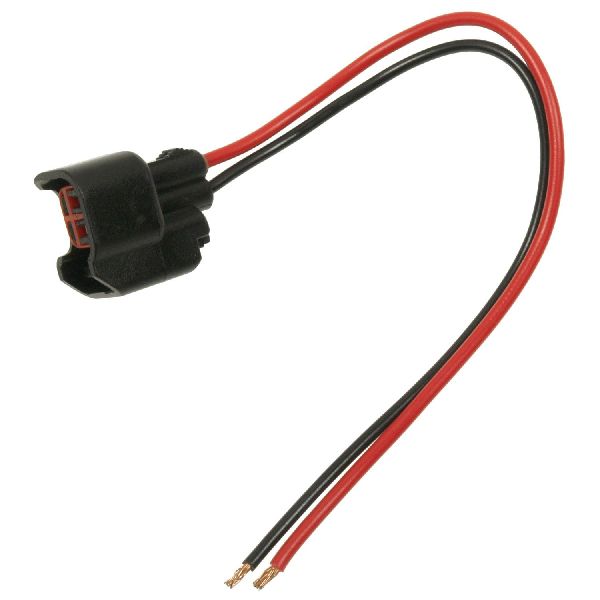
- Purge Valve Connector — On the purge valve solenoid itself, on top of or behind the engine.. This 2-pin connector provides power and control. One pin should show battery voltage with the key on. The other pin is the ground-side control from the ECM. Testing here can rule out wiring issues.
Real Owner Repair Stories
- CruzeTalk Forum Member (2012 Chevy Cruze 1.4L) — P0442 and P0496 codes.
❌ Tried (didn't work) Replacing the EVAP purge valve solenoid., Replacing the gas cap.
✅ What actually fixed it A smoke test revealed a leak from the seal/grommet for the Fuel Tank Pressure (FTP) sensor, located on top of the fuel tank/fuel pump module. Replacing the faulty sensor seal resolved the codes. - YouTube video by 'Repairs and Rides' (2016 Chevy Cruze 1.4L) — P0442 small EVAP leak.
❌ Tried (didn't work) Initially replacing the purge valve, vent valve, and gas cap did not resolve the issue on its own.
✅ What actually fixed it After lowering the gas tank for inspection, the technician found that the atmospheric vent line for the charcoal canister was contaminated with dirt and grit, preventing a proper seal. Cleaning the contaminated hose connection was the final fix.
"I Checked Everything" — The Actual Cause
- An internally leaking purge valve. A technician may perform a system smoke test or use a metered air flow machine and find no leaks, because the system itself is sealed. However, the purge valve, which is supposed to be normally closed, can leak vacuum from the intake manifold side when the engine is running. This leak won't be found by pressurizing the system from the service port but can be confirmed by checking for vacuum at the disconnected valve port with the engine on.
- A contaminated charcoal canister vent line. In one documented case, the system passed a smoke test, but the P0442 code persisted. The actual cause was dirt and debris inside the canister's atmospheric vent line, which prevented the vent valve from sealing properly during the ECU's vacuum-based self-test, even though it wasn't a traditional 'leak' that smoke would reveal.
When the Usual Fixes Don't Work
- While the EVAP purge valve is the most common cause, numerous owner accounts confirm that it is not always the solution. In multiple documented cases, owners replaced the purge valve only to have the P0442 code return. The subsequent successful repairs included replacing a leaking Fuel Tank Pressure sensor seal on top of the fuel tank, cleaning a dirt-clogged canister vent line, and replacing a cracked EVAP hose near the charcoal canister. These instances highlight the necessity of proper diagnosis, often with a smoke machine, if replacing the purge valve and gas cap does not resolve the issue.
OEM Part Supersession History
55573017 (for 1.4L)→No direct supersession found. This remains the primary GM part number.— N/A
Heads up: This part is specific to the 1.4L engine and is not interchangeable with the 1.8L engine's purge valve.55567453 (for 1.8L)→No direct supersession found. This remains the primary GM part number.— N/A
Heads up: This part is often cross-referenced with ACDelco 214-2317. It is specific to the 1.8L engine.
Model Year Variations Within This Range

- 2011-2018 (Varies by VIN): GM has Special Coverage Programs (e.g., N192210240, N232395300) that extend the warranty on the EVAP purge valve for up to 15 years or 150,000 miles on certain vehicles due to the high failure rate. Owners should contact a dealer with their VIN to check for eligibility before paying for a repair.
- 2011-2016 vs 2016.5-2018: The first generation (2011-2016) has the purge valve located on top of the intake manifold, making for a very easy replacement. The second generation (2016.5+) has the purge valve located behind the engine, which is more difficult to access.
Helpful Videos
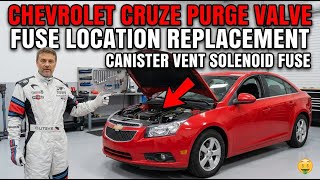
Used OEM Parts in Stock
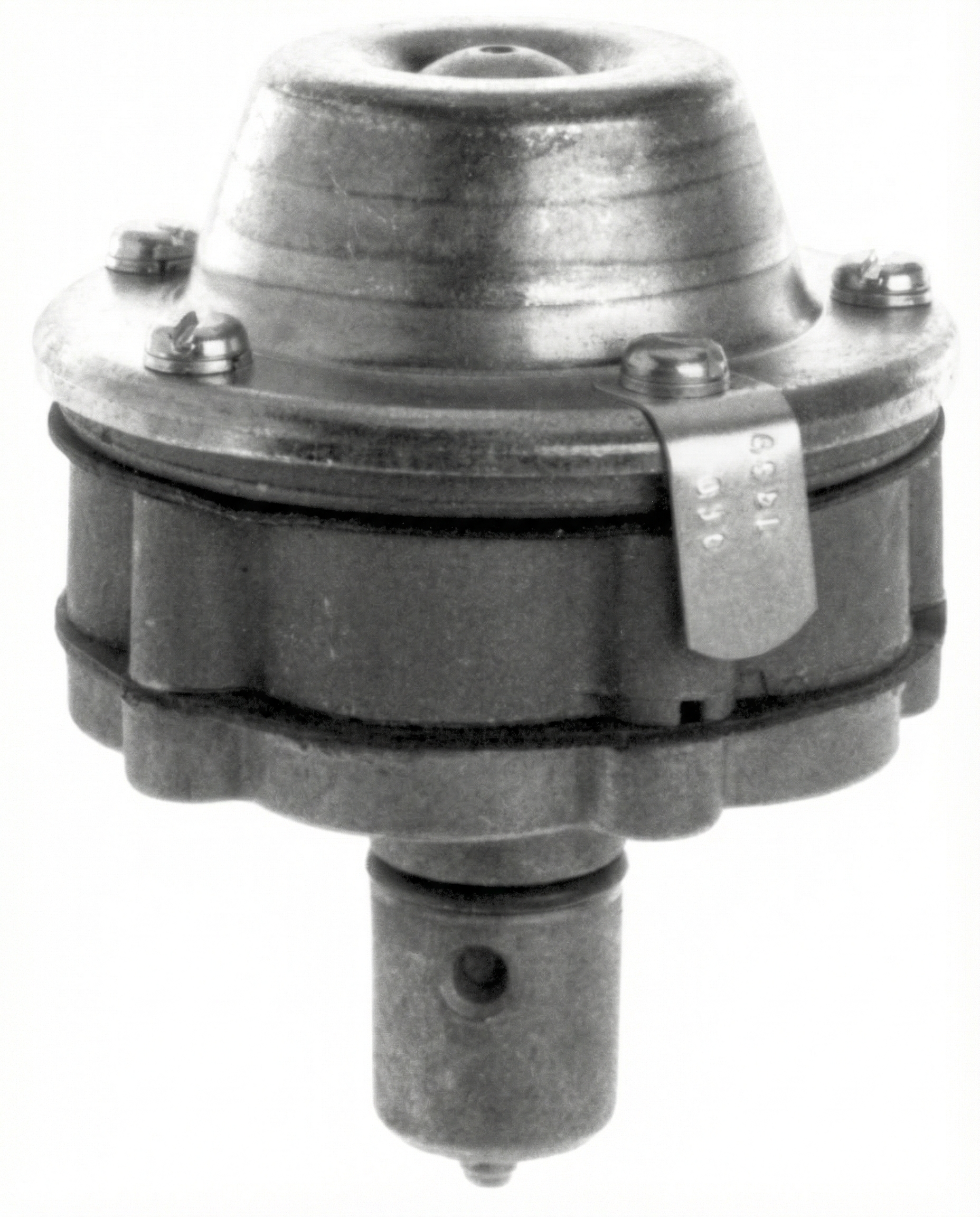
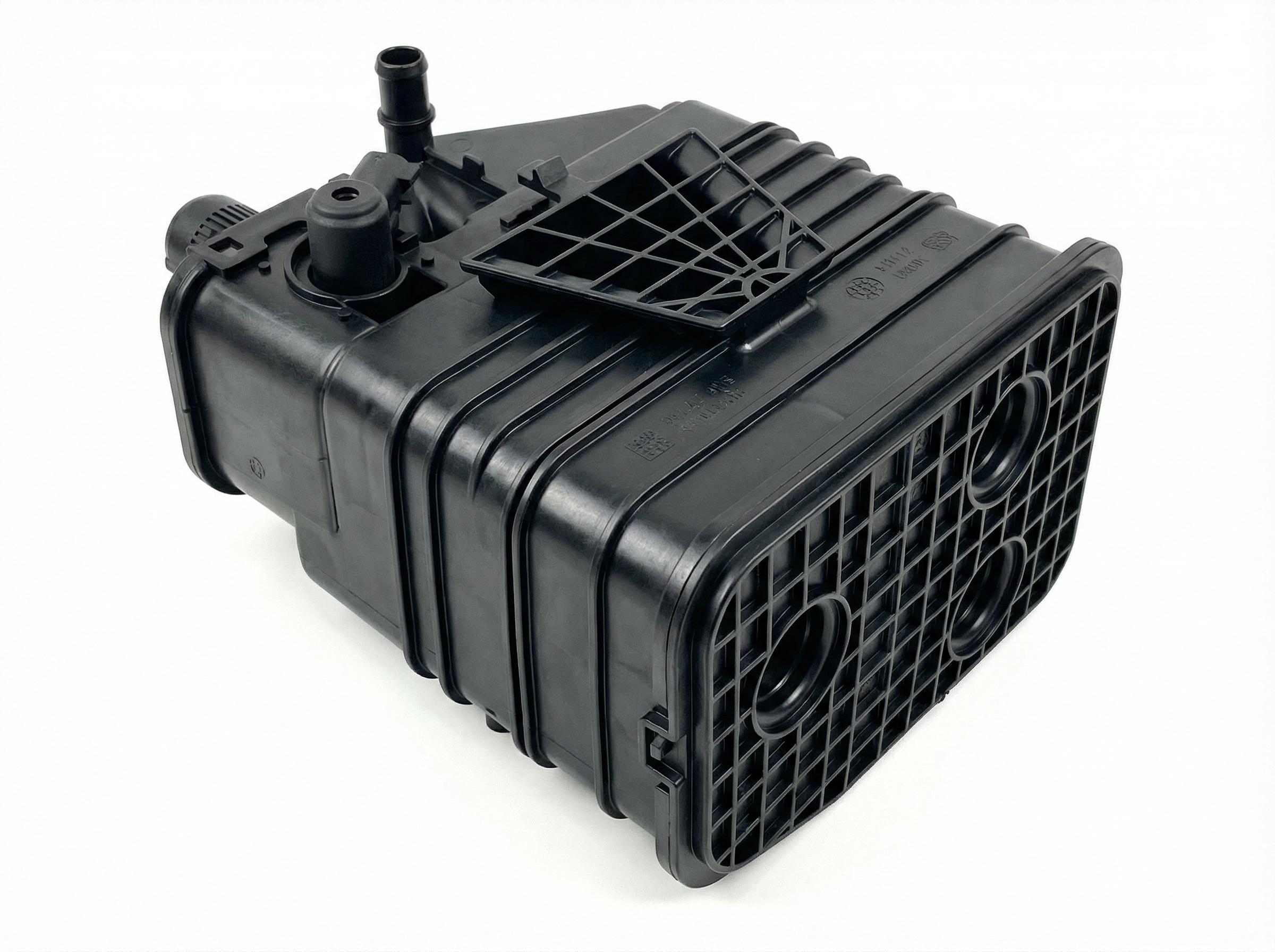

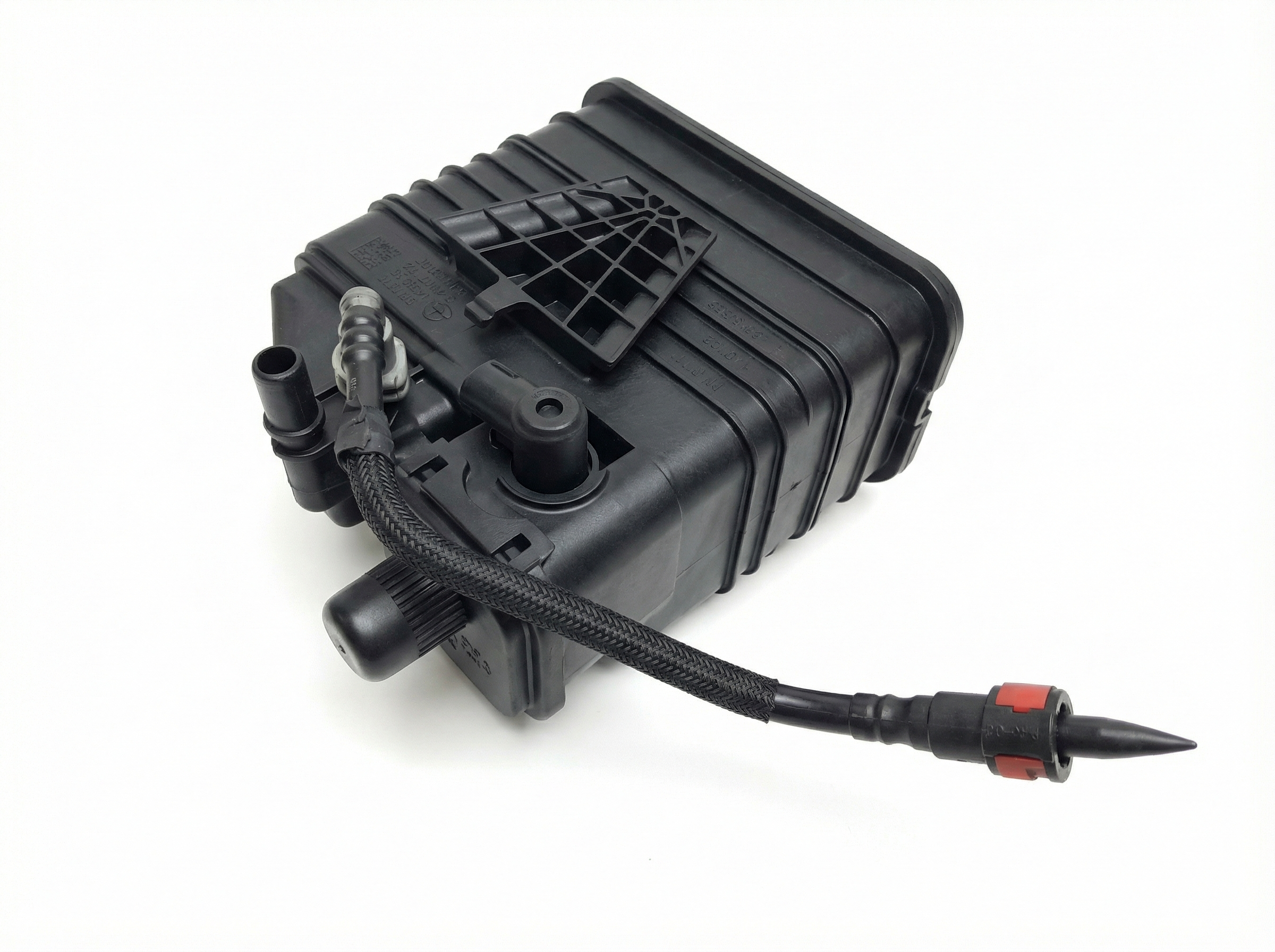
New Aftermarket Parts Available


The information in this article is provided for general reference and educational purposes only. Vehicle specifications, procedures, and part compatibility can vary by production date, trim level, and region. Always consult your vehicle's factory service manual and verify part numbers before purchasing or performing repairs. Safety-critical components such as airbags, seat belts, and braking systems should be installed by a qualified professional.
- Chevrolet CRUZE:
- 🎬 Helpful Videos
- 🛍️ Shop This Part
- What's Unique About the 2011-2018 Chevrolet CRUZE
- Diagnostic Flowchart
- Symptoms You May Notice
- Most Likely Causes
- Rare But Worth Checking
- Diagnosis Steps
- Parts You'll Likely Need
- Related Codes That Often Appear With This One
- Technical Service Bulletins (TSBs) & Recalls
- Platform-Specific Known Issues
- Mechanic-Grade Diagnostic Values
- Hidden / Shadow Codes Worth Checking
- Scan Tool Commands That Help
- Wiring & Ground Locations
- Real Owner Repair Stories
- "I Checked Everything" — The Actual Cause
- When the Usual Fixes Don't Work
- OEM Part Supersession History
- Model Year Variations Within This Range
- 🎟️ Get 5% Off