

P0442 on 2004-2011 Chevrolet Colorado: EVAP Small Leak Causes and Fixes
The most common cause for a P0442 code on a 2004-2011 Chevy Colorado is a loose or faulty gas cap. If tightening or replacing the gas cap (~$10-$25) doesn't solve it, the next likely culprits are the EVAP vent solenoid located by the spare tire or the purge solenoid in the engine bay. A smoke test is the best way to confirm the leak's location before replacing parts.
- P0442 means your truck's computer has found a small leak in the fuel vapor system.
- Always start with the simplest fix: check that your gas cap is tight and its seal is intact. A new gas cap is an inexpensive first step.
- If the gas cap isn't the issue, the most likely culprits are the EVAP vent solenoid (at the rear of the truck) or the purge solenoid (in the engine bay).
- While you can replace parts one by one, the most efficient way to find the leak is with a smoke test, which can pinpoint the exact source and save you from buying unnecessary parts.
What's Unique About the 2004-2011 Chevrolet COLORADO

For the first-generation Chevrolet Colorado and its platform mates (GMC Canyon, Hummer H3), the EVAP system components, particularly the vent and purge solenoids, are known failure points that can trigger a P0442 code. Unlike some vehicles where the gas cap is almost always the sole issue, Colorados of this era are highly susceptible to solenoid and hose failures. The vent solenoid is mounted on a bracket above the spare tire, where it is directly exposed to road debris, moisture, and road salt, leading to corrosion and failure. The purge solenoid is located on the driver's side of the engine block, a location that can be difficult to access and where heat can contribute to its failure over time.
Diagnostic Flowchart

Tap your situation to follow the diagnostic path that matches what you're seeing on this vehicle.
Symptoms You May Notice
- Check Engine Light is on.
- A faint smell of fuel, especially when parked in an enclosed space like a garage.
- No noticeable difference in drivability or performance in most cases.
- Slightly rough idle or hesitation in some cases if the purge valve is stuck open.
- Difficulty filling the gas tank (pump clicks off repeatedly), which can be a symptom of a clogged vent solenoid.
- Replacing the purge valve when the vent valve is the actual problem, or vice-versa. A proper diagnosis with a smoke machine is highly recommended to prevent replacing the wrong part.
- Replacing a gas cap when the actual leak is a rusted fuel filler neck or a cracked hose.
Most Likely Causes

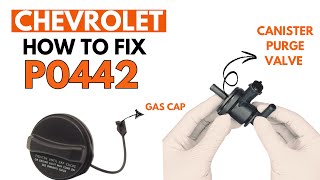
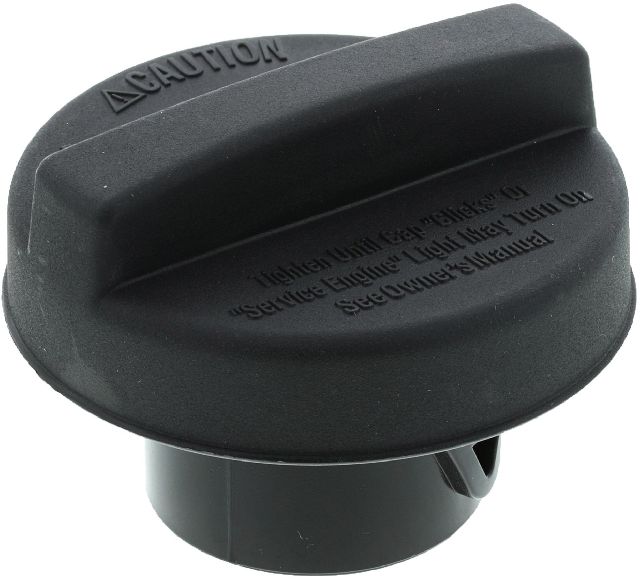
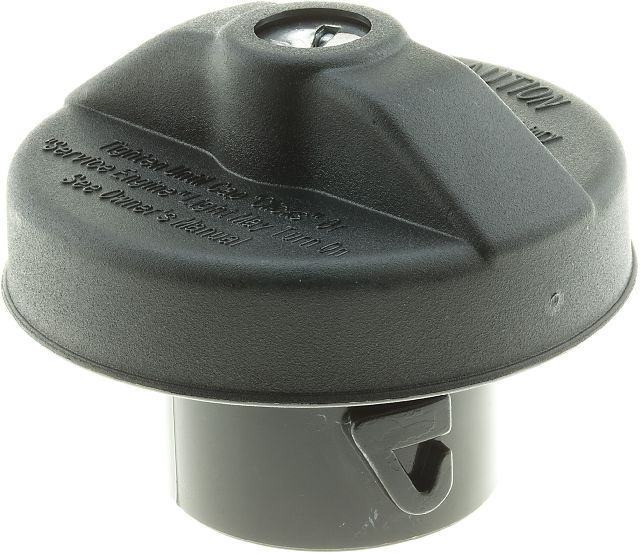
- Loose or Faulty Gas Cap 🔴 High Probability The gas cap is a simple seal that is frequently removed and replaced. Over time, the rubber O-ring can crack, harden, or get dirty, preventing a proper seal. Using a non-OEM cap can also cause sealing issues.
How to confirm: First, ensure the gas cap is tightened until it clicks several times. Inspect the rubber seal on the cap for any visible cracks, tearing, or debris. Check the fuel filler neck for rust or dirt that could prevent a good seal. An OEM replacement is often recommended as some aftermarket caps do not seal correctly.
Typical fix: Tighten the cap correctly. If the seal is damaged or the cap is incorrect, replace it with a new OEM-spec gas cap (e.g., ACDelco GT284).
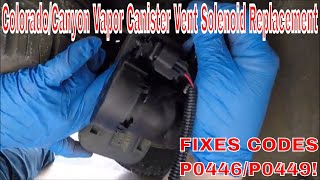
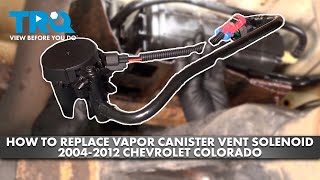
Est. part cost: $10-$25 - Faulty EVAP Vent Valve Solenoid 🟡 Medium Probability Located near the rear of the truck by the charcoal canister and spare tire, this valve is highly exposed to road debris, moisture, and salt. This causes the valve to fail, get stuck, or its plastic housing to crack. It is a very common failure point on the GMT355 platform.
How to confirm: The valve is normally open but closes when the ECM tests the system. A scan tool can command the valve to close for testing. A smoke test is the most effective way to confirm a leak at the valve itself or its connections. You can also remove the valve and apply 12V to the terminals; you should hear a solid 'click' as it actuates. If it's silent or sounds weak, it has likely failed.
Typical fix: Replace the EVAP vent valve solenoid. The part is often sold as an assembly. Note that many newer replacement parts (like ACDelco 20907779) have a different electrical connector than the original and require a jumper wiring harness (e.g., ACDelco 19257603 or included with Dorman 911-070) to be installed.
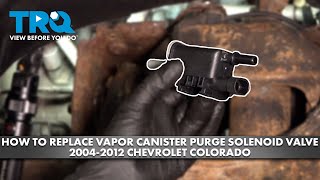
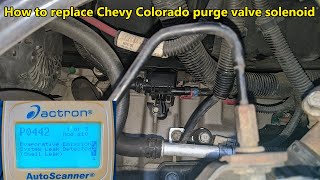
Est. part cost: $30-$115 - Faulty EVAP Purge Valve Solenoid 🟡 Medium Probability This valve is located on the driver's side of the engine block, under the intake manifold. Heat and age can cause it to fail, typically by sticking open and creating a constant vacuum leak into the intake.
How to confirm: The purge valve is normally closed. With the engine off, remove the valve and try to blow through it; if air passes, it's stuck open and faulty. A scan tool can also be used to command the valve open and closed while monitoring system pressure. A rough idle can also be a symptom of a stuck-open purge valve.
Typical fix: Replace the purge valve solenoid. Access is tight; it often requires removing the driver-side front wheel and the plastic fender liner to reach the valve from the side and underneath.
Est. part cost: $25-$60 - Cracked or Disconnected EVAP Hoses ⚪ Low Probability Rubber and plastic hoses can become brittle and crack with age and exposure to heat and cold cycles. Connections at the purge solenoid, canister, and fuel tank are common places for leaks to develop.
How to confirm: Visually inspect all accessible EVAP lines running from the fuel tank to the charcoal canister and up to the engine bay. A smoke test is the most reliable method to find small, hard-to-see cracks. Wiggling the lines during a smoke test can help reveal intermittent leaks.
Typical fix: Replace the cracked section of hose or reconnect any loose fittings.
Est. part cost: $5-$50
Rare But Worth Checking
- Leaking Fuel Tank or Filler Neck: In areas with heavy road salt use, the fuel filler neck or the top of the fuel tank/fuel pump sending unit assembly can rust through, creating a leak that will trigger the P0442 code. This is often found with a smoke test where smoke will be seen exiting the top of the fuel tank or around the filler neck.
- Leaking Charcoal Canister: The plastic housing of the charcoal canister itself can develop cracks from age or impact from road debris, leading to a small leak. This is less common than valve failures but should be checked during a smoke test if no other leaks are found.
Diagnosis Steps
- Read the code with an OBD-II scanner to confirm P0442 is present.
- Inspect the gas cap. Remove it, check the seal for damage, and clean the cap and filler neck. Reinstall it, ensuring it clicks multiple times. Clear the code and drive for a few days to see if it returns.
- If the code returns, perform a visual inspection of all visible EVAP hoses and components for obvious cracks or damage, paying close attention to the lines near the purge solenoid in the engine bay and around the canister at the rear.
- The most effective next step is to perform a smoke test. An EVAP smoke machine injects low-pressure smoke into the system's service port. It is critical to perform this test *before* disturbing or replacing parts to ensure an accurate diagnosis.
- Connect the smoke machine to the EVAP service port. Use a scan tool to command the EVAP vent valve to the closed (sealed) position.
- Watch for smoke exiting from any part of the system: the gas cap, vent solenoid, purge solenoid, charcoal canister, or any of the lines in between. The source of the smoke is the source of the leak. Pay special attention to the top of the fuel tank and the fuel filler neck, as rust can cause leaks here.
- If no leak is found with smoke, test the purge and vent valves. Remove them and apply 12V power to their terminals; a healthy solenoid will make an audible click. You can also test for internal leaks by attempting to blow through them when they are in their default state (purge=closed, vent=open).
Parts You'll Likely Need

- Gas Cap
(OEM #ACDelco GT284)— This is the most frequent and simplest cause of a small EVAP leak due to a worn or damaged seal. An OEM cap is recommended for a proper seal.
Trusted brands: ACDelco, Stant
OEM price range: $15-$30
Aftermarket price range: $10-$20 - EVAP Vapor Canister Vent Valve Solenoid
(OEM #20907779 (supersedes 10386359, 25948082))— A very common failure point on this platform, this valve gets stuck or fails to seal due to its exposed location near the spare tire.
Trusted brands: ACDelco, Dorman (often includes wiring adapter), Standard Motor Products
OEM price range: $70-$145
Aftermarket price range: $30-$80 - EVAP Vapor Canister Purge Valve Solenoid
(OEM #12597567)— Located in the engine bay, this valve can fail and stick open, creating a constant small leak. It's another common point of failure for this code.
Trusted brands: ACDelco, Delphi, Dorman
OEM price range: $35-$60
Aftermarket price range: $20-$45 - Vent Valve Solenoid Jumper Wiring Harness
(OEM #19257603)— Often required when replacing the original vent valve solenoid with the updated part (20907779), as the electrical connector was changed. Some aftermarket kits include this harness.
Trusted brands: ACDelco, Dorman
OEM price range: $15-$25
Aftermarket price range: $10-$20
Related Codes That Often Appear With This One
- P0455 — P0455 indicates a large EVAP leak. If a small leak (P0442) worsens, or if the cause is something like a very faulty seal or a large crack, it can be detected as a large leak. They often share the same root causes.
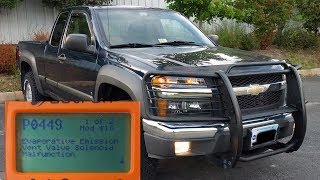
- P0449 — P0449 specifically points to a fault in the EVAP Vent Valve Solenoid control circuit. It's common to see this code alongside P0442 if the vent valve's electrical circuit is the source of the problem, not just a mechanical leak.
Technical Service Bulletins (TSBs) & Recalls
- 21-NA-124: Provides diagnostic tips/steps on testing for possible EVAP leaks in the system to correct a customer concern of an MIL Illuminated with DTCs P0442 and/or P0455 Set. It advises checking lines, then the vent valve, then the purge valve in that order.
- PIT4943D: Provides information about diagnosing a Service Engine Soon Malfunction Indicator Lamp with Diagnostic Trouble Code P0442, referencing a Techlink article on using an EVAP system tester and a specific procedure to test the purge solenoid under vacuum.
Platform-Specific Known Issues
- TSB #21-NA-124 provides a clear diagnostic order for P0442/P0455: 1. Check EVAP lines/connections. 2. Check vent valve. 3. Check purge valve.
- TSB #PIT4943D directs technicians to use a specific GM-approved evaporative emissions system tester and a detailed procedure to isolate intermittent leaks, especially in the purge solenoid, which may only leak under vacuum.
- Rust on the top of the fuel pump/sending unit assembly is a known issue in salt-belt states, causing the port where the EVAP line connects to leak. A user on 355nation.net confirmed this was the source of their P0442 after a smoke test revealed smoke coming from the top of the tank.
Mechanic-Grade Diagnostic Values
- Fuel Tank Pressure (FTP) Sensor Voltage — expected: Approximately 1.45V - 1.50V with Key On, Engine Off (KOEO) and the gas cap removed (atmospheric pressure).. Failure: A voltage significantly outside this range at atmospheric pressure indicates a faulty sensor.
- EVAP Purge or Vent Solenoid Coil Resistance — expected: Approximately 15 to 30 Ohms.. Failure: A reading that is significantly higher, lower, or infinite (Open Line) indicates a failed solenoid coil.
Scan Tool Commands That Help
- GM Tech 2 / Professional Scan Tool: EVAP Service Bay Test — This is a comprehensive, automated test that allows the technician to force the vehicle's PCM to run the entire EVAP leak test procedure without performing a lengthy drive cycle. It commands the vent and purge solenoids to seal and test the system's integrity.
- Professional Scan Tool: Vent Solenoid Command (On/Off or Close) — This is a critical bidirectional command used during a smoke test. To pressurize the system with smoke, the normally-open vent solenoid must be commanded closed to seal the EVAP system at the canister.
Wiring & Ground Locations
- Fuse #69 (2004-2005 models) — In the under-hood fuse block.. This fuse specifically powers the Fuel Canister Vent Solenoid. If this fuse is blown, the solenoid cannot close, which will prevent the EVAP system from sealing and will set a fault code.
- G102 / G103 — Lower left side of the engine block.. These are primary engine ground points. A poor ground connection at these locations can cause erratic behavior or failure of any engine-mounted sensor or solenoid, including the EVAP purge solenoid.
- EVAP Purge Solenoid Connector — On the driver's side of the engine, below the intake manifold.. This connector and its wiring are subjected to engine heat and vibration. It should be checked for a secure connection, corrosion, or damage, which could cause a circuit fault for the purge solenoid.
Real Owner Repair Stories
- South Main Auto Repair YouTube Channel (2008 Chevrolet Colorado 3.7L) — Check Engine Light with code P0442 (Small EVAP Leak).
❌ Tried (didn't work) Initial visual inspection did not reveal the leak source.
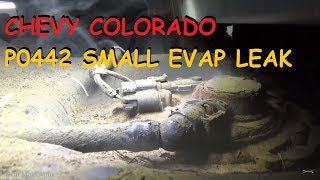
✅ What actually fixed it A smoke test revealed a major leak from the top of the fuel pump module where the lines connect. The metal components on top of the module had rusted through due to exposure in the salt belt. The mechanic noted his surprise that this large of a leak registered as a P0442 (small leak) instead of a P0455 (large leak). The fix required replacing the fuel pump module assembly. - Reddit user /u/baronsmeg (2007 Chevrolet Colorado) — Check Engine Light with code P0442.
❌ Tried (didn't work) Replaced the Purge Valve Solenoid.
✅ What actually fixed it The code returned two months after replacing the purge solenoid. The user's experience serves as a cautionary tale against replacing parts without a proper diagnosis. The recommended next step from other users was to perform a smoke test to find the actual source of the leak instead of continuing to guess.
"I Checked Everything" — The Actual Cause
- In a documented case on a 2007 Colorado with an intermittent P0442, a standard diagnostic test using vacuum showed the system held pressure, suggesting it was sealed. However, the technician suspected a component was failing intermittently. The advanced diagnostic tip was that a valve (purge or vent) could potentially seal correctly under the positive pressure of a smoke machine but fail to seal under the vacuum that the PCM uses for its self-test. The suggested fix was to either cycle the valves repeatedly with the scan tool while the smoke machine is running or to remove the valves and test them directly with a hand-held vacuum pump to see if they leak.
When the Usual Fixes Don't Work
- While the most common fixes involve the gas cap or EVAP solenoids, a significant number of P0442 cases on these trucks, especially in the rust belt, are ultimately traced to a rusted-out fuel filler neck or, more insidiously, a rusted-through top plate of the fuel pump module. A technician documented a case where a large, obvious leak from the fuel pump module after a smoke test was surprisingly being reported by the PCM as only a 'small leak' (P0442). This indicates that even if the code suggests a small leak, one should not rule out a much larger, more severe leak source at the fuel tank itself.
OEM Part Supersession History
10386359, 25948082→20907779— This is the EVAP Vent Valve Solenoid. The original design was prone to failure. The updated part is a more robust design.
Heads up: The updated part number 20907779 has a different electrical connector than the original factory-installed parts. A separate jumper harness, ACDelco PN 19257603, is required to connect the new valve to the old vehicle harness. Some aftermarket kits (like Dorman 911-070) include this adapter.
Model Year Variations Within This Range
- 2004-2005: The under-hood fuse block in 2004-2005 models has a dedicated fuse (#69) for the 'Fuel Canister Vent Solenoid'. This fuse location and numbering scheme is different from later model years (2006+), requiring year-specific diagrams for electrical diagnosis.
Helpful Videos
Used OEM Parts in Stock

New Aftermarket Parts Available


The information in this article is provided for general reference and educational purposes only. Vehicle specifications, procedures, and part compatibility can vary by production date, trim level, and region. Always consult your vehicle's factory service manual and verify part numbers before purchasing or performing repairs. Safety-critical components such as airbags, seat belts, and braking systems should be installed by a qualified professional.
- Chevrolet COLORADO:
- 🎬 Helpful Videos
- 🛍️ Shop This Part
- What's Unique About the 2004-2011 Chevrolet COLORADO
- Diagnostic Flowchart
- Symptoms You May Notice
- Most Likely Causes
- Rare But Worth Checking
- Diagnosis Steps
- Parts You'll Likely Need
- Related Codes That Often Appear With This One
- Technical Service Bulletins (TSBs) & Recalls
- Platform-Specific Known Issues
- Mechanic-Grade Diagnostic Values
- Scan Tool Commands That Help
- Wiring & Ground Locations
- Real Owner Repair Stories
- "I Checked Everything" — The Actual Cause
- When the Usual Fixes Don't Work
- OEM Part Supersession History
- Model Year Variations Within This Range
- 🎟️ Get 5% Off