

P0442 on 2014-2017 Chevrolet SS: EVAP Small Leak Causes and Fixes
For a 2014-2017 Chevy SS, a P0442 code is most often caused by a loose or worn-out gas cap. Before trying more complex repairs, check that the cap is tight and the seal is intact. A new OEM gas cap (ACDelco GT329) is an inexpensive first step, costing around $15-$30. If that doesn't resolve the issue, the next most likely culprits are the EVAP purge or vent solenoids.
- P0442 means a small leak has been detected in the EVAP (emissions) system.
- Always check the gas cap first. A loose or worn cap is the most common and cheapest fix.
- The code does not indicate a serious problem and will not affect how the car drives.
- If a new gas cap doesn't solve the issue, the most likely culprits are the EVAP purge or vent valves.
- Finding the exact leak source without a smoke test can be difficult; professional diagnosis is often the most efficient path.
What's Unique About the 2014-2017 Chevrolet SS
The Chevrolet SS, being a unique performance sedan based on the Australian Holden Commodore, doesn't have widespread, model-specific pattern failures for this code. However, its LS3 engine and EVAP system share components with other GM vehicles like the 5th Gen Camaro and C6 Corvette, which do have known P0442 patterns. GM has issued Technical Service Bulletins (TSBs) that apply to the SS, such as #21-NA-124 and #PIT4943D. These bulletins don't pinpoint a single faulty part but instead provide technicians with advanced diagnostic strategies for finding leaks, emphasizing the importance of a thorough and proper diagnosis (like a smoke test) rather than just replacing parts.
Diagnostic Flowchart
Tap your situation to follow the diagnostic path that matches what you're seeing on this vehicle.
Symptoms You May Notice
- Check Engine Light is on.
- Remote start is disabled.
- A faint fuel smell, possibly more noticeable after parking or in a garage.
- A hissing sound when removing the gas cap.
- Difficulty filling the fuel tank (fuel nozzle clicks off repeatedly), which can indicate a blocked vent path.
- Replacing the O2 sensors. Oxygen sensors are not part of the EVAP system and will not cause a P0442 code.
- Replacing the fuel injectors. While part of the fuel system, injectors are unrelated to the vapor recovery system.
Most Likely Causes
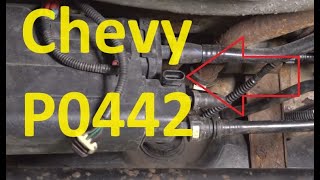
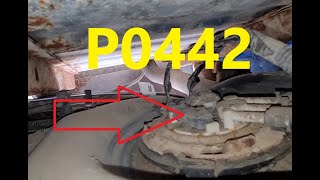
- Loose or Faulty Gas Cap 🔴 High Probability This is the most common cause for a P0442 on virtually all vehicles. 🎬 Watch: Common causes and fixes for the P0442 code The rubber O-ring on the cap can dry out, crack, or get dirty over time, preventing a proper seal. Aftermarket gas caps are also a frequent source of issues.
How to confirm: Remove the gas cap and inspect the seal for any visible cracks, stiffness, or debris. Ensure you tighten it until it clicks several times. If the seal looks worn, replacement is the best confirmation. Clean the filler neck sealing surface before installing a new cap.
Typical fix: Replace the gas cap with a new, high-quality OEM part. The ACDelco part number is GT329.
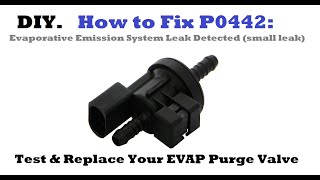
Est. part cost: $15-$30 - Leaking EVAP Purge Valve/Solenoid 🟡 Medium Probability The purge valve, located on the intake manifold, controls the flow of stored vapors to the engine. It can get stuck partially open or develop a small internal leak, causing the code. This is a common failure on many GM vehicles with similar engines.
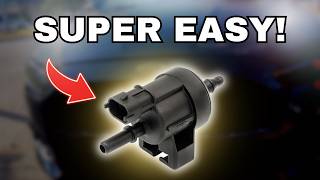
How to confirm: With the engine off, the valve should be closed. A simple test is to remove the valve and try to blow through it; if air passes, it has failed. 🎬 See how to test and replace the EVAP purge valve A mechanic can also command it open and closed with a scan tool while a smoke machine is connected to see if it operates correctly.
Typical fix: Replace the EVAP purge valve. A common ACDelco part number for the LS3 engine family is 12690512, though fitment should be verified.
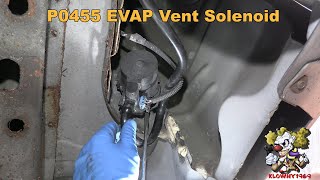
Est. part cost: $50-$100 - Leaking EVAP Vent Valve/Solenoid 🟡 Medium Probability This valve, located near the charcoal canister under the car, closes to seal the system for testing. It is exposed to road debris and moisture, which can cause it to fail or not seal properly. This is a very common failure point on the related C6 Corvette platform.
How to confirm: A smoke test is the most effective method. A technician will command the valve closed with a scan tool and see if smoke escapes from it. It can also be removed and bench-tested for function by applying 12V and listening for a click.
Typical fix: Replace the EVAP vent valve solenoid. The ACDelco part number is 84524035. Some model years may require a wiring harness adapter.
Est. part cost: $40-$90 - Cracked or Disconnected EVAP Hoses ⚪ Low Probability The plastic and rubber lines that make up the EVAP system can become brittle with age and heat cycles, leading to small cracks, especially at connection points.
How to confirm: A thorough visual inspection of all accessible EVAP lines in the engine bay and under the car near the fuel tank may reveal obvious damage. However, a smoke test is the definitive way to find a small hose leak.
Typical fix: Replace the specific section of cracked hose.
Est. part cost: $20-$50
Rare But Worth Checking
- Cracked Charcoal Canister: While more commonly associated with a large leak (P0455), a small hairline crack in the plastic body of the canister can cause a P0442. This is usually caused by impact from road debris.
- Leaking Fuel Tank Filler Neck: Corrosion can form on the metal filler neck where the gas cap seals, creating an uneven surface that prevents a tight seal, even with a new cap.
- Faulty Fuel Tank Pressure Sensor: In rare cases, the sensor that monitors EVAP system pressure can fail, causing it to report a leak when none exists. This is typically diagnosed after a smoke test confirms the system is perfectly sealed. A failing sensor seal can also be the source of the leak.
Diagnosis Steps
- Read the code with an OBD-II scanner to confirm P0442 is present.
- Inspect the gas cap. Remove it, check the seal for damage, and reinstall it, ensuring it clicks multiple times. Clear the code and drive for a few days to see if it returns.
- If the code returns, replace the gas cap with an OEM part (ACDelco GT329) as an inexpensive and highly probable fix.
- Perform a thorough visual inspection of all visible EVAP hoses and lines under the hood and near the fuel tank. Look for any obvious cracks, damage, or loose connections, especially at elbows and connection points.
- If no obvious issues are found, the most effective next step is a professional smoke test. A mechanic will inject low-pressure smoke into the EVAP system. Smoke will escape from the location of the leak, making it easy to pinpoint. 🎬 Watch: How to perform a professional EVAP smoke test
- While the smoke test is running, a technician can use a scan tool to command the purge and vent valves open and closed to test their function and sealing ability.
- If a smoke machine is not available, the purge valve (on the engine) can be removed and tested by attempting to blow through it. It should be closed and not allow air to pass when de-energized.
- Once the leaking component is identified (e.g., purge valve, vent solenoid, hose), replace it.
- After the repair, clear the code and perform a complete drive cycle to allow the vehicle's computer to re-run the EVAP monitor and confirm the fix.
Parts You'll Likely Need
- Fuel Cap
(OEM #ACDelco GT329)— This is the most frequent cause of a P0442 code due to its seal wearing out over time or improper tightening.
Trusted brands: ACDelco
OEM price range: $20-$35
Aftermarket price range: $15-$25 - EVAP Canister Purge Valve
(OEM #12690512 (Verify Fitment))— This valve is a common failure point that can leak internally, causing a small leak code. It is located on the engine's intake manifold.
Trusted brands: ACDelco, Bosch
OEM price range: $60-$110
Aftermarket price range: $40-$80 - EVAP Vent Valve Solenoid
(OEM #84524035)— Located under the vehicle, this valve is prone to failure from dirt and moisture, preventing it from sealing the system correctly.
Trusted brands: ACDelco, Delphi
OEM price range: $50-$100
Aftermarket price range: $30-$70
Related Codes That Often Appear With This One
- P0455 — This code indicates a large EVAP leak. A leak can sometimes be on the borderline between small and large, or two separate leaks may exist. TSB #21-NA-124 specifically mentions diagnosing P0442 and/or P0455 together.
- P0449 — This code points to an electrical fault in the EVAP vent solenoid circuit. If the vent solenoid is the source of the leak, it may also have an accompanying circuit code.
- P0496 — This code indicates 'EVAP Flow During a Non-Purge Condition,' often caused by a purge valve that is stuck open. A purge valve stuck slightly open can also be interpreted by the system as a small leak, triggering a P0442.
Technical Service Bulletins (TSBs) & Recalls
- 21-NA-124: Provides diagnostic tips for testing the EVAP system for leaks related to DTCs P0442 and/or P0455. The bulletin suggests a chronological investigation: check EVAP lines for proper seating and damage, then test the vent valve, and finally the purge valve.
- PIT4943D: Directs technicians to review a Techlink article on using an Evaporative Emissions System Tester (smoke machine) for diagnosing P0442.
Mechanic-Grade Diagnostic Values
- EVAP Canister Purge Valve Solenoid Resistance — expected: 15 to 30 Ohms is a common range for GM purge valves.. Failure: A reading of 0 Ohms (short circuit) or infinite/OL (open circuit) indicates a failed solenoid coil.
- EVAP Canister Vent Valve Solenoid Resistance — expected: Generally between 20 and 50 Ohms. One source specifies 48-65 Ohms for some GM applications.. Failure: A reading outside the expected range, especially an open circuit (OL), points to a faulty solenoid.
- Fuel Tank Pressure (FTP) Sensor Voltage — expected: The sensor receives a 5-volt reference from the PCM. The signal wire voltage changes with pressure. A reading stuck at a high voltage (e.g., 4.8V) can indicate a bad sensor or a wiring issue.. Failure: A static voltage reading that doesn't change as tank pressure changes (or should change) suggests a failed sensor.
Hidden / Shadow Codes Worth Checking
- Mode $06, TID $26, CID $81 (Example): GM uses Mode $06 to display the results of non-continuous monitor tests, like the EVAP leak test. These Test IDs (TID) and Component IDs (CID) show the raw test data, allowing a technician to see if the system passed or failed, and by how much, which can help diagnose intermittent issues before a code is set. (see via An advanced OBD-II scan tool with Mode $06 capability.)
Scan Tool Commands That Help
- GDS2/Tech2: EVAP System Test / Output Control — This function allows a technician to command the EVAP purge and vent solenoids open or closed manually. It is essential during a smoke test to seal the system (by commanding the vent valve closed) and to check if the purge valve is sealing properly when commanded closed.
Wiring & Ground Locations
- Engine Block Grounds — The Holden Commodore (VF), the base for the SS, has several key ground points on the engine block. One is often located on the right-hand side (passenger side in US) near the front of the engine, and another near the power steering pump.. A poor engine ground can cause erratic behavior in engine-mounted sensors and solenoids, including the EVAP purge valve. While not a primary cause, checking that grounds are clean and tight is a crucial step in diagnosing electrical faults.
- Chassis/Body Grounds — A primary body ground point on the Holden Commodore is located on the inner front fender, just above the battery. Other grounds are located throughout the chassis, including on the transmission tunnel.. The EVAP vent solenoid and Fuel Tank Pressure sensor are located near the rear of the vehicle and rely on a solid chassis ground. Corrosion or looseness at a rear ground point could affect their operation.
"I Checked Everything" — The Actual Cause
- In some cases, a vehicle can pass a smoke test but still set a P0442 code. This can happen if the Fuel Tank Pressure (FTP) sensor itself is faulty, providing incorrect readings to the computer. The sensor might report a pressure drop (indicating a leak) when the system is actually sealed. Another possibility is an intermittent failure of a solenoid that only occurs under specific temperature or vibration conditions not present during the test.
OEM Part Supersession History
12610560→12690512— This is a common supersession for the EVAP Purge Valve used on many GM V8 and V6 engines. The newer part may offer improved durability or material changes.
Heads up: Part number 12690512 has itself been superseded by 12737252 for some applications, so verifying the latest number with a GM dealer is recommended.13502510→13502903— This supersession applies to the Fuel Tank Pressure Sensor. The updated part is the standard replacement for the 2014-2017 SS.
Model Year Variations Within This Range
- 2015-2017: For 2015, Chevrolet introduced Magnetic Ride Control as standard, which changed the suspension but did not directly affect the EVAP system. The 2016-2017 models received a facelift with a new front fascia, functional hood vents, and a bi-modal exhaust, but the core EVAP system components and engine remained the same as the 2014-2015 models.
Helpful Videos
We Have This Part in Stock


The information in this article is provided for general reference and educational purposes only. Vehicle specifications, procedures, and part compatibility can vary by production date, trim level, and region. Always consult your vehicle's factory service manual and verify part numbers before purchasing or performing repairs. Safety-critical components such as airbags, seat belts, and braking systems should be installed by a qualified professional.
- Chevrolet CHEVEROLET SS:
- 🎬 Helpful Videos
- 🛍️ Shop This Part
- What's Unique About the 2014-2017 Chevrolet SS
- Diagnostic Flowchart
- Symptoms You May Notice
- Most Likely Causes
- Rare But Worth Checking
- Diagnosis Steps
- Parts You'll Likely Need
- Related Codes That Often Appear With This One
- Technical Service Bulletins (TSBs) & Recalls
- Mechanic-Grade Diagnostic Values
- Hidden / Shadow Codes Worth Checking
- Scan Tool Commands That Help
- Wiring & Ground Locations
- "I Checked Everything" — The Actual Cause
- OEM Part Supersession History
- Model Year Variations Within This Range
- 🎟️ Get 5% Off