

P0442 on 2011-2018 Chevrolet Camaro: EVAP Small Leak Causes and Fixes
The most common causes for a P0442 code on a 2011-2018 Camaro are a loose or faulty gas cap, a faulty EVAP purge valve, or a bad EVAP vent solenoid. Start by checking the gas cap, as it's the easiest and most common fix. If that doesn't work, the purge valve on the engine is the next most likely culprit and a relatively easy DIY replacement. The vent solenoid near the tank is also common but harder to access. Expect to replace a valve, costing between $30 and $150 for the part.
- P0442 indicates a small leak in the EVAP emissions system.
- Always check the gas cap first; a loose or worn cap is the most common and cheapest fix.
- The most likely parts to fail are the EVAP purge valve (on the engine) and the EVAP vent valve (near the gas tank).
- A smoke test is the most reliable way to find the exact source of the leak if it's not the gas cap.
- While the issue won't stop you from driving, it will cause an automatic failure on an emissions test.
What's Unique About the 2011-2018 Chevrolet CAMARO

For the 2011-2018 Camaro, which spans the 5th and 6th generations, the P0442 code is a straightforward EVAP leak issue without major platform-specific defects. However, GM has issued technical service bulletins that guide technicians on diagnosing this exact code, pointing towards common failures in the vent and purge valves. The location of the vent solenoid, tucked above the rear differential/subframe, can make what is a simple part swap on other vehicles a more labor-intensive job on the Camaro. Forum users confirm dealers often need to perform a smoke test to find the leak, which frequently turns out to be the vent solenoid.
Diagnostic Flowchart
Tap your situation to follow the diagnostic path that matches what you're seeing on this vehicle.
Generation note: This range covers the end of the fifth generation (2011-2015) and the start of the sixth generation (2016-2018). While the EVAP system components are similar, their specific locations and part numbers may differ. For example, the purge valve is a very common replacement for 2012-2015 V6 (LFX) and V8 models. The vent valve is also a frequent failure point across these years. Always verify the part with your vehicle's VIN.
Symptoms You May Notice
- Check Engine Light is on.
- Remote start may be disabled.
- A faint smell of fuel, especially after parking.
- Slight decrease in fuel economy.
- Slightly rough or stumbling idle in some cases, as a faulty valve can create a small vacuum leak.
- Replacing the O2 sensors. O2 sensors are not related to the EVAP system.
- Replacing the catalytic converter. This is an expensive repair that has no connection to a P0442 code.
- Repeatedly replacing the gas cap when the issue is a faulty valve. Many owners try multiple gas caps before moving on to the more likely valve culprits.
Most Likely Causes

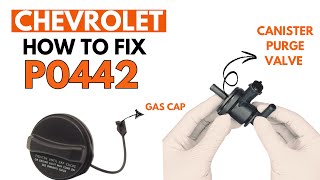
- Loose or Faulty Gas Cap 🔴 High Probability This is the most common cause for an EVAP leak code on any vehicle, including the Camaro. The seal can wear out, crack, or the cap may not have been tightened properly after refueling. Many forum users report this as the first thing they check or replace.
How to confirm: Inspect the gas cap's rubber seal for cracks, splits, or signs of drying out. Ensure the cap clicks at least once when tightened. If the seal is damaged or the cap is old, replacement is the easiest first step. A new OEM cap is recommended for a reliable seal.
Typical fix: Tighten or replace the gas cap. After replacing, the code must be cleared with a scan tool or by driving for several days to allow the system to re-test.
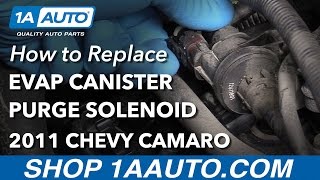
Est. part cost: $15-$40 - Faulty EVAP Purge Valve/Solenoid 🟡 Medium Probability The purge valve is an electromechanical part that cycles frequently and can get stuck open, causing a small leak. It's a known failure point on many GM vehicles with the 3.6L V6 and 6.2L V8 engines. It is often the second part replaced after the gas cap proves ineffective.
How to confirm: With the engine running, you can sometimes feel for vacuum at the valve's port or listen for a clicking sound. A more definitive test involves applying voltage to see if it opens and closes correctly or using a scan tool to command it on and off. On the V6, it is located on the intake manifold and easily accessible. On the V8, it is located on the passenger side of the engine, near the throttle body.
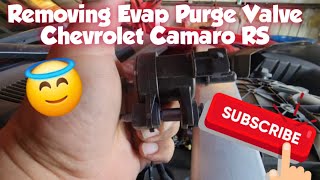
Typical fix: Replace the purge valve. This is a common DIY repair that takes 10-20 minutes. Part numbers vary by engine and year, for example, ACDelco 12690512 for 2012-2015 V6 models and ACDelco 12630282 for 2016-2018 models.
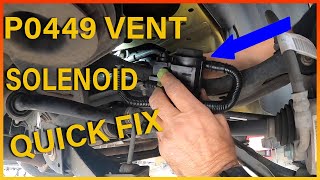
Est. part cost: $30-$90 - Faulty EVAP Vent Valve/Solenoid 🟡 Medium Probability The vent valve, typically located near the charcoal canister, can fail and get stuck open. GM TSB #21-NA-124 specifically mentions this as a potential cause for P0442 after checking lines. A GM service bulletin also noted that in some 2011-2013 models, a leaking EVAP Vent Solenoid could cause a P0442. Multiple owner accounts on Camaro5 forums confirm this was the part that ultimately fixed their P0442 code after a smoke test.
How to confirm: This valve is normally open and closes when the system runs its leak test. Diagnosis almost always requires a smoke machine to see if it's leaking when commanded closed by a scan tool. This is the most reliable way to confirm failure.
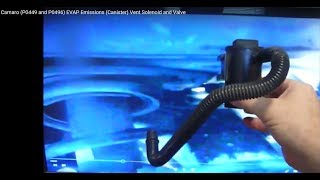
Typical fix: Replace the vent valve. On the Camaro, this part is located above the rear differential, which can make access difficult without lowering the rear subframe or exhaust slightly. A common replacement part number is ACDelco 22865590 or Dorman 911-140.
Est. part cost: $25-$50 - Cracked or Disconnected EVAP Hoses ⚪ Low Probability Over time, the rubber and plastic lines in the EVAP system can become brittle and crack, especially in harsh climates or due to engine bay heat. A disconnected line after other maintenance is also possible.
How to confirm: A visual inspection may reveal obvious cracks or loose connections, particularly the line connecting to the purge valve on the engine. However, the most effective method is to use a smoke machine, which fills the EVAP system with a visible vapor to pinpoint the exact location of the leak.
Typical fix: Replace the damaged section of the hose or the entire line assembly. Secure any loose connections.
Est. part cost: $20-$100
Rare But Worth Checking
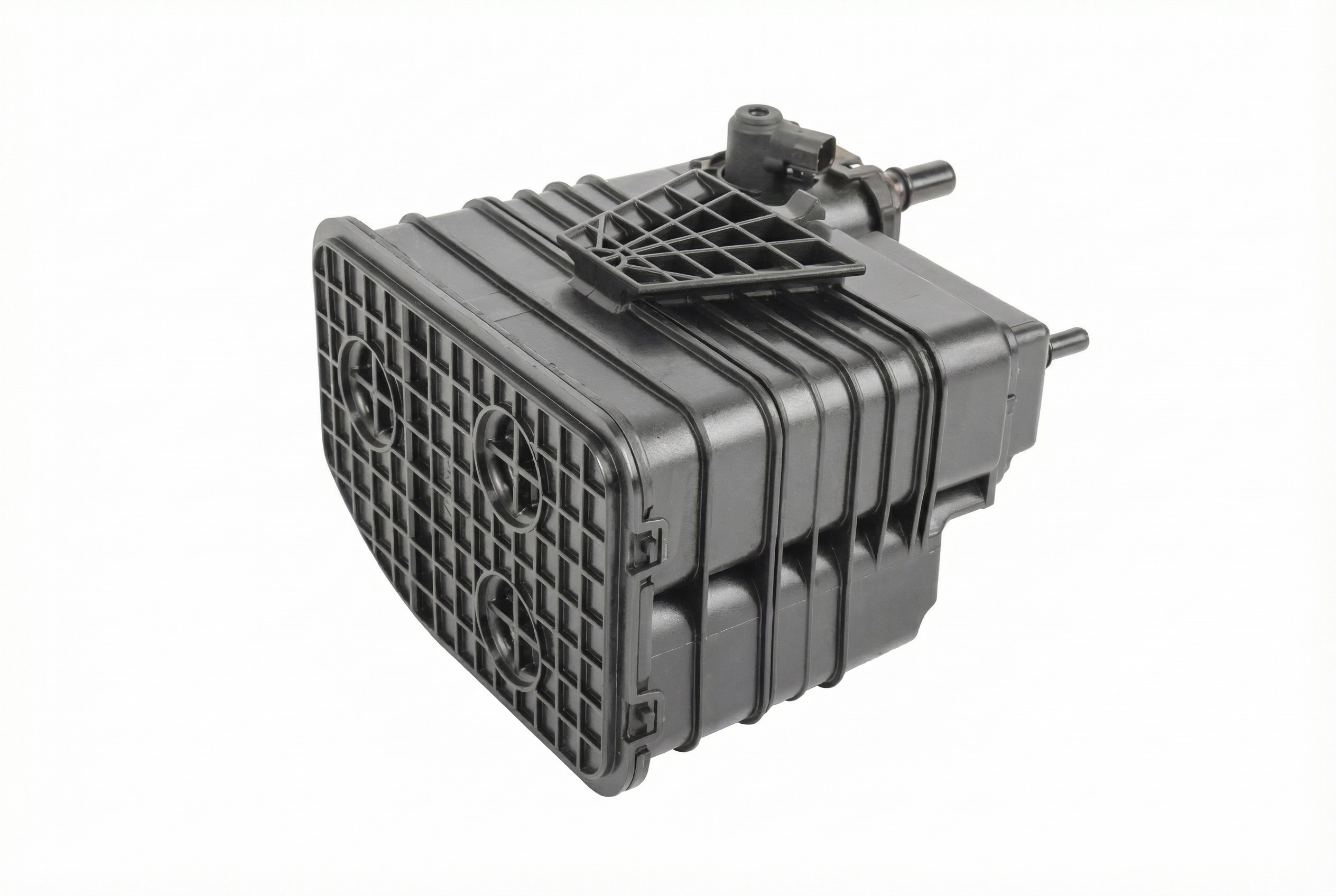
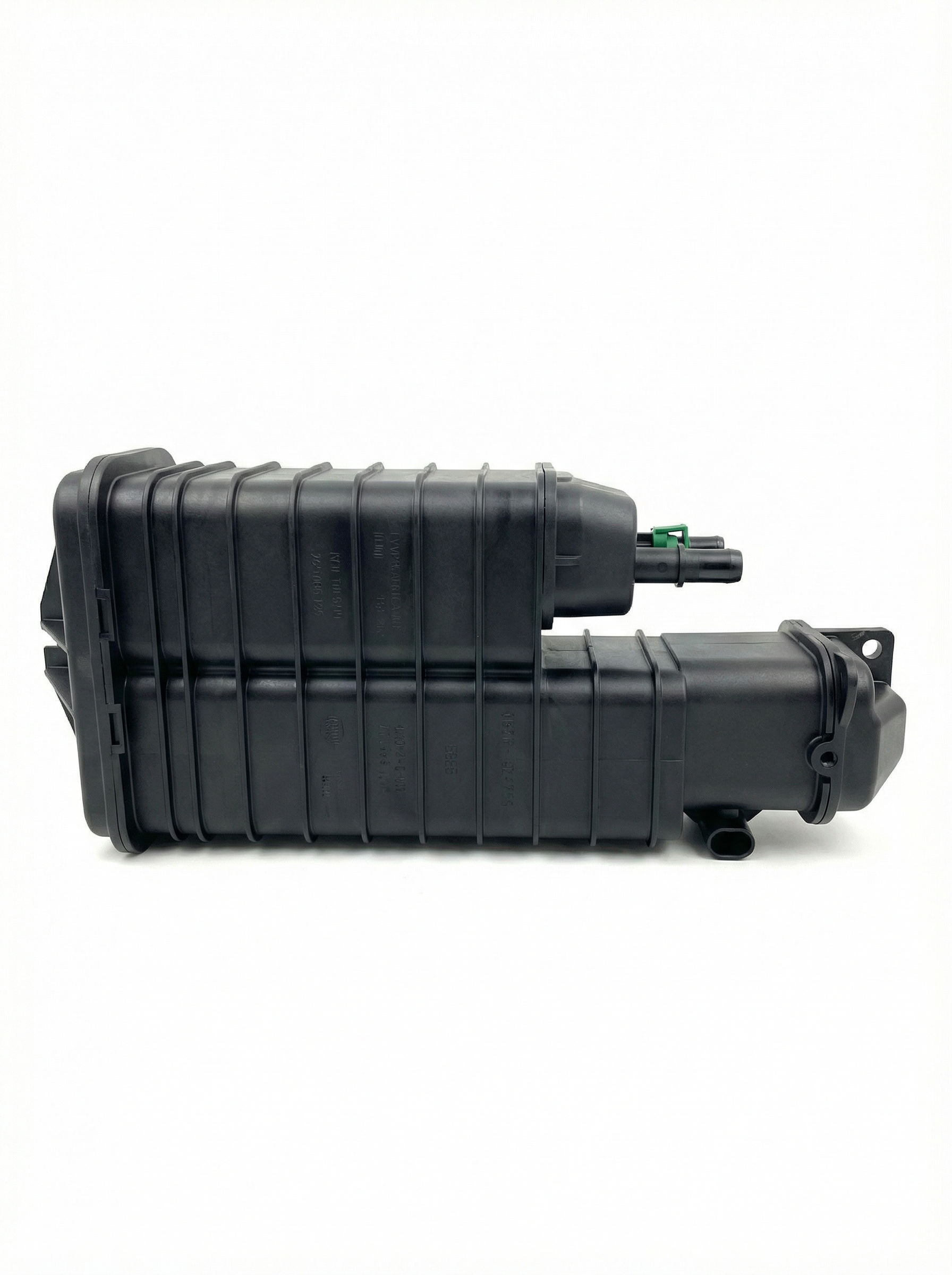
- Leaking Charcoal Canister: The plastic housing of the charcoal canister can develop hairline cracks over time, causing a small leak. This is less common than valve failures but should be checked with a smoke test if other components are good.
- Faulty Fuel Tank Pressure Sensor: A faulty sensor can incorrectly report a leak to the ECM when one doesn't exist. This is rare, but a possibility if a smoke test shows no leaks. The sensor's reading can be monitored with a capable scan tool during a smoke test to verify its function.
- Leaking Fuel Filler Neck: Corrosion or damage to the fuel filler neck where the gas cap seals can prevent a proper seal, even with a new cap. A visual inspection and cleaning of the sealing surface is recommended.
Diagnosis Steps

- Check the gas cap. Remove it, inspect the seal for cracks, and retighten it until it clicks multiple times. Clear the code and drive for a few days to see if it returns.
- If the code returns, perform a visual inspection of all accessible EVAP hoses and lines, particularly the line connecting to the purge valve on the engine cover/intake manifold, for any obvious cracks or disconnections.
- Locate the EVAP purge valve on the intake manifold (V6) or passenger side of the engine (V8). With the engine running, listen for a constant clicking sound. You can also disconnect the hose from the valve (the side going to the canister, not the intake) and feel for vacuum at idle when there shouldn't be any.
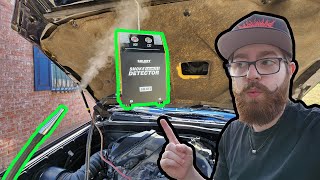
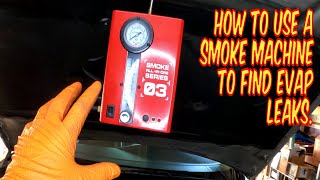
- If the gas cap and purge valve seem okay, the definitive next step is a smoke test. This involves feeding low-pressure smoke into the EVAP service port. Smoke will exit from any leak point, making it easy to find.
- While the smoke test is running, pay close attention to the purge valve, vent valve (above the rear differential), charcoal canister, fuel filler neck, and all connecting lines.
- Use a bi-directional scan tool to command the vent valve to close during the smoke test. If smoke appears from the vent valve area only when it's commanded closed, the valve is faulty and needs replacement.
- If no leaks are found with a smoke test, investigate the fuel tank pressure sensor for correct operation by monitoring its data on a scan tool.
Parts You'll Likely Need

- Gas Cap
(OEM #ACDelco GT329 (5th Gen))— This is the most frequent and cheapest first step for a P0442 code due to a worn seal or improper tightening.
Trusted brands: ACDelco, Duralast, Gates
OEM price range: $25-$40
Aftermarket price range: $15-$25 - Vapor Canister Purge Valve / Solenoid
(OEM #ACDelco 12690512 (2012-15 V6); ACDelco 214-1680 (V8); ACDelco 12630282 (2016+))— This valve cycles frequently and is a common failure point that gets stuck open, causing a small leak. It is a very common DIY fix. Part numbers vary by engine and year.
Trusted brands: ACDelco, Dorman, Standard Motor Products
OEM price range: $40-$90
Aftermarket price range: $30-$60
Related Codes That Often Appear With This One
- P0455 — P0455 indicates a large EVAP leak. If a small leak (P0442) worsens, or if there are multiple leaks, both codes can appear. TSB #21-NA-124 addresses diagnostics for both codes together.
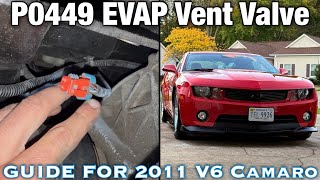
- P0449 — P0449 specifically points to a fault in the EVAP vent valve solenoid circuit. If you see P0449 along with P0442, the vent valve or its wiring is almost certainly the problem.
- P0496 — P0496 indicates 'EVAP Flow During a Non-Purge Condition'. This code strongly points to a purge valve that is stuck open. If seen with P0442, the purge valve should be the primary suspect.
Technical Service Bulletins (TSBs) & Recalls
- 21-NA-124: Provides diagnostic tips for finding leaks that cause P0442 and/or P0455. It advises a specific diagnostic order: 1) Check all EVAP lines for proper seating and damage. 2) Investigate the vent valve for a stuck open position. 3) Investigate the purge valve.
- PIT4943D: Directs technicians to review a specific Techlink article from May 2013 titled "Using the Evaporative Emissions System Tester" for diagnosing P0442, emphasizing the need for proper smoke testing procedures.
Platform-Specific Known Issues
- Vent Valve Location: On both 5th and 6th generation Camaros, the EVAP vent valve is located above the rear differential. This makes replacement more difficult than on other vehicles, sometimes requiring the exhaust or rear subframe to be lowered for access. This difficulty leads many owners to have a shop perform the replacement even though the part is inexpensive.
- Remote Start Disabled: A common secondary complaint from Camaro owners with a P0442 code is that the factory remote start system is automatically disabled whenever the Check Engine Light is illuminated. Restoring normal operation is an extra incentive to fix the EVAP leak promptly.
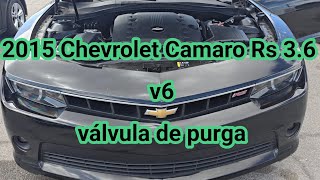
- Purge Valve on V6 (LFX): For the 3.6L V6 LFX engine (2012-2015), the purge valve is extremely easy to access, located directly on top of the intake manifold under the plastic engine cover. Replacement is a 10-minute job requiring only a 10mm socket, making it a highly recommended DIY fix before exploring more complex causes.
Mechanic-Grade Diagnostic Values
- EVAP System Test Conditions — expected: Ignition voltage between 11-18 volts; Barometric pressure > 75 kPa; Engine Coolant and Intake Air Temperature at startup between 4-30°C (39-86°F); Fuel tank level between 20-85%.. Failure: The EVAP monitor will not run if these conditions are not met, preventing the system from self-testing and potentially masking a problem.
Scan Tool Commands That Help
- GDS2 (GM Global Diagnostic System 2): EVAP Service Bay Test — This function forces the EVAP monitor to run in a service bay, allowing a technician to verify a repair without having to perform a full drive cycle. It pressurizes the system and monitors for leaks. However, GM disabled this feature on some model years due to accuracy issues, so its availability may vary.
- GDS2 (GM Global Diagnostic System 2): EVAP Purge/Seal — Used during a smoke test to command the purge valve and vent valve solenoids on and off. This allows a technician to isolate components and confirm if they are sealing correctly or are stuck.
Wiring & Ground Locations
- EVAP Canister Purge Solenoid Valve — On the V6, it is on the passenger side of the engine, under the decorative engine cover. On the V8 (L99/LS3), it is on the right rear of the engine.. This is a primary failure point. Knowing its location is key for inspection and replacement.
- EVAP Canister Vent Solenoid Valve — Located above the rear differential on 5th generation models.. This is another primary failure point. Its location makes it difficult to access and susceptible to road debris and moisture, leading to failure.
- Fuel Tank Pressure Sensor — Located on the top of the fuel tank.. This sensor provides the pressure readings to the ECM for the EVAP test. A faulty sensor can give false readings, though it usually sets its own code.
- Engine Harness Grounds — There are multiple grounds, including at the back of each cylinder head and on the side of the block on the passenger side.. A poor ground connection to the ECM or EVAP components can cause erratic behavior or failure of the solenoids to actuate correctly, potentially mimicking a leak.
Real Owner Repair Stories
- Camaro5 Forums (2012 Camaro SS L99) — Check Engine Light with P0442, remote start disabled.
❌ Tried (didn't work) Tightening the gas cap and clearing the code (light returned after a few days).
✅ What actually fixed it The user was advised by others that a smoke test was the next logical step to find the leak, with the vent or purge solenoid being the likely culprit. The thread highlights the common diagnostic path owners take. - YouTube (No-Nonsense Knows) (General GM vehicle, but demonstrates a common scenario applicable to the Camaro.) — P0442 small leak code.
❌ Tried (didn't work) A full smoke test of the EVAP system which showed no external leaks.
✅ What actually fixed it The purge valve was faulty. Even though it was not leaking externally (which a smoke test would show), it was not sealing properly against engine vacuum, causing a leak to be detected by the system during its self-test. The fix was to replace the purge valve.
"I Checked Everything" — The Actual Cause
- In some cases, a vehicle can pass a smoke test but still have a P0442 code. This often points to an intermittent or functional failure rather than a static leak. A common culprit is a faulty EVAP purge valve that holds pressure during a smoke test (engine off) but fails to seal properly against engine vacuum when the vehicle is running, which is when the ECM detects the leak.
OEM Part Supersession History
12610560, 12661763→12690512— Standard part evolution for improved reliability or manufacturing changes.
Heads up: While a direct replacement, always verify with VIN. This part fits a very wide range of GM vehicles.
Model Year Variations Within This Range
- 2011-2015 (5th Gen) vs 2016-2018 (6th Gen): The 6th generation Camaro is built on the lighter Alpha platform, a significant change from the 5th generation's Zeta platform. While the function of the EVAP system is the same, the physical routing of lines and the specific part numbers for components like the purge valve and vent solenoid can differ. For example, the base V6 engine changed from the LFX to the LGX, and the V8 changed from the LS3/L99 to the LT1, each with its own intake manifold and component placement.
- 2011-2013: A specific GM service bulletin mentioned that these model years could be prone to a P0442 caused by a leaking EVAP Vent Solenoid, indicating a potential batch issue or design weakness in early 5th-gen parts.
Helpful Videos
Used OEM Parts in Stock
New Aftermarket Parts Available


The information in this article is provided for general reference and educational purposes only. Vehicle specifications, procedures, and part compatibility can vary by production date, trim level, and region. Always consult your vehicle's factory service manual and verify part numbers before purchasing or performing repairs. Safety-critical components such as airbags, seat belts, and braking systems should be installed by a qualified professional.
- Chevrolet CAMARO:
- 🎬 Helpful Videos
- 🛍️ Shop This Part
- What's Unique About the 2011-2018 Chevrolet CAMARO
- Diagnostic Flowchart
- Symptoms You May Notice
- Most Likely Causes
- Rare But Worth Checking
- Diagnosis Steps
- Parts You'll Likely Need
- Related Codes That Often Appear With This One
- Technical Service Bulletins (TSBs) & Recalls
- Platform-Specific Known Issues
- Mechanic-Grade Diagnostic Values
- Scan Tool Commands That Help
- Wiring & Ground Locations
- Real Owner Repair Stories
- "I Checked Everything" — The Actual Cause
- OEM Part Supersession History
- Model Year Variations Within This Range
- 🎟️ Get 5% Off