

P0442 on 2014-2018 Chevrolet Aveo: EVAP Small Leak Causes and Fixes
The P0442 code on a 2014-2018 Chevrolet Aveo indicates a small leak in the evaporative emissions (EVAP) system. The most common and easiest fix is to inspect and tighten or replace the gas cap. If that doesn't solve it, the next likely culprits are a faulty EVAP purge or vent valve, which are known failure points on this platform.
- P0442 signifies a small leak in the EVAP (emissions) system.
- Always check the gas cap first; it's the most common and cheapest fix.
- If a new gas cap doesn't solve the issue, the EVAP purge valve or vent valve are the next most likely culprits.
- The vehicle is safe to drive, but the issue should be fixed to pass an emissions test and prevent fuel vapor loss.
- A smoke test is the most reliable professional method to find the exact location of a hard-to-see leak.
What's Unique About the 2014-2018 Chevrolet AVEO
For the 2014-2018 Chevrolet Aveo (part of the T300 generation), the P0442 code is a straightforward emissions issue without major platform-specific complexities. This vehicle is a platform-mate with the Chevrolet Sonic sold in North America, and they share the same core EVAP components and common failures. Like many GM vehicles, the primary causes are consistent: the gas cap, purge valve, and vent valve. A Technical Service Bulletin (TSB #21-NA-124) was issued for a wide range of GM vehicles including the 2014 model year, providing diagnostic guidance for finding EVAP leaks related to codes P0442 and P0455, confirming this is a known issue for the manufacturer.
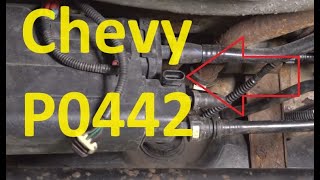
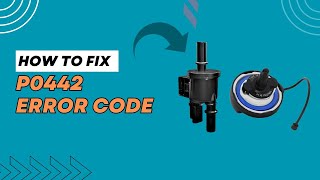
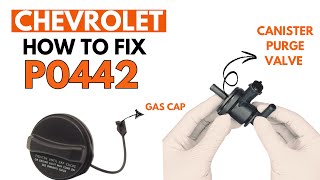
🎬 Watch: A complete guide to fixing P0442 on your Chevrolet.Diagnostic Flowchart
Tap your situation to follow the diagnostic path that matches what you're seeing on this vehicle.
Symptoms You May Notice
- Check Engine Light is on
- A faint smell of gasoline, particularly around the rear of the car or in a garage.
- Slightly reduced fuel economy over time
- Difficulty starting the engine immediately after refueling (classic sign of a stuck-open purge valve).
- A 'tighten fuel cap' message on the driver information center, if equipped.
- Slightly rough or surging idle.
- Replacing the oxygen (O2) sensors. O2 sensors are not part of the EVAP system and will not cause a P0442 code.
- Replacing the fuel tank pressure (FTP) sensor. While an FTP sensor can fail, it usually produces a different trouble code related to sensor performance (e.g., P0451, P0452, P0453), not a small leak.
Most Likely Causes
- Loose or Faulty Gas Cap 🔴 High Probability The gas cap seal is a simple rubber O-ring that can dry out, crack, or get dirty over time, preventing a proper seal. This is the most frequent cause for P0442 across all vehicles. Forum users often report a visibly dry-rotted and cracked O-ring as the first thing they notice.
How to confirm: Check that the gas cap clicks when tightened. Remove the cap and inspect the rubber seal for any cracks, stiffness, or debris. A greasy, black residue around the fuel filler neck can also indicate a poor seal. Some owners also recommend cleaning any rust or corrosion from the filler neck itself to ensure a good seal.
Typical fix: First, try cleaning the seal and retightening the cap. If the seal is damaged or the code returns, replace the gas cap with a new OEM-equivalent part. It is often recommended to use an OEM cap as some aftermarket caps may not seal correctly.
Est. part cost: $10-$25 - Faulty EVAP Purge Valve (Solenoid) 🟡 Medium Probability The purge valve is an electronic solenoid that can get stuck open or closed, or develop a small internal leak over time. This is a common failure point on many modern GM vehicles, including the Aveo/Sonic platform.
How to confirm: The purge valve is typically located on the engine intake manifold. With the engine off, you can remove the valve and try to blow through it; it should be closed and not allow air to pass. A hard start after refueling is a classic symptom of a purge valve stuck open, as it allows fuel vapors to flood the engine. On a Sonic forum, a user confirmed their P0442 was resolved by replacing a purge valve that was stuck open.
Typical fix: Replacement of the purge valve assembly. This is generally an easy DIY job.
Est. part cost: $25-$60 - Faulty EVAP Vent Valve (Solenoid) 🟡 Medium Probability Located near the charcoal canister under the car, this valve is exposed to road debris and moisture, which can cause it to fail or clog with dust. GM has issued service bulletins for other models regarding vent valve failures causing P0442.
How to confirm: The valve is normally open. A scan tool can command it closed to test for leaks. A visual inspection may reveal cracks or damage. Testing often requires a smoke machine to see if the valve is leaking when it's commanded shut. If the car is difficult to fill with gas, it can point to a blocked vent path.
Typical fix: Replacement of the vent valve solenoid. This is often sold as an assembly with the charcoal canister.
Est. part cost: $30-$70 - Cracked or Disconnected EVAP Hoses ⚪ Low Probability The plastic and rubber hoses that make up the EVAP system can become brittle and crack with age and exposure to heat and cold cycles. The lines near the engine are particularly susceptible.
How to confirm: Visually inspect all accessible EVAP lines running from the fuel tank to the charcoal canister and up to the engine. Look for obvious cracks, especially at connection points and bends. A smoke test is the most effective way to find a small hose leak.
Typical fix: Replace the damaged section of hose or the entire hose assembly. A common part is the vapor canister purge valve hose.
Est. part cost: $5-$50
Rare But Worth Checking
- Cracked Charcoal Canister: The canister itself can develop a hairline crack from road debris impact or age, causing a leak. This is less common than valve or hose failures but should be inspected if other causes are ruled out, especially after a smoke test.
- Leaking Fuel Tank Filler Neck: Corrosion can form on the metal filler neck where the gas cap seals, creating an uneven surface that prevents a proper seal even with a new cap. One owner on a forum noted that after replacing multiple parts, a loose filler neck was found and fixed by the dealer. Cleaning the filler neck with a wire brush is a recommended diagnostic step.
- Broken Fuel Filler Inlet Flap: On capless systems (not standard on all Aveos but relevant to the platform), the interior flap that seals the tank can break or fall in, preventing a seal. A Sonic owner reported this issue occurring along with P0442 and P0496 codes.
Diagnosis Steps
- Read the code with an OBD-II scanner to confirm P0442 is the primary code. Note any other codes like P0455 or P0496.
- Inspect the gas cap. Ensure it is tight and clicks. Remove it and check the seal for cracks or damage. Clean the filler neck sealing surface. If in doubt, it's an inexpensive first part to replace with an OEM cap.
- Clear the code and drive for a few days to see if it returns. Some vehicles require a specific drive cycle to re-run the EVAP monitor.
- If the code returns, perform a visual inspection of all visible EVAP hoses and lines between the engine bay and the fuel tank. Look for any obvious cracks, breaks, or loose connections, especially at elbows and connectors.
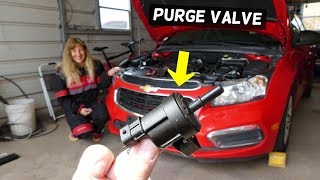
- Locate and test the EVAP purge valve in the engine bay, typically on the intake manifold. With the valve disconnected and engine off, it should not allow air to pass through. Also, check for hard starting after refueling, which points to this valve being stuck open.
- Locate the EVAP vent valve and charcoal canister near the fuel tank (under the rear of the car). Inspect them for any physical damage or cracks.
- If the leak is not visually apparent, the most effective method is to use a smoke machine. This tool fills the EVAP system with a harmless, visible smoke, making it easy to spot the source of the leak from a hose, valve, or the canister itself.
Parts You'll Likely Need
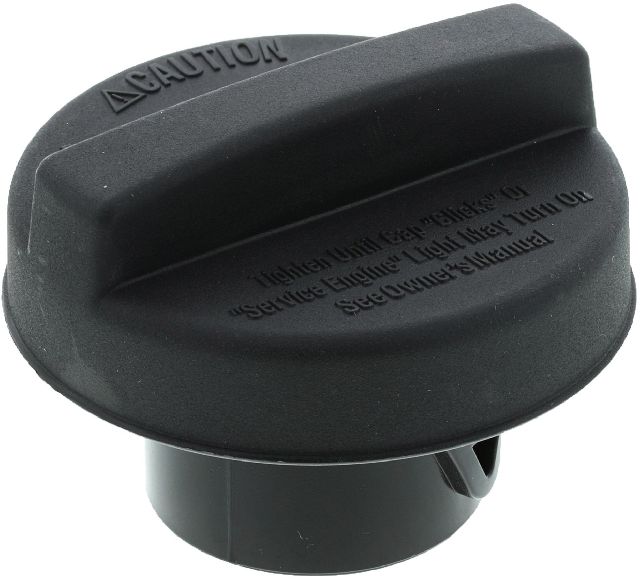
- Fuel Cap
(OEM #ACDelco GT288 (or equivalent))— This is the most common failure point due to the rubber seal wearing out, causing an improper seal.
Trusted brands: ACDelco, Stant
OEM price range: $20-$35
Aftermarket price range: $10-$25 - EVAP Canister Purge Valve
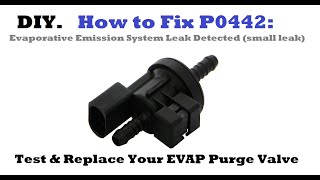
(OEM #ACDelco 214-2137 (GM 55567453))— This valve frequently gets stuck or fails internally, creating a small leak. It's a common cause after the gas cap has been ruled out and is a known issue on the Sonic/Aveo platform.
Trusted brands: ACDelco, Bosch, Dorman
OEM price range: $40-$70
Aftermarket price range: $25-$60 - EVAP Canister Vent Valve Solenoid
(OEM #ACDelco 214-2324 (GM 13575703))— Its location under the car makes it susceptible to dirt and moisture, which can cause it to stick open and fail the system's leak test.
Trusted brands: ACDelco, Dorman
OEM price range: $30-$50
Aftermarket price range: $20-$40
Related Codes That Often Appear With This One
- P0455 — This code indicates a large EVAP leak. If a small leak (P0442) worsens, or if the gas cap is left off entirely, the system may register a P0455 instead or in addition. TSB 21-NA-124 specifically addresses both codes.
- P0441 — This code indicates incorrect purge flow. It can appear alongside P0442 if the purge valve is malfunctioning, causing both a leak and improper flow.
- P0496 — This code indicates EVAP High Purge Flow, often caused by a purge valve stuck open. A Sonic owner reported having both P0496 and P0442 simultaneously, pointing strongly to a faulty purge valve.
Technical Service Bulletins (TSBs) & Recalls
- 21-NA-124: Provides diagnostic tips for technicians on testing for EVAP leaks related to DTCs P0442 and/or P0455. It advises checking line connections first, then the vent valve for being stuck open, and finally the purge valve.
Platform-Specific Known Issues
- source — A user on the SonicOwnersForum reported a persistent P0442 code for over a year despite having the system smoke tested with no leaks found. The issue was ultimately resolved by replacing the purge valve solenoid, which was found to be stuck open. This highlights that even without a visible leak during a smoke test, a malfunctioning valve can be the root cause.
- source — On a Chevrolet Aveo forum, a user described getting a P0442 code and immediately suspecting the gas cap. They noted the O-ring was visibly 'dry rotted and cracked' and that they had noticed a 'greasy, black' residue around the fuel filler neck for a long time, which are classic signs of a failed cap seal.
Mechanic-Grade Diagnostic Values
- Fuel Tank Pressure (FTP) Sensor Signal Voltage — expected: 0.1V (high pressure) to 4.9V (low pressure/vacuum). Failure: Voltage outside of this range, or a reading that doesn't change when pressure/vacuum is applied, may indicate a faulty sensor. Note that other codes like P0451-P0453 are more common for a direct sensor failure.
- EVAP Vent Valve Solenoid Coil Resistance — expected: ~23 Ohms. Failure: A reading of infinite resistance (open circuit) or zero resistance (short circuit) indicates a failed solenoid coil.
- EVAP Purge Valve Functional Test (Mechanical) — expected: With the valve de-energized (unplugged), no air should pass through it.. Failure: If you can blow air through the valve when it is unplugged, it is stuck open and must be replaced.
- EVAP Purge Valve Functional Test (Electrical) — expected: Applying 12V and ground to the two pins should produce an audible click as the solenoid opens.. Failure: No click indicates a failed solenoid. This test confirms the coil works, but does not confirm the valve seals properly.
Scan Tool Commands That Help
- GDS2 / Professional Scan Tool: EVAP System Test / Output Control — A scan tool with bidirectional controls is essential for a proper diagnosis. It allows the technician to command the EVAP purge and vent valves open or closed independently. For a smoke test, the technician will command the vent valve closed to seal the system, then introduce smoke to find the physical leak.
Wiring & Ground Locations
- Fuse F15 (Underhood) — In the underhood fuse box, the fuse at position 15 is for the EVAP Vent Solenoid Valve.. This 10A fuse provides power to the vent solenoid. If this fuse is blown, the vent valve cannot be commanded closed, which will cause the EVAP leak test to fail and may set various EVAP codes.
- G104 — Located at the rear of the cylinder bank.. This is a primary engine ground point. A poor connection here can cause erratic behavior for various engine sensors and actuators, including those in the EVAP system.
- G102 — Located at the left rear of the engine compartment.. Another critical engine ground. Intermittent or poor grounding can lead to incorrect sensor readings and actuator failures, potentially mimicking leak symptoms.
Real Owner Repair Stories
- Sonic Owners Forum user 'sarrm' (2012 Chevy Sonic LS hatchback, 85,000km) — Persistent P0442 code for about a year.
❌ Tried (didn't work) Clearing the code (it would return), Smoke test (came back with no leaks)
✅ What actually fixed it Replacing the EVAP purge valve solenoid, which was found to be stuck open. - Reddit user 'brinalee_' (2017 Chevy Sonic LT) — Code for a bad purge valve; new replacement parts would not physically connect securely.
❌ Tried (didn't work) Installing a new aftermarket purge valve (would not click into place on the fuel line), Returning the first part and trying a second aftermarket purge valve from a different brand (also would not click into place)
✅ What actually fixed it Purchasing an OEM purge valve from a GM dealer. The dealer part fit correctly and clicked securely into place immediately, resolving the issue. The problem was a subtle manufacturing difference in the aftermarket parts.
"I Checked Everything" — The Actual Cause
- A known failure pattern for P0442 on this platform is a faulty purge valve solenoid, even if a smoke test shows no leaks. A user on the Sonic Owners Forum reported having a smoke test come back clean, but the P0442 code persisted for a year. The final fix was replacing the purge valve, which was stuck open. This happens because a stuck-open purge valve allows smoke to flow directly into the intake manifold, which can be mistaken for normal system operation if the technician isn't specifically testing the valve's sealing ability.
OEM Part Supersession History
55567453 (Purge Valve)→28289971— Standard part revision by the manufacturer.10293954, 10337458, 20761332 (Vent Valve)→13575703— Standard part consolidation and revision by the manufacturer.
Model Year Variations Within This Range
- 2014-2018 (Turbocharged Engines): Vehicles with the 1.4L turbocharged engine have an additional one-way check valve in the purge tube between the purge solenoid and the EVAP canister. This valve prevents boost pressure from the turbo from pressurizing the EVAP system. Its presence means the system cannot be pressure-tested for leaks by applying pressure at the EVAP canister purge tube connector in the engine bay, as the check valve will block the flow.
Helpful Videos
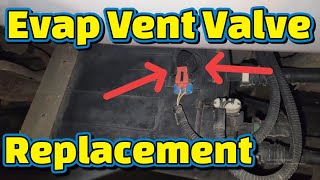
We Have This Part in Stock


The information in this article is provided for general reference and educational purposes only. Vehicle specifications, procedures, and part compatibility can vary by production date, trim level, and region. Always consult your vehicle's factory service manual and verify part numbers before purchasing or performing repairs. Safety-critical components such as airbags, seat belts, and braking systems should be installed by a qualified professional.
- Chevrolet AVEO:
- 🎬 Helpful Videos
- 🛍️ Shop This Part
- What's Unique About the 2014-2018 Chevrolet AVEO
- Diagnostic Flowchart
- Symptoms You May Notice
- Most Likely Causes
- Rare But Worth Checking
- Diagnosis Steps
- Parts You'll Likely Need
- Related Codes That Often Appear With This One
- Technical Service Bulletins (TSBs) & Recalls
- Platform-Specific Known Issues
- Mechanic-Grade Diagnostic Values
- Scan Tool Commands That Help
- Wiring & Ground Locations
- Real Owner Repair Stories
- "I Checked Everything" — The Actual Cause
- OEM Part Supersession History
- Model Year Variations Within This Range
- 🎟️ Get 5% Off