

P0442 on 2005-2011 Cadillac STS: Causes and Fixes for a Small EVAP Leak
On the 2005-2011 Cadillac STS, a P0442 code is most often caused by a loose or faulty gas cap. Before suspecting other parts, always check that the cap is tight and the seal is intact. A new OEM gas cap is an inexpensive first step if the original is worn. If the cap isn't the issue, the next most common culprits are the EVAP purge and vent solenoids.
- P0442 signifies a small leak in the EVAP emissions system.
- Always start with the simplest fix: check that the gas cap is tight. If it's old, replace it.
- The next most likely culprits are the EVAP purge valve (on the engine) and the vent valve (near the tank).
- While the code doesn't indicate a critical engine problem, it will cause an automatic failure on an emissions test.
- For leaks that aren't obvious, a professional smoke test is the fastest way to find the source.
What's Unique About the 2005-2011 Cadillac STS
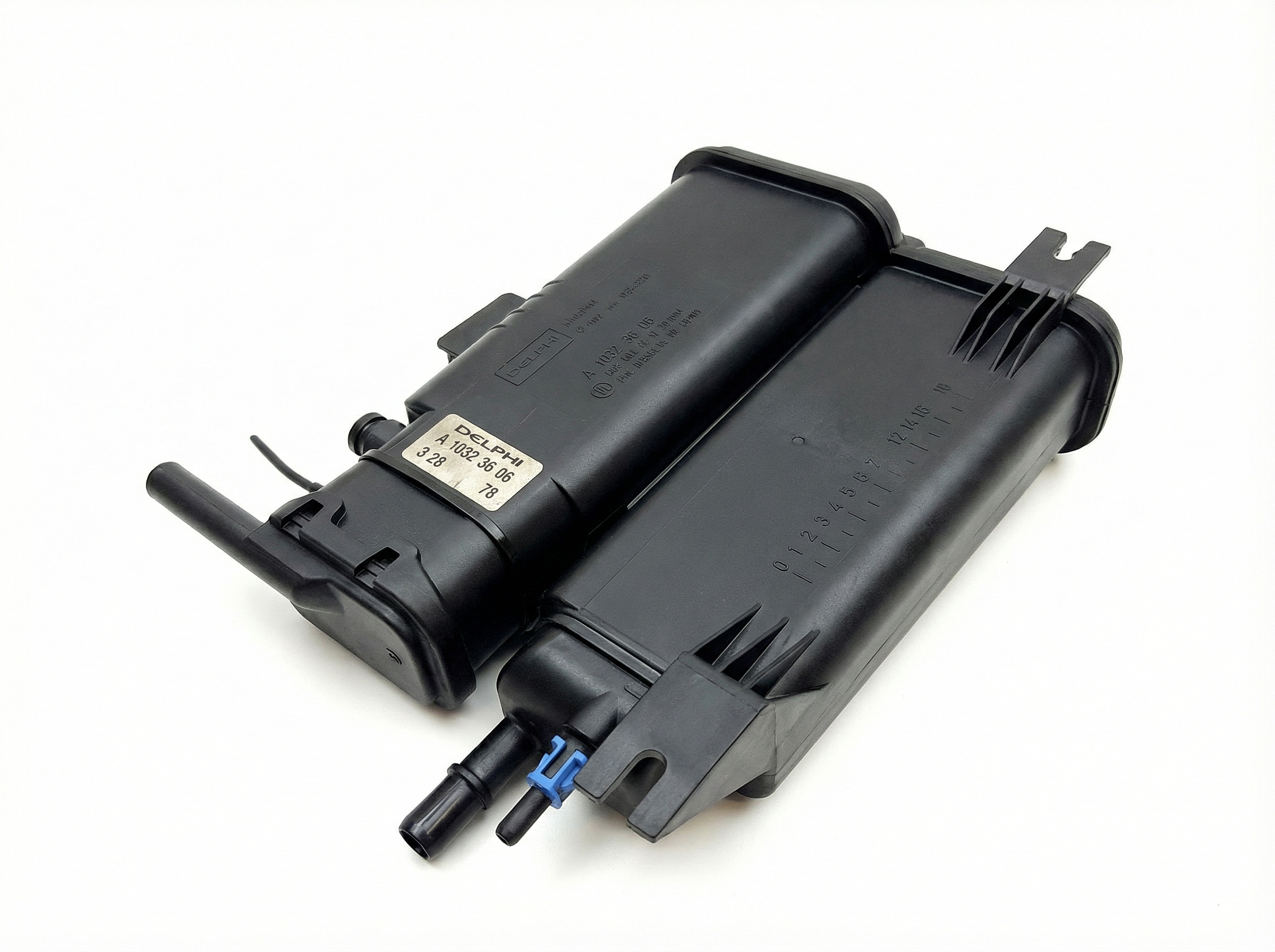
For this generation of Cadillac STS and other contemporary GM vehicles on the Sigma platform, the EVAP system components are common points of failure as the vehicles age. While the gas cap is a universal suspect for this code, parts like the purge and vent solenoids are extremely frequent culprits. Two Technical Service Bulletins (TSBs) have been issued by GM that address diagnostics for this specific code, indicating it's a recognized issue that requires a methodical approach to diagnose. The location of the vent solenoid, often above the rear differential, makes its replacement a significantly more involved job than on many other vehicles.
Diagnostic Flowchart
Tap your situation to follow the diagnostic path that matches what you're seeing on this vehicle.
Symptoms You May Notice
- Check Engine Light is on
- A faint smell of fuel, particularly around the rear of the car or gas cap area
- Difficulty starting the car immediately after refueling (a symptom of a stuck-open purge valve).
- Failing a state emissions inspection.
- Replacing the oxygen sensor. O2 sensors are not related to the EVAP system.
- Replacing the purge valve without testing it first. While a common cause, a simple vacuum test can confirm if it's actually bad.
- Replacing the vent solenoid without a smoke test. This can be a costly and labor-intensive mistake if the leak is elsewhere.
Most Likely Causes
- Loose or Faulty Gas Cap 🔴 High Probability The gas cap seal is made of rubber and can dry out, crack, or become worn over time, preventing a proper seal. It's the most common and simple failure point in the EVAP system.
How to confirm: Inspect the gas cap for any visible cracks or damage to the rubber O-ring. Ensure it clicks several times when tightened. If the cap looks old or worn, replacement is a simple and inexpensive diagnostic step.
Typical fix: Replace the gas cap with a new OEM or high-quality aftermarket part. OEM is often recommended as some aftermarket caps may not seal correctly.
Est. part cost: $15-$50 - Faulty EVAP Purge Solenoid/Valve 🟡 Medium Probability The purge valve, located on the engine, can get stuck open or closed, causing a leak or flow issue in the EVAP system. This is a very common failure point on many GM vehicles of this era.
How to confirm: The valve is located on the driver's side of the intake manifold. With the engine running, disconnect the valve's electrical connector and check for vacuum at the port where the line from the canister connects. If vacuum is present, the valve is stuck open and needs to be replaced. A professional can also command the valve open and closed with a scan tool to test its function.
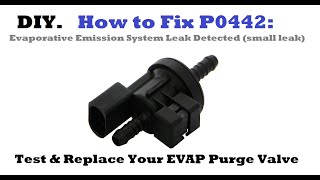
Typical fix: Replace the purge solenoid. It is located on top of the engine and is typically held by a single 10mm bolt, making it an easy 15-minute repair. 🎬 Watch this 3-minute guide to diagnose and fix the purge valve.
Est. part cost: $25-$65 - Faulty EVAP Vent Solenoid/Valve 🟡 Medium Probability Located near the fuel tank and charcoal canister, this valve can fail due to corrosion or dirt ingress from its exposed location, preventing it from sealing the system during pressure tests. A GM service bulletin mentions this part as a potential cause for P0442.
How to confirm: This part is difficult to access, often located above the rear differential. A mechanic will use a scan tool to command the valve closed and then use a smoke machine to see if smoke escapes from the vent valve, indicating a leak. Due to the high labor cost of replacement, a smoke test is highly recommended before replacing this part.
Typical fix: Replace the vent solenoid assembly. This repair often requires lowering the exhaust and potentially the rear differential to gain access, making it a job for a professional or experienced DIYer. 🎬 See how to replace the vent valve solenoid on this platform.
Est. part cost: $40-$100 - Cracked or Disconnected EVAP Hoses ⚪ Low Probability Rubber and plastic hoses throughout the EVAP system can become brittle and crack with age and exposure to heat and elements, especially at connection points.
How to confirm: A visual inspection may reveal obvious cracks or loose connections, particularly in the engine bay near the purge solenoid. However, small leaks are often found using a smoke machine, which fills the EVAP system with a visible vapor to pinpoint the exact location of the leak.
Typical fix: Replace the damaged section of hose or secure a loose connection.
Est. part cost: $10-$30
Rare But Worth Checking
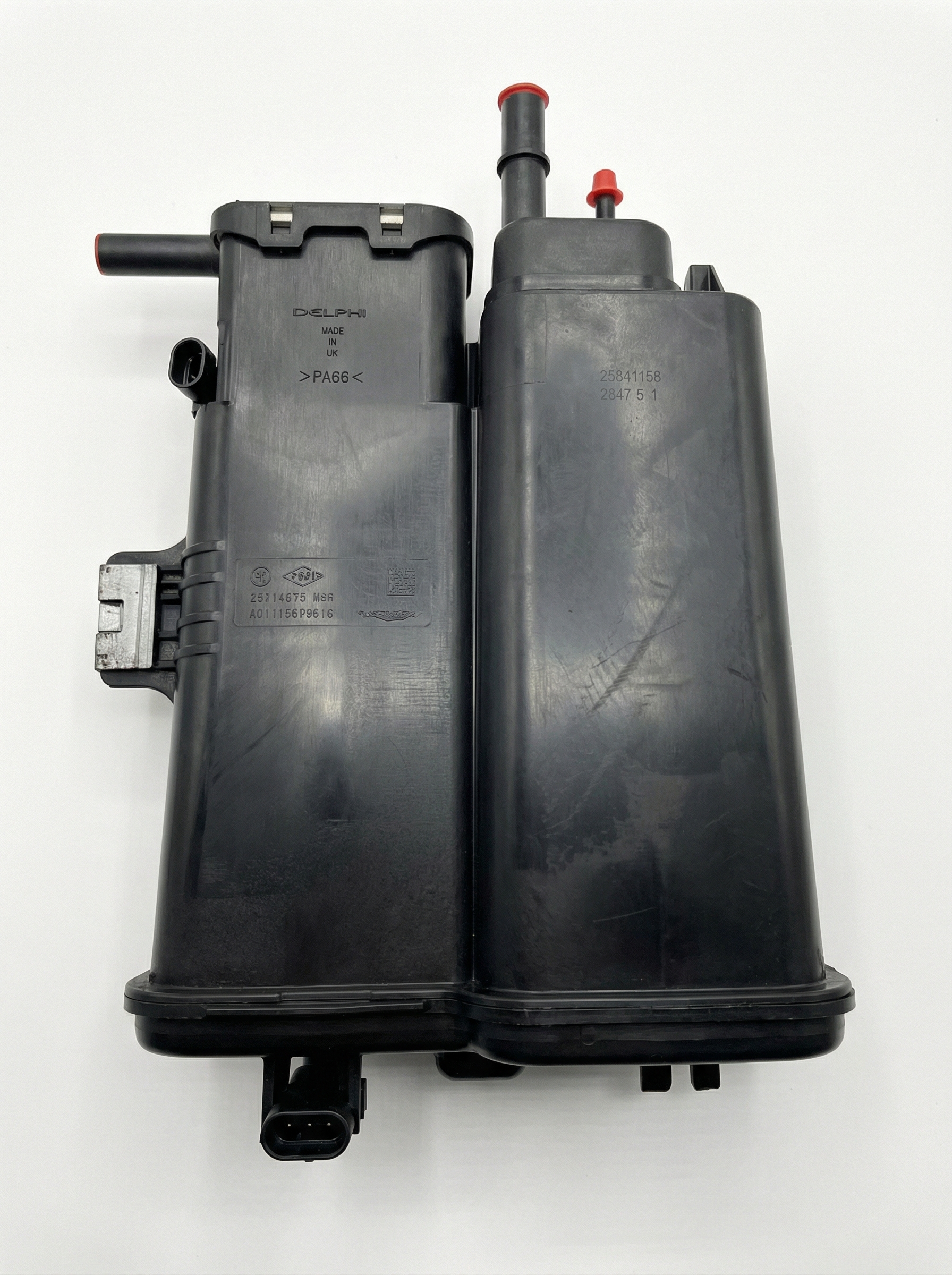
- Cracked Charcoal Canister: The plastic housing of the charcoal canister can develop hairline cracks from age or road debris impact, creating a leak. This is usually found with a smoke test after other common causes are ruled out.
- Leaking Fuel Tank or Filler Neck: Corrosion on the fuel filler neck where the gas cap seals, or a crack in the fuel tank itself, can cause a P0442 code. A leak from the filler neck is sometimes visible as a fuel stain or drip during refueling.
Diagnosis Steps
- Check for any other stored trouble codes with an OBD-II scanner.
- Inspect the gas cap. Remove it, check the seal for cracks or damage, and reinstall it, ensuring it clicks several times.
- If the gas cap is old or the seal is questionable, replace it with an OEM part (ACDelco is recommended), clear the code, and drive for a few days to see if the light returns.
- If the code returns, visually inspect all accessible EVAP hoses in the engine bay for obvious cracks or disconnections, especially the lines connected to the purge solenoid.
- Locate the EVAP purge solenoid on the driver's side of the engine intake. With the engine running, disconnect the electrical plug and the vapor line. Feel for vacuum on the valve's port. If vacuum is present, the valve is stuck open and must be replaced.
- If the above steps do not reveal the issue, the leak is likely in the rear of the vehicle (vent valve, canister, hoses, or tank). At this point, a smoke test is the most effective diagnostic method. This involves connecting a smoke machine to the EVAP service port and filling the system with vapor to find the source of the leak. 🎬 Watch a pro find a small EVAP leak using a smoke machine.
- Based on the smoke test results, replace the faulty component (e.g., vent solenoid, charcoal canister, or hose).
Parts You'll Likely Need
- Fuel Tank Cap
(OEM #19436184)— This is the most common and easiest fix. The seal wears out over time, causing a small leak.
Trusted brands: ACDelco, Stant
OEM price range: $25-$40
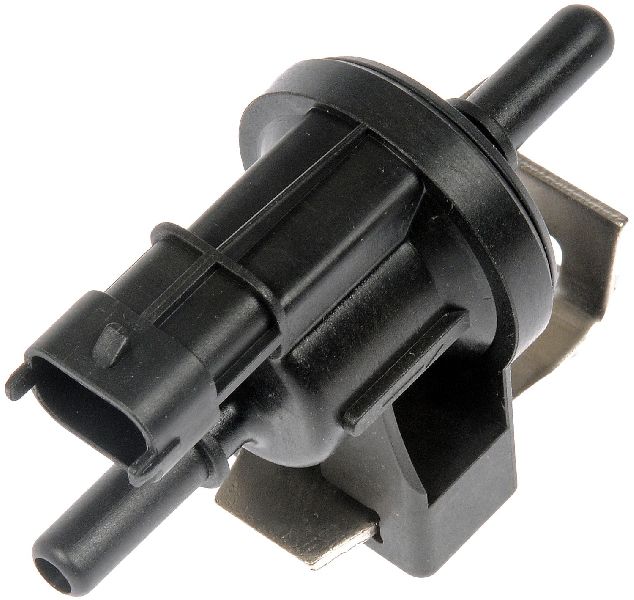
Aftermarket price range: $15-$25 - Vapor Canister Purge Solenoid
(OEM #12610560)— A very common failure point on GM vehicles of this era. The valve sticks open, creating a constant small leak in the system.
Trusted brands: ACDelco (p/n 214-2149), Standard Motor Products, Delphi
OEM price range: $40-$65
Aftermarket price range: $25-$50 - Vapor Canister Vent Solenoid
(OEM #25950499)— This valve, located near the tank, fails due to exposure to road debris and moisture, preventing the system from sealing for its self-test.
Trusted brands: ACDelco (p/n 214-2142), Dorman (p/n 911-070)
OEM price range: $60-$100
Aftermarket price range: $40-$75
Related Codes That Often Appear With This One
- P0455 — This code indicates a 'Large EVAP Leak'. If the leak that triggers a P0442 gets worse, or if a component fails completely (like a disconnected hose), it can eventually be flagged as a P0455. TSB #21-NA-124 provides diagnostic steps for both codes together.
- P0496 — This code means 'EVAP Flow During a Non-Purge Condition', which is almost always caused by a purge valve that is stuck open. A stuck-open purge valve is also a type of leak, which can trigger a P0442 as well.
Technical Service Bulletins (TSBs) & Recalls
- Bulletin #21-NA-124: Provides diagnostic tips for EVAP leaks causing DTCs P0442 and/or P0455. It advises a chronological investigation: check lines and connections first, then test the vent valve, and finally test the purge valve.
Platform-Specific Known Issues
- Real-World Repair Story: An owner on CadillacForums.com reported chasing a P0442 code on their 2006 STS. After a new gas cap didn't solve the issue, they replaced the easily accessible purge solenoid on the engine (a 15-minute job), which fixed the problem. Another owner with the same code on an '08 STS was not so lucky; a professional smoke test revealed their leak was from the vent solenoid. The repair required lowering the rear differential for access and cost several hundred dollars in labor, highlighting the importance of proper diagnosis before replacing the vent solenoid.
Mechanic-Grade Diagnostic Values
- Fuel Tank Pressure (FTP) Sensor Voltage — expected: Approximately 1.5 volts with the engine off and fuel cap removed (at atmospheric pressure).. Failure: A voltage that is stuck at 1.5V even when vacuum is applied to the system, or a voltage that does not rationally correspond to the pressure/vacuum in the tank.
Scan Tool Commands That Help
- Tech2 / Professional Scan Tool: EVAP Service Bay Test / Purge/Seal — This function allows the technician to command the EVAP solenoids and observe the system's reaction. For a P0442, a technician would command the vent solenoid closed and the purge solenoid open to see if the system can build vacuum, watching the FTP sensor voltage drop from ~1.5V.
- Tech2 / Professional Scan Tool: Vent Solenoid Control — Used to command the normally-open vent solenoid to the closed position ('Not Venting'). This seals the system and is the first step before performing a smoke test to find a leak.
Wiring & Ground Locations
- G100 / G106 — On the rear side of the right cylinder head.. A poor engine ground can cause erratic signals and performance from various sensors and solenoids controlled by the Engine Control Module (ECM), including EVAP components.
- G101 — Near the left front strut tower, at the bottom of the inside fender well.. This is a primary chassis ground point. Corrosion or looseness here can affect multiple electronic systems, including the ECM that runs the EVAP monitor tests.
- EVAP Purge Solenoid Harness Splice — In the engine harness, approximately 27 cm (10.6 inches) from the EVAP canister purge solenoid valve connector (on 3.6L models).. Factory splices within a harness can be a potential point of corrosion or failure, leading to an intermittent connection or loss of power/signal to the purge solenoid.
Real Owner Repair Stories
- YouTube user 'CHEFMAN's How To's' (2006 Cadillac STS) — Check Engine Light with code P0496, which is often related to P0442.
✅ What actually fixed it The EVAP purge valve was stuck open. The user confirmed this by starting the engine with the valve's electrical connector unplugged and feeling for vacuum on the port. Vacuum was present, indicating a stuck valve. Replacing the purge solenoid (a 10mm bolt and two connections) resolved the issue. - YouTube user 'CHU 3 DALLAS' (2005 Cadillac STS) — Check Engine Light with code P0442.
❌ Tried (didn't work) The video implies other checks were done first, leading to the final diagnosis.
✅ What actually fixed it The EVAP vent solenoid was leaking. The mechanic replaced the vent solenoid, which required lowering the exhaust system to gain access to the part near the charcoal canister.
"I Checked Everything" — The Actual Cause
- In some cases, the EVAP system will pass a smoke test (which uses positive pressure) but still set a P0442 because a valve is leaking under vacuum, which is what the ECM uses for its self-test. A technician can diagnose this by applying vacuum directly to the purge and vent valves with a hand pump to see if they hold, or by repeatedly cycling the valves with a scan tool during a smoke test to catch an intermittent fault.
- A faulty Fuel Tank Pressure (FTP) sensor that is stuck on its baseline reading (around 1.5V) can mislead the ECM into thinking a leak is present when there is none. The ECM commands the test and expects to see a change in pressure (voltage), but if the sensor doesn't report a change, the test fails and a code is set.
OEM Part Supersession History
12610560→12737252— Standard part evolution, likely for improved reliability or manufacturing efficiency.
Model Year Variations Within This Range
- 2005-2011: No significant variations in the EVAP system's design or common P0442 failure points have been noted across this model year range. The diagnostic process for V6 and V8 engines is fundamentally the same, though component locations on the engine (like the purge solenoid) will differ slightly.
Helpful Videos

Used OEM Parts in Stock
New Aftermarket Parts Available



The information in this article is provided for general reference and educational purposes only. Vehicle specifications, procedures, and part compatibility can vary by production date, trim level, and region. Always consult your vehicle's factory service manual and verify part numbers before purchasing or performing repairs. Safety-critical components such as airbags, seat belts, and braking systems should be installed by a qualified professional.
- Cadillac STS:
- 🎬 Helpful Videos
- 🛍️ Shop This Part
- What's Unique About the 2005-2011 Cadillac STS
- Diagnostic Flowchart
- Symptoms You May Notice
- Most Likely Causes
- Rare But Worth Checking
- Diagnosis Steps
- Parts You'll Likely Need
- Related Codes That Often Appear With This One
- Technical Service Bulletins (TSBs) & Recalls
- Platform-Specific Known Issues
- Mechanic-Grade Diagnostic Values
- Scan Tool Commands That Help
- Wiring & Ground Locations
- Real Owner Repair Stories
- "I Checked Everything" — The Actual Cause
- OEM Part Supersession History
- Model Year Variations Within This Range
- 🎟️ Get 5% Off