

P0442 on 2000-2004 Cadillac Seville: EVAP Small Leak Causes and Fixes
For the 2000-2004 Cadillac Seville, a P0442 code is most often caused by a loose or worn-out gas cap. Before looking at other parts, check that the cap is tight and inspect the fuel filler neck for rust. If the light returns, a new OEM gas cap is an inexpensive first step, costing around $15-$35.
- Always start with the simplest solution: check that your gas cap is tight and its seal is in good condition.
- If you replace the gas cap, use an OEM ACDelco part for the best chance of fixing the issue.
- Do not replace any other parts until you have confirmed the location of the leak, preferably with a smoke test.
- The P0442 code does not indicate a serious mechanical problem and is safe to drive with, but it will cause you to fail an emissions inspection.
- Overfilling your gas tank after the pump clicks off can damage EVAP components like the charcoal canister and purge valve.
What's Unique About the 2000-2004 Cadillac SEVILLE
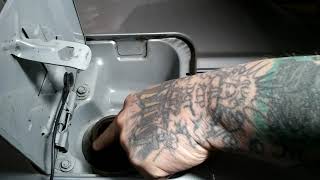
On the fifth-generation Cadillac Seville, the P0442 code is a common and well-documented issue. The primary culprits are consistent with other GM vehicles of the era, focusing on the gas cap and EVAP solenoids. A frequent point of failure specific to these and related models is rust forming on the fuel filler neck, which prevents the gas cap from creating a proper seal. What's helpful for owners of this specific model is that the locations of the most frequently failed parts—the purge solenoid in the engine bay and the vent solenoid near the rear wheel—are well-documented 🎬 Watch this specific P0442 repair walkthrough for your Cadillac. in repair guides and owner forums. GM has also issued technical service bulletins related to diagnosing these leaks, underscoring that it's a known issue requiring a systematic approach.
Diagnostic Flowchart
Tap your situation to follow the diagnostic path that matches what you're seeing on this vehicle.
Symptoms You May Notice
- Check Engine Light is on
- A faint fuel odor may be present, especially when parked in an enclosed space like a garage.
- A 'Check Gas Cap' message may appear on the driver information center (if equipped)
- Noticeable long crank time after refueling. This can happen if the purge valve is stuck open, allowing fuel vapors to flood the engine intake while you fill the tank.
- Replacing the oxygen sensors. O2 sensors are not related to the EVAP system.
- Replacing the catalytic converter. EVAP codes do not indicate a bad catalytic converter.
- Immediately replacing the purge or vent valve without performing a smoke test. The leak could be a simple cracked hose or a bad gas cap, and a smoke test is the only way to be certain of the leak's location.
Most Likely Causes
- Loose, Worn, or Incorrect Gas Cap 🔴 High Probability The gas cap's rubber o-ring is a simple seal that degrades and hardens over time. More specifically on this platform, rust and corrosion often build up on the metal fuel filler neck where the cap seals, creating an uneven surface that allows vapors to escape. Using a non-OEM cap can also lead to sealing issues.
How to confirm: Ensure the cap clicks at least three times when tightened. Inspect the rubber O-ring on the cap for cracks or brittleness. Critically, inspect the metal filler neck for any signs of rust, debris, or pitting. After a long drive, you should hear a faint 'whoosh' of pressure when opening the cap; if you don't, it may indicate a leak.
Typical fix: Clean the filler neck thoroughly with a wire brush or emery cloth to create a smooth sealing surface. If the cap is old or damaged, replace it with a new OEM part (ACDelco).
Est. part cost: $15-$35 - Faulty EVAP Canister Purge Valve (Solenoid) 🟡 Medium Probability This valve is located in the hot engine bay and cycles thousands of times, making it prone to electronic failure or getting stuck. It can get stuck partially open, creating a constant small leak.
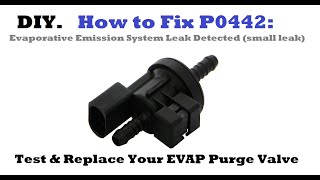
How to confirm: A key symptom is a long crank time after filling the gas tank. To test, locate the valve in the engine bay, disconnect the electrical connector, and remove the vapor line leading from the canister. With the engine running, you should not feel any vacuum from the valve's port. If you do, it's stuck open. You can also try to blow through it with it de-energized; no air should pass. 🎬 See how to test and replace a faulty purge valve. A valve may still click when power is applied but fail to seal completely internally.
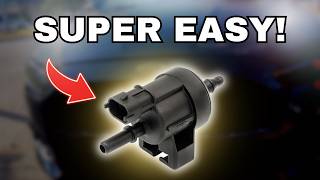
Typical fix: Replacement of the purge valve solenoid. This is typically a straightforward repair involving one bolt and two hose connections.
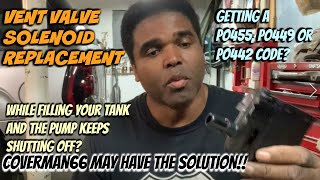
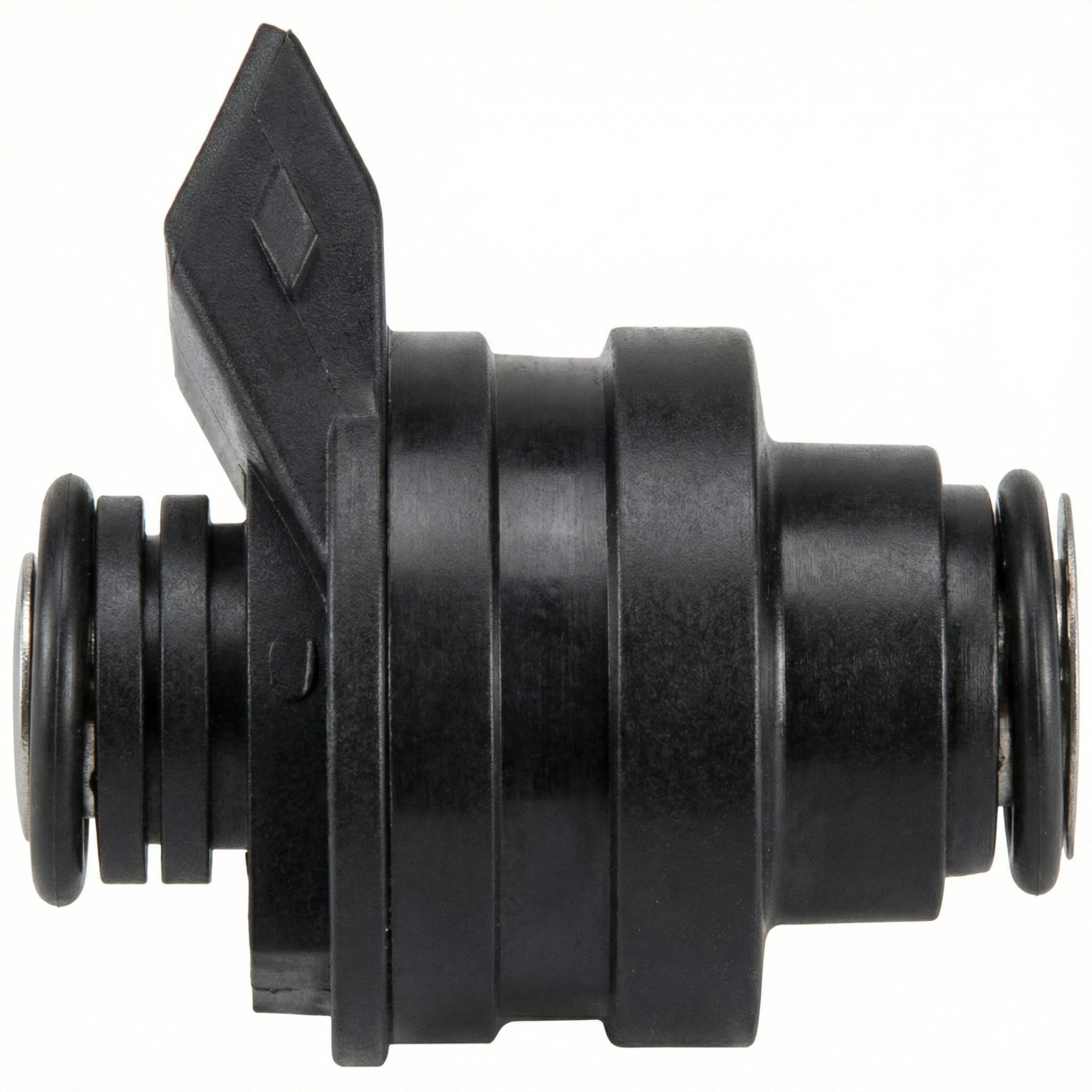
Est. part cost: $25-$60 - Faulty EVAP Canister Vent Valve (Solenoid) 🟡 Medium Probability Located under the car near the fuel tank, this valve is exposed to road debris, water, and salt, which can cause it to fail. A related GM TSB for trucks (02-06-04-037H) highlights how dust and dirt get sucked into the valve, causing it to stick open and not seal properly during the EVAP test. This is a common failure mode across many GM vehicles of this era.
How to confirm: This valve is normally open and closes only when the PCM commands it shut for a system test. Diagnosis requires a bi-directional scan tool to command the valve closed, followed by a smoke test to see if it's leaking from the vent port.
Typical fix: Replacement of the vent valve solenoid. On some GM vehicles, a filter relocation kit is available to move the air intake to a cleaner location, though this is less commonly documented for the Seville itself.
Est. part cost: $40-$80 - Cracked or Disconnected EVAP Hoses ⚪ Low Probability Over time, the rubber and plastic hoses in the EVAP system can become brittle from heat and age, leading to small cracks, especially at connection points or bends.
How to confirm: A visual inspection may reveal obvious cracks, but a smoke test is the most effective way to find small, hard-to-see hose leaks. Pay close attention to rubber elbows and connectors.
Typical fix: Replace the damaged section of hose.
Est. part cost: $5-$20
Rare But Worth Checking
- Cracked EVAP Charcoal Canister: The plastic body of the canister can develop hairline cracks, especially after a physical impact or due to age. This is almost always found with a smoke test.
- Leaking Fuel Tank Gasket/Seal: The seal where the fuel pump assembly mounts to the top of the fuel tank can degrade and cause a small leak, which can be difficult toaccess and diagnose without dropping the tank.
- Cracked or Rusted Fuel Filler Neck: Beyond just surface rust on the sealing lip, the entire metal filler neck tube can rust through or crack, creating a leak. This is often discovered during a smoke test when smoke appears from the side of the filler neck, not the cap.
Diagnosis Steps
- Check the Gas Cap and Filler Neck: This is the most common cause. Remove the cap, inspect the seal for cracks, and use a wire brush to clean any rust or dirt from the filler neck sealing surface. Reinstall the cap, ensuring it clicks several times. Clear the code and drive for a few days.
- Purchase an OEM Gas Cap: If the code returns, the next logical and inexpensive step is to replace the gas cap. Aftermarket caps are a frequent source of problems; an OEM (ACDelco) cap is highly recommended.
- Visual Inspection: Carefully inspect all visible EVAP hoses and lines in the engine bay and under the car near the fuel tank for any obvious cracks, disconnections, or damage. Pay attention to rubber fittings.
- Check for Purge Valve Symptoms: Note if the car has a long cranking time after you fill up with gas. If so, the purge valve is the prime suspect.
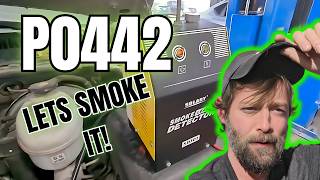
- Perform a Smoke Test: This is the most definitive diagnostic step. A smoke machine is connected to the EVAP service port, and low-pressure smoke is forced into the system. Any leaks will be revealed by smoke exiting from 🎬 Watch a pro find a small leak using a smoke test. the cracked hose, faulty valve, or bad seal.
- Inspect and Test Vent Solenoid: During the smoke test, a technician will use a scan tool to command the vent solenoid (near the tank) to close. If smoke escapes from the vent valve, it has failed and needs replacement.
- Perform a GM Drive Cycle: After a repair, simply clearing the code with a scanner may not turn off the light permanently. The vehicle's computer must successfully run its internal EVAP test. This requires a specific 'drive cycle,' but is usually completed by driving the vehicle normally for 2-3 days under varied conditions (city, highway).
Parts You'll Likely Need
- Fuel Tank Cap
(OEM #GT229 (or superseded by 19207873))— The seal on the gas cap is the most frequent failure point in the EVAP system, along with rust on the filler neck preventing a seal.
Trusted brands: ACDelco
OEM price range: $20-$35
Aftermarket price range: $15-$25 - Vapor Canister Purge Valve / Solenoid
(OEM #214-649 (Verify by VIN))— This valve is located in the harsh environment of the engine bay and cycles frequently, causing it to fail and stick open or closed.
Trusted brands: ACDelco, Dorman, Standard Motor Products
OEM price range: $40-$60
Aftermarket price range: $25-$45 - Vapor Canister Vent Valve / Solenoid
(OEM #214-1363)— Located under the car near the fuel tank, this valve is exposed to the elements and can fail due to corrosion or dirt intrusion, causing it to stick and not seal the system for testing.
Trusted brands: ACDelco, Dorman
OEM price range: $50-$80
Aftermarket price range: $30-$60
Related Codes That Often Appear With This One
- P0455 — P0455 indicates a large EVAP leak. A component failure, like a bad gas cap or stuck vent valve, can sometimes register as a small leak (P0442) and then worsen to a large leak (P0455), or both codes may appear if the system's test parameters are borderline.
- P0440 — This is a general EVAP system malfunction code. It may accompany P0442 if the computer detects a general fault in addition to the small leak.
Technical Service Bulletins (TSBs) & Recalls
- 21-NA-124: Provides diagnostic tips for testing EVAP leaks related to DTCs P0442 and/or P0455.
- PIT4943D: Directs technicians to use an Evaporative Emissions System Tester (smoke machine) for diagnosing a P0442 code.
- 02-06-04-037H: While for GM trucks with code P0446, this TSB is relevant as it details the common failure mode of the vent valve solenoid due to dust/dirt intrusion, a problem that can also cause a P0442 leak.
Platform-Specific Known Issues
- On the 2000-2004 Seville, the EVAP purge valve is conveniently located on top of the engine intake manifold under the plastic cover, making it relatively easy to inspect and replace.
- The EVAP vent solenoid is located near the charcoal canister, which is found just behind the driver's side rear wheel well, making access possible when the vehicle is safely raised.
- A recurring problem on these cars is rust forming on the fuel filler neck, which compromises the gas cap seal and is a very common cause of P0442 that should be checked before replacing any parts.
Mechanic-Grade Diagnostic Values
- Fuel Tank Pressure (FTP) Sensor Voltage — expected: 1.45V - 1.47V with Key On, Engine Off, and gas cap removed.. Failure: A sensor that does not change its voltage reading when vacuum is applied, or reads significantly outside the expected range, may be faulty.
- EVAP Purge Valve Solenoid Resistance — expected: Approximately 20 - 36 Ohms, dependent on temperature.. Failure: An infinite reading (open circuit) or a reading far outside the typical range indicates a failed solenoid coil.
- EVAP Vent Valve Solenoid Resistance — expected: Typically between 20 - 50 Ohms.. Failure: A reading of zero or infinite ohms indicates a bad coil within the solenoid.
Hidden / Shadow Codes Worth Checking
- Mode $06, TID $XX: Mode $06 data provides results from the PCM's non-continuous self-tests. Before a P0442 code is officially set, a failing value for the EVAP small leak test can be seen here. For 2004-2005 4.6L engines, specific Test IDs (TID) and Component IDs (CID) correspond to these tests, but a factory service manual is often needed to decode the exact values. (see via Advanced OBD-II scanner with Mode $06 capability.)
Scan Tool Commands That Help
- Tech2 or similar bidirectional scanner: EVAP System Test / Activation Test — This function is critical for diagnosis. It allows the technician to command the normally-open Vent Valve to close, sealing the system. This is a required step before performing a smoke test to check for leaks in the entire system, including the vent valve itself.
- Tech2 or similar bidirectional scanner: Purge/Seal — This automated test commands the purge and vent valves to operate while monitoring the fuel tank pressure sensor. It can help verify the function of the valves and the integrity of the system by seeing if it can pull and hold a vacuum.
Wiring & Ground Locations
- G106 — Located on the left rear of the engine.. A poor engine ground can cause erratic behavior or incorrect readings from engine-mounted sensors and solenoids, including the EVAP Purge Valve.
- G108 — Located on the right rear of the engine.. Similar to G106, this provides a critical ground path for engine electronics. Verifying it is clean and tight is a key step in diagnosing electrical faults.
- G303 / G304 — Located on the left and right sides of the rear shelf, accessible from the trunk.. These are primary chassis grounds for rear-body electronics. The EVAP Vent Solenoid and Fuel Tank Pressure sensor are located near the rear of the vehicle and may rely on these ground points for proper operation.
- Vapor Canister / Vent Solenoid — Underneath the vehicle, just behind the driver's side rear wheel, near the fuel tank.. This is the physical location of the charcoal canister and the vent solenoid, which is a common failure point. Knowing its location is essential for visual inspection and testing.
Real Owner Repair Stories
- YouTube user 'sconnie life' (2004 Cadillac Deville (similar G-body platform)) — Check Engine Light with codes P0442 and P0455.
❌ Tried (didn't work) Initially just clearing the code.
✅ What actually fixed it The owner first used a wire brush to clean significant rust off the fuel filler neck where the gas cap seals. He then replaced the gas cap with a new OEM part (GM #19207873). In an update five months later, he confirmed the check engine light had not returned.
"I Checked Everything" — The Actual Cause
- In some cases, the EVAP system can pass a pressure-based smoke test but still set a P0442 code. This can happen if a valve (typically the purge or vent valve) leaks under vacuum but seals under pressure. The vehicle's self-test uses engine vacuum to check for leaks. A technician can diagnose this by using a hand-held vacuum pump to apply a few inches of mercury ('Hg) of vacuum directly to the suspect valve to see if it holds, mimicking the system's self-test more accurately than a smoke machine.
OEM Part Supersession History
GT229→19207873— Standard part evolution and design updates by the manufacturer.
Heads up: Using the older part number may still be possible, but the superseded number is the currently recommended OEM replacement.
Helpful Videos
Used OEM Parts in Stock
New Aftermarket Parts Available


The information in this article is provided for general reference and educational purposes only. Vehicle specifications, procedures, and part compatibility can vary by production date, trim level, and region. Always consult your vehicle's factory service manual and verify part numbers before purchasing or performing repairs. Safety-critical components such as airbags, seat belts, and braking systems should be installed by a qualified professional.
- Cadillac SEVILLE:
- 🎬 Helpful Videos
- 🛍️ Shop This Part
- What's Unique About the 2000-2004 Cadillac SEVILLE
- Diagnostic Flowchart
- Symptoms You May Notice
- Most Likely Causes
- Rare But Worth Checking
- Diagnosis Steps
- Parts You'll Likely Need
- Related Codes That Often Appear With This One
- Technical Service Bulletins (TSBs) & Recalls
- Platform-Specific Known Issues
- Mechanic-Grade Diagnostic Values
- Hidden / Shadow Codes Worth Checking
- Scan Tool Commands That Help
- Wiring & Ground Locations
- Real Owner Repair Stories
- "I Checked Everything" — The Actual Cause
- OEM Part Supersession History
- 🎟️ Get 5% Off