

P0442 on 2007-2011 Cadillac Escalade EXT: Small EVAP Leak Causes & Fixes
For a 2007-2011 Escalade EXT, P0442 usually means a loose gas cap or a bad EVAP vent solenoid near the spare tire. Check the cap first; if it's tight and the seal is good, the vent solenoid is the next most likely culprit, costing around $30-$60 for an aftermarket part. A smoke test is the best way to confirm the leak's location before buying parts.
- P0442 signifies a small leak in the fuel vapor system.
- Always start by checking the gas cap; it's the easiest and most common fix.
- The two most likely parts to fail on this truck are the EVAP vent solenoid (under the truck by the spare tire) and the EVAP purge valve (on the engine).
- A smoke test is the most accurate professional method to find the leak without replacing unnecessary parts.
- You can continue to drive the vehicle, but it will not pass an emissions inspection until the code is resolved.
What's Unique About the 2007-2011 Cadillac ESCALADE EXT 1500
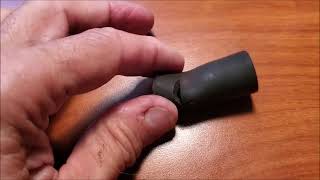
The 2007-2011 Escalade EXT is built on the GMT900 platform, shared with the Chevrolet Avalanche, Tahoe, and Suburban. On these trucks, the EVAP system components, particularly the vent solenoid located near the spare tire, are common failure points due to their exposure to road debris and moisture. In some cases, the factory hose to the vent solenoid is too short, causing a kink and a leak right at the connection point. 🎬 Watch: This video shows the common factory hose kink issue. A smoke test is the most definitive way to find the leak if simple part swaps don't work.
Diagnostic Flowchart
Tap your situation to follow the diagnostic path that matches what you're seeing on this vehicle.
Symptoms You May Notice
- Check Engine Light is on
- A 'TIGHTEN GAS CAP' message on the driver information center, even if the cap is tight.
- A faint smell of fuel, particularly around the rear of the vehicle.
- Difficulty starting immediately after refueling (this points more specifically to a faulty purge valve).
- Difficulty filling the fuel tank (gas pump clicks off repeatedly), which points to a blocked or failed EVAP vent solenoid.
- Replacing the charcoal canister when only the vent solenoid attached to it has failed.
- Replacing the purge or vent valve without first checking for a loose gas cap.
- Replacing the purge valve when the actual cause is a pinhole leak elsewhere, such as the fuel pump hanger or filler neck, which would be found with a smoke test.
Most Likely Causes
- Loose or Faulty Gas Cap 🔴 High Probability This is the most common cause on any vehicle. The rubber O-ring on the cap degrades over time, preventing a proper seal. Aftermarket caps are also a frequent source of leaks.
How to confirm: Ensure the cap is tightened until it clicks multiple times. Inspect the rubber seal for cracks, stiffness, or damage. Clean any dirt or rust from the fuel filler neck flange where the seal makes contact.
Typical fix: Tighten or replace the gas cap. Using an OEM ACDelco cap is highly recommended.
Est. part cost: $15-$35 - Faulty EVAP Vent Solenoid/Valve 🔴 High Probability The vent solenoid is mounted under the truck near the spare tire, making it highly susceptible to dirt, moisture, and road debris, which can cause it to stick open or fail. The filter can become clogged with dust, and sometimes the factory hose is too short, causing a kinked connection. GM has issued service bulletins for similar models regarding leaking vent solenoids, such as TSB #21-NA-124.
How to confirm: The valve can be tested with a scan tool to see if it actuates (it should click). However, it can still leak mechanically even if it clicks. A smoke test is the most reliable method to confirm a leak at the valve itself. Difficulty refueling is a strong symptom. 🎬 See how to replace the vent solenoid to fix refueling issues.
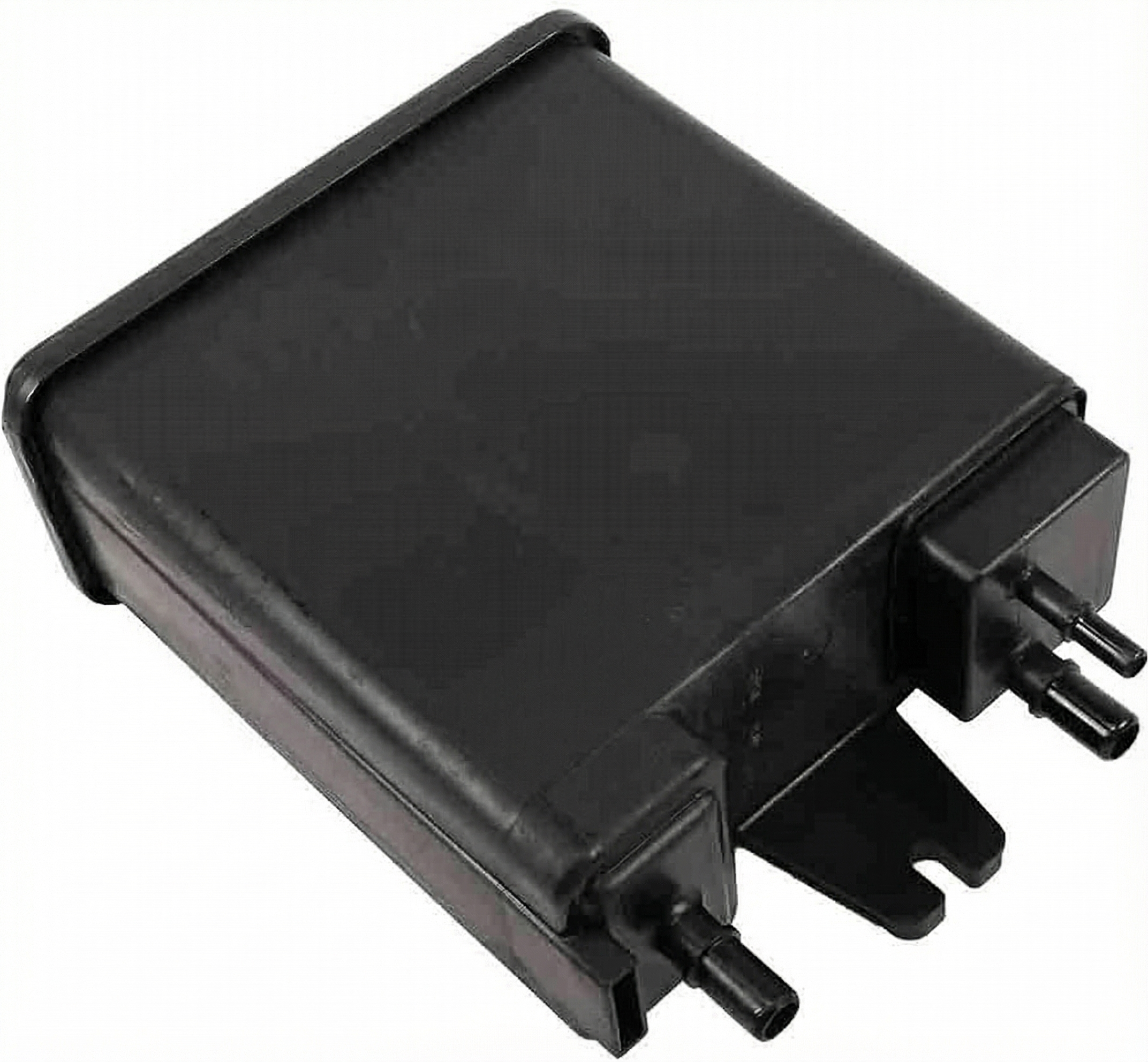
Typical fix: Replace the EVAP vent solenoid. It is located near the charcoal canister, which is typically above the spare tire. Some owners have had to modify the mounting bracket to prevent a new hose from kinking.
Est. part cost: $30-$80 - Faulty EVAP Purge Solenoid/Valve 🟡 Medium Probability This valve cycles frequently during engine operation and can wear out or get stuck open by debris, such as charcoal pellets from a deteriorating canister.
How to confirm: A common symptom is difficulty starting after refueling. It can be tested with a scan tool or by applying vacuum with a hand pump to see if it holds when de-energized. You can also remove it and try to blow through it; if air passes, it has failed. TSB PIT4943D also provides diagnostic steps.
Typical fix: Replace the purge solenoid. It is located on the driver's side of the engine's intake manifold, often behind the alternator.
Est. part cost: $25-$60 - Cracked or Disconnected EVAP Hose ⚪ Low Probability Rubber and plastic hoses become brittle with age and exposure to engine heat and the elements, leading to small cracks. A specific real-world case on a 2007 Escalade found the hose to the vent solenoid was kinked from the factory, causing the leak.
How to confirm: A visual inspection may reveal obvious cracks or disconnections. A smoke test is the definitive method to find small, hard-to-see leaks in the hose network.
Typical fix: Replace the damaged section of the hose or, in the case of a kink, re-route or modify brackets to relieve tension.
Est. part cost: $10-$50
Rare But Worth Checking
- Cracked Charcoal Canister: The plastic housing of the canister can develop hairline cracks from age or impact. More commonly, the canister can degrade internally, sending charcoal pellets into the EVAP lines that hold the purge valve open. This is usually found with a smoke test or by finding pellets in the purge valve line.
- Leaking Fuel Tank Pressure (FTP) Sensor: The sensor itself or its seal can fail, creating a leak point. In some cases, the sensor can also report incorrect readings, causing the computer to falsely detect a leak when none exists. This is typically diagnosed after a smoke test shows no leaks.
- Cracked or Rusted Fuel Filler Neck: The metal tube leading to the gas tank can rust through, especially in regions with road salt, creating a leak. This is often accompanied by a strong fuel smell during refueling and can be definitively found with a smoke test.
- Leaking Fuel Pump Module Gasket: The gasket sealing the fuel pump assembly to the top of the fuel tank can dry out and leak. This is a common issue if the fuel pump was recently replaced and the seal was not installed correctly. This repair requires dropping the fuel tank.
Diagnosis Steps
- Read the code with an OBD-II scanner to confirm P0442 is present.
- Inspect the gas cap. Ensure it is tight and clicks when closed. Remove it and check the rubber O-ring for cracks or damage. Clean the filler neck sealing surface. If in doubt, replace with an OEM cap.
- If the gas cap is okay, perform a thorough visual inspection of all accessible EVAP hoses and lines running from the engine bay to the fuel tank area, looking for obvious cracks, damage, or disconnections. Pay close attention to the hoses connected to the vent solenoid near the spare tire.
- Locate the EVAP purge valve on the intake manifold. With the engine off, it should be closed. You can test this by removing it and trying to blow through it; if air passes, it's bad.
- Locate the EVAP vent solenoid near the charcoal canister under the vehicle (the spare tire may need to be removed for access). Check its wiring and hoses. The valve is normally open and closes when powered. A scan tool can command it closed for testing.
- The most effective diagnostic step is to perform a smoke test. This involves injecting low-pressure smoke into the EVAP service port (often has a green cap) and looking for where the smoke escapes. 🎬 Watch: How to find a small leak using a smoke test. To do this correctly, the vent solenoid must be commanded closed with a scan tool to seal the system. This will pinpoint the exact location of the leak, whether it's a hose, valve, canister, filler neck, or gas cap seal.
Parts You'll Likely Need
- EVAP Vent Solenoid
(OEM #ACDelco 214-2149 (or GM 19207762 for kit with filter relocation))— This part is a very common failure point on GMT900 trucks due to its exposed location under the vehicle, where it ingests dirt and moisture.
Trusted brands: ACDelco, Dorman (911-032)
OEM price range: $50-$90
Aftermarket price range: $30-$60 - EVAP Purge Valve/Solenoid
(OEM #ACDelco 214-1680 (Supersedes 12597567))— This valve cycles constantly and can fail over time, getting stuck open and causing a small leak. It's a very common failure item on these trucks.
Trusted brands: ACDelco, Standard Motor Products, Dorman
OEM price range: $40-$70
Aftermarket price range: $25-$50 - Fuel Cap
(OEM #ACDelco GT294)— The gas cap seal is a simple rubber part that wears out over time, preventing the system from sealing. It is the easiest and most common fix for P0442.
Trusted brands: ACDelco, Stant
OEM price range: $20-$35
Aftermarket price range: $15-$25
Related Codes That Often Appear With This One
- P0455 — Indicates a large EVAP leak. The same faulty component (like a vent valve stuck wide open or a very bad gas cap seal) can cause either a small or large leak code depending on the test conditions. The provided TSB #21-NA-124 explicitly links P0442 and P0455.
- P0449 — Indicates a fault in the EVAP vent solenoid's electrical circuit. If this code is present with P0442, it strongly points to the vent solenoid assembly or its wiring/connector as the root cause.
- P0496 — Indicates 'EVAP Flow During a Non-Purge Condition,' which almost always points to a faulty purge valve that is stuck open or leaking.
Technical Service Bulletins (TSBs) & Recalls
- Bulletin #21-NA-124: Provides diagnostic tips/steps on testing for possible EVAP leaks in the system to correct a customer concern of an MIL Illuminated with DTCs P0442 and/or P0455 Set. It advises checking all EVAP lines for proper installation and damage before suspecting the vent or purge valves.
Platform-Specific Known Issues
- A known issue for this platform is the location of the EVAP vent solenoid, which is often mounted near the spare tire and is prone to failure from dirt and water intrusion.
- GM Technical Service Bulletin #21-NA-124 provides specific diagnostic advice for technicians dealing with P0442 and/or P0455 codes, instructing them to check lines and connections before replacing the vent or purge valves.
- In some instances, the factory hose leading to the vent solenoid is too short, causing it to kink at the connection point and create a leak. An owner documented fixing this by modifying the solenoid's mounting bracket to add slack.
Mechanic-Grade Diagnostic Values
- EVAP Purge Solenoid Resistance — expected: 14 to 38 Ohms. Failure: A reading of OL (infinite) or significantly outside this range indicates a failed coil.
- EVAP Vent Solenoid Resistance — expected: Approximately 20 Ohms, though some service data specifies 48-65 Ohms depending on the part revision.. Failure: An open loop (OL) reading means the coil is burned out; a reading far outside the expected range also indicates failure.
- Fuel Tank Pressure (FTP) Sensor Voltage — expected: Approximately 1.3V to 1.7V with the key on, engine off, and gas cap removed (at atmospheric pressure).. Failure: A reading stuck near 0V or 5V, or a value that doesn't change when pressure/vacuum is applied, points to a faulty sensor or wiring.
- EVAP Vent Solenoid Power Supply — expected: 12V+ (Battery Voltage) on the Orange/White wire at the solenoid connector with the key on.. Failure: No voltage suggests a blown fuse (Underhood Fuse Block, Fuse #14) or a break in the power wire.
Hidden / Shadow Codes Worth Checking
- Diagnostic Logic (P0496 Prerequisite): On this platform, the Engine Control Module (ECM) must run and pass the test for DTC P0496 (EVAP Flow During a Non-Purge Condition) *before* it will run the tests that set P0442 or P0455. This means if a P0496 is pending or recently cleared, it should be addressed first as it often points directly to a leaking purge valve. (see via This is not a visible code but a part of the ECM's diagnostic strategy. A technician aware of this logic will prioritize testing the purge valve if P0442/P0455 appears intermittently or alongside a P0496.)
Scan Tool Commands That Help
- Tech2 or GDS2 (or equivalent emulator): EVAP System Service Bay Test — Used to force the EVAP monitor to run and complete its self-test in a workshop setting, which is necessary to confirm a repair and clear the I/M readiness status for an emissions test. The test requires a cold start and holding the engine RPM between 1800-2200 for several minutes.
- Bi-directional Scan Tool: EVAP Vent Valve Control (On/Off) — This command is critical for performing a smoke test. The vent valve is normally open, so it must be commanded closed ('Not Venting') to seal the EVAP system, allowing the smoke machine to build pressure and reveal leaks.
- Bi-directional Scan Tool: EVAP Purge Valve Control (PWM %) — Used to test the function of the purge valve. A technician can command the valve to open while the engine is running and watch for a change in fuel trims or engine RPM to confirm it is operating. It can also be used to check if the valve is leaking when commanded closed.
Wiring & Ground Locations
- EVAP Vent Valve Connector — Under the vehicle, connected to the vent valve solenoid near the spare tire.. This 2-pin connector is highly exposed to road spray and corrosion. The Orange/White wire should have 12V+ power, and the White wire is the control ground from the PCM. A corroded connector or broken wire here will set a P0449 and can prevent the valve from closing, causing a P0442/P0455 leak code.
- G104 & G103 — G104 is on the front of the left cylinder head. G103 is on the front of the right cylinder head.. These are primary engine grounds. A poor connection at these points can cause erratic behavior in various sensors and solenoids controlled by the Engine Control Module (ECM), including the EVAP components.
- G108 & G110 — Both are located on the left rear of the engine compartment, typically on or near the firewall.. These grounds are critical for the main engine harness. Intermittent or poor grounding here can lead to a variety of difficult-to-diagnose electrical issues, potentially including false sensor readings or improper solenoid operation.
Real Owner Repair Stories
- YouTube user 'shadetreemechanic' (2007 Cadillac Escalade) — Check Engine Light with code P0442.
❌ Tried (didn't work) The owner initially assumed it was a bad EVAP vent valve or purge valve and was prepared to replace parts.
✅ What actually fixed it The hose connected to the EVAP vent valve was found to be severely kinked and stretched where it attached to the valve nipple, likely due to being too short from the factory. The owner fabricated a small extension for the valve's mounting bracket to create more slack for the hose. This relieved the tension, allowed the hose to seal properly, and resolved the code without replacing any electrical components.
"I Checked Everything" — The Actual Cause
- A common scenario where a smoke test passes but the P0442 code persists is a faulty Fuel Tank Pressure (FTP) sensor. The sensor provides incorrect voltage data to the computer, making the ECM believe there is a leak when the physical system is perfectly sealed. The diagnosis involves checking the FTP sensor's voltage against specifications with the gas cap off (~1.5V) rather than relying solely on the smoke test.
- In the case of a kinked hose right at a connection point, a smoke test might not reveal the leak if the hose is not disturbed or if the kink temporarily creates a seal. The leak may only occur under specific vibrations or temperatures, making it easy to miss during a static test.
OEM Part Supersession History
ACDelco 214-2149 / GM 19207762→ACDelco 23481275 (or similar)— The EVAP vent solenoid was redesigned to improve durability against dirt and moisture intrusion.
Heads up: The redesigned solenoid (e.g., 23481275) often uses a different, boxier electrical connector than the original part. A harness adapter (e.g., GM 19257603) is frequently required to connect the new solenoid to the existing vehicle wiring.GM 12597567→ACDelco 214-1680— Standard part revision and supersession by ACDelco.
Model Year Variations Within This Range
- 2007-2011 (during replacement): The replacement EVAP vent solenoid is often a redesigned part with a different electrical connector than the one installed at the factory. The original may have a horizontal plug, while the new design is a square or 'box' plug. This necessitates purchasing and splicing in a pigtail adapter harness for the new part to connect to the vehicle.
Helpful Videos
Used OEM Parts in Stock

New Aftermarket Parts Available



The information in this article is provided for general reference and educational purposes only. Vehicle specifications, procedures, and part compatibility can vary by production date, trim level, and region. Always consult your vehicle's factory service manual and verify part numbers before purchasing or performing repairs. Safety-critical components such as airbags, seat belts, and braking systems should be installed by a qualified professional.
- Cadillac ESCALADE EXT 1500:
- 🎬 Helpful Videos
- 🛍️ Shop This Part
- What's Unique About the 2007-2011 Cadillac ESCALADE EXT 1500
- Diagnostic Flowchart
- Symptoms You May Notice
- Most Likely Causes
- Rare But Worth Checking
- Diagnosis Steps
- Parts You'll Likely Need
- Related Codes That Often Appear With This One
- Technical Service Bulletins (TSBs) & Recalls
- Platform-Specific Known Issues
- Mechanic-Grade Diagnostic Values
- Hidden / Shadow Codes Worth Checking
- Scan Tool Commands That Help
- Wiring & Ground Locations
- Real Owner Repair Stories
- "I Checked Everything" — The Actual Cause
- OEM Part Supersession History
- Model Year Variations Within This Range
- 🎟️ Get 5% Off