

P0442 on 2010-2017 Cadillac Escalade: Causes and Fixes for a Small EVAP Leak
For a 2010-2017 Cadillac Escalade, P0442 most often means a loose gas cap, a bad EVAP purge valve, or a faulty vent solenoid. Start by tightening or replacing the gas cap for about $15-$30. If that doesn't work, the purge or vent valve are the next most likely culprits. A smoke test is the best way to find the exact source of the leak.
- P0442 means your Escalade has a small leak in the emissions system designed to control fuel vapors.
- Always start with the simplest fix: check that your gas cap is tight. If the seal looks old or cracked, replace it.
- The most common parts to fail after the gas cap are the EVAP purge valve (on the engine) and the vent valve (near the spare tire).
- A strong fuel smell is a key symptom for this vehicle and could point to a cracked filler neck hose, as noted in a GM service bulletin.
- While you can safely drive the vehicle, you will not pass an emissions test until the leak is fixed.
What's Unique About the 2010-2017 Cadillac ESCALADE

On this generation of Escalade (and related GM trucks/SUVs like the Tahoe and Yukon), the P0442 code is frequently accompanied by a strong fuel odor, particularly after filling the tank. This specific symptom is addressed in GM Technical Service Bulletin #15-NA-019, which points to a potential fracture in the fuel tank filler vent hose connector. This makes inspecting the filler neck area more critical on these vehicles than on others where a simple gas cap or purge valve is the overwhelming cause. Additionally, forum users frequently report the vent solenoid, located near the spare tire, gets clogged with fine dirt and sand, causing it to fail.
Diagnostic Flowchart

Tap your situation to follow the diagnostic path that matches what you're seeing on this vehicle.
Generation note: The 2010-2017 year range covers two Escalade generations: the 3rd Gen (2007-2014, GMT900 platform) and the 4th Gen (2015-2020, K2XX platform). While the fundamental EVAP system components are similar, their exact location and part numbers may differ. For example, the EVAP vent solenoid is a common failure point on the GMT900 trucks. TSB #15-NA-019 specifically calls out different part numbers for the filler vent hose for 2013-2014 models. Always verify the part for your specific model year before purchasing.
Symptoms You May Notice
- Check Engine Light is on
- Strong fuel odor, especially during or after refueling.
- A "Tighten Gas Cap" message on the driver information center, even if the cap is tight.
- Difficulty starting the vehicle immediately after filling the gas tank (long crank time).
- Slightly rough idle or RPM fluctuations in some cases.
- Replacing the charcoal canister when only the vent valve is bad. The vent valve is often attached to the canister but can usually be replaced separately.
- Immediately replacing expensive components without first checking the gas cap, which is the most common and cheapest fix.
- Replacing parts without confirming the leak with a smoke test. Many owners replace the gas cap, purge valve, and vent valve only to find the leak was in a cracked hose.
Most Likely Causes

- Loose or Faulty Gas Cap 🔴 High Probability This is the most common cause for P0442 on any vehicle. The rubber O-ring on the cap can crack, stiffen, and degrade over time, preventing a proper seal. Aftermarket caps are also a frequent cause as they may not seal to OEM specifications.
How to confirm: First, ensure the cap is tightened until it clicks several times. Inspect the rubber seal for any visible cracks, stiffness, or damage. Also, clean the mating surface on the fuel filler neck, as dirt or rust can prevent a good seal.
Typical fix: Replace the gas cap with a new, high-quality OEM or equivalent part (e.g., ACDelco).
Est. part cost: $15 - $40 - EVAP Purge Valve/Solenoid Failure 🟡 Medium Probability The purge valve on GM trucks and SUVs is a very common failure item. It can get stuck open or fail to seal properly, creating a constant small leak that the system detects. This often leads to a P0496 code as well.
How to confirm: The purge valve is located on top of the engine. A classic symptom of a failed-open purge valve is difficulty starting after refueling. You can test it by removing it and trying to blow through it; when not energized, it should be completely closed and block all airflow. A more advanced test involves checking for vacuum at the inlet port with the engine running and the electrical connector unplugged; there should be no vacuum.
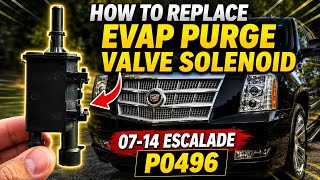
Typical fix: Replace the purge valve solenoid. This is a relatively easy repair, often requiring no more than a single bolt and two hose connections. 🎬 Watch: How to replace the purge valve solenoid on your Escalade.
Est. part cost: $25 - $60 - EVAP Vent Valve/Solenoid Failure 🟡 Medium Probability Located near the charcoal canister by the spare tire, this valve is exposed to road debris. Owners on forums frequently report that fine dirt and sand get into the valve, causing it to stick open and fail to seal the system for the pressure test.
How to confirm: Diagnosis often requires a scan tool to command the valve closed. A definitive test involves a smoke machine to see if smoke escapes from the vent valve when it should be sealed. Visually inspect the valve and its filter for heavy dirt or damage. You can also bench test it by applying 12V power; it should close and not allow air to pass through.
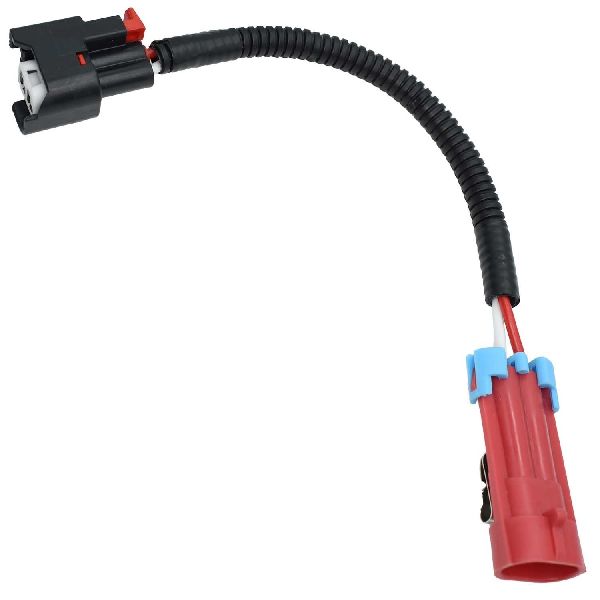
Typical fix: Replace the vent valve solenoid assembly. This often requires lowering the spare tire for access. 🎬 See this walkthrough for replacing the EVAP vent valve assembly. Some replacement parts may require a jumper harness (e.g., ACDelco 19257603) if the connector style has been updated.
Est. part cost: $40 - $120 - Cracked Fuel Tank Filler Vent Hose ⚪ Low Probability As noted in TSB #15-NA-019, the connector on the filler vent hose can fracture, causing a leak and a strong fuel smell, especially during fueling. This is a known issue for this specific GM platform.
How to confirm: Visually inspect the fuel filler neck area and the associated vent hoses for cracks or damage, as instructed by the TSB. This may require raising the vehicle for a clear view.
Typical fix: Replace the fuel tank filler vent hose assembly. Part numbers vary by specific model and year.
Est. part cost: $50 - $100
Rare But Worth Checking
- Cracked or disconnected EVAP lines: The plastic and rubber hoses that make up the EVAP system can become brittle and crack over time. A visual inspection is a good first step, but a smoke test is the most effective way to find a small crack in a hose. A user on a forum found a broken 90-degree nipple on a tube connected to the purge solenoid.
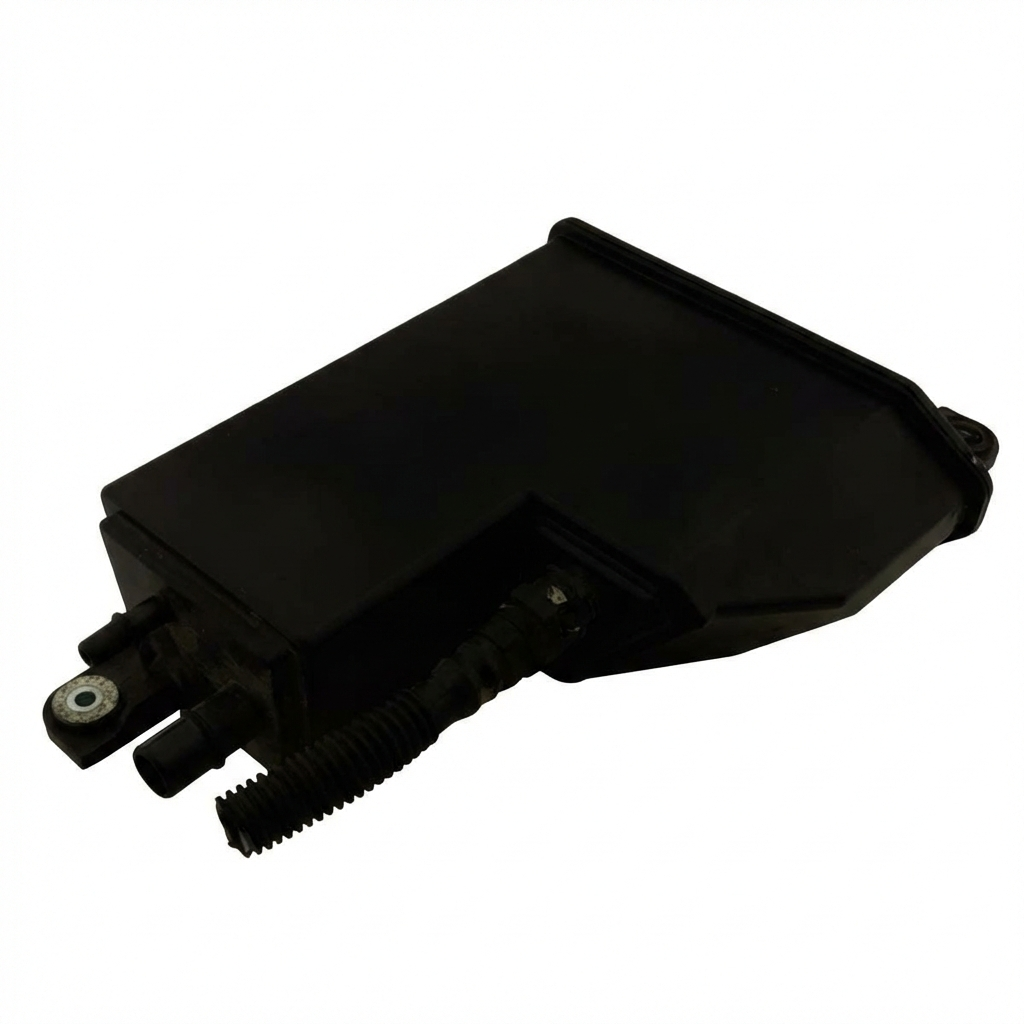
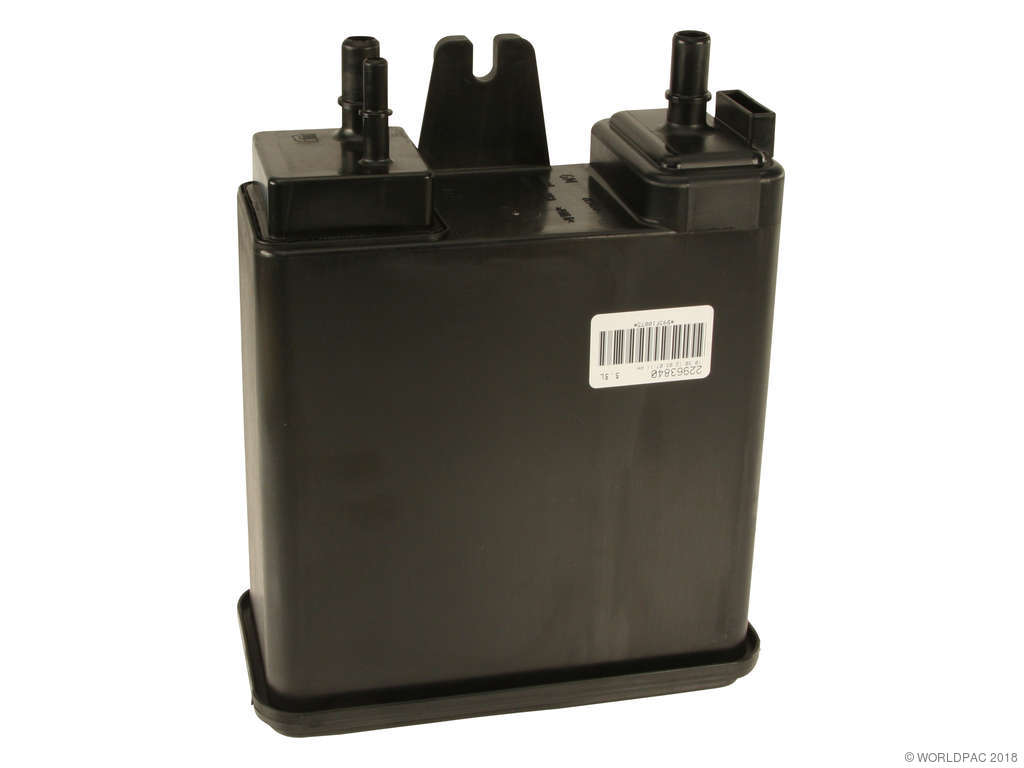
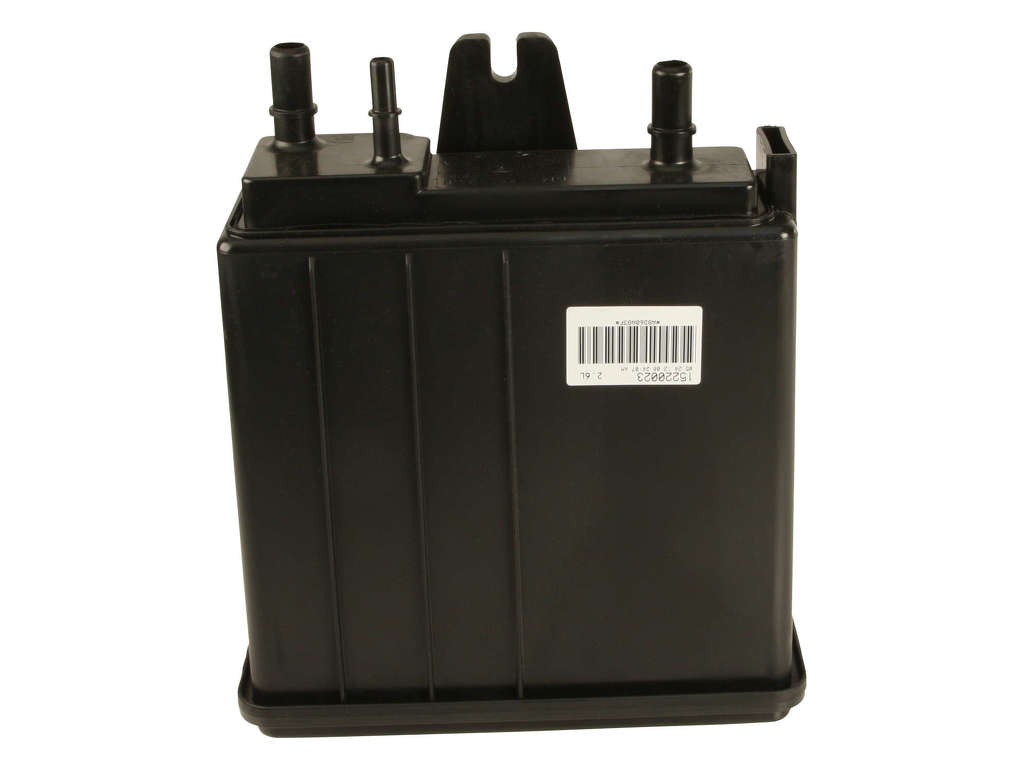
- Leaking charcoal canister: The plastic housing of the charcoal canister itself can develop cracks, leading to a leak. This is less common than the valves failing but can happen, especially with age or physical damage. Overfilling the fuel tank can also saturate the canister with raw fuel, causing damage.
- Faulty fuel tank pressure sensor: In rare cases, the sensor that measures the pressure in the tank can provide incorrect readings to the computer, leading to a false P0442 code. This is usually diagnosed after all other possibilities have been ruled out.
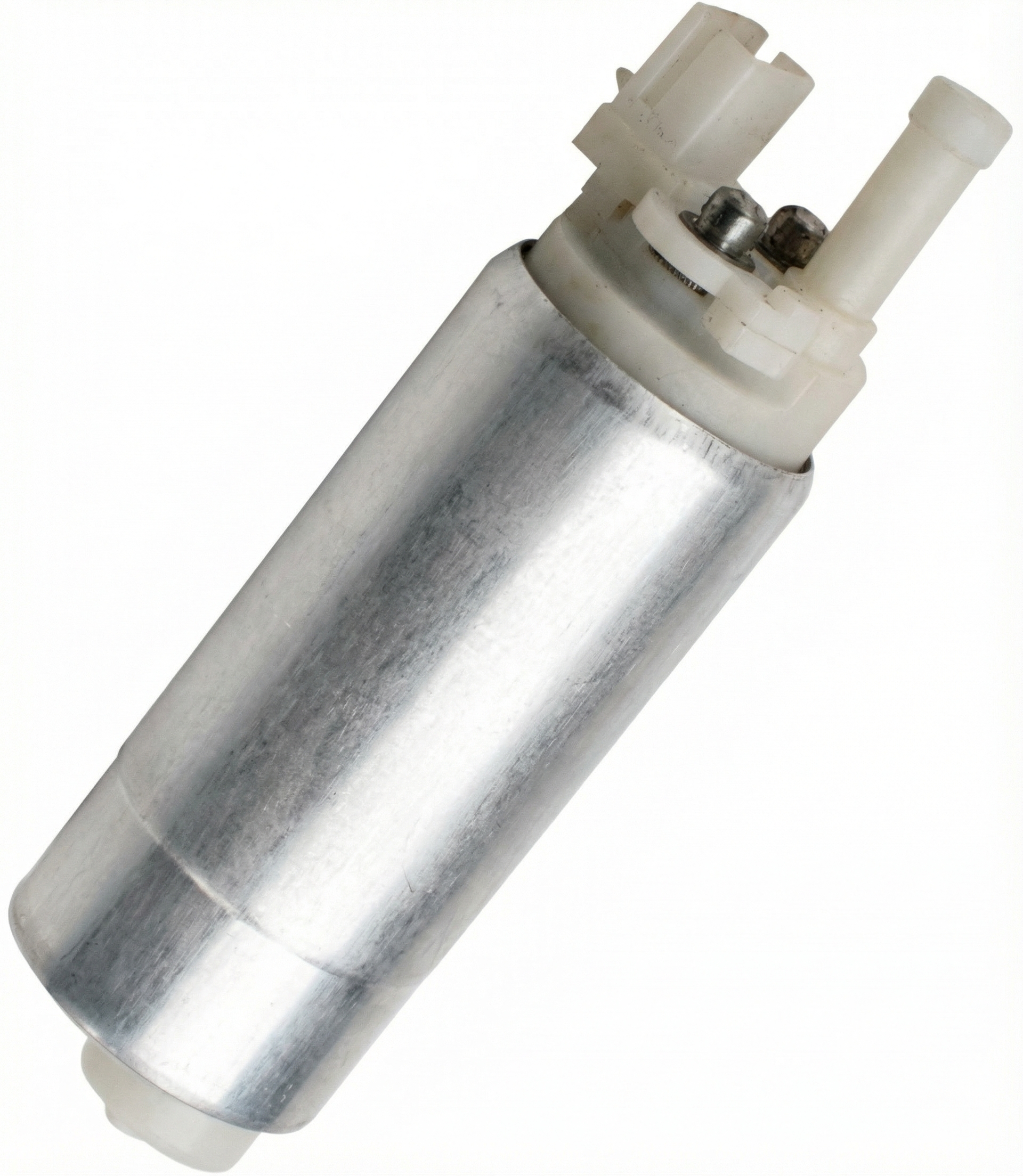
- Leaking fuel pump module gasket: A degraded or improperly seated gasket on the top of the fuel tank where the fuel pump module is installed can cause a small EVAP leak. One owner on a forum chased a P0442 code for an extended period, and the final fix was a new fuel pump assembly and gasket.
Diagnosis Steps

- Check the Gas Cap: Remove and reinstall the gas cap, ensuring it clicks multiple times. Inspect the cap's seal for cracks or damage and clean the filler neck surface. If in doubt, replace it with an OEM part. Clear the code and drive for a few days to see if it returns.
- Visual Inspection: Inspect all accessible EVAP hoses and lines in the engine bay and underneath the vehicle for obvious cracks, disconnections, or damage. Pay close attention to rubber elbows and connections to the purge valve and canister.
- Test the Purge Valve: Locate the purge valve on the engine. With the engine off and electrical connector unplugged, remove the hose coming from the canister and try to blow through the valve. It should be closed. If air passes, the valve is stuck open and needs replacement.
- Inspect Vent Valve: Locate the vent valve near the charcoal canister (by the spare tire). Inspect it for physical damage or being clogged with dirt. Lowering the spare tire is usually required for access.
- Smoke Test: If the leak source is not obvious, the most effective method is to perform an EVAP smoke test. This involves injecting harmless, UV-dyed smoke into the system's service port and looking for where it escapes. 🎬 Watch: How to find a small EVAP leak using smoke. This is the definitive way to find small, hard-to-see leaks in hoses, the canister, or around gaskets.
Parts You'll Likely Need
- Gas Cap
(OEM #ACDelco GT295 or GT330 (Verify by VIN))— This is the most frequent cause of a P0442 code due to a worn-out seal. It's the first, easiest, and cheapest part to replace.
Trusted brands: ACDelco, Motorad
OEM price range: $25-$40
Aftermarket price range: $15-$30 - Vapor Canister Purge Valve / Solenoid
(OEM #ACDelco 214-2246 (Replaces 214-2242))— A very common failure point on GM vehicles. It gets stuck open, causing a constant small leak and often leads to hard starting after refueling.
Related Codes That Often Appear With This One
- P0455 — This code indicates a large EVAP leak. It often appears with P0442 if a component fails in a way that can be interpreted as both a small and large leak by the system, or if there are multiple leak points. The TSBs for the Escalade mention both codes together.
- P0496 — This code indicates 'EVAP Flow During Non-Purge Condition' and almost always points directly to a faulty EVAP purge valve that is stuck open.
Technical Service Bulletins (TSBs) & Recalls
- 15-NA-019: Fuel Odor During Fuel Filling or During Idle, Possible P0442 or P0455 DTCs Set
- 21-NA-124: Diagnostic tips for MIL Illuminated with DTCs P0442 and/or P0455 Set
- PIT4943D: Information regarding Service Engine Soon Lamp with DTC P0442
Platform-Specific Known Issues

- A fuel odor during fueling or at idle is a strong indicator to check the fuel tank filler vent hose for cracks, per TSB 15-NA-019.
- The vent solenoid's location near the spare tire makes it prone to collecting large amounts of dirt and sand, which causes the valve to stick. An owner reported getting showered with dirt upon removal.
- Some owners have chased the P0442 code for years, replacing multiple components. In one extreme case on a forum, an owner replaced the purge valve 30 times in a year due to poor quality of both OEM and aftermarket parts, suggesting a potential quality control issue with some replacement parts.
Mechanic-Grade Diagnostic Values
- EVAP Purge Valve/Solenoid Resistance — expected: 20 - 30 Ohms. Failure: A reading that is too high, too low, or infinite (open circuit) indicates a faulty valve.
- EVAP Vent Valve/Solenoid Resistance — expected: ~20.2 Ohms. Failure: A significantly different reading or an open/short circuit reading on the multimeter indicates a failed solenoid coil.
- Fuel Tank Pressure (FTP) Sensor Voltage — expected: Varies between 0.1V (high pressure) and 4.9V (high vacuum). With the gas cap off, the voltage should be around 1.5V.. Failure: Voltage that is stuck high or low regardless of tank pressure, or does not change when vacuum/pressure is applied, indicates a faulty sensor.
Scan Tool Commands That Help
- GDS2 / Tech2: EVAP Vent Valve Solenoid Activation Test — This bidirectional command is essential for a smoke test. The vent valve is normally open, so to seal the system and build pressure for the smoke test, the technician must use the scan tool to command the valve closed. If smoke still escapes from the vent, the valve is faulty.
- GDS2 / Tech2: EVAP Service Bay Test — This is an automated test sequence that runs the vehicle's own EVAP leak test procedure on demand. It commands the purge and vent valves to seal the system and monitors the fuel tank pressure sensor to see if the system can hold a vacuum. It's a way to confirm a leak exists without a smoke machine, or to verify a repair has been successful.
Wiring & Ground Locations
- Fuse TCH BATT 10A (Fuse 14 in underhood block) — Underhood fuse block, driver's side of the engine compartment.. This fuse supplies the 12V power to the EVAP Vent Valve Solenoid. If this fuse is blown, the solenoid cannot be commanded closed for the system test, which can lead to various EVAP codes.
- G103 — Front of the right cylinder head.. This is a major engine ground. While not exclusively for the EVAP system, a poor connection here can cause erratic behavior in multiple engine control systems, including the ECM which controls the EVAP components.
- G201 — Behind the upper left end of the dashboard.. This is a primary ground for the Body Control Module (BCM) and other interior components. While less likely to directly cause a P0442, issues with BCM communication can sometimes manifest in unexpected ways.
Real Owner Repair Stories
- YouTube user 'Tim S' (2007 Cadillac Escalade) — P0442 Check Engine Light
❌ Tried (didn't work) The owner was preparing to replace the purge valve or vent valve.
✅ What actually fixed it The owner discovered the hose leading to the EVAP vent valve was kinked and pinched, restricting flow. Instead of replacing the part, they modified the mounting bracket to provide more slack for the hose, which straightened the kink and resolved the code.
"I Checked Everything" — The Actual Cause
- In some cases, a P0442 can be set even if a smoke test reveals no leaks. This can happen if the Fuel Tank Pressure (FTP) sensor is faulty and providing incorrect readings to the computer, making the ECM believe there is a leak when there isn't one.
- Another possibility is an intermittent failure of a component like the vent valve solenoid. It may seal perfectly during a smoke test but fail to close properly during the vehicle's self-test under specific temperature or vibration conditions.
OEM Part Supersession History
Various older vent valve solenoids→ACDelco 23481275 (and others)— Design update for improved durability and to consolidate part numbers.
Heads up: When replacing an older style vent valve with a newer one like 23481275, the electrical connector is often different. A jumper harness, part number 19257603, is required to adapt the new valve to the original vehicle harness.
Model Year Variations Within This Range
- 2015-2017 (K2XX Platform): The K2XX platform vehicles use a more advanced EVAP system that relies more heavily on the Engine Off Natural Vacuum (EONV) diagnostic test. This test uses the natural pressure changes in the fuel tank as it cools to detect very small leaks. While the components are similar, the diagnostic strategy is more sensitive than on the earlier GMT900 platform.
- 2010-2014 (GMT900 Platform): The location and design of the EVAP vent solenoid and its associated filter box are a well-known failure point, prone to getting clogged with dirt and debris. Later replacement parts often include a redesigned filter box and hose that can be routed to a cleaner location.
Helpful Videos
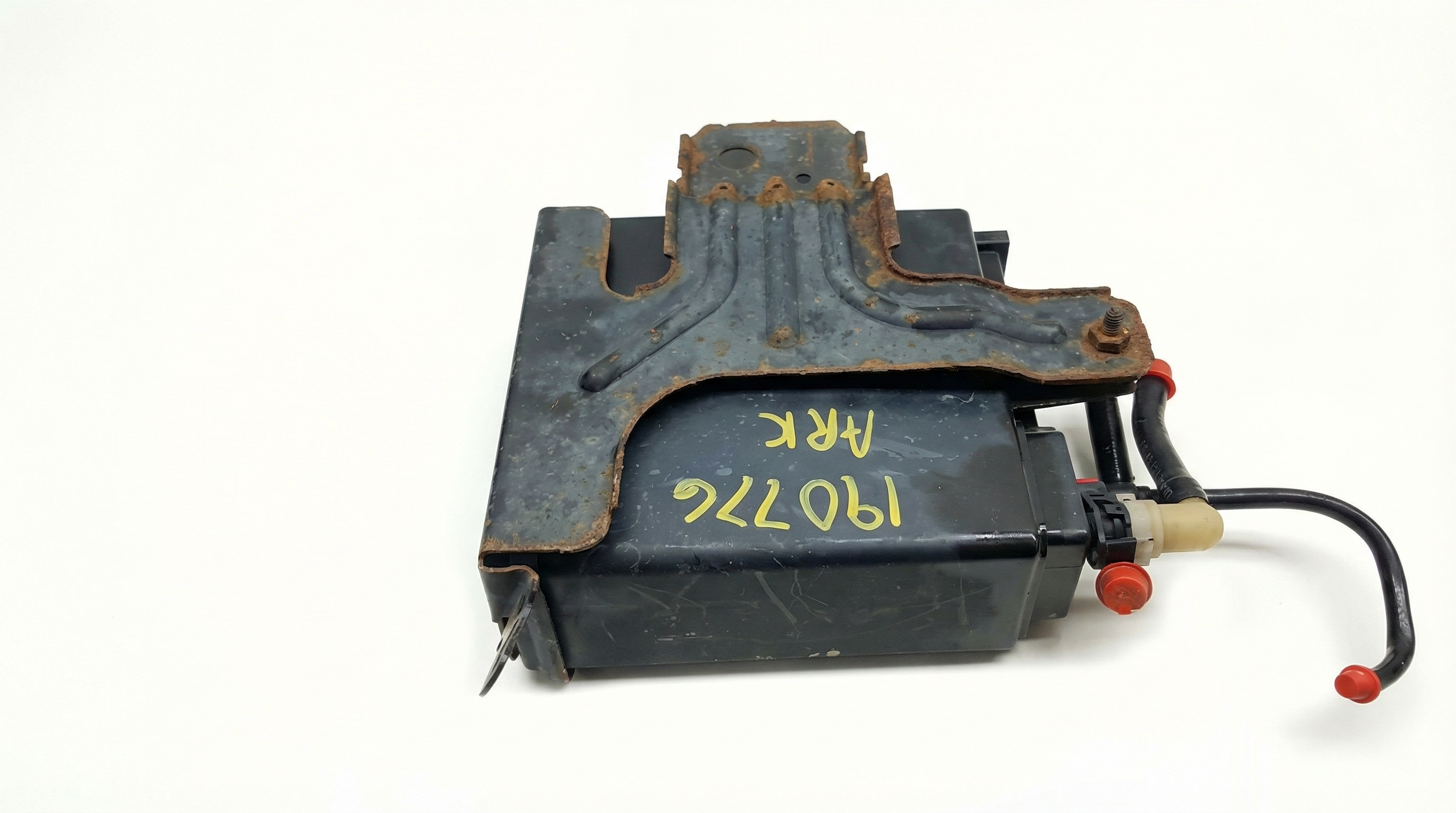
Used OEM Parts in Stock
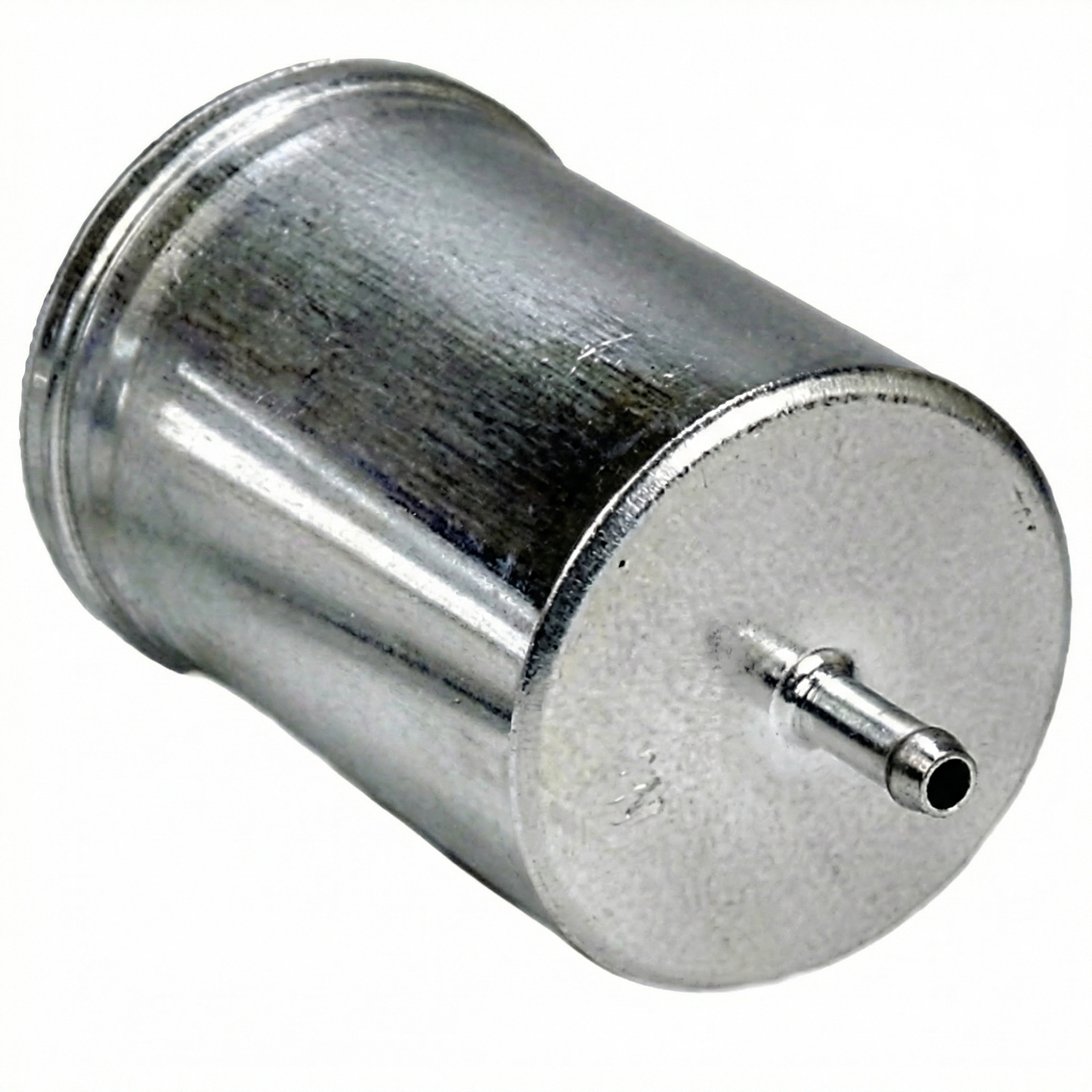
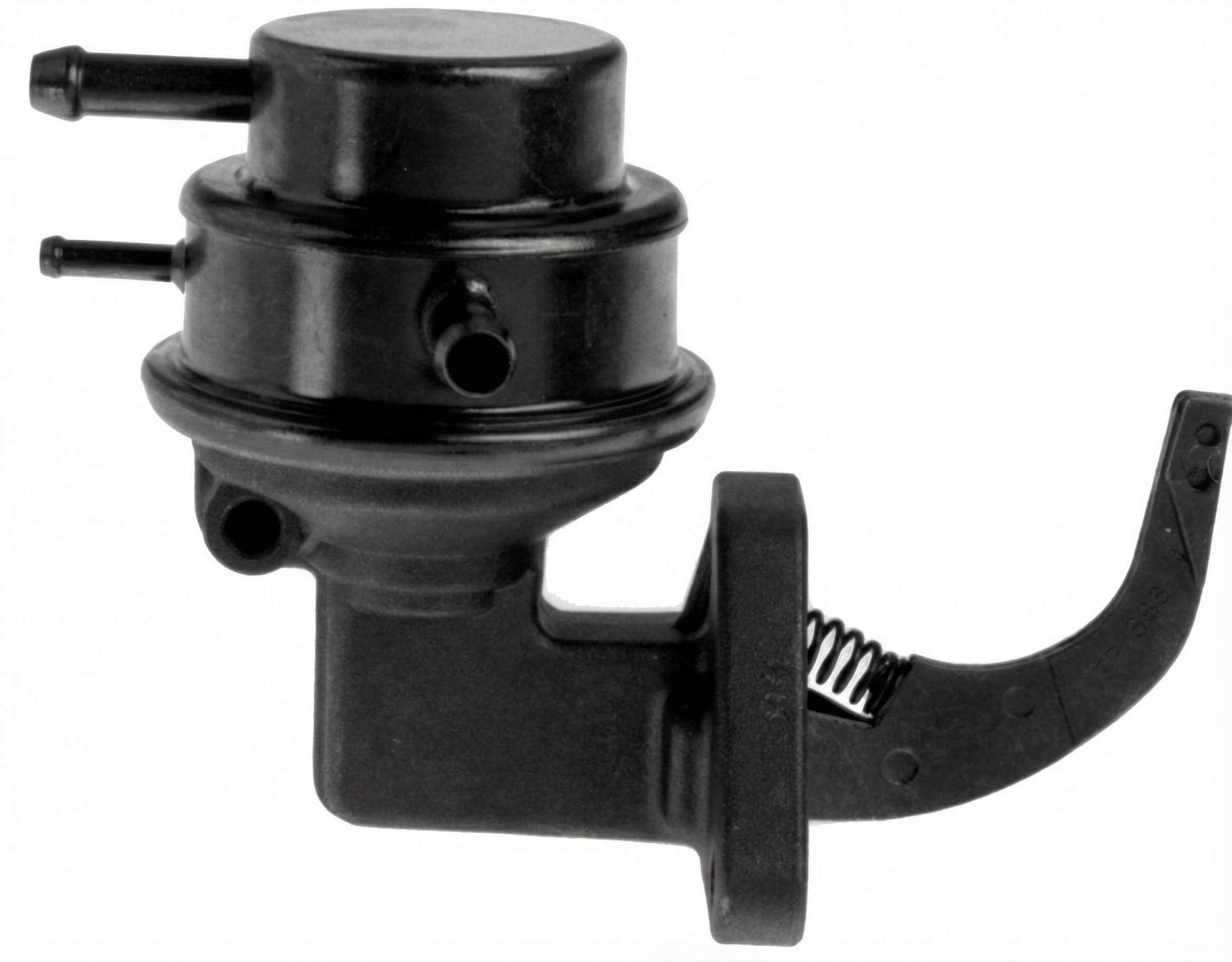
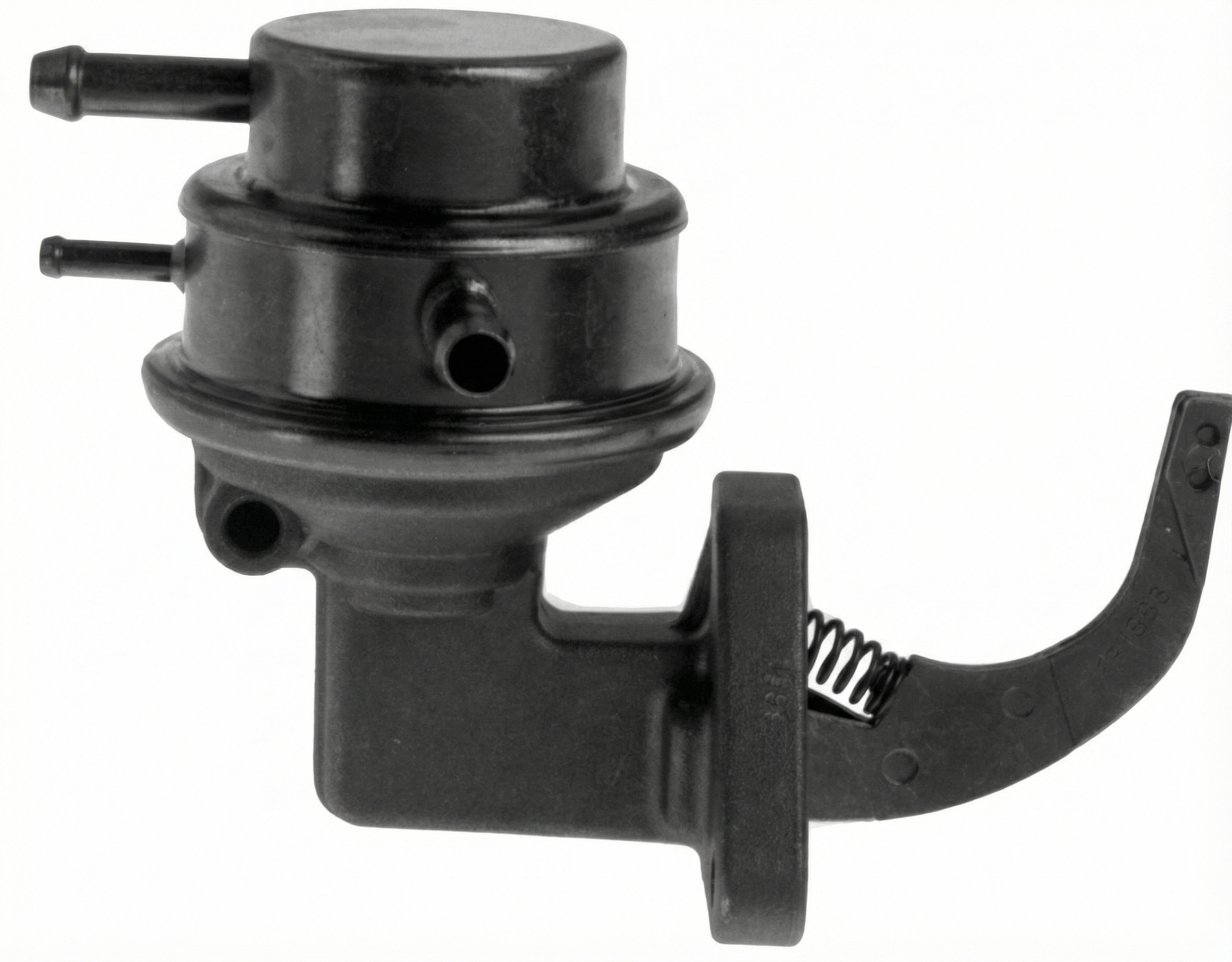
New Aftermarket Parts Available


The information in this article is provided for general reference and educational purposes only. Vehicle specifications, procedures, and part compatibility can vary by production date, trim level, and region. Always consult your vehicle's factory service manual and verify part numbers before purchasing or performing repairs. Safety-critical components such as airbags, seat belts, and braking systems should be installed by a qualified professional.
- Cadillac ESCALADE:
- 🎬 Helpful Videos
- 🛍️ Shop This Part
- What's Unique About the 2010-2017 Cadillac ESCALADE
- Diagnostic Flowchart
- Symptoms You May Notice
- Most Likely Causes
- Rare But Worth Checking
- Diagnosis Steps
- Parts You'll Likely Need
- Related Codes That Often Appear With This One
- Technical Service Bulletins (TSBs) & Recalls
- Platform-Specific Known Issues
- Mechanic-Grade Diagnostic Values
- Scan Tool Commands That Help
- Wiring & Ground Locations
- Real Owner Repair Stories
- "I Checked Everything" — The Actual Cause
- OEM Part Supersession History
- Model Year Variations Within This Range
- 🎟️ Get 5% Off