

P0442 on 2000-2005 Buick LeSabre: EVAP Small Leak Causes & Fixes
For a 2000-2005 Buick LeSabre, a P0442 code is most often caused by a loose or worn-out gas cap. This is the first thing you should check and is an inexpensive fix, typically under $25 for a quality replacement. If a new gas cap doesn't solve it, the next most common culprits are the EVAP purge or vent solenoids. A unique and well-documented issue on this platform is a leak at the fuel filler neck where the metal flange meets the plastic tube, which often requires a smoke test to find.
- Always start with the simplest fix: check that your gas cap is tight and inspect its seal. Replacing it with an OEM ACDelco cap solves the issue more than half the time.
- If a new gas cap doesn't work, the next most likely culprits are the EVAP purge solenoid (on the engine) or the vent solenoid (near the gas tank).
- Do not just replace parts randomly. The official GM-recommended procedure is to use a smoke machine to find the exact location of the leak, which can save you money in the long run.
- This code will not leave you stranded, but it will cause an automatic failure on an emissions test, so it needs to be addressed.
What's Unique About the 2000-2005 Buick LESABRE

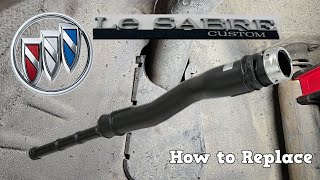
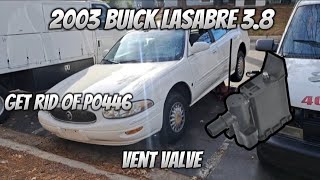
The 2000-2005 Buick LeSabre, built on the GM H-body platform with the durable 3.8L V6 engine, shares its EVAP system design with other GM cars of the era, like the Pontiac Bonneville and Buick Park Avenue. This makes it susceptible to common GM failure points, such as faulty gas caps and EVAP solenoids. A notable and frequently discussed issue on this specific platform is the fuel filler neck's design, where the metal flange at the top can separate from the plastic tube due to the repeated stress of tightening and loosening the gas cap. This creates a small leak that a new gas cap cannot fix and is a common source of a persistent P0442 code, often confirmed only after a smoke test. 🎬 Watch: How to replace a leaking fuel filler neck. Uniquely, the EVAP canister and vent solenoid on the LeSabre are located in the front driver's side of the engine bay, under the air filter 🎬 Watch: How to access and replace the vent valve solenoid. housing, rather than at the rear of the car near the fuel tank, which is a more common location on other vehicles.
Diagnostic Flowchart

Tap your situation to follow the diagnostic path that matches what you're seeing on this vehicle.
Symptoms You May Notice
- Check Engine Light is on
- A faint smell of fuel, particularly around the rear of the car (in some cases)
- A 'Check Gas Cap' message on the driver information center, if equipped.
- Difficulty starting the engine immediately after refueling (a strong indicator of a stuck-open purge valve).
- Replacing the fuel tank pressure (FTP) sensor. While possible, the sensor itself is far less likely to fail than the solenoids, gas cap, or hoses. A faulty FTP sensor may also prevent the EVAP monitor from running at all.
- Replacing the O2 sensors. Oxygen sensors are not related to the EVAP system and will not cause a P0442 code.
Most Likely Causes

- Loose or Faulty Gas Cap 🔴 High Probability The gas cap seal is a rubber O-ring that hardens, cracks, and deteriorates over time from exposure to fuel vapors and weather. This is the most common and simplest reason for a P0442 code on any vehicle, including the LeSabre.
How to confirm: Ensure the cap is tightened until it clicks several times. Inspect the rubber seal for any visible cracks, stiffness, or damage. Also, check the metal lip of the fuel filler neck for rust or debris that could prevent a good seal. Cleaning the filler neck rim with a wire brush or fine-grit sandpaper can resolve sealing issues.
Typical fix: Replace the gas cap. It is highly recommended to use an OEM ACDelco cap (Part No. GT261) to ensure a proper seal, as owners frequently report that aftermarket caps fail to fix the issue.
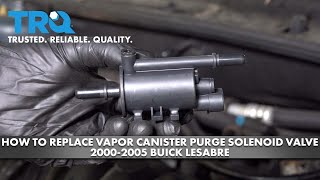
Est. part cost: $15-$30 - Faulty EVAP Purge Solenoid/Valve 🟡 Medium Probability This valve is a very common failure point on GM's 3.8L V6 engine. It can get stuck open or closed, or develop an internal leak, which the system detects during its self-test. A stuck-open valve is a known cause of hard starting after refueling.
How to confirm: The valve is located on the top of the engine, making it easy to access. With the engine off, remove the valve and try to blow through it; if any air passes, it's faulty as it should be normally closed. You can also test it by applying 12V power to its two pins to hear/feel it click open and closed. A stuck-open valve may also cause a P0496 code.
Typical fix: Replace the purge solenoid. It is held by a bracket that slides off and has two quick-disconnect hose connections and an electrical connector, making it a straightforward DIY job.
Est. part cost: $25-$60 - Faulty EVAP Vent Solenoid/Valve 🟡 Medium Probability Located near the charcoal canister in the front driver's side of the engine bay, this valve is exposed to dirt and moisture, which can cause it to fail and not seal properly during the EVAP test.
How to confirm: A scan tool can command the valve to close during a smoke test. If smoke escapes from the vent valve, it has failed. You can also bench test it by removing it and applying 12V power; it should click closed and prevent air from passing through. A P0449 code often accompanies a P0442 when the vent solenoid circuit is faulty.
Typical fix: Replace the vent solenoid. Access is from the engine bay, underneath the air filter housing.
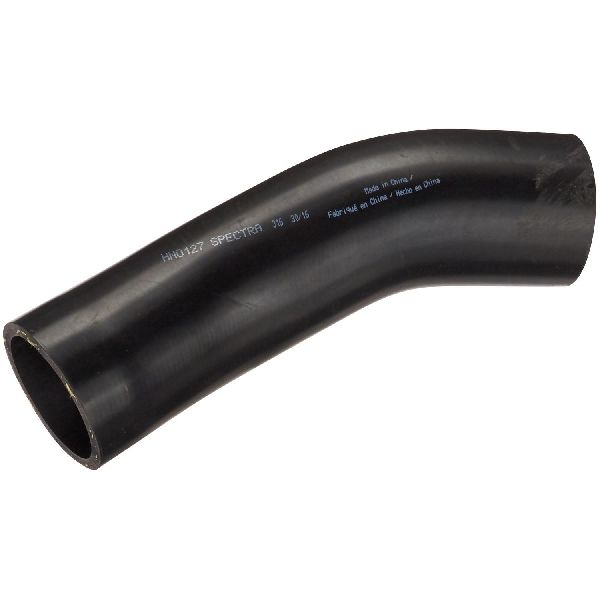
Est. part cost: $30-$70 - Cracked or Disconnected EVAP Hoses ⚪ Low Probability After two decades, the plastic and rubber hoses in the EVAP system become brittle from age and engine heat, leading to cracks and small leaks, especially at connection points and elbows.
How to confirm: A visual inspection may reveal obvious cracks or loose connections, especially in the engine bay around the purge solenoid. A smoke test is the most effective way to find small, hard-to-see leaks in the hose network.
Typical fix: Replace the cracked section of hose or the entire line if necessary. Ensure connections are secure.
Est. part cost: $5-$50
Rare But Worth Checking
- Leaking Fuel Filler Neck: On LeSabres and related H-body platforms, the metal flange at the top of the filler neck can separate from the plastic tube, creating a leak that a new gas cap cannot fix. This is a well-documented failure mode in owner forums. The fix involves replacing the entire filler neck assembly. This is often found with a smoke test, which will show smoke exiting from the top of the fill pipe, just before the gas cap area.
- Cracked EVAP Charcoal Canister: The plastic body of the canister itself can develop hairline cracks from age or road debris impact, causing a leak. This is usually the last part to be checked and is confirmed with a smoke test.
- Leaking Fuel Tank Sending Unit Gasket: The large O-ring that seals the fuel pump/sending unit assembly to the top of the fuel tank can degrade or be improperly seated, causing a small leak. A faint fuel smell inside the trunk, especially after refueling, can be a symptom. This was identified by one owner as the final fix after replacing both EVAP solenoids.
Diagnosis Steps
- Check for other stored trouble codes that could provide more clues.
- Inspect the gas cap. Remove it, check the seal for cracks or damage, and clean any rust or debris from the filler neck sealing surface with a wire brush or sandpaper. Tighten the cap until it clicks multiple times, clear the code, and drive for a few days to see if it returns. This is the simplest and most common fix.
- If the code returns, perform a thorough visual inspection of all accessible EVAP hoses and lines in the engine bay and under the car for obvious cracks or disconnections. Pay close attention to rubber elbows.
- Test the purge solenoid. It's on top of the engine. With the engine off, try blowing through it; it should be closed. If air passes, it's bad. Also listen for a click when applying 12V power. A long crank time after refueling strongly points to this part.
- If the simple checks do not reveal the issue, the most effective next step is to have a professional perform an EVAP smoke test. This involves injecting low-pressure smoke into the system and watching where it escapes, definitively pinpointing the leak's location (e.g., filler neck, canister, or a hidden hose). This is the diagnostic method recommended by GM in TSB #21-NA-124 and #PIT4943D.
Parts You'll Likely Need
- Fuel Tank Cap
(OEM #ACDelco GT261)— This is the most frequent cause of a P0442 code due to its seal wearing out over time. An OEM cap is strongly recommended by owners for a reliable seal.
Trusted brands: ACDelco
OEM price range: $20-$30
Aftermarket price range: $10-$20 - Vapor Canister Purge Solenoid
(OEM #ACDelco 214-641)— A very common failure item on the 3.8L V6 that gets stuck or develops a leak. It's located on the engine and is easy to access and replace.
Trusted brands: ACDelco, Delphi, Dorman
OEM price range: $40-$60
Aftermarket price range: $25-$45 - Vapor Canister Vent Solenoid
(OEM #ACDelco 214-2082)— This valve is located near the fuel tank and can fail to seal properly during the system's self-test due to exposure to the elements, resulting in a small leak code.
Related Codes That Often Appear With This One
- P0455 — Indicates a large EVAP leak. If you see both, it could mean a component has failed completely, like a disconnected hose or a very bad valve, but the system is intermittently detecting it as both large and small.
- P0440 — A general EVAP system malfunction code. It often appears with P0442 and points to the same set of potential causes. Owners have reported seeing P0440 and P0442 together when the fuel filler neck was the root cause.
- P0449 — This code specifically points to a fault in the EVAP vent solenoid circuit. If you have P0442 and P0449 together, the vent solenoid is almost certainly the problem.
Technical Service Bulletins (TSBs) & Recalls
- 21-NA-124: Provides diagnostic tips on testing for possible EVAP leaks to correct DTCs P0442 and/or P0455.
- PIT4943D: Directs technicians to use an Evaporative Emissions System Tester (smoke machine) for diagnosis of P0442.
Platform-Specific Known Issues
- TSB Guidance: General Motors has issued technical service bulletins (TSBs) regarding P0442. Bulletin #21-NA-124 provides a diagnostic hierarchy: first check all EVAP lines and connections, then check the vent valve, and finally the purge valve. Bulletin #PIT4943D directs technicians to use an evaporative emissions system tester (a smoke machine) to properly diagnose the code, reinforcing that part-swapping is not the recommended approach and warning that aftermarket testers may lead to misdiagnosis.
- Fuel Filler Neck Separation: A widely reported issue in owner forums for the LeSabre and its platform mates is the separation of the metal flange from the plastic fuel filler tube. The constant twisting of the gas cap eventually wears a groove and breaks the seal. Owners report that after replacing the gas cap and solenoids, this is often the final culprit found via a smoke test. A common DIY repair is to remove the neck, clean the area, and apply JB Weld epoxy to permanently reseal the metal flange to the plastic tube.
Mechanic-Grade Diagnostic Values
- EVAP Canister Purge Solenoid Resistance — expected: 30 - 38 Ohms. Failure: A reading outside this range, especially infinite resistance (open circuit), indicates a faulty solenoid coil.
- EVAP Canister Vent Solenoid Resistance — expected: 48 - 65 Ohms. Failure: A reading outside this range suggests the solenoid coil is bad.
- Fuel Tank Pressure (FTP) Sensor Voltage — expected: Around 2.5-2.7V with the gas cap off (atmospheric pressure). Voltage decreases as vacuum increases.. Failure: Voltage stuck high (near 5V) or low (near 0V), or not changing when a vacuum is applied during a test.
Scan Tool Commands That Help
- Tech 2 / Professional Bidirectional Scanner: EVAP Purge/Seal Test or Service Bay Test — This command is essential for performing a smoke test. It commands the normally-open EVAP Vent Solenoid to close, sealing the system so it can be pressurized with smoke to find leaks.
- Tech 2: EVAP Service Bay Test (SBET) — This function initiates an automated, on-demand test of the entire EVAP system. However, GM issued a TSB (#02-06-04-014) eliminating this function for the 2001 LeSabre due to accuracy issues, though it may be present for the 2000 model year. A technician may need to identify the vehicle as a 2000 model to access the test.
Wiring & Ground Locations
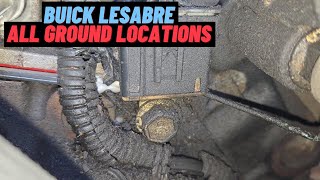
- G105 — In the engine bay, on the passenger side, located under the ignition control module.. This splice pack ground provides the ground path for the Powertrain Control Module (PCM) and the Mass Airflow (MAF) sensor, both of which are critical for engine management and running the EVAP diagnostic tests.
- G106 — In the engine bay, located close to the airbox on the driver's side strut tower.. Provides a ground for the cruise control module and brake fluid level switch. While not directly tied to EVAP, poor grounds in this area can cause electrical noise that may affect PCM operations.
- G201 — Behind the passenger side kick panel, at the front door pillar.. This ground serves the Data Link Connector (DLC), which is necessary for communication with a scan tool to read codes and perform bidirectional tests.
- G401 / G402 — G401 is on the lower right corner of the trunk; G402 is on the lower left corner.. These grounds are for the Rear Integration Module and various rear lighting. While the main EVAP components are in the front, these grounds are near the fuel tank and filler neck area and are important for overall chassis ground integrity.
Real Owner Repair Stories
- GM Forum user 'Bretton65' (Buick (model not specified, but context implies LeSabre/Bonneville family)) — Persistent P0442 code.
❌ Tried (didn't work) Replaced vapor canister purge valve, Replaced canister vent solenoid
✅ What actually fixed it Replaced the fuel tank pressure sensor and the fuel pump sending unit gasket. The user noted a fuel smell near the access panel in the trunk, leading them to believe the gasket was the primary culprit. - YouTube video by 'Repairs and Stuff' (2000-2005 Buick LeSabre) — P0440 EVAP system leak code.
❌ Tried (didn't work) Inspected gas cap gasket, Tested purge valve (held vacuum correctly)
✅ What actually fixed it A smoke test revealed a large leak from the top of the fuel filler neck, where the rubber/plastic part meets the metal flange. Replacing the entire fuel filler neck assembly resolved the leak.
OEM Part Supersession History
GM 1997278→ACDelco 214-641— Standard part evolution and consolidation for the Vapor Canister Purge Solenoid.ACDelco 214-1363→ACDelco 214-2082— Part update for the Vapor Canister Vent Solenoid.
Model Year Variations Within This Range
- 2001-2002: Per GM TSB #02-06-04-014, the "Service Bay Evap Test" (SBET) function was removed from the Tech 2 scan tool software for these model years due to accuracy issues. A technician may need to identify the vehicle as a 2000 model to access this automated test.
Helpful Videos

Used OEM Parts in Stock

New Aftermarket Parts Available


The information in this article is provided for general reference and educational purposes only. Vehicle specifications, procedures, and part compatibility can vary by production date, trim level, and region. Always consult your vehicle's factory service manual and verify part numbers before purchasing or performing repairs. Safety-critical components such as airbags, seat belts, and braking systems should be installed by a qualified professional.
- Buick LESABRE:
- 🎬 Helpful Videos
- 🛍️ Shop This Part
- What's Unique About the 2000-2005 Buick LESABRE
- Diagnostic Flowchart
- Symptoms You May Notice
- Most Likely Causes
- Rare But Worth Checking
- Diagnosis Steps
- Parts You'll Likely Need
- Related Codes That Often Appear With This One
- Technical Service Bulletins (TSBs) & Recalls
- Platform-Specific Known Issues
- Mechanic-Grade Diagnostic Values
- Scan Tool Commands That Help
- Wiring & Ground Locations
- Real Owner Repair Stories
- OEM Part Supersession History
- Model Year Variations Within This Range
- 🎟️ Get 5% Off