

P0442 on 2013-2019 Buick LaCrosse: Causes and Fixes for a Small EVAP Leak
For a 2013-2019 Buick LaCrosse, code P0442 most often points to a faulty gas cap or a failing EVAP purge valve. A new gas cap is under $30, while a purge valve replacement can cost between $150 and $250 at a shop. Always check the gas cap first, but the purge valve is a very common failure on this specific platform.
- P0442 indicates a small leak in the EVAP (emissions) system.
- Always start by checking the gas cap; make sure it's tight and the seal isn't cracked. This is the easiest and most common fix.
- On the 2013-2019 LaCrosse, the EVAP purge valve (on the engine) is a very common failure item that causes this code. It's the second thing you should check.
- While you can continue to drive the car, the Check Engine Light will cause an automatic failure on an emissions test.
- If the gas cap and purge valve are good, finding the leak will likely require a professional smoke test, as recommended in manufacturer service bulletins.
What's Unique About the 2013-2019 Buick LACROSSE

On this generation of Buick LaCrosse and other similar GM vehicles built on the Epsilon II platform, the EVAP purge valve is a very common failure point that can cause a P0442 code. In fact, GM issued a special coverage program (N192210240) for this part on the 2016 LaCrosse, extending the warranty to 10 years or 120,000 miles due to high failure rates. A failing purge valve can also cause symptoms like a rough idle or difficulty starting immediately after refueling. While a loose gas cap is always the first thing to check, the purge valve should be the next suspect on these specific cars before beginning a complex and costly smoke test.
Diagnostic Flowchart

Tap your situation to follow the diagnostic path that matches what you're seeing on this vehicle.
Generation note: This range covers the end of the second generation (2013-2016) and the entire third generation (2017-2019) LaCrosse. While the EVAP system components are similar, the specific part numbers for components like the purge valve can differ. For example, the purge valve for a 2013-2016 LaCrosse with the 3.6L V6 is often part number 12690512 (or its superseding numbers), while the 2017-2019 models may use a different part like 12630282. Always verify parts with your vehicle's VIN.
Symptoms You May Notice
- Check Engine Light is on.
- A faint smell of gasoline, particularly around the rear of the car or near the gas cap.
- Slightly reduced fuel economy.
- Engine running rough, hesitating, or stalling at idle.
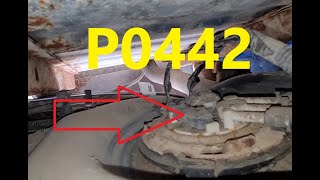
- Difficulty starting the engine right after filling up with gas (long crank time). 🎬 Watch: A helpful breakdown of P0442 causes and fixes.
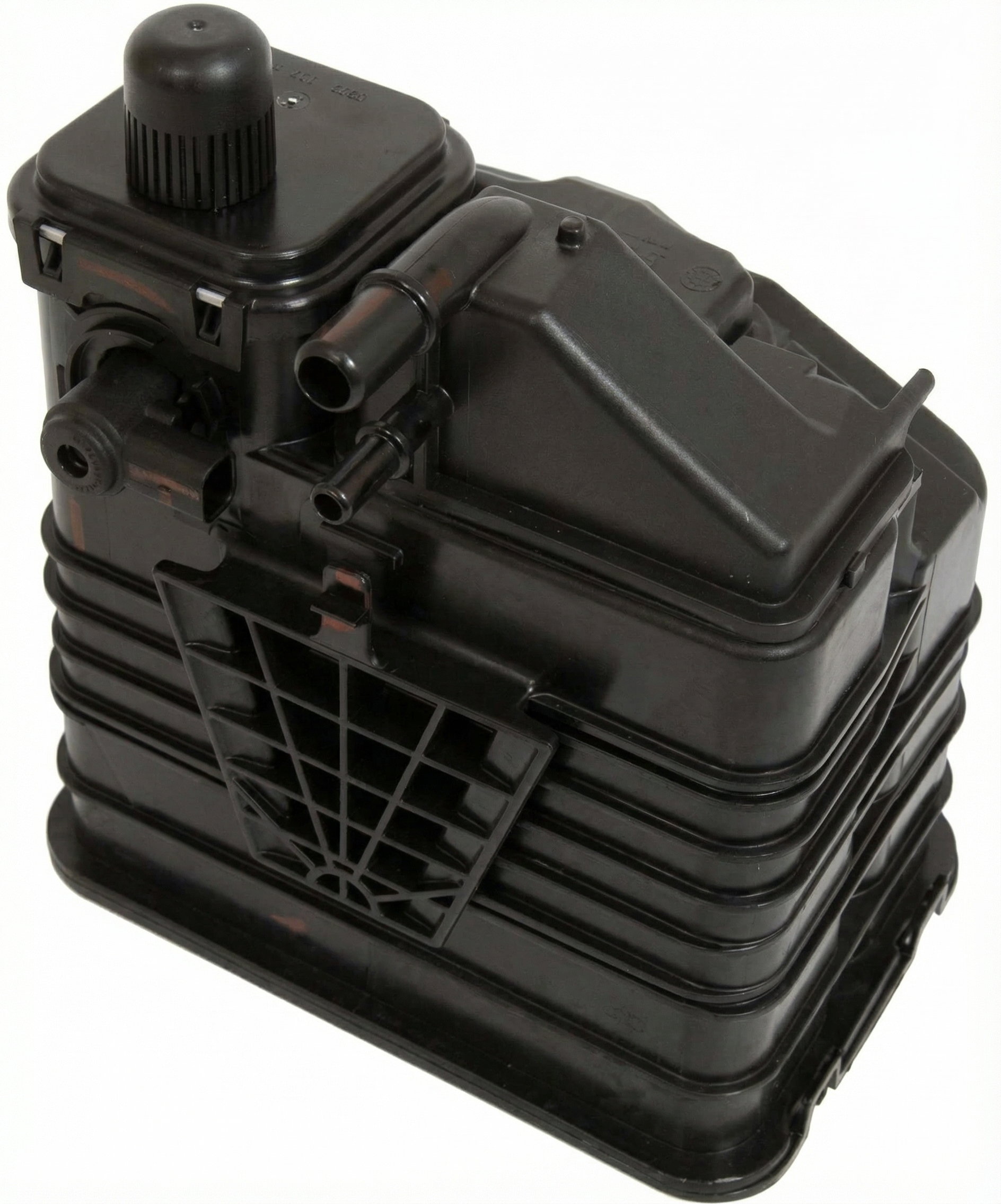
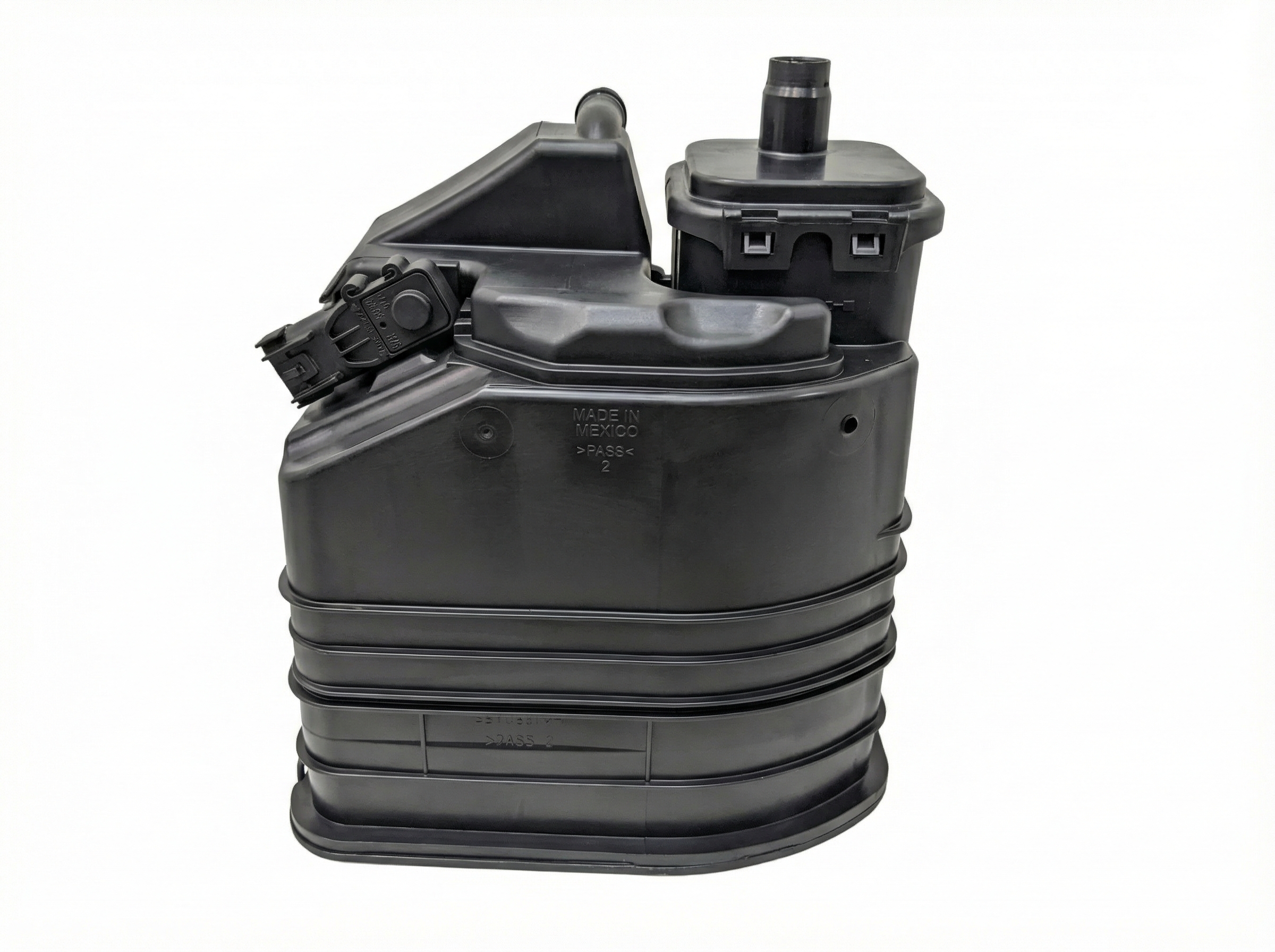
- Replacing the charcoal canister. The canister itself is rarely the cause of a small leak unless it is physically cracked. It's more often associated with fueling issues (gas pump clicks off) or P0496 codes if it becomes saturated with fuel from overfilling the tank.
- Replacing oxygen sensors. O2 sensors are not part of the EVAP system and will not cause a P0442 code.
Most Likely Causes

- Loose or Faulty Gas Cap 🔴 High Probability This is the most common cause for a P0442 on any vehicle. The rubber O-ring seal on the cap can crack, stiffen, and degrade over time, preventing a proper seal. Even if it looks okay, the seal can lose its integrity.
How to confirm: First, ensure the cap is tightened until it clicks multiple times. If the light returns, visually inspect the cap's rubber seal for any obvious cracks, stiffness, or damage. A visual failure confirms the need for replacement. A worn-out gasket on a gas cap with a shot seal was identified as a cause in a P0442 diagnosis on a Buick.
Typical fix: Replace the gas cap. It is a simple and inexpensive first step.
Est. part cost: $15-$35 - Faulty EVAP Purge Solenoid Valve 🔴 High Probability This is a well-documented failure point on many GM vehicles from this era, including the LaCrosse. GM issued a special coverage adjustment (#N192210240) for the 2016 model year due to this part failing and causing EVAP codes. The valve gets stuck partially open, creating a constant small leak that the system detects.
How to confirm: With the engine running at idle, disconnect the vapor line from the purge valve (located on the engine) and feel for suction at the valve's port. There should be no vacuum at idle. If you feel suction, the valve is stuck open and is faulty. This is the most common failure mode. Another test is to try blowing through the valve when it's removed from the car; if air passes through when it's not energized, it has failed.
Typical fix: Replace the purge solenoid valve. It is highly recommended to use a genuine GM or ACDelco part, as aftermarket versions are known to fail quickly. The replacement is a common DIY job.
Est. part cost: $30-$70 - Faulty EVAP Vent Solenoid 🟡 Medium Probability The vent solenoid, located near the charcoal canister at the rear of the car, can get stuck or fail electronically. Dust and dirt from the road can clog the valve, especially on vehicles driven on gravel roads. GM Service Bulletin #21-NA-124 mentions checking for a stuck-open vent valve as a key diagnostic step for P0442 after checking lines and connections.
How to confirm: Diagnosis typically requires a bi-directional scan tool to command the valve closed while performing a smoke test. If smoke exits the vent valve when it's commanded shut, the valve is faulty. A failing vent valve can also cause difficulty when refueling (gas pump clicks off repeatedly).
Typical fix: Replace the EVAP vent solenoid. This is generally accessible from underneath the rear of the vehicle.
Est. part cost: $30-$80 - Cracked or Disconnected EVAP Hose ⚪ Low Probability Plastic and rubber lines can become brittle over time and crack, especially at connection points. This is not specific to the LaCrosse but is a possibility on any aging vehicle. TSB #21-NA-124 advises technicians to first investigate if all EVAP lines are properly installed and fully seated before checking hardware.
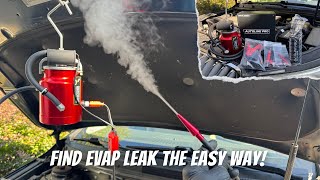
How to confirm: A visual inspection may reveal an obvious crack or disconnected line. However, small leaks usually require an EVAP smoke test to find the exact location. This is the procedure recommended by GM in TSB #PIT4943D. 🎬 See how to find small leaks using a smoke machine.
Typical fix: Replace the damaged section of hose or reconnect it.
Est. part cost: $10-$50
Rare But Worth Checking
- Leaking Fuel Tank Filler Neck: Rust and corrosion can create small pinholes in the metal filler neck where the gas cap screws on, preventing a good seal. A YouTube video documented this exact failure on a 2010 LaCrosse, where a smoke test revealed a hole rusted through right under a mounting bracket, requiring a full filler neck replacement to fix. A forum user on a similar GM vehicle fixed their P0442 by cleaning rust off the filler neck surface where the cap seal meets.
- Leaking Fuel Tank Gasket / Sending Unit Seal: A forum user with a Buick reported chasing a P0442 code by replacing both solenoids, only to find the issue was a faulty fuel pump sending unit gasket. The problem was discovered due to a distinct gas smell inside the trunk, and replacing the gasket resolved the code.
Diagnosis Steps
- Check the gas cap. Remove it, inspect the seal for cracks, and retighten it until it clicks at least three times. Clear the code and drive for a few days to see if it returns.
- If the light returns, inspect and test the EVAP purge valve in the engine bay. With the engine idling, disconnect the hose coming from the fuel tank side of the valve and check for any suction. If vacuum is present, the valve is bad and must be replaced.
- Visually inspect all accessible EVAP hoses and lines between the engine bay and the fuel tank for obvious cracks, damage, or disconnections, paying close attention to connection points as recommended by TSB #21-NA-124.
- If no obvious issues are found, the most effective next step is to have a professional perform an EVAP smoke test. This test fills the system with a harmless, visible smoke under low pressure, making even the smallest leaks easy to spot. This is the procedure recommended by GM in TSB #PIT4943D.
- During the smoke test, pay close attention to the purge valve, vent valve, fuel filler neck (especially around mounting brackets), and all line connection points.
Parts You'll Likely Need

- Vapor Canister Purge Valve
(OEM #12690512 (for 2013-2016 3.6L V6, superseded by 12737252))— This is the most common point of failure on this platform for EVAP leak codes. It gets stuck open, causing a leak that the system detects. Special Coverage #N192210240 was issued for this part on the 2016 model. Part number 12610560 is also a common reference for this part.
Trusted brands: ACDelco, GM Genuine Parts
OEM price range: $30-$55
Aftermarket price range: $20-$45 - Fuel Cap
(OEM #GT294)— A worn-out gas cap seal is the simplest and most common cause of a small EVAP leak code on any vehicle.
Trusted brands: ACDelco, GM Genuine Parts
OEM price range: $20-$35
Aftermarket price range: $15-$25 - Vapor Canister Vent Solenoid
(OEM #85123399)— This valve, located near the fuel tank, can fail and get stuck open or closed, causing a leak or other EVAP system faults like difficulty fueling.
Trusted brands: ACDelco, Standard Motor Products
OEM price range: $40-$90
Aftermarket price range: $30-$60
Related Codes That Often Appear With This One
- P0455 — This code indicates a large EVAP leak. It can appear with P0442 if a component fails intermittently or if the leak is on the borderline between small and large. TSB #21-NA-124 specifically addresses diagnostics for both P0442 and P0455 together, suggesting they often share the same root causes like faulty lines or valves.
- P0496 — This code means 'EVAP Flow During a Non-Purge Condition' and is very commonly caused by a faulty purge valve that is stuck open. Since a stuck-open purge valve also causes a leak, it's very common to see P0496 and P0442 together on these GM vehicles. Special Coverage N192210240 was created to address this exact condition.
Technical Service Bulletins (TSBs) & Recalls
- 21-NA-124: Provides diagnostic tips for P0442 and/or P0455. It advises checking EVAP lines and connections for damage or improper seating first, then testing the vent valve for being stuck open, and finally investigating the purge valve.
- PIT4943D: Directs technicians to review a Techlink article about using an EVAP system tester (smoke machine) to properly diagnose a P0442 code.
- N192210240: This is a Special Coverage Adjustment, not a traditional TSB. It extends the warranty on the purge valve for certain 2016 LaCrosse models to 10 years/120,000 miles due to a known defect causing the valve to stick open.
Platform-Specific Known Issues
- Special Coverage N192210240: Purge Valve Warranty Extension: GM issued this program for the 2016 LaCrosse (among other vehicles) which extended the warranty on the EVAP purge valve to 10 years or 120,000 miles. This was due to a high failure rate where the valve would not fully close, causing a rough idle, hesitation, and setting codes like P0442 and P0496. Owners within this period could get the part replaced at no charge.
- Purge Valve Part Number Variations: The purge valve part number differs between the second (ending 2016) and third (starting 2017) generations. The 2013-2016 LaCrosse with the 3.6L V6 typically uses ACDelco/GM part 12690512, which has been superseded by newer numbers like 12737252. The 2017-2019 LaCrosse may use part 12630282. It is critical to verify the correct part number with the vehicle's VIN before purchasing.
Mechanic-Grade Diagnostic Values
- Fuel Tank Pressure (FTP) Sensor Voltage — expected: With the sensor unplugged from the tank but connected to the harness (at atmospheric pressure), a scan tool should read between 1.3 and 1.7 volts.. Failure: A reading of 0 volts or 5 volts indicates a wiring problem or a failed sensor. A reading stuck at a specific voltage that doesn't change may also indicate failure.
- FTP Sensor Wiring Integrity Check — expected: Using a jumper wire, connect the 5V reference wire to the signal wire at the sensor connector. The scan tool's FTP sensor voltage PID should read ~5.0 volts.. Failure: If the scan tool does not show ~5.0 volts, there is an open or short in the signal or reference circuit. If it does show 5.0 volts, the wiring is confirmed good, pointing towards a faulty sensor if it was previously reading low.
Scan Tool Commands That Help
- GDS2 (GM Global Diagnostic System 2): EVAP System Test / Output Control Functions — This is the factory-level tool used to perform a complete, automated EVAP system leak test. It can also be used for manual diagnosis by commanding specific components.
- GDS2 or equivalent bidirectional scanner: EVAP Vent Valve Control (Seal System) — During a smoke test, the EVAP vent valve must be commanded closed to seal the system. The vent valve is normally open, so without this command, smoke will simply exit the vent, and no pressure will build to find leaks.
- GDS2 or equivalent bidirectional scanner: EVAP Purge Valve Control — Used to test the purge valve functionality. A technician can command the valve to open and close while monitoring engine RPM or fuel trims to see if it is responding correctly. This can help diagnose a sticky or non-responsive valve.
Wiring & Ground Locations
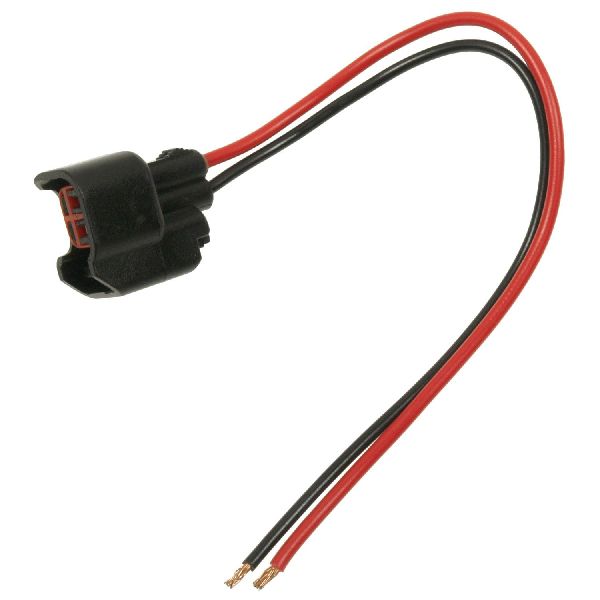
- Purge Valve Connector — In the engine bay, on the intake manifold near the throttle body.. This 2-wire connector provides power and control to the purge valve. A corroded or damaged connector can cause the same symptoms as a failed valve.
- Vent Valve Connector — Underneath the vehicle at the rear, on or near the charcoal canister by the driver's side rear wheel.. This 2-wire connector powers the vent valve. It is exposed to road debris and moisture, making it a potential point of failure due to corrosion or wire damage, which could set a P0449 but also contribute to leak codes.
- Fuel Tank Pressure (FTP) Sensor Connector — On top of the fuel pump module, inside the fuel tank. Access requires dropping the tank.. A bad connection here can cause incorrect pressure readings, leading the ECU to falsely set a P0442 or other EVAP codes (P0451, P0452, P0453).
Real Owner Repair Stories
- YouTube channel 'auto-pro' (Chevrolet Tahoe (similar GM EVAP system)) — Check Engine Light with code P0442.
❌ Tried (didn't work) A full external smoke test was performed, and no leaks were found in any hoses, the gas tank, or the vent valve.
✅ What actually fixed it The purge valve was identified as the only remaining component that could leak internally into the engine intake without showing on an external smoke test. Replacing the purge valve resolved the code. - YouTube channel 'Provo-st' (General older car (demonstrating common P0442 fix)) — Check Engine Light with code P0442.
❌ Tried (didn't work) Assuming it was a complex leak.
✅ What actually fixed it The fuel filler neck had significant rust and corrosion where the gas cap seal makes contact. Cleaning the rust off the filler neck surface with a wire brush to create a smooth sealing surface fixed the leak and cleared the code.
"I Checked Everything" — The Actual Cause
- A common scenario for P0442 on these GM vehicles is passing a smoke test, yet the code persists. This often points to a faulty EVAP purge valve. The purge valve is designed to leak into the engine's intake manifold, not to the outside atmosphere. A smoke test will not reveal this type of internal leak, as the smoke has nowhere to escape externally. If the gas cap is good and a smoke test reveals no leaks, the purge valve is the next most likely culprit.
OEM Part Supersession History
12610560→12690512— Standard part evolution for improved reliability or manufacturing.12690512→12737252— Standard part evolution for improved reliability or manufacturing.
Heads up: These parts are generally interchangeable for the specified applications.
Model Year Variations Within This Range
- 2013-2016 (2nd Gen): These models typically use the LFX 3.6L V6 engine. The common purge valve part number is 12690512 and its supersessions.
- 2017-2019 (3rd Gen): The LaCrosse was fully redesigned for 2017 with a new chassis and the updated LGX 3.6L V6 engine. This generation uses a different purge valve, part number 12630282, which is not interchangeable with the earlier generation.
Helpful Videos

Used OEM Parts in Stock



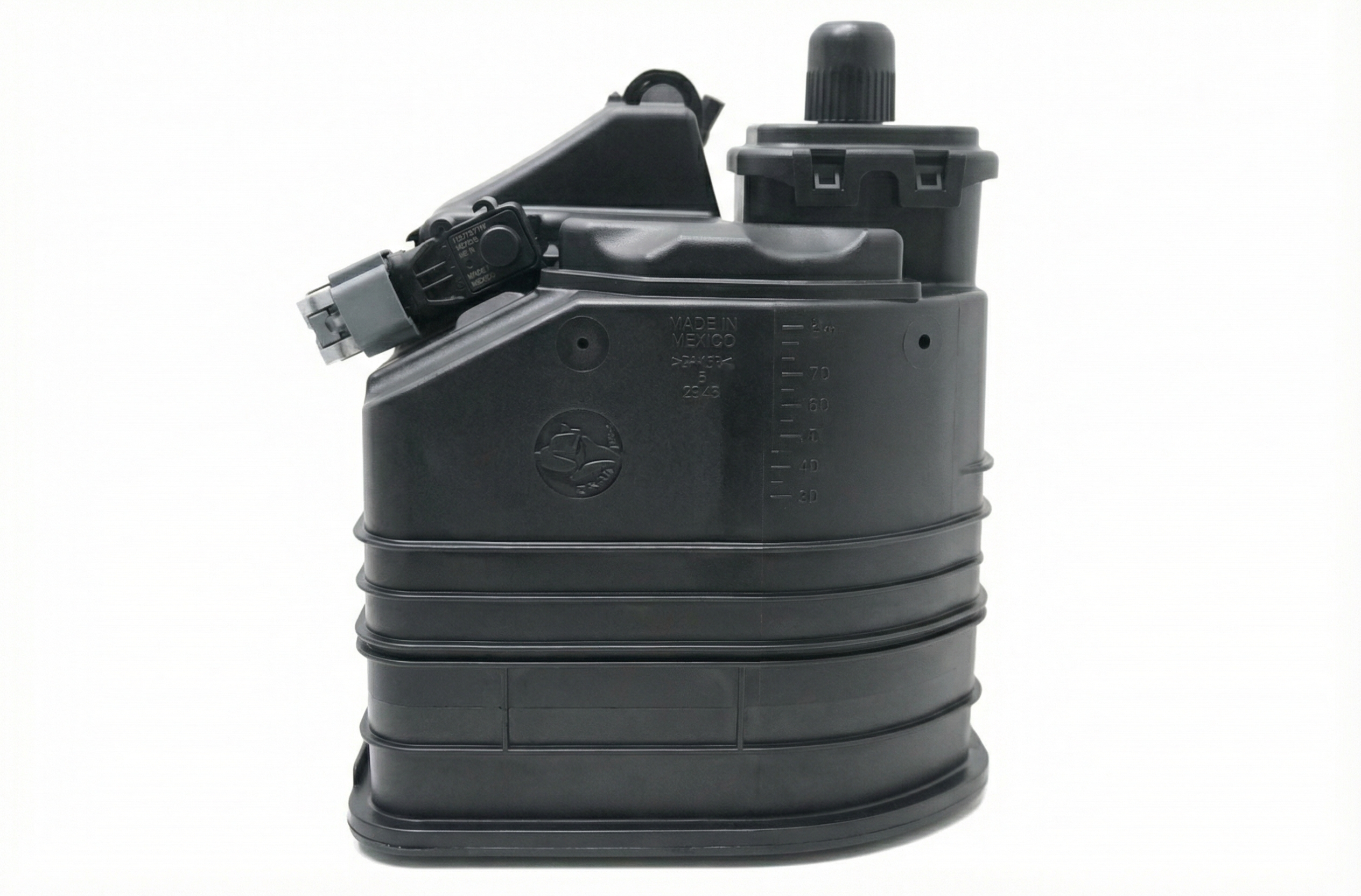
New Aftermarket Parts Available


The information in this article is provided for general reference and educational purposes only. Vehicle specifications, procedures, and part compatibility can vary by production date, trim level, and region. Always consult your vehicle's factory service manual and verify part numbers before purchasing or performing repairs. Safety-critical components such as airbags, seat belts, and braking systems should be installed by a qualified professional.
- Buick LACROSSE:
- 🎬 Helpful Videos
- 🛍️ Shop This Part
- What's Unique About the 2013-2019 Buick LACROSSE
- Diagnostic Flowchart
- Symptoms You May Notice
- Most Likely Causes
- Rare But Worth Checking
- Diagnosis Steps
- Parts You'll Likely Need
- Related Codes That Often Appear With This One
- Technical Service Bulletins (TSBs) & Recalls
- Platform-Specific Known Issues
- Mechanic-Grade Diagnostic Values
- Scan Tool Commands That Help
- Wiring & Ground Locations
- Real Owner Repair Stories
- "I Checked Everything" — The Actual Cause
- OEM Part Supersession History
- Model Year Variations Within This Range
- 🎟️ Get 5% Off