

P0442 on 2000-2005 Buick Century: EVAP Small Leak Causes and Fixes
This code indicates a small leak in the fuel vapor (EVAP) system. The most common cause is a loose or worn-out gas cap. If that's not the issue, the next most likely culprits are a faulty EVAP purge or vent solenoid, which are known failure points on this platform.
- P0442 means your Buick Century has a small leak in the fuel vapor system.
- Always start with the simplest and most likely fix: check that your gas cap is tight and its seal is in good condition.
- If the gas cap isn't the problem, the next parts to inspect are the EVAP purge valve (in the engine bay) and the vent valve (near the gas tank).
- While you can drive the car without issue, the Check Engine Light will stay on and you will not pass an emissions inspection until the leak is repaired.
- A smoke test is the most reliable way to find a leak if it's not one of the common, easily replaceable components.
What's Unique About the 2000-2005 Buick CENTURY

The P0442 code is a very common issue on this generation of GM W-body vehicles, including the Buick Century. Its frequency is highlighted by the existence of multiple Technical Service Bulletins (TSBs) issued to dealers. These bulletins, like #21-NA-124 and #PIT4943D, provide technicians with specific diagnostic tips for finding EVAP leaks, indicating that GM recognized this as a recurring problem that required specialized guidance for efficient repair. The plastic and rubber components of the EVAP system become brittle with age, and corrosion of underbody parts like the vent solenoid and filler neck is common.
Diagnostic Flowchart
Tap your situation to follow the diagnostic path that matches what you're seeing on this vehicle.
Symptoms You May Notice
- Check Engine Light is on
- A faint smell of fuel, particularly around the rear of the car or near the gas cap.
- Difficulty starting the car immediately after refueling (if the purge valve is stuck open).
- Gas pump nozzle clicks off repeatedly when trying to refuel (if the vent valve is stuck closed or canister is clogged).
- Replacing the oxygen (O2) sensors, as they are common maintenance items but are unrelated to the EVAP system.
- Replacing the catalytic converter, which is a costly repair for different emissions codes (like P0420) and will not fix a P0442.
Most Likely Causes


- Loose or Faulty Gas Cap 🔴 High Probability The gas cap seal is a simple rubber O-ring that degrades over time with exposure to fuel vapors and weather, becoming hard and brittle. It's the most frequently moved part of the sealed EVAP system and a very common failure point.
How to confirm: Ensure the cap is tightened until it clicks at least once. Some owners report needing to tighten until several clicks are heard. Inspect the rubber seal on the cap for cracks, stiffness, or damage. Check the fuel filler neck for rust or debris that could prevent a good seal.
Typical fix: Tighten the cap. If the seal is bad or the cap is suspect, replace it with a new one. It is often recommended to use an OEM or high-quality aftermarket cap to ensure a proper seal, as some cheaper aftermarket caps are known to cause issues.
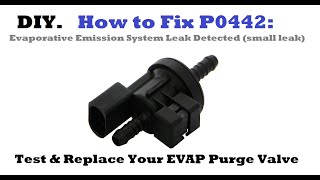
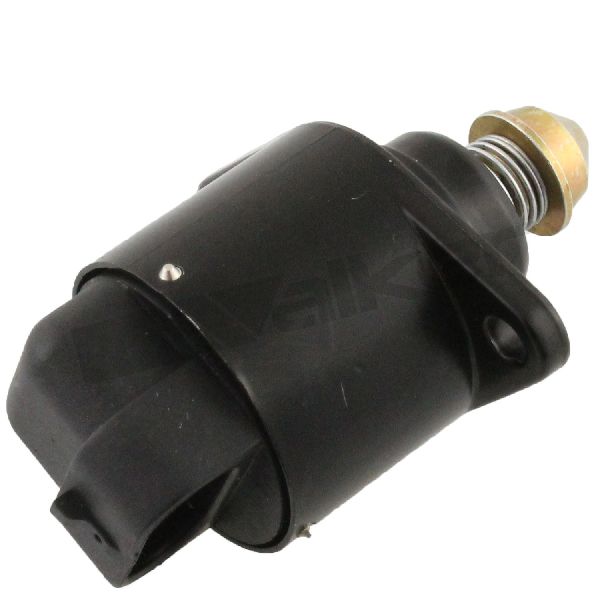
Est. part cost: $10-$30 - EVAP Purge Solenoid/Valve Failure 🟡 Medium Probability This valve is located in the engine bay and cycles frequently, leading to eventual wear. It can get stuck open or closed, or develop a leak. Debris from a deteriorating charcoal canister can also travel up the line and cause the valve to fail.
How to confirm: With the engine off, remove the valve and try to blow through it. It should be normally closed and not allow air to pass. If air passes through, it's faulty and stuck open. A common symptom of a stuck-open purge valve is a long crank time or difficulty starting the engine right after filling the gas tank.
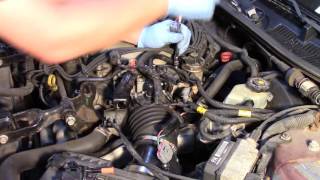
Typical fix: Replace the purge solenoid. On the 3.1L V6 engine, it is located on top of the engine, often near the ignition coils, 🎬 Watch: Step-by-step purge solenoid replacement for the 3.1L engine. making it relatively easy to access.
Est. part cost: $25-$60 - EVAP Vent Solenoid/Valve Failure 🟡 Medium Probability Located near the charcoal canister at the rear of the vehicle, this component is exposed to road salt and debris, which can cause corrosion and failure of the valve or its electrical connector. This is a very common failure on GM vehicles of this era.
How to confirm: The valve should be normally open. A scan tool can command it to close; you should hear a click. If it doesn't operate or is stuck, it needs replacement. A smoke test is the most definitive way to confirm if it's leaking when commanded closed. Visually, it is located near the fuel filler neck, up under the car.
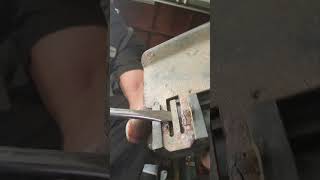
Typical fix: Replace the vent solenoid. It is typically mounted on or near the charcoal canister, located near the fuel tank. 🎬 See how to replace the vent valve solenoid under the car. Some replacement parts are an updated design and may require a new wiring harness pigtail.
Est. part cost: $30-$70 - Cracked or Disconnected EVAP Hoses ⚪ Low Probability The rubber and plastic hoses in the EVAP system can become brittle and crack with age and exposure to heat and cold cycles. This is especially true for 20+ year old vehicles.
How to confirm: Perform a thorough visual inspection of all EVAP lines from the engine bay to the fuel tank. Look for obvious cracks, especially at connection points and rubber elbows. The most reliable method is to use a smoke machine, which fills the system with a visible vapor to pinpoint the exact location of the leak.
Typical fix: Replace the cracked section of hose or the entire hose assembly. Ensure connections are secure.
Est. part cost: $5-$50
Rare But Worth Checking
- Leaking Fuel Tank Filler Neck: The metal filler neck where the gas cap screws on can rust and corrode, creating a rough or pitted surface that the gas cap seal cannot seal against properly. In some cases, the neck itself can rust through, creating a leak that is found with a smoke test.
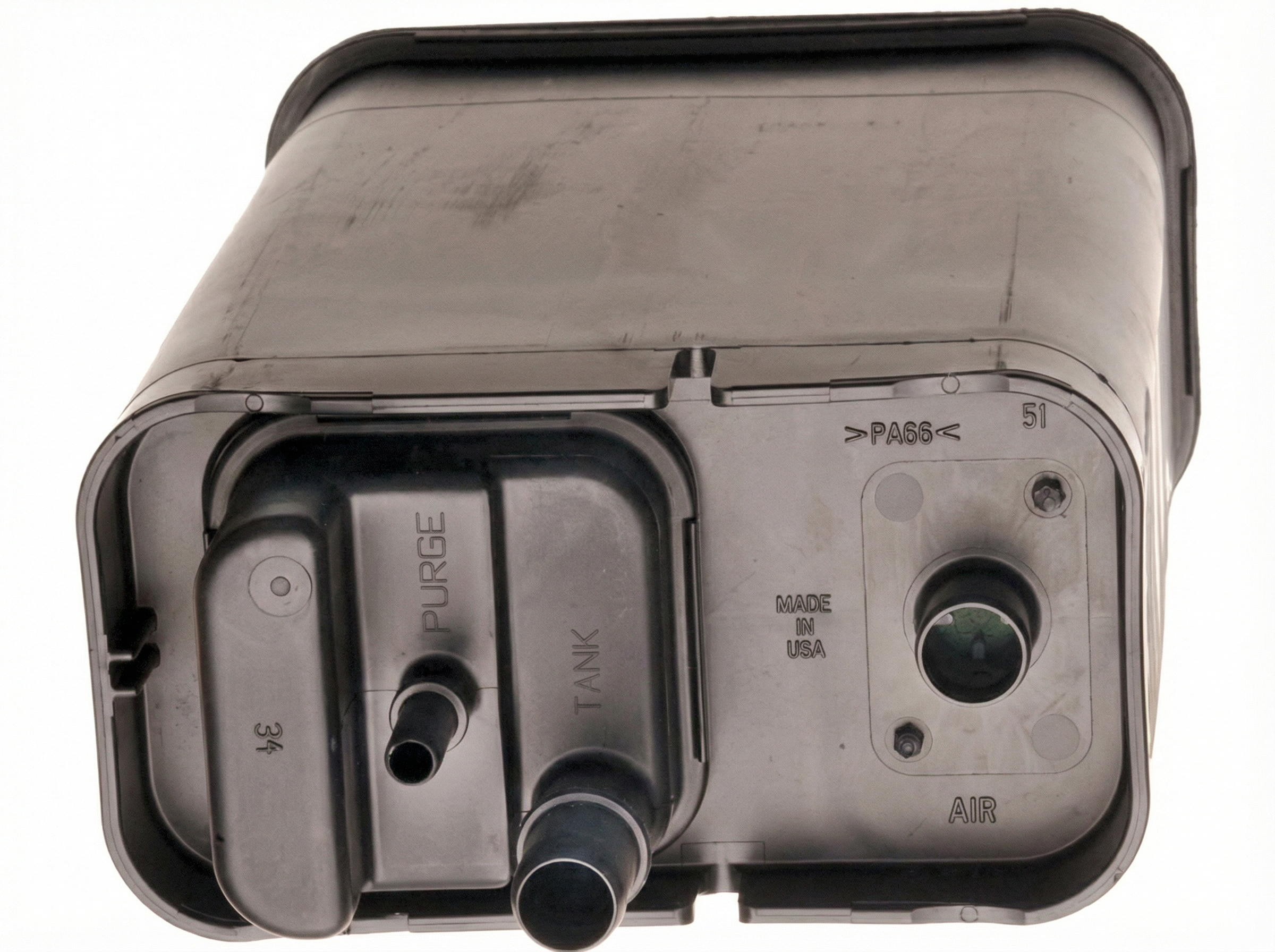
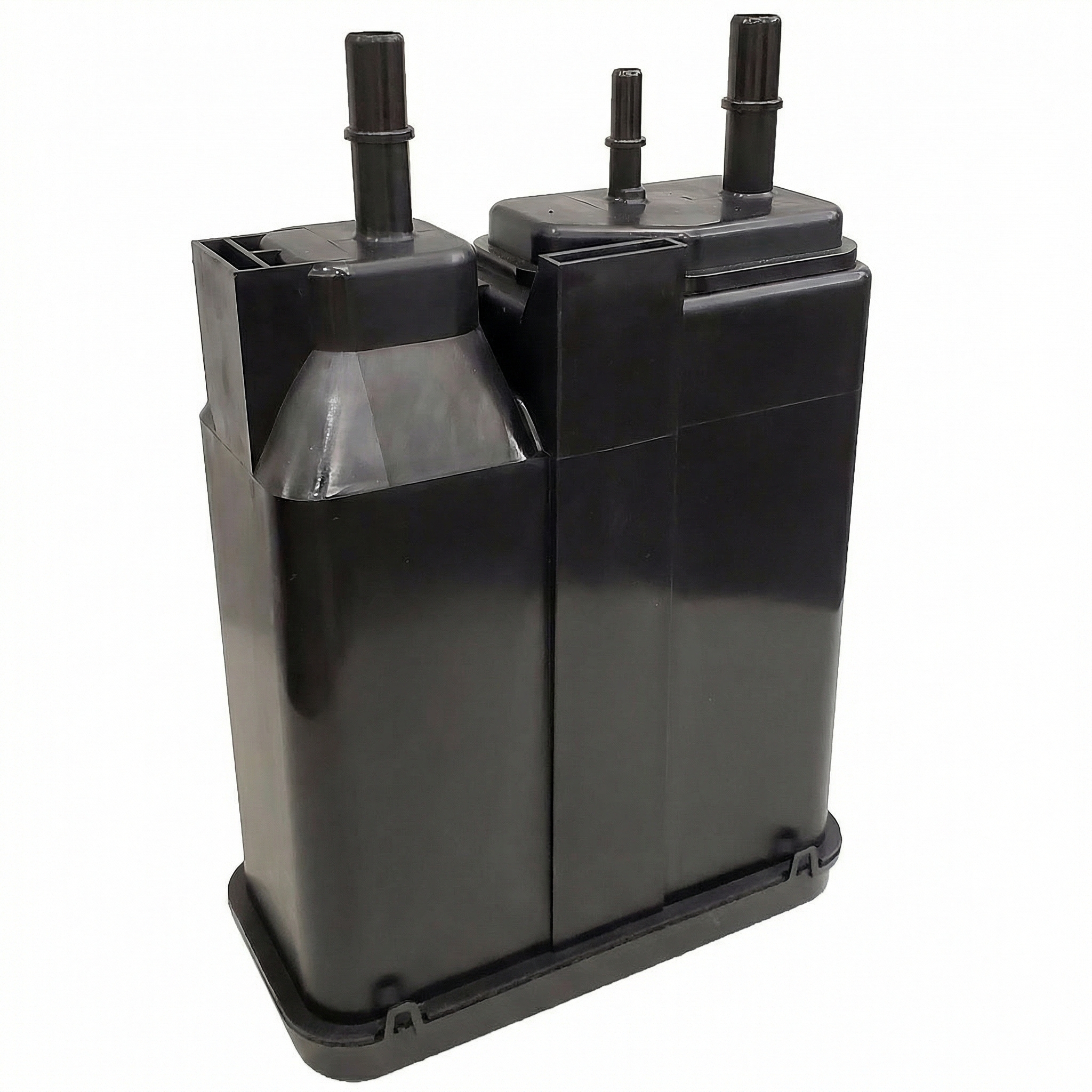
- Leaking Charcoal Canister: The plastic housing of the canister itself can develop cracks from age or impact from road debris, creating a leak. This is less common than valve failures but can be found with a smoke test.
- Fuel Tank or Sending Unit Gasket Leak: The large O-ring seal for the fuel pump/sending unit on top of the tank can fail. This is often accompanied by a strong fuel smell inside or outside the car, especially after filling up. A leak here can be difficult to spot without a smoke test but is a known cause for a persistent P0442 after more common parts have been replaced.
Diagnosis Steps

- Read the code with an OBD-II scanner to confirm P0442 is present.
- Check the gas cap. Remove it, inspect the seal for cracks or damage, and clean the filler neck surface. Reinstall the cap, ensuring it clicks several times. Clear the code and drive. Many owners fix the issue at this step.
- If the light returns, perform a visual inspection of all accessible EVAP hoses and lines in the engine bay and under the car for obvious cracks, damage, or loose connections, paying close attention to rubber elbows.
- Locate the EVAP purge solenoid in the engine bay. With the engine off, disconnect the hoses and try to blow through it. If air passes, the valve is stuck open and must be replaced.
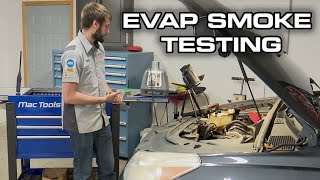
- If the above steps do not reveal the issue, the most effective next step is a professional smoke test. A machine injects low-pressure smoke into the EVAP system, and any leaks will be visible as smoke escapes from the faulty component (e.g., 🎬 Watch: How to perform a smoke test to find hidden leaks. vent valve, charcoal canister, filler neck, or a cracked hose).
- After any repair, the code must be cleared. The vehicle will then need to complete a full drive cycle (which can take several days of normal driving) for the EVAP monitor to run its self-test and confirm the fix.
Parts You'll Likely Need

- Fuel Cap
(OEM #ACDelco GT279 (GM 19432733))— This is the most common failure point due to frequent use and seal degradation. It's the first, easiest, and cheapest part to check and replace.
Trusted brands: ACDelco, Stant, Gates
OEM price range: $20-$35
Aftermarket price range: $10-$20 - Vapor Canister Purge Valve/Solenoid
(OEM #ACDelco 214-641 (GM 1997297))— This valve cycles frequently and is a common failure point on GM vehicles of this era, often getting stuck open or leaking.
Trusted brands: ACDelco, Dorman
OEM price range: $30-$50
Aftermarket price range: $18-$35 - Vapor Canister Vent Valve/Solenoid
(OEM #ACDelco 214-2324)— Its location near the rear wheel exposes it to the elements, leading to corrosion and failure. It's essential for sealing the system during self-tests. Some model years or replacements may require a new wiring harness adapter (p/n 19257603).
Trusted brands: ACDelco, Dorman, Standard Motor Products
OEM price range: $50-$80
Aftermarket price range: $30-$60
Related Codes That Often Appear With This One
- P0455 — P0455 indicates a 'Gross EVAP Leak'. If a small leak (P0442) worsens, or if a component fails significantly (like a very loose gas cap), the system may register it as a large leak instead.
- P0440 — This is a general 'EVAP System Malfunction' code. It can sometimes appear alongside P0442 as the computer tries to narrow down the system fault.
- P0449 — This code points specifically to a fault in the EVAP Vent Solenoid control circuit. It often appears with P0442 if the vent solenoid is the root cause of the leak.
Technical Service Bulletins (TSBs) & Recalls
- 21-NA-124: Provides diagnostic tips on testing for possible EVAP leaks to correct MIL with DTCs P0442 and/or P0455.
- PIT4943D: Directs technicians to review a specific article on using an EVAP system tester for P0442 diagnostics.
- 02-06-04-037J: Details issues with dirt and dust intrusion into the EVAP canister vent hose assembly causing restrictions and codes, recommending a filter box relocation kit in some applications.
Platform-Specific Known Issues
- GM issued Technical Service Bulletin #21-NA-124 to provide dealers with updated diagnostic strategies for finding EVAP leaks related to codes P0442 and P0455.
- An older TSB, #PIT4943D, also directs technicians to specific procedures for diagnosing P0442, underscoring that this has been a long-recognized issue on this platform.
Mechanic-Grade Diagnostic Values
- Fuel Tank Pressure (FTP) Sensor Voltage — expected: ~1.5 Volts with the gas cap off (at atmospheric pressure).. Failure: Voltage does not change when vacuum is applied to the system, or voltage is stuck high or low. A reading significantly different from 1.5V with the cap off indicates a sensor or wiring issue.
- EVAP Vent Solenoid Coil Resistance — expected: 11 to 26 Ohms. Failure: Resistance is significantly outside this range, or shows an open circuit (infinite resistance) or a short (near zero resistance).
- EVAP Purge Solenoid Coil Resistance — expected: 11 to 26 Ohms. Failure: Resistance is significantly outside this range, or shows an open circuit or a short.
Hidden / Shadow Codes Worth Checking
- Mode $06, Test ID $82: This is not a hidden code, but rather a specific test result within the universal Mode $06 diagnostic data. For many GM vehicles, TID $82 corresponds to the 0.020" (small leak) test. A technician can view the raw test value and compare it to the manufacturer's min/max limits to see how close the system is to failing, even if the Check Engine Light is not yet on. (see via An OBD-II scanner capable of displaying Mode $06 data.)
Scan Tool Commands That Help
- Tech2 / GDS2 or equivalent professional scanner: EVAP System Seal — This command energizes the EVAP Vent Solenoid, closing it to seal the system. This is the first step in performing a manual leak test with a scan tool, allowing the technician to see if the system can be sealed on command.
- Tech2 / GDS2 or equivalent professional scanner: EVAP Purge/Seal — After sealing the system, this function allows the technician to command the Purge Solenoid to open by a specific percentage. This draws engine vacuum into the EVAP system. By monitoring the FTP sensor, the technician can verify the system holds vacuum, confirming its integrity or identifying a leak if the vacuum bleeds off.
- Tech2 / GDS2 or equivalent professional scanner: EVAP Service Bay Test — This is an automated function that forces the EVAP monitor to run in the service bay, rather than waiting for the specific drive cycle conditions to be met. It's used to verify that a repair has been successful without extensive driving.
Wiring & Ground Locations
- G111 — On the right side of the engine, mounted on the ignition control module bracket.. This is a primary engine ground. While not directly for the rear EVAP components, poor grounding here can cause erratic PCM behavior and misinterpretation of sensor data.
- G402 — On the right side of the rear shelf, in the trunk area.. This is a key body ground in the rear of the vehicle. The EVAP vent solenoid and fuel tank pressure sensor rely on a clean ground path. Corrosion at this point can cause intermittent operation of the vent solenoid, leading to a P0442.
- EVAP Vent Solenoid Wiring — Runs from the underhood fuse block to the rear of the vehicle near the fuel tank.. The control wire is typically Dark Green/White, and the power feed is Pink. Damage to this harness from road debris or corrosion where it passes through the body can cause a loss of control over the vent solenoid.
Real Owner Repair Stories
- BuickForums user (2003 Buick Century) — Persistent P0442 Check Engine Light.
❌ Tried (didn't work) Replaced gas cap, Replaced EVAP purge solenoid, Replaced EVAP vent solenoid
✅ What actually fixed it A smoke test finally revealed a very small, hard-to-see crack in the plastic fuel tank filler neck assembly, behind the metal ring where the cap attaches. Replacing the entire filler neck assembly resolved the code. - Automotive forum user with a sister vehicle (2001 Buick Regal 3.1L V6) — Recurring P0442 code.
❌ Tried (didn't work) Replaced gas cap, Replaced EVAP purge solenoid, Replaced EVAP vent solenoid
✅ What actually fixed it The Fuel Tank Pressure (FTP) sensor was faulty and not reading pressure changes correctly. Replacing the FTP sensor on top of the fuel tank finally cleared the code. - YouTube mechanic video (General GM vehicle with similar symptoms) — P0442 code and long crank time after refueling.
❌ Tried (didn't work) Checked gas cap
✅ What actually fixed it The EVAP purge valve was leaking internally, allowing fuel vapors to flood the engine after fill-ups. Even though the solenoid would click when tested with 12v, it would not seal completely. Replacing the purge valve fixed both the code and the starting issue.
"I Checked Everything" — The Actual Cause
- A faulty Fuel Tank Pressure (FTP) sensor can cause a P0442 even if the system is perfectly sealed. A smoke test introduces positive pressure and is designed to find physical leaks, so it will not identify a sensor that is electrically failing or not responding correctly to pressure changes. If a smoke test shows no leaks, the next step should be to test the FTP sensor by monitoring its voltage on a scan tool while manually applying vacuum and pressure to it with a hand pump to see if it responds accurately.
When the Usual Fixes Don't Work
- While the most common fixes are the gas cap and EVAP solenoids, numerous owner reports confirm that these fixes are not always sufficient. In multiple documented cases, owners replaced the cap, purge solenoid, and vent solenoid only to have the P0442 code return. The ultimate culprits in these instances were often more difficult-to-diagnose issues such as a hairline crack in the fuel filler neck, a faulty Fuel Tank Pressure (FTP) sensor providing incorrect data to the computer, or a corroded rear ground point (G402) causing intermittent vent valve operation.
OEM Part Supersession History
GM 25932571 (and others)→ACDelco 214-2324 (GM 23481275)— The original EVAP vent solenoid design was prone to failure from corrosion and sticking. The updated part is more robust.
Heads up: The updated solenoid (214-2324) often has a different electrical connector than the original factory part. A wiring harness adapter, GM part number 19257603, is frequently required to connect the new solenoid to the existing vehicle harness.
Model Year Variations Within This Range
- 2000-2005: There are no major design changes to the EVAP system within this generation. The primary variation comes from part supersessions, where a replacement part for an earlier model year (e.g., a 2001) will be the updated design that may have come standard on a later model year (e.g., a 2005), sometimes requiring a wiring adapter for the fit.
Helpful Videos
Used OEM Parts in Stock
New Aftermarket Parts Available



The information in this article is provided for general reference and educational purposes only. Vehicle specifications, procedures, and part compatibility can vary by production date, trim level, and region. Always consult your vehicle's factory service manual and verify part numbers before purchasing or performing repairs. Safety-critical components such as airbags, seat belts, and braking systems should be installed by a qualified professional.
- Buick CENTURY:
- 🎬 Helpful Videos
- 🛍️ Shop This Part
- What's Unique About the 2000-2005 Buick CENTURY
- Diagnostic Flowchart
- Symptoms You May Notice
- Most Likely Causes
- Rare But Worth Checking
- Diagnosis Steps
- Parts You'll Likely Need
- Related Codes That Often Appear With This One
- Technical Service Bulletins (TSBs) & Recalls
- Platform-Specific Known Issues
- Mechanic-Grade Diagnostic Values
- Hidden / Shadow Codes Worth Checking
- Scan Tool Commands That Help
- Wiring & Ground Locations
- Real Owner Repair Stories
- "I Checked Everything" — The Actual Cause
- When the Usual Fixes Don't Work
- OEM Part Supersession History
- Model Year Variations Within This Range
- 🎟️ Get 5% Off