

P0441 on 2016-2018 Volkswagen Beetle: Incorrect Purge Flow Causes and Fixes
For a 2016-2018 VW Beetle, code P0441 is most often caused by a faulty EVAP purge valve, also known as the N80 valve. It's a common, inexpensive, and easy DIY fix. Before replacing it, always check that your gas cap is tight and its seal is intact. If you find black charcoal pellets in the EVAP lines, the charcoal canister has also failed and must be replaced.
- P0441 points to an incorrect amount of fuel vapor being purged into the engine.
- The most likely cause on your 2016-2018 Beetle is a faulty N80 purge valve, which is a common and relatively easy part to replace yourself.
- Always check your gas cap first. Make sure it's tight and the seal isn't cracked.
- Driving with this code is safe, but you won't be able to pass an emissions test until it's fixed.
What's Unique About the 2016-2018 Volkswagen BEETLE
The 2016-2018 Volkswagen Beetle is built on a platform that shares many components with other VW and Audi models of the era, including the Golf, Jetta, and Audi A3. On these vehicles, the N80 purge valve is a notoriously common failure item that leads directly to code P0441. 🎬 Watch: Understanding P0441 causes, symptoms, and common fixes. While other causes are possible, the purge valve is the primary suspect due to a high rate of failure where the internal mechanism either sticks open or closed. This is a well-documented issue across enthusiast forums and by mechanics specializing in German vehicles, with many owners recommending sticking to OEM-quality brands like Bosch for the replacement part.
Diagnostic Flowchart
Tap your situation to follow the diagnostic path that matches what you're seeing on this vehicle.
Symptoms You May Notice
- Check Engine Light is on
- A slight fuel odor near the vehicle.
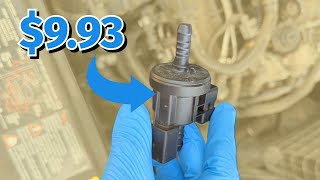
- Slightly rough or surging idle, especially when stopped or after a long drive. 🎬 See how a cheap valve fix solves a rough idle.
- Difficulty starting immediately after refueling (this is a classic symptom of the purge valve being stuck open, flooding the engine with vapors).
- A subtle decrease in fuel economy.
- Replacing the oxygen sensors. O2 sensors are not related to the EVAP system's purge function.
- Replacing the catalytic converter. This is an expensive exhaust component and is unrelated to P0441.
- Replacing the N80 valve with a cheap, unbranded part. Some owners report these parts failing quickly, leading to the code's return.
Most Likely Causes
- Faulty EVAP Purge Valve (N80 Valve) 🔴 High Probability The purge valve used on this VW platform is a very common failure point. The internal solenoid or diaphragm can wear out, causing it to stick open or closed. It is a known weak point across many VW and Audi models.
How to confirm: Locate the valve in the engine bay. With the engine off, disconnect the hoses and try to blow through it. If air passes through, it's stuck open and is faulty. Alternatively, a scan tool can be used to command the valve to open and close; you should hear a distinct clicking sound. You can also check the electrical connector for power and ground. A key sign of a related failure is finding black charcoal pellets inside the valve or its hoses.
Typical fix: Replace the purge valve. It is typically mounted in the engine bay with two hoses and an electrical connector. Many owners recommend using an OEM-quality part (like Bosch) as cheap aftermarket versions can fail quickly.
Est. part cost: $30-$90 - Loose, Damaged, or Incorrect Gas Cap 🟡 Medium Probability While P0441 is a flow code, a gas cap that doesn't seal properly can disrupt the system's ability to hold vacuum, sometimes confusing the diagnostic tests and contributing to flow-related codes.
How to confirm: Inspect the gas cap for cracks or a worn, brittle seal. Ensure it is tightened until it clicks at least once. If the seal looks damaged or you have any doubts, it's an inexpensive replacement part to rule out the issue.
Typical fix: Tighten or replace the gas cap. The OEM part number is often 5Q0201550L or a succeeding part number.
Est. part cost: $15-$40 - Cracked or Disconnected EVAP Hoses/Lines ⚪ Low Probability Over time, the plastic and rubber hoses in the engine bay can become brittle from heat cycles and crack, creating a vacuum leak that can be misinterpreted as a flow problem.
How to confirm: Visually inspect the vacuum lines running to and from the purge valve and charcoal canister for any visible cracks, breaks, or loose connections. A smoke test is the most effective way to find small, hard-to-see leaks. One owner on a forum found a gash in a vacuum line near the intake manifold was the source of their P0441 issue after a smoke test.
Typical fix: Replace the damaged section of hose.
Est. part cost: $10-$50
Rare But Worth Checking
- Faulty Charcoal Canister: This can happen if the fuel tank is consistently overfilled, which can force liquid fuel into the canister. This saturates the charcoal pellets, causing a blockage or sending black pellets into the EVAP lines, clogging the purge valve. If you find pellets in the purge valve, the canister must be replaced along with the valve.
- Wiring Issue to the Purge Valve: A break or short in the wiring harness leading to the purge valve will prevent it from operating, but this would typically also set a circuit code like P0443.
- Faulty Diagnostic Module Tank Leakage (DMTL) Pump: For earlier models in the A5 generation (2012-2013), VW issued a TSB noting that a faulty DMTL pump could cause a false P0441 reading. The diagnostic procedure involves testing the pump; if it passes, the purge valve is the likely culprit.
Diagnosis Steps
- Read the codes with an OBD-II scanner to confirm P0441 is present and check for any other codes like P0455, P0456, or P04F0.
- Inspect the gas cap. Ensure it is tight and the rubber seal is not cracked or worn. If in doubt, it's an inexpensive first step to replace it.
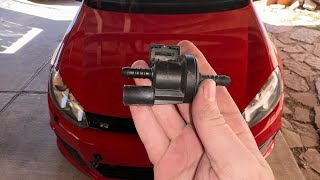
- Locate the EVAP purge valve (N80) in the engine bay. It's a small solenoid with two hoses and an electrical connector, often mounted near the intake manifold.
- Visually inspect the vacuum hoses connected to the purge valve for any obvious cracks, brittleness, or loose connections.
- Perform a basic test of the purge valve. With the engine off, disconnect the valve. If you can blow through it, it is stuck open and must be replaced.
- If the valve is not stuck open, disconnect the hose between the valve and the intake manifold. Tap the valve's port on a white paper towel and check for black charcoal pellets. If pellets are present, the charcoal canister has failed and must be replaced along with the N80 valve to prevent a repeat failure.
- If the valve seems okay, use a scan tool with bidirectional controls to activate the purge valve. You should hear it click. If it doesn't click, check the wiring for power and ground.
- If no issues are found with the valve or its immediate hoses, perform a smoke test on the EVAP system to check for hard-to-find leaks in other lines or the charcoal canister.
Parts You'll Likely Need
- EVAP Canister Purge Valve (N80 Valve)
(OEM #06H906517H)— This is the most frequent cause of P0441 on this vehicle. The valve fails internally, sticking open or closed. The Bosch branded version is 0280142431.
Trusted brands: Bosch (OEM supplier), Dorman, Genuine VW
OEM price range: $60-$100
Aftermarket price range: $30-$70 - Fuel Cap
(OEM #5Q0201550L (or superseding part 5WA201550K))— A worn seal on the gas cap can cause EVAP system pressure issues that may trigger a flow code. It's a cheap and easy part to rule out.
Trusted brands: Genuine VW, Stant, Oner
OEM price range: $25-$40
Aftermarket price range: $15-$25
Related Codes That Often Appear With This One
- P0455 / P0456 — These codes indicate a large or small EVAP leak. A faulty gas cap or a crack in a hose can cause both a leak code and interfere with the purge flow test, triggering P0441 as well.
- P04F0 — This code is specific to some VW/Audi models and often appears with P0441, further strengthening the diagnosis of a faulty N80 purge valve or a related blockage.
Technical Service Bulletins (TSBs) & Recalls
- Bulletin #VIN 4 A PIN-2018: This is an umbrella TSB that lists "MIL-on P0441 in the ECM" as one of many possible unrelated faults for the 2016 VW Beetle, confirming the code is a known issue to the manufacturer.
Platform-Specific Known Issues
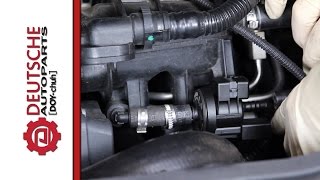
- Owner Experience: DIY N80 Valve Replacement: Multiple owners on forums like VWVortex and Reddit, as well as in YouTube videos, confirm that replacing the N80 purge valve is a simple DIY job taking less than 30 minutes. 🎬 Watch: Step-by-step DIY guide for replacing the N80 valve. One user on Reddit with a P0441 code was quoted $1000 by a dealer for the repair, while the part itself cost under $50 and was easily replaced at home.
- Symptom Confirmation: Hard Starts After Refueling: A widely reported symptom tied directly to a stuck-open N80 valve on these VW platforms is difficulty starting the engine right after filling the gas tank. The open valve allows excess fuel vapor to flood the intake, making it hard to start without pressing the throttle.
- Charcoal Canister Contamination: A critical diagnostic step mentioned by experienced VW technicians is to check the purge valve and lines for black, sand-like charcoal pellets. Finding these confirms the charcoal canister is breaking down (often from over-filling the fuel tank) and must be replaced to prevent the new purge valve from clogging again.
Mechanic-Grade Diagnostic Values
- N80 Purge Valve Resistance — expected: 22 to 30 Ohms. Failure: A reading outside this range indicates a faulty valve coil. Some sources cite a slightly wider range of 15-25 Ohms.
- N80 Purge Valve Connector Voltage (Pin 1 to Ground) — expected: Battery Voltage (~12V) with ignition on.. Failure: Low or no voltage (e.g., 1.25V) points to a wiring issue, blown fuse, or a problem with the power supply from the ECM/fuel pump relay.
- N80 Purge Valve Connector Ground (Pin 2) — expected: This pin is ground-controlled by the ECM. A continuity test from this pin to the corresponding pin at the ECM connector should show near-zero resistance.. Failure: High resistance or an open circuit indicates a break in the ground wire.
Scan Tool Commands That Help
- VCDS (VAG-COM): Output Test: 'EVAP Canister Purge Regulator Valve (N80)' — This command manually cycles the N80 valve, allowing a technician to listen for an audible click, which confirms the solenoid is mechanically actuating. Lack of a click points to a bad valve or a wiring issue.
- VCDS (VAG-COM): Basic Settings: Group 070 - 'EVAP System Leak Test' — After confirming the N80 valve functions, this test runs the complete EVAP system self-diagnostic. It can help confirm if the 'Incorrect Purge Flow' condition is still detected by the system after a repair.
Wiring & Ground Locations
- N80 Valve Connector — On the N80 valve itself, located in the engine bay, often near the intake manifold.. Pin 1 is the 12V+ power supply (often from the fuel pump relay), and Pin 2 is the ground signal controlled by the ECM. Testing voltage at Pin 1 and continuity to ground at Pin 2 is critical for diagnosing a wiring fault versus a faulty valve.
Real Owner Repair Stories
- Ross-Tech Forums User (Volkswagen (model unspecified, but common platform)) — Persistent P0441 code.
❌ Tried (didn't work) Replacing the N80 purge valve with an unbranded, inexpensive part from eBay.
✅ What actually fixed it The user found a gash in a vacuum line connected to the intake manifold during a smoke test. This highlights that even with a high-probability part failure like the N80, a thorough diagnostic including a smoke test is necessary. It also warns against using cheap, unbranded electronic parts which may be faulty from the start. - Reddit user on r/Volkswagen (2009 VW Tiguan (similar engine/EVAP design)) — P0441 code.
❌ Tried (didn't work) Initially quoted $1000 by a dealership for the repair.
✅ What actually fixed it The owner replaced the N80 valve themselves. The post highlights the extreme cost difference between a dealer repair and a simple DIY fix for this common code. Another user in the thread noted a shop charged them only $12 for the part and $35 for labor, confirming it's a quick, inexpensive job.
OEM Part Supersession History
06E906517A→06H906517H (and other variants like K, T)— Standard part evolution and supplier changes. The core function remains the same.
Heads up: While many are interchangeable, it's crucial to verify the connector style. Some aftermarket parts may require an adapter harness if the connector is different from the vehicle's harness.Bosch 0280142431→N/A— This is the OEM supplier part number that corresponds to various VW Group part numbers like 06E906517A and 06H906517H.
Heads up: This is generally considered the direct, high-quality replacement for the original part.
Helpful Videos
Used OEM Parts in Stock
New Aftermarket Parts Available


The information in this article is provided for general reference and educational purposes only. Vehicle specifications, procedures, and part compatibility can vary by production date, trim level, and region. Always consult your vehicle's factory service manual and verify part numbers before purchasing or performing repairs. Safety-critical components such as airbags, seat belts, and braking systems should be installed by a qualified professional.
- Volkswagen BEETLE:
- 🎬 Helpful Videos
- 🛍️ Shop This Part
- What's Unique About the 2016-2018 Volkswagen BEETLE
- Diagnostic Flowchart
- Symptoms You May Notice
- Most Likely Causes
- Rare But Worth Checking
- Diagnosis Steps
- Parts You'll Likely Need
- Related Codes That Often Appear With This One
- Technical Service Bulletins (TSBs) & Recalls
- Platform-Specific Known Issues
- Mechanic-Grade Diagnostic Values
- Scan Tool Commands That Help
- Wiring & Ground Locations
- Real Owner Repair Stories
- OEM Part Supersession History
- 🎟️ Get 5% Off