

P0441 on 2005-2020 SEAT Leon FR / Cupra: Causes and Fixes for Incorrect Purge Flow
On a SEAT Leon, P0441 is almost always a faulty EVAP Purge Valve (N80), a simple DIY fix for around $25-$50. If that doesn't solve it, the charcoal canister is the next likely culprit, especially on later models around 2020 which may require a revised part.
- P0441 on a SEAT Leon almost always points to a problem with the EVAP purge (N80) valve or the charcoal canister.
- Start your diagnosis with the N80 valve; it's the most likely culprit, inexpensive, and easy to access in the engine bay.
- Do not habitually overfill your fuel tank. Stopping at the first click prevents liquid fuel from damaging the charcoal canister.
- This is a highly DIY-friendly repair that does not require professional service for most owners.
What's Unique About the 2005-2020 SEAT Leon FR / Cupra

For the SEAT Leon and other vehicles in the VW/Audi group (VAG), the P0441 code has a very strong correlation with two specific parts. On earlier Mk2 models (2005-2012, platform PQ35), the N80 purge valve is a frequent failure point but is inexpensive and easy to replace. On later Mk3 models (platform MQB, especially 1.5 TSI engines around 2020), the charcoal canister itself is prone to saturation, sometimes requiring a revised part and an ECU software update for a permanent fix. This platform-specific trend means you can diagnose the issue with a higher degree of certainty than on other vehicles.
Generation note: This range covers the SEAT Leon Mk2 (1P, 2005-2012) and Mk3 (5F, 2012-2020). While the cause is similar, the N80 purge valve is a more common failure on the Mk2. The charcoal canister becoming saturated is a more noted issue on late-model Mk3s (around 2020), particularly the 1.5 TSI engine, sometimes requiring a revised canister, updated pipework, and an ECU software update from a dealer to permanently resolve.
Symptoms You May Notice
- Check Engine Light is on
- Slightly rough idle (less common)
- Slight decrease in fuel efficiency (less common)
- Difficulty starting after refueling (in some cases, if the valve is stuck open)
- A 'start-stop system error' may appear on the dash, as the engine fault disables this feature.
- Replacing the gas cap first. While easy to do, it rarely fixes a P0441 code on a SEAT Leon.
- Replacing oxygen sensors. This code is related to the fuel vapor system, not exhaust gas measurement.
Most Likely Causes

- Faulty EVAP Purge Valve (N80 Valve) 🔴 High Probability The N80 valve is a known common failure item on many VW/Audi group vehicles of this era. It's a relatively simple solenoid that can get stuck open or closed over time due to internal wear or contamination.
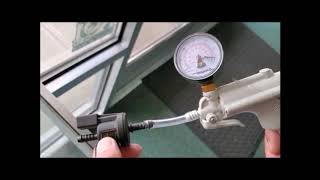
How to confirm: Locate the N80 valve in the engine bay, often near the intake manifold or air filter box. With the engine off, disconnect the electrical connector and the two hoses. Try to blow through the valve; if air passes through, it is stuck open and faulty. You can also test its resistance with a multimeter, which should be between 22-30 ohms. A scan tool like VCDS can also command the valve to open and close via an Output Test while you listen for an audible click.
Typical fix: Replacement of the N80 valve. It is typically located in the engine bay and held by one or two bolts or clips, with two hoses and an electrical connector.
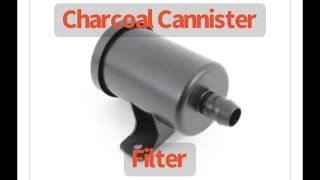
Est. part cost: $25-$50 - Saturated or Faulty Charcoal Canister 🟡 Medium Probability Habitually overfilling the fuel tank (continuing to pump after the first click) can force liquid gasoline into the EVAP system, saturating the charcoal canister and ruining it. Later models (c. 2020 1.5 TSI) have a known issue with this, which may be a design flaw.
How to confirm: Visually inspect the canister (usually located in the rear driver's side wheel well) for cracks or physical damage. If the N80 valve has been replaced and the code returns, the canister is the next logical suspect, especially if there's a history of overfilling the tank. A strong fuel smell near the canister is also an indicator.
Typical fix: Replacement of the charcoal canister. On some later models, this may also involve installing revised pipework and getting an ECU software update from a dealer or specialist.
Est. part cost: $145-$250 - Leaking or Cracked EVAP Hoses ⚪ Low Probability Over time, the plastic and rubber hoses in the engine bay and under the car can become brittle and crack due to heat cycles and age. On some VW/Audi models, the purge line under the engine cover can get crushed, causing a P0441 code.
How to confirm: Visually inspect all accessible EVAP system hoses, especially the lines running to and from the N80 valve and the charcoal canister. A smoke test is the most effective way to find small, hard-to-see leaks.
Typical fix: Replace the damaged section of hose.
Est. part cost: $10-$30
Rare But Worth Checking
- Faulty Gas Cap: While a bad gas cap can cause other EVAP codes (like for a small or large leak), it is an uncommon cause for the specific 'Incorrect Purge Flow' P0441 code on this vehicle. It's easy to check but should not be the first part replaced.
Diagnosis Steps

- Read the code with an OBD-II scanner to confirm P0441 is present.
- Start with the most likely cause: the N80 Purge Valve. Locate it in the engine bay.
- Test the N80 valve. Disconnect it and try to blow through it. If air passes, it's faulty and needs replacement. If it's closed, you can temporarily apply 12V to see if the solenoid clicks open. If it doesn't, it's faulty. You can also check its resistance with a multimeter; a reading between 22-30 ohms is expected.
- If the N80 valve seems okay or replacing it doesn't fix the code, inspect the EVAP hoses connected to it for any visible cracks or loose connections. Check for crushed hoses under the engine cover.
- If the valve and hoses are good, move to the charcoal canister, located behind the rear driver's side wheel arch liner. Inspect it for any physical damage or signs of being saturated with fuel.
- Consider your fueling habits. If you regularly top off your tank after the pump clicks off, the canister is a very likely suspect.
- If you suspect a small leak in a hose that isn't visible, a professional smoke test is the most reliable way to find it.
- After replacing any parts, clear the codes with the scanner and perform a drive cycle to see if the Check Engine Light returns.
Parts You'll Likely Need

- EVAP Purge Valve / Solenoid (N80)
(OEM #06E906517A (Common, but verify by VIN))— This is the most common failure part for P0441 on this platform. It's a relatively simple solenoid that wears out and gets stuck.
Trusted brands: Bosch, Pierburg, OEM VW/Audi
OEM price range: $40-$60
Aftermarket price range: $25-$45 - Charcoal Canister / EVAP Canister
(OEM #5Q0201801 / 1K0201801E (Varies by generation, verify by VIN))— This is the second most likely cause, especially if the fuel tank is frequently overfilled or on later model years (c. 2020).
Trusted brands: OEM VW/Audi
OEM price range: $145-$250
Aftermarket price range: $100-$180
Technical Service Bulletins (TSBs) & Recalls
- While no specific SEAT TSB was found, VW has issued TSBs (e.g., TPI 2040693, Technical Bulletin 2046514) for incorrect purge flow on related engines, sometimes addressing the issue with an ECU software update. This suggests a software fix may be available for some Leons.
Platform-Specific Known Issues
- On 2020 1.5 TSI models, a saturated charcoal canister is a known issue that may require a revised canister, updated pipework, and an ECU software update from a dealer to permanently resolve.
- A Reddit user with a 2020 Leon 1.5 FR reported persistent P0441 and P04F0 codes even after replacing the canister, purge valve, and gas cap seal, indicating a potentially more complex issue in some cases.
Mechanic-Grade Diagnostic Values
- N80 Purge Valve Coil Resistance — expected: 22 - 30 Ohms. Failure: A reading outside this range, or an open/short circuit, indicates a faulty coil.
- N80 Purge Valve Voltage Supply (Pin 1) — expected: ~12V (Battery Voltage) with key on, engine off. Failure: No voltage suggests a wiring or fuse issue upstream of the valve.
Scan Tool Commands That Help
- VCDS (VAG-COM): Engine Controller (01) -> Output Tests -> Evaporative Emission (EVAP) Canister Purge Regulator Valve (N80) — This command directly cycles the N80 valve, allowing the technician to listen for an audible click, confirming the solenoid is mechanically actuating. This tests the valve's basic function without removing it.
- VCDS (VAG-COM): Engine Controller (01) -> Basic Settings -> Group 070 (EVAP System Test) — This initiates a short test of the fuel tank ventilation system. The final field in the measuring block will report the test result, such as 'Test ON/Test OFF' and 'Fuel tank ventilation OK/not OK'. This is a quick way to get a system-level pass/fail result.
- ODIS (Official Dealer Information System): Guided Fault Finding (GFF) -> EVAP Test — When a P0441 code is present, the dealer-level ODIS software will guide the technician through a specific test plan. In some cases, ODIS may detect a failure that the VCDS Basic Settings test passes, as it may use a more sensitive or comprehensive test procedure.
Wiring & Ground Locations
- N80 Valve Connector (Mk2 Leon 2.0 TFSI BWA) — On the N80 valve itself, in the engine bay.. Pin 1 is the ECU output (Green/Red wire) and Pin 2 is Ground (Brown wire). Knowing the pinout allows for testing of voltage supply and ground connection directly at the component.
- Fuse SB4 / Fuse Holder B (Mk3 Leon) — In the E-box in the engine compartment on the left side.. On some Mk3 engine variants, Fuse 4 (SB4) provides power to the N80 Activated charcoal filter solenoid valve 1. A blown fuse here would cause the valve to be inoperative.
- Earth Point 18 (Mk3 Leon) — On the engine block.. This is a primary engine block ground point. A poor connection here could cause issues with various engine sensors and actuators, including the N80 valve's ground path which is often completed through the ECU to an engine ground.
- Earth Point 639 (Mk3 Leon) — On the left A-pillar.. This is a major chassis ground point. While less likely to be the direct cause for an engine component, poor chassis grounds can create unpredictable electrical issues throughout the vehicle.
Real Owner Repair Stories
- SEATCUPRA.NET user 'seatleon2019FR' (2020 SEAT Leon Mk3.5 1.5 TFSI Black Edition) — EML light on with code P0441, and errors with the start-stop system.
❌ Tried (didn't work) Replacing the N80 valve (as part of a new air intake assembly).
✅ What actually fixed it The final fix was replacing the charcoal canister, which was located under the right-hand rear wheel arch. The part cost £115 from SEAT. - SEATCUPRA.NET user 'benvarney1' (2020 SEAT Leon 1.5 FR (150hp)) — Check engine light with code P0441.
❌ Tried (didn't work) Initial diagnosis pointed towards the purge valve and canister.
✅ What actually fixed it The issue was resolved by replacing the charcoal canister. The part was purchased from SEAT Direct for £145 and was located behind the rear driver's side wheel liner.
OEM Part Supersession History
1K0201801D→1K0201801E— Part revision for Mk2 (1P) generation vehicles.5Q0201801→5WA201801— Part revision for later Mk3 (5F) models, potentially related to the known saturation issue.
Heads up: For late model year cars (c. 2020), forum reports suggest a revised canister, updated pipework, and an ECU update may be required for a permanent fix, indicating that simply swapping the canister with an older part number may not be sufficient.
Model Year Variations Within This Range
- 2005-2012 (Mk2, PQ35 Platform): The most common cause is the N80 purge valve. The charcoal canister part number is typically 1K0201801E. The N80 valve wiring is a 2-pin connector with a Green/Red wire for ECU control and a Brown wire for ground on TFSI models.
- 2012-2020 (Mk3, MQB Platform): While the N80 valve is still a common cause, issues with saturated charcoal canisters are more frequently reported, especially on 2019-2020 1.5 TSI models. This may require a revised canister (e.g., 5WA201801), new pipework, and an ECU software update. The N80 valve is often powered by Fuse 4 or 7 in the engine bay fuse box (SB).
Diagnostic Flowchart
Other Known Issues on This Vehicle
Issues unrelated to this code that are worth knowing about as an owner of this generation:
- HPFP Cam Follower Wear (EA113 2.0 TFSI) 🔴 High — Common on Mk2 Cupra/FR models with the EA113 engine. Recommended inspection/replacement every 10,000-30,000 miles. Failure can destroy the camshaft and fuel pump.
- Timing Chain Tensioner Failure (EA888 Gen1/Gen2) 🔴 High — Affects earlier Mk2 Leon FR models with the EA888 engine. The original tensioner can fail without warning, leading to catastrophic engine damage. An updated tensioner design resolves the issue.
- Water Pump & Thermostat Housing Leak (EA888 Gen3) 🟠 Medium — A very common issue on Mk3 Leon FR/Cupra models. The plastic housing becomes brittle and cracks, causing a slow coolant leak. Usually requires replacement of the entire pump/thermostat assembly.
- Carbon Buildup on Intake Valves 🟠 Medium — Affects all direct-injection engines in this range (TFSI/TSI). Over time, carbon deposits build up on the back of intake valves, causing rough idle, misfires, and reduced performance. Requires manual cleaning (walnut blasting) every 40,000-60,000 miles.
- DSG Mechatronic Unit Failure 🔴 High — Can affect both the 6-speed wet-clutch (DQ250) and 7-speed dry-clutch (DQ200) DSG transmissions. Symptoms include harsh shifting, loss of drive, and flashing gear indicator. Repair is expensive, often requiring a new mechatronic unit.
Used vs. New Parts: Buying Guide for This Vehicle
When a used part is the smart pick: A used charcoal canister from a low-mileage, late-model donor vehicle can be a cost-effective option if the part is known to be good. However, given the risk of saturation, it's a gamble.
Donor-vehicle mileage cap: roughly under 50000 miles for the part to have meaningful remaining life.
What to inspect on the donor part:
- Ensure the donor vehicle was not in a front or rear collision that could have damaged the EVAP system.
- Visually inspect the used canister for any cracks, damage, or signs of fuel saturation (wetness or strong fuel odor).
- Ask the seller if there is any history of EVAP codes on the donor vehicle.
OEM-only on this vehicle (don't cheap out):
- Charcoal Canister (Recommended): For late model (2019+) vehicles requiring a revised part, using an OEM part is crucial to ensure the permanent fix, especially if a software update is also needed. Aftermarket versions may not be available or may not solve the underlying design issue.
Aftermarket brands forum-validated for this vehicle:
- Pierburg
- Bosch
Brands owners have reported issues with on this vehicle:
- Unbranded, no-name parts from online marketplaces are risky for the N80 valve, as their internal components may not meet the same quality standards and could fail prematurely.
Real Owner Stories
Aggregated from forums and TSBs cited above. Mileages and costs reflect what owners reported in those sources.
2020 SEAT Leon 1.5 FR
Symptoms: P0441 fault code present; start-stop system error appeared on the dash.
What fixed it: Replacement of the charcoal canister located behind the rear driver's side wheel liner.
Cost: $185-$195
Source hint: SEATCUPRA.NET - "P0441 - Evaporative Emission Control Syystem" (https://www.seatcupra.net/forums/threads/p0441-evaporative-emission-control-syystem.473995/)
2009 SEAT Leon FR
Symptoms: P0441 fault code; discussion of the N80 valve as the primary culprit.
What fixed it: Replacement of the N80 Purge Valve.
Source hint: SEATCUPRA.NET - "P0441 Faultcode" (https://www.seatcupra.net/forums/threads/p0441-faultcode.376813/)
2020 SEAT Leon FR 1.5
Symptoms: Persistent P0441 and P04F0 codes.
What fixed it: The owner replaced the canister, purge valve harness, and gas cap seal, but the issue remained unresolved, indicating a more complex fault.
Source hint: Reddit r/MechanicAdvice - "EVAP CODE P0441/P04F0" (https://www.reddit.com/r/MechanicAdvice/comments/1eztj93/evap_code_p0441p04f0/)
Related OBD-II Codes
Frequently Asked Questions
I have a 2020 Leon 1.5 TSI with a P0441 code; is this a known issue?
How can I test if the N80 Purge Valve on my Leon FR is actually broken?
Could my habit of 'topping off' the fuel tank be causing the P0441 code?
Where is the charcoal canister located on the SEAT Leon?
Are there any VW Technical Service Bulletins that apply to the Leon's purge flow issues?
My Leon dash is showing a 'start-stop system error' along with the engine light. Is this related to P0441?
Helpful Videos



The information in this article is provided for general reference and educational purposes only. Vehicle specifications, procedures, and part compatibility can vary by production date, trim level, and region. Always consult your vehicle's factory service manual and verify part numbers before purchasing or performing repairs. Safety-critical components such as airbags, seat belts, and braking systems should be installed by a qualified professional.
- SEAT Leon FR / Cupra:
- 🎬 Helpful Videos
- What's Unique About the 2005-2020 SEAT Leon FR / Cupra
- Symptoms You May Notice
- Most Likely Causes
- Rare But Worth Checking
- Diagnosis Steps
- Parts You'll Likely Need
- Technical Service Bulletins (TSBs) & Recalls
- Platform-Specific Known Issues
- Mechanic-Grade Diagnostic Values
- Scan Tool Commands That Help
- Wiring & Ground Locations
- Real Owner Repair Stories
- OEM Part Supersession History
- Model Year Variations Within This Range
- Diagnostic Flowchart
- Other Known Issues on This Vehicle
- Used vs. New Parts: Buying Guide for This Vehicle
- Real Owner Stories
- 2020 SEAT Leon 1.5 FR
- 2009 SEAT Leon FR
- 2020 SEAT Leon FR 1.5
- Related OBD-II Codes
- Frequently Asked Questions
- 🎟️ Get 5% Off