

P0441 on 2014 Ram 3500: EVAP Purge System Performance Causes and Fixes
For a 2014 Ram 3500 with a gas engine, code P0441 is most often caused by a faulty EVAP purge valve solenoid (Mopar P/N: 04861963AB) located on the engine. Other common causes include a failed ESIM switch (Mopar P/N: 04861962AB) on the charcoal canister or a cracked EVAP hose. A software update from the dealer may also be required, as confirmed by multiple TSBs.
- This code applies only to the 5.7L or 6.4L gasoline engines, not the Cummins diesel.
- The most likely hardware failure is the EVAP purge valve solenoid in the engine bay.
- Before replacing any parts, check with a dealer if your truck needs a PCM software update, as several TSBs mention this as a fix.
- Other potential causes are a faulty ESIM switch on the charcoal canister or a cracked EVAP hose.
- Don't start by replacing the gas cap; it's rarely the cause for this specific flow-related code.
What's Unique About the 2014-2014 Ram 3500
This code applies specifically to the gasoline-powered 5.7L and 6.4L HEMI V8 engines, not the 6.7L Cummins diesel, which does not use a traditional EVAP system. Ram trucks of this era use an EVAP System Integrity Monitor (ESIM) switch, which is a common failure point, instead of the older Leak Detection Pump (LDP) design. The ESIM is a simpler, weight-based mechanical switch that confirms the system's ability to seal. It's also critical to note that several Technical Service Bulletins (TSBs) exist for the 2014 model year, indicating that this code can sometimes be triggered by overly sensitive monitoring logic in the original software, which requires a PCM reflash at a dealership.
Diagnostic Flowchart
Tap your situation to follow the diagnostic path that matches what you're seeing on this vehicle.
Symptoms You May Notice
- Check Engine Light is on
- A "Check Fuel Cap" message may appear on the dash
- Slightly rough idle in some cases, particularly if the purge valve is stuck open
- Difficulty starting immediately after refueling (rare, but can happen if the canister is saturated and flooding the engine with vapor)
- Faint fuel odor (rare)
- Gas pump nozzle clicks off repeatedly when refueling (can be a symptom of a clogged charcoal canister or vent path)
- Replacing the gas cap. While a faulty gas cap can cause other EVAP codes (like P0456 or P0457 for leaks), it is an uncommon cause for P0441, which specifically relates to incorrect purge *flow*, not a general system leak.
Most Likely Causes
- Faulty EVAP Purge Valve/Solenoid 🔴 High Probability The purge valve is a constantly working solenoid that can get stuck open or closed over time, or fail electrically. It's a very common failure item on many Chrysler/Dodge/Ram vehicles.
How to confirm: With the engine running, disconnect the EVAP hose from the purge valve and feel for vacuum; there should be none at idle on a cold start. Use a scan tool to command the valve open and closed to see if it clicks and allows flow. A stuck-open valve will allow vacuum at all times.
Typical fix: Replace the purge valve solenoid. It is located on the top/side of the engine, has two hoses and an electrical connector, and is often mounted with a simple bracket or pushed into a grommet.
Est. part cost: $25-$60 - Faulty EVAP System Integrity Monitor (ESIM) Switch 🟡 Medium Probability The ESIM, mounted on the charcoal canister under the truck, is exposed to road debris and moisture. Its internal weighted switch mechanism is known to fail, causing it to get stuck or report an incorrect state to the PCM.
How to confirm: The switch can be tested off the vehicle. It is a simple open/closed switch based on pressure/vacuum. With no pressure, there should be no continuity between the pins. Applying slight pressure to the port should close the switch, creating continuity. If it's stuck open or closed, it's bad.
Typical fix: Replace the ESIM switch. It twists a quarter-turn into the charcoal canister, which is located near the fuel tank. Ensure the new O-ring is seated correctly.
Est. part cost: $30-$75 - PCM Software Update Required 🟡 Medium Probability Multiple manufacturer TSBs (e.g., 18-096-16, 18-042-15) specifically list P0441 as a code that can be resolved by a PCM software update. The logic for monitoring the EVAP system purge flow test may be too sensitive in the original software, causing false positives.
How to confirm: A Ram dealership or a properly equipped independent shop can check the current software calibration of your PCM against the latest available version using their scan tool.
Typical fix: The dealership will reflash the PCM with the updated software. This is not a DIY repair.
Est. part cost: $0 (if under warranty) - $200 - Cracked or Disconnected EVAP Hose ⚪ Low Probability The plastic and rubber hoses in the EVAP system, especially the lines near the purge valve in the hot engine bay, can become brittle and crack over time, causing a vacuum leak or a blockage. This is a well-documented issue on platform mates like the Jeep Grand Cherokee.
How to confirm: Visually inspect all accessible EVAP lines from the engine bay back to the charcoal canister. Pay close attention to the plastic fittings. A smoke test is the most effective way to find a hard-to-see crack or leak.
Typical fix: Replace the damaged section of hose or the entire hose assembly if it's a molded part.
Est. part cost: $15-$50
Rare But Worth Checking
- Faulty Fuel Tank Pressure Sensor: While less common for a P0441 flow code, a faulty fuel tank pressure sensor can provide incorrect data to the PCM, leading it to misinterpret the purge flow test. A diagnostic check on a 2019 Ram with P0441 showed a bad fuel tank pressure sensor was the root cause. In another case on a 2014 Ram 2500, corroded wires at the sensor's pigtail caused P0441.
- Clogged Charcoal Canister: Over-filling the fuel tank can force liquid gasoline into the charcoal canister, saturating the charcoal pellets and creating a blockage that prevents vapor flow. This can also happen if the canister's air filter gets clogged with dust.
- Clogged EVAP Canister Filter (Dusty Conditions): Per TSB 25-001-21, trucks operated in dusty environments (farms, construction sites, dirt roads) can ingest enough dust to clog the EVAP canister's fresh air filter. This blockage prevents the system from drawing in air, leading to refueling issues and setting codes like P0441. An upgraded dual-filter kit is available from Mopar to fix this.
Diagnosis Steps
- Verify the code with an OBD-II scanner.
- Check for any Technical Service Bulletins (TSBs) related to your VIN and P0441. A software update may be the required fix.
- Inspect the gas cap to ensure it is tight and the seal is intact, though this is not the most likely cause for this specific code.
- Visually inspect the EVAP purge valve and its connecting hoses in the engine bay for any obvious cracks or disconnections. Pay close attention to the plastic end fittings.
- Test the purge valve. With the engine at idle, disconnect the hose coming from the canister and check for vacuum. There should be none. Use a scan tool to command the valve to 50% duty cycle and verify vacuum is now present.
- Inspect the EVAP hoses running from the engine to the rear of the truck, looking for damage.
- Locate the charcoal canister and ESIM switch near the fuel tank. Inspect them for physical damage. Test the ESIM by checking for continuity across its pins while applying light pressure/vacuum to its port.
- If no visible issues are found, perform a smoke test on the EVAP system to pinpoint any hard-to-find leaks in hoses or the canister itself.
Parts You'll Likely Need
- Vapor Canister Purge Valve/Solenoid
(OEM #04861963AB)— This is the most frequent cause of incorrect purge flow, as the solenoid fails from constant use, getting stuck open or closed.
Trusted brands: Mopar, Dorman, Standard Motor Products
OEM price range: $40-$70
Aftermarket price range: $25-$50 - EVAP System Integrity Monitor (ESIM) Switch
(OEM #04861962AB)— This switch, mounted on the charcoal canister, is a known failure point on Ram trucks that can disrupt the EVAP system's self-test and trigger flow-related codes.
Trusted brands: Mopar, Dorman
OEM price range: $50-$80
Aftermarket price range: $30-$60
Related Codes That Often Appear With This One
- P0456 — Indicates a small EVAP leak. A component causing a flow issue (like a purge valve stuck slightly open or a cracked hose) can also be interpreted by the system as a small leak.
- P0457 — Indicates a leak detected, often associated with a loose or missing fuel cap. It can appear alongside P0441 if there are multiple faults in the EVAP system.
- P0440 — A general EVAP system malfunction code. It often appears with more specific codes like P0441 to indicate a broader system fault.
Technical Service Bulletins (TSBs) & Recalls
- Bulletin #18-096-16: Mentions P0441 as one of several codes addressed by a PCM software update.
- Bulletin #18-042-15: Also lists P0441 in a group of codes that may be fixed with a PCM reflash.
- Bulletin #1800414: Cites P0441 as a code that can be fixed with a software update for DJ/D2 vehicles.
- Bulletin #18-004-14: Another TSB that includes P0441 in a list of software-addressable trouble codes.
- Bulletin #25-001-21: Addresses issues on trucks in dusty environments where a
Platform-Specific Known Issues
- A series of Technical Service Bulletins (#18-096-16, #18-042-15, #1800414, #18-004-14) were issued for 2014 Ram trucks, indicating that a Powertrain Control Module (PCM) software update could resolve the P0441 code. This should be investigated before replacing parts.
- TSB #25-001-21 addresses P0441 and refueling problems on trucks used in dusty conditions due to a clogged EVAP canister filter. The fix is an upgraded filter kit (P/N 68478013AA).
Mechanic-Grade Diagnostic Values
- EVAP Purge Solenoid Coil Resistance — expected: Approximately 15-30 Ohms at room temperature.. Failure: A reading of infinity (Open Loop) or near zero Ohms (short circuit) indicates a failed solenoid coil.
- Fuel Tank Pressure (FTP) Sensor Voltage — expected: Approximately 2.5 Volts with Key On, Engine Off (KOEO) at normal atmospheric pressure.. Failure: Voltage should decrease when a vacuum is applied to the system and increase with pressure. A stuck or biased reading (e.g., always 2.5V or a skewed value like -4500 Pa as seen in one case) points to a faulty sensor or wiring.
- EVAP Purge Solenoid Connector Voltage — expected: One pin should have battery voltage (12V+) with the key on. The other pin is the control wire, which the PCM will pulse to ground to activate the solenoid.. Failure: Absence of 12V+ power indicates a wiring or fuse issue. No activity on the control wire when commanded by a scan tool points to a PCM or wiring fault.
Scan Tool Commands That Help
- wiTECH or equivalent professional scanner: EVAP Purge Solenoid Test / Purge Vaporizer Test — This bidirectional control allows a technician to manually command the purge solenoid open by a specific percentage (e.g., 10%, 25%, 50%) while monitoring the Fuel Tank Pressure sensor data. This directly tests if the valve is opening and if the system is capable of drawing a vacuum, confirming flow.
- wiTECH or equivalent professional scanner: EVAP System Test — This function forces the PCM to run the entire onboard EVAP monitor sequence, including the purge flow test. It's used to verify a repair is successful without having to perform a full drive cycle, which can be time-consuming.
Wiring & Ground Locations
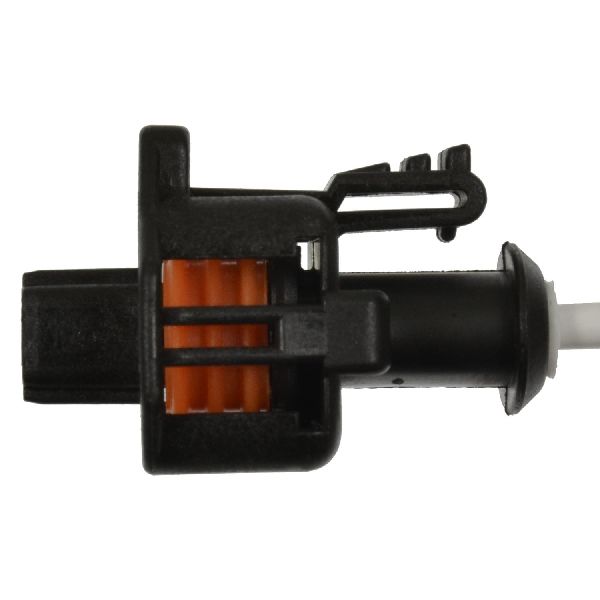
- Purge Solenoid Connector (C107) — On the EVAP purge solenoid itself, located on the top/side of the engine near the intake manifold.. This 2-pin connector provides power and control to the purge solenoid. Pin 1 is typically the 12V+ feed from the fuse box (TIPM), and Pin 2 is the ground-side control from the PCM. Corrosion or a loose connection here will cause a failure to purge.
- Fuel Tank Pressure Sensor Connector — On the sensor, which is located on a vapor line attached to the fuel filler neck, accessible by removing the driver-side rear wheel and wheel well liner.. Corrosion and wire damage are common at this connector due to its exposed location. A 2014 Ram 2500 with P0441 was fixed by repairing corroded, broken wires right at the pigtail. This fault prevents the PCM from seeing the pressure change caused by purging.
- Engine Block Ground (G905A) — Typically found on the lower driver's side of the engine block, near the starter or alternator.. This is a primary ground for many engine sensors. While not specific to the EVAP system, a poor connection here can cause erratic sensor readings and intermittent electrical problems, potentially leading to a false P0441 code.
Real Owner Repair Stories
- RamForum.com user (2014 Ram 1500 5.7L) — P0441 and P0456 codes
❌ Tried (didn't work) Replaced gas cap, Replaced purge solenoid
✅ What actually fixed it The dealer performed a PCM software update as per the TSB, which resolved the codes. This confirms the validity of the TSBs as a primary fix. - RamForumz.com user (2014 Ram 1500 5.7L) — P0441 code
❌ Tried (didn't work) Replaced purge valve, Replaced ESIM switch, Smoke test (showed no leaks)
✅ What actually fixed it Replacing the entire charcoal canister. The owner suspected an internal blockage was preventing flow, even though the system was sealed and passed a smoke test for leaks. - RamForum.com user (2012 Ram 1500 (similar EVAP system)) — P0441 code
❌ Tried (didn't work) Replaced purge valve
✅ What actually fixed it Replacing the Fuel Tank Pressure (FTP) sensor located on the filler neck vent line resolved the issue after a long road trip confirmed the fix. - Lakes Automotive Diagnostics (YouTube) (2014 Ram 2500) — P0441 and P1457 (FTP Sensor Circuit High)
❌ Tried (didn't work) Initial diagnosis focused on components, not wiring.
✅ What actually fixed it Found corroded and broken wires in the pigtail connector for the Fuel Tank Pressure sensor. Repairing the wiring harness fixed the problem.
"I Checked Everything" — The Actual Cause
- An internally blocked or saturated charcoal canister can pass a smoke test (which only checks for leaks) but still fail the PCM's flow test, triggering P0441. The system is sealed, but no air can flow through it.
- An internally collapsed EVAP hose can act as a one-way check valve. It may look fine visually and even hold pressure during a smoke test, but it restricts the volume of vapor flow required during the purge cycle, causing the code to set.
- A faulty Fuel Tank Pressure (FTP) sensor that is stuck on a single reading will cause the PCM to believe no flow is occurring, even if the purge valve and all hoses are working perfectly. The system has no leaks and flows correctly, but the sensor fails to report the change.
When the Usual Fixes Don't Work
- In several real-world cases, owners replaced both the purge valve and the ESIM switch—the two most common causes—only to have the P0441 code return. One such case was resolved by replacing the entire charcoal canister, which had passed a smoke test but was internally blocked, preventing flow. Another case was resolved by finding and repairing corroded wires at the Fuel Tank Pressure sensor connector near the filler neck, demonstrating that wiring integrity is just as critical as component function. A third instance pointed to a faulty Fuel Tank Pressure sensor itself, which was not allowing the PCM to see the pressure drop during a purge cycle. These examples show that if the most common parts don't fix the issue, the next steps should be a thorough wiring inspection and testing of the FTP sensor and charcoal canister flow.
OEM Part Supersession History
04861963AB→04861963AC— Standard revision update for improved reliability or manufacturing process change.4861962AA, 4861962AB, 4861962AC→04861962AD— Multiple revisions consolidating into a final, more robust version of the ESIM switch.
Heads up: The latest part number, 04861962AD, replaces all previous versions.
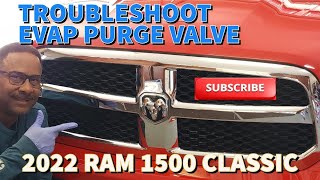
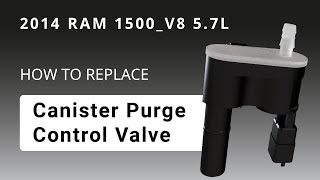
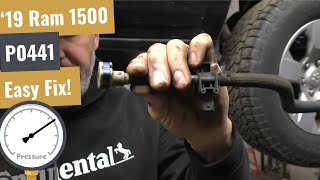
Helpful Videos


Used OEM Parts in Stock


New Aftermarket Parts Available


The information in this article is provided for general reference and educational purposes only. Vehicle specifications, procedures, and part compatibility can vary by production date, trim level, and region. Always consult your vehicle's factory service manual and verify part numbers before purchasing or performing repairs. Safety-critical components such as airbags, seat belts, and braking systems should be installed by a qualified professional.
- Ram 3500:
- 🎬 Helpful Videos
- 🛍️ Shop This Part
- What's Unique About the 2014-2014 Ram 3500
- Diagnostic Flowchart
- Symptoms You May Notice
- Most Likely Causes
- Rare But Worth Checking
- Diagnosis Steps
- Parts You'll Likely Need
- Related Codes That Often Appear With This One
- Technical Service Bulletins (TSBs) & Recalls
- Platform-Specific Known Issues
- Mechanic-Grade Diagnostic Values
- Scan Tool Commands That Help
- Wiring & Ground Locations
- Real Owner Repair Stories
- "I Checked Everything" — The Actual Cause
- When the Usual Fixes Don't Work
- OEM Part Supersession History
- 🎟️ Get 5% Off