

P0441 on 2011-2018 Ram 1500: EVAP Purge System Performance Causes and Fixes
P0441 on a 2011-2018 Ram 1500 most often means the EVAP purge valve has failed. However, it is often accompanied by difficulty filling the fuel tank and code P062A, which points to a known issue with the fuel tank pressure sensor or related EVAP lines near the tank. Always check for other codes before replacing parts, as TSBs specifically link P0441 and P062A to this rear-mounted component failure.
- Before buying parts, use a scanner to check for other codes. If P062A is present with P0441, the problem is likely near the fuel tank, not the purge valve.
- The most common fixes are replacing the EVAP purge valve, a cracked EVAP hose, or the fuel tank pressure sensor.
- Difficulty filling the gas tank is a key symptom that points to a problem with the EVAP system's venting, often related to the fuel tank pressure sensor or a clogged canister.
- Avoid topping off your fuel tank. Consistently adding fuel after the pump automatically stops can damage the charcoal canister, leading to expensive repairs.
What's Unique About the 2011-2018 Ram 1500

On this generation of Ram 1500, P0441 is frequently linked to other symptoms and codes that point beyond a simple purge valve failure. Manufacturer Technical Service Bulletins (TSBs) specifically connect P0441 with code P062A (Fuel Pump Control Performance) and a customer complaint of the fuel nozzle constantly shutting off during refueling. This combination often indicates a problem with EVAP components near the fuel tank, such as a clogged vapor canister filter or a faulty fuel tank pressure sensor, rather than just the purge valve under the hood. Forum discussions confirm that replacing the 'Fuel Tank Pressure Sensor/Recirculation Tube Assembly' is a common dealer fix for this specific set of symptoms.
Diagnostic Flowchart
Tap your situation to follow the diagnostic path that matches what you're seeing on this vehicle.
Symptoms You May Notice

- Check Engine Light is on
- Difficulty filling the fuel tank (gas nozzle shuts off prematurely).
- Fuel smell around the vehicle.
- Slightly rough or surging idle.
- A 'Check Fuel Cap' message may appear on the dash.
- Replacing only the gas cap when the actual fault is a stuck purge valve or a cracked hose. A bad cap is more likely to cause a 'large leak' code.
- Replacing the purge valve under the hood without investigating issues at the rear of the vehicle (pressure sensor, canister, hoses) when refueling problems and code P062A are also present.
Most Likely Causes

- Faulty EVAP Purge Valve/Solenoid 🔴 High Probability This is a common failure point on many vehicles. The valve can get stuck open or closed, or develop a leak. It is a moving part located in the hot engine bay, mounted on the intake manifold.
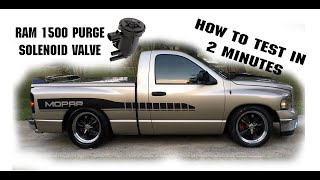
How to confirm: With the engine off, apply vacuum to the valve with a hand pump; it should hold vacuum. Command the valve open with a scan tool and check if it flows. A stuck-open valve may cause a rough idle. You can also feel for a pulsing or clicking from the valve with your finger shortly after the engine warms up, which indicates it's being commanded by the PCM.
Typical fix: Replace the purge valve, which is typically located on the engine near the battery or throttle body.
Est. part cost: $25-$60 - Faulty Fuel Tank Pressure Sensor or Recirculation Tube Assembly 🟡 Medium Probability TSBs and owner forums confirm this is a known issue, especially when P0441 is paired with P062A and refueling problems. One owner noted their dealer replaced the 'Fuel Tank Pressure Sensor/Recirculation Tube Assembly' (Part No. 52029939AC) to resolve the issue, stating there was a 'bad run' of these parts. This part has been superseded by 52029939AD.
How to confirm: Check for code P062A. With a scan tool, monitor the fuel tank pressure sensor voltage with the gas cap off (or filler flap open); it should be around 2.5-2.6 volts at atmospheric pressure. If the reading is incorrect, stuck, or shows an open circuit (5V), the sensor is likely faulty. The sensor is located on a vent line near the fuel filler neck, accessible by removing the driver's side rear wheel and fender liner.
Typical fix: Replace the fuel tank pressure sensor and the attached recirculation line assembly.
Est. part cost: $40-$80 - Cracked, Disconnected, or Chewed EVAP Hoses 🟡 Medium Probability Rubber and plastic lines become brittle over time. Rodents are also known to chew on these lines, causing significant leaks. A specific molded hose (Part No. 55398515AB) that runs from the top of the gas tank to the charcoal canister is a commonly cited failure point due to rodent damage.
How to confirm: Visually inspect all accessible EVAP lines between the engine, charcoal canister, and fuel tank. A smoke test is the most effective way to find hard-to-see leaks. One owner found a large, chewed hole in the hose near the rear differential.
Typical fix: Replace the damaged section of hose. The quick-connect fittings can be difficult to release without seeing how they operate on the new part.
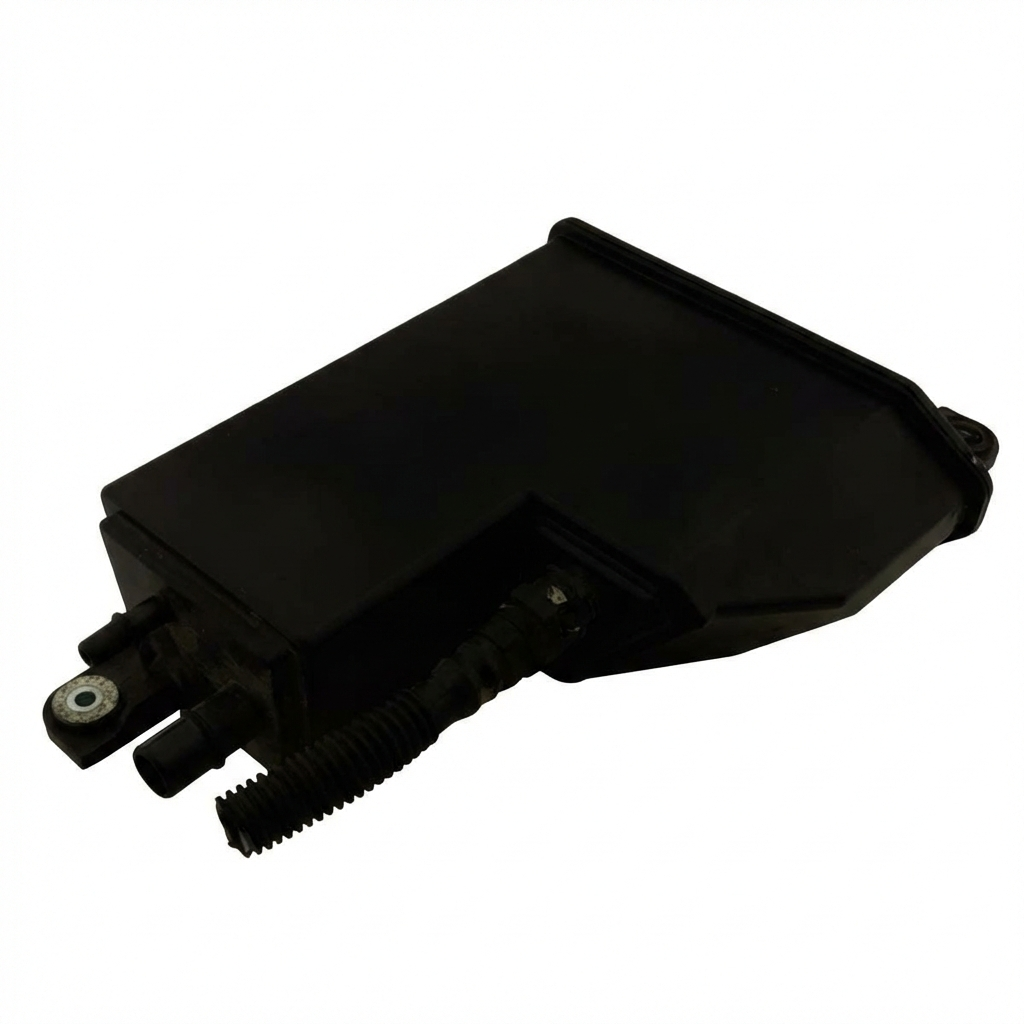
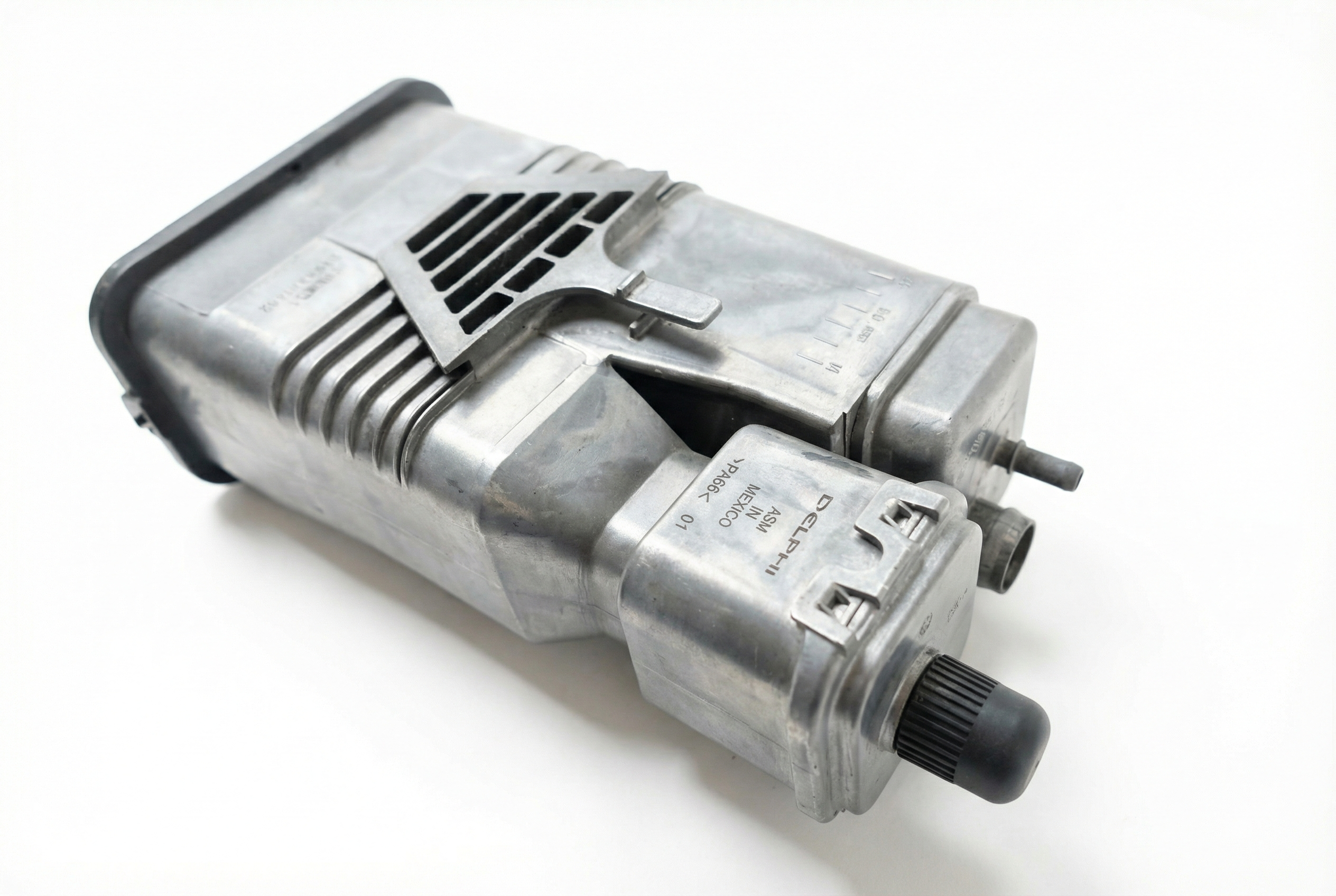
Est. part cost: $15-$55 - Clogged EVAP Canister or Vent Filter ⚪ Low Probability Consistently overfilling the fuel tank after the nozzle clicks off can force raw fuel into the charcoal canister, saturating it and causing it to clog. A TSB also notes that operating in very dusty conditions can plug the vent filter, causing P0441 and refueling issues.
How to confirm: The canister may be restricted if refueling is difficult and other causes are ruled out. A smoke test may show no exit flow from the vent. A mechanic cut open a failed canister and found it 'gunky at the bottom' from overfilling.
Typical fix: Replace the charcoal canister and avoid overfilling the fuel tank. For dusty environments, an upgraded dual-filter kit is available from Mopar (Part #68478013AA).
Est. part cost: $150-$300
Rare But Worth Checking
- Loose or Faulty Gas Cap: While a bad gas cap typically causes a large leak code (like P0455 or P0457), it's an easy and inexpensive item to check first. However, some technicians note that for a P0441 'incorrect flow' code, the gas cap is an unlikely cause.
- Faulty Powertrain Control Module (PCM): This is extremely rare. The PCM should only be considered after all other possibilities, including wiring integrity checks between the components and the PCM, have been exhaustively tested.
Diagnosis Steps
- Scan for all stored trouble codes. If P062A is present, pay close attention to the TSBs and focus diagnosis on the fuel tank pressure sensor and related EVAP lines near the filler neck.
- Inspect the gas cap for a tight fit and a healthy seal. Ensure the fuel filler neck where the cap seals is clean and free of rust or debris.
- Visually inspect the EVAP purge valve and its hoses in the engine bay for any obvious cracks or loose connections. The valve is typically on the intake manifold.
- Test the purge valve. With a scan tool, command it to cycle and listen for a clicking sound. You can also remove it and test if it holds vacuum when closed and flows when voltage is applied.
- Inspect the EVAP lines running to the rear of the truck, especially the hoses around the charcoal canister and fuel filler neck. Look for cracks, damage, or signs of chewing from rodents. The hose (55398515AB) between the tank and canister is a known spot for damage.
- If a visual inspection reveals no obvious faults, perform a smoke test on the EVAP system. This involves feeding low-pressure smoke into the system's service port and looking for where it escapes. This is the most reliable way to find small leaks.
- Check the fuel tank pressure sensor data with a scan tool. With the filler flap open, the voltage should be stable around 2.5-2.6V. Unplugging the sensor should result in a 5V reading on the scan tool, confirming wiring integrity from the PCM.
Parts You'll Likely Need

- EVAP Purge Valve / Solenoid
(OEM #4891739AB)— This is a very common failure point for P0441 across many vehicles. It's a moving part that can stick open or closed over time.
Trusted brands: Mopar, Bosch, Standard Motor Products
OEM price range: $40-$70
Aftermarket price range: $25-$60 - Fuel Tank Pressure Sensor / Recirculation Line
(OEM #52029939AD (replaces 52029939AC, 52029939AB))— A known issue on this platform, especially when P0441 is accompanied by P062A and refueling problems. The part is an assembly including the sensor and a recirculation tube.
Trusted brands: Mopar
OEM price range: $40-$80
Aftermarket price range: $30-$60 - EVAP System Hose
(OEM #55398515AB)— A specific molded hose near the fuel tank that is prone to cracking or being damaged by rodents, leading to leak and flow codes.
Trusted brands: Mopar
OEM price range: $50-$65
Related Codes That Often Appear With This One
- P062A — Stands for 'Fuel Pump Control Performance'. On this truck, TSBs #25-009-24 and #25-001-21 directly link this code with P0441, pointing to a common failure in the EVAP system components near the fuel tank that affects both fuel vapor management and tank pressure during refueling.
- P0456 / P0457 — These codes indicate small or large leaks in the EVAP system. If a hose is cracked or a seal has failed, you may get a leak code in addition to the incorrect flow code.
Technical Service Bulletins (TSBs) & Recalls
- 25-009-24: Links MIL illumination with DTCs P0441 and P062A, plus hard-to-fill fuel tank symptoms, to a fault in the rear EVAP components.
- 25-001-21: Addresses P0441 and refueling issues caused by a plugged EVAP canister filter in dusty environments and recommends an upgraded dual-filter kit.
Platform-Specific Known Issues
- TSB #25-009-24 and #25-001-21 identify an issue where P0441 appears with P062A, accompanied by difficulty filling the fuel tank. This points to a failure in the EVAP system near the tank, specifically the fuel tank pressure sensor/recirculation line assembly.
- TSB #25-001-21 notes that vehicles operated in continuous dusty conditions can have the fresh air filter for the EVAP system clog, leading to P0441 and refueling issues. An upgraded filter kit is available.
Mechanic-Grade Diagnostic Values
- EVAP Canister Purge Valve Solenoid Resistance — expected: 14.4 to 38 ohms. Failure: A resistance reading outside of this range indicates a faulty internal coil.
- Fuel Tank Pressure (FTP) Sensor Voltage (KOEO, gas cap off) — expected: ~2.5 Volts. Failure: A reading stuck at 5V indicates an open circuit or unplugged sensor; a reading stuck near 0V may indicate a short.
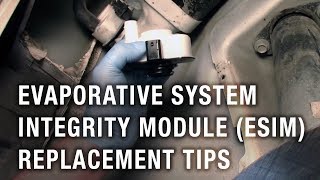
- Evaporative System Integrity Monitor (ESIM) Switch Voltage (during vacuum test) — expected: Voltage should drop to 0 volts. Failure: If voltage does not drop to zero when a slight vacuum (1 inHg) is applied to the canister, the switch is faulty or installed incorrectly.
Scan Tool Commands That Help
- wiTECH or equivalent professional scanner (e.g., Innova 5160): ESIM Forced Test / EVAP System Test — This function is used to command the vehicle's internal EVAP leak monitor to run on demand, without needing a full drive cycle. It allows a technician to monitor the ESIM switch and system pressure to quickly verify if the system can seal. If the test fails to show the ESIM switch closing, it points to a leak or a faulty switch.
Wiring & Ground Locations
- G924A — Rear of the right front fender.. This is a ground point referenced in wiring diagrams for EVAP system components. A poor ground here can cause erratic sensor readings and trigger codes like P0441.
- Fuel Tank Pressure Sensor Connector — On the fuel filler neck, accessible by removing the driver's side rear wheel and fender liner.. This is a 3-wire connector. One wire is a 5V supply from the PCM, one is the signal wire back to the PCM, and one is a sensor ground. Checking for 5V at the connector is a key step in diagnosing a faulty sensor vs. a wiring problem.
- EVAP Purge Solenoid Connector — On the intake manifold in the engine bay.. This is a 2-wire connector that receives a pulse-width modulated signal from the PCM to open the valve. Verifying the integrity of this connector and its wiring is crucial before replacing the solenoid.
Real Owner Repair Stories
- RamForum.com user 'Dusty' (2019 Ram 1500 Laramie 5.7L) — Check Engine Light with code P0441 and a long-standing issue of the fuel nozzle shutting off constantly during fill-ups.
❌ Tried (didn't work) Learned to live with the refueling issue before the CEL appeared.
✅ What actually fixed it The dealer replaced the 'Fuel Tank Pressure Sensor/Recirculation Tube Assembly' (Part No. 52029939AC) under warranty. The user was told there was a 'bad run' of these parts from the factory. - YouTube channel 'Fix It Now' (2014 Ram 1500) — Check Engine Light with codes P0441, P0457 (large leak), and a 'Check Fuel Cap' message.
❌ Tried (didn't work) Replacing the gas cap.
✅ What actually fixed it A visual inspection under the truck revealed a large, chewed hole in the EVAP hose (Part No. 55398515AB) that runs from the gas tank to the charcoal canister, located near the rear differential. Replacing the damaged hose resolved all codes. - RamForum.com user 'Rango1500' (2015 Ram 1500 Big Horn) — Started with a 'loose gas cap' message, progressed to 'EVAP system small leak', and finally 'EVAP system malfunction' with codes P0440 and P0441.
❌ Tried (didn't work) Replacing the gas cap., Replacing the purge solenoid on the engine.
✅ What actually fixed it A shop first found and replaced a chewed vent hose. When the CEL returned, further diagnosis pointed to the 'esim/charcoal canister' assembly. Replacing the entire canister assembly was the final fix.
"I Checked Everything" — The Actual Cause
- In one documented case on a Ram truck, a shop was chasing EVAP codes including P0441. A smoke test revealed no leaks, and the purge valve tested good. They replaced the Evaporative System Integrity Monitor (ESIM) switch, but the code returned immediately. The root cause was discovered to be that the new ESIM switch was installed in the wrong clock position. The switch can be physically installed in four different orientations, but it will only function correctly when the electrical connector is in the 3:00 position.
OEM Part Supersession History
4891739AA→4891739AB— Standard revision and update by the manufacturer.52029939AC→52029939AD— Standard revision. Forum reports suggest the 'AC' version was part of a 'bad run' of parts, implying the revision was to correct a quality issue.
Model Year Variations Within This Range
- 2011-2018: No significant variations in the design or common causes of P0441 have been identified within this model year range. The primary components (purge valve, canister, ESIM, pressure sensor) and their associated failures appear consistent across the generation.
Helpful Videos

Used OEM Parts in Stock



New Aftermarket Parts Available


The information in this article is provided for general reference and educational purposes only. Vehicle specifications, procedures, and part compatibility can vary by production date, trim level, and region. Always consult your vehicle's factory service manual and verify part numbers before purchasing or performing repairs. Safety-critical components such as airbags, seat belts, and braking systems should be installed by a qualified professional.
- Ram 1500:
- 🎬 Helpful Videos
- 🛍️ Shop This Part
- What's Unique About the 2011-2018 Ram 1500
- Diagnostic Flowchart
- Symptoms You May Notice
- Most Likely Causes
- Rare But Worth Checking
- Diagnosis Steps
- Parts You'll Likely Need
- Related Codes That Often Appear With This One
- Technical Service Bulletins (TSBs) & Recalls
- Platform-Specific Known Issues
- Mechanic-Grade Diagnostic Values
- Scan Tool Commands That Help
- Wiring & Ground Locations
- Real Owner Repair Stories
- "I Checked Everything" — The Actual Cause
- OEM Part Supersession History
- Model Year Variations Within This Range
- 🎟️ Get 5% Off