

P0441 on 2016-2021 Jeep Wrangler: EVAP Incorrect Purge Flow Causes & Fixes
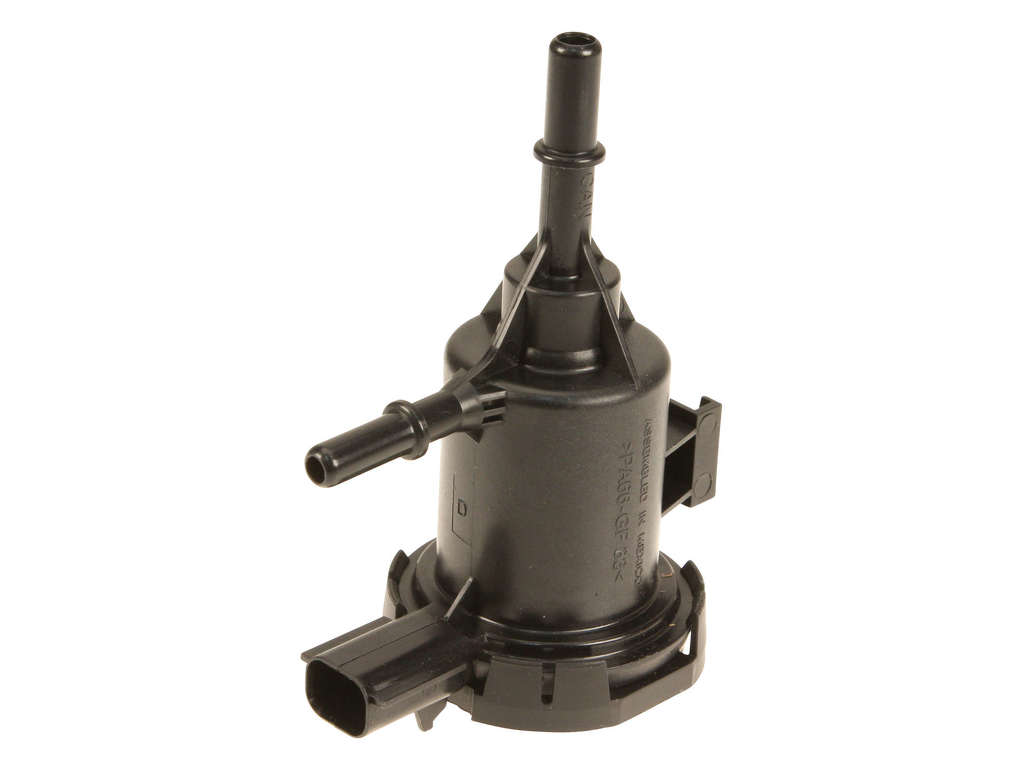
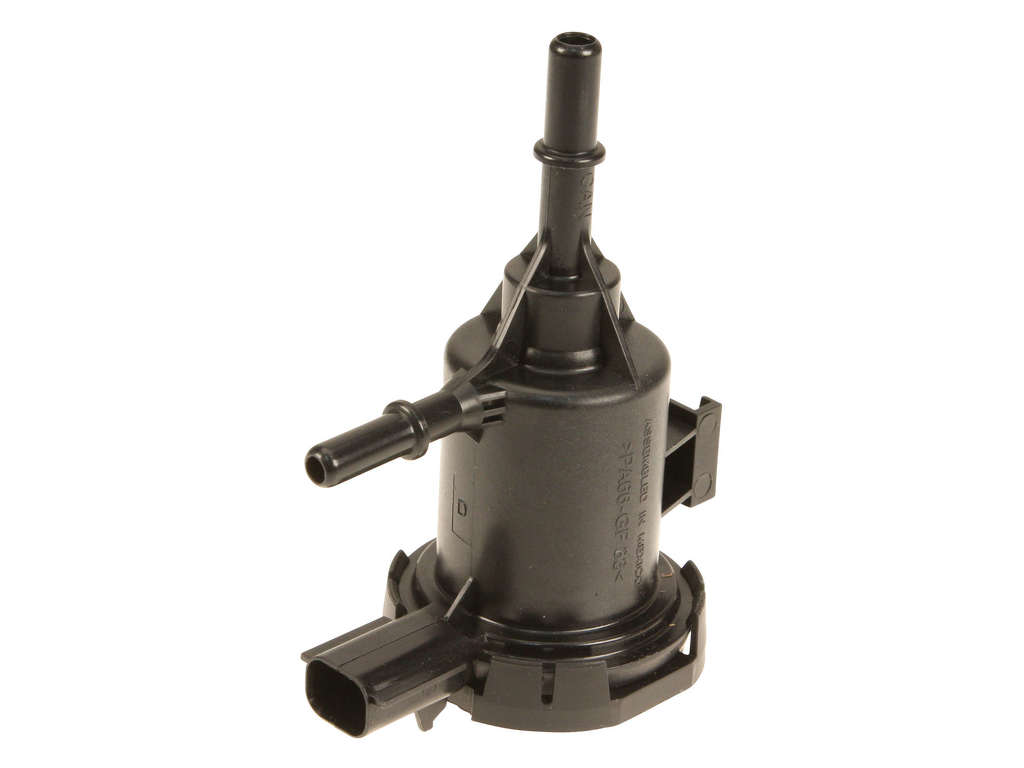
On 2016-2021 Jeep Wranglers, code P0441 is most often caused by a faulty EVAP purge valve/solenoid. This is a relatively inexpensive part, costing around $25-$100, and is typically easy to replace for a DIYer, often located in the engine bay near the driver's side firewall.
- P0441 indicates an incorrect *flow* in the EVAP system, not necessarily a leak.
- The most probable cause is a faulty EVAP purge valve located in the engine bay.
- Before buying parts, check all EVAP hoses for cracks or disconnections, as this is a simple and free check.
- Be aware of your Wrangler's generation (JK or JL) as parts are not always interchangeable.
- This code will cause an automatic failure on an emissions test, so it should be addressed promptly.
What's Unique About the 2016-2021 Jeep WRANGLER

The 2016-2021 Wrangler model years span two distinct generations: the JK (through 2018) and the JL (starting in 2018). While the P0441 code's meaning is the same for both, the physical location and part numbers for EVAP components like the purge valve can differ significantly. For the JK with the 3.6L engine, the purge valve is typically on the driver's side fender. For the JL, its location can vary based on the 3.6L or 2.0L Turbo engine. Additionally, Jeep has issued multiple Technical Service Bulletins (TSBs) that include P0441, indicating it's a known issue that can be associated with other fault codes or specific symptoms like engine pinging, sometimes addressed with a PCM software update.
Diagnostic Flowchart

Tap your situation to follow the diagnostic path that matches what you're seeing on this vehicle.
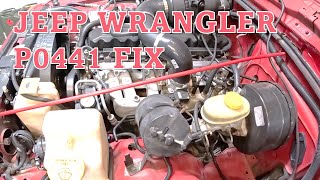
Generation note: This range covers the end of the Wrangler JK generation (2016-2018) and the beginning of the JL generation (2018-2021). The 2018 model year is an overlap. Always verify which generation you have before ordering parts, as component design and location can vary. For example, the purge valve for a 2017 JK 3.6L is a different part 🎬 Watch: Step-by-step purge valve replacement for Wrangler JK models. than for a 2019 JL 3.6L.
Symptoms You May Notice
- Check Engine Light (Malfunction Indicator Lamp) is on
- Engine pinging or detonation sounds, especially after the engine is warm at low RPM (1000-1500 RPM).
- Slightly rough or unstable idle.
- Difficulty starting the engine immediately after refueling.
- A faint smell of fuel (less common).
- Failure to pass an emissions inspection
- Replacing the gas cap. While a bad gas cap is a common cause for EVAP *leak* codes (like P0455 or P0456), it is an uncommon cause for an incorrect *flow* code like P0441. Forum users frequently report replacing the cap with no success for this specific code.
Most Likely Causes

- Faulty EVAP Purge Valve/Solenoid 🔴 High Probability This is the most common failure point for this code across many vehicles, including Jeeps. The valve can become clogged with carbon particles from a failing canister or simply fail electrically, causing it to stick open or closed.
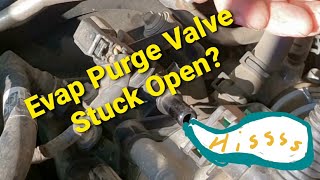
How to confirm: With the engine off, disconnect the purge valve and try to blow through it. It should be closed, and no air should pass. If air passes, it's stuck open. A scan tool can also be used to command the valve to open and close while listening for an audible click. A hand-held vacuum pump can be used to test if the valve holds a vacuum when closed.
Typical fix: Replace the purge valve solenoid.
Est. part cost: $25-$100 - Cracked or Disconnected EVAP Hose 🟡 Medium Probability The vacuum lines, especially around the engine, are made of plastic and rubber that can become brittle over time and crack or get knocked loose during other maintenance. The line from the purge valve to the intake manifold is a common culprit.
How to confirm: Visually inspect all EVAP hoses between the intake manifold, purge valve, and charcoal canister for any visible cracks, loose fittings, or disconnections. A smoke test is the most effective way to find a leak that isn't obvious.
Typical fix: Replace the damaged hose or reconnect it securely.
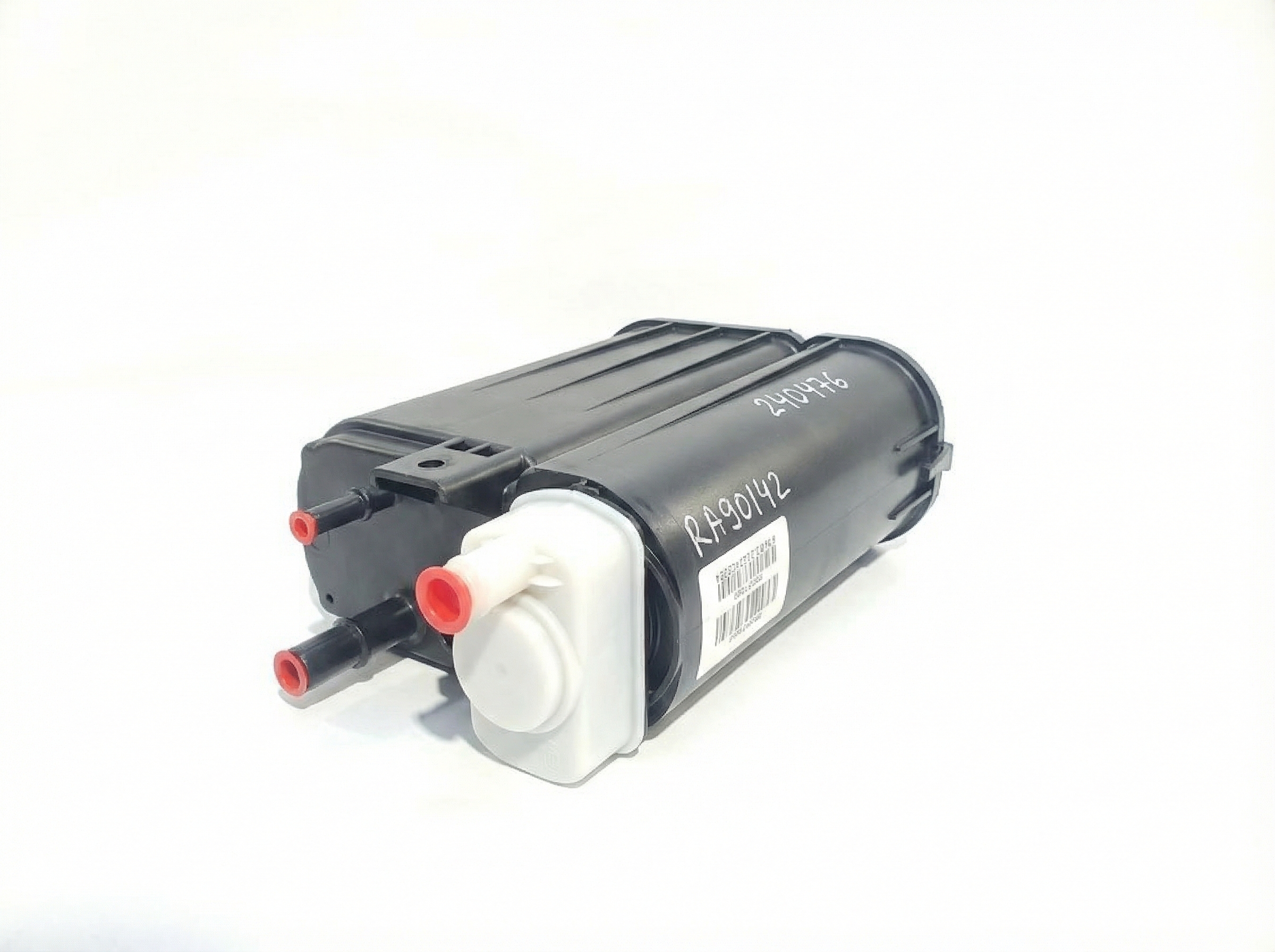
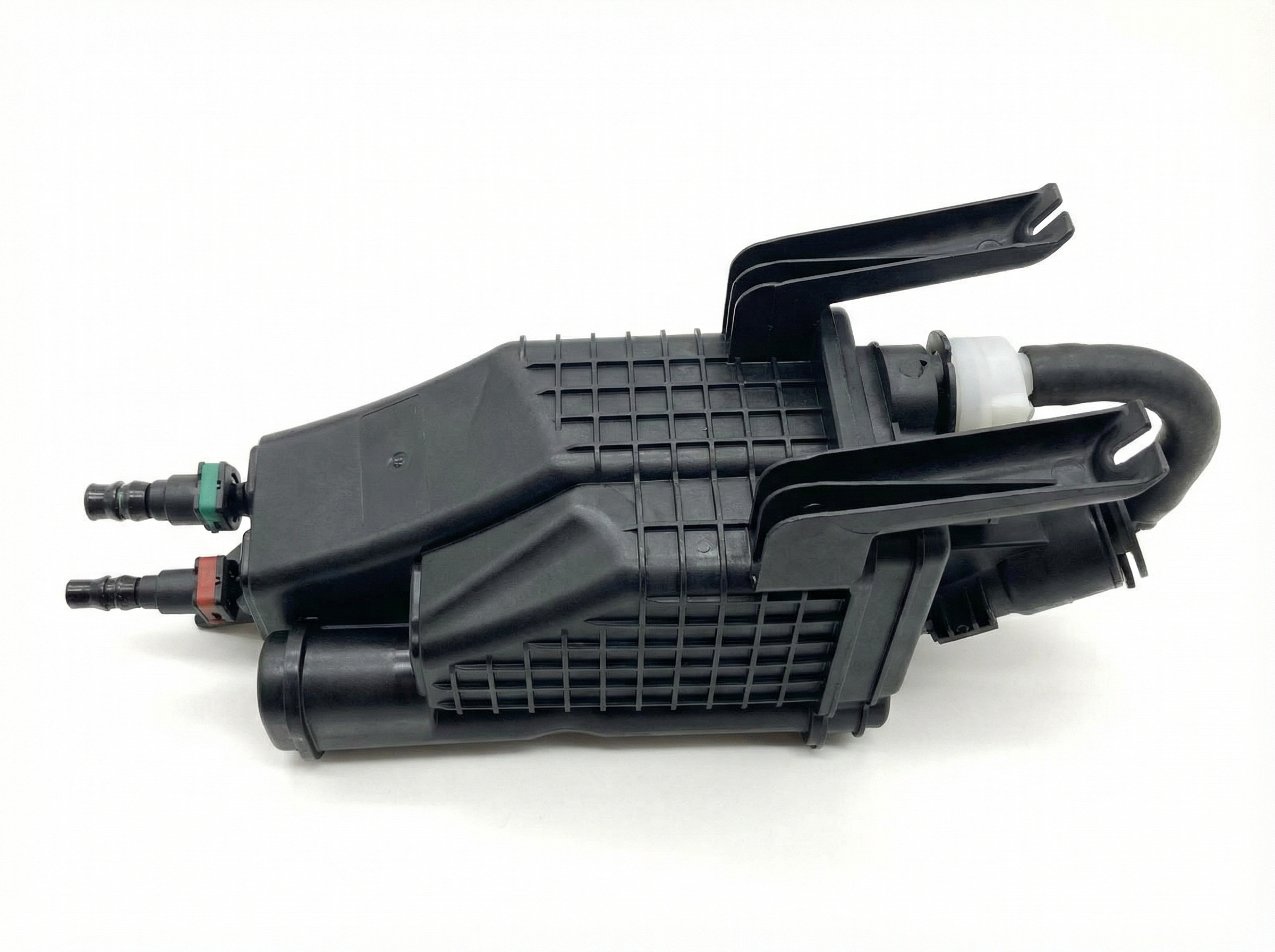
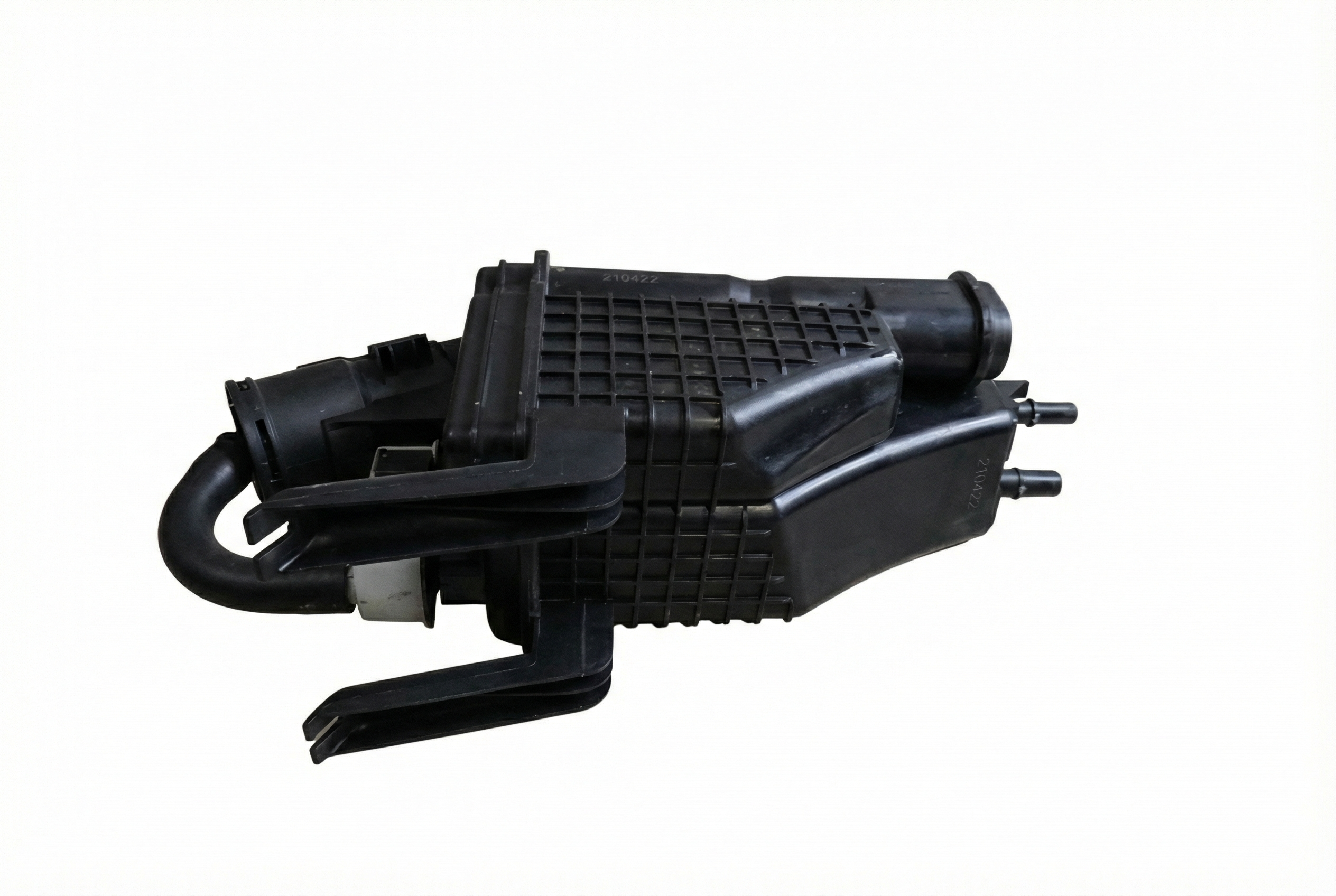
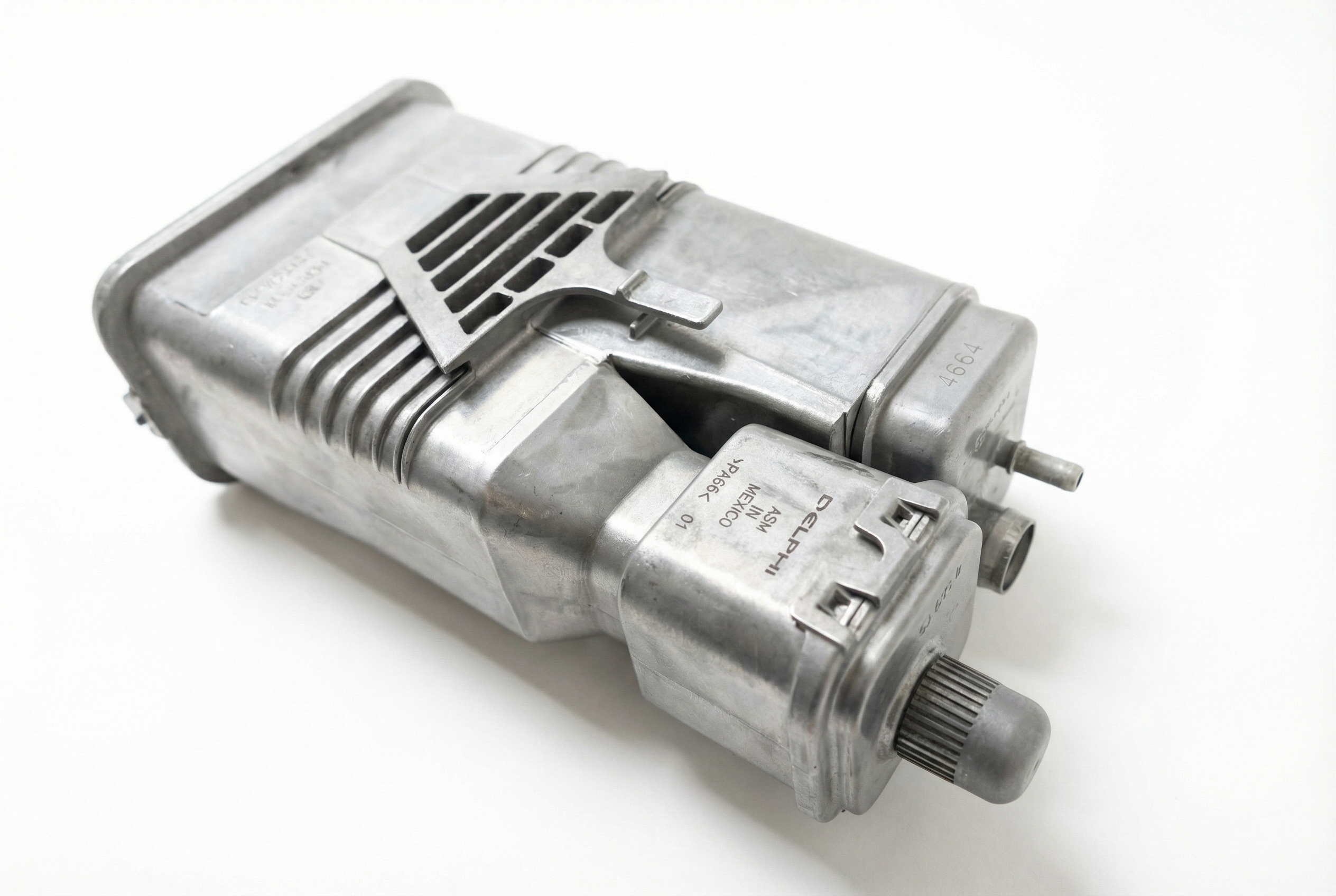
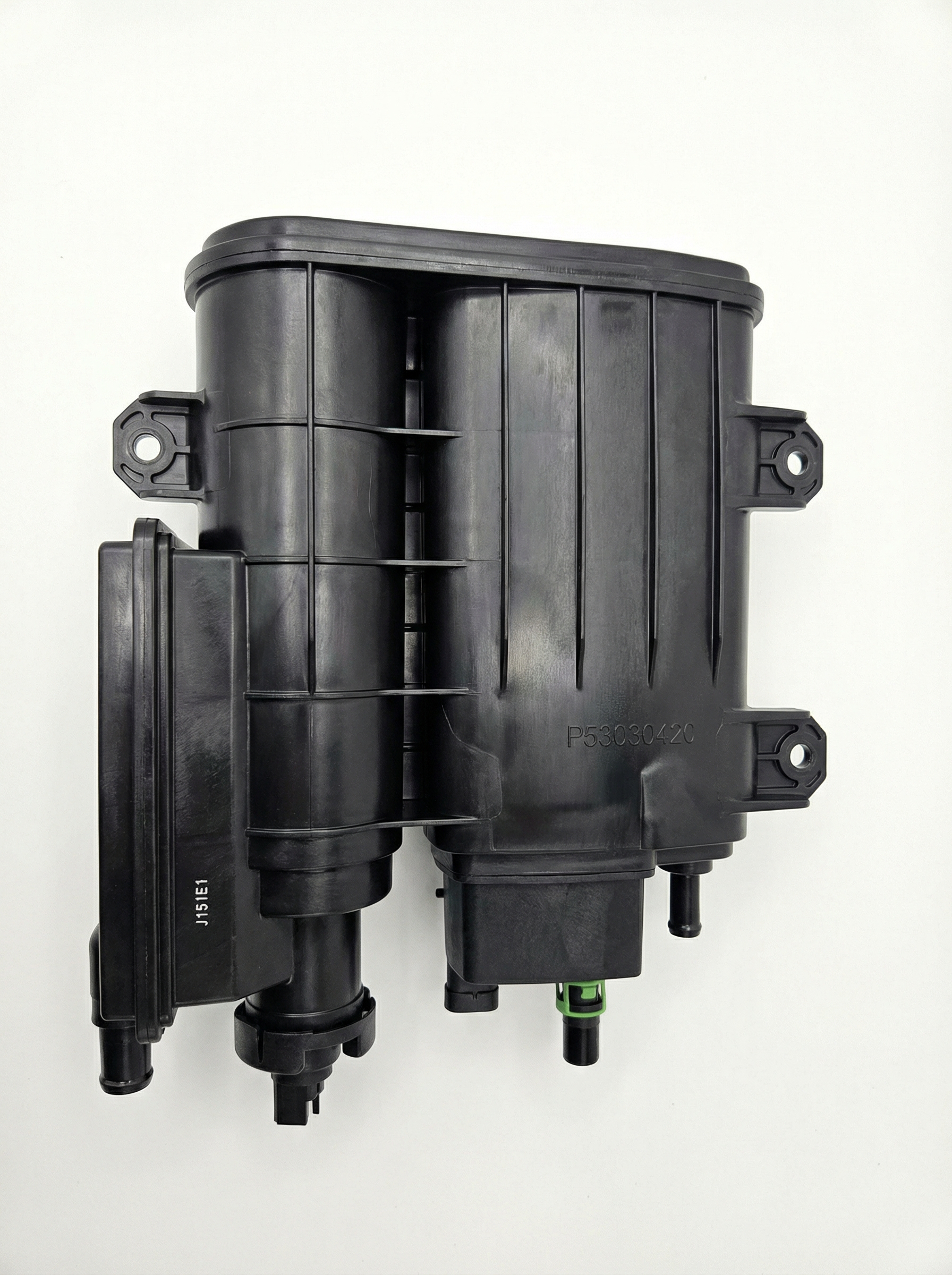
Est. part cost: $10-$50 - Clogged Charcoal Canister ⚪ Low Probability Over-filling the gas tank (topping off after the pump clicks off) can force liquid fuel into the charcoal canister, saturating it and causing internal filters to break down. This sends charcoal pellets into the EVAP lines, clogging the purge valve or the lines themselves.
How to confirm: Disconnect the line leading from the canister to the purge valve. If charcoal pellets or black dust are present, the canister has failed and is contaminating the system. A creative diagnostic trick seen in forums is to place a piece of cotton or a clear filter in the line to see if it catches any debris over a short time.
Typical fix: Replace the charcoal canister and clean out all associated EVAP lines and the purge valve. The purge valve should also be replaced as the debris has likely damaged it.
Est. part cost: $255-$375
Rare But Worth Checking
- Faulty Fuel Tank Pressure (FTP) Sensor: The PCM uses the FTP sensor to monitor the effectiveness of the purge valve. If the sensor provides incorrect readings, the PCM might mistakenly set a P0441 code. This is sometimes seen on JL Wranglers and other Stellantis vehicles, where owners have replaced the purge valve with no success, only to find the FTP sensor was the root cause.
- PCM Software Glitch: TSB 18-049-22 for the 2020 Wrangler with the 3.6L engine specifically calls for a PCM software update to address P0441, especially when accompanied by engine pinging. This should be considered before replacing parts on eligible vehicles.
- Faulty Powertrain Control Module (PCM): Extremely rare, but several TSBs mention P0441 in conjunction with P0607 (ECU Internal Performance), indicating it can be part of a larger module failure. This should only be considered after all other possibilities have been exhausted.
Diagnosis Steps
- Read the code with an OBD-II scanner and check for any other accompanying codes.
- Perform a thorough visual inspection of the EVAP purge valve, located in the engine bay, and all connected hoses. Look for obvious cracks, damage, or loose connections.
- Test the purge valve. With the engine off, remove the valve. It should be normally closed. Try to blow air through it; if air passes, the valve is stuck open and must be replaced.
- If the valve seems okay, use a scan tool with control functions to command the purge valve to open and close. You should hear an audible click. If not, check for power and ground at the valve's electrical connector.
- If the valve and wiring are good, inspect the purge lines for blockages. Disconnect the line from the charcoal canister and check for charcoal debris, which indicates a failed canister.
- If no blockages are found, a smoke test may be necessary to find hairline cracks or small leaks in the hoses that are not visually apparent.
- For 2020+ 3.6L models exhibiting engine pinging, check with a dealer for eligibility for the PCM flash outlined in TSB 18-049-22 before replacing hardware.
Parts You'll Likely Need
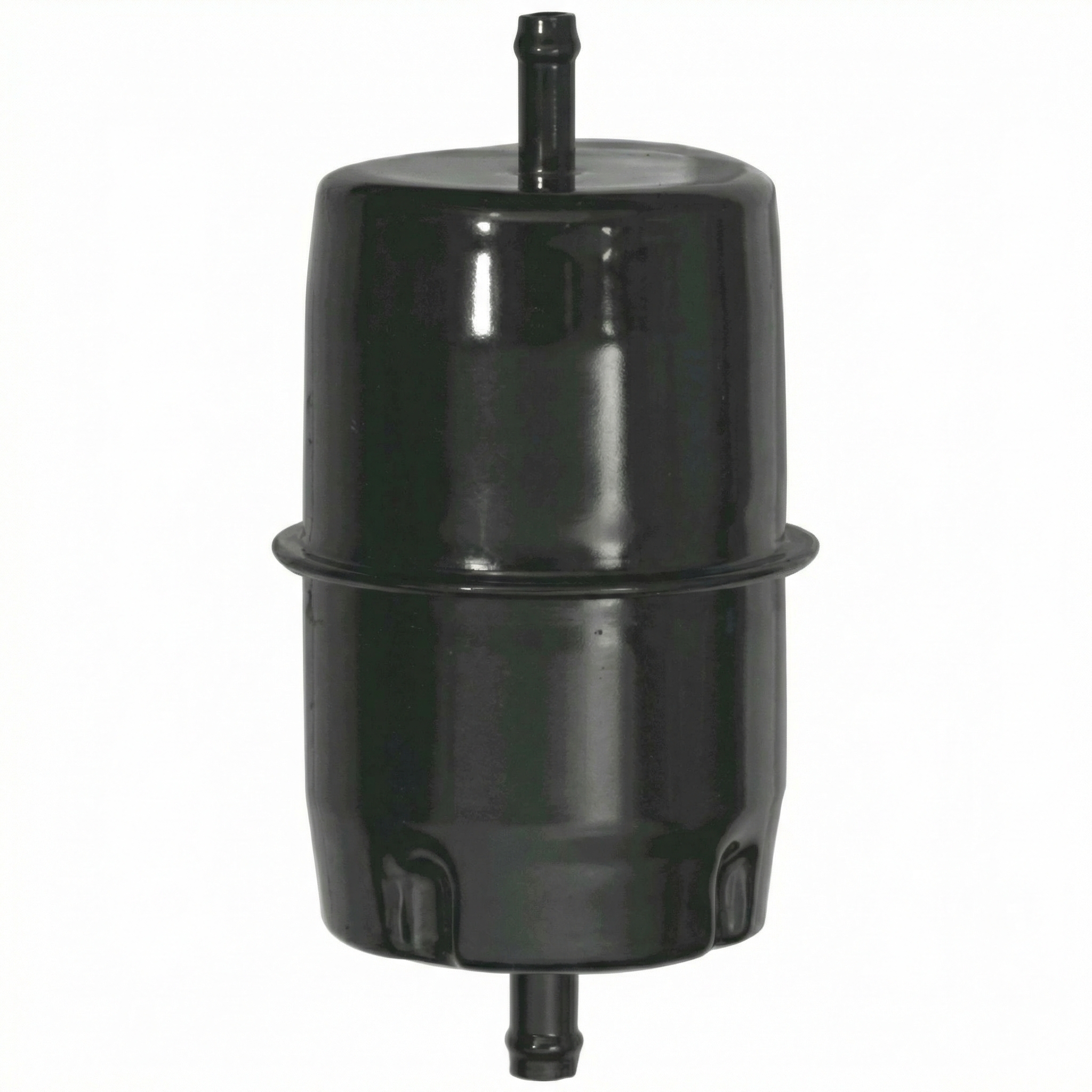
- EVAP Purge Valve / Solenoid
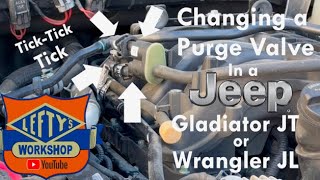
(OEM #JK (3.6L): 04891731AC; JL (3.6L): 4627694AB; JL (2.0L): 4627182AA)🎬 Watch: How to change the purge valve on a Wrangler JL. — This is the most frequent point of failure for a P0441 code. It's a moving part that can get stuck or fail electronically.
Trusted brands: Mopar, Standard Motor Products, Dorman
OEM price range: $60-$120
Aftermarket price range: $25-$90 - EVAP Charcoal Canister — This part needs replacement if it has become saturated with fuel (often from overfilling the tank) and is leaking charcoal pellets into the system, causing blockages.
Trusted brands: Mopar
OEM price range: $260-$350
Aftermarket price range: $200-$300
Related Codes That Often Appear With This One
- P2172 — Mentioned in TSBs #1807023 and #1805322REVA. A purge valve stuck open creates a vacuum leak, which can be interpreted by the PCM as 'High Airflow/Vacuum Leak Detected'.
- P0506 — Mentioned in TSBs #1807023, #1801922REVA, and #1805322REVA. The vacuum leak from a stuck-open purge valve can cause the engine's idle speed to drop below the expected range.
- P1CEA — Mentioned in TSB #S2125000002. This code for 'Boost Side EVAP Purge System Performance' suggests a related issue specific to turbocharged engines, likely the 2.0L in the Wrangler JL.
- P0440, P0456, P0457 — TSB #S2008000112 groups P0441 with these general EVAP system and leak codes, indicating a fault in one component can sometimes trigger multiple related codes.
Technical Service Bulletins (TSBs) & Recalls
- S2125000002: Mentions P0441 in a list of EVAP system diagnostic trouble codes.
- 1807023: Lists P0441 along with other codes that may set intermittently.
- 1801922REVA: Includes P0441 in a list of potential DTCs.
- 1805322REVA: Groups P0441 with other codes that may be found when investigating MIL illumination.
- 18-049-22: Directly links DTC P0441 to customer complaints of engine pinging after warm-up on 2020 3.6L models and recommends a PCM flash.
- S2008000112: Groups P0441 with other EVAP leak codes (P0456, P0457, P0440).
Platform-Specific Known Issues
- TSB #18-049-22 specifically notes that customers with a 2020 3.6L Wrangler may experience a pinging or detonation sound from the engine after it has warmed up when a P0441 code is present. The fix is a PCM software update.
- Multiple TSBs (#1807023, #1801922REVA, #1805322REVA) list P0441 as one of several potential DTCs that may appear together, sometimes related to software updates or intermittent electrical issues.
- On the JL Wrangler forums, some owners have chased the P0441 code, replacing the purge valve and gas cap, only to find the issue was a faulty Fuel Tank Pressure (FTP) sensor giving the PCM bad data.
Mechanic-Grade Diagnostic Values
- EVAP Purge Valve Vacuum Test (de-energized) — expected: The valve should hold vacuum without dropping.. Failure: If vacuum is applied and the gauge needle drops, or if you can't build vacuum, the valve is leaking internally and is faulty.
- EVAP Purge Valve Electrical Test — expected: With the key on, one pin on the connector should have battery voltage. The other pin is the ground-side control from the PCM.. Failure: Absence of voltage on the power feed pin indicates a wiring or fuse issue upstream. If voltage is present but the valve doesn't click when commanded by a scan tool, the valve's coil may be open.
Hidden / Shadow Codes Worth Checking
- Mode 6, TID $93: On some Chrysler vehicles, this Test ID relates to the purge flow monitor. An out-of-range value here, even without a specific DTC, can point towards an issue with the Fuel Tank Pressure sensor, which the system uses to infer flow. (see via An OBD-II scanner capable of reading Mode 6 test data.)
Scan Tool Commands That Help
- wiTECH (Dealer Tool): Small Leak Verification Test (SLVT) — Although designed primarily for leak codes like P0456, the SLVT is the mandatory dealer procedure to verify the integrity of the EVAP system. It must be run before a repair to confirm a leak and after a repair to verify the fix. This is more thorough than a simple road test, as some EVAP codes require multiple specific drive cycles to set.
- High-end aftermarket scan tool (e.g., Autel, Innova): EVAP System Test / Purge Solenoid Actuation — This bidirectional control allows the technician to command the purge valve to open and close while the engine is off. This is used to listen for the audible click of the solenoid, confirming the electrical circuit and the solenoid's mechanical function are at least partially working. It can also be used in conjunction with a smoke machine or vacuum gauge to test the valve's sealing ability.
Wiring & Ground Locations
- G106 / G107 (JK) — Located on the driver's side inner fender, behind the airbox.. This is a primary grounding point for several left-side engine bay accessories. While not directly for the purge valve, a poor ground here can introduce electrical noise and issues for various systems monitored by the PCM, making it a good spot to check for corrosion or looseness during any electrical diagnosis.
- Purge Valve Connector — Directly on the EVAP purge valve, typically in the engine bay on the driver's side.. This is the point for electrical testing. One pin is the power feed (should have battery voltage with key on) and the other is the control wire that the PCM pulses to ground to open the valve. Checking for voltage here is a critical step before replacing the valve.
Real Owner Repair Stories
- Reddit user in r/Jeep (2011 Jeep Wrangler JK) — Check engine light with EVAP leak codes (P0456).
❌ Tried (didn't work) The user was facing the prospect of a smoke test after common fixes failed.
✅ What actually fixed it The issue was a cracked plastic nipple for an EVAP tube on top of the fuel tank. The user was able to repair it with plastic cement, avoiding the cost of replacing the entire fuel tank, which is often the only way the part is sold. - YouTube channel 'ATEM OFFROAD' (Jeep Wrangler TJ (older model, but demonstrates a relevant failure)) — Check Engine Light with P0441.
❌ Tried (didn't work) Initial diagnosis focused on the purge valve itself.
✅ What actually fixed it The charcoal canister had failed internally, sending charcoal beads into the EVAP lines. This clogged the system and caused the incorrect flow. The fix required replacing the charcoal canister and cleaning out the lines. The video proves the purge valve was working because it was ables to pull the charcoal debris through the line.
"I Checked Everything" — The Actual Cause
- In cases where a smoke test passes (indicating no leaks), a P0441 code is almost certainly due to a faulty component rather than a cracked hose. The most likely culprit is a purge valve that is mechanically sticking or has an electrical fault, preventing it from opening and closing as commanded by the PCM. Another possibility is a faulty Fuel Tank Pressure (FTP) sensor providing incorrect data, leading the PCM to misinterpret the flow rate.
Model Year Variations Within This Range
- 2018-2021 (JL) vs 2016-2018 (JK): The location of the EVAP canister was a known issue on the JK, as it was in a vulnerable position that often required an aftermarket skid plate for protection on the trail. For the JL generation, Jeep relocated the canister to a safer, less exposed location. This change means that while both can suffer from canister failure, the cause on a JK is more likely to be physical damage from off-roading.
- 2018-2021 (JL) vs 2016-2018 (JK): The JL generation introduced an 8-speed automatic transmission and an optional 2.0L turbocharged engine alongside the updated 3.6L V6. The JK used a 5-speed automatic. These powertrain differences mean that part numbers for components like the purge valve are not interchangeable between the generations, even if the engine displacement is the same (3.6L).
Helpful Videos
Used OEM Parts in Stock
New Aftermarket Parts Available



The information in this article is provided for general reference and educational purposes only. Vehicle specifications, procedures, and part compatibility can vary by production date, trim level, and region. Always consult your vehicle's factory service manual and verify part numbers before purchasing or performing repairs. Safety-critical components such as airbags, seat belts, and braking systems should be installed by a qualified professional.
- Jeep WRANGLER:
- 🎬 Helpful Videos
- 🛍️ Shop This Part
- What's Unique About the 2016-2021 Jeep WRANGLER
- Diagnostic Flowchart
- Symptoms You May Notice
- Most Likely Causes
- Rare But Worth Checking
- Diagnosis Steps
- Parts You'll Likely Need
- Related Codes That Often Appear With This One
- Technical Service Bulletins (TSBs) & Recalls
- Platform-Specific Known Issues
- Mechanic-Grade Diagnostic Values
- Hidden / Shadow Codes Worth Checking
- Scan Tool Commands That Help
- Wiring & Ground Locations
- Real Owner Repair Stories
- "I Checked Everything" — The Actual Cause
- Model Year Variations Within This Range
- 🎟️ Get 5% Off