

P0441 on 2015-2018 Jeep Renegade: EVAP Purge System Performance Causes and Fixes
The P0441 code on a 2015-2018 Jeep Renegade most often points to a faulty EVAP purge valve. This is a relatively inexpensive part, typically costing between $35 and $75 for an aftermarket replacement, and is a straightforward DIY repair for many owners. In some cases, particularly for the 1.4L engine, a PCM software update per a Technical Service Bulletin (TSB) may be the required fix.
- P0441 on a Jeep Renegade means there's an incorrect amount of fuel vapor flow being detected by the engine computer.
- The most common and likely fix is replacing the EVAP purge valve, which is an affordable and accessible part.
- Before buying parts, visually inspect all the EVAP hoses connected to the purge valve for cracks or loose fittings.
- Be aware that Jeep has issued software updates that can fix this code, so it might not be a hardware problem.
- Do not overfill your gas tank, as this can saturate the charcoal canister and lead to EVAP system problems.
What's Unique About the 2015-2018 Jeep RENEGADE

The 2015-2018 Jeep Renegade, which shares its platform with the Fiat 500X, can be prone to a range of EVAP system codes. While the purge valve is a common culprit for P0441, it's important to note that Jeep has issued several Technical Service Bulletins (TSBs) that include P0441. These bulletins suggest that in some cases, the fix may be a PCM software update rather than a physical part replacement, especially on the 1.4L Turbo model per TSB 18-044-21. Additionally, some owners have reported persistent EVAP issues that were only resolved by replacing the entire fuel filler neck assembly due to a hard-to-find leak.
Diagnostic Flowchart

Tap your situation to follow the diagnostic path that matches what you're seeing on this vehicle.
Symptoms You May Notice
- Check Engine Light is on
- A slight rough idle, particularly at a stop
- Difficulty starting immediately after refueling
- Slight decrease in fuel economy
- Fuel odor (less common for this specific code, but possible if the system has a physical leak)
- Replacing the gas cap. The Renegade has a capless fuel filler system, so there is no traditional gas cap to replace. While the seal on the filler neck door can fail, it's not a simple 'gas cap' issue.
- Immediately replacing the charcoal canister. The purge valve and hoses are more common, cheaper, and easier-to-access failure points that should be diagnosed first.
Most Likely Causes

- Faulty EVAP Purge Valve/Solenoid 🔴 High Probability The purge valve is an electromechanical part that cycles thousands of times and is exposed to fuel vapors, making it a common failure point across many vehicles, including the Renegade. It can get stuck open or closed.
How to confirm: With the engine running, disconnect the EVAP line from the purge valve. There should be no vacuum present when the valve is commanded closed by a scan tool. You can also try to blow through the valve when it's disconnected; if air passes through, it's stuck open and needs replacement. A bidirectional scanner can also command the valve to open and close to check for an audible click. A simple bench test involves applying a 12V power supply to the two pins; a healthy valve will click open and allow air to pass, and close when power is removed.
Typical fix: Replace the purge valve. On the 2.4L engine, it is located on the back of the engine, mounted to the intake manifold near the throttle body.
Est. part cost: $35-$100 - Cracked or Disconnected EVAP Hoses 🟡 Medium Probability The vacuum and vapor lines are made of plastic and rubber, which can become brittle and crack over time due to engine heat and age, causing vacuum leaks or flow restrictions.
How to confirm: Visually inspect all hoses connected to the purge valve, intake manifold, and charcoal canister for obvious cracks, loose connections, or deterioration. A smoke test is the most effective way to find small, hard-to-see leaks.
Typical fix: Replace the damaged hose section.
Est. part cost: $10-$50 - Outdated Powertrain Control Module (PCM) Software ⚪ Low Probability Jeep has released multiple TSBs for this generation of Renegade that address various EVAP codes, including P0441, with a software update. TSB 18-044-21 specifically addresses this for the 1.4L engine, and TSB 18-061-16 Rev. C covers the 2.4L. This suggests the original software was overly sensitive.
How to confirm: A Jeep dealership or a properly equipped independent shop can check your vehicle's current software version against the latest available updates by referencing the TSBs.
Typical fix: Reprogram the PCM with the latest software. This is a dealer-only or specialized shop repair.
Est. part cost: $0-$200 - Faulty EVAP Canister ⚪ Low Probability The charcoal canister can become clogged with charcoal particles or saturated with fuel, especially if the fuel tank is habitually overfilled ('topped off'). This restricts vapor flow and can even send charcoal bits into the purge valve, causing it to stick.
How to confirm: Inspect the canister for physical damage or signs of fuel saturation. If the purge valve is removed and charcoal pellets fall out, the canister is failing and must be replaced along with the valve and cleaning the lines.
Typical fix: Replace the charcoal canister.
Est. part cost: $150-$250
Rare But Worth Checking
- Faulty Fuel Tank Pressure Sensor: While this sensor usually triggers its own specific codes (like P0452), a faulty reading can cause the PCM to misinterpret purge flow, leading to a P0441 code. One owner on Reddit reported this as the fix for their 2016 Renegade's P0441 after other repairs failed.
- Leaking Fuel Filler Neck: Some owners have chased persistent EVAP codes and found the ultimate cause to be a leak in the fuel filler neck assembly. One owner of a 2015 model on a Reddit forum stated that after replacing multiple sensors and valves, the dealer finally fixed the issue by replacing the entire filler neck assembly with an updated part.
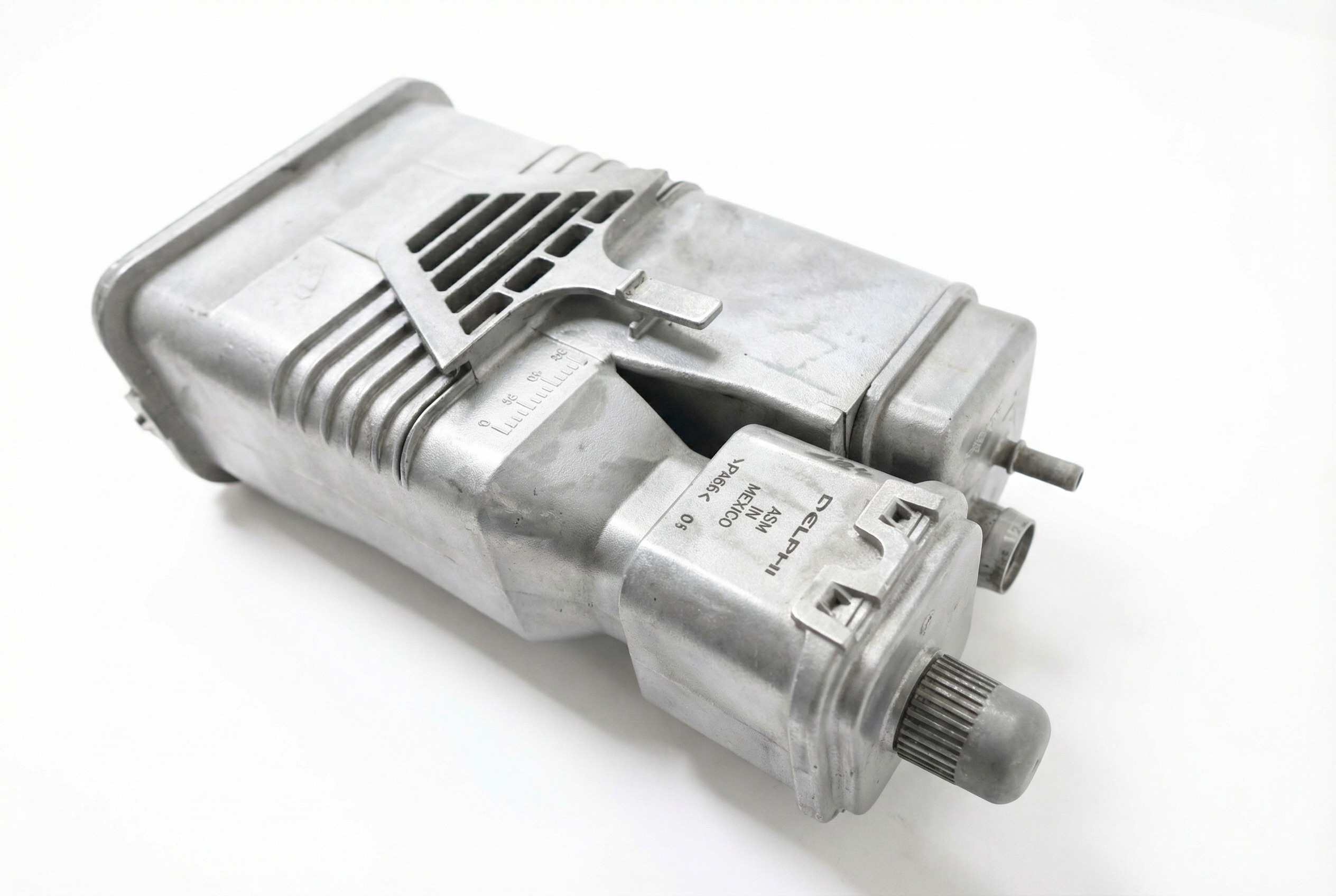
- Faulty EVAP System Integrity Module (ESIM) / Leak Detection Pump: This component, located near the charcoal canister, is part of the system used to test for leaks. While it typically sets other codes (like P0456), its failure can sometimes contribute to or be misdiagnosed as a P0441. A degraded O-ring that seals the ESIM to the canister is a known weak point on this platform. A Reddit user with a 2017 Renegade replaced this part in their journey to solve recurring P0441/P0443 codes.
Diagnosis Steps

- Read the code with an OBD-II scanner to confirm P0441 and check for any other related codes.
- Visually inspect the EVAP purge valve and all connected hoses in the engine bay. Look for any obvious cracks, damage, or loose connections.
- Test the purge valve. With the engine off, disconnect the valve and try to blow through it. If air passes, it is stuck open and faulty. If it's closed, use a bidirectional scan tool to command the valve to open and listen for a clicking sound. Check for vacuum at the valve's outlet port when it's commanded open and the engine is running. Alternatively, bench test the valve by applying 12V and listening for a click and confirming airflow.
- If the valve and hoses appear fine, perform a smoke test on the EVAP system. This involves pumping low-pressure smoke into the system's service port and looking for where it escapes, which will pinpoint the location of any leaks.
- Check with a dealership for any open recalls or applicable Technical Service Bulletins (TSBs) that might recommend a PCM software update. Provide your VIN and mention TSBs 18-044-21 (for 1.4L) or 18-061-16 Rev. C (for 2.4L).
- If no leaks are found and the purge valve tests good, further diagnosis of the charcoal canister, vent valve, and fuel tank pressure sensor may be needed.
Parts You'll Likely Need
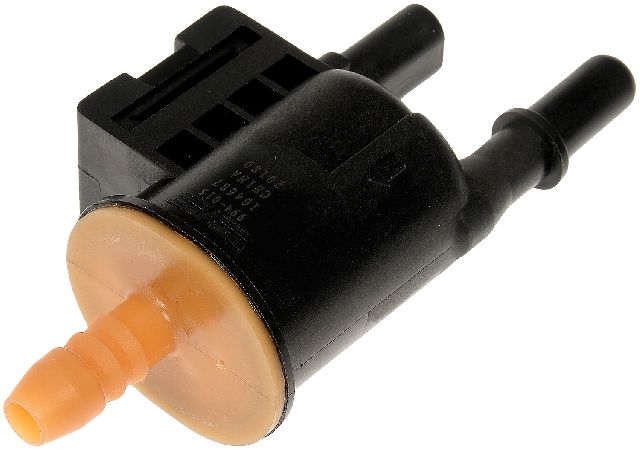
- EVAP Canister Purge Valve / Solenoid
(OEM #68444726AA)— This is the most frequent cause of P0441. It gets stuck open or closed, disrupting the correct flow of fuel vapors. Note: Mopar has discontinued this specific part number, but equivalent aftermarket parts are widely available.
Trusted brands: Mopar, Dorman, Standard Motor Products
OEM price range: $70-$100
Aftermarket price range: $35-$75
Related Codes That Often Appear With This One
- P0440 — This is a general EVAP system failure code, often appearing with more specific codes like P0441. TSB 18-044-21 lists them together as potentially being solved by a PCM flash.
- P0456 — This code indicates a small leak in the EVAP system. A faulty purge valve can sometimes cause both a flow issue (P0441) and be interpreted as a leak. TSB 18-044-21 also groups this code with P0441.
- P0455 — This code indicates a large leak in the EVAP system. It can appear alongside P0441 if the system has multiple faults. TSB 18-044-21 also groups this code with P0441.
- P0452 — This code points to the EVAP pressure sensor. It can be triggered along with P0441 if the system cannot correctly measure pressure changes during the purge cycle, or if the sensor itself is faulty.
Technical Service Bulletins (TSBs) & Recalls

- TSB 18-044-21: For 2018 Renegade with 1.4L Turbo, addresses P0441 (and other EVAP codes) with a PCM software update to revise EVAP system diagnostics.
- TSB 18-061-16 REV. C: For 2016 Renegade (likely 2.4L), lists P0441 in a group of potential EVAP system codes that can be fixed with a PCM software update.
- TSB 18-063-16: For 2015 Renegade (likely 2.4L), lists P0441 in a group of potential EVAP system codes that can be fixed with a PCM software update.
- TSB 18-061-16 REV. B: For 2016 Renegade (likely 2.4L), lists P0441 in a group of potential EVAP system codes that can be fixed with a PCM software update.
Platform-Specific Known Issues
- Several TSBs (18-044-21, 18-061-16 REV. C, 18-063-16, 18-061-16 REV. B) have been issued by Jeep for the 2015-2018 Renegade, which list P0441 among a group of EVAP codes that may be resolved by a PCM software update. TSB 18-044-21 is specific to the 1.4L Turbo engine.
- A persistent P0441 code, after replacing the purge valve and checking for leaks, can be a strong indicator of a needed PCM software update, as reported by many owners who had the work done at a dealership.
- Some owners on forums have reported that after replacing multiple EVAP components without success, the final fix was replacing the entire fuel filler neck assembly due to a persistent, hard-to-detect leak.
Mechanic-Grade Diagnostic Values
- EVAP Purge Valve Solenoid Resistance — expected: Approximately 30-40 Ohms at room temperature (around 68°F / 20°C).. Failure: An open circuit (infinite resistance) or a very high reading indicates a failed coil. A reading of zero or near-zero indicates a short circuit.
- EVAP Purge Valve Voltage Test (at connector) — expected: With the key on, engine off, one of the two pins should show battery voltage (approx. 12V) when probed against a good ground. The other pin is the control wire from the PCM.. Failure: No voltage on the power feed pin indicates a wiring or fuse issue upstream from the connector.
Scan Tool Commands That Help
- Witech (or equivalent professional scanner): EVAP System Test / Purge Valve Actuation — This function allows a technician to command the purge valve to open and close while the engine is running. It's used to verify the valve is physically working (an audible click should be heard) and to check if the PCM can control it. While monitoring fuel tank pressure or vacuum, actuating the valve should cause a noticeable change, confirming flow.
Wiring & Ground Locations
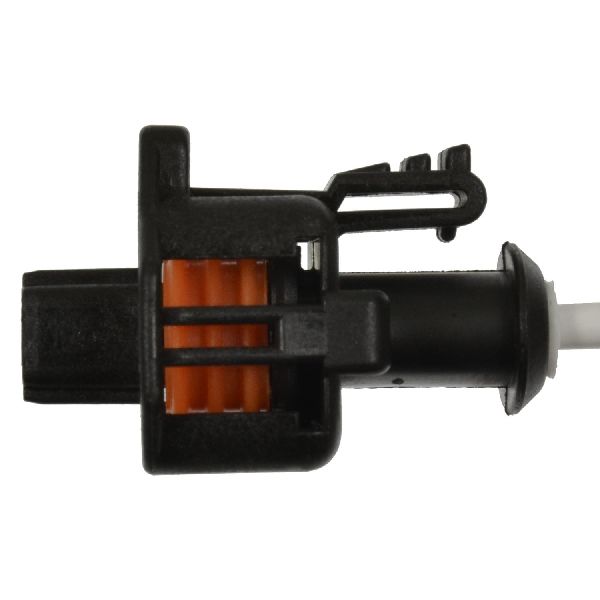
- EVAP Purge Solenoid Connector — On the 2.4L engine, it's on the back side of the engine near the intake manifold. The connector has a safety lock tab (often white or red) that must be slid out before the release tab can be pressed.. A poor connection, corrosion on the pins, or broken wires at the connector will prevent the purge valve from operating, causing a P0441 or related circuit code (like P0444).
- Main Engine/Chassis Ground — A primary ground strap typically connects the negative battery terminal to the chassis and/or the engine block. The specific location on the Renegade frame is near the battery.. While not a direct cause, a poor or corroded main ground can cause a host of seemingly unrelated electrical issues and fault codes as various modules and sensors lose their reference voltage. Ensuring grounds are clean and tight is a fundamental step in diagnosing any electrical fault.
Real Owner Repair Stories
- Reddit user on r/AskMechanics (2016 Jeep Renegade, <60k miles) — P0441 Check Engine Light
❌ Tried (didn't work) Replacing the EVAP purge valve as recommended by the dealership.
✅ What actually fixed it The dealership stated that an 'optional software update' for the PCM was the required fix after the new part did not clear the code. This aligns with the information found in Jeep's Technical Service Bulletins for this issue. - YouTube video by 'Alley 55 Customs' (Jeep Renegade (year not specified, but 2015+ body style)) — Check Engine Light with EVAP code (P0441 implied as common)
❌ Tried (didn't work) Initial diagnosis pointed towards the purge valve.
✅ What actually fixed it The video provides a detailed walk-through of replacing the vapor canister purge valve, confirming it as a common DIY fix. The process involves removing the air intake box for access on the 2.4L engine.
"I Checked Everything" — The Actual Cause
- In cases where a smoke test passes (indicating no leaks), the P0441 code is almost certainly caused by either a faulty purge valve that is stuck closed (preventing flow) or a PCM software calibration issue. The TSBs issued by Jeep confirm that the PCM can misinterpret normal system operation and set a false code, which is only correctable with a software flash.
OEM Part Supersession History
68444726AA→This part number has been discontinued by Mopar. Aftermarket equivalents are the primary replacement option. Another Mopar part, 68444723AA, is listed as a seal or gasket for the intake manifold on the 1.3L engine, but is sometimes confused with the purge valve itself.— Part lifecycle / end of production.
Heads up: Ensure any aftermarket replacement is specified for the correct engine (1.4L Turbo or 2.4L), as the fittings and mounting may differ.
Model Year Variations Within This Range
- 2015-2018: The primary variation affecting P0441 is the engine. The 1.4L Turbo and 2.4L MultiAir engines have different part locations and are covered by different TSBs for PCM updates. TSB 18-044-21 is specific to the 1.4L engine, while others like 18-061-16 Rev. C apply to the 2.4L.
Helpful Videos
Used OEM Parts in Stock
New Aftermarket Parts Available


The information in this article is provided for general reference and educational purposes only. Vehicle specifications, procedures, and part compatibility can vary by production date, trim level, and region. Always consult your vehicle's factory service manual and verify part numbers before purchasing or performing repairs. Safety-critical components such as airbags, seat belts, and braking systems should be installed by a qualified professional.
- Jeep RENEGADE:
- 🎬 Helpful Videos
- 🛍️ Shop This Part
- What's Unique About the 2015-2018 Jeep RENEGADE
- Diagnostic Flowchart
- Symptoms You May Notice
- Most Likely Causes
- Rare But Worth Checking
- Diagnosis Steps
- Parts You'll Likely Need
- Related Codes That Often Appear With This One
- Technical Service Bulletins (TSBs) & Recalls
- Platform-Specific Known Issues
- Mechanic-Grade Diagnostic Values
- Scan Tool Commands That Help
- Wiring & Ground Locations
- Real Owner Repair Stories
- "I Checked Everything" — The Actual Cause
- OEM Part Supersession History
- Model Year Variations Within This Range
- 🎟️ Get 5% Off