

P0441 on 2020 Jeep Gladiator: EVAP Incorrect Purge Flow Causes and Fixes
For a 2020 Jeep Gladiator, code P0441 most often points to a faulty EVAP purge valve or the need for a PCM software update as specified in a Technical Service Bulletin (TSB). A purge valve is around $25-$70, while a dealer software update may be covered under warranty or cost about one hour of labor, which can be around $150-$200.
- For a 2020 Gladiator, always check for TSB #18-048-22 eligibility before replacing parts, as a free software update might be the only fix needed.
- The most common mechanical failure is the EVAP purge valve (Mopar P/N 04627694AB), which is relatively inexpensive and accessible for DIY replacement on top of the engine.
- Don't immediately blame the gas cap for a P0441 code; it's an incorrect flow code, not a leak code, and the cap is an unlikely cause.
- The Jeep Wrangler (JL) shares this exact issue and its fixes, making its forums a valuable resource.
What's Unique About the 2020-2020 Jeep GLADIATOR

For the 2020 Jeep Gladiator, the P0441 code has a unique and well-documented cause that sets it apart from many other vehicles. Manufacturer Technical Service Bulletins (TSBs) indicate that a simple powertrain software update can resolve this code, especially if it appears with other specific diagnostic trouble codes. This is a critical first check before replacing any parts, as the issue may be in the logic of the vehicle's computer rather than a mechanical failure. One owner on a forum noted that after a dealer visit for P0441, both the purge valve was replaced and an ECM reflash was performed under warranty, which resolved the issue and improved engine smoothness.
Diagnostic Flowchart

Tap your situation to follow the diagnostic path that matches what you're seeing on this vehicle.
Symptoms You May Notice

- Check Engine Light is on
- A faint smell of fuel (less common)
- Slightly rough idle or difficulty starting (rare)
- Noticeable ticking sound from the purge valve in the engine bay.
- Slight engine lugging or pinging that disappears after the fix.
- Replacing the gas cap. While a loose or faulty gas cap can cause other EVAP codes (like P0455, P0456, or P0440), a NHTSA document clarifies that it is not a typical cause for P0441, which is an 'incorrect flow' code, not a 'leak' code. Some owners replace it as a first step, but it rarely solves this specific code.
Most Likely Causes

- Powertrain Control Module (PCM) Software Update Needed 🔴 High Probability TSB #18-048-22 explicitly states that for a P0441 code, a software update may be the sole required fix, particularly if seen with codes like P258B or C1252-92. This TSB was also released as a Rapid Service Update (RSU) 20-053, indicating its importance. The fix is often covered under warranty.
How to confirm: A Jeep dealership or a qualified independent shop with access to OEM software (like wiTECH) can check if your vehicle's PCM has the latest calibration by referencing your VIN.
Typical fix: Flashing the PCM with the updated software. This is a non-mechanical repair that adjusts the module's logic.
Est. part cost: $0 if under warranty, otherwise ~$150-$200 for one hour of dealer labor. - Faulty EVAP Purge Valve/Solenoid 🔴 High Probability This is the most common mechanical failure for P0441 across most vehicles, including the Gladiator and its platform-mate, the Wrangler JL. The valve can get stuck open or closed, causing incorrect vapor flow. It is located on top of the 3.6L engine under the plastic cover.
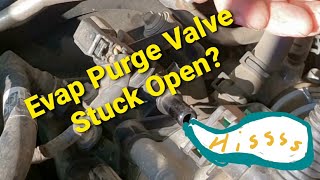
How to confirm: With the engine off, disconnect the valve and try to blow through it; it should be closed and pass no air. A more definitive test is to start the engine with the outlet hose disconnected and feel for suction at the valve's port; if vacuum is present at idle, the valve is stuck open and faulty. A scan tool can also command the valve open and closed to verify function.
Typical fix: Replacement of the purge valve. This is a straightforward DIY job for many owners.
Est. part cost: $25-$70 - Cracked, Disconnected, or Clogged EVAP Hoses 🟡 Medium Probability Hoses can become brittle over time or get damaged during other maintenance. A NHTSA document also lists obstructed plumbing as a typical reason for P0441.
How to confirm: Visually inspect all EVAP lines between the intake manifold, purge valve, and charcoal canister for cracks, kinks, or loose connections. A smoke test is the most effective way to find small leaks that aren't visually apparent.
Typical fix: Repairing the connection or replacing the damaged hose section.
Est. part cost: $10-$50 - Faulty Fuel Tank Pressure Sensor ⚪ Low Probability The PCM uses this sensor's readings to monitor the EVAP system and detect purge flow. A faulty sensor can provide incorrect data, triggering the code. One owner on the JeepGladiatorForum.com confirmed this was the cause after multiple attempts to clear the code.
How to confirm: Requires a scan tool (like J-Scan) to monitor the fuel tank pressure readings to see if they are logical and respond to changes (like opening the gas cap). An owner on a related forum noted their pressure was stuck high (14,000-16,000 PA) when running, indicating a potential sensor or blockage issue.
Typical fix: Replacement of the fuel tank pressure sensor, which is located on the fuel tank.
Est. part cost: $40-$80
Rare But Worth Checking
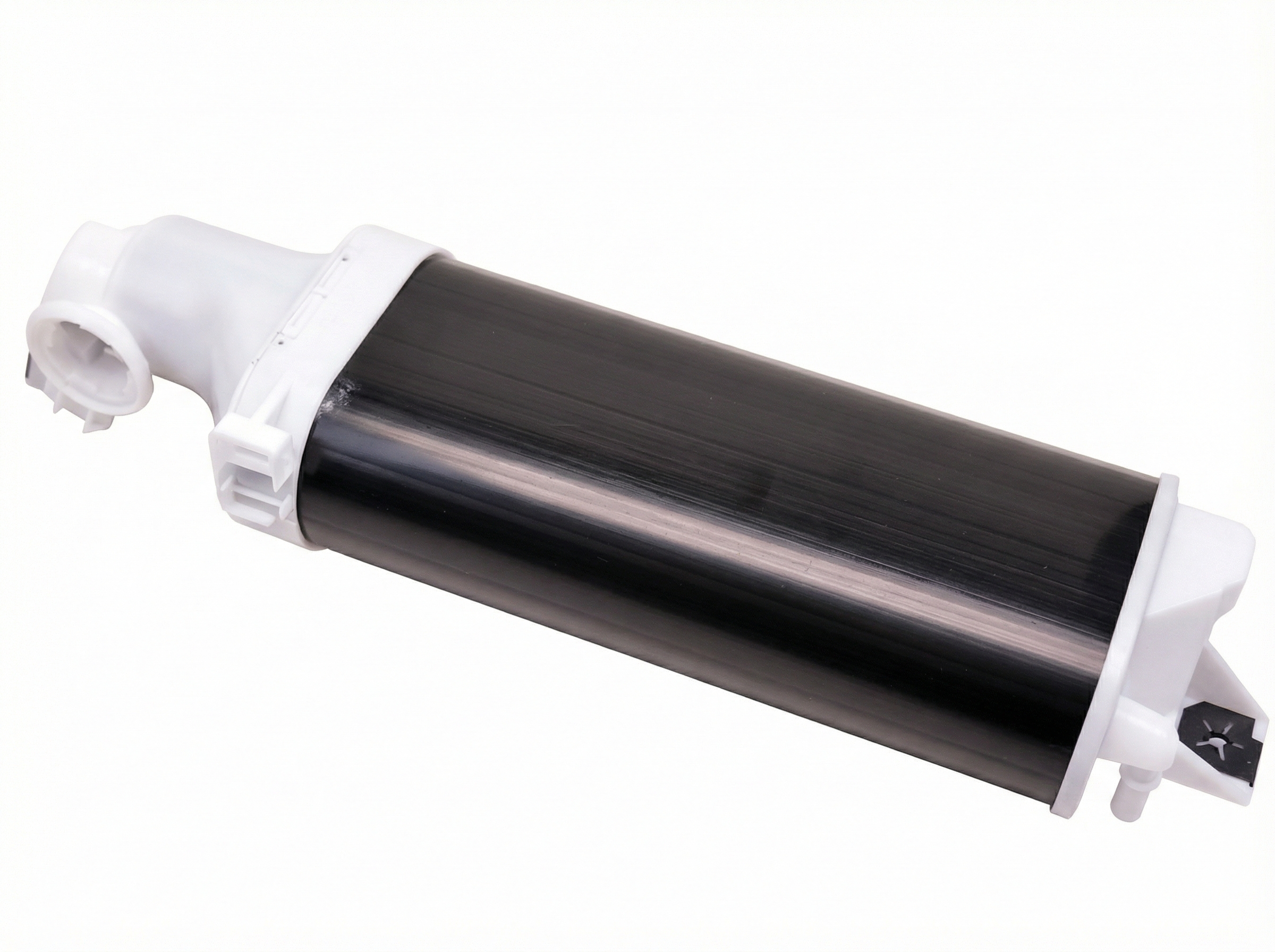
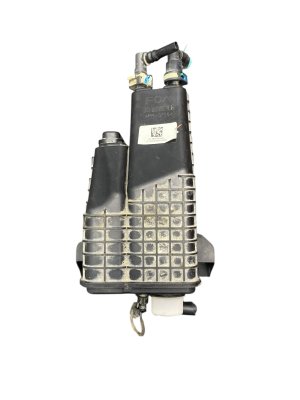
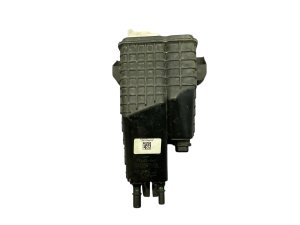
- Faulty or Clogged Charcoal Canister: The canister can become saturated with fuel if the tank is consistently overfilled, or it can crack, causing a leak. This is less common than a purge valve failure but is a possibility if other diagnostics don't reveal the issue. The Mopar part number for the canister assembly is 68350418AD, with a retail price around $200-$300.
- Moisture in an EVAP System Connector: Multiple owners on JeepGladiatorForum.com have reported the P0441 code appearing specifically after a rainstorm, suggesting a potential vulnerability to water intrusion in a component or electrical connector within the EVAP system.
Diagnosis Steps
- Check for Technical Service Bulletins (TSBs) related to your vehicle's VIN. For the 2020 Gladiator, TSB #18-048-22 is highly relevant and a dealer can confirm if the update applies.
- Scan for any other accompanying trouble codes. The presence of codes like P258B or C1252-92 can provide strong clues that a software update is needed.
- Perform a thorough visual inspection of all EVAP hoses and lines running from the engine bay to the charcoal canister. Look for any obvious cracks, kinks, or loose connections.
- Locate and test the EVAP purge valve on top of the engine. It is normally closed. Disconnect it and try to blow air through it; if air passes, it's stuck open and needs replacement. Alternatively, start the engine and feel for vacuum at the valve's outlet port; suction indicates a failed, stuck-open valve.
- If you have a capable scan tool, command the purge valve to open and close while monitoring system vacuum or fuel tank pressure to confirm its operation.
- If the valve and hoses are good, inspect the wiring and connector at the purge valve for damage or corrosion. Several owners report the code appearing after rain, suggesting a moisture issue.
- If the problem persists, a smoke test is the most reliable way to find a hard-to-see leak in the system.
- As a final step, consider testing the fuel tank pressure sensor using a scan tool to monitor its readings or inspecting the charcoal canister for damage or fuel saturation.
Parts You'll Likely Need
- EVAP Purge Valve / Solenoid
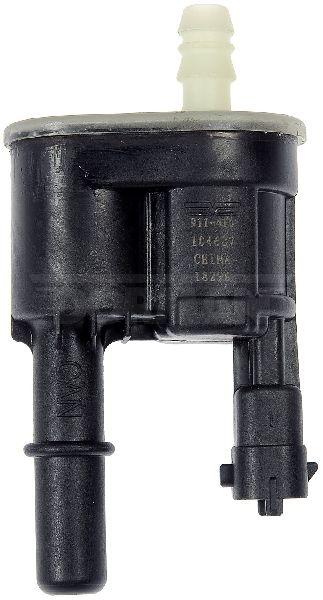
(OEM #Mopar 04627694AB (replaces 4627694AA))— This is the most frequent mechanical point of failure for P0441. It's a small solenoid that can get stuck open or closed, directly causing an incorrect purge flow condition. It is located under the engine cover.
Trusted brands: Mopar, Dorman (p/n 911-410), Standard Motor Products
OEM price range: $40-$70
Aftermarket price range: $25-$50
Related Codes That Often Appear With This One
- P258B — TSB #18-048-22 links P0441 with this code for the Electronic Vacuum Pump, suggesting a software update as the fix for both.
- C1252-92 — Also mentioned in TSB #18-048-22, this code for the Vacuum Pump Control Circuit can appear with P0441 and points towards a software issue.
- P0443 — This code for the 'EVAP Purge Control Valve Circuit' is mentioned alongside P0441 in TSB #S2025000002, indicating a potential electrical problem with the purge valve itself or its wiring.
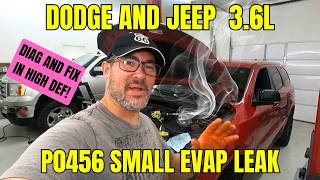
- P0456 — This 'Small Leak' code is also mentioned in TSB #18-048-22 and can sometimes accompany P0441, though the TSB recommends a software update for P0441 and a separate leak verification test for P0456. A faulty purge valve can also cause both codes.
Technical Service Bulletins (TSBs) & Recalls
- 18-048-22: Recommends a software update for P0441, especially when present with other specific DTCs like P258B. This was also issued as RSU 20-053.
- 1804822: An alternate numbering for the same TSB, confirming the software update fix.
- S2025000002: Notes customer complaints of a check engine light where P0441, P0443, or P0449 are found.
Platform-Specific Known Issues
- TSB #18-048-22 indicates that a PCM software update may be the only repair needed to fix a P0441 code on the 2020 Gladiator.
- TSB #S2025000002 confirms that P0441 can appear as an active or stored fault, pointing to issues with the purge system.
- Multiple owners on JeepGladiatorForum.com have noted the code appearing after heavy rain, suggesting a potential vulnerability to moisture in a component or connector.
Mechanic-Grade Diagnostic Values
- EVAP Purge Valve Solenoid Resistance — expected: 15-30 Ohms. Failure: A reading far outside this range indicates a faulty solenoid coil.
- EVAP Purge Valve Solenoid Voltage (Key On, Engine Off) — expected: Approximately 12V (Battery Voltage) at the power feed wire in the connector.. Failure: No voltage suggests a wiring issue, blown fuse, or PCM problem.
Scan Tool Commands That Help
- wiTECH: EVAP System Test — This is a guided diagnostic procedure within the OEM scan tool that can command components like the purge valve and vent solenoid to operate, while monitoring the system's pressure sensor to verify function and detect leaks or blockages. It is used after initial visual checks fail to find an obvious fault.
Wiring & Ground Locations
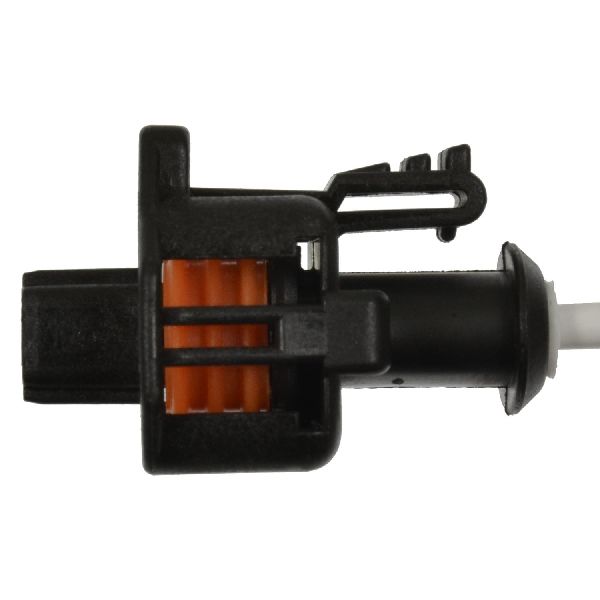
- Purge Solenoid Connector — On the EVAP purge solenoid itself, located under the engine cover on top of the intake manifold.. This 2-pin connector is the primary point for electrical testing (voltage, ground, resistance) of the purge solenoid. It has a red locking tab that must be disengaged.
- G901a (Platform Similar) — Right rear corner of the engine compartment (on the related Grand Cherokee platform).. This is a primary ground point for several engine components, and while not confirmed for Gladiator specifically, a corroded or loose ground in a similar location could cause erratic operation of the purge solenoid.
Real Owner Repair Stories
- JeepGladiatorForum.com user 'Montytrmpt' (2020 Jeep Gladiator) — Check Engine Light with code P0441, engine lugging and pinging.
❌ Tried (didn't work) Clearing the code (it returned).
✅ What actually fixed it The dealership replaced the EVAP purge valve solenoid and performed an ECM emissions recall (reflash) under warranty. The combination of both actions resolved the code and improved engine performance. - JeepGladiatorForum.com user 'Uparms' (2020/2021 Jeep Gladiator) — Check Engine Light with code P0441.
❌ Tried (didn't work) Clearing the code twice (it returned).
✅ What actually fixed it A dealership diagnosis confirmed a bad in-tank fuel pressure sensor, which was replaced to fix the issue.
"I Checked Everything" — The Actual Cause
- On the related Jeep Grand Cherokee platform, a case with P0441 and other EVAP codes passed a smoke test, but the ultimate cause was a faulty ESIM (EVAP System Integrity Monitor) switch. The switch failed to change its voltage reading when vacuum was applied, indicating an internal failure despite no physical leak being present.
OEM Part Supersession History
4627694AA→04627694AB— Standard part revision/update by the manufacturer.
Heads up: The new part number (04627694AB) is the correct replacement and is backward compatible with vehicles that used the older part.
Helpful Videos

Used OEM Parts in Stock
New Aftermarket Parts Available


The information in this article is provided for general reference and educational purposes only. Vehicle specifications, procedures, and part compatibility can vary by production date, trim level, and region. Always consult your vehicle's factory service manual and verify part numbers before purchasing or performing repairs. Safety-critical components such as airbags, seat belts, and braking systems should be installed by a qualified professional.
- Jeep GLADIATOR:
- 🎬 Helpful Videos
- 🛍️ Shop This Part
- What's Unique About the 2020-2020 Jeep GLADIATOR
- Diagnostic Flowchart
- Symptoms You May Notice
- Most Likely Causes
- Rare But Worth Checking
- Diagnosis Steps
- Parts You'll Likely Need
- Related Codes That Often Appear With This One
- Technical Service Bulletins (TSBs) & Recalls
- Platform-Specific Known Issues
- Mechanic-Grade Diagnostic Values
- Scan Tool Commands That Help
- Wiring & Ground Locations
- Real Owner Repair Stories
- "I Checked Everything" — The Actual Cause
- OEM Part Supersession History
- 🎟️ Get 5% Off