

P0441 on 2017-2020 Hyundai Elantra (2.0L Nu): Incorrect Purge Flow Causes and Fixes
On a 2017-2020 Elantra with the 2.0L Nu engine, code P0441 is almost always caused by a faulty canister purge valve (solenoid). A classic symptom is difficulty starting the car immediately after refueling. This is an inexpensive part (around $25-$60) and is very easy to replace yourself in under 30 minutes, making it a great DIY fix.
- The P0441 code on your 2017-2020 Elantra is most likely due to a bad canister purge valve, OEM part number 28910-2E000.
- A classic symptom is the car struggling to start right after you get gas.
- Before buying any parts, check that your gas cap is tight and its seal is in good condition.
- Replacing the purge valve is a very simple, 15-minute DIY job that requires only basic tools (like hose pliers) and can save you significant money on labor costs.
- Don't bother trying to clean the old valve; replacement is the only reliable fix.
What's Unique About the 2017-2020 Hyundai Elantra
For the 2017-2020 Hyundai Elantra (sixth generation, AD) with the 2.0L Nu MPI engine, the P0441 code points overwhelmingly to a simple mechanical failure: a bad canister purge valve. Unlike some other Hyundai models from the same era which had software issues requiring an ECM update to fix a false P0441 code, there are no such technical service bulletins for this Elantra. This makes diagnosis more straightforward, as the problem is almost certainly a physical part that needs to be replaced, not a complex software glitch.
Symptoms You May Notice 🎬 Watch: A quick breakdown of common bad purge valve symptoms.
- Check Engine Light is on.
- Hard starting, especially right after refueling. The engine may crank for a long time before it starts because a stuck-open valve floods the engine with fuel vapors.
- Rough or unstable idle. A stuck-open purge valve creates a vacuum leak, disrupting the air-fuel mixture and causing a shaky idle.
- A faint smell of fuel, although this is uncommon.
- Intermittent Check Engine Light that may turn off on its own, only to return days or weeks later.
- Decreased fuel efficiency; as noted in NHTSA ODI #11449571, an incorrect purge flow can "eat away at your gas mileage."
- Replacing the charcoal canister or vent valve first. These parts are more expensive and harder to replace than the purge valve and are much less likely to be the cause of a P0441 code.
- Assuming the issue is a major EVAP system leak when it's just the purge valve itself causing the incorrect flow reading.
- Replacing the gas cap without inspecting it first. While a possibility, the purge valve is a more frequent failure point on this model.
Most Likely Causes
- Faulty Canister Purge Valve (Purge Solenoid) 🔴 High Probability This is the most common failure point for this code on this specific vehicle. The internal solenoid fails mechanically, causing it to stick open or closed. It is a widely reported issue in owner forums for this generation.
How to confirm: With the engine off, disconnect the purge valve. Try to blow through it from the inlet port. If air passes through, the valve is stuck open and is bad. The valve is normally closed when unpowered. It is located on the engine bay, near the intake manifold, and is easy to access.
Typical fix: Replace the canister purge valve. Cleaning the valve with carburetor cleaner is often a temporary fix at best, with the code typically returning within a short period.
Est. part cost: $25-$70 - Loose or Damaged Gas Cap 🟡 Medium Probability The gas cap is a critical sealing point for the EVAP system. User error (not tightening it enough) or a worn-out rubber o-ring seal can easily cause EVAP codes.
How to confirm: Inspect the gas cap for cracks or damage to the rubber seal. Ensure it is tightened until it clicks at least once. If the light appeared shortly after a fill-up, this is a likely cause.
Typical fix: Tighten the cap. If the seal is damaged or the cap is faulty, replace it with a new one. It is often recommended to use an OEM part to ensure a proper seal.
Est. part cost: $15-$30 - Cracked or Disconnected EVAP Hose ⚪ Low Probability Rubber hoses in the engine bay can become brittle over time due to heat and age, leading to cracks, especially at the connection points to the purge valve itself.
How to confirm: Visually inspect all vacuum and vapor lines connected to the purge valve and intake manifold for obvious cracks, breaks, or loose connections. Flex the hoses to reveal hidden cracks.
Typical fix: Replace the damaged section of hose.
Est. part cost: $5-$20
Rare But Worth Checking
- Faulty Charcoal Canister or Vent Valve: This is less common for a P0441 code, which points to flow issues, but a clogged canister (sometimes from overfilling the gas tank) or a failed vent valve (located near the gas tank) can sometimes trigger this code.
- Wiring Issue: A break or short in the wiring going to the purge valve solenoid can prevent it from operating, causing the code. Check the connector and harness for damage. The purge valve circuit is protected by a fuse, which should also be checked.
- Faulty Fuel Tank Pressure Sensor: Very rarely, the sensor that reports pressure in the EVAP system to the computer can fail. This might lead the computer to believe there is a flow problem when there isn't one.
Diagnosis Steps
- Read the code with an OBD-II scanner to confirm P0441 is present.
- Inspect the gas cap. Remove it and check for any cracks or damage to the o-ring seal. Reinstall it and ensure it clicks several times.
- Clear the code and drive the vehicle for a few drive cycles to see if the code returns. If it doesn't, the loose cap was likely the issue.
- If the code returns, locate the canister purge valve in the engine bay. It's a small black solenoid with two hoses and an electrical connector, typically mounted on or near the intake manifold.
- Visually inspect the hoses connected to the purge valve for any obvious cracks or disconnections. Squeeze them to check for brittleness.
- Test the purge valve. Disconnect the electrical connector and both hoses. Try to blow air through the valve. If air passes through, the valve is stuck open and must be replaced. This is the most definitive test. 🎬 See how a mechanic diagnoses P0441 flow issues step-by-step.
- If the valve holds air, the issue could be a lack of power to the valve (check the fuse and wiring) or a blockage in the EVAP line from the charcoal canister. At this point, a smoke test may be needed to find a leak elsewhere in the system, which is best done by a professional.
Parts You'll Likely Need
- Vapor Canister Purge Valve / Solenoid
(OEM #28910-2E000)— This is the most frequent point of failure for the P0441 code on this specific Elantra model with the 2.0L engine.
Trusted brands: Hyundai (OEM), Dorman (911-383), Standard Motor Products (CP986), Beck/Arnley (046-0107)
OEM price range: $35-$60
Aftermarket price range: $25-$50
Related Codes That Often Appear With This One
- P0455 — Evaporative Emission System Leak Detected (Gross Leak). A purge valve that is stuck wide open can be interpreted by the ECM as a large leak, triggering both codes.
- P0456 — Evaporative Emission System Leak Detected (Very Small Leak). If the root cause is a small crack in a hose or a failing gas cap seal, the system might log both an incorrect flow code and a small leak code.
- P0443 / P0444 / P0445 — These codes indicate an electrical fault (malfunction, open, or short) in the purge valve control circuit itself, rather than just incorrect flow.
- P0507 — Idle Air Control System RPM Higher Than Expected. As seen in NHTSA ODI #11434136, this code can appear alongside P0441, likely due to the vacuum leak created by a faulty purge valve.
Technical Service Bulletins (TSBs) & Recalls
- TSB 17-01-019 - This TSB for a P0441 software update does NOT apply to the 2017-2020 Elantra. It is for the 2016 Accent and Veloster with the 1.6L GDI engine, confirming that the Elantra's issue is likely hardware-related.
- Bulletin #5NP-S5Y6V-04 - While issued for other Hyundai models, this bulletin highlights that an ECM software update may be used to address "Incorrect CPV Flow" diagnostics, though it notes there is often no associated vehicle performance concern.
Mechanic-Grade Diagnostic Values
- Canister Purge Valve (Solenoid) Coil Resistance — expected: Approximately 29.1 Ω for a new OEM part.. Failure: Readings that are wildly inconsistent or deviate significantly from the 29 Ω spec. Used parts have been measured from 12 Ω to 47 Ω, indicating internal degradation.
- Voltage at Purge Valve Connector (Harness Side) — expected: Approximately 11-12+ Volts DC with the ignition key in the ON position, engine OFF.. Failure: No voltage, or significantly low voltage (e.g., below 9V), indicates a problem in the power supply circuit, such as a blown fuse or wiring fault, not the valve itself.
Scan Tool Commands That Help
- Hyundai GDS / Professional OBD-II Scanner: Purge Valve Actuation Test / Output Control — This is used to command the purge valve to open and close manually. If the valve clicks and vacuum flow changes when commanded, the valve and its circuit are likely working. If it doesn't respond, it confirms a fault in either the valve or the wiring. This test can verify function without removing the part from the vehicle.
Wiring & Ground Locations
- Purge Control Solenoid Valve (PCSV) Connector — On the purge valve itself, located on the driver's side of the engine near the intake manifold.. This 2-pin connector is where electrical tests are performed. Pin 1 receives battery power (approx. 12V with key on), and Pin 2 is the ground-side control wire that is pulsed by the ECM to open the valve. Testing here differentiates a bad valve from a wiring or ECM problem.
Real Owner Repair Stories
- YouTube user 'fix it' (2008 Hyundai Elantra (similar failure mode and part)) — Check Engine Light with code P0441.
❌ Tried (didn't work) Cleaning the purge valve with carburetor cleaner and compressed air.
✅ What actually fixed it The code returned after about 40 miles. Replacing the purge valve with a new part permanently resolved the issue. - AliExpress Reviewer / Forum Post (2015 Hyundai Elantra) — Check Engine Light with code P0441.
❌ Tried (didn't work) Mechanic ruled out the gas cap and charcoal canister.
✅ What actually fixed it The purge valve was found to be stuck closed. Replacing it with a new OEM part (28910-2E000) fixed the problem. - NHTSA ODI #10394376 — An owner reported that whenever they added gas to the tank, the car would "hard start and continually stall" after the check engine light produced code P0441.
"I Checked Everything" — The Actual Cause
- A P0441 code can be present even if an EVAP smoke test shows no leaks. This is because P0441 indicates 'Incorrect Purge Flow,' not necessarily a system leak (which would trigger P0455/P0456). If the purge valve is stuck closed, it cannot flow vapor when the ECM commands it to, but the system will remain perfectly sealed and pass a smoke test. This is a key reason why the purge valve should be tested directly for function (flow and electrical) rather than relying solely on a smoke test for a P0441 diagnosis. In extreme cases, as noted in NHTSA ODI #11468646, multiple codes including P0441 can accompany severe engine failure requiring replacement.
OEM Part Supersession History
28910-2E000→N/A— This part number appears to be stable and has not been superseded. It covers a wide range of model years, including the 2017-2020 Elantra.
Diagnostic Flowchart
Other Known Issues on This Vehicle
Issues unrelated to this code that are worth knowing about as an owner of this generation:
- Excessive Oil Consumption (2.0L Nu Engine) 🔴 High — Commonly reported, especially in 2019-2020 models. Can start at any mileage but becomes more noticeable over 60,000 miles. Some owners report consuming a quart of oil every 1,000-2,000 miles. (Ref: Recall 205 (NHTSA 21V-301) for 2019-2020 models addresses improperly heat-treated piston oil rings. Hyundai also released TSB 22-01-028H to add a Piston Ring Noise Sensing System (PNSS) software update to detect issues early.)
- Peeling or Chipping Paint 🟡 Low — A widely reported cosmetic issue, particularly for the 2017 model year. Paint, especially on the roof and hood, can begin to peel or flake off without prior damage.
- Engine Ticking Noise / Piston Slap 🟠 Medium — Some owners report a ticking or tapping sound from the engine, especially on cold starts. This was a more prominent issue in the previous generation but is still reported on the 2.0L Nu engine. It can be a precursor to more serious engine wear. (Ref: Related to the oil consumption recall (21V-301) and the PNSS software update (TSB 22-01-028H) intended to detect bearing noise.)
- Interior Rattles and Noises 🟡 Low — Owners frequently mention that the interior, which uses a lot of hard plastics, is prone to developing squeaks and rattles over time.
Used vs. New Parts: Buying Guide for This Vehicle
When a used part is the smart pick: For this specific repair, a used part is NOT recommended. The failure is internal and cannot be visually inspected. Given the low cost of a new aftermarket part, the risk of getting a bad used part is not worth the minimal savings.
What to inspect on the donor part:
- Not applicable. External appearance is irrelevant to the internal failure of the solenoid coil or valve seat.
- A key failure indicator is incorrect electrical resistance, which requires a multimeter to test. One source found used valves varied wildly from 12Ω to 47Ω, while a new part was a precise 29.1Ω.
OEM-only on this vehicle (don't cheap out):
- Gas Cap - While not strictly required, an OEM gas cap is often recommended to ensure a perfect seal, as some aftermarket caps can have tolerance issues that cause EVAP codes.
Aftermarket brands forum-validated for this vehicle:
- Dorman
- Standard Motor Products (SMP)
- Beck/Arnley
Brands owners have reported issues with on this vehicle:
- While no specific brands are consistently cited as 'bad,' some mechanics report intermittent issues with various aftermarket purge valves and recommend sticking with the genuine Hyundai/Kia OEM part to avoid potential comebacks.
Real Owner Stories
Aggregated from forums and TSBs cited above. Mileages and costs reflect what owners reported in those sources.
2018 Elantra GT
Symptoms: Check engine light with code P0441.
What fixed it: The owner replaced the canister purge valve, but the light returned after one week of driving, indicating a diagnostic dead end or secondary issue.
Source hint: Reddit thread titled '2018 Elantra GT' in r/MechanicAdvice
2007 Elantra
Symptoms: Intermittent Check Engine Light that would clear itself and then return later.
What fixed it: The owner noted the purge valve was the likely culprit for this intermittent behavior.
Source hint: TexAgs Automotive Forum
Related OBD-II Codes
Frequently Asked Questions
Does TSB 17-01-019 for the P0441 software update apply to my 2017-2020 Hyundai Elantra?
Why does my Elantra struggle to start specifically after I fill up the gas tank?
Can I just clean the purge valve with carburetor cleaner to save money?
Is there a specific engine in the 2019-2020 Elantra that has known issues related to the Check Engine Light?
How can I personally test if the purge valve is the cause of my P0441 code?
Should I use an aftermarket gas cap if mine is damaged?
Helpful Videos
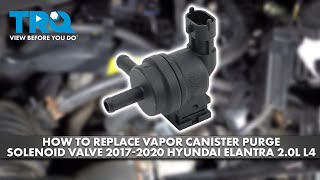

Used OEM Parts in Stock

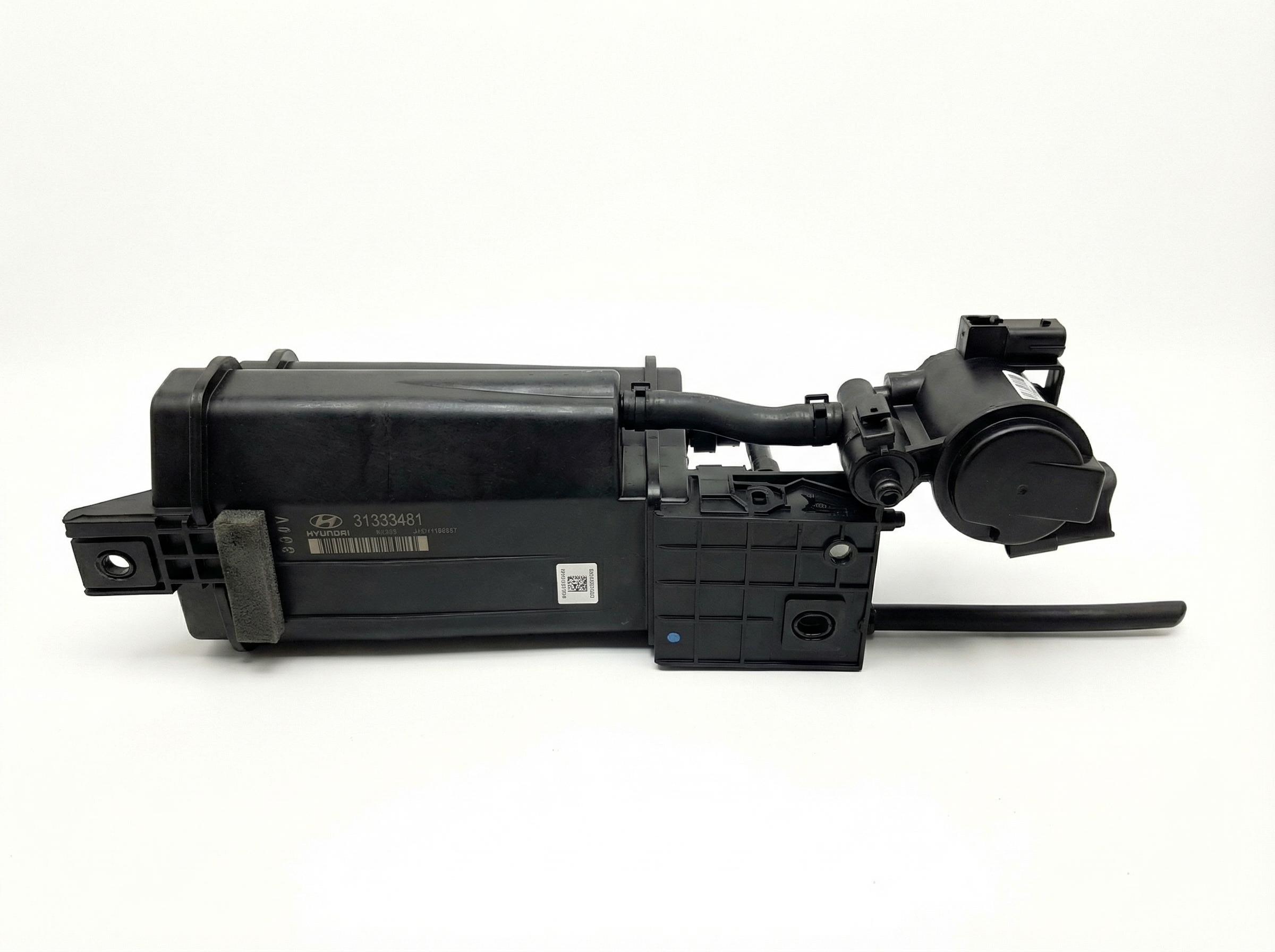
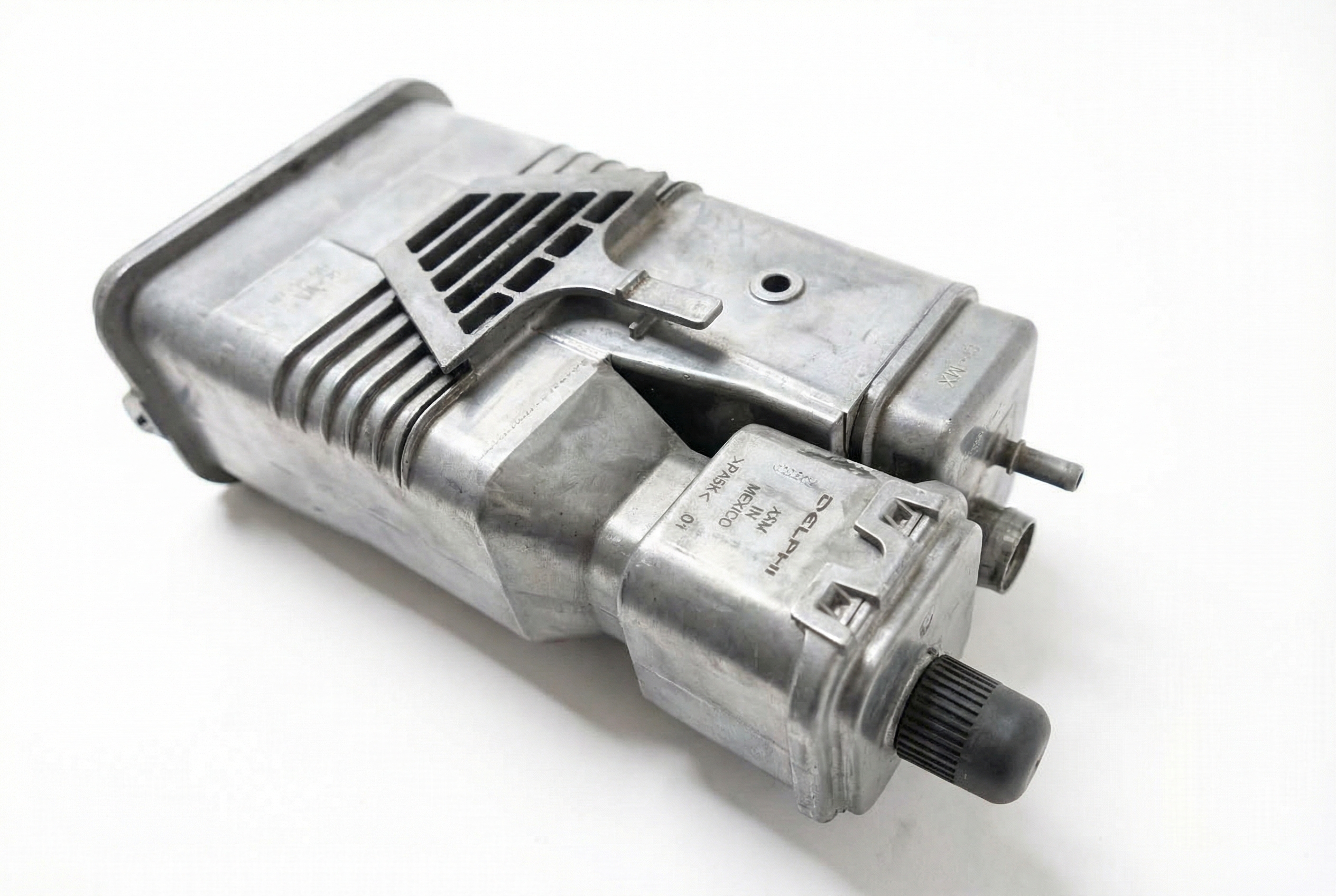
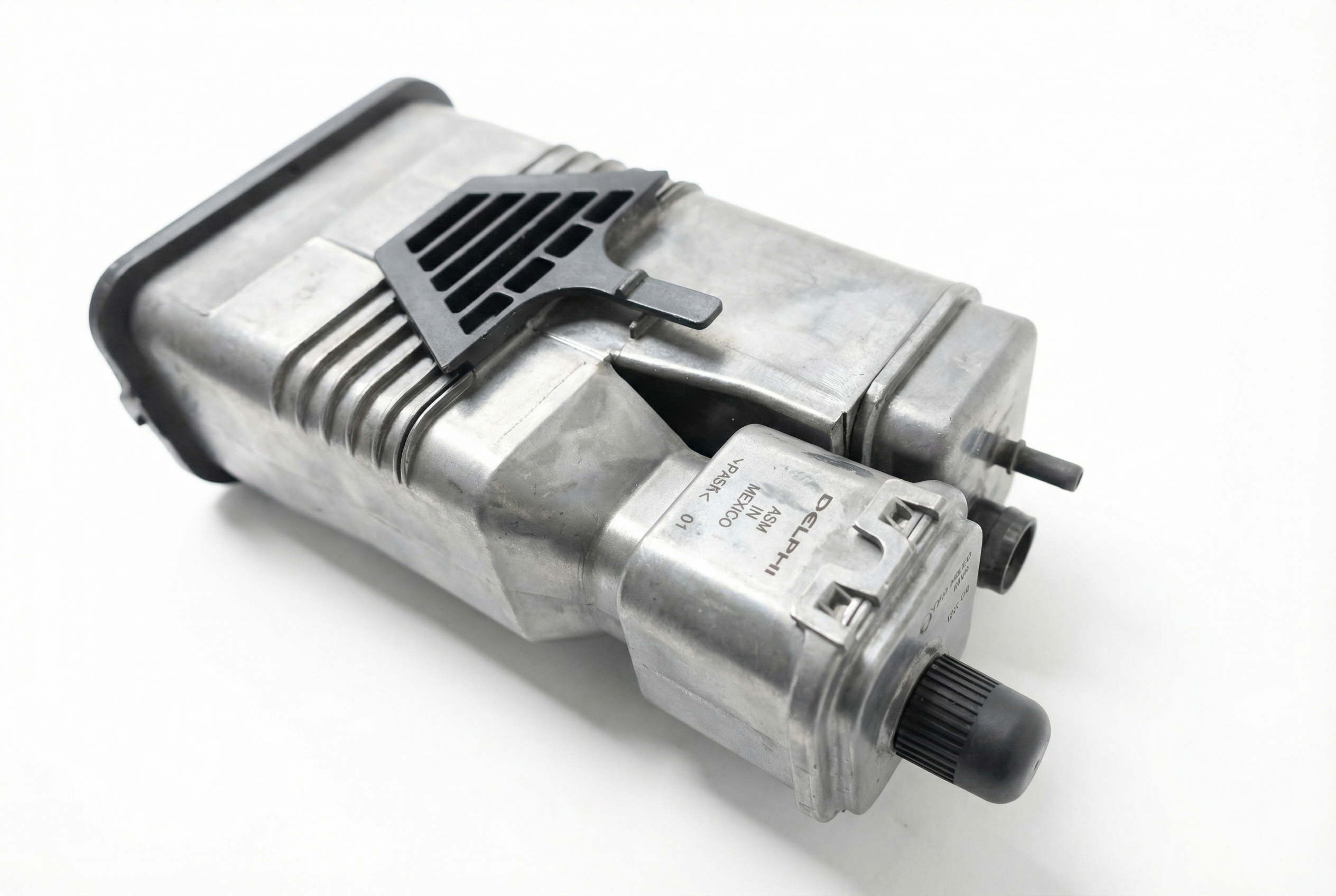
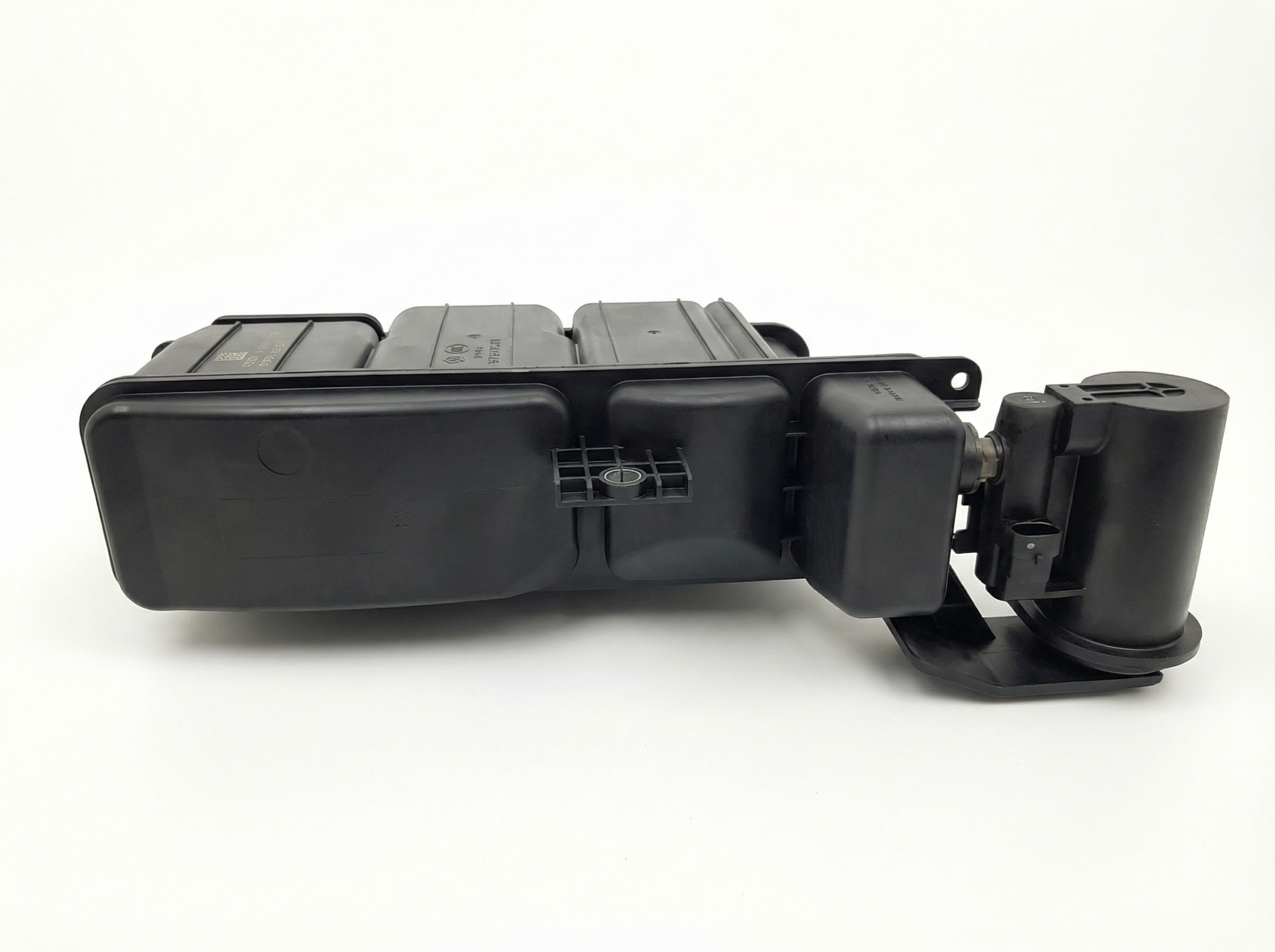
New Aftermarket Parts Available

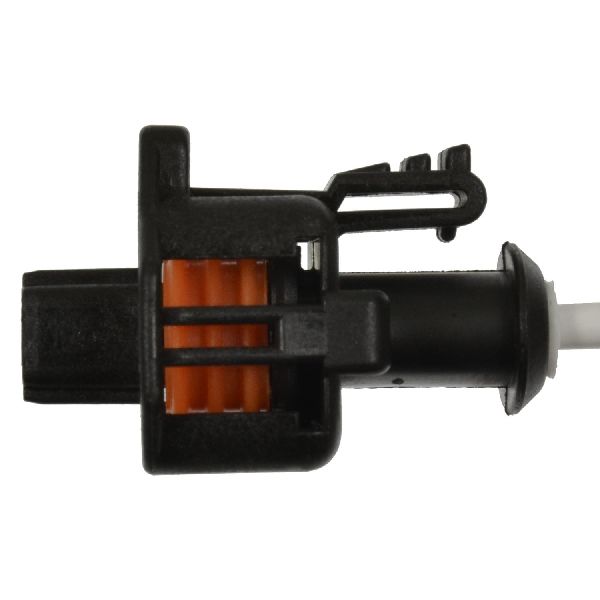

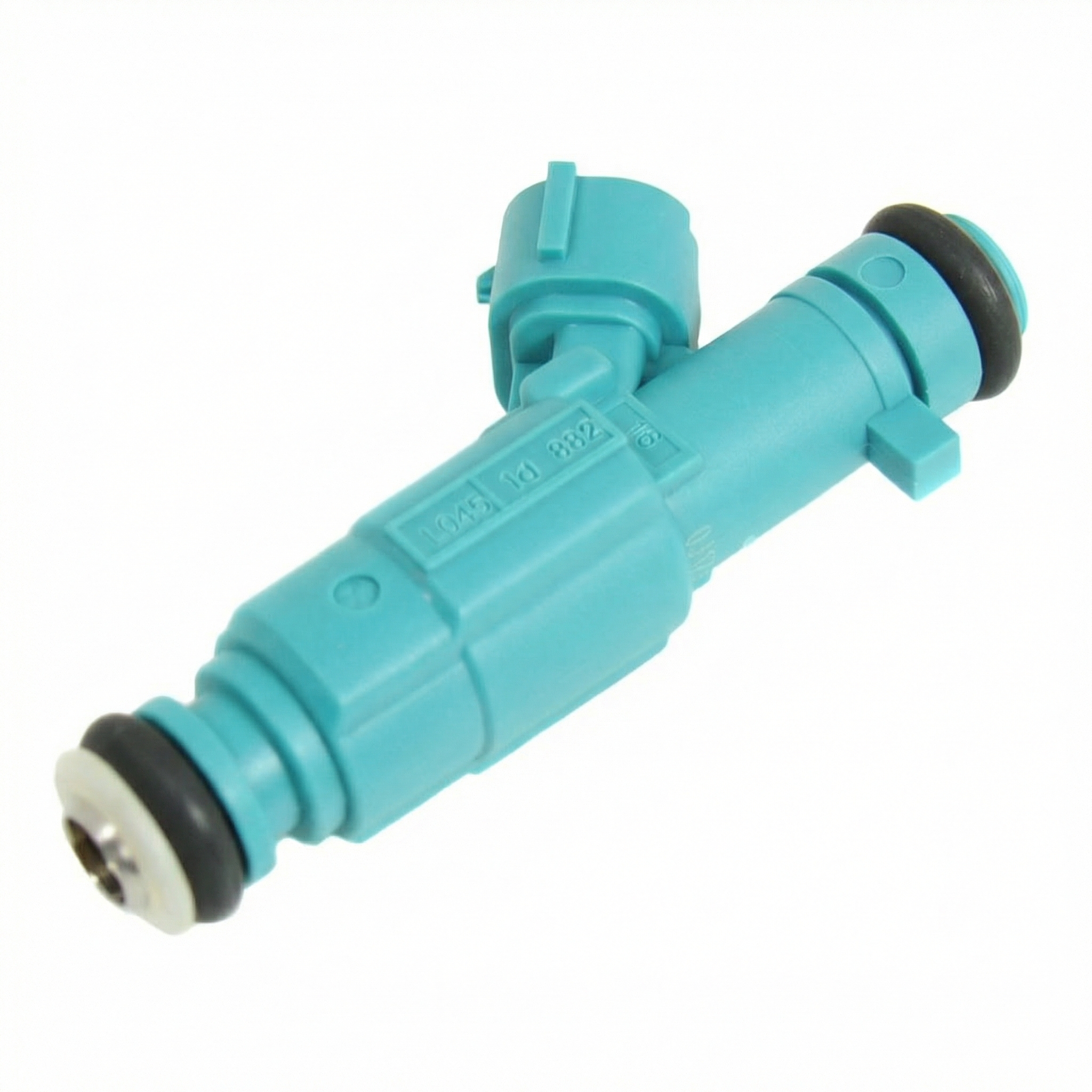
The information in this article is provided for general reference and educational purposes only. Vehicle specifications, procedures, and part compatibility can vary by production date, trim level, and region. Always consult your vehicle's factory service manual and verify part numbers before purchasing or performing repairs. Safety-critical components such as airbags, seat belts, and braking systems should be installed by a qualified professional.
- Hyundai Elantra:
- 🎬 Helpful Videos
- 🛍️ Shop This Part
- What's Unique About the 2017-2020 Hyundai Elantra
- Symptoms You May Notice
- Most Likely Causes
- Rare But Worth Checking
- Diagnosis Steps
- Parts You'll Likely Need
- Related Codes That Often Appear With This One
- Technical Service Bulletins (TSBs) & Recalls
- Mechanic-Grade Diagnostic Values
- Scan Tool Commands That Help
- Wiring & Ground Locations
- Real Owner Repair Stories
- "I Checked Everything" — The Actual Cause
- OEM Part Supersession History
- Diagnostic Flowchart
- Other Known Issues on This Vehicle
- Used vs. New Parts: Buying Guide for This Vehicle
- Real Owner Stories
- 2018 Elantra GT
- 2007 Elantra
- Related OBD-II Codes
- Frequently Asked Questions
- 🎟️ Get 5% Off