

P0441 on 2018-2022 Honda Pilot: EVAP Purge Flow Malfunction Causes & Fixes
On a 2018-2022 Honda Pilot, code P0441 is almost always caused by a faulty EVAP purge control solenoid valve. Honda issued a Technical Service Bulletin (A23-091) for this exact problem, which also affects the Odyssey, Passport, and Ridgeline. The replacement part (OEM #36162-5G0-A02) costs about $50-$80 and is a very easy DIY fix, typically taking less than 30 minutes.
- For a 2018-2022 Pilot, P0441 almost certainly means you need a new EVAP purge control solenoid valve.
- This is a known issue with a Honda TSB (#A23-091) that specifies the cause and the fix.
- The correct OEM replacement part number is 36162-5G0-A02, which replaces the faulty original part 36162-5G0-A01.
- This is a very simple and inexpensive DIY repair that requires basic tools (10mm socket) and can be done in under 30 minutes.
- Don't waste money on a new gas cap or other parts until you have replaced the purge valve.
- Check if the repair is covered under the 8-year/80,000-mile Federal Emissions Warranty before paying out of pocket.
What's Unique About the 2018-2022 Honda PILOT

For this specific generation of Honda Pilot and its platform-mates (Odyssey, Passport, Ridgeline) with the 3.5L V6 engine, the P0441 code is not a mystery. Honda has officially acknowledged a manufacturing issue with the original EVAP purge control solenoid valve. A Technical Service Bulletin (TSB A23-091) explains that variations in an internal spring can cause the valve to wear unevenly and stick, leading directly to this code. This makes diagnosis much more straightforward than on other vehicles where the cause could be anything from a loose gas cap to a cracked hose.
Diagnostic Flowchart

Tap your situation to follow the diagnostic path that matches what you're seeing on this vehicle.
Symptoms You May Notice

- Check Engine Light is on 🎬 Watch: Understanding the P0441 code and what it means
- Other warning lights may appear on the dash, such as for the all-wheel-drive (AWD) system. This happens because the engine management system detects a fault and may disable related systems like traction control as a precaution.
- A faint fuel smell (rare)
- Slightly rough idle or minor hesitation (rare)
- Replacing the gas cap when the purge valve is the actual, documented point of failure.
- Replacing the charcoal canister, which is more expensive and less likely to be the root cause than the purge valve.
- Performing an expensive smoke test before replacing the highly probable and inexpensive purge valve.
Most Likely Causes

- Faulty EVAP Purge Control Solenoid Valve 🔴 High Probability Honda TSB #A23-091 explicitly states that for 2019-2022 Pilots, "variations in the purge control solenoid valve spring" cause the valve to wear unevenly and stick, triggering DTC P0441. The original, failure-prone part is 36162-5G0-A01, which is superseded by the corrected part.
How to confirm: The valve is located on top of the engine and is easy to access. A simple test is to remove the old valve and try to blow through it. It should be closed by default (when unpowered); if air passes through, it is stuck open and has failed. A mechanic can also use a scan tool to command the valve open and closed to test its function and may find it gets hot but fails to open.
Typical fix: Replace the purge control solenoid valve with the updated part (36162-5G0-A02). This involves removing two 10mm bolts, one electrical connector, and one hose. The job is very accessible and requires minimal tools.
Est. part cost: $40-$80 - Loose or Faulty Gas Cap ⚪ Low Probability
How to confirm: Ensure the gas cap is tightened until it clicks. Inspect the seal on the cap for any cracks or damage. While a bad cap can cause EVAP codes, it more commonly triggers a leak-detection code (like P0455, P0456, or P0457) rather than the P0441 incorrect flow code on this platform.
Typical fix: Tighten or replace the gas cap. Always use a high-quality OEM cap for Hondas, as aftermarket caps can cause issues. However, for this specific vehicle and code, this is rarely the solution.
Est. part cost: $25-$45 - Cracked or Disconnected EVAP Hose ⚪ Low Probability
How to confirm: Visually inspect the rubber and plastic hoses connected to the purge valve and running towards the back of the vehicle for any visible cracks, brittleness, or loose connections. A professional smoke test can definitively find small leaks, but this step is usually unnecessary until after the purge valve has been replaced.
Typical fix: Replace the damaged section of hose.
Est. part cost: $10-$50
Rare But Worth Checking
- Clogged Charcoal Canister: This can happen if you habitually 'top off' your gas tank after the pump clicks off, forcing raw fuel into the canister designed only for vapor. It's less common than a failed purge valve but possible.
- Faulty Canister Vent Solenoid: This valve works with the purge solenoid to control vapor flow. While it can fail, it's a less frequent cause for P0441 🎬 Watch: How to replace both the purge and vent valves on this platform compared to the purge solenoid itself.
- Wiring Harness Interference: An older TSB (A21-081) for some Honda models, including the CR-V, noted that external radio waves could interfere with sensor readings, causing P0441/P04F1. The fix involved installing a sub-harness. While this TSB doesn't specifically apply to the 2018-2022 Pilot, it shows that wiring issues can be a rare underlying cause.
Diagnosis Steps
- Read the code with an OBD-II scanner to confirm P0441 is present. Note if P04F1 is also present.
- Check the gas cap. Ensure it is tight and the seal is intact. Given the known TSB, do not immediately replace it.
- Locate the EVAP Purge Control Solenoid Valve on top of the engine. It is held by two 10mm bolts.
- Inspect the electrical connector and the vacuum hoses attached to the valve for any obvious damage or disconnection.
- Given the high probability from TSB #A23-091, the most efficient and cost-effective step is to replace the purge control solenoid valve with the updated OEM part (36162-5G0-A02).
- After replacement, clear the trouble codes with the scanner and perform a drive cycle.
- If the code returns, a more thorough diagnosis is needed, including a professional smoke test of the EVAP system to check for leaks in hoses or the charcoal canister.
Parts You'll Likely Need
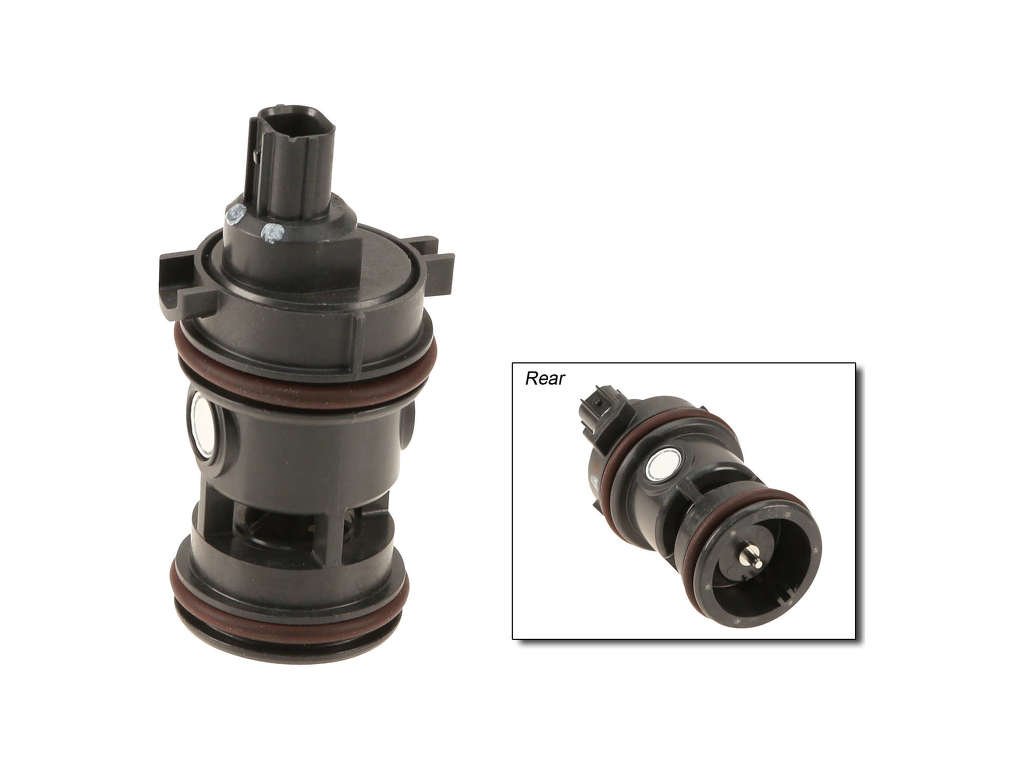
- Purge Control Solenoid Valve
(OEM #36162-5G0-A02)— This is the component identified by Honda in TSB #A23-091 as the primary cause of P0441 due to a manufacturing defect. It is the updated replacement for the original faulty part, 36162-5G0-A01.
Trusted brands: Honda (Genuine OEM), Denso (often the OEM manufacturer)
OEM price range: $50-$80
Aftermarket price range: $30-$60
Related Codes That Often Appear With This One
- P04F1 — P04F1 indicates 'EVAP System Low Purge Flow.' Since the faulty purge valve sticks, it can either fail to open (causing low/no flow) or fail to close properly (causing incorrect flow). The provided owner complaint (ODI #11563010) and multiple forum/video reports show these codes appearing together as a direct result of the same faulty valve.
Technical Service Bulletins (TSBs) & Recalls
- A23-091: MIL Comes on with DTC P0441
- APaS04222021905: Parts Collection for MIL on with DTC P0441
Platform-Specific Known Issues
- TSB #A23-091: Honda issued this bulletin for 2019-2022 Pilots (among other models) with P0441. It states, "Due to variations in the purge control solenoid valve spring, the valve wears unevenly and intermittently sticks. This may result in setting DTC P0441." The corrective action is to replace the valve with part number 36162-5G0-A02. The dealer flat rate time is 0.5 hours.
- TSB #APaS04222021905: Prior to the definitive bulletin, Honda was already investigating this issue. This TSB from April 2021 requested that dealerships collect purge valves from 2018-2020 Pilots with code P0441 to help engineers "better understand the cause of this condition." This confirms the issue was a known problem for several years.
- Warranty Coverage: As an emissions component, this part may be covered under the Federal Emissions Warranty, which is typically 8 years or 80,000 miles. Owners should check with a Honda dealer for potential warranty coverage before paying for the repair.
Mechanic-Grade Diagnostic Values
- Purge Control Solenoid Coil Resistance — expected: Approximately 15-36 Ohms. One source cited a good reading of 36 Ohms at 55-60°F, while another cited 21.3 Ohms. Resistance varies with temperature.. Failure: An open circuit (infinite resistance) or a value significantly outside the expected range indicates a failed coil.
- Purge Control Solenoid Connector Voltage — expected: Battery voltage on one pin with Key On, Engine Off.. Failure: No voltage suggests a wiring issue or a blown fuse upstream of the solenoid.
Scan Tool Commands That Help
- Honda i-HDS (Dealer Tool): PGM-FI EVAP Test > Function Test > EVAP Test — This is the official procedure recommended by Honda in TSB #A23-091 to verify the repair is complete and the EVAP system is functioning correctly after replacing the purge valve.
- Advanced Aftermarket Scan Tool (e.g., Thinkcar, Autel): Active Test / Bidirectional Control for EVAP Purge Valve — To manually command the purge valve to open and close while monitoring its effect. A mechanic can use this with a vacuum pump to confirm if the valve is physically opening and allowing flow, or if it is stuck.
Wiring & Ground Locations
- Purge Valve Connector — On top of the engine, connected to the EVAP Purge Control Solenoid Valve.. The valve has a 2-pin connector. One pin receives power (typically from a fused circuit) and the other is the control wire that the ECU/PCM grounds to activate the solenoid. A bad connection or damaged wire here will prevent the valve from operating and can mimic a failed valve.
Real Owner Repair Stories
- Reddit user on r/hondapilot (2019 Honda Pilot EXL) — Emission problem warning and check engine light with code P0441.
❌ Tried (didn't work) None mentioned; went straight to the most likely cause.
✅ What actually fixed it Replacing the purge control valve. The user later confirmed, "Yes, so far it seems to have fixed the issue." - YouTube video from 'Pine Hollow Auto Diagnostics' (2019 Honda Pilot) — EVAP issues with codes P0441 and P04F1.
❌ Tried (didn't work) A previous check of the purge valve where it appeared to be working at the time.
✅ What actually fixed it The valve was failing intermittently. A second diagnosis using a scan tool to command the valve on while a vacuum pump was attached showed the valve was getting very hot but not opening at all. Replacing it with a new OEM Honda purge valve resolved the problem.
OEM Part Supersession History
36162-5G0-A01→36162-5G0-A02— The original part (-A01) is the failure-prone valve identified in TSB A23-091 due to an internal spring defect causing it to stick.
Heads up: While the -A02 part is the corrected replacement, some online parts stores may still list or sell the original -A01 part. Owners should ensure they are purchasing the updated 36162-5G0-A02 part to permanently fix the issue.
Model Year Variations Within This Range
- 2018 vs 2019-2022: The primary repair bulletin, TSB #A23-091, officially lists the affected model years for the Pilot as 2019-2022. However, an earlier bulletin for parts collection, #APaS04222021905, included the 2018 model year. This suggests 2018 Pilots can experience the exact same purge valve failure, but owners may face more difficulty getting the repair covered under the specific terms of TSB A23-091 at a dealership.
Helpful Videos
We Have This Part in Stock

The information in this article is provided for general reference and educational purposes only. Vehicle specifications, procedures, and part compatibility can vary by production date, trim level, and region. Always consult your vehicle's factory service manual and verify part numbers before purchasing or performing repairs. Safety-critical components such as airbags, seat belts, and braking systems should be installed by a qualified professional.
- Honda PILOT:
- 🎬 Helpful Videos
- 🛍️ Shop This Part
- What's Unique About the 2018-2022 Honda PILOT
- Diagnostic Flowchart
- Symptoms You May Notice
- Most Likely Causes
- Rare But Worth Checking
- Diagnosis Steps
- Parts You'll Likely Need
- Related Codes That Often Appear With This One
- Technical Service Bulletins (TSBs) & Recalls
- Platform-Specific Known Issues
- Mechanic-Grade Diagnostic Values
- Scan Tool Commands That Help
- Wiring & Ground Locations
- Real Owner Repair Stories
- OEM Part Supersession History
- Model Year Variations Within This Range
- 🎟️ Get 5% Off