

P0441 on 2012-2015 Chrysler 200: EVAP Incorrect Purge Flow Causes and Fixes
For a 2012-2015 Chrysler 200, code P0441 almost always points to a faulty EVAP purge valve/solenoid. It's a common failure item that's relatively inexpensive and accessible for DIY replacement. In some 2015 models with the 2.4L engine, a PCM software update may be required per a TSB.
- P0441 means the EVAP system has an incorrect purge flow, not necessarily a leak.
- The most common cause on a 2012-2015 Chrysler 200 is a bad EVAP purge valve.
- Always check the gas cap first, as it's a cheap and easy potential fix.
- For 2015 models, be aware that a software update (PCM reflash) might be the required fix, per official Chrysler TSBs.
What's Unique About the 2012-2015 Chrysler 200

The Chrysler 200 from this era, particularly the 2015 model with the 2.4L engine, is subject to manufacturer Technical Service Bulletins (TSBs) that mention P0441. These bulletins often bundle P0441 with other seemingly unrelated codes, suggesting that a PCM software update may be required to fix overly sensitive diagnostic thresholds. An owner complaint filed with the NHTSA for a 2013 model also specifically identifies the EVAP purge valve as the diagnosed culprit for a P0441 code. [ODI #10575614] The issue is also common on platform mates like the Dodge Avenger and Dodge Journey.
Diagnostic Flowchart
Tap your situation to follow the diagnostic path that matches what you're seeing on this vehicle.
Generation note: This range covers two generations: the first generation (JS) from 2012-2014 and the second generation (UF) starting in 2015. The P0441 code and its common causes, particularly the purge valve, are relevant to both generations and both the 2.4L 'World Engine'/'Tigershark' and 3.6L 'Pentastar' engines.
Symptoms You May Notice
- Check Engine Light is on
- Slightly rough idle in some cases
- A faint smell of fuel (rare)
- Difficulty starting the car immediately after refueling (a classic sign of a purge valve stuck open)
- Replacing the charcoal canister when the purge valve is the actual problem. The canister is more expensive and less likely to fail than the purge valve for a P0441 code.
- Replacing O2 sensors or other components when the P0441 is accompanied by lean codes (e.g., P0171) caused by a stuck-open purge valve creating a vacuum leak.
Most Likely Causes

- Faulty EVAP Purge Valve/Solenoid 🔴 High Probability This is a very common failure point across many Chrysler/Dodge/Jeep products of this era that use the same part. An NHTSA complaint for a 2013 model specifically had P0441 diagnosed as a bad purge valve. [ODI #10575614] The part can get stuck open or closed, or the internal solenoid can fail, preventing correct vapor flow. 🎬 Watch: A mechanic diagnoses and tests a faulty purge valve.
How to confirm: With the engine off, unplug the electrical connector and the two vapor lines. Try to blow through the valve; it should be closed, and no air should pass. If air passes, it's stuck open and faulty. You can also apply 12V power to its pins; it should click open and allow air to pass. A stuck-open valve is a common cause of difficulty starting after getting gas.
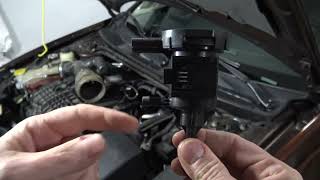
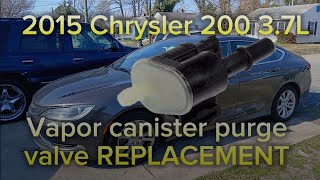
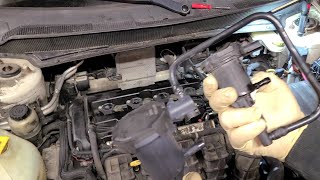
Typical fix: Replace the purge valve. It is typically located in the engine bay. On the 2.4L, it's often found near the firewall/intake manifold area. 🎬 Watch: How to replace the purge valve on the 2.4L engine. On the 3.6L, it's often on the back of the intake manifold. 🎬 See this walkthrough for replacing the valve on a 3.6L engine.
Est. part cost: $25-$60 - Loose or Faulty Gas Cap 🟡 Medium Probability While more commonly associated with leak codes (P0455/P0456), a gas cap that doesn't seal properly can disrupt the entire EVAP system's pressure, sometimes leading to a purge flow fault. It's a frequent point of failure due to seal degradation over time.
How to confirm: Inspect the gas cap for cracks in the plastic or a dried-out, cracked rubber seal. Ensure it clicks several times when tightened. If it feels loose or the seal is damaged, it's suspect. It's a cheap and easy first step before more complex diagnostics.
Typical fix: Replace the gas cap. It's recommended to use an OEM Mopar cap, as some aftermarket caps have been reported to not seal correctly.
Est. part cost: $10-$30 - Cracked or Disconnected EVAP Hoses ⚪ Low Probability The plastic and rubber lines that carry fuel vapor can become brittle and crack over time due to engine heat and age. A user on a Jeep forum with a P0441 on a similar engine found they had forgotten to reconnect a hose to the air intake after previous maintenance, which caused the code.
How to confirm: Visually inspect all accessible EVAP lines between the charcoal canister (near the fuel tank), the purge valve, and the intake manifold for obvious cracks, breaks, or loose connections. A smoke test is the most effective way to find small, hard-to-see leaks if a visual inspection reveals nothing.
Typical fix: Replace the damaged section of hose or reconnect it securely.
Est. part cost: $5-$30 - Outdated Powertrain Control Module (PCM) Software ⚪ Low Probability Chrysler issued TSBs (#18-022-17 REV. A, #18-023-16) for the 2015 model year with the 2.4L engine that address false P0441 codes by reprogramming the PCM. This suggests the original software was too sensitive and could trigger the code without a mechanical fault. The TSB also addresses other issues like engine startup flare and idle surge.
How to confirm: A Chrysler dealership or a well-equipped independent shop can check your vehicle's current software version against the latest available version referenced in the TSBs using a tool like wiTECH.
Typical fix: Reprogram the PCM with the updated software. This is a dealer-only or specialty shop repair.
Est. part cost: $100-$200
Rare But Worth Checking
- Clogged or Failed Charcoal Canister: This can happen if you consistently 'top off' your fuel tank after the pump clicks off. Liquid fuel can saturate the charcoal canister, clogging it and preventing proper vapor flow. While possible, this is much less common for a P0441 code than a faulty purge valve.
Diagnosis Steps

- Read the code with an OBD-II scanner to confirm P0441 is present.
- Inspect the gas cap for damage and ensure it is tightened correctly. If in doubt, replace it with an OEM part.
- Visually inspect the engine bay for any obvious cracks or disconnections in the EVAP hoses leading to and from the purge valve. A common mistake is forgetting to reconnect a hose after other engine work.
- Locate the EVAP purge valve. On the 2.4L, it's often low on the firewall or near the intake manifold. On the 3.6L, it's often on the back of the intake manifold.
- Test the purge valve. With the engine off, disconnect the lines and try to blow through it; it should be sealed. If it allows air to pass, it's stuck open and needs replacement.
- If you experience hard starting after refueling, the purge valve is very likely stuck open.
- If the purge valve and gas cap are good, the next step is a smoke test to find potential leaks in the EVAP lines or canister.
- If no leaks are found, especially on a 2015 model with a 2.4L engine, check with a dealer about TSB #18-022-17 REV. A for a potential PCM software update.
Parts You'll Likely Need

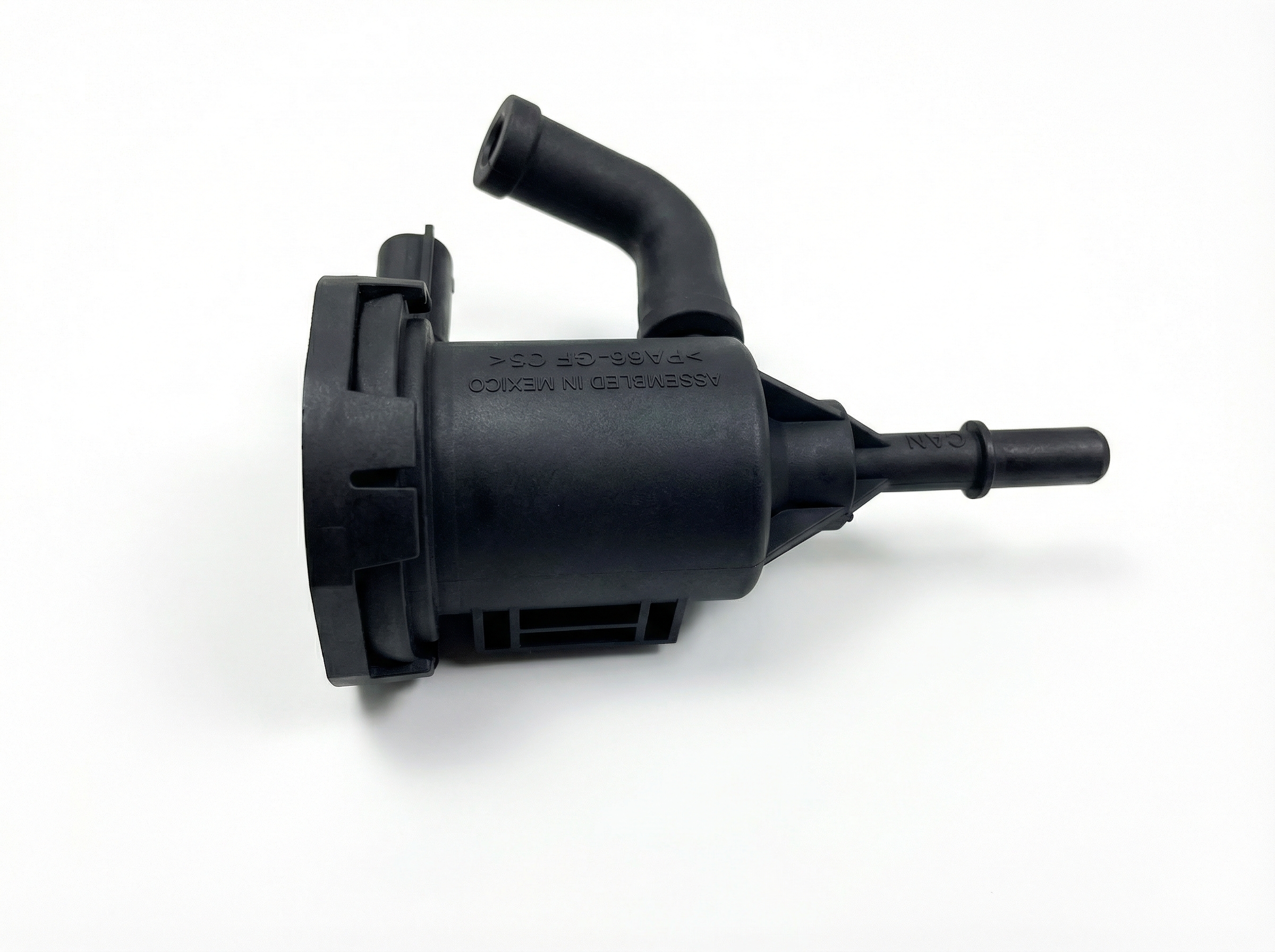
- EVAP Canister Purge Valve / Solenoid
(OEM #04891735AC)— This is the most frequent point of failure for the P0441 code on this vehicle, as confirmed by owner complaints, mechanic consensus, and its prevalence on platform-mate vehicles. [ODI #10575614, 5] Note: Some parts catalogs incorrectly list 04891735AC as a throttle body; it is crucial to verify the part is the purge valve. The correct part is a small solenoid with two hose ports and an electrical connector.
Trusted brands: Mopar, Dorman (e.g., 911-481), Standard Motor Products
OEM price range: $40-$60
Aftermarket price range: $25-$45 - Fuel Cap — A worn-out seal on the gas cap is a simple but common cause of various EVAP system codes. It's an inexpensive and easy part to replace as a first step. Using an OEM Mopar cap is often recommended for a proper seal.
Trusted brands: Mopar, Stant, Gates
OEM price range: $20-$30
Aftermarket price range: $10-$20
Related Codes That Often Appear With This One
- U0140 — Mentioned in TSBs #18-022-17 REV. A and #1810216 alongside P0441, suggesting a potential underlying electrical or software issue addressed by a PCM reflash.
- P0456 — Also mentioned in TSB #18-022-17 REV. A. This is a small leak code, and sometimes flow and leak codes can appear together if the system has multiple issues or if the PCM software is overly sensitive.
- P2172 — Listed with P0441 in TSB #18-022-17 REV. A. A purge valve stuck open can create a vacuum leak, which could trigger a high airflow/vacuum leak code.
- P0116 — Appears with P0441 in TSB #18-022-17 REV. A, likely as part of a group of codes addressed by a single PCM software update for the 2.4L engine.
Technical Service Bulletins (TSBs) & Recalls
- 18-022-17 REV. A: Addresses P0441 among other codes, recommending a PCM software update for some 2015 Chrysler 200 and 2013-2015 Dodge Dart models with the 2.4L engine.
- 1810216: Lists P0441 as a possible DTC in relation
Platform-Specific Known Issues
- TSB #18-022-17 REV. A and #18-023-16 identify that on some 2015 models with the 2.4L engine, the P0441 code can be triggered falsely and a PCM reflash is the correct fix.
- A real-world owner complaint to the NHTSA on a 2013 model confirms a technician diagnosed and replaced the EVAP purge valve to resolve a P0441 code. [ODI #10575614]
- Owners of platform mates like the Dodge Avenger and Jeep Cherokee report the same P0441 issue, often resolved by replacing the purge valve or finding a disconnected hose after recent repairs.
Mechanic-Grade Diagnostic Values
- EVAP Purge Solenoid Connector Voltage (2015 Model) — expected: With the key on, engine off, one pin should have battery voltage (approx. 12V) and the other should be the PCM control wire. When the PCM commands the valve on, it grounds the control wire, which should then read near 0V.. Failure: No voltage on the power feed pin indicates a wiring or fuse issue. Voltage on the control wire that doesn't drop to near 0V when commanded by a scan tool indicates a wiring issue or faulty PCM driver.
Hidden / Shadow Codes Worth Checking
- Mode $06, TID $88: On some Chrysler products, this Test ID corresponds to 'Gas Flow Average Ratio.' A value outside the acceptable minimum/maximum range can indicate a failure in the purge flow test, directly related to P0441, even after common parts are replaced. (see via A professional scan tool capable of reading Mode $06 non-continuous monitor test results.)
Scan Tool Commands That Help
- wiTECH or equivalent professional scan tool: EVAP Purge Solenoid Actuation / Test — This bidirectional command allows a technician to manually open and close the purge solenoid while the engine is off. You should hear an audible click from the solenoid. This confirms the solenoid's electrical circuit and mechanical plunger are functioning, helping to isolate the problem to the solenoid itself versus a blockage in a line.
Wiring & Ground Locations
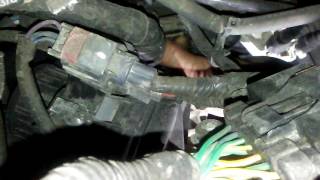
- EVAP Purge Solenoid Connector (2015 Model) — Located at the rear of the engine compartment. On the 2.4L, it is found below the master cylinder. On the 3.6L, it is located behind the brake fluid reservoir, identifiable by its red connector tab.. This is the primary electrical connection for the most common failed part. A wiring diagram for the 2015 model shows a 2-pin connector: Pin 1 is a Pink/Light Green wire for power, and Pin 2 is a Dark Green/Light Green wire which is the control signal from the PCM. Checking for power and control signal at this connector is a critical diagnostic step.
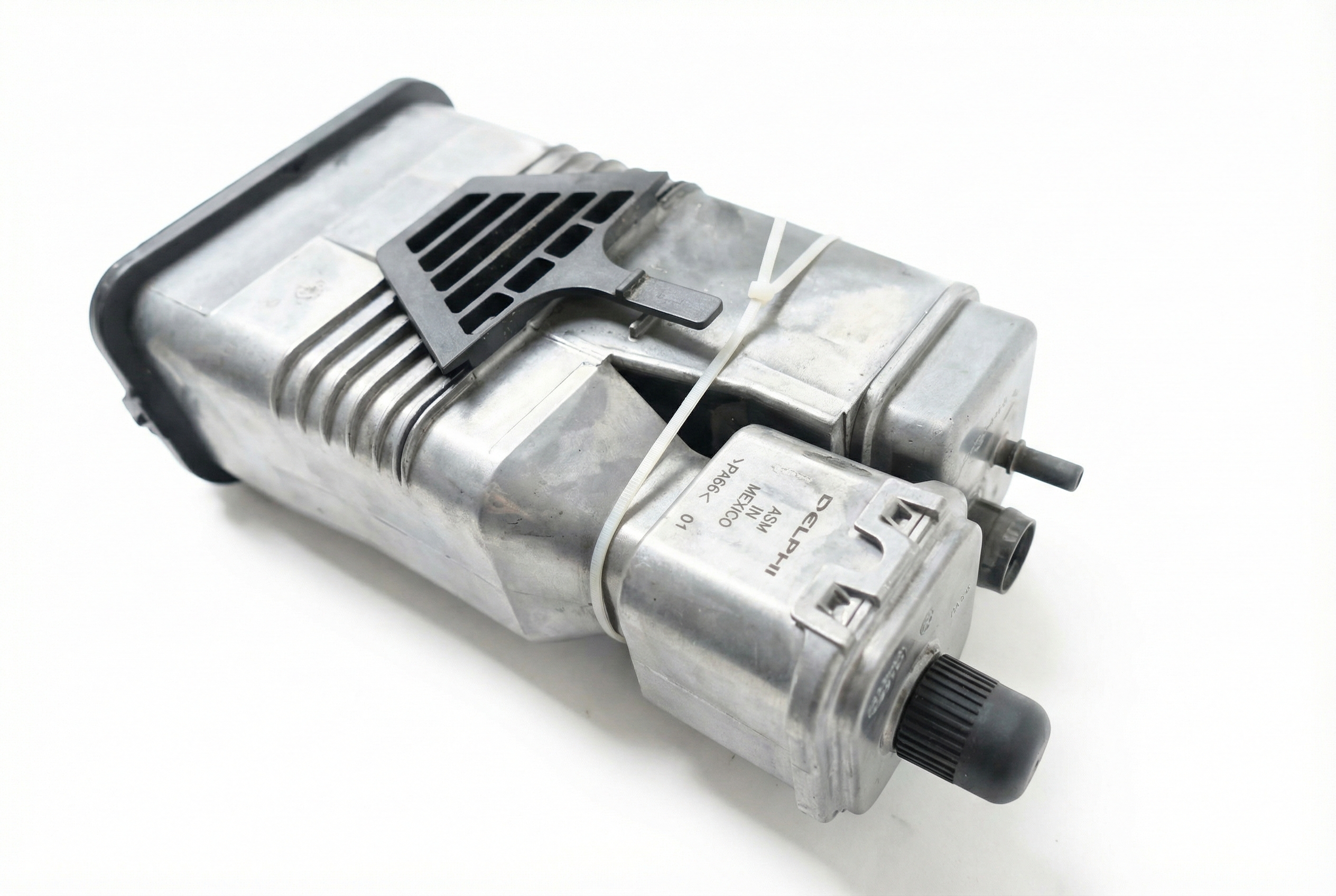
- Charcoal Canister (2015 Model) — Located inside the passenger side rear wheel well, behind the fender liner.. This is a significant change from the previous generation. Knowing the location is critical if you need to inspect the canister or its associated hoses for cracks or blockages after ruling out the purge valve.
Real Owner Repair Stories
- YouTube video by 'd c' (2014 Chrysler 200 with 2.4L engine) — Check Engine Light with code P0441.
❌ Tried (didn't work) The owner was advised by someone else to replace the part, suggesting it was a common knowledge fix rather than the result of a long diagnosis.
✅ What actually fixed it The video documents the replacement of the EVAP purge solenoid (part number CP646 shown) located below the master cylinder to resolve the P0441 code.
OEM Part Supersession History
04891735AA→04891735AB, 04891735AC, 4891735AD— Standard part revisions for reliability or manufacturing changes.
Heads up: A significant issue is that many aftermarket parts catalogs and online marketplaces incorrectly identify part number 04891735AC as a throttle body. It is critical to verify the part being purchased is the small, two-port EVAP purge solenoid and not a much larger, more expensive throttle body.
Model Year Variations Within This Range
- 2012-2014 (JS Generation) vs 2015 (UF Generation): The 2015 model year marked a complete redesign. For the EVAP system, the charcoal canister on the 2015 model is located in the rear passenger-side wheel well, whereas it may be in a different location on earlier models. This is supported by different replacement costs, with the 2015+ canister being significantly more expensive. The TSBs regarding PCM software updates for false P0441 codes are also specific to the 2015 model with the 2.4L engine.
Helpful Videos
Used OEM Parts in Stock
New Aftermarket Parts Available


The information in this article is provided for general reference and educational purposes only. Vehicle specifications, procedures, and part compatibility can vary by production date, trim level, and region. Always consult your vehicle's factory service manual and verify part numbers before purchasing or performing repairs. Safety-critical components such as airbags, seat belts, and braking systems should be installed by a qualified professional.
- Chrysler 200:
- 🎬 Helpful Videos
- 🛍️ Shop This Part
- What's Unique About the 2012-2015 Chrysler 200
- Diagnostic Flowchart
- Symptoms You May Notice
- Most Likely Causes
- Rare But Worth Checking
- Diagnosis Steps
- Parts You'll Likely Need
- Related Codes That Often Appear With This One
- Technical Service Bulletins (TSBs) & Recalls
- Platform-Specific Known Issues
- Mechanic-Grade Diagnostic Values
- Hidden / Shadow Codes Worth Checking
- Scan Tool Commands That Help
- Wiring & Ground Locations
- Real Owner Repair Stories
- OEM Part Supersession History
- Model Year Variations Within This Range
- 🎟️ Get 5% Off