

P0440 on 2015-2018 Jeep Renegade: Causes and Fixes for EVAP System Failure
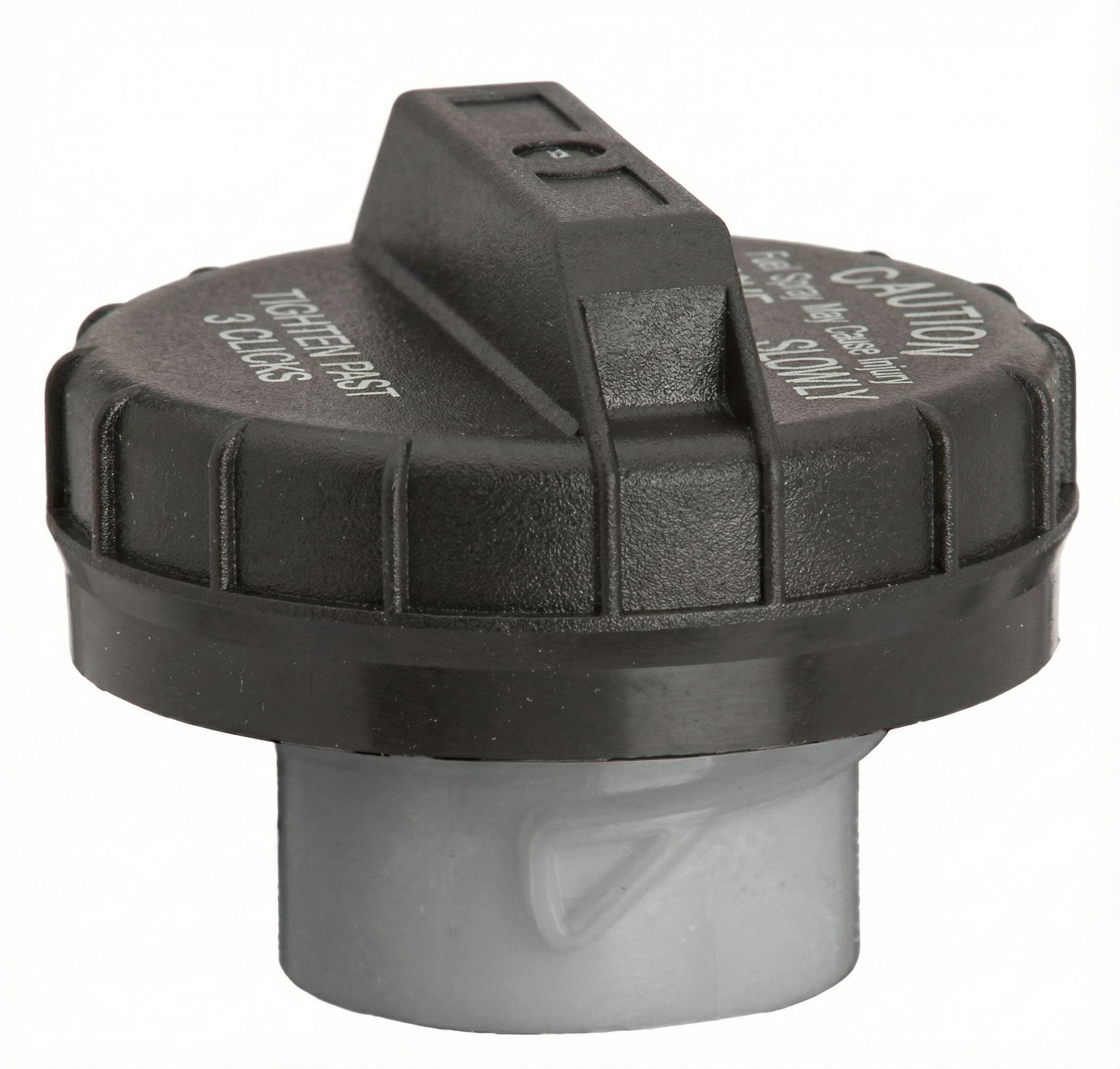
On a 2015-2018 Jeep Renegade, code P0440 most often points to a loose or faulty gas cap. If tightening or replacing the cap (Mopar Part #68245042AA, $10-$25) doesn't work, the next most likely causes are a faulty EVAP purge valve or a cracked EVAP hose, often near the valve itself.
- P0440 on a Jeep Renegade means there's a general fault in the evaporative emissions system.
- Always start with the simplest fix: check that your gas cap is tight and the seal is intact. A new gas cap is a cheap and easy first step.
- If the gas cap isn't the issue, the most likely culprits are the EVAP purge valve in the engine bay or a cracked vacuum hose.
- You can continue to drive the vehicle, but it will fail an emissions test and the check engine light will remain on.
- For hard-to-find leaks, a professional smoke test is the most effective diagnostic tool.
What's Unique About the 2015-2018 Jeep RENEGADE

The Jeep Renegade, sharing its platform and 2.4L engine with the Fiat 500X, has a compact EVAP system where components are tightly packaged. The most common trigger for P0440 is often the simplest: the gas cap. However, owners on forums like jeeprenegadeforum.com frequently report issues with cracked plastic EVAP hoses, particularly where they connect to the purge valve in the engine bay, and faulty purge valves themselves. A series of Technical Service Bulletins (TSBs) also indicate that Jeep released several powertrain software updates to refine the sensitivity of the EVAP monitoring system and prevent false codes from being triggered.
Diagnostic Flowchart

Tap your situation to follow the diagnostic path that matches what you're seeing on this vehicle.
Symptoms You May Notice
- Check Engine Light is on
- A faint smell of fuel, especially around the rear of the vehicle or after refueling
- Remote start may be disabled
- A 'gascap' message may appear on the instrument cluster, though this is more common with codes P0456/P0457
- Replacing the O2 sensors. P0440 is strictly an EVAP system code and is not related to the oxygen sensors.
- Replacing the catalytic converter. This is an expensive repair that has no connection to the EVAP system.
Most Likely Causes


- Loose, Damaged, or Incorrect Gas Cap 🔴 High Probability This is the most common cause for any EVAP code on any vehicle. The seal can wear out, or it may not have been tightened correctly after refueling. It's the first and cheapest thing to check.
How to confirm: Check if the gas cap is tight (at least three clicks). Remove it and inspect the rubber O-ring for cracks, dirt, or wear. Ensure it's the correct OEM or equivalent cap, as poorly fitting aftermarket caps are a known issue.
Typical fix: Tighten the cap. If the seal is damaged or you are unsure of its age, replace the gas cap.
Est. part cost: $10-$25 - Faulty EVAP Purge Valve (Solenoid) 🟡 Medium Probability The purge valve, located on the back side of the engine, can get stuck open or closed, which is a common failure point in many modern vehicles, including the Renegade. This is frequently cited in owner forums as the fix.
How to confirm: The purge valve is located in the engine bay, near the back. With the engine running, you can sometimes feel for vacuum at the valve's port or listen for a clicking sound. A more definitive test involves applying 12V power to see if the valve actuates. A stuck-open valve will often cause rough idling immediately after refueling.
Typical fix: Replace the purge valve and the attached hose if it appears brittle.
Est. part cost: $25-$70 - Cracked or Disconnected EVAP Hoses 🟡 Medium Probability The plastic and rubber hoses that carry fuel vapor can become brittle and crack over time due to engine heat and exposure. A very common failure point on the Renegade is the hard plastic line connecting to the purge valve.
How to confirm: Visually inspect all accessible EVAP lines between the engine bay, the charcoal canister, and the fuel tank for obvious cracks, breaks, or loose connections. Pay special attention to the fittings. A smoke test is the most effective way to find small, hard-to-see leaks.
Typical fix: Replace the damaged section of hose or the entire hose assembly.
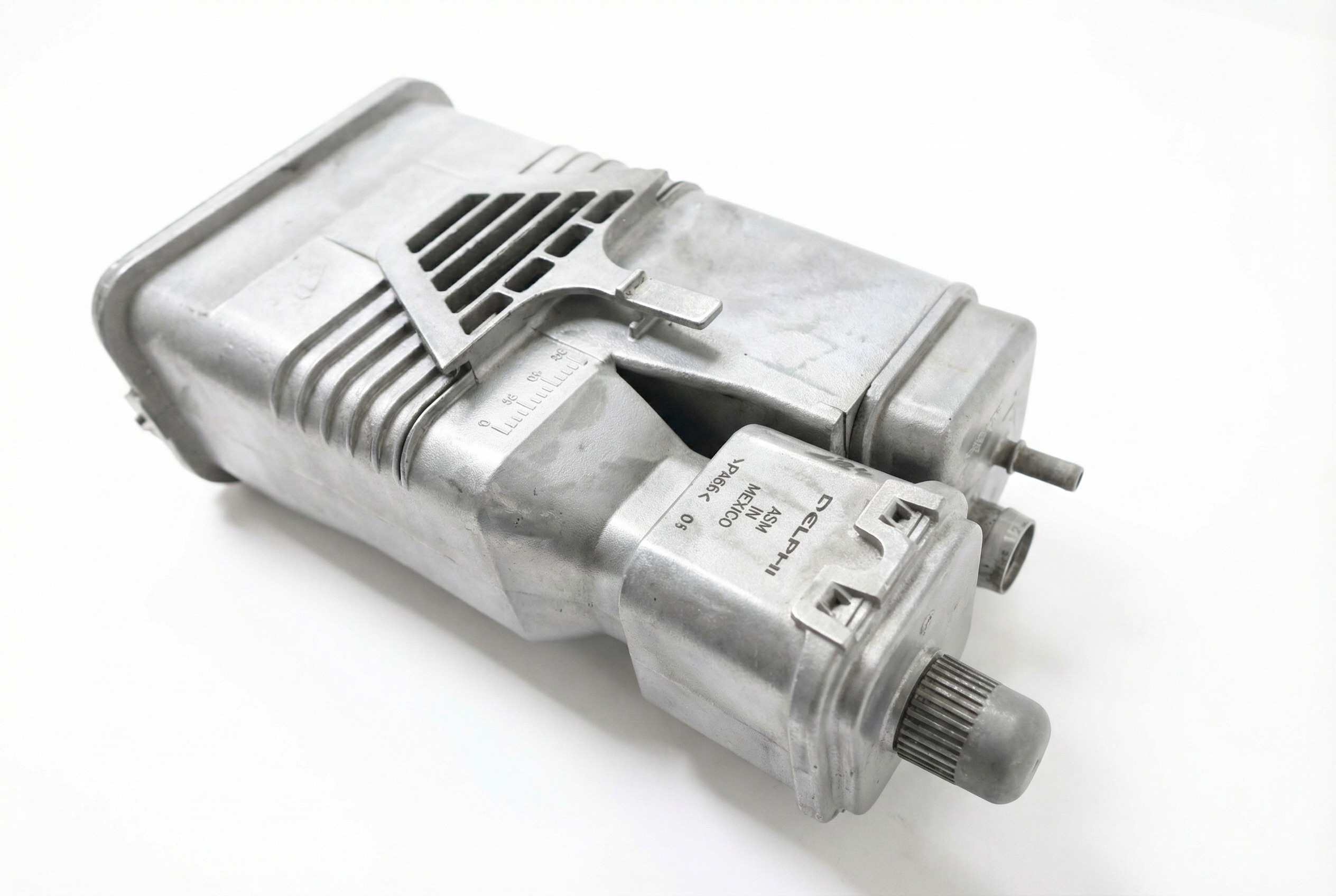
Est. part cost: $15-$50 - Faulty EVAP Leak Detection Pump / ESIM ⚪ Low Probability The Evaporative System Integrity Module (ESIM), also called a leak detection pump, is mounted directly to the charcoal canister. Its internal diaphragm or switch can fail, causing it to incorrectly report a leak. Owners have reported replacing this part to resolve persistent EVAP codes after trying other fixes.
How to confirm: This component is located on the charcoal canister, accessible by removing the rear driver's side wheel and wheel well liner. Diagnosis is difficult without a bi-directional scan tool; it's often diagnosed by replacement after other, more common parts have been ruled out.
Typical fix: Replace the ESIM. It typically twists off the charcoal canister. 🎬 See this video to locate and replace the ESIM.
Est. part cost: $35-$80
Rare But Worth Checking
- Cracked Charcoal Canister: The canister itself can develop cracks from road debris or age, causing a leak. This is less common than valve or hose failures but should be inspected if a leak is suspected in the rear of the vehicle.
- Failing Battery: One owner on a forum reported that a dying battery caused their P0440 code, stating that Renegades can exhibit strange electrical issues when battery voltage is low. While not a direct cause, it's a data point worth considering if other electrical gremlins are present.
- Spider Webs in Vent Hose: Spiders have been known to build webs inside the EVAP system's vent hose (which often terminates near the fuel filler neck), causing a blockage that can trigger a P0440 or P0441 code. This is a known issue across many vehicle makes and models.
Diagnosis Steps
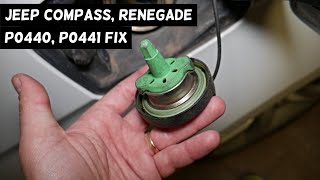
- Check the Gas Cap: Ensure it is tight. Remove it and inspect the seal for cracks or damage. If in doubt, replacing it with an OEM cap (Mopar #68245042AA) is an inexpensive first step.
- Scan for Other Codes: Use an OBD-II scanner to see if other codes are present. Codes like P0441, P0455, or P0456 can help pinpoint the problem.
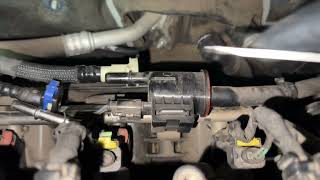
- Inspect the Purge Valve: Locate the purge valve on the back of the engine. Visually inspect its hoses for cracks, especially at the connection points. With the engine running, disconnect the hose leading to the intake to check for suction (it should be closed and have no vacuum at idle).
- Visually Inspect Hoses: Trace the EVAP hoses from the engine bay to the rear of the vehicle. Look for any visible cracks, disconnections, or damage. Pay close attention to the hard plastic lines which can become brittle.
- Inspect the Charcoal Canister Area: The charcoal canister and ESIM/leak detection pump are located near the fuel tank, accessible by removing the driver's side rear wheel and wheel well liner. Check for any physical damage or cracked hoses in this area.
- Perform a Smoke Test: If no obvious issues are found, the most reliable way to find the leak is with a smoke test. This involves introducing low-pressure smoke into the EVAP service port and watching for where it escapes. 🎬 Watch a professional mechanic diagnose EVAP leaks with a smoke test. This is the definitive method for finding hairline cracks in hoses or leaks from seals.
Parts You'll Likely Need
- Gas Cap
(OEM #68245042AA)— This is the most frequent and cheapest fix for P0440. The seal fails over time, causing a pressure leak.
Trusted brands: Mopar, Stant
OEM price range: $20-$30
Aftermarket price range: $10-$20 - Vapor Canister Purge Valve
(OEM #04892352AC (or superseding part number))— A common failure point that can get stuck open or closed, disrupting the EVAP system's ability to function and test itself. Often fails on the Renegade and its platform mates.
Trusted brands: Mopar, Bosch, Dorman
OEM price range: $50-$80
Aftermarket price range: $25-$50 - Evaporative System Integrity Module (ESIM) / Leak Detection Pump
(OEM #04861959AA (or superseding part number))— This component is part of the system self-test. If it fails, it can incorrectly report a leak or fail to run the test, triggering a code. It's a common failure point on many Chrysler/Jeep products.
Trusted brands: Mopar, Dorman, SKP
OEM price range: $60-$100
Aftermarket price range: $35-$70
Related Codes That Often Appear With This One
- P0441 — This code indicates 'EVAP Purge System Performance'. It often appears with P0440 because a general system failure can be caused by the purge system not working correctly, such as a stuck purge valve.
- P0455 — This code means 'EVAP System Large Leak'. P0440 can be a precursor or companion to P0455 if the system detects a general fault that is later identified as a large leak, like a disconnected hose or missing gas cap.
- P0456 — This code means 'EVAP System Small Leak'. Similar to P0455, a general P0440 fault might be triggered alongside the more specific small leak code, often caused by a bad gas cap seal or a hairline crack in a hose.
Technical Service Bulletins (TSBs) & Recalls
- 1804421: Mentions P0440-00 - General EVAP System Failure as a potential code.
- 18-061-16 REV. C: This is a key TSB that involves reprogramming the Powertrain Control Module (PCM) with updated software. Its purpose is to improve the diagnostic logic and prevent the PCM from falsely setting a range of codes, including P0440, P0441, P0455, and P0456. It does not fix a physical leak but makes the system less prone to flagging erroneous faults.
- 1806316: Also includes P0440 in a list of codes addressed by a PCM software update.
- 18-061-16 REV. B: An earlier revision of the above-mentioned PCM flash TSB.
- 18-061-16: The original version of the PCM flash TSB.
Platform-Specific Known Issues
- Recurring Codes After Dealer Recall/Flash: Some owners have reported on Reddit that the P0440 or related EVAP codes appeared shortly after having an emissions-related recall or software update performed at the dealership. While the TSBs aim to fix faulty logic, it's a recurring anecdote that the light appears post-service, sometimes leading to a debate with the dealer over whether the new fault is related to the service.
- Owner Replaced Multiple Parts: In a thread on Jeeps.net, an owner detailed a frustrating diagnostic journey starting with P0456/P0457, replacing the filler neck and gas cap at the
Mechanic-Grade Diagnostic Values
- EVAP Purge Valve/Solenoid Coil Resistance — expected: 12-15 Ω (general specification). Failure: A reading significantly outside this range, or an open circuit (infinite resistance), indicates a failed coil.
- ESIM (Leak Detection Pump) Switch State — expected: With ground applied to one pin, the other pin should show ground ONLY when pressure or vacuum is applied to the port.. Failure: If the second pin never shows ground when pressure/vacuum is applied, the internal switch is bad.
- ESIM Voltage PID via Scan Tool — expected: Voltage (typically starting around 2.5V-4.5V) should change towards 0V when blowing into the system's vent tube.. Failure: If the voltage reading on the scan tool does not change while applying light pressure, the ESIM has failed.
Scan Tool Commands That Help
- WiTech (Dealer Tool): Small Leak Verification Test — This test should be run to confirm a small leak (like P0456) is actually present before replacing components. An FCA newsletter notes many parts are replaced unnecessarily, and this test helps prevent misdiagnosis. It must also be run after a repair to verify the fix.
- Bi-Directional Scan Tool: EVAP Vent Solenoid Open/Close Command — Used during a smoke test to manually seal the EVAP system. The technician commands the vent valve closed to pressurize the system and then looks for smoke.
- Bi-Directional Scan Tool: EVAP System Test / Monitor Test — This function forces the vehicle's computer to run the internal EVAP monitor test on demand. This is useful for verifying a fix without waiting for multiple drive cycles, and for confirming an intermittent fault is currently present before starting diagnosis.
Wiring & Ground Locations
- G904 — Near the top of the brake pedal assembly.. A wiring diagram for the 2.4L engine shows this as a ground point in the vicinity of other engine management components; a poor ground here could cause erratic behavior.
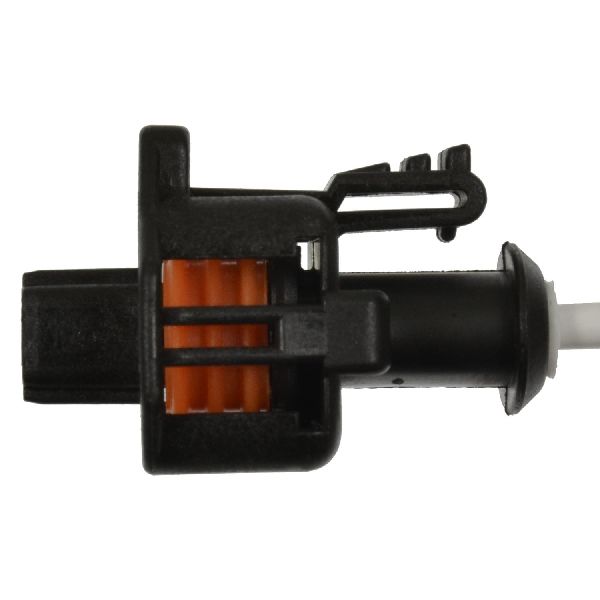
- Purge Solenoid Connector — On the back side of the 2.4L engine, connected to the purge solenoid.. This is the connection point for testing the purge solenoid. One pin receives power and the other is a control signal (ground) from the PCM. Testing for voltage and control signal occurs here.
- ESIM Connector — On the ESIM, which is attached to the charcoal canister behind the driver's side rear wheel well liner.. This is where to test the ESIM's internal switch. One pin is a ground feed, and the other is the switch sense line back to the PCM.
Real Owner Repair Stories
- Reddit user in r/JeepRenegade (2019 Jeep Renegade) — Recurring P0440 code.
❌ Tried (didn't work) Two previous repair attempts (details not specified).
✅ What actually fixed it Replacing a failing battery. The user noted that 'Renegades get weird with electrical issues.' - YouTube channel 'Fx It' (2018 Jeep Renegade Latitude) — Check engine light with codes P0455 and P0456 (large and small leaks).
❌ Tried (didn't work) Initial smoke test pointed to the rear of the vehicle near the canister.
✅ What actually fixed it The owner found the O-ring on the ESIM (vent valve) was flattened and had black residue on it. Replacing just the O-ring was the intended fix. - YouTube channel 'Clark's Place' (Jeep (model not specified, but common Chrysler/Jeep issue)) — P0440 code.
❌ Tried (didn't work) Visual inspection was difficult.
✅ What actually fixed it The hard plastic EVAP line in the engine bay was severely cracked and brittle. The fix was to cut out the bad section and splice in a piece of rubber fuel hose with clamps.
"I Checked Everything" — The Actual Cause
- A common scenario for Chrysler/Jeep vehicles is passing a smoke test but still having a persistent EVAP code (P0440, P0456). In many of these cases, the fault lies with the Evaporative System Integrity Module (ESIM). The ESIM has internal weights and a switch that can fail its electronic self-test without there being an actual physical leak in the system. FCA has noted that a high percentage of returned ESIMs under warranty test as 'Trouble Not Found,' suggesting this is a common misdiagnosis, but a faulty ESIM remains a primary suspect when no leak is found.
When the Usual Fixes Don't Work
- While cracked hoses and faulty purge valves are common, a significant number of P0440 and related EVAP codes on Jeep products are resolved by replacing the Evaporative System Integrity Module (ESIM), even when a smoke test does not show a leak. An FCA internal newsletter highlighted that technicians were frequently replacing ESIMs and purge valves that later tested as having no fault, leading them to create a more robust diagnostic procedure using the 'Small Leak Verification Test' on the dealer scan tool to prevent unnecessary parts replacement. This indicates that while a physical leak is possible, an electronic fault in the testing components themselves is a very common root cause.
OEM Part Supersession History
04861959AA→04861959AB, 04861959AC— Standard part revision and improvement over time.
Heads up: Some aftermarket versions are reported to not fit or seal properly. It is critical to ensure the replacement part has a quality seal and locks into the canister correctly.
Helpful Videos
Used OEM Parts in Stock
New Aftermarket Parts Available



The information in this article is provided for general reference and educational purposes only. Vehicle specifications, procedures, and part compatibility can vary by production date, trim level, and region. Always consult your vehicle's factory service manual and verify part numbers before purchasing or performing repairs. Safety-critical components such as airbags, seat belts, and braking systems should be installed by a qualified professional.
- Jeep RENEGADE:
- 🎬 Helpful Videos
- 🛍️ Shop This Part
- What's Unique About the 2015-2018 Jeep RENEGADE
- Diagnostic Flowchart
- Symptoms You May Notice
- Most Likely Causes
- Rare But Worth Checking
- Diagnosis Steps
- Parts You'll Likely Need
- Related Codes That Often Appear With This One
- Technical Service Bulletins (TSBs) & Recalls
- Platform-Specific Known Issues
- Mechanic-Grade Diagnostic Values
- Scan Tool Commands That Help
- Wiring & Ground Locations
- Real Owner Repair Stories
- "I Checked Everything" — The Actual Cause
- When the Usual Fixes Don't Work
- OEM Part Supersession History
- 🎟️ Get 5% Off