

P0430 on 2013-2018 Volkswagen Passat 3.6L VR6: Catalyst Efficiency Fixes
This code is for the 3.6L VR6 engine only and means the Bank 2 catalytic converter is inefficient. While the converter itself may be faulty, first check for exhaust leaks and consider replacing the downstream (post-cat) Bank 2 oxygen sensor, which is a common, less expensive fix. Bank 2 on the transverse VR6 is the cylinder bank closer to the firewall.
- P0430 on a 2013-2018 Passat is only for the 3.6L VR6 engine.
- Do not immediately replace the catalytic converter. It's the most expensive part and may not be the root cause.
- First, inspect thoroughly for exhaust leaks between the engine and the rear O2 sensor.
- Consider replacing the Bank 2 downstream O2 sensor as a likely and more affordable fix.
- Always check for and resolve any other engine codes (especially misfires) before replacing emission components.
What's Unique About the 2013-2018 Volkswagen PASSAT
The P0430 code on a 2013-2018 Passat is exclusive to the 3.6L VR6 engine, as it's the only engine in the lineup with two cylinder banks and therefore two catalytic converters. Inline-4 and inline-5 cylinder engines only have a 'Bank 1' (which would trigger a P0420 code). Volkswagen has issued technical service bulletins related to this, including one that specifically investigates when both P0420 and P0430 appear together on 2012-2013 models with the 3.6L engine, suggesting a known pattern of issues on this platform. Forum discussions among VW owners with VCDS (VAG-COM) diagnostic tools often show P0430 appearing intermittently before becoming a persistent fault.
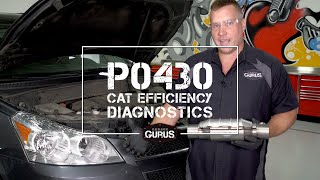
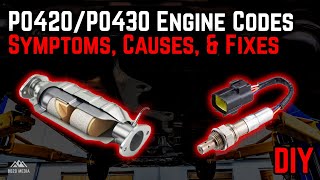
🎬 Watch: Everything you need to know about P0420 and P0430 codes.Diagnostic Flowchart
Tap your situation to follow the diagnostic path that matches what you're seeing on this vehicle.
Symptoms You May Notice
- Check Engine Light is on
- Failure to pass state emissions inspection
- Slightly reduced fuel economy
- A sulfur or "rotten egg" smell from the exhaust, though this is not always present.
- In rare cases of a clogged converter, sluggish acceleration or lack of engine power.
- Increased exhaust noise if the code is caused by an exhaust leak.
- Replacing the catalytic converter when the actual problem is a less expensive downstream oxygen sensor or an exhaust leak.
- Replacing an oxygen sensor when the catalytic converter has truly failed due to an unaddressed engine misfire or fuel mixture problem.
Most Likely Causes
- Failing Catalytic Converter (Bank 2) 🔴 High Probability Catalytic converters have a finite lifespan and can be damaged by other engine problems. High mileage is a primary factor. Unaddressed issues like misfires or rich fuel conditions can rapidly destroy the converter's internal structure.
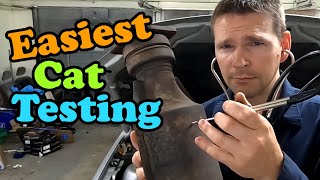
How to confirm: After ruling out other causes, a definitive test is to use an infrared thermometer to measure the converter's inlet and outlet pipes with the engine warm and running at ~2000 RPM. The outlet should be at least 100°F (38°C) hotter than the inlet. If temperatures are similar or the inlet is hotter, the converter is not working. Tapping the converter with a rubber mallet (when cool) may also reveal a rattling sound, indicating a broken internal substrate. 🎬 See how to test a catalytic converter like a professional.
Typical fix: Replacement of the Bank 2 catalytic converter assembly. This is the converter located on the firewall side of the engine.
Est. part cost: $800-$2000+ - Faulty Downstream Oxygen Sensor (Bank 2, Sensor 2) 🟡 Medium Probability Oxygen sensors wear out over time and can send incorrect signals, tricking the ECM into thinking the converter is bad. Replacing the sensor is a common first step before condemning an expensive converter. Forum users often attempt this fix first due to the lower cost.
How to confirm: Use a scan tool to graph the voltage of the Bank 2 downstream O2 sensor. A healthy sensor on a working converter will show a relatively steady voltage (e.g., >0.6V). If the sensor's voltage is stuck or fluctuating wildly in a way that mimics the upstream sensor, it may be faulty. A 'wiggle test' on the sensor's wiring harness while watching live data can also identify a bad connection.
Typical fix: Replace the Bank 2 downstream oxygen sensor.
Est. part cost: $50-$150 - Exhaust System Leak 🟡 Medium Probability Exhaust manifold gaskets and flex pipes can develop cracks or rust over time, allowing outside oxygen into the exhaust stream. This extra oxygen fools the O2 sensors and leads to an incorrect catalyst efficiency reading. One owner found a large hole in the exhaust manifold was the root cause.
How to confirm: Perform a visual inspection of the exhaust system from the engine to the rear O2 sensor, looking for black soot marks or cracks, especially at flanges and welds. A smoke test is the most effective way to find small leaks. Listening for hissing or ticking sounds from the exhaust manifold area is also a good indicator.
Typical fix: Repair the leak by replacing the faulty gasket or exhaust component.
Est. part cost: $20-$300 - Underlying Engine Problem ⚪ Low Probability Issues like engine misfires, leaking fuel injectors, or a bad mass air flow (MAF) sensor can create a rich or lean fuel mixture. This unburned fuel can overheat and destroy the catalytic converter over time. Carbon buildup on the intake valves, a known issue on direct injection engines like the VR6, can also affect combustion and lead to downstream exhaust issues.
How to confirm: Scan for other trouble codes. Misfire codes (P0300-P0306), fuel trim codes (P0171, P0174), or sensor codes will point to the root cause. A Reddit user noted their P0420/P0430 codes appeared after a timing chain replacement, suggesting a potential link to recent major engine work.
Typical fix: Resolve the underlying engine issue (e.g., replace spark plugs, ignition coils, fuel injectors, perform carbon cleaning) before replacing the catalytic converter.
Est. part cost: $50-$500
Diagnosis Steps
- Scan for all stored fault codes using a VW-compatible scanner like VCDS (VAG-COM) if possible. If any other codes are present, especially for misfires (P030x) or fuel mixture (P017x, P310B), diagnose and fix them first.
- Perform a thorough visual inspection of the Bank 2 exhaust system (the bank closer to the firewall on the VR6). Look for cracks, rust, or black soot at gaskets and welds, indicating a leak.
- With the engine running, listen for any hissing or ticking sounds from the exhaust manifold and downpipe area that would suggest a leak.
- Use a scan tool with live data capability. Graph the voltage signals for Bank 2 Sensor 1 (upstream) and Bank 2 Sensor 2 (downstream).
- At a steady 2,000-2,500 RPM, the upstream sensor should switch rapidly between ~0.1V and ~0.9V. The downstream sensor should hold a relatively steady, high voltage (typically >0.5V).
- If the downstream sensor's graph mirrors the upstream sensor's rapid switching, the catalytic converter is not functioning correctly.
- If the downstream sensor's voltage is stuck low or high and doesn't respond, or if it changes erratically when wiggling the connector, the sensor itself or its wiring is likely faulty.
- If no leaks are found and the sensors appear to be working, confirm the catalytic converter failure using an infrared temperature gun as a final check before replacement. The outlet should be significantly hotter than the inlet.
Parts You'll Likely Need
- Bank 2 Catalytic Converter
(OEM #561-254-500-D)— This is the component identified by the code as failing. It is often the ultimate fix if O2 sensors and exhaust leaks have been ruled out. This part number fits the 3.6L Passat and supersedes 561254500A and 561254500B.
Trusted brands: Walker Exhaust, MagnaFlow, AP Exhaust, OEM Volkswagen
OEM price range: $1200-$2500+
Aftermarket price range: $600-$1200 - Bank 2 Downstream Oxygen Sensor
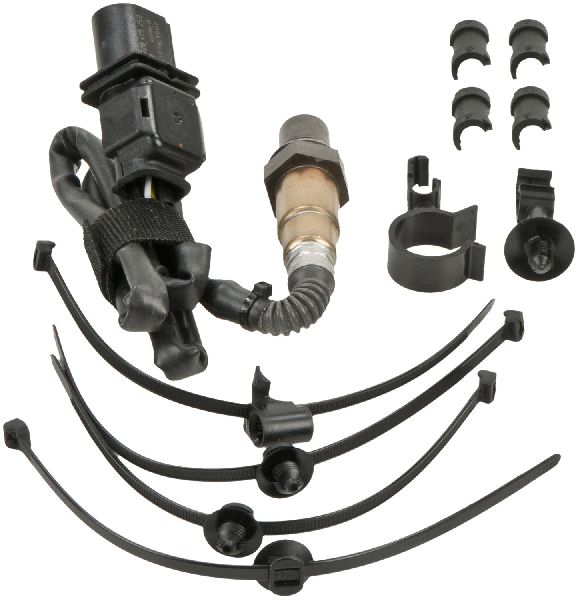
(OEM #1K0-998-262-E)— This sensor is responsible for monitoring the converter's efficiency. It can fail and send false data, making it a common and cost-effective part to replace during diagnosis.
Trusted brands: Bosch, NGK, Denso, NTK
OEM price range: $120-$200
Aftermarket price range: $50-$150 - Exhaust Manifold Gasket — A leak at the exhaust manifold gasket can introduce oxygen and cause an incorrect P0430 code. It's a common failure point on high-mileage vehicles.
Trusted brands: Victor Reinz, Fel-Pro, OEM Volkswagen
OEM price range: $30-$60
Aftermarket price range: $15-$40
Related Codes That Often Appear With This One
- P0420 — This is the equivalent code for Bank 1. Seeing both P0420 and P0430 simultaneously can point to a systemic issue like a fuel delivery problem or a specific known issue noted in a VW TSB for the 3.6L engine. A Reddit user with a 2015 Passat reported both codes appearing intermittently after a timing chain service.
- P0300, P0301-P0306 — These are misfire codes. An engine misfire allows unburned fuel to enter the exhaust, which can quickly damage the catalytic converter, causing the P0430 code. A user on a Ross-Tech forum for a VW CC with the same engine experienced misfire codes on cylinders 2, 4, and 6 (Bank 2) alongside the P0430.
- P310B, P0087, P129F — These codes relate to low fuel pressure regulation. The 3.6L FSI engine uses a high-pressure fuel system, and issues with the in-tank lift pump, high-pressure fuel pump (HPFP), or the G410 fuel pressure sensor can cause a rich or lean condition that ultimately damages the catalytic converter. A faulty G410 sensor is a known issue on these engines.
Technical Service Bulletins (TSBs) & Recalls
- VIN-4-A-PIN Sept (2017 EQUIPMENT): MIL-on P0420 and/or P0430 in the ECM, MIL-on P0463 and B103E1B stored
- On-car analysis list from August 6th, 2015 (NHTSA ID 10058223): Mentions analysis of P0420/P0430 codes on 2012-2013 3.6L Passat models.
Platform-Specific Known Issues
- A 2015 NHTSA document shows that Volkswagen was specifically analyzing 2012-2013 Passat 3.6L models that stored both P0420 and P0430 codes simultaneously, indicating this is a known issue pattern on early NMS VR6 models.
Mechanic-Grade Diagnostic Values
- High-Pressure Fuel System — expected: Up to 1,595 psi (110 bar). At idle, expect 100-130 bar; at wide-open throttle, 140-150 bar.. Failure: Significantly lower pressure than specified, which can lead to fuel mixture issues that damage the converter. May be accompanied by codes P310B, P0087, or P129F.
- Low-Pressure Fuel Pump Duty Cycle (VCDS) — expected: Using VCDS, check Measuring Value Block (MVB) 106.2. The duty cycle should be below 70%.. Failure: A value consistently higher than 70% indicates the low-pressure lift pump is working too hard to supply the high-pressure pump, suggesting a weak lift pump or a restriction (like a clogged filter).
- Oxygen Sensor Heater Fuse — expected: A 10-amp or 20-amp fuse (F12) located in the engine bay fuse box provides power to the oxygen sensor heaters.. Failure: A blown fuse will prevent the O2 sensors from heating up to operating temperature quickly, causing incorrect readings and potentially triggering catalyst codes. The fuse should have continuity (0 ohms).
Scan Tool Commands That Help
- VCDS (VAG-COM): Guided Readiness Script — After a repair (like replacing a cat or O2 sensor), use this function in the Engine controller ([01-Engine] -> [Readiness - 15]) to run the specific sequence of engine operations required to get the catalyst monitor to complete its self-test. This confirms if the fix was successful without days of driving.
- VCDS (VAG-COM): Graphing Measuring Blocks for O2 Sensors — This is the primary diagnostic step. Graph the upstream (pre-cat) and downstream (post-cat) O2 sensors for Bank 2 simultaneously. A bad converter is indicated when the downstream sensor's voltage graph starts to closely mimic the rapid switching of the upstream sensor.
Wiring & Ground Locations
- O2 Sensor Connectors — On the 3.6L VR6, the upstream and downstream O2 sensor connectors for both banks are typically clipped to a bracket on the side of the engine bay.. The upstream and downstream connectors have different shapes to prevent mixing them up on the same bank. However, it is physically possible to mix up the Bank 1 and Bank 2 connectors if they are disconnected simultaneously. Ensure correct routing and connection after any service.
- Main Engine Ground — A primary ground point is located on the front of the left longitudinal member (frame rail) in the engine bay.. A poor engine ground can cause a host of electrical issues, including erratic sensor readings. While not a direct cause, verifying that main ground connections are clean and tight is a crucial step in diagnosing any electronic fault code.
Real Owner Repair Stories
- Reddit user in /r/AskAMechanic (2015 Volkswagen Passat (Engine not specified, but P0420/P0430 implies 3.6L VR6)) — Intermittent P0420 and P0430 codes appearing after having the timing chains replaced. The Check Engine Light would stay on for about 60 miles and then turn off for a few days.
❌ Tried (didn't work) The user was asking for advice before trying any fixes. The dealership told them it was 'just an emissions warning' and didn't investigate O2 sensors or leaks.
✅ What actually fixed it The thread did not have a final confirmed fix, but the strong implication from the timing of the event is that the issue was related to the timing chain service. This could involve disturbed O2 sensor wiring, a new exhaust leak created during the job, or potentially incorrect cam timing affecting engine combustion and exhaust characteristics. - Ross-Tech Forums user (2009 Volkswagen CC 3.6L VR6 4Motion (same engine family)) — Multiple codes including P0430, misfires on Bank 2 (cylinders 2, 4, 6), and fuel pressure codes.
❌ Tried (didn't work) Replaced spark plugs and ignition coils, replaced fuel thrust sensor.
✅ What actually fixed it The user replaced the high-pressure fuel pump (HPFP), which improved the situation. The final diagnosis pointed towards a fuel delivery problem (low and high pressure pumps) as the root cause for the misfires and rich running condition that likely led to the P0430 code over time.
OEM Part Supersession History
561-254-500-A, 561-254-500-B→561-254-500-D— Standard part revision by the manufacturer for improvements or supplier changes.
Heads up: The newer part number 561-254-500-D is the correct and current replacement for the previous versions on the 2013-2018 Passat 3.6L.
Helpful Videos
We Have This Part in Stock






The information in this article is provided for general reference and educational purposes only. Vehicle specifications, procedures, and part compatibility can vary by production date, trim level, and region. Always consult your vehicle's factory service manual and verify part numbers before purchasing or performing repairs. Safety-critical components such as airbags, seat belts, and braking systems should be installed by a qualified professional.
- Volkswagen PASSAT:
- 🎬 Helpful Videos
- 🛍️ Shop This Part
- What's Unique About the 2013-2018 Volkswagen PASSAT
- Diagnostic Flowchart
- Symptoms You May Notice
- Most Likely Causes
- Diagnosis Steps
- Parts You'll Likely Need
- Related Codes That Often Appear With This One
- Technical Service Bulletins (TSBs) & Recalls
- Platform-Specific Known Issues
- Mechanic-Grade Diagnostic Values
- Scan Tool Commands That Help
- Wiring & Ground Locations
- Real Owner Repair Stories
- OEM Part Supersession History
- 🎟️ Get 5% Off