

P0430 on 2013-2017 VW Beetle: Why It's Likely P0420 and How to Fix It
A P0430 code is for 'Bank 2' and your VW Beetle's engine only has one bank. The code is almost certainly a typo for P0420. For a P0420, the most common causes are a failing catalytic converter, a bad downstream oxygen (O2) sensor, or an exhaust leak at the flex pipe. Always diagnose before replacing the expensive converter.
- Your Beetle cannot have a P0430 code; the actual code is P0420. Any tool showing P0430 is incorrect.
- Do not replace the catalytic converter without a proper diagnosis. It's the most expensive part and may not be the root cause.
- Always check for exhaust leaks and analyze O2 sensor live data before buying any parts.
- Address any other engine codes (especially for misfires or fuel mixture) before tackling the P0420, as they are likely the cause of the converter failure.
What's Unique About the 2013-2017 Volkswagen BEETLE

The key issue for the 2013-2017 VW Beetle is the code itself. Seeing a P0430 is a misdiagnosis because the inline engines (2.5L, 1.8T, 2.0T) used in this generation only have one bank and cannot trigger a Bank 2 fault. This guide will proceed by addressing the correct code, P0420, which is a common fault on these vehicles and shares the same diagnostic principles. The underlying cause of P0420 on these direct-injected and port-injected engines can range from simple exhaust leaks to eventual catalytic converter failure. A particularly common failure point on this platform is the flexible joint (flex pipe) in the exhaust, which can crack and allow air to enter, confusing the oxygen sensors.
Diagnostic Flowchart
Tap your situation to follow the diagnostic path that matches what you're seeing on this vehicle.
Symptoms You May Notice
- Check Engine Light is on
- Reduced fuel economy
- Sluggish acceleration or lack of power
- A sulfur or 'rotten egg' smell from the exhaust
- Vehicle may fail an emissions test
- Audible hissing or ticking sound from the engine bay or under the car, especially when cold, indicating an exhaust leak.
- Replacing the catalytic converter when the actual problem is a much cheaper exhaust leak or a faulty oxygen sensor. Always perform a full diagnosis before replacing the most expensive part.
Most Likely Causes


- Failing Catalytic Converter 🔴 High Probability Catalytic converters have a finite lifespan (often 80,000+ miles) and can be damaged by other engine problems like misfires, oil consumption from PCV issues, or burning coolant, which are not uncommon in aging VWs. The internal honeycomb structure can become clogged or melt, reducing its efficiency.
How to confirm: A mechanic can use a scan tool like VCDS to monitor the upstream and downstream O2 sensor readings. The upstream sensor (Bank 1, Sensor 1) should fluctuate rapidly, while the downstream (Bank 1, Sensor 2) should be relatively steady. If the downstream sensor mimics the upstream, the converter is not working. An infrared thermometer can also be used; the outlet should be at least 100°F hotter than the inlet on a working converter after the engine is fully warmed up.
Typical fix: Replacement of the catalytic converter assembly. This is often a single unit with the downpipe.
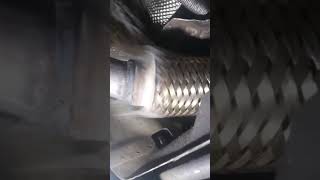
Est. part cost: $400-$1200 - Exhaust Leak (Especially Flex Pipe) 🔴 High Probability The woven steel flex pipe section of the downpipe is a very common failure point. It is designed to absorb engine movement but can crack from stress and corrosion over time, allowing outside air to be drawn into the exhaust stream. This extra oxygen fools the downstream O2 sensor into thinking the converter is inefficient.
How to confirm: Perform a visual inspection for black soot marks or obvious cracks on the flex pipe. A simple test is to have a helper briefly block the tailpipe with a rag while the engine is running; a hissing sound from the flex pipe area will confirm a leak. A professional smoke test is the most effective way to pinpoint small leaks, though a shop-vac in reverse can also be used to pressurize the cold exhaust with soapy water sprayed on joints to find leaks. 🎬 Watch: How to perform these exhaust leak and efficiency tests.
Typical fix: The official repair is to replace the entire downpipe/catalytic converter assembly. However, many exhaust shops can cut out the failed flex pipe and weld in a new universal one for a much lower cost.
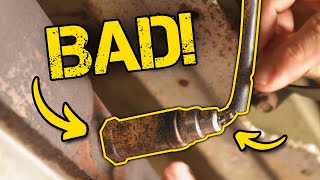
Est. part cost: $50-$300 for a welded-in flex pipe, or the cost of a full downpipe assembly. - Failing Downstream Oxygen (O2) Sensor 🟡 Medium Probability The downstream O2 sensor is what measures converter efficiency. These sensors can become 'lazy' or fail with age, sending incorrect data to the computer and falsely triggering a P0420 code. It's a common maintenance item on higher-mileage vehicles.
How to confirm: Test the sensor's voltage output with a scan tool. A healthy downstream sensor should show a relatively stable voltage (typically >0.6V). If it's stuck low, switching rapidly like the upstream sensor, or not responding, it is likely faulty. The sensor can also be tested for resistance with a multimeter when removed.
Typical fix: Replace the downstream (post-catalyst) oxygen sensor.
Est. part cost: $60-$150 - Engine Misfires or Rich/Lean Running Condition ⚪ Low Probability Issues like worn spark plugs, failing ignition coils, or leaking fuel injectors can send unburnt fuel into the exhaust, which superheats and melts the internal structure of the catalytic converter, causing it to fail. On direct-injected turbo engines (1.8T, 2.0T), carbon buildup on intake valves can also affect combustion and contribute to conditions that harm the converter.
How to confirm: Check for other trouble codes related to misfires (P0300-P0304), fuel trim (P0171, P0172), or ignition system components. Address these codes first.
Typical fix: Perform a full engine tune-up, replacing spark plugs, ignition coils, or addressing the specific fuel system fault. Carbon cleaning may be required for direct-injected engines.
Est. part cost: $50-$500
Rare But Worth Checking
- ECU Software Update Needed:
- O2 Sensor Spacer/Non-Fouler (Previous Owner 'Fix'):
Diagnosis Steps
- Confirm the Code: Double-check your scanner. If it reads P0430, assume it's a typo for P0420, as your vehicle only has Bank 1.
- Check for Other Codes: Scan for any other active trouble codes. Misfire, fuel trim, or O2 sensor heater codes must be diagnosed and fixed first, as they can cause a P0420.
- Inspect for Exhaust Leaks: This is a critical step. Thoroughly inspect the exhaust system from the engine manifold to the catalytic converter, paying close attention to the flex pipe. Look for cracks, listen for hissing sounds, and check for black soot trails. Use the 'rag over the tailpipe' method or a smoke test for best results.
- Analyze Oxygen Sensor Data with VCDS or similar scan tool: Use a scan tool with live data graphing. Warm up the engine to operating temperature and hold the RPMs around 2,000-2,500. The upstream O2 sensor (Sensor 1) voltage should switch rapidly between ~0.1V and ~0.9V. The downstream O2 sensor (Sensor 2) voltage should remain relatively steady and stable (typically above 0.5V or 0.6V).
- Interpret Sensor Data: If the downstream O2 sensor's graph mirrors the upstream sensor's rapid switching, the catalytic converter is not storing oxygen and has likely failed. If the downstream sensor is flatlined, stuck, or slow to respond, the sensor itself may be the problem.
- Test the Catalytic Converter Directly (Temperature Test): If O2 sensors appear to be working, an infrared temperature gun can be used. After a 20-minute drive, measure the temperature of the pipe just before the converter and just after. The outlet should be at least 100°F (38°C) hotter 🎬 Watch a mechanic diagnose this P0420 code on a VW platform. than the inlet. If it's not, the converter is not functioning chemically.
- Check for Previous Owner 'Fixes': While inspecting the downstream O2 sensor, look for any spacers or extenders installed between the sensor and the exhaust pipe. This indicates a pre-existing problem was covered up, not fixed.
- Replace Parts Based on Diagnosis: Replace the component that failed the diagnostic tests, starting with the least expensive possibilities (leaks, sensors) before condemning the converter.
Parts You'll Likely Need

- Catalytic Converter
(OEM #Varies by engine. Example for 2.5L: 5C0-253-059-AM or 5C0-253-059-AL. Example for 2.0T: Magnaflow 557405 (aftermarket).)— This is the most frequent, though most expensive, cause of a persistent P0420 code after other causes are ruled out.
Trusted brands: Bosal, Walker Exhaust, MagnaFlow, API
OEM price range: $800-$1500
Aftermarket price range: $400-$800 - Downstream Oxygen Sensor (Post-Catalyst)
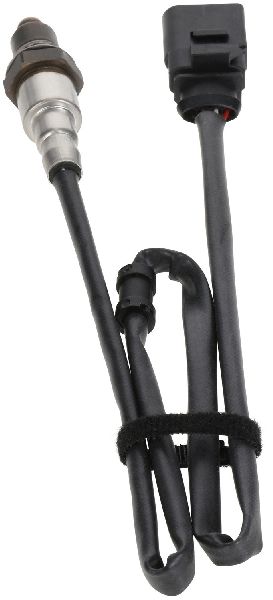
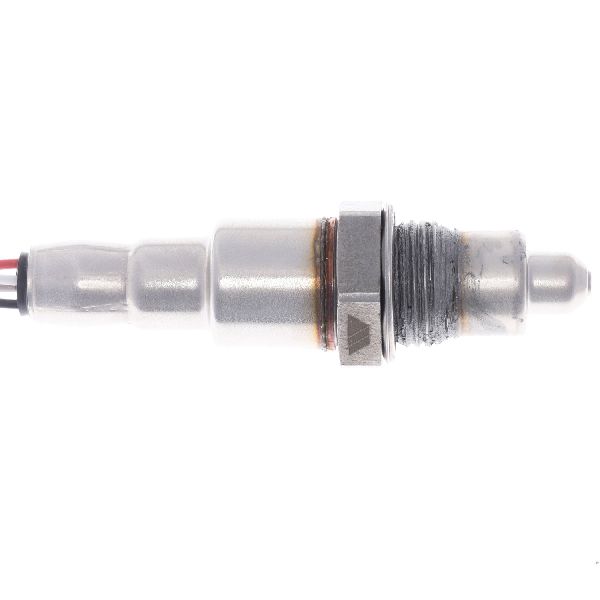
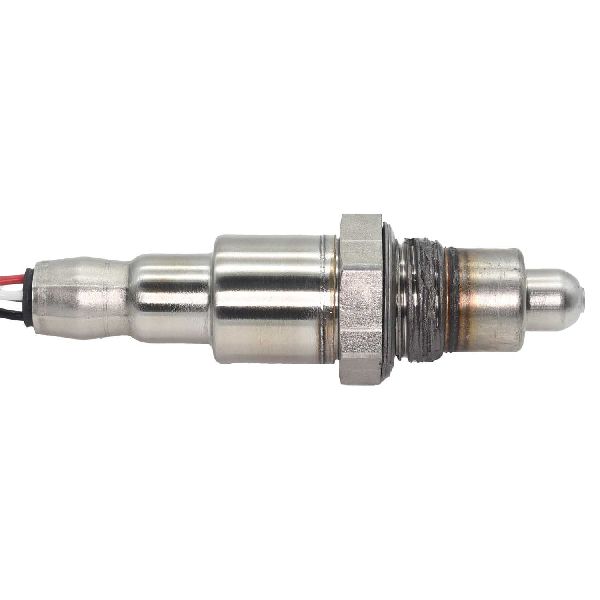
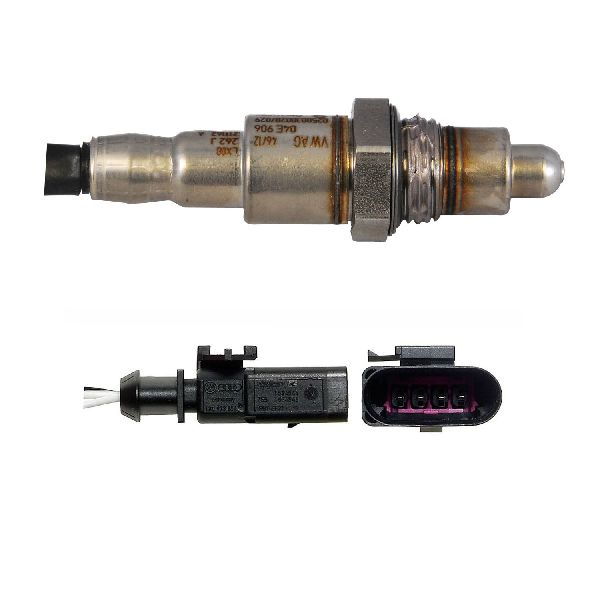
(OEM #Varies by engine. Example for 1.8T/2.0T: 06K-906-262-CE. Example for 2.5L: 1K0-998-262-T.)— This sensor is responsible for reporting the converter's efficiency. It can fail and send false readings, making it a common misdiagnosis.
Trusted brands: Bosch, Denso, NTK
OEM price range: $120-$200
Aftermarket price range: $60-$150
Related Codes That Often Appear With This One
- P0300-P0304 — Misfire codes (P0300 for random, P0301-P0304 for specific cylinders) indicate that unburnt fuel may be entering the exhaust and damaging the catalytic converter.
- P0171 or P0172 — Fuel trim codes (P0171 System Too Lean, P0172 System Too Rich) point to an underlying engine management issue that can lead to catalytic converter failure over time.
Technical Service Bulletins (TSBs) & Recalls
- VW TSB 01-20-01: While this TSB specifically mentions the 2018-2019 Atlas for P0420/P0430, it demonstrates a precedent for VW issuing ECM software updates to improve catalytic converter durability and reduce thermal stress. It advises that both hardware (new converter) and software updates should be performed together. This strategy could be relevant for other VW models experiencing premature converter failure.
Platform-Specific Known Issues
- Flex Pipe Failure: The most common vehicle-specific issue leading to P0420 on this platform is a cracked exhaust flex pipe. A user on vwvortex.com with a 2.5L Jetta (platform mate) reported solving their persistent P0420 by having an exhaust shop weld in a new flex pipe after finding a leak during a smoke test.
- Owner Experience: O2 Sensor Replacement Not Enough: A user on the Ross-Tech forums with a 2016 Golf Sportwagen (1.8T engine) reported getting a P0420 code at 105k miles. They first replaced the rear oxygen sensor, but the code returned, confirming their suspicion that the catalytic converter itself had failed. This is a common story: replacing the sensor is a valid diagnostic step, but often the converter is the ultimate point of failure.
Mechanic-Grade Diagnostic Values
- Upstream O2 Sensor (Sensor 1) Voltage — expected: Rapidly fluctuating between approximately 0.1V - 0.3V (lean) and 0.8V - 0.9V (rich) at steady RPM.. Failure: A flat or very slow-to-respond signal.
- Downstream O2 Sensor (Sensor 2) Voltage — expected: A relatively steady voltage, typically around 0.45V to 0.7V, when the catalyst is hot and working.. Failure: If the voltage mimics the rapid switching of the upstream sensor, the catalyst is inefficient. If the voltage is stuck near 0V, it often indicates an exhaust leak introducing unmetered oxygen.
- Downstream O2 Sensor Manual Test — expected: When a vacuum leak is induced, the sensor voltage should drop to ~0.1V (100mV). When a rich condition is induced (e.g., with propane), the voltage should swing high towards 0.9V.. Failure: Sensor does not respond or fails to reach the high and low ends of its voltage range, indicating it is 'lazy' or has failed.
- Mode $06 Catalyst Monitor Test — expected: Using a capable scan tool, look for Test ID (TID) $21 or similar for the catalyst monitor. The tool will display a test value and a maximum or minimum threshold. A passing test indicates the ECU's last check of the catalyst was successful.. Failure: The test value exceeds the manufacturer's threshold, resulting in a 'Fail' status for that monitor, which will set a pending or active P0420 code.
Hidden / Shadow Codes Worth Checking
- Mode $06, TID $21 (Catalyst Monitor Bank 1): This is not a trouble code but a raw data parameter from an onboard diagnostic test. It shows the measured efficiency value of the catalytic converter from the last time the monitor ran. Technicians compare this value against the manufacturer's specified maximum limit to see how close the converter is to failing, even before a code is set. (see via A professional scan tool with Mode $06 capability (like VCDS, Autel, Launch, etc.). This data is not typically visible on basic code readers.)
Scan Tool Commands That Help
- VCDS (VAG-COM) or equivalent: Catalyst Readiness Script / Basic Settings Group 046 — After a repair, a technician can run the catalyst readiness test to force the onboard monitor to run and confirm the fix. The function in Basic Settings will start the test, requiring the tech to hold the engine at a specific RPM and temperature until the test completes and shows 'CAT B1 OK' or 'Not OK'.
- Generic OBD-II Scan Tool with Live Data: Graphing O2 Sensor B1S1 vs B1S2 — This is the primary diagnostic step. Graphing both sensors simultaneously provides a clear visual representation of catalyst function. A working cat will show a rapidly switching upstream sensor and a steady downstream sensor. A failed cat will show the downstream sensor mirroring the upstream.
Wiring & Ground Locations
- Main Engine/Transmission Ground — Typically a braided strap from the chassis frame horn to the transmission case. Also, check the main negative battery cable connection to the body, often found under the battery tray.. A poor engine ground can create a voltage offset, causing sensor readings (including O2 sensors) to be skewed. The ECU may interpret this incorrect data as a component failure, potentially triggering a false P0420.
- G15 / Cylinder Head Ground — On many VW engines, a key ground point is located on top of the cylinder head, often near the ignition coils. (Note: Specific location from source is for a prior generation, but is a common VW practice).. This ground is critical for ignition components. A poor connection here could lead to weak spark or intermittent misfires, which can send unburnt fuel into the exhaust and damage the catalytic converter over time.
Real Owner Repair Stories
- CtrlAltDefeatTV on YouTube (Toyota Prius (demonstrates a common P0420 scenario applicable to many vehicles)) — P0420 check engine light returned 30,000 miles after installing an aftermarket catalytic converter.
❌ Tried (didn't work) Replacing the catalytic converter (the aftermarket unit failed prematurely), a straight spark plug non-fouler/spacer did not work.
✅ What actually fixed it Installing a 90-degree elbow O2 sensor spacer on the downstream sensor. This pulled the sensor partially out of the direct exhaust stream, smoothing its readings enough to prevent the ECU from triggering the P0420 code. This is a workaround, not a true repair of the catalyst's efficiency, but it successfully turned off the light.
"I Checked Everything" — The Actual Cause
- If a smoke test does not reveal any exhaust leaks but the downstream O2 sensor voltage on a scan tool is stuck near zero volts (e.g., < 0.1V), it is a strong indicator of a small leak. This leak, often a pinhole crack in the flex pipe or a bad gasket, allows oxygen to be sucked into the exhaust stream, which the sensor reads as an extreme lean condition. The leak may be too small to be obvious during a smoke test or may only open up when the exhaust metal is hot and expanded.
Model Year Variations Within This Range
- 2013-2014 (Primarily): The 2.5L 5-cylinder engine was the base engine during these years. It uses port fuel injection, which is less susceptible to intake valve carbon buildup compared to the later turbo engines.
- 2014-2017: The 1.8T and 2.0T TSI engines became standard. These engines use direct injection (DI). While more efficient, DI can lead to carbon buildup on the back of the intake valves over time. Severe carbon buildup can affect airflow and combustion, potentially leading to conditions (like misfires) that can damage the catalytic converter.
Helpful Videos
We Have This Part in Stock



The information in this article is provided for general reference and educational purposes only. Vehicle specifications, procedures, and part compatibility can vary by production date, trim level, and region. Always consult your vehicle's factory service manual and verify part numbers before purchasing or performing repairs. Safety-critical components such as airbags, seat belts, and braking systems should be installed by a qualified professional.
- Volkswagen BEETLE:
- 🎬 Helpful Videos
- 🛍️ Shop This Part
- What's Unique About the 2013-2017 Volkswagen BEETLE
- Diagnostic Flowchart
- Symptoms You May Notice
- Most Likely Causes
- Rare But Worth Checking
- Diagnosis Steps
- Parts You'll Likely Need
- Related Codes That Often Appear With This One
- Technical Service Bulletins (TSBs) & Recalls
- Platform-Specific Known Issues
- Mechanic-Grade Diagnostic Values
- Hidden / Shadow Codes Worth Checking
- Scan Tool Commands That Help
- Wiring & Ground Locations
- Real Owner Repair Stories
- "I Checked Everything" — The Actual Cause
- Model Year Variations Within This Range
- 🎟️ Get 5% Off