

P0430 on 2006-2012 Mitsubishi Eclipse: Catalyst Efficiency Bank 2 Causes and Fixes
On the 2006-2012 Eclipse with the 3.8L V6, code P0430 almost always means the Bank 2 catalytic converter has failed. Bank 2 is the converter located at the front of the engine bay, near the radiator. While an O2 sensor or exhaust leak is possible, the converter itself is the most common failure point. Owners on forums like club4g.org frequently confirm this diagnosis. Expect to spend $400-$700 on a new aftermarket converter, plus labor.
- P0430 on your Eclipse points to a problem with the catalytic converter on the front (radiator side) of the engine.
- The most likely cause is a failed catalytic converter, which is a common issue on these cars.
- Before replacing the expensive converter, it's wise to rule out a cheaper fix like a bad O2 sensor or an exhaust leak.
- Always resolve any engine misfires or fuel mixture problems before installing a new catalytic converter to prevent damaging the new part.
- For 2006 models, verify that emissions recall EMR-06-002 has been completed.
What's Unique About the 2006-2012 Mitsubishi Eclipse
The 2006-2012 Eclipse (4G) with the 3.8L V6 is known for having its catalytic converters fail as the vehicle ages. While the code itself is standard, the high frequency of actual converter failure is a common theme among owners. For the 2006 model year specifically, Mitsubishi issued a recall (EMR-06-002) and a warranty extension (TSB-13-15-001) for catalytic converter issues on V6 models. The TSB was for codes P0421/P0431 ('Warm Up Catalyst Efficiency') and notes the cause as potential catalyst layer separation due to production variations. The recall involved a PCM reprogram to prevent false triggers. However, given the age of these vehicles now, a P0430 code is highly likely to indicate a legitimate converter failure due to age and mileage.
Symptoms You May Notice
- Check Engine Light is on
- Failure to pass an emissions test
- Reduced engine power and acceleration if the converter is clogged
- A sulfur or "rotten egg" smell from the exhaust
- Slight decrease in fuel economy
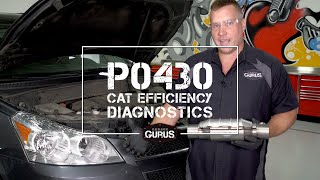
- Immediately replacing the oxygen sensors without diagnosis. While O2 sensors can fail, the catalytic converter itself is the more common culprit for P0430 on this vehicle. A proper diagnosis by observing live sensor data is crucial to avoid replacing good parts. 🎬 Watch: A deep dive into P0430 catalyst efficiency diagnostics.
Most Likely Causes
- Failed Bank 2 Catalytic Converter 🔴 High Probability Catalytic converters have a finite lifespan and fail from age and mileage. They can also be damaged by engine issues like misfires or burning oil, which send unburnt fuel and contaminants into the exhaust, overheating the converter. TSB-13-15-001 specifically mentions that catalyst layer separation can occur on these models.
How to confirm: Use a scan tool to monitor O2 sensor data; the Bank 2 downstream sensor (Sensor 2) voltage should be stable and high (e.g., >0.6V), while the upstream (Sensor 1) fluctuates rapidly. If the downstream sensor mimics the upstream's fluctuations, the converter is not working. An infrared thermometer can also be used; the outlet of a working converter should be at least 100°F (38°C) hotter than the inlet.
Typical fix: Replace the Bank 2 (front) catalytic converter and exhaust gaskets.
Est. part cost: $400-$700 - Faulty Oxygen (O2) Sensor 🟡 Medium Probability O2 sensors also wear out over time. A lazy or failing downstream (post-catalyst) sensor can send incorrect data to the ECM, falsely indicating a bad converter.
How to confirm: Monitor live sensor data with a scan tool. A faulty downstream sensor may show erratic or flat-lined voltage. The easiest test is to swap the downstream O2 sensors from Bank 1 and Bank 2 (if they are identical and accessible). If the code changes to P0420 (Bank 1), the sensor is the problem.
Typical fix: Replace the Bank 2, Sensor 2 (downstream) oxygen sensor. It is often recommended to replace both downstream sensors at the same time.
Est. part cost: $50-$120 - Exhaust Leak ⚪ Low Probability Rust and corrosion can cause leaks at exhaust manifold gaskets, flex pipes, or flange connections. These leaks allow oxygen to enter the exhaust, which can confuse the O2 sensors and trigger a false code.
How to confirm: Visually inspect the exhaust system from the engine to the catalytic converter for cracks or black soot marks indicating a leak. A shop can perform a smoke test to pinpoint the exact location of a small leak.
Typical fix: Replace the leaking gasket or damaged exhaust component.
Est. part cost: $20-$200
Rare But Worth Checking
- Engine Misfires or Fuel System Issues: This is often the root cause of a catalytic converter failure. Unaddressed misfires (from bad spark plugs or coils) or a rich fuel condition (from a leaking injector) will destroy a new catalytic converter quickly. Always check for and resolve other engine codes (like P0300-P0306) before replacing a converter.
Diagnosis Steps
- Scan for Codes: Use an OBD-II scanner to confirm P0430 is present and check for any other codes. Address any misfire (P030x) or fuel system codes first.
- Inspect for Exhaust Leaks: Visually and audibly inspect the entire exhaust system for leaks, paying close attention to the exhaust manifold and the flanges before and after the Bank 2 converter.
- Analyze O2 Sensor Live Data: Use a scanner with live data capability. Observe the voltage graphs for Bank 2 Sensor 1 (upstream) and Bank 2 Sensor 2 (downstream). A good converter will show the upstream sensor fluctuating rapidly and the downstream sensor holding a relatively steady, high voltage. If the downstream sensor's graph mirrors the upstream sensor's, the converter has failed.
- Test the Oxygen Sensors: If the data is ambiguous, consider swapping the downstream sensors between Bank 1 and Bank 2. Clear the codes and drive the vehicle. If the code returns as P0420, the O2 sensor you moved is faulty.
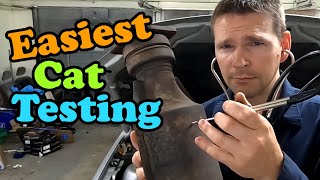
- Check Converter Temperature: Using an infrared thermometer, measure the temperature of the exhaust pipe going into and out of the catalytic converter after the engine is fully warmed up. The outlet should be at least 100°F (38°C) hotter than the inlet. 🎬 Watch: How to test a catalytic converter like a professional. If it's not, the converter is not working.
- Verify Engine Health: Ensure there are no underlying issues like misfires, vacuum leaks, or incorrect fuel pressure that could damage a new converter before making the replacement.
Parts You'll Likely Need
- Bank 2 Catalytic Converter
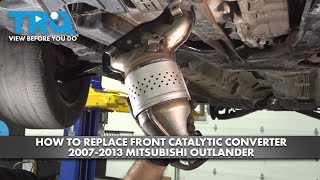
(OEM #1555A086)— This is the most common cause of P0430 on the 3.8L Eclipse. Bank 2 is the front manifold converter, closer to the radiator. 🎬 See this walkthrough for replacing the front catalytic converter.
Trusted brands: Walker Exhaust (e.g., part #50569), MagnaFlow, AP Exhaust
OEM price range: $1000-$1500
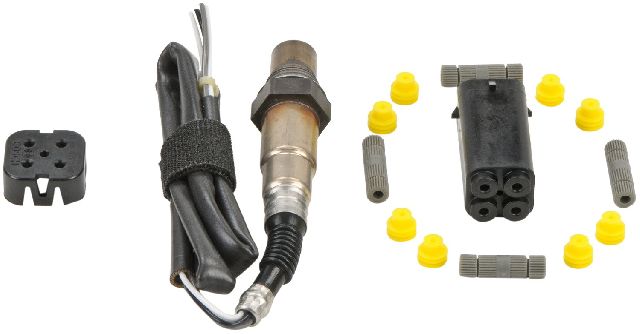
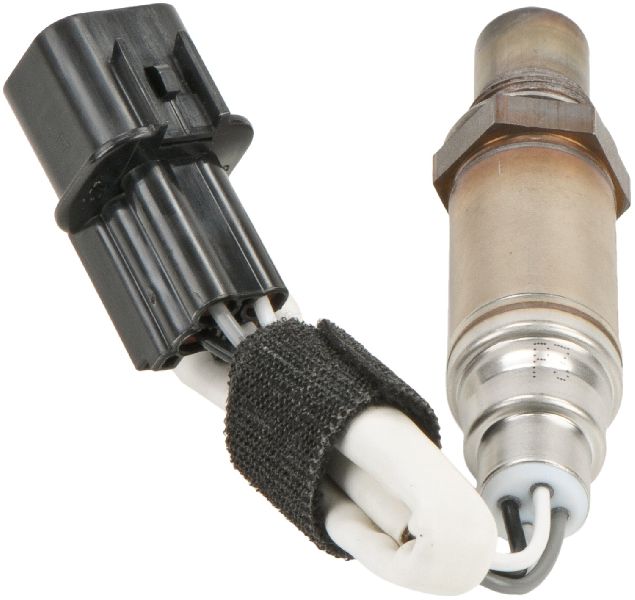
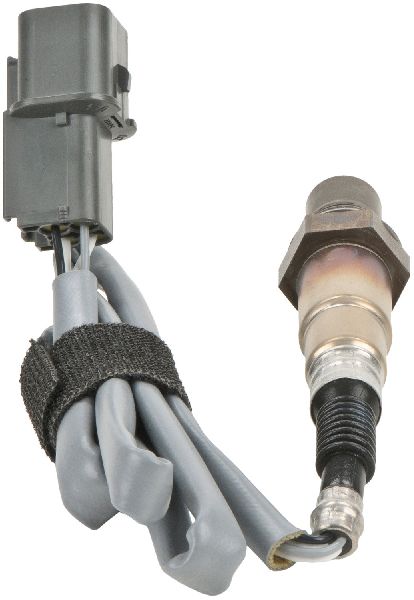
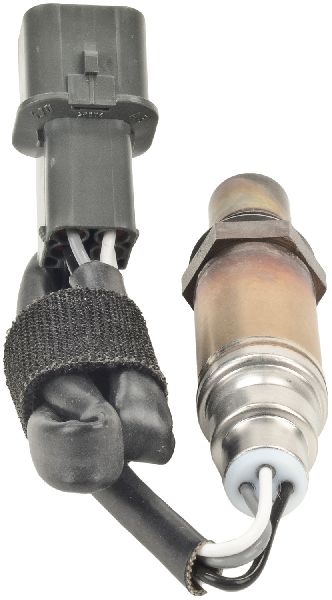
Aftermarket price range: $400-$700 - Bank 2, Sensor 2 (Downstream) Oxygen Sensor
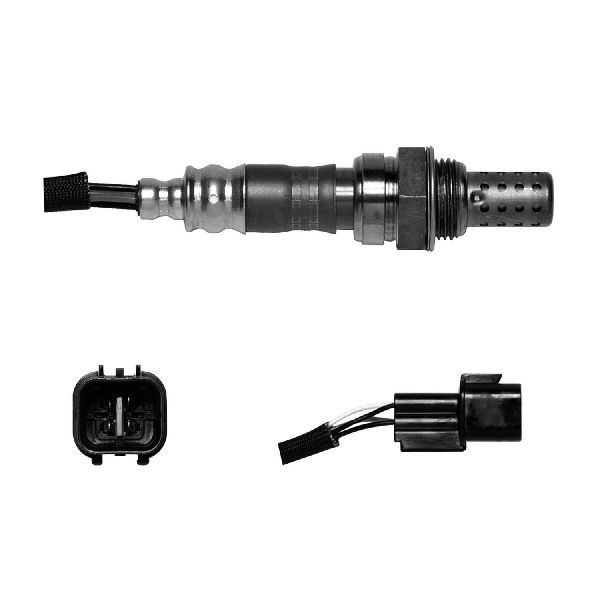
(OEM #MN158919)— The second most likely cause. This sensor provides the reading that the ECM uses to determine converter efficiency.
Trusted brands: Denso (OEM supplier, part #234-4274), Bosch, NGK/NTK
OEM price range: $100-$180
Aftermarket price range: $50-$120 - Exhaust Manifold Gasket
(OEM #1555A223)— This gasket must be replaced whenever the catalytic converter is removed to prevent exhaust leaks.
Trusted brands: Fel-Pro, Victor Reinz
OEM price range: $20-$40
Aftermarket price range: $10-$25
Related Codes That Often Appear With This One
- P0420 — P0420 is the equivalent code for Bank 1 (rear, firewall side). If both converters are of similar age and mileage, it's not uncommon for them to fail around the same time.
- P0150-P0161 — These codes relate to O2 sensor circuit faults for Bank 2. If you have one of these codes along with P0430, it points more strongly toward a faulty O2 sensor or its wiring.
- P0431 — This is a related code for 'Warm Up Catalyst Efficiency Below Threshold'. TSB-13-15-001 directly addresses this code alongside P0421 as being caused by catalyst degradation.
Technical Service Bulletins (TSBs) & Recalls
- TSB-13-15-001: Notes a warranty extension for catalytic converters on certain 2006-2008 Eclipse, Galant, and Eclipse Spyder V6 models for DTCs P0421 or P0431. It cites 'catalyst layer separation' as the cause and requires recall EMR-06-002 to be performed first on 2006 models.
- EMR-06-002: An emissions recall to reprogram the PCM on 2006 V6 models. The original software had parameters that could cause the converter to overheat and deteriorate when driven aggressively.
Platform-Specific Known Issues
- For the 2006 model year, a PCM software update was issued under recall EMR-06-002 to address potential false P0421/P0431 codes. While the codes are slightly different ('Warm Up Catalyst' vs 'Catalyst System'), it's worth checking if this recall was performed as it adjusts parameters that could affect catalyst monitoring.
- The platform mates, Mitsubishi Galant and Endeavor with the same 3.8L V6, are also widely reported to suffer from premature catalytic converter failure, indicating a systemic issue with the 6G75's exhaust system design or components across the model line.
Mechanic-Grade Diagnostic Values
- Upstream O2 Sensor (Bank 2, Sensor 1) Voltage — expected: Rapidly fluctuating between approximately 0.1V (lean) and 0.9V (rich) at idle and cruise.. Failure: A slow or flat-lined signal indicates a faulty sensor.
- Downstream O2 Sensor (Bank 2, Sensor 2) Voltage with a good converter — expected: A relatively stable voltage, typically between 0.4V and 0.8V, with minimal fluctuations.. Failure: If the voltage rapidly fluctuates and mirrors the pattern of the upstream sensor, the catalytic converter is not storing oxygen and has failed.
- Engine Coolant Temperature (ECT) Sensor Resistance — expected: Approximately 2,000 to 3,000 Ohms at 68°F (20°C).. Failure: No reading or a reading far outside this range indicates a faulty sensor, which can cause an incorrect fuel mixture and damage the catalytic converter.
Scan Tool Commands That Help
- Mitsubishi M.U.T.-III: Data List (Service Data Monitor) — Used to view live data streams from all engine sensors, including the critical upstream and downstream O2 sensors, to diagnose converter efficiency.
- Mitsubishi M.U.T.-III: Actuator Test — Allows the technician to force-operate various components like fuel injectors or solenoids to test their function, which can help rule out underlying causes of converter failure.
- Mitsubishi M.U.T.-III: ECU Reprogramming — Necessary for performing recalls like EMR-06-002, which updated the PCM logic for catalyst monitoring on 2006 models.
Wiring & Ground Locations
- Engine Ground Strap (Firewall to Engine) — A heavy ground strap connects the engine to the chassis. On the 3.8L, a key ground is a strap near the front motor mount.. A corroded or loose main engine ground can cause erratic voltage and sensor readings throughout the engine management system, potentially leading to false sensor codes or incorrect data for the catalyst monitor. Cleaning all major ground points is a low-cost, high-impact preventative and diagnostic step.
- Chassis Grounds (Engine Bay) — Multiple ground points are located on the strut towers and firewall. One is in the back right-hand corner over the strut tower, another is by the passenger side strut tower, and several are behind the ECU assembly.. The ECU and its sensors rely on clean, stable ground connections. A video for the 4G Eclipse highlights multiple grounds that can become corroded over time, leading to strange codes and running issues.
- G10 (Rear of Engine) — A wiring diagram for the 2007 Eclipse 3.8L indicates a ground point designated 'G10' at the rear of the engine.. This ground point is shared by several engine components. While not directly tied to the O2 sensor circuit in the diagram, a poor connection here could introduce electrical noise affecting the PCM's interpretation of sensor data.
Real Owner Repair Stories
- club4g.org forum user (2007 Mitsubishi Eclipse GT (3.8L V6)) — P0430 code returned after replacing the catalytic converter.
❌ Tried (didn't work) Replacing the Bank 2 catalytic converter, Replacing the O2 sensors
✅ What actually fixed it The user discovered a badly corroded and frayed main ground strap between the engine and the chassis. After cleaning the contact points and replacing the strap, the code did not return. The poor ground was causing erratic sensor readings that the ECU misinterpreted as a failed converter. - mitsubishi-forums.com user (2007 Mitsubishi Eclipse GT (3.8L V6)) — P0430 code present.
❌ Tried (didn't work) Using an O2 sensor spacer (non-fouler) on the downstream sensor.
✅ What actually fixed it The user ultimately had to replace the Bank 2 (front) catalytic converter. They noted that while the spacer trick is often suggested online, it did not work for them and the only permanent solution was the converter replacement.
OEM Part Supersession History
1555A086→1555A756— Standard part lifecycle update. 1555A086 is the widely cited number for the Bank 2 converter for this generation. Part supplier databases show 1555A756 as the current superseding number.
Model Year Variations Within This Range
- 2006: The 2006 model year was subject to Emissions Recall EMR-06-002, which involved a PCM reprogram. The original software had parameters that could cause the converter to overheat and deteriorate prematurely. Any 2006 model should have its VIN checked to ensure this recall was performed before diagnosing a P0430.
Diagnostic Flowchart
Other Known Issues on This Vehicle
Issues unrelated to this code that are worth knowing about as an owner of this generation:
- Clear Coat / Paint Peeling 🟠 Medium — Very common, especially on darker colors and cars exposed to high UV/sunlight. Can start appearing after 5-10 years.
- Dashboard Material Cracking/Peeling 🟠 Medium — Common issue where the top layer of the dashboard material cracks, lifts, or gets sticky, particularly near the windshield defrost vents and passenger airbag.
- ABS Unit Internal Valve Seizure 🔴 High — Affects 2006-2009 models. Corrosion inside the ABS unit can cause valve seizure, leading to increased brake pedal travel and reduced braking. (Ref: NHTSA Recall 08V454000)
- Manual Transmission Shifting Difficulty 🟡 Low — A notable number of owners have reported issues with shifting gears or clutch-related noises on manual transmission models across multiple years.
Used vs. New Parts: Buying Guide for This Vehicle
When a used part is the smart pick: For this repair, sourcing used parts is generally not recommended for the catalytic converter or oxygen sensors due to their nature as wear items. A used part may have very little life left and could cause the code to return quickly. Used parts may be considered for associated hardware like heat shields or mounting brackets if they are damaged during removal.
Donor-vehicle mileage cap: roughly under 50000 miles for the part to have meaningful remaining life.
What to inspect on the donor part:
- For a catalytic converter, check for any rattling (indicates broken internal substrate), dents, or heavy corrosion.
- Visually inspect the honeycomb structure from the inlet/outlet if possible; it should be intact and not melted or clogged.
- For O2 sensors, there is no reliable visual cue. Buying used is a gamble.
OEM-only on this vehicle (don't cheap out):
- Catalytic Converter: While expensive, the OEM converter is the most reliable fix. Some owners report that cheaper, non-CARB compliant aftermarket converters do not have sufficient catalyst material to satisfy the ECU's monitoring, leading to the P0430 code returning.
Aftermarket brands forum-validated for this vehicle:
- Oxygen Sensors: Denso (part #234-4274) is the OEM supplier and is a highly recommended replacement.
- Catalytic Converters: MagnaFlow and Walker are frequently mentioned as higher-quality aftermarket options that are more likely to work correctly than no-name budget brands.
Brands owners have reported issues with on this vehicle:
- Unbranded, ultra-low-cost catalytic converters from online marketplaces are frequently reported to fail within a year or fail to clear the code from the start.
Real Owner Stories
Aggregated from forums and TSBs cited above. Mileages and costs reflect what owners reported in those sources.
2004 Mitsubishi Montero 3.8L Engine
Symptoms: Check Engine Light with DTC P0431 (Catalyst System Efficiency Low Bank 2). The code would return every other day after being cleared.
What fixed it: The owner suspected carbon buildup due to a vacuum leak causing excessive fuel delivery. They used CataClean to excel the carbon clean-up process.
Source hint: owner_reports: The Mitsubishi Montero Channel
2007 Mitsubishi Eclipse GT 3.8L V6
Symptoms: Check Engine Light with P0430 code.
What fixed it: Replacement of the catalytic converter; forum consensus indicates O2 sensor replacement rarely fixes this specific issue on this platform.
Source hint: mitsubishi-forums.com: https://mitsubishi-forums.com/threads/2007-eclipse-gt-p0430-code.45826/
2006 Mitsubishi Eclipse V6
Symptoms: P0430/P0420 codes; potential for converter to overheat and deteriorate when driven aggressively.
What fixed it: PCM reprogramming under recall EMR-06-002 followed by catalytic converter replacement if catalyst layer separation occurred per TSB-13-15-001.
Source hint: TSB-13-15-001 and Recall EMR-06-002
Related OBD-II Codes
Frequently Asked Questions
Is there a recall for the P0430 code on my 2006 Mitsubishi Eclipse V6?
My 2007 Eclipse GT has a P0430 code; should I just replace the O2 sensors first?
How can I tell if my Bank 2 catalytic converter is actually bad on my 3.8L V6?
Does the P0430 code affect the Mitsubishi Galant or Endeavor as well?
Can an exhaust leak cause a P0430 code on my Eclipse?
Helpful Videos
We Have This Part in Stock


The information in this article is provided for general reference and educational purposes only. Vehicle specifications, procedures, and part compatibility can vary by production date, trim level, and region. Always consult your vehicle's factory service manual and verify part numbers before purchasing or performing repairs. Safety-critical components such as airbags, seat belts, and braking systems should be installed by a qualified professional.
- Mitsubishi Eclipse:
- 🎬 Helpful Videos
- 🛍️ Shop This Part
- What's Unique About the 2006-2012 Mitsubishi Eclipse
- Symptoms You May Notice
- Most Likely Causes
- Rare But Worth Checking
- Diagnosis Steps
- Parts You'll Likely Need
- Related Codes That Often Appear With This One
- Technical Service Bulletins (TSBs) & Recalls
- Platform-Specific Known Issues
- Mechanic-Grade Diagnostic Values
- Scan Tool Commands That Help
- Wiring & Ground Locations
- Real Owner Repair Stories
- OEM Part Supersession History
- Model Year Variations Within This Range
- Diagnostic Flowchart
- Other Known Issues on This Vehicle
- Used vs. New Parts: Buying Guide for This Vehicle
- Real Owner Stories
- 2004 Mitsubishi Montero 3.8L Engine
- 2007 Mitsubishi Eclipse GT 3.8L V6
- 2006 Mitsubishi Eclipse V6
- Related OBD-II Codes
- Frequently Asked Questions
- 🎟️ Get 5% Off