

P0430 on 2020-2021 Lincoln Navigator: Catalyst Efficiency Causes and Fixes
For a 2020-2021 Lincoln Navigator, code P0430 often points to a failing Bank 2 catalytic converter, but can also be triggered by high-sulfur fuel as noted in Lincoln TSB 22-2260 or a software issue covered by Emission Recall 24E13. Before replacing the expensive converter (approx. $2,400+), a dealer should first check for the recall and then consider the TSB's de-sulfation procedure. Exhaust leaks and faulty oxygen sensors are less common but possible causes.
- P0430 means the driver's side (Bank 2) catalytic converter is not working efficiently.
- For this specific Navigator, check for the fuel sulfur issue noted in TSB 22-2260 before replacing any parts.
- The most common fix is replacing the Bank 2 catalytic converter, which is an expensive repair.
- Always check for exhaust leaks and test the oxygen sensors before condemning the converter.
- If replacing parts, using OEM (Motorcraft) components is often recommended to avoid compatibility issues.
What's Unique About the 2020-2021 Lincoln NAVIGATOR

For the 2020-2021 Expedition and Navigator platform, Ford and Lincoln have issued specific Technical Service Bulletins (TSBs) and an Emission Recall. TSB 22-2260 acknowledges that P0420 and P0430 codes can be triggered by high sulfur content in fuel, requiring a special de-sulfation drive cycle. Additionally, Emission Recall 24E13 was issued because the PCM software can be overly sensitive and falsely trigger a P0430 code; the fix is a simple software update at a dealership. These two issues are critical, vehicle-specific details that must be investigated before assuming the catalytic converter has failed.
Diagnostic Flowchart
Tap your situation to follow the diagnostic path that matches what you're seeing on this vehicle.
Symptoms You May Notice
- Check Engine Light (Malfunction Indicator Lamp) is illuminated
- Vehicle will fail an emissions test
- Reduced fuel efficiency
- In some cases, reduced engine power or acceleration
- A sulfur or 'rotten egg' smell from the exhaust, especially if the converter is clogged or failing
- Immediately replacing the oxygen sensors without testing them. While an O2 sensor can be the cause, it's less common than a failed converter for this code. A proper diagnosis of sensor activity should be performed first.
- Replacing the catalytic converter without first checking for applicable TSBs or Recalls. For this vehicle, performing the de-sulfation procedure (TSB 22-2260) or the PCM software update (Recall 24E13) should be the first steps. 🎬 See how to avoid expensive repairs with these simple fixes.
Most Likely Causes

- Failing or Degraded Catalytic Converter (Bank 2) 🔴 High Probability While converters are wear items, failure on a newer vehicle is often secondary to another issue like engine misfires or contamination. However, TSBs confirm that even on low-mileage vehicles, the converter may need replacement if the de-sulfation procedure fails.
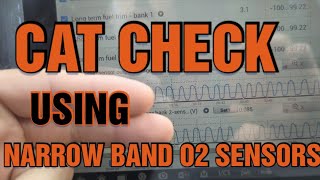
How to confirm: Use a scan tool to monitor upstream (B2S1) and downstream (B2S2) oxygen sensor data for Bank 2. The upstream sensor should fluctuate rapidly, while the downstream sensor should hold a relatively steady voltage. If the downstream sensor mimics the upstream sensor's fluctuations, the converter is not storing oxygen and has likely failed. An infrared thermometer can also be used; the outlet of a working converter should be significantly hotter than the inlet.
Typical fix: Replace the Bank 2 (driver's side) catalytic converter assembly.
Est. part cost: $2000-$2500 - High Sulfur Content in Fuel 🟡 Medium Probability This is a documented issue for this specific vehicle and year range, as per TSB 22-2260. The catalyst materials are sensitive to fuel quality, causing a temporary drop in efficiency that can be mistaken for converter failure.
How to confirm: This is confirmed by following the TSB procedure as a primary diagnostic step after checking for recalls and other codes. The technician will record Mode 6 data before and after the drive cycle to see if catalyst oxygen storage values improve.
Typical fix: Follow the de-sulfation procedure outlined in TSB 22-2260. The drive cycle involves warming the engine, performing 3-4 wide-open throttle accelerations from ~30 mph to 65 mph, followed by 5 minutes of varied driving between 50-65 mph, and then idling for one hour. If this fails, the TSB directs the technician to replace the converter.
Est. part cost: $0 - Faulty Oxygen (O2) Sensor ⚪ Low Probability O2 sensors can fail, but on modern vehicles, they are more likely to trigger their own specific codes (like heater circuit faults). However, a lazy or biased downstream sensor can still incorrectly report poor catalyst efficiency. It is a common misdiagnosis to replace sensors when the converter is the actual problem.
How to confirm: Test the O2 sensors' response rate and voltage range using a professional scan tool. Compare the readings from Bank 2 sensors to the Bank 1 sensors to check for discrepancies. A common diagnostic trick is to swap the downstream sensors between Bank 1 and Bank 2; if the code changes to P0420, the sensor is faulty.
Typical fix: Replace the faulty oxygen sensor. It's the downstream (post-catalyst) sensor that is responsible for monitoring catalyst efficiency.
Est. part cost: $50-$180 - Exhaust System Leak ⚪ Low Probability Leaks can occur at gaskets or flex pipes. An exhaust leak between the engine and the catalytic converter can introduce extra oxygen, confusing the O2 sensors and leading to a false P0430 code. A user on a Ford F-150 forum with the same engine noted P0420/P0430 codes appeared with rain, suggesting a moisture-related electrical short or an exhaust leak that was more pronounced when components were cold/wet.
How to confirm: Perform a visual inspection of the exhaust system from the manifold to the post-catalyst O2 sensor. Look for black soot, cracks, or holes. A smoke test is the most effective way to find small leaks.
Typical fix: Repair the leak by replacing the gasket or welding the cracked component.
Est. part cost: $20-$200
Rare But Worth Checking
- Engine Misfires or Rich Fuel Condition:
Diagnosis Steps

- Check for Recalls: First, verify with a Lincoln dealer if Emission Recall 24E13 is open for your vehicle. If so, have the PCM software updated, as this may be a false code.
- Check for other DTCs. Address any misfire (P030x), fuel system, or O2 sensor heater codes first, as these can cause or be related to the P0430 code.
- Visually inspect the Bank 2 exhaust system for any signs of leaks, especially around the exhaust manifold and catalytic converter flanges. A smoke test is the most reliable method.
- If no other codes or leaks are present, follow the diagnostic procedure in TSB 22-2260. This involves using a scan tool (like Ford's FDRS) to record Mode 6 data for catalyst efficiency.
- Perform the De-Sulfation Drive Cycle as prescribed in TSB 22-2260. This involves a series of specific acceleration and cruising events designed to burn off sulfur deposits.
- After the drive cycle, re-check Mode 6 data. If catalyst efficiency has improved and is within spec (a value less than 0.5 is the target), the issue is resolved. If not, the TSB advises replacing the catalytic converter.
- If the TSB does not apply or does not resolve the issue, confirm the converter failure by observing live O2 sensor data. A healthy system will show the B2S1 sensor switching rapidly (~0.1V-0.9V), while the B2S2 sensor remains stable (>0.5V). If B2S2 mirrors B2S1, the converter has failed and requires replacement.
Parts You'll Likely Need

- Bank 2 Catalytic Converter Assembly
(OEM #JL7Z-5E212-R (supersedes JL7Z-5E212-A, JL7Z-5E212-K))— This is the most common required part for a persistent P0430 code after software updates, de-sulfation, and other diagnoses have been performed. It is the driver's side converter.
Trusted brands: Motorcraft, Walker Exhaust, MagnaFlow
OEM price range: $2400-$2500
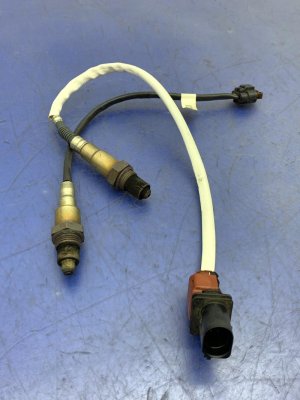
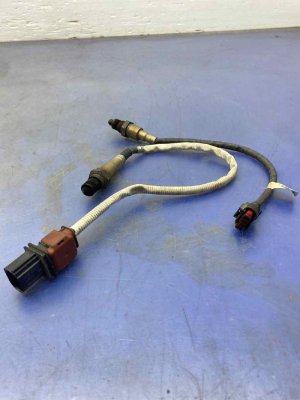
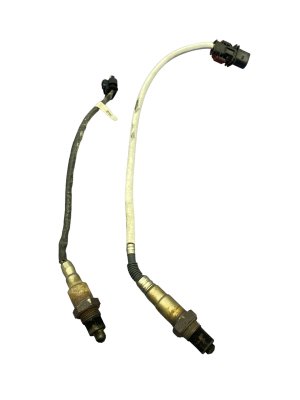
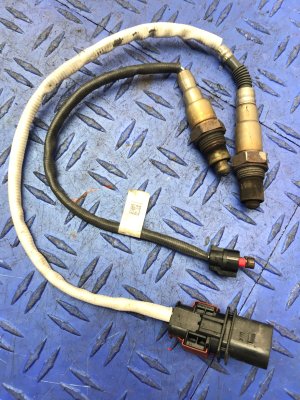
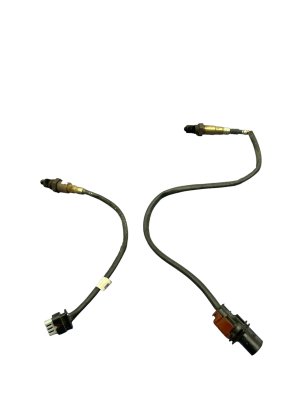
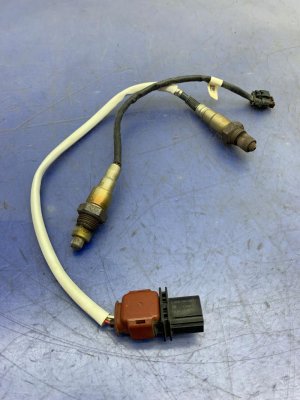
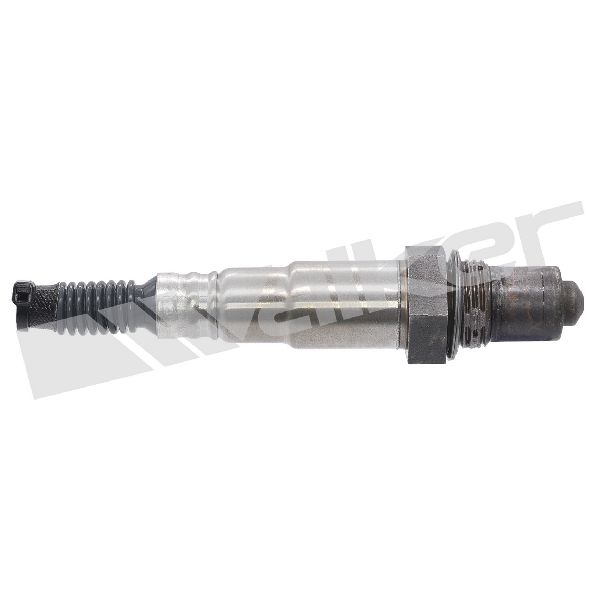
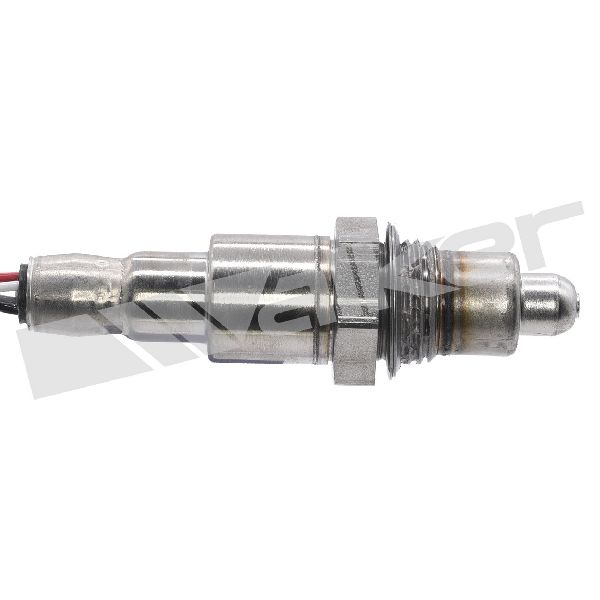
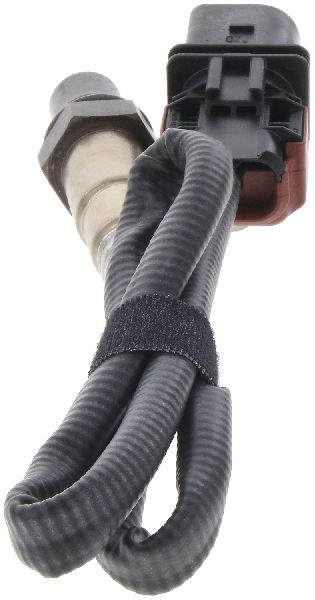
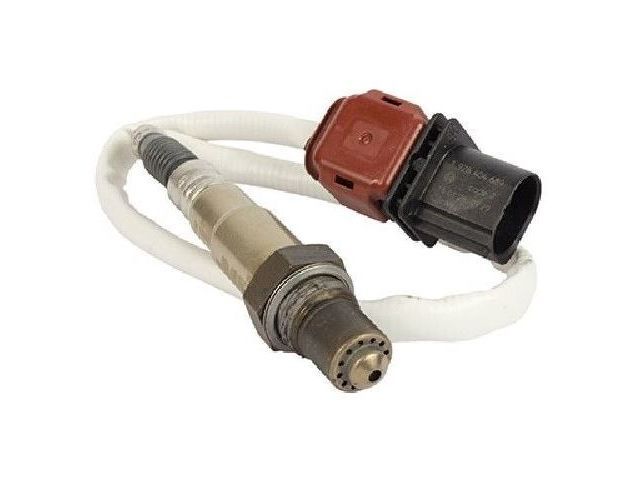
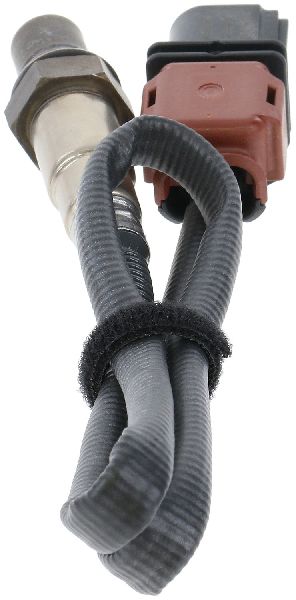
Aftermarket price range: $400-$800 - Downstream Oxygen Sensor (Bank 2, Sensor 2) — This sensor is responsible for monitoring the converter's efficiency. If it becomes faulty or 'lazy,' it can trigger the code. It's a less common cause but much cheaper to replace than the converter. A YouTube video on a 2015 Navigator with P0430 shows the process of swapping sensors for diagnosis.
Trusted brands: Motorcraft, Bosch, Denso, NTK
OEM price range: $120-$170
Aftermarket price range: $50-$90
Related Codes That Often Appear With This One
- P0420 — This is the identical code but for Bank 1 (passenger side). If both appear, it could point to a systemic issue like poor fuel quality affecting both catalytic converters, making the TSB for high-sulfur fuel a more likely cause.
- P030x (e.g., P0302, P0304, P0306) — These are cylinder-specific misfire codes for Bank 2. A persistent misfire can destroy a catalytic converter by sending unburned fuel into it. If you have a P0430 with misfire codes, the root cause is the misfire, and the converter is the resulting damage.
Technical Service Bulletins (TSBs) & Recalls

- TSB 22-2260: '...2020-2021 Expedition/Navigator vehicles may exhibit an illuminated malfunction indicator lamp (MIL) with diagnostic trouble codes (DTCs) P0420 and/or P0430 stored in the powertrain control module (PCM). This may be due to high sulfur content in the fuel.'
- TSB 22-2137: An earlier, superseded version of TSB 22-2260 that contains the same core information.
- Emission Recall 24E13: 'The affected vehicles have an On-Board Diagnostics (OBD) system that may falsely set the catalytic converter Diagnostic Trouble Code (DTC) P0430... causing the Malfunction Indicator Light (MIL) to illuminate even though a repair may be unnecessary.'
Platform-Specific Known Issues
- TSB 22-2260: Identifies that an illuminated MIL with DTC P0430 (and/or P0420) may be due to high sulfur content in the fuel. The prescribed action is to perform a specific de-sulfation service procedure before replacing parts.
- Emission Recall 24E13: Ford identified that the On-Board Diagnostics (OBD) system on 2018-2021 Expedition/Navigator vehicles may falsely set a P0430 code. The fix is a PCM software update performed by a dealer.
- Owner Experience: A YouTube video with a 2015 Navigator highlights the difficulty and expense of this repair, stressing the importance of using genuine Ford/Motorcraft parts to avoid recurring check engine lights after replacement.
Mechanic-Grade Diagnostic Values
- Downstream O2 Sensor (B2S2) Voltage at Idle/Steady Cruise — expected: Relatively stable voltage between 0.6V and 0.8V.. Failure: Voltage fluctuates rapidly, mimicking the upstream (B2S1) sensor, or is stuck low (near 0.1V) or high (near 0.9V).
- Upstream O2 Sensor (B2S1) Voltage — expected: Rapidly fluctuates between approximately 0.1V (lean) and 0.9V (rich) as the PCM adjusts fuel trim.. Failure: Slow to respond, or stuck at a specific voltage.
- Mode $06, Test ID $81 (Bank 2) — expected: The calculated value should be less than the maximum threshold. TSB 22-2260 specifies a target value of less than 0.5 after a successful de-sulfation procedure.. Failure: The test value exceeds the PCM's calibrated maximum limit, indicating the catalyst failed its last efficiency test.
- Catalytic Converter Temperature Differential — expected: The outlet pipe should be at least 100°F hotter than the inlet pipe on a fully warmed-up engine at idle.. Failure: Little to no temperature increase across the converter, indicating it is not chemically active.
Hidden / Shadow Codes Worth Checking
- Mode $06 Data (TID $81, CID $22): This is not a DTC, but the raw test data for the Bank 2 Catalyst Efficiency monitor. It provides the actual calculated efficiency value from the last drive cycle, which can confirm a borderline or definite failure before the MIL is commanded on. (see via A professional scan tool capable of displaying Mode $06 test results, such as the Ford IDS/FDRS or advanced aftermarket scanners.)
Scan Tool Commands That Help
- Ford IDS/FDRS: Catalyst Monitor Drive Cycle — To have the scan tool guide the technician through the specific driving procedure required to run the catalyst monitor test and populate Mode $06 data.
- Ford IDS/FDRS: Retrieve/Clear DTCs and Mode 6 Data — Used before and after the de-sulfation procedure in TSB 22-2260 to record the catalyst oxygen storage values and verify if the procedure was successful.
- Professional Scan Tools (Snap-on, Launch, etc.): Live Data Graphing (O2 Sensors) — To visually compare the upstream (B2S1) and downstream (B2S2) oxygen sensor waveforms. This is the primary method to visually confirm if the catalyst is storing oxygen.
Wiring & Ground Locations
- PCM Connector (C175B) — Under the hood on the passenger side. The O2 sensor signal and heater circuit wires run to this main connector.. A poor connection, corrosion, or damaged pin at this connector for the Bank 2 O2 sensor circuits could cause erratic readings and trigger a false P0430 code. A visual inspection of the connector and wiring harness is part of the pinpoint test procedure.
- Chassis Ground Points — Various locations in the engine bay and cabin kick panels. There is no single ground point for the O2 sensor heaters; they are grounded through the PCM. However, ensuring the PCM itself has a clean, tight ground connection (less than 1 ohm resistance to the battery negative terminal) is critical for all sensor readings.. A bad PCM ground can cause floating voltages and incorrect readings from all sensors, including the oxygen sensors, leading to a variety of false codes.
Real Owner Repair Stories
- Ford F150 Forum User (2015 F-150 3.5L EcoBoost) — P0420 and P0430 codes appeared only when it rained.
❌ Tried (didn't work) Clearing the codes.
✅ What actually fixed it The user found a hole in the exhaust resonator. While not the final confirmed fix in the thread, it was the next logical step. The rain-related onset strongly suggested either a water-induced electrical short in a connector or an exhaust leak that was more pronounced when the metal was cold and wet. Cleaning and applying dielectric grease to the O2 sensor connectors was the primary recommendation. - Ford F150 Forum User (2013 F-150 5.0L) — Persistent P0430 after multiple repairs.
❌ Tried (didn't work) Replacing both catalytic converters with aftermarket Magnaflow units., Replacing all four O2 sensors with Bosch parts., Replacing ignition coil on cylinder 5.
✅ What actually fixed it The final fix was not posted, but the diagnosis shifted to a root cause of a rich fuel condition (indicated by negative long-term fuel trims). A recommended next step was to perform a Keep Alive Memory (KAM) reset by disconnecting the battery, as Ford fuel trims may not relearn correctly after repairs. Another suggestion was to check for a leaking fuel injector, which could be causing the rich condition that set the P0430 code and would eventually destroy the new converters. - Ford Expedition Forum User (2018-2021 Expedition) — Check engine light with P0430 or P0420.
❌ Tried (didn't work) One user paid $1500 to replace a catalytic converter two years prior.
✅ What actually fixed it The user had the PCM software updated by a dealer's mobile service under Emission Recall 24E13. The user then questioned if their previous expensive catalytic converter replacement was actually necessary, as the recall addresses a condition where the OBD system can falsely set the P0430 code.
OEM Part Supersession History
JL7Z-5E212-A, JL7Z-5E212-K→JL7Z-5E212-R— Unspecified, but part supersessions are typically for design improvements, manufacturing process changes, or supplier changes. Given the TSBs and recalls related to catalyst performance, the change may be related to catalyst materials or construction.
Heads up: The parts are listed as direct replacements, so no incompatibility is expected when using the newest part number (JL7Z-5E212-R) on an older vehicle in the 2018-2021 range.
Helpful Videos
Used OEM Parts in Stock
New Aftermarket Parts Available

The information in this article is provided for general reference and educational purposes only. Vehicle specifications, procedures, and part compatibility can vary by production date, trim level, and region. Always consult your vehicle's factory service manual and verify part numbers before purchasing or performing repairs. Safety-critical components such as airbags, seat belts, and braking systems should be installed by a qualified professional.
- Lincoln NAVIGATOR:
- 🎬 Helpful Videos
- 🛍️ Shop This Part
- What's Unique About the 2020-2021 Lincoln NAVIGATOR
- Diagnostic Flowchart
- Symptoms You May Notice
- Most Likely Causes
- Rare But Worth Checking
- Diagnosis Steps
- Parts You'll Likely Need
- Related Codes That Often Appear With This One
- Technical Service Bulletins (TSBs) & Recalls
- Platform-Specific Known Issues
- Mechanic-Grade Diagnostic Values
- Hidden / Shadow Codes Worth Checking
- Scan Tool Commands That Help
- Wiring & Ground Locations
- Real Owner Repair Stories
- OEM Part Supersession History
- 🎟️ Get 5% Off