

P0430 on 2018-2023 Kia Stinger 3.3T: Catalyst Efficiency Bank 2 Causes and Fixes
P0430 on your Kia Stinger 3.3T means the passenger-side catalytic converter is inefficient. The most common causes are a failing catalytic converter or a bad downstream oxygen sensor. Before replacing the expensive converter, it is critical to rule out exhaust leaks and test the O2 sensors to avoid a costly misdiagnosis. Some owners have also reported this code appearing after installing aftermarket mid-pipes.
- P0430 points to a problem with the passenger-side catalytic converter.
- Do not immediately replace the catalytic converter. First, rule out cheaper and simpler problems like exhaust leaks and a faulty downstream O2 sensor.
- Always check for other engine codes (misfires, fuel trim). Fixing these underlying issues is necessary to prevent repeat failure of a new catalytic converter.
- Due to multiple possible part numbers, always confirm the correct catalytic converter and O2 sensor part numbers with a Kia dealership using your vehicle's VIN before ordering.
- Check your emissions warranty. Federal law mandates an 8-year/80,000-mile warranty on major emissions components like catalytic converters, which may still apply to your vehicle.
What's Unique About the 2018-2023 Kia Stinger
The Kia Stinger's Lambda II 3.3T is a twin-turbocharged, direct-injection (GDI) engine. These technologies produce significant power but also generate high exhaust temperatures, which places a great deal of stress on the catalytic converters over time. While the engine is generally considered reliable, the P0430 code suggests a failure in the emissions control system, which is a critical and often expensive component of this high-performance exhaust setup. Direct injection can also lead to carbon buildup on intake valves, which can affect engine performance and indirectly impact the catalytic converters if not maintained.
Symptoms You May Notice
- Check Engine Light is on
- Failure to pass an emissions inspection
- Reduced engine power or sluggish acceleration if the converter is clogged
- A sulfur or "rotten egg" smell from the exhaust
- Slight fluttering or rough idle in some cases.
- Replacing the catalytic converter when the actual problem is a less expensive downstream oxygen sensor.
- Replacing an oxygen sensor when there is an un-repaired exhaust leak throwing off the sensor's readings.
- Replacing catalytic converters or O2 sensors when the root cause is an engine performance issue (like a misfire or fuel trim problem) that is damaging the new parts.
Most Likely Causes
- Failing Catalytic Converter (Bank 2) 🔴 High Probability The twin-turbo engine generates high exhaust heat, which can degrade the catalytic converter's internal materials over its service life. Over time, the precious metals inside lose their ability to store oxygen and catalyze exhaust gases effectively. Some owners report primary cats failing at higher mileage.
How to confirm: After confirming O2 sensors are working correctly, a scan tool showing the downstream O2 sensor voltage fluctuating similarly to the upstream sensor indicates a bad converter. A mechanic can also perform a backpressure test or use an infrared thermometer to check the inlet vs. outlet temperature; the outlet should be significantly hotter. If it's hotter before the converter, it may be clogged.
Typical fix: Replace the Bank 2 (passenger side) catalytic converter.
Est. part cost: $1500-$2500+ - Failing Downstream Oxygen Sensor (Bank 2, Sensor 2) 🟡 Medium Probability Oxygen sensors are exposed to extreme heat and contaminants and have a finite lifespan. A faulty sensor can send incorrect data to the PCM, falsely triggering the P0430 code. It is a common diagnostic step to replace the O2 sensor before condemning the much more expensive converter.
How to confirm: Use a scan tool to graph the sensor's voltage. A healthy downstream sensor should show a relatively steady, slow-to-react voltage. If it's stuck at one voltage or fluctuating rapidly like the upstream sensor, it may be faulty. Also inspect wiring for damage, as chewed or broken wires can cause the same issue.
Typical fix: Replace the Bank 2 downstream oxygen sensor.
Est. part cost: $80-$200 - Exhaust System Leak 🟡 Medium Probability
How to confirm: Visually inspect the exhaust manifold, gaskets, and pipes on Bank 2 (passenger side) for cracks or black soot trails indicating a leak. A smoke test is the most effective way to find small leaks between the upstream and downstream O2 sensors. Leaks near flanges or gaskets are common points of failure.
Typical fix: Repair the leak by replacing the faulty gasket or exhaust component.
Est. part cost: $20-$300 - Engine Misfires or Fuel Mixture Issues ⚪ Low Probability
How to confirm: Check for other diagnostic trouble codes, especially misfire codes (P0300, P0304, P0305, P0306) or fuel trim codes (P0174, P2096). Unburned fuel from misfires can overheat and destroy a catalytic converter. A leaking fuel injector can also cause a rich condition that damages the catalyst.
Typical fix: Address the root cause of the misfire or fuel issue first (e.g., spark plugs, ignition coils, fuel injectors). The catalytic converter may also need replacement if it has been damaged.
Est. part cost: $50-$500+
Rare But Worth Checking
- PCM Software Issue: Occasionally, a manufacturer may release a software update to change the sensitivity of the catalyst monitoring parameters. Check with a Kia dealer for any available ECU updates. Kia has released ECU updates for other models to address emissions-related DTCs.
- Aftermarket Mid-pipes: Some owners on forums for the Stinger and its platform-mate, the Genesis G70, have reported triggering a P0430 or P0420 code after installing catless mid-pipes, even though the monitoring O2 sensors are located on the primary cats. This could be due to changes in exhaust flow dynamics or small leaks during installation.
Diagnosis Steps
- Check for Other Codes: Use an OBD-II scanner to check for any other codes. If you have misfire (P030x) or fuel trim (P017x, P209x) codes, diagnose and fix those first, as they are likely the root cause of the P0430.
- Inspect for Exhaust Leaks: Carefully inspect the exhaust system on the passenger side from the exhaust manifold to the downstream O2 sensor. Look for cracks, loose flanges, or black soot. A professional smoke test is the most reliable method to find leaks that can trick the O2 sensors.
- Analyze Oxygen Sensor Data: Use a scan tool with live data graphing. At a steady 2,500 RPM, observe the Bank 2 sensors. The upstream sensor (Sensor 1) should fluctuate rapidly. The downstream sensor (Sensor 2) should hold a relatively steady, higher voltage. If the downstream sensor is mirroring the upstream sensor's activity, the catalytic converter is not working.
- Test the Oxygen Sensor: If the sensor's readings are suspect (e.g., stuck at one voltage), test the sensor itself and its wiring. A bad O2 sensor heater circuit can also cause issues. Inspect wiring for any physical damage from road debris or rodents.
- Check for TSBs and ECU Updates: Contact a Kia dealership with your VIN to see if any Technical Service Bulletins or ECU software updates apply to your vehicle for this code.
- Confirm Catalytic Converter Failure: If there are no other codes, no exhaust leaks, and the O2 sensors are confirmed to be working properly, the catalytic converter on Bank 2 is the culprit and needs to be replaced.
Parts You'll Likely Need
- Catalytic Converter (Bank 2 / Passenger Side)
(OEM #28530-3LVB0)— This is the most common cause of a true P0430 code, where the catalyst materials have degraded and can no longer effectively clean the exhaust.
Trusted brands: Kia (OEM)
OEM price range: $1800-$2800+
Aftermarket price range: $600-$1500 - Downstream Oxygen Sensor (Bank 2 / Passenger Side)
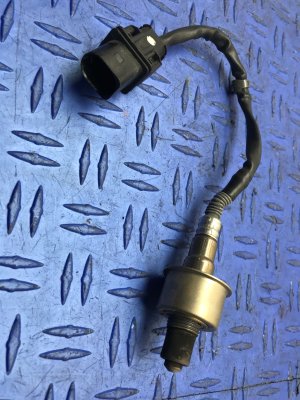
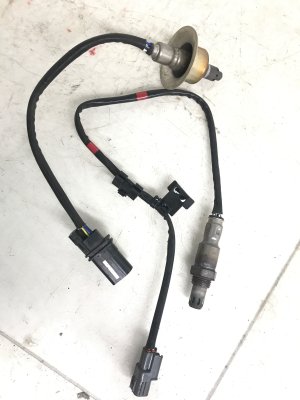
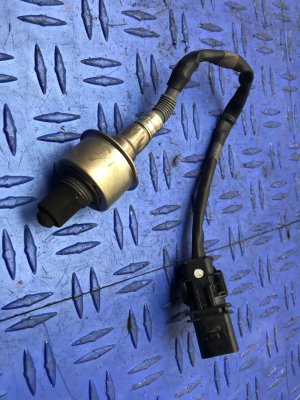
(OEM #39210-3L000, 39210-3L010 (cross-reference with VIN))— This sensor provides the reading that triggers the code. If it fails, it can send incorrect data, leading to a misdiagnosis. It's a common practice to replace it before condemning the much more expensive converter.
Trusted brands: Bosch, Denso, NTK, Kia (OEM)
OEM price range: $150-$250
Aftermarket price range: $80-$150
Related Codes That Often Appear With This One
- P0420 — This is the identical code for Bank 1 (driver's side). Seeing both codes together suggests a systemic issue like contaminated fuel or a common engine problem affecting both banks.
- P0300, P0304, P0305, P0306 — These are misfire codes for Bank 2. An ongoing misfire will dump raw fuel into the exhaust, quickly destroying the catalytic converter. The misfire is the root cause that must be fixed.
- P2096 — Post Catalyst Fuel Trim System Too Lean Bank 1. While for the opposite bank, this code indicates a fuel trim issue detected by the downstream O2 sensor. A similar code for Bank 2 (P2098) could accompany P0430, pointing towards a fuel delivery problem or an exhaust leak.
Technical Service Bulletins (TSBs) & Recalls
- SC300 - Safety recall for the left-hand turbocharger oil feed pipe and hose assembly, which can deteriorate from heat and leak oil. This can cause an oil leak, burning smell, and risk of fire.
- SA341 - A service bulletin (not a recall) was issued for some 2018 Stinger models to update the Transmission Control Unit (TCU) logic for improper 1st gear engagement. While unrelated to P0430, it shows a history of software updates for the platform.
Platform-Specific Known Issues
- A safety recall (SC300) was issued for the 2018-2023 Stinger 3.3T for a deteriorating *left-hand* (Bank 1) turbocharger oil feed pipe that could leak oil onto the exhaust. While this affects the opposite bank, it highlights the high-heat environment in the engine bay that can degrade components and potentially lead to oil contamination of the exhaust system, which can damage catalytic converters.
- The NHTSA has a record of an older Kia model (2005 Sportage) where P0430 and P0420 appeared alongside multiple misfire and fuel trim codes, indicating that catalyst failure was likely a symptom of a larger engine performance problem. [ODI #10320360]
- A Reddit user with a 2019 Stinger GT2 experienced a P0430 code and forum members advised checking O2 sensors and for exhaust leaks before assuming the catalytic converter had failed.
Mechanic-Grade Diagnostic Values
- Downstream O2 Sensor (Bank 2, Sensor 2) Live Data Voltage — expected: A relatively steady, slow-reacting voltage, typically above 0.5V, when the engine is at operating temperature and steady RPM.. Failure: Voltage fluctuates rapidly, mirroring the upstream (Sensor 1) O2 sensor's waveform. This indicates the catalyst is not storing oxygen.
- Catalytic Converter Temperature Differential — expected: The outlet pipe temperature should be significantly hotter (e.g., 100°F or more) than the inlet pipe temperature when measured with an infrared thermometer on a fully warmed-up engine.. Failure: The outlet temperature is the same as or cooler than the inlet temperature, suggesting the catalyst is not lighting off and performing its chemical reaction. An inlet temperature much hotter than the outlet can indicate a clog.
Wiring & Ground Locations
- O2 Sensor Wiring Harness & Connectors — The wiring for the downstream O2 sensor runs along the transmission and exhaust on the passenger side of the vehicle. The connector is typically located on a bracket near the transmission.. Due to proximity to extreme exhaust heat and road debris, the wiring and plastic connectors can become melted, brittle, or damaged. A 'wiggle test' on the harness while watching live sensor data can reveal intermittent connections that mimic a failed sensor.
Real Owner Repair Stories
- YouTube user Joshua Gathings (2019 Kia Stinger GT) — Check Engine Light with code P0430 came on about a week after installing aftermarket ARK downpipes.
❌ Tried (didn't work) Initially just read the code.
✅ What actually fixed it The suspected cause was an exhaust leak from the new installation. The resolution was to get under the car and re-tighten the downpipe connections to ensure a proper seal. - Reddit user zacmersal (2020 Kia Stinger GT2, ~60,000 miles (Canadian import in US)) — Check Engine Light with code P0420 (Bank 1, but same issue as P0430).
❌ Tried (didn't work) Took car to a Kia dealership, who quoted $15,000 for primary and secondary catalytic converter replacement and denied warranty coverage due to the car's origin.
✅ What actually fixed it The owner rejected the dealer quote and took the car to an independent mechanic to diagnose whether the issue was the O2 sensor or the converter itself. The plan was to replace with an aftermarket high-flow catalytic converter from Ultimate Performance if the cat was confirmed bad, saving thousands.
When the Usual Fixes Don't Work
- While many diagnostic guides suggest replacing the cheaper O2 sensor first, multiple technician and owner reports indicate that if P0430 is the *only* code present (no misfire, fuel trim, or O2 sensor circuit codes), and there are no exhaust leaks, the catalytic converter is almost certainly the failed component. Replacing the O2 sensor in this scenario is often a waste of money, as the PCM's algorithm for detecting catalyst efficiency is quite robust and rarely triggered by a sensor that isn't setting its own specific codes.
OEM Part Supersession History
39210-3L000→39210-3L010— Unknown, likely a minor revision or supplier change for the downstream oxygen sensor.
Heads up: Both part numbers are listed for the 2018-2023 Stinger 3.3T. Always confirm fitment with a VIN at a Kia parts dealer before ordering.
Model Year Variations Within This Range
- 2022-2023: For the 2022 model year facelift, the 3.3T V6 received a new variable exhaust system which resulted in a minor power increase from 365 to 368 hp. While this changes exhaust components post-catalyst, there is no direct evidence it changes the root causes of P0430, but part numbers for exhaust components may differ.
Diagnostic Flowchart
Other Known Issues on This Vehicle
Issues unrelated to this code that are worth knowing about as an owner of this generation:
- Warped Brake Rotors 🟠 Medium — Common issue, especially on earlier models. Owners report vibrations under braking, sometimes appearing around 24,000 miles.
- Left-Hand Turbo Oil Feed Pipe Leak 🔴 High — Affects 2018-2023 models with the 3.3T engine. The pipe and hose assembly can deteriorate from exhaust heat, leading to an oil leak and potential fire risk. (Ref: SC300 / NHTSA 24V169000)
- Oil Pressure Sensor Failure 🟠 Medium — Some owners report failure around 75,000 miles or more, causing the oil pressure light to illuminate despite correct oil levels. Repair can be costly due to sensor location. (Ref: A TSB exists for this issue on other Kia models with the same engine, but not explicitly for the Stinger as of recent reports.)
- High Pressure Fuel Pump (HPFP) Failure 🔴 High — A recall was issued for some 2018-2021 models. A sticking plunger in the pump could cause over-pressurization and loss of drive power. (Ref: SC281 / NHTSA 23V634000)
- Trunk and Interior Rattles 🟡 Low — A common complaint among owners, particularly from the trunk area on 2022 and earlier models.
Used vs. New Parts: Buying Guide for This Vehicle
When a used part is the smart pick: A used OEM oxygen sensor from a verified low-mileage (<50,000 miles) donor vehicle can be a cost-effective option. A used OEM catalytic converter is also a possibility from a low-mileage, accident-damaged vehicle, but carries more risk as its remaining life is unknown.
Donor-vehicle mileage cap: roughly under 50000 miles for the part to have meaningful remaining life.
What to inspect on the donor part:
- For catalytic converters, inspect the housing for severe rust, dents, or cracks.
- Ask the seller for the VIN of the donor car to verify mileage and ensure it wasn't from a flood vehicle.
- For O2 sensors, ensure the wiring and connector are intact with no signs of melting or corrosion.
OEM-only on this vehicle (don't cheap out):
- Catalytic Converter: It is strongly recommended to use an OEM Kia catalytic converter for a direct replacement. Many aftermarket converters, especially cheaper ones, lack the required amount of precious metals and will fail to clear the P0430 code or will cause it to return prematurely.
Aftermarket brands forum-validated for this vehicle:
- O2 Sensors: NTK (an NGK brand) is a known OEM supplier and a trusted aftermarket choice. Bosch and Denso are also reputable.
- High-Flow Catalytic Converters (Performance): For owners looking to upgrade, brands like MagnaFlow are used in performance downpipe kits, but may require an ECU tune or O2 spacers to prevent a CEL.
Brands owners have reported issues with on this vehicle:
- Generic, unbranded catalytic converters from online marketplaces. These are notorious for poor fitment, causing other issues, and failing emissions tests right out of the box.
Real Owner Stories
Aggregated from forums and TSBs cited above. Mileages and costs reflect what owners reported in those sources.
2019 Kia Stinger GT2 3.3T
Symptoms: Check engine light with code P0430.
What fixed it: Forum members advised the owner to check downstream O2 sensors and inspect for exhaust leaks before replacing the catalytic converter, also suggesting a check of emissions warranty coverage.
Source hint: reddit.com/r/kiastinger/comments/w7s41h/engine_light_code/
2019 Genesis G70 3.3T
Symptoms: Triggered a P0430 CEL code.
What fixed it: The code was triggered after the installation of a catless midpipe, highlighting that exhaust modifications can cause this specific error.
Source hint: reddit.com/r/GenesisG70/comments/x9s1z6/p0430_cel_code/
2018 Genesis G80 3.3T Sport
Symptoms: Engine misfires.
What fixed it: Diagnosis of misfires, which are noted as a common root cause that can lead to subsequent catalytic converter failure.
Source hint: Video diagnosis cited in platform_mates
Related OBD-II Codes
Frequently Asked Questions
Does the SC300 safety recall for the 3.3T engine cause the P0430 code?
Is there a software update for the 2018 Kia Stinger that might fix my Check Engine Light?
Should I replace the Bank 2 catalytic converter or the O2 sensor first on my Stinger GT?
Can I check if my Stinger's catalytic converter is clogged without removing it?
Does the P0430 code affect the Genesis G70 with the same 3.3T engine?
Helpful Videos
Used OEM Parts in Stock
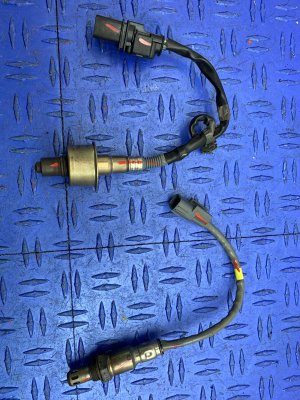
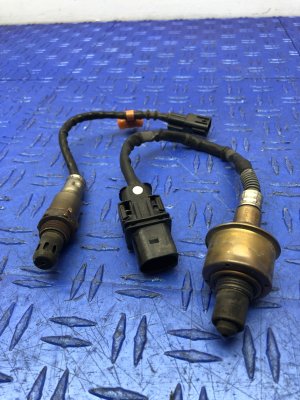
New Aftermarket Parts Available
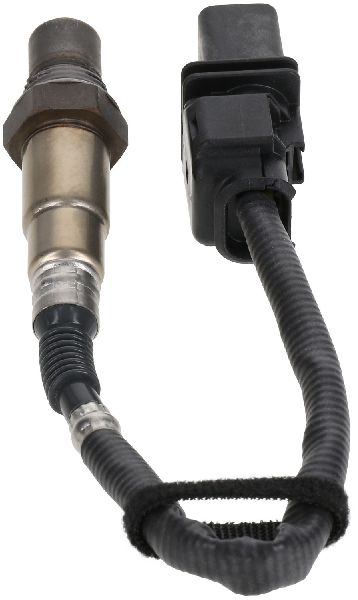

The information in this article is provided for general reference and educational purposes only. Vehicle specifications, procedures, and part compatibility can vary by production date, trim level, and region. Always consult your vehicle's factory service manual and verify part numbers before purchasing or performing repairs. Safety-critical components such as airbags, seat belts, and braking systems should be installed by a qualified professional.
- Kia Stinger:
- 🎬 Helpful Videos
- 🛍️ Shop This Part
- What's Unique About the 2018-2023 Kia Stinger
- Symptoms You May Notice
- Most Likely Causes
- Rare But Worth Checking
- Diagnosis Steps
- Parts You'll Likely Need
- Related Codes That Often Appear With This One
- Technical Service Bulletins (TSBs) & Recalls
- Platform-Specific Known Issues
- Mechanic-Grade Diagnostic Values
- Wiring & Ground Locations
- Real Owner Repair Stories
- When the Usual Fixes Don't Work
- OEM Part Supersession History
- Model Year Variations Within This Range
- Diagnostic Flowchart
- Other Known Issues on This Vehicle
- Used vs. New Parts: Buying Guide for This Vehicle
- Real Owner Stories
- 2019 Kia Stinger GT2 3.3T
- 2019 Genesis G70 3.3T
- 2018 Genesis G80 3.3T Sport
- Related OBD-II Codes
- Frequently Asked Questions
- 🎟️ Get 5% Off