

P0430 on 2010-2016 Hyundai Genesis Coupe 3.8L: Catalyst Efficiency Causes and Fixes
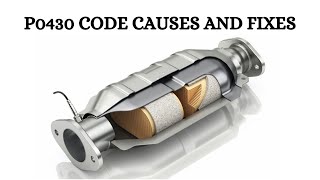
The P0430 code on a 3.8L Genesis Coupe most often means the catalytic converter on Bank 2 (driver's side) has failed. It can also be caused by a faulty downstream oxygen sensor or an exhaust leak, particularly near the flex pipes. Before replacing the expensive converter (over $900), it's crucial to rule out the cheaper O2 sensor (under $100) and inspect for leaks. Aftermarket 'pop and bang' tunes are a known and frequent cause of premature catalytic converter failure on this platform.
- P0430 means the catalytic converter on the driver's side (Bank 2) is not working correctly.
- Before buying a new catalytic converter, thoroughly check for exhaust leaks and test the downstream oxygen sensor, as these are cheaper and common failure points.
- If your car has an aftermarket 'pop and bang' tune, it has likely damaged the catalytic converter.
- Always address other engine codes (especially for misfires or fuel mixture) before replacing parts for a P0430, as they are the root cause.
- Use a scan tool to watch live O2 sensor data; it is the most effective way to diagnose the problem without guessing.
What's Unique About the 2010-2016 Hyundai Genesis Coupe
The Hyundai Genesis Coupe 3.8L spans two generations: the BK1 (2010-2012) with a port-injected (MPI) engine and the BK2 (2013-2016) with a more powerful direct-injected (GDI) engine. While both can experience this code, the BK2's GDI engine is prone to carbon buildup on intake valves, which can affect combustion and indirectly contribute to conditions that damage the catalytic converter over time. A very common cause of P0420/P0430 on this specific platform is the use of aftermarket tunes, especially "pop and bang" or "crackle" tunes that create backfires by design. These tunes are known to quickly destroy the catalytic converters. Additionally, owners on forums frequently report that exhaust leaks near the flex pipes are a common trigger for this code.
Generation note: This guide covers both the BK1 (2010-2012) and BK2 (2013-2016) generations of the Hyundai Genesis Coupe. The core diagnostic process is the same, but be aware that part numbers for catalytic converters and oxygen sensors differ between the MPI (BK1) and GDI (BK2) engines.
Symptoms You May Notice
- Check Engine Light is on
- Reduced engine power and sluggish acceleration
- Decreased fuel economy
- A sulfur or "rotten egg" smell from the exhaust
- Rattling noises from under the car if the converter's internal structure has broken apart
- Failed emissions test
- Replacing the oxygen sensor when the catalytic converter is actually the failed component.
- Replacing the catalytic converter when an undiagnosed exhaust leak or faulty oxygen sensor is the true cause.
- Ignoring underlying engine issues like misfires or rich conditions, leading to repeated failure of the new catalytic converter.
Most Likely Causes
- Failed Catalytic Converter (Bank 2) 🔴 High Probability Catalytic converters can fail from normal aging, but are also susceptible to damage from engine misfires, burning oil, or rich fuel conditions. Aftermarket tunes that cause backfiring are a very common cause of premature failure on this platform.
How to confirm: After ruling out O2 sensors and exhaust leaks, this is the most likely cause. A definitive test involves using a thermal camera or infrared thermometer to check the converter's temperature; the outlet should be at least 100°F hotter than the inlet on a fully warmed-up engine. If the inlet is hotter, it indicates a clog. Visually inspecting the converter's internal honeycomb structure (if removed) for melting or blockage is another confirmation.
Typical fix: Replace the Bank 2 catalytic converter assembly. This is often integrated with the exhaust manifold.
Est. part cost: $900-$1500 - Failed Downstream Oxygen Sensor (Bank 2, Sensor 2) 🟡 Medium Probability Oxygen sensors are wear items and can fail over time, sending incorrect readings to the PCM. Their wiring can also be damaged.
How to confirm: Use a scan tool to graph the voltage of the Bank 2 downstream O2 sensor. A healthy sensor after a good converter will show a relatively steady voltage (typically >0.5V). If it's switching rapidly like the upstream sensor (between ~0.1V and ~0.9V), it could be a bad converter or a bad sensor. The easiest way to confirm is to swap the downstream sensors from Bank 1 and Bank 2. Clear the codes and drive the vehicle. If the code changes to P0420 (Bank 1), the sensor is faulty. Also, inspect the sensor's wiring and connector for damage.
Typical fix: Replace the Bank 2, Sensor 2 oxygen sensor.
Est. part cost: $50-$100 - Exhaust Leak 🟡 Medium Probability Forum members have noted that leaks in the flex pipes or at gasket flanges before the downstream O2 sensor are common. The gaskets can blow out and cause a leak that confuses the O2 sensors.
How to confirm: Visually inspect the exhaust system from the engine to the rear of the car. Look for black soot marks, cracks, or holes, especially around flanges and flex pipes. A common method is to use a shop vacuum in reverse (blower mode) to pressurize the exhaust and spray soapy water on joints; bubbles will reveal the leak. A smoke machine is the most effective tool.
Typical fix: Replace the leaking gasket or repair/replace the leaking section of the exhaust pipe.
Est. part cost: $15-$200
Rare But Worth Checking
- Engine Misfires or Rich Fuel Condition: Unburned fuel entering the exhaust can overheat and destroy the catalytic converter. If you have other codes like P0300 (Random Misfire) or fuel trim codes (P0172/P0175), you must fix those underlying issues first, or you will destroy the new converter.
- Failed Upstream Oxygen Sensor (Bank 2, Sensor 1): A faulty upstream (air/fuel ratio) sensor can cause the engine to run too rich, which can damage the catalytic converter over time. This will usually be accompanied by fuel trim codes.
- PCM/Software Issue: While rare, sometimes the PCM's parameters for triggering the code are too sensitive. Check for any available Technical Service Bulletins (TSBs) related to emissions or PCM updates for your specific model year.
Diagnosis Steps
- Scan for all diagnostic trouble codes. Address any misfire, fuel system, or upstream oxygen sensor codes before diagnosing the P0430.
- Perform a thorough visual inspection of the Bank 2 (driver's side) exhaust system. Look for cracks, rust, and black soot indicating a leak, paying close attention to the manifold, flex pipe, and flange gaskets.
- With the engine running, listen for any hissing or ticking sounds that would indicate an exhaust leak. A smoke test is the most reliable method to find small leaks.
- Use a scan tool with live data capability. Graph the voltage signals from the Bank 2 upstream (Sensor 1) and downstream (Sensor 2) oxygen sensors with the engine fully warm and running at around 2000 RPM.
- Analyze the O2 sensor graphs. The upstream sensor should switch rapidly between ~0.1V and ~0.9V. If the catalytic converter is working, the downstream sensor should show a much slower, steadier voltage, typically above 0.5V.
- If the downstream sensor's graph mimics the upstream sensor's rapid switching, it confirms the converter is not efficient. This points to either a bad converter or a bad downstream sensor.
- To isolate the O2 sensor, swap the downstream sensors between Bank 1 and Bank 2. They are often the same part number. Clear the codes and drive the vehicle. If the code returns as P0420 (Bank 1), the O2 sensor you moved is faulty. If the P0430 code returns, the catalytic converter is the most likely problem.
- (Optional but Recommended) Use an infrared thermometer to measure the temperature of the pipe entering and exiting the catalytic converter. A working converter should be at least 100°F hotter at the outlet than the inlet. A clogged converter may be hotter at the inlet.
- Inspect the wiring and connector for the Bank 2 downstream O2 sensor for any signs of corrosion, fraying, or loose connections.
Parts You'll Likely Need
- Catalytic Converter (Bank 2, Driver's Side)
(OEM #BK1 (2010-2012): 28950-2C650 (Manifold/Converter Assembly is 28510-3C460); BK2 (2013-2016): 28950-2C760 (Manifold/Converter Assembly is 28510-3CFH0))— This is the most common, though most expensive, fix for a persistent P0430 code after other causes are ruled out.
Trusted brands: Hyundai (OEM), Walker, MagnaFlow
OEM price range: $1200-$1700
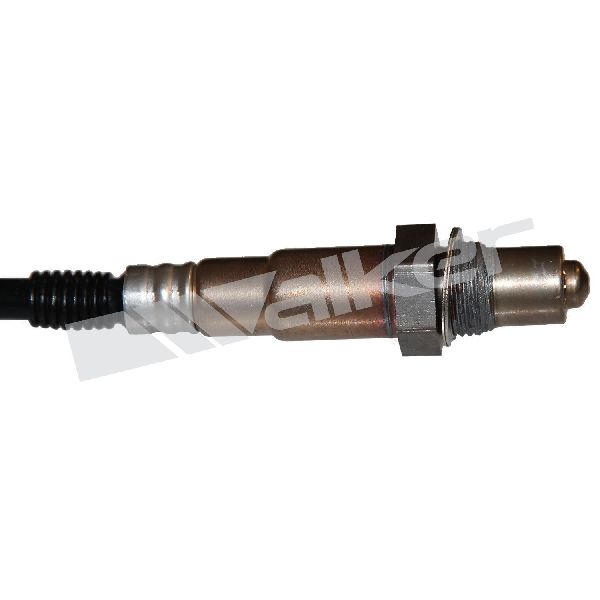
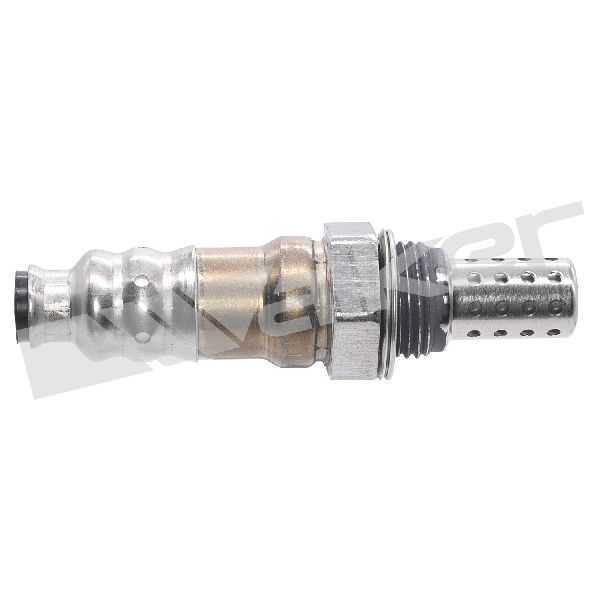
Aftermarket price range: $400-$800 - Downstream Oxygen Sensor (Bank 2, Sensor 2)
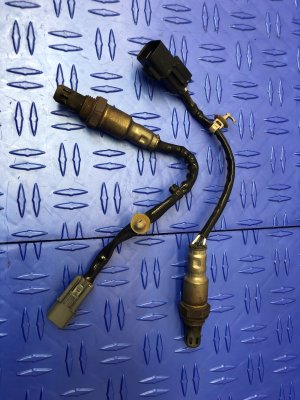
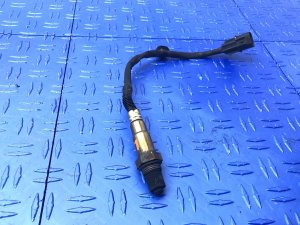
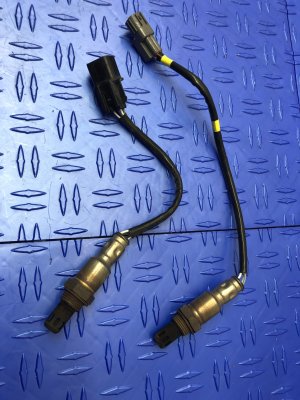
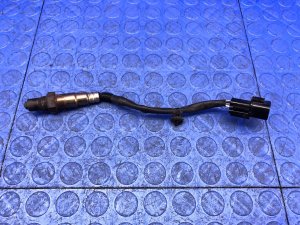
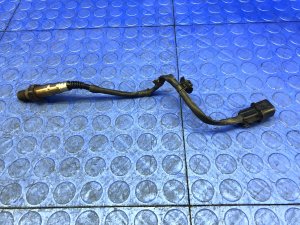
(OEM #BK1 (2010-2012): 39210-3C200; BK2 (2013-2016): 39210-3C540 (Note: Left and Right downstream sensors are often the same part))— This sensor is responsible for monitoring the converter's efficiency. It can fail and send false readings, triggering the code. It's a common wear item and a much cheaper first step than replacing the converter.
Trusted brands: NTK, Bosch, Denso
OEM price range: $100-$180
Aftermarket price range: $50-$100
Related Codes That Often Appear With This One
- P0420 — If both catalytic converters are failing, you will see both P0420 (Bank 1) and P0430 (Bank 2) codes together. This is common on higher mileage vehicles or those with damaging engine tunes.
- P0300-P0306 — Misfire codes (P0300 for random, P0301-P0306 for specific cylinders) indicate an engine problem that allows unburned fuel into the exhaust, which can quickly destroy the catalytic converter.
Technical Service Bulletins (TSBs) & Recalls
- While no specific TSB for P0430 on this exact model was found, Hyundai has issued TSBs for other models (e.g., 12-EM-004 for Veloster) for ECM updates to revise catalyst monitoring logic. It is always worth checking with a dealer for the latest software for your vehicle's VIN.
Platform-Specific Known Issues
- Aftermarket 'pop and bang' tunes are notorious for destroying the catalytic converters on both BK1 and BK2 models, often leading to P0420 and P0430 codes within weeks of installation.
- Exhaust flex pipes have been reported by owners to be a common point of failure, leading to leaks that trigger P0430.
Mechanic-Grade Diagnostic Values
- O2 Sensor Heater Resistance (Cold) — expected: 3 to 15 Ohms. Failure: Infinite resistance (open circuit) or zero resistance (short).
- Total Fuel Trim (STFT + LTFT) at Idle — expected: Within +/- 10%. Failure: Consistently greater than +10% (lean condition) or less than -10% (rich condition) can indicate underlying issues that damage the catalytic converter.
- Downstream O2 Sensor (Bank 2, Sensor 2) Voltage — expected: Relatively steady voltage between 0.5V and 0.8V on a warm engine at steady RPM.. Failure: Voltage rapidly switching between ~0.1V and ~0.9V, mimicking the upstream sensor, indicates low oxygen storage capacity (bad converter).
- Mode $06 Catalyst Monitor Index (Siemens ECU) — expected: A value of approximately 2.0 for a normal vehicle.. Failure: A numerical index greater than 0.3 may indicate a fault. Note: This data can be confusing and manufacturer-specific; a high value may indicate a passing test result, while a low value indicates failure, or vice-versa depending on the specific Test ID.
Wiring & Ground Locations
- Bank 2 Downstream O2 Sensor Connector — On the driver's side exhaust pipe, after the primary catalytic converter. The connector is typically clipped to the transmission bell housing or a nearby bracket.. This is the primary connector for the sensor that triggers the P0430 code. Damage to the connector or wiring (corrosion, melting, chafing) will cause faulty readings. A 'wiggle test' on this connector while watching live data can reveal intermittent faults.
- Main Engine Ground Strap — A primary ground point is located on the chassis near the battery tray. Other critical grounds are on the intake manifold, a coolant pipe on the rear of the engine block, and a bolt on the starter/transmission bell housing.. Poor engine grounds can cause a host of electrical issues, including incorrect sensor readings. The O2 sensor heater and signal rely on a stable ground reference. Ensuring these points are clean and tight is a crucial, often overlooked, step.
- ECM Ground — A main ground for the Engine Control Module (ECM) is located in the engine bay, often near the driver's side strut tower. A service manual for the 2013 BK2 shows a ground point (E) near the brake fluid reservoir being disconnected during major service.. The ECM is what interprets the O2 sensor data. A faulty ECM ground can lead to misinterpretation of sensor signals and incorrect trouble codes.
Real Owner Repair Stories
- Reddit user in /r/genesiscoupe (Genesis Coupe 3.8 (year not specified)) — P0420 and P0430 codes appeared a few weeks after getting an aftermarket 'pops and bangs' tune. The exhaust note also changed.
❌ Tried (didn't work) Initial diagnosis
✅ What actually fixed it The consensus from other owners was that the tune had destroyed the internal structure of the catalytic converters. The recommended fix was to physically inspect the converters for damage and replace them. - Reddit user in /r/genesiscoupe (Genesis Coupe BK2 (2013-2016)) — P0420/P0430 codes and a louder exhaust note.
❌ Tried (didn't work) Not specified, but the user was diagnosing the catalyst efficiency codes.
✅ What actually fixed it The user discovered exhaust leaks in the flex pipes. Fixing the leaks resolved the codes, as the extra oxygen entering the system was throwing off the O2 sensor readings. - ClubLexus forum user (similar vehicle, relevant diagnosis) (Lexus IS250) — Persistent P0420 and P0430 codes with a known bad exhaust leak.
❌ Tried (didn't work) Using exhaust repair tape, which worked for almost two years but ultimately failed.
✅ What actually fixed it A complete replacement of the leaking exhaust system finally and permanently resolved the P0420 and P0430 codes. This confirms that a significant leak can prevent the catalytic converters from reaching operating temperature and functioning correctly.
Model Year Variations Within This Range
- 2010-2016: Wiring diagram documentation shows different component identifiers for O2 sensors between model years. For example, a 2010 diagram may label the sensor as 'oxygen sensor 4 (b2/s2)', while a 2013 diagram may simply say 'Oxygen sensor (down)'. This highlights the importance of using a wiring diagram specific to the exact model year for accurate diagnosis.
Diagnostic Flowchart
Other Known Issues on This Vehicle
Issues unrelated to this code that are worth knowing about as an owner of this generation:
- Manual Transmission Grind / Lockout 🟠 Medium — Very common, especially on BK1 (2010-2013) models. Owners report grinding going into 3rd or 5th gear, and lockout from 2nd gear during aggressive shifting.
- Taillight Gasket Leak / Water in Trunk 🟡 Low — Extremely common across all model years. The foam gaskets for the taillights fail, allowing water to enter the trunk and pool in the spare tire well.
- Timing Chain Tensioner Wear / Startup Rattle 🔴 High — Commonly reported between 80,000 and 120,000 miles. A rattling noise on cold startup for a few seconds is the primary symptom, indicating wear on the tensioners. Failure can lead to jumped timing and catastrophic engine damage.
- Peeling Interior Chrome Trim 🟡 Low — Widespread cosmetic issue where the matte clear coat on interior chrome-look plastic (door handles, steering wheel) flakes off.
- GDI Engine Carbon Buildup (BK2) 🟠 Medium — An inherent issue with all GDI engines, including the 2013-2016 3.8L. Over time, carbon deposits build up on the intake valves, which can cause reduced performance and misfires. Walnut blasting is the typical cleaning procedure.
Used vs. New Parts: Buying Guide for This Vehicle
When a used part is the smart pick: For this repair, using used parts is generally not recommended for the core components. However, if the cause is a cracked exhaust pipe or manifold section (and not the integrated converter part), a used, rust-free pipe from a donor car in a dry climate can be a cost-effective solution.
Donor-vehicle mileage cap: roughly under 80000 miles for the part to have meaningful remaining life.
What to inspect on the donor part:
- For exhaust pipes: Check for heavy rust, especially at welds and flanges. Tap it to listen for internal rust flakes. Ensure hangers are intact.
- For catalytic converters (if considering used): Strongly discouraged. If you must, ask for the donor vehicle's VIN to check its history for emissions-related issues. Visually inspect the honeycomb inside; it should be intact, not melted, clogged, or rattling.
- For O2 sensors: Never buy used. They are wear items with a finite lifespan.
OEM-only on this vehicle (don't cheap out):
- Catalytic Converter: While expensive, OEM converters are designed to meet the specific emissions requirements and ECU parameters for the Genesis Coupe. Many aftermarket converters, especially cheaper universal ones, are known to fail prematurely or not meet the efficiency threshold, causing the P0430 code to return within months.
Aftermarket brands forum-validated for this vehicle:
- Oxygen Sensors: NTK (often the OEM supplier), Denso, and Bosch are widely trusted brands for O2 sensors that meet or exceed OEM performance.
- Catalytic Converters: If OEM is not an option, high-quality aftermarket brands like MagnaFlow or Walker, specifically their direct-fit, EPA or CARB-compliant models (depending on your state), are the next best choice.
Brands owners have reported issues with on this vehicle:
- Unbranded, no-name catalytic converters from online marketplaces. These are notorious for poor quality catalysts that do not have enough precious metal loading to work effectively, leading to a quick return of the P0430 code.
Real Owner Stories
Aggregated from forums and TSBs cited above. Mileages and costs reflect what owners reported in those sources.
2010-2016 Hyundai Genesis Coupe 3.8L V6
Symptoms: Check engine light appeared a few weeks after installing a performance tune with pops.
What fixed it: Replacement of the catalytic converters, as the 'pop' tune had destroyed the internal structure.
Source hint: Reddit r/genesiscoupe Thread 'p0420 and p0430 genesis coupe 3.8'
2010-2016 Hyundai Genesis Coupe 3.8L V6
Symptoms: P0430 code triggered by exhaust leaks near the downstream O2 sensor.
What fixed it: Repairing leaks in the flex pipes or replacing blown-out gasket flanges.
Source hint: Gencoupe.com / r/genesiscoupe forum experiences
Related OBD-II Codes
Frequently Asked Questions
Is there a Hyundai TSB for the P0430 code on my Genesis Coupe?
I just installed a 'pop and bang' tune and now I have a P0430 code. Are they related?
Where is the Bank 2 catalytic converter located on the 3.8L V6 engine?
Can a leak in the flex pipe cause a P0430 code on a Genesis Coupe?
How can I tell if my Bank 2 catalytic converter is actually clogged?
Is there a simple way to test if the O2 sensor is the problem before I buy a new converter?
Helpful Videos

Used OEM Parts in Stock
New Aftermarket Parts Available





The information in this article is provided for general reference and educational purposes only. Vehicle specifications, procedures, and part compatibility can vary by production date, trim level, and region. Always consult your vehicle's factory service manual and verify part numbers before purchasing or performing repairs. Safety-critical components such as airbags, seat belts, and braking systems should be installed by a qualified professional.
- Hyundai Genesis Coupe:
- 🎬 Helpful Videos
- 🛍️ Shop This Part
- What's Unique About the 2010-2016 Hyundai Genesis Coupe
- Symptoms You May Notice
- Most Likely Causes
- Rare But Worth Checking
- Diagnosis Steps
- Parts You'll Likely Need
- Related Codes That Often Appear With This One
- Technical Service Bulletins (TSBs) & Recalls
- Platform-Specific Known Issues
- Mechanic-Grade Diagnostic Values
- Wiring & Ground Locations
- Real Owner Repair Stories
- Model Year Variations Within This Range
- Diagnostic Flowchart
- Other Known Issues on This Vehicle
- Used vs. New Parts: Buying Guide for This Vehicle
- Real Owner Stories
- 2010-2016 Hyundai Genesis Coupe 3.8L V6
- 2010-2016 Hyundai Genesis Coupe 3.8L V6
- Related OBD-II Codes
- Frequently Asked Questions
- 🎟️ Get 5% Off