

P0430 on 2017-2019 Honda Ridgeline: Catalyst Efficiency Fixes & Injector Issues
On a 2017-2019 Ridgeline, code P0430 is most often caused by faulty fuel injectors, not the catalytic converter itself. Debris from the manufacturing process can cause the direct-injection fuel injectors to fail, leading to an improper air-fuel mixture that triggers the P0430 code. Honda issued technical service bulletins (TSB A21-010) and a warranty extension for this known issue, and the fix involves replacing all six fuel injectors and sometimes updating the vehicle's software.
- Before buying any parts for a P0430 code on a 2017-2019 Ridgeline, investigate the fuel injectors.
- Check for related trouble codes like P030x (misfires) and P219A/B (air-fuel imbalance), as they are strong indicators of the injector problem.
- Contact a Honda dealer with your VIN to see if your vehicle is covered under the warranty extension for fuel injectors (TSB A21-010).
- Do not automatically replace the catalytic converter; it is often the victim of the injector issue, not the cause of the code.
- A PCM software update may be required to complete the repair, which typically must be done at a dealership.
What's Unique About the 2017-2019 Honda RIDGELINE

While P0430 typically points to a failed catalytic converter, on this specific generation of Ridgeline and other Hondas with the direct-injection 3.5L V6 engine, the root cause is frequently defective fuel injectors. TSBs A21-010 and A19-072 state that debris from the high-pressure fuel pump or from the fuel injector machining process itself can cause internal wear or clogging. This leads to an incorrect air-fuel mixture, which can trigger misfires (P030x codes) and air-fuel ratio imbalances (P219A/B codes). This unburned fuel can damage the catalytic converter over time or simply trick the PCM's software into setting a P0430 code, even if the converter is still functional. Honda acknowledged this with several Technical Service Bulletins and a warranty extension covering the injector replacement for 10 years or 150,000 miles.
Diagnostic Flowchart

Tap your situation to follow the diagnostic path that matches what you're seeing on this vehicle.
Symptoms You May Notice
- Check Engine Light is on
- Failure to pass an emissions test
- Reduced engine power or hesitation, particularly if misfires are also occurring
- Decreased fuel economy
- Rough idle
- Engine shaking
- Replacing the catalytic converter without first investigating the fuel injectors. If the injectors are faulty, the new converter can be damaged, and the code will likely return. This is the most common and costly misdiagnosis for this specific vehicle.
- Replacing the oxygen sensors when they are accurately reporting the inefficiency of the catalytic converter. Bad O2 sensors usually set their own specific codes (like P0154) and are a low-probability cause for an isolated P0430 on this platform.
Most Likely Causes

- Faulty Fuel Injectors 🔴 High Probability Honda issued multiple TSBs (A21-010, A19-072, A19-073) and a warranty extension for this known issue. Debris from the high-pressure fuel pump or the injector manufacturing process can cause them to fail.
How to confirm: Check for accompanying codes like P0300-P0306 (misfires) or P219A/P219B (air-fuel imbalance). A dealership or qualified shop can perform a "cylinder A/F test" with the Honda Diagnostic System (HDS) as specified in the TSBs. 🎬 Watch: How to diagnose these codes using the service bulletin. If the test fails, the injectors are the confirmed cause.
Typical fix: Replace all six fuel injectors as a set and, in some cases, update the PCM software. The warranty was extended to 10 years/150,000 miles for this specific repair. Owners have successfully had this repaired under warranty, sometimes after initially being denied by a dealer.
Est. part cost: $400-$1150 - Failed Catalytic Converter (Bank 2) 🟡 Medium Probability This can be the end result of long-term operation with faulty fuel injectors, which overheat and contaminate the catalyst materials. It can also fail from age and normal wear, though this is less likely on newer vehicles unless the injector issue has been ignored.
How to confirm: After ruling out injectors and O2 sensors, a temperature test using an infrared thermometer can be performed (the outlet should be significantly hotter than the inlet). A mechanic can also perform a backpressure test. This should only be considered after the fuel injector TSB has been investigated.
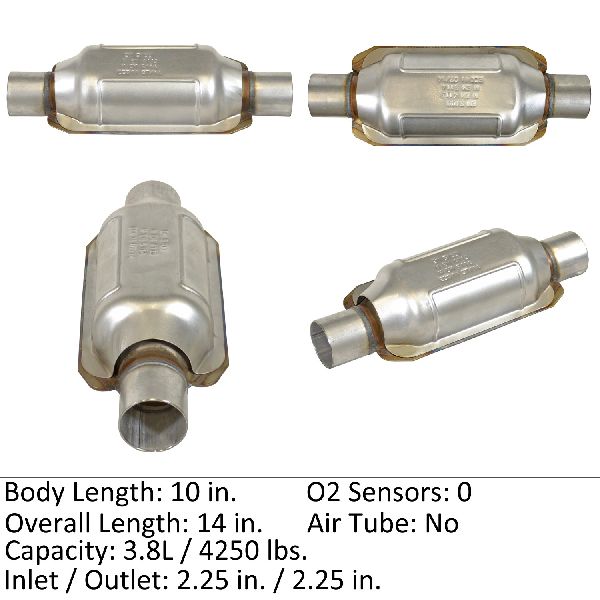
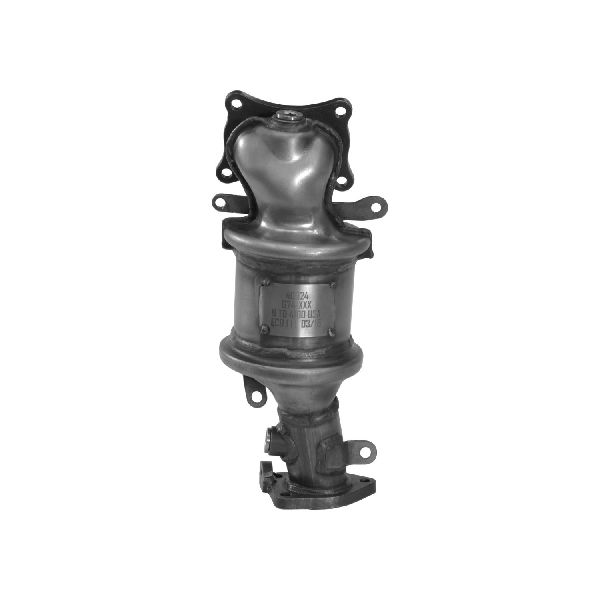
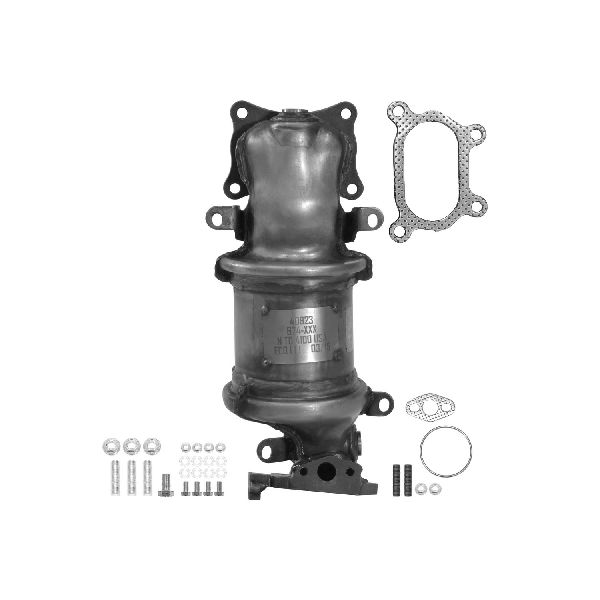
Typical fix: Replace the Bank 2 catalytic converter. This is the front converter, located between the engine and the radiator. 🎬 Watch: Step-by-step guide to replacing the Bank 2 catalytic converter. The OEM part number is 18180-5MJ-A00 (Converter Assy., FR. Primary).
Est. part cost: $1000-$1700 - Failed Oxygen Sensor ⚪ Low Probability
How to confirm: Graph the voltage of the downstream O2 sensor (Bank 2, Sensor 2) with a scan tool. It should show a relatively steady, slow-switching voltage above 0.5V. If it's switching rapidly like the upstream sensor or shows no activity, it may be faulty.
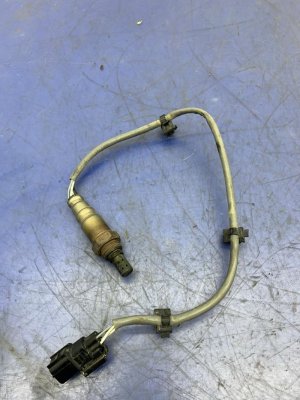
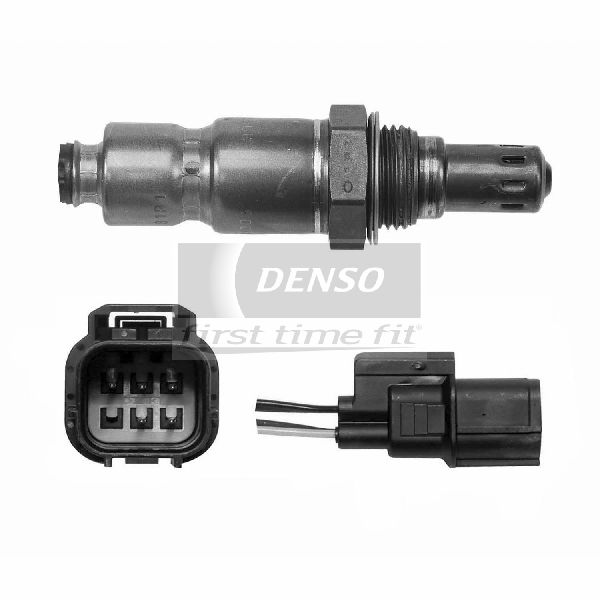
Typical fix: Replace the Bank 2, Sensor 2 (downstream) oxygen sensor. The OEM part number is 36542-5G0-A01 (Rear Oxygen Sensor). A common aftermarket equivalent is Denso 234-4781.
Est. part cost: $60-$150 - Exhaust Leak ⚪ Low Probability
How to confirm: Visually inspect the exhaust manifold and pipes near the Bank 2 catalytic converter for cracks, loose connections, or black soot marks. Listen for ticking or hissing sounds from the engine bay, especially when the engine is cold.
Typical fix: Repair the leak by replacing the gasket or tightening bolts. In some cases, the leaking component may need to be replaced.
Est. part cost: $20-$200
Rare But Worth Checking
- PCM Software Issue: Honda TSBs A19-072 and A17-036 indicate the PCM software may misinterpret sensor inputs, falsely triggering a P0430 code. An update is often the first step in the diagnostic process and is sometimes required as part of the injector replacement procedure.
Diagnosis Steps

- Read all stored DTCs with an OBD-II scanner. The presence of P030x or P219x codes alongside P0430 is a very strong indication of the fuel injector issue described in Honda's TSBs.
- Check for Honda TSBs A21-010, A19-072, and A19-073. Contact a Honda dealer with your VIN to determine if the vehicle is eligible for the warranty extension (10 years/150,000 miles).
- If misfire (P030x) or air-fuel ratio (P219A/B) codes are present, the TSB procedure directs to replace all fuel injectors.
- If only P0430 is present, the TSB recommends performing a 'cylinder AF test' using a Honda-specific scan tool. If the test fails, the injectors must be replaced. If it passes, normal troubleshooting continues.
- If injectors are ruled out, inspect the exhaust system for any leaks between the engine and the downstream O2 sensor on Bank 2 (front of vehicle).
- Use a scan tool to graph the voltage signals from the upstream (Air/Fuel Ratio) and downstream (Oxygen) sensors for Bank 2. A healthy downstream sensor will have a much more stable and slower-switching signal (typically >0.6V) than the rapidly fluctuating upstream sensor. If the downstream sensor mimics the upstream, the converter is not working.
- If all other causes are ruled out, the Bank 2 catalytic converter is the likely culprit.
Parts You'll Likely Need

- Fuel Injector Set
(OEM #16010-RLV-315)— This is the most common root cause for P0430 on this vehicle, as documented in multiple Honda TSBs. They must be replaced as a set of six. 🎬 See this walkthrough of the fuel injector replacement process. The part number for the V6 set is different from the 4-cylinder part (16010-5R1-315) mentioned in some generic catalogs.
Trusted brands: Honda (OEM)
OEM price range: $800-$1200
Aftermarket price range: $300-$500 - Bank 2 Catalytic Converter (Front)
(OEM #18180-5MJ-A00)— This part is replaced when it has failed due to age or contamination from a separate issue (like faulty injectors). It is often misdiagnosed as the primary failure.
Trusted brands: Honda (OEM), Walker, MagnaFlow
OEM price range: $1100-$1700
Aftermarket price range: $400-$800 - Bank 2 Downstream Oxygen Sensor
(OEM #36542-5G0-A01)— Replaced when the sensor itself fails and sends incorrect data, which is a less common cause for this code. A common aftermarket cross-reference is Denso 234-4781.
Trusted brands: Denso, NTK, Bosch
OEM price range: $140-$200
Aftermarket price range: $60-$120
Related Codes That Often Appear With This One
- P0420 — Catalyst efficiency code for the other bank (Bank 1). The underlying fuel injector issue often affects both banks, and TSB A21-010 covers both P0420 and P0430.
- P0300-P0306 — These are random and specific cylinder misfire codes. Faulty injectors are a primary cause of misfires, which directly lead to the P0430 code. The presence of these codes alongside P0430 strongly points to the injector issue.
- P219A / P219B — These codes indicate an air-fuel ratio imbalance between cylinders on a specific bank. This is a strong indicator of a faulty fuel injector and is mentioned in the same TSBs as P0430. P219B is for Bank 2, the same bank as P0430.
Technical Service Bulletins (TSBs) & Recalls
- A21-010: Warranty Extension: MIL Comes On with DTC P0420/P0430, P030x, and/or P219A/B (Without Software Update). This is the main TSB covering the injector replacement under warranty.
- A19-073: MIL Comes On with DTC P0430 or P0430 with P030X, P219A, P219B (Without Software Update). This bulletin was superseded by A21-010.
- A19-072 / A20-100: Warranty Extension: MIL Comes On with DTC P0420/P0430, P030x, and/or P219A/B (With Software Update). This TSB addresses vehicles that also require a PCM software update as part of the injector replacement.
- A17-036: MIL Comes On with DTC P0430. An earlier TSB noting that PCM software may misinterpret sensor inputs, which was later replaced by newer bulletins that also address the injector hardware fault.
Platform-Specific Known Issues
- Warranty Extension for Fuel Injectors: A warranty extension was issued by Honda covering the fuel injectors for 10 years or 150,000 miles from the vehicle's original purchase date due to this specific issue. Owners should check their VIN with a Honda dealer for eligibility.
- TSB A21-010 Diagnostic Logic: TSB A21-010 explicitly states that if P0430 is present with misfire (P030x) or air/fuel imbalance (P219B) codes, the injectors should be replaced. If only P0430 is present, a 'Cylinder AF Test' must be performed with a Honda diagnostic tool to determine if the injectors are at fault.
Mechanic-Grade Diagnostic Values
- Fuel Factor Study Value (per cylinder) — expected: 0.83 to 1.15. Failure: A value below 0.83 indicates a rich-leaning injector. A value above 1.15 indicates a lean-leaning injector.
- Downstream O2 Sensor (Bank 2, Sensor 2) Voltage at Idle — expected: Relatively stable voltage between 0.4V and 0.6V.. Failure: Voltage fluctuates rapidly between ~0.1V and ~0.9V, mimicking the upstream sensor, which indicates the catalytic converter is not functioning.
- Low-Side Fuel Pressure at Idle — expected: 380-430 kPa (55-63 psi). Failure: Pressure significantly below this range could indicate a weak fuel pump, which is not the primary cause of P0430 but is a foundational check.
Hidden / Shadow Codes Worth Checking
- Fuel Factor Study Value: This is not a DTC but a specific data PID within the Honda Diagnostic System (HDS) that shows the fuel trim adjustment for each individual cylinder. It serves as a 'shadow code' by providing a much deeper insight into cylinder-to-cylinder fuel imbalances than a generic P-code. (see via Honda Diagnostic System (HDS) or a high-end bidirectional scan tool with Honda-specific software (like some Autel or TOPDON models).)
Scan Tool Commands That Help
- Honda HDS (or equivalent): Cylinder AF Test — Use when only P0430 is present, per TSB A21-010. This active test forces lean/rich conditions on each cylinder and counts misfires to definitively identify a faulty injector, preventing misdiagnosis of the catalytic converter.
- Honda HDS (or equivalent): CMK Relearn (Crank Pattern/Learned Value Clear) — This is a critical final step after replacing the fuel injectors. It clears the long-term fuel trim memory. Failing to perform this reset can cause the ECU to apply old, incorrect fuel adjustments to the new injectors, potentially leading to new drivability issues or codes.
Wiring & Ground Locations
- Bank 2 (Front) — The cylinder bank located closer to the radiator.. P0430 specifically refers to the catalytic converter and sensors on this bank. Correctly identifying Bank 2 is the first step in any physical inspection or repair.
- Bank 2, Sensor 2 Connector — At the front of the engine bay, accessible after removing the engine cover. The connector is located below a plastic trim piece.. This is the primary connector for the sensor that triggers the P0430 code. Checking for corrosion or damage here is a key diagnostic step before replacing the sensor itself.
Real Owner Repair Stories
- Reddit user in /r/hondaridgeline (2017-2019 Honda Ridgeline (implied by TSB)) — P0430 Check Engine Light.
✅ What actually fixed it The user was informed that the likely cause was the fuel injectors and that the repair is covered by Honda Service Bulletin #21-010, which extends the warranty to 10 years or 150,000 miles.
OEM Part Supersession History
16010-RLV-305→16010-RLV-315— Likely an updated design or manufacturing process to mitigate the debris/clogging issue that causes P0430 and related codes.
Heads up: While the old part may fit, the new part (16010-RLV-315) should always be used for this repair to ensure the latest revision is installed. It is sold as a complete kit of 6 injectors.
Model Year Variations Within This Range
- 2017-2019: The primary variation is the required PCM software. TSB A19-072 is titled '(With Software Update)' and TSB A19-073 is titled '(Without Software Update)'. A dealer's diagnostic system (iN) determines if a vehicle requires the software update as part of the injector replacement procedure. For 2017 models with a 9-speed automatic transmission, an A/T software update may also be required per TSB 17-036.
Helpful Videos
Used OEM Parts in Stock

New Aftermarket Parts Available


The information in this article is provided for general reference and educational purposes only. Vehicle specifications, procedures, and part compatibility can vary by production date, trim level, and region. Always consult your vehicle's factory service manual and verify part numbers before purchasing or performing repairs. Safety-critical components such as airbags, seat belts, and braking systems should be installed by a qualified professional.
- Honda RIDGELINE:
- 🎬 Helpful Videos
- 🛍️ Shop This Part
- What's Unique About the 2017-2019 Honda RIDGELINE
- Diagnostic Flowchart
- Symptoms You May Notice
- Most Likely Causes
- Rare But Worth Checking
- Diagnosis Steps
- Parts You'll Likely Need
- Related Codes That Often Appear With This One
- Technical Service Bulletins (TSBs) & Recalls
- Platform-Specific Known Issues
- Mechanic-Grade Diagnostic Values
- Hidden / Shadow Codes Worth Checking
- Scan Tool Commands That Help
- Wiring & Ground Locations
- Real Owner Repair Stories
- OEM Part Supersession History
- Model Year Variations Within This Range
- 🎟️ Get 5% Off