

P0430 on 2012-2018 GMC Yukon XL: Catalyst Inefficiency Causes and Fixes
P0430 on a Yukon XL means the Bank 2 catalytic converter is failing. However, before replacing the expensive converter (~$400+), it is critical to follow GM's TSB #16-NA-111 and inspect the air filter housing for a poor seal, which allows debris to enter and damage components. Also, check for exhaust leaks and failing oxygen sensors, which are common and cheaper fixes.
- P0430 means the driver's side catalytic converter is underperforming.
- Before buying a new converter, ALWAYS inspect the air filter box for a poor seal, as per GM TSB #16NA111.
- Check for exhaust leaks and test the oxygen sensors before condemning the catalytic converter.
- If you do replace the converter, use a high-quality OEM or reputable aftermarket brand (e.g., ACDelco, Walker) to ensure the code does not return.
- Address any engine misfires or oil consumption issues, or you will likely ruin the new catalytic converter.
What's Unique About the 2012-2018 Gmc YUKON XL

For this specific generation of GM trucks and SUVs, a P0430 code has a unique and well-documented cause that is often overlooked. GM issued Technical Service Bulletin #16-NA-111 because sand and other abrasive debris can get past a poorly sealed air filter box. This is often due to broken retaining tabs or a warped housing cover that prevents the filter from seating correctly. This debris contaminates the oxygen sensors and can even physically clog the catalytic converter itself. This makes inspecting the air intake system a mandatory first step before assuming the catalytic converter has failed on its own, potentially saving you from a costly and unnecessary repair.
Diagnostic Flowchart
Tap your situation to follow the diagnostic path that matches what you're seeing on this vehicle.
Generation note: This range covers two generations of the Yukon XL: the GMT900 platform (2012-2014) and the K2XX platform (2015-2018). While the engines (5.3L, 6.2L) and exhaust systems are similar, the K2XX models (2015+) are more specifically called out in TSBs regarding this issue. However, the diagnostic principles, especially the airbox inspection, apply to both generations.
Symptoms You May Notice
- Check Engine Light is on
- Reduced engine power or sluggish acceleration, especially if the converter is clogged.
- Rotten egg or sulfur smell from the exhaust.
- Rattling noise from underneath the vehicle if the converter's internal structure has broken apart.
- Failure to pass a state emissions test.
- Some owners report seeing black smoke on a cold start, which GM notes in TSB PIP5189B can be a normal characteristic of the catalyst warm-up strategy on these direct-injection engines.
- Immediately replacing the catalytic converter without checking for air intake leaks (per TSB 16-NA-111), exhaust leaks, or faulty O2 sensors first. The converter is often the victim of another problem, not the root cause.
Most Likely Causes

- Failing or Degraded Catalytic Converter 🔴 High Probability Converters fail from age or contamination. Engine issues like misfires (P0300-P0308) or excessive oil consumption on these V8s can send unburned fuel/oil into the exhaust, overheating and destroying the converter's internal structure.
How to confirm: Use an infrared thermometer to check the pipe temperature before and after the converter; the outlet should be at least 100°F hotter. A scan tool showing the downstream O2 sensor voltage switching rapidly like the upstream sensor also indicates failure.
Typical fix: Replace the Bank 2 (driver's side) catalytic converter assembly.
Est. part cost: $400-$1200 (Federal EPA), $1500-$2500+ (CARB) - Poorly Sealing Air Filter Housing 🔴 High Probability Per TSB #16-NA-111, the air filter box cover is prone to warping or breaking its retaining tabs, which prevents a proper seal. This allows sand and dirt to bypass the filter, damaging the O2 sensors and clogging the catalytic converter.
How to confirm: Inspect the air filter housing for missing or broken tabs and fasteners. Remove the cover and look for dirt tracks around the air filter seal and inside the housing cover, which indicates a leak.
Typical fix: Clean the housing and ensure a proper seal. If the housing is warped or broken, it must be replaced. Replace the contaminated air filter.
Est. part cost: $80-$250 - Faulty Oxygen (O2) Sensor 🟡 Medium Probability O2 sensors are wear items and can fail or become 'lazy' with age, sending inaccurate data to the ECU. Contamination from fuel additives, oil, coolant, or debris from a faulty airbox can also cause premature failure.
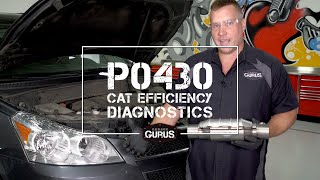
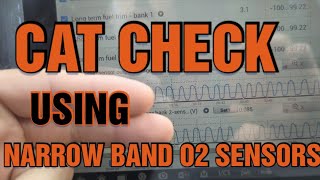
How to confirm: Use a scan tool to monitor live O2 sensor voltage. The Bank 2, Sensor 2 (downstream) voltage should be relatively stable (e.g., >0.5V). If it's erratic, stuck, or mirrors the upstream sensor, it may be faulty. 🎬 Watch: A pro mechanic's guide to diagnosing P0430 and P0420 codes. A good diagnostic step is to swap the Bank 1 and Bank 2 downstream sensors and see if the code follows to P0420.
Typical fix: Replace the Bank 2, Sensor 2 oxygen sensor. Many owners recommend replacing O2 sensors in pairs or all four at once on higher mileage vehicles.
Est. part cost: $50-$150 - Exhaust System Leak ⚪ Low Probability Rust and vibration can cause leaks at gaskets or welds, especially at the exhaust manifold-to-pipe flange. An exhaust leak before or near the O2 sensors can introduce outside air, skewing the sensor readings and falsely triggering a P0430 code.
How to confirm: Visually inspect the exhaust system for cracks or black soot stains, particularly around flanges and gaskets. A common method is to use a shop vacuum in reverse to blow air into the tailpipe and spray soapy water on joints to look for bubbles. 🎬 See these 3 simple DIY methods to fix a P0430 code.
Typical fix: Replace the leaking gasket or repair the cracked pipe section.
Est. part cost: $20-$100
Rare But Worth Checking
- Underlying Engine Issues: A misfiring spark plug, faulty ignition coil, or leaking fuel injector can send raw fuel into the exhaust, which superheats and destroys the catalytic converter. If you don't fix the root cause (e.g., a P0300-series code), you will destroy the new converter as well. Always check for other engine codes first.
Diagnosis Steps

- Check for other DTCs. Address any misfire (P03xx), fuel system, or air intake codes before diagnosing P0430.
- Inspect the Air Intake System (per TSB #16-NA-111): This is the most critical first step for this vehicle. Open the airbox. Check for broken/missing tabs on the cover, a warped housing, and look for fine dirt/sand tracks bypassing the filter seal. Inspect the intake tube downstream of the filter for any debris.
- Inspect for Exhaust Leaks: Carefully check the entire exhaust system from the engine to the catalytic converter for any signs of leaks, such as black soot or audible hissing, especially at the manifold flanges.
- Analyze Oxygen Sensor Data: Using a capable OBD-II scanner, graph the voltage for Bank 2 Sensor 1 (upstream) and Bank 2 Sensor 2 (downstream). At a steady 2,500 RPM, the upstream sensor should fluctuate rapidly between ~0.1V and ~0.9V. The downstream sensor should remain relatively steady and high (e.g., 0.6V-0.8V). If the downstream sensor mimics the upstream sensor's rapid switching, the converter is not working.
- Test the Catalytic Converter Temperature: After warming up the engine, use an infrared temperature gun to measure the exhaust pipe temperature just before and just after the catalytic converter. The outlet should be at least 100°F hotter than the inlet. If not, the converter is likely clogged or inactive.
- If all other tests pass, the catalytic converter has likely failed and requires replacement. Note that some owners report new aftermarket converters can trigger a code within the first 100 miles during their break-in period; clearing the code may resolve it if it's a quality part.
Parts You'll Likely Need
- Catalytic Converter (Bank 2 - Driver Side) — This is the most common direct fix for the code, assuming other causes have been ruled out. Note: Vehicles registered in CA, CO, NY, or ME require a more expensive CARB-compliant converter.
Trusted brands: ACDelco (OEM), Walker Exhaust, MagnaFlow, Eastern Catalytic
OEM price range: $700-$1200
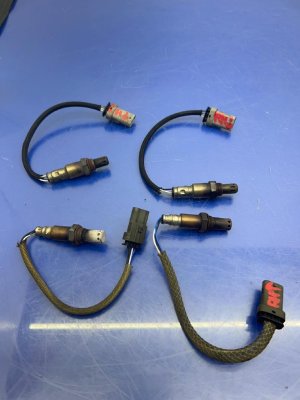
Aftermarket price range: $400-$800 - Downstream Oxygen Sensor (Bank 2, Sensor 2)
(OEM #ACDelco 12673435 or 213-4768 (example, confirm with VIN))— A faulty sensor can send incorrect data, falsely triggering the P0430 code. It's often replaced as a diagnostic step or along with the converter. Using quality brands like Denso or ACDelco is highly recommended by owners.
Trusted brands: ACDelco, Denso, Bosch
OEM price range: $80-$150
Aftermarket price range: $50-$100 - Air Cleaner Housing Assembly
(OEM #ACDelco 23400178 (example, confirm with VIN))— If the housing is warped or has broken tabs, it won't seal against the air filter, leading to debris intake that causes P0430 per TSB #16-NA-111.
Trusted brands: ACDelco (OEM), Dorman (e.g., 696-159)
OEM price range: $150-$250
Aftermarket price range: $80-$150
Related Codes That Often Appear With This One
- P0420 — This is the identical code for Bank 1 (passenger side). It's common for both converters to degrade at a similar rate, or for a systemic issue like a dirty air intake to affect both sides, triggering both codes.
- P0300-P0308 — These are misfire codes (P0300 for random, P0301-P0308 for specific cylinders). An engine misfire is a primary cause of catalytic converter failure, as it allows unburned fuel to enter the exhaust and ignite in the converter.
Technical Service Bulletins (TSBs) & Recalls

- 16NA111: This informational bulletin provides diagnostic/inspection information for the air box and air filter seal to correct a MIL and DTCs P0420 and P0430 setting.
- PIP3119P: Advises that catalytic converter efficiency DTCs P0420 and P0430 are disabled for the first hour of operation on low-mileage vehicles.
Platform-Specific Known Issues
- TSB #16-NA-111: GM issued a bulletin specifically for P0420 and P0430 codes caused by a poorly sealing air filter housing. Debris bypassing the filter can damage O2 sensors and the catalytic converter.
- TSB #PIP3119P: GM noted that on some low-mileage vehicles, codes P0420 and P0430 are disabled for the first hour of engine operation to prevent false codes during the initial break-in period.
Mechanic-Grade Diagnostic Values
- Downstream O2 Sensor (Bank 2, Sensor 2) Voltage — expected: Relatively stable voltage between 0.65V and 0.75V (650-750mV) when the converter is working efficiently.. Failure: Voltage rapidly switching between low (<0.2V) and high (>0.8V), mimicking the pattern of the upstream (Sensor 1) O2 sensor.
- Short-Term and Long-Term Fuel Trims — expected: Within a range of -10% to +10% combined. Ideally, closer to +/- 5%.. Failure: Sustained values greater than +10% (indicating the engine is compensating for a vacuum leak or lean condition) or less than -10% (compensating for a rich condition).
- Catalytic Converter Temperature Differential — expected: The exhaust pipe outlet of the converter should be significantly hotter (e.g., by at least 100-200°F) than the inlet pipe after the engine is fully warmed up.. Failure: The outlet temperature is the same as or cooler than the inlet temperature, indicating the catalyst is not 'lighting off' and performing the chemical reaction.
Hidden / Shadow Codes Worth Checking
- Mode 6, Test ID $51 & $52: These are not DTCs but onboard test results for the catalyst efficiency monitor. A capable scanner can read this raw data. It shows the test value and the minimum/maximum allowable thresholds set by the manufacturer. A value that is close to the failure threshold can indicate a converter that is getting weak, even before the P0430 code is set. (see via An OBD-II scan tool with Mode 6 diagnostic capabilities.)
Scan Tool Commands That Help

- Professional Scan Tool / Gas Analyzer: Propane Injection Catalyst Test — This is a GM-documented procedure to definitively test catalyst efficiency. Propane is introduced into the engine while monitoring exhaust gases. The ratio of converted CO2 to unburned hydrocarbons reveals the converter's actual oxidation ability, separating a bad converter from a sensor issue.
- GDS2 / Tech2 or equivalent: Misfire Data & History — Before diagnosing the P0430, check for any current or history misfire counts on all cylinders. A history of misfires on any cylinder, even if not currently active, points to a past event that could have damaged the catalytic converter with raw fuel.
Wiring & Ground Locations
- O2 Sensor Heater Fuse — In the underhood fuse block on 2015+ K2XX models.. On 2015-2020 models, the O2 sensor heaters for both banks often share a single 15A fuse (labeled 'O2 A' or similar). If this fuse blows, multiple sensors will stop working correctly, potentially leading to false catalyst codes.
- O2 Sensor Signal Wires — Within the harness running along the transmission and exhaust.. The signal wires for Bank 1 (passenger side) are typically tan and purple. The corresponding wires for Bank 2 (driver side) often have a white tracer stripe. Knowing this helps diagnose crossed or damaged wiring if sensors have been replaced.
- Wiggle Test on O2 Sensor Connector — The electrical connector for the Bank 2 downstream O2 sensor.. With the engine running and live data displayed on a scan tool, wiggling the sensor's connector can reveal an intermittent connection. If the voltage reading jumps or drops out during the wiggle test, the connector or its terminals are faulty, which can mimic a bad sensor or converter.
Real Owner Repair Stories
- Hood Rats Garage YouTube Channel (2015 Chevy Suburban 5.3L V8) — Check Engine Light with P0430 code.
❌ Tried (didn't work) Customer requested catalytic converter replacement without diagnosis.
✅ What actually fixed it A visual inspection revealed a cracked weld on the exhaust flange right before the catalytic converter. The leak was allowing air to be drawn in, fooling the downstream O2 sensor. The exhaust pipe assembly was replaced to fix the leak, which resolved the code without needing a new converter. - Reddit user in r/MechanicAdvice (2011 Jeep Wrangler (similar diagnostic principle)) — P0430 code, fuel efficiency and performance seemed fine.
❌ Tried (didn't work) A mechanic replaced the Bank 2 Sensor 1 (upstream) O2 sensor based on an out-of-range voltage reading.
✅ What actually fixed it The Check Engine Light returned almost immediately after the O2 sensor replacement. The community consensus was that the O2 sensor was correctly reporting the inefficiency of the catalytic converter, and the next logical step was to replace the catalytic converter itself, as this is the most common cause when sensors are confirmed good.
"I Checked Everything" — The Actual Cause
- In a documented case on a 2012 GM vehicle with a P0430, a technician found a very small pinhole leak in the exhaust Y-pipe. This type of small leak might not show up on a low-pressure smoke test but can cause a significant 'venturi effect' where escaping exhaust gases pull fresh air into the pipe. This extra oxygen fools the downstream O2 sensor into thinking the catalyst isn't working, triggering the P0430 code. The fix was replacing the Y-pipe assembly.
When the Usual Fixes Don't Work
- While replacing the catalytic converter is the ultimate fix for a P0430 code caused by an internally failed converter, it should be the last step. Multiple owner and technician reports confirm that underlying issues are the true cause in many cases. For example, a cracked exhaust flange weld on a 2015 Suburban and a tiny pinhole leak in a 2012 Traverse's Y-pipe both caused a persistent P0430 that was resolved by repairing the exhaust leak, saving the cost of a new converter. Similarly, failing AFM lifters on the 5.3L V8 are a known cause of misfires that destroy converters; replacing the converter without fixing the lifters results in a repeat failure.
Model Year Variations Within This Range
- 2012-2014 (GMT900): These models typically use the Gen IV 5.3L V8 engine. While they have Active Fuel Management (AFM), some of the most severe oil consumption and lifter issues were addressed in later revisions.
- 2015-2018 (K2XX): These models use the Gen V 5.3L L83 EcoTec3 engine, which features direct injection and a different AFM system. The airbox design on these trucks is the specific subject of TSB #16-NA-111, making the air intake inspection especially critical for this year range. The O2 sensor heater circuits are also more likely to be on a shared fuse.
Helpful Videos
![How to Fix CHEVROLET P0430 Engine Code in 3 Minutes [3 DIY Methods / Only $4.97]](https://img.youtube.com/vi/v773CdVFa7I/mqdefault.jpg)
We Have This Part in Stock


The information in this article is provided for general reference and educational purposes only. Vehicle specifications, procedures, and part compatibility can vary by production date, trim level, and region. Always consult your vehicle's factory service manual and verify part numbers before purchasing or performing repairs. Safety-critical components such as airbags, seat belts, and braking systems should be installed by a qualified professional.
- Gmc YUKON XL:
- 🎬 Helpful Videos
- 🛍️ Shop This Part
- What's Unique About the 2012-2018 Gmc YUKON XL
- Diagnostic Flowchart
- Symptoms You May Notice
- Most Likely Causes
- Rare But Worth Checking
- Diagnosis Steps
- Parts You'll Likely Need
- Related Codes That Often Appear With This One
- Technical Service Bulletins (TSBs) & Recalls
- Platform-Specific Known Issues
- Mechanic-Grade Diagnostic Values
- Hidden / Shadow Codes Worth Checking
- Scan Tool Commands That Help
- Wiring & Ground Locations
- Real Owner Repair Stories
- "I Checked Everything" — The Actual Cause
- When the Usual Fixes Don't Work
- Model Year Variations Within This Range
- 🎟️ Get 5% Off