

P0430 on 2004-2011 GMC Yukon XL: Catalyst Efficiency Fixes & Causes
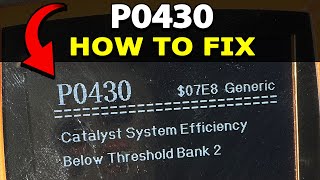
The P0430 code on a 2004-2011 GMC Yukon XL almost always means the Bank 2 (passenger side) catalytic converter is failing, a common issue over 100,000 miles. Before replacing this expensive part, definitively rule out exhaust leaks, especially from notoriously broken exhaust manifold bolts, and confirm the oxygen sensors are functioning correctly, as these can sometimes trigger the code.
- P0430 means the passenger-side catalytic converter is no longer working efficiently.
- The most likely cause on a high-mileage Yukon XL is a failed catalytic converter.
- Before replacing the expensive converter, always check for exhaust leaks and test the oxygen sensors.
- If you have any engine misfire or fuel system codes, you must fix them first to avoid damaging the new converter.
- You can drive the vehicle, but you won't pass an emissions test and risk further damage if the converter is clogged.
What's Unique About the 2004-2011 Gmc YUKON XL
The 2004-2011 GMC Yukon XL spans two vehicle generations, the GMT800 (through 2006) and the GMT900 (starting in 2007). While the P0430 code's meaning is consistent, the underlying causes can be typical for large V8 trucks of this era. High mileage is the primary contributor to converter failure. A very common issue on these GM V8s is broken exhaust manifold bolts 🎬 Watch: How to fix broken manifold bolts on GM V8s., which cause an exhaust leak that can trigger a false P0430. For 2007 and newer models with Active Fuel Management (AFM), excessive oil consumption is a known issue that can contaminate and destroy a new catalytic converter if not addressed first. A GM Technical Service Bulletin also notes that on new vehicles, the P0420/P0430 codes are disabled for the first hour of operation to allow for a break-in period.
Diagnostic Flowchart
Tap your situation to follow the diagnostic path that matches what you're seeing on this vehicle.
Generation note: This guide covers the latter part of the GMT800 generation (2004-2006) and the first part of the GMT900 generation (2007-2011). The function and diagnosis of the P0430 code are similar across both generations. However, 2007+ models with the 5.3L or 6.0L V8s feature Active Fuel Management (AFM), which is a frequent root cause of oil consumption that leads to catalytic converter failure. The issue of broken exhaust manifold bolts is prevalent across both generations.
Symptoms You May Notice
- Check Engine Light is on
- Reduced engine performance and sluggish acceleration
- Decreased fuel economy
- A sulfur or "rotten egg" smell from the exhaust
- Rattling noises from underneath the vehicle if the converter's internal structure has broken apart
- Intermittent Check Engine Light that turns on and off periodically
- Immediately replacing the oxygen sensors without proper diagnosis. While an O2 sensor *can* be the cause, it's far more common for the sensor to be correctly reporting a failed catalytic converter. Forum members repeatedly advise against just 'throwing parts' at the problem.
- Using a spark plug non-fouler or O2 sensor extender on the downstream sensor. This is a trick to pull the sensor out of the main exhaust stream to fool the computer. It does not fix the emissions problem, is illegal in many states, and will fail a visual emissions inspection.
Most Likely Causes
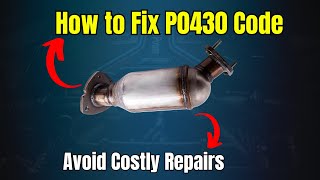
- Failing or Failed Catalytic Converter (Bank 2) 🔴 High Probability Catalytic converters have a finite lifespan and fail due to age, mileage, and contamination. On these large V8 trucks, they are a common failure point, often between 100,000-150,000 miles. For 2007+ models, oil consumption from the Active Fuel Management (AFM) system can significantly shorten the converter's life. Forum users consistently report that this is the ultimate fix after trying other remedies.
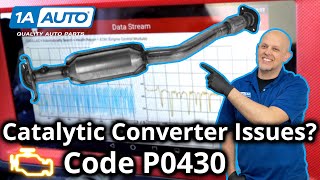
How to confirm: Use a scan tool to graph the upstream (B2S1) and downstream (B2S2) oxygen sensors. A good converter shows a steady downstream sensor reading, while a bad one will have the downstream sensor switching rapidly, mimicking the upstream sensor. An infrared temperature gun can also be used; the outlet of a good converter should be at least 100°F hotter than the inlet. If it's the same or cooler, it's not functioning.
Typical fix: Replace the Bank 2 catalytic converter. It is highly recommended to fix any underlying engine issues (misfires, oil burning from AFM) first. Some owners on forums have had issues with aftermarket converters and recommend using OEM or high-quality aftermarket parts like Magnaflow.
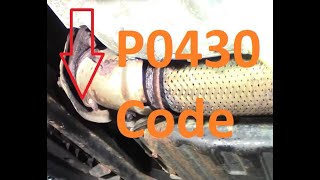
Est. part cost: $300-$800 for an aftermarket direct-fit unit, $900+ for an OEM part. - Exhaust Leak 🟡 Medium Probability Exhaust manifold bolts on GM V8s are notoriously prone to breaking off at the cylinder head, especially the rearmost bolts near the firewall. This creates a leak that allows oxygen into the exhaust, confusing the O2 sensors and triggering a false P0430. Gaskets at the manifold or converter flanges can also fail.
How to confirm: Listen for a distinct 'ticking' or 'puffing' sound from the passenger side engine bay, especially on a cold start, which disappears as the engine warms up and the metal expands. Visually inspect for black soot trails around the exhaust manifold where it meets the cylinder head. A smoke machine can also pinpoint the leak.
Typical fix: If a bolt is broken, instead of a costly cylinder head removal, mechanics and DIYers often use a clamp-style exhaust manifold bolt repair kit (e.g., Dorman, Kral KAP169) that uses adjacent bolt holes to seal the leak. Otherwise, replace the leaking gasket.
Est. part cost: $20-$100 for gaskets and hardware, or $50-$150 for a bolt repair kit. - Faulty Oxygen (O2) Sensor ⚪ Low Probability While often replaced first, a faulty O2 sensor is a less common cause. Forum discussions are filled with owners who replaced the O2 sensor only for the P0430 code to return. A truly bad sensor usually triggers its own specific code (e.g., for heater circuit failure or slow response). However, an old, high-mileage sensor can become 'lazy' and contribute to inaccurate readings.
How to confirm: Test the sensor's response using a scan tool. The upstream sensor (B2S1) should switch rapidly between ~0.1V and ~0.9V. The downstream sensor (B2S2) on a good converter should hold a steady voltage, typically above 0.6V-0.7V. If the B2S2 sensor is stuck at a low voltage or switches in perfect sync with the upstream sensor, it is correctly identifying a bad converter. If the sensor is stuck at a fixed voltage and doesn't respond to changes in engine conditions, the sensor itself may be bad.
Typical fix: Replace the faulty oxygen sensor (typically the downstream, Bank 2 Sensor 2). It's often recommended to replace O2 sensors when replacing a catalytic converter as a preventative measure.
Est. part cost: $50-$120 for one sensor.
Rare But Worth Checking
- Engine Misfires or Rich/Lean Fuel Condition: This is a root cause, not a direct trigger. Unburned fuel from misfires or an improper air-fuel ratio can overheat and destroy the catalytic converter. If you have other codes like P0300 (Random Misfire) or fuel trim codes (P0171, P0174), you must fix those problems before replacing the converter, or the new one will fail quickly.
- Contaminated Air Filter Housing: A specific GM TSB (#16-NA-111) for later models indicates that sand or debris bypassing a poorly sealed air filter can damage O2 sensors and clog the catalytic converter. While this TSB applies to 2014+ models, the principle is relevant if the vehicle is operated in dusty environments and serves as a reminder to check for any unmetered air leaks.
- Fluctuating Alternator/Unstable System Voltage: In one documented forum case, a user with persistent P0420/P0430 codes noted erratic battery voltage (dropping to 12V while driving). Unstable voltage can affect sensor readings and PCM calculations. This should be investigated if charging system issues are also present.
Diagnosis Steps
- Check for other DTCs. Any codes related to misfires (P030x), fuel trim (P0171, P0174), or other oxygen sensors must be addressed first.
- Visually inspect the exhaust system for leaks. Pay extremely close attention to the exhaust manifold-to-cylinder head connection on the passenger side for signs of soot, indicating a leak from a broken bolt.
- Inspect the wiring for the Bank 2 oxygen sensors for any damage, melting, or corrosion.
- Use a scan tool with live data capability to monitor the voltage of the Bank 2 upstream (B2S1) and downstream (B2S2) oxygen sensors with the engine fully warmed up and held at around 2,000 RPM.
- Analyze the data: If the B2S2 voltage graph is switching rapidly and mirroring the B2S1 voltage graph, the catalytic converter has failed. A properly functioning converter should produce a much flatter, steadier B2S2 voltage reading (typically >0.6V).
- If the B2S2 voltage is flat and unresponsive (e.g., stuck at 0.45V) or shows other signs of malfunction, the sensor itself is likely faulty.
- Use an infrared thermometer to measure the temperature of the pipe entering the converter and exiting it. The outlet should be at least 100°F hotter than the inlet. If it's the same temperature or cooler, the converter is not working (either clogged or chemically inactive).
- If a new converter was just installed and the code appeared, perform the GM Catalyst Monitor Drive Cycle to allow the system to re-learn.
Parts You'll Likely Need
- Catalytic Converter (Bank 2, Passenger Side)
(OEM #19420124 (2007-08 4.8/5.3/6.0L), 22940415 (2007-08))— This is the most common failed component for a P0430 code, as it directly measures the part's efficiency.
Trusted brands: Walker, Magnaflow, AP Exhaust, Genuine GM - Downstream Oxygen Sensor (Bank 2, Sensor 2)
(OEM #12573167 (Common for 5.3L/6.0L))— This is the sensor that reports the converter's efficiency. It is sometimes replaced as a preventative measure or if it is diagnosed as faulty.
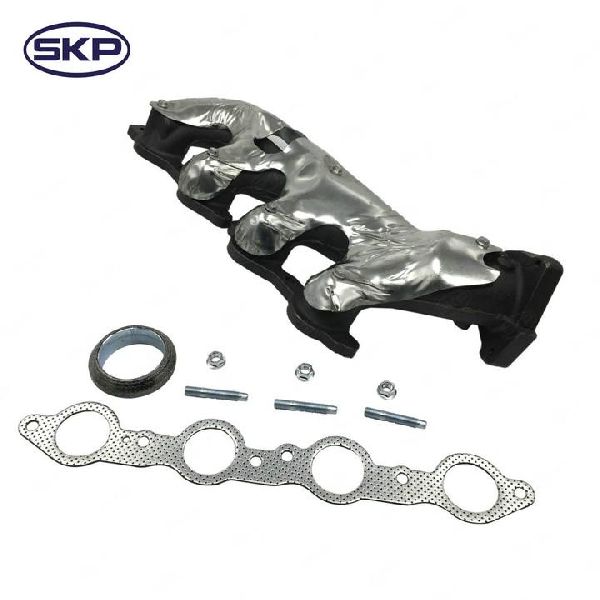
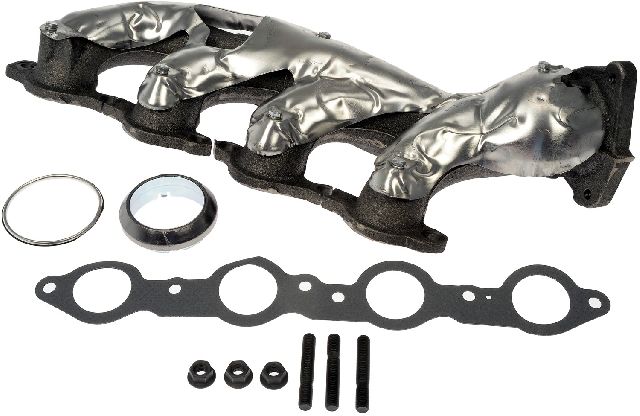
Trusted brands: ACDelco, Denso, Delphi, NTK - Exhaust Manifold Bolt Repair Clamp — Used to fix a common exhaust leak from broken manifold bolts without having to remove the cylinder head.
Trusted brands: Dorman, Kral Auto Parts (KAP)
Related Codes That Often Appear With This One
- P0420 — P0420 is the identical code for Bank 1 (driver's side). It is common for both catalytic converters to fail around the same time due to age and mileage, often leading to both codes appearing together.
- P0300-P0308 — These are misfire codes (P0300 for random, P0301-P0308 for specific cylinders). An ongoing misfire allows unburned fuel to enter the exhaust, which will quickly overheat and destroy the catalytic converter. This is a root cause that MUST be fixed before replacing the converter.
Technical Service Bulletins (TSBs) & Recalls
- PIP3119N: Mentions that the catalytic converter efficiency diagnostic for P0420/P0430 may be disabled for the first hour of operation on some vehicles.
Platform-Specific Known Issues
- tsbs_cited
- forum_citations
- real_owner_experiences
Mechanic-Grade Diagnostic Values
- Downstream O2 Sensor (B2S2) Voltage (Good Converter) — expected: Steady voltage, typically between 0.4V and 0.75V, with slow fluctuations.. Failure: Voltage rapidly switching between ~0.1V and ~0.9V, mimicking the upstream sensor's pattern.
- Long Term and Short Term Fuel Trims (LTFT/STFT) — expected: Within +/- 5% at idle and steady cruise.. Failure: Consistently high positive values (e.g., > +10%) suggest a vacuum/exhaust leak. Consistently high negative values suggest a rich condition.
- Mode $06 Catalyst Monitor (GMT800, 2004-2006) — expected: TID $04, CID $70. This is the steady-state catalyst test for Bank 2. The value should be below the PCM's calculated maximum limit.. Failure: The test value exceeds the maximum limit specified in the scan tool's Mode $06 data.
- Mode $06 Catalyst Monitor (GMT900, 2007-2011) — expected: OBDMID $21, TID $A3 (Main Catalyst Efficiency Monitoring). The reported value should be below the PCM's failure threshold.. Failure: The test value exceeds the maximum limit specified in the scan tool's Mode $06 data.
Hidden / Shadow Codes Worth Checking
- Mode $06 Data: This is not a DTC but a diagnostic mode that shows the results of the PCM's self-tests before a code is set. For P0430, it shows the measured efficiency value of the Bank 2 catalyst versus its passing threshold. This can reveal a marginal converter that hasn't failed enough to consistently set the Check Engine Light. (see via A professional scan tool or advanced OBD-II app that can display Mode $06 test results. The specific Test ID (TID) and Component ID (CID) vary by model year.)
Scan Tool Commands That Help
- Tech 2 / GDS2 or equivalent: GM Catalyst Monitor Drive Cycle — This is not a direct command, but a specific driving procedure used to force the PCM to run the catalyst efficiency test. It is essential for verifying that a repair (like a new converter) has been successful and that the monitor will run and pass for an emissions test. The cycle involves a cold start, idle periods with electrical load, and specific highway cruise speeds.
Wiring & Ground Locations
- O2 Sensor Wiring Repair — Wiring pigtail on any oxygen sensor.. Per a GM service document, O2 sensor wires must NOT be repaired with solder. The sensor draws its clean air reference through the copper wire strands themselves. Soldering the connection blocks this air path, which can degrade sensor performance and cause incorrect readings, potentially leading to a false P0430 code. If the pigtail is damaged, the entire sensor must be replaced.
- G104 (GMT800) / PCM Ground — On the GMT800 (2004-2006), a critical ground for the PCM and sensors is located on the top rear of the engine block, driver's side. Another ground designated G104 is at the left rear of the engine.. A poor ground connection at this point can cause erratic voltage and faulty signals from all engine sensors, including the oxygen sensors, leading to misdiagnosis.
- G103 (GMT900) — On GMT900 models (2007-2011), this ground is located on the front of the passenger side cylinder head.. This is a primary engine ground point. Corrosion or a loose connection here can cause a host of electrical issues, including incorrect O2 sensor readings.
- O2 Sensor Fuses (GMT900) — In the underhood fuse block on 2007-2014 models.. Fuses #8 and #18 supply power to the O2 sensor heater circuits for all four sensors. A blown fuse will cause the sensors to respond slowly or not at all, triggering various codes including P0430.
Real Owner Repair Stories
- Reddit user in r/MechanicAdvice (2014 Chevy Silverado 5.3L (150,000 miles) - Similar engine/emissions platform) — Blinking check engine light, sluggish acceleration, misfires, and a pre-existing O2 sensor code.
❌ Tried (didn't work) Replaced spark plugs and wires.
✅ What actually fixed it The owner took the truck to the dealership, who quoted $3800 to replace the catalytic converter as a first step without guaranteeing it would fix the issue. A second independent shop properly diagnosed the problem and found the O2 sensor itself was faulty. Replacing the O2 sensor resolved all the issues, including the misfires.
"I Checked Everything" — The Actual Cause
- In one documented case on a similar GM vehicle, a P0430 code was present but a smoke test revealed no leaks. The actual cause was a small pinhole leak in the Y-pipe, located *after* the downstream O2 sensor. The technician explained that the high-speed flow of exhaust gas over the pinhole created a venturi effect, pulling fresh air into the pipe. This fresh air would then get pulled back upstream toward the sensor during exhaust pulses, contaminating the reading and tricking the PCM into thinking the converter was inefficient.
When the Usual Fixes Don't Work
- While the catalytic converter is the most probable cause, it should not be replaced without confirming it has failed. A real-world example on a similar GM truck showed a dealership recommending a $3,800 converter replacement as a first step for a P0430 and misfire code. The owner sought a second opinion, and the actual fault was a defective oxygen sensor. Replacing only the sensor fixed all codes and symptoms, saving thousands of dollars. This highlights the importance of ruling out sensors and leaks before condemning the expensive converter.
OEM Part Supersession History
10395213, 15076462, 15130093, 15754088, 15755463, 15772206, 15772207→19420124— Part consolidation and design updates over the model years.15905949→22940415— Part update for 6.2L engine applications.
Model Year Variations Within This Range
- 2007-2011: The introduction of Active Fuel Management (AFM) on 5.3L and 6.0L V8s is the most significant change. This system is a known cause of excessive oil consumption due to issues with piston rings and the AFM pressure relief valve. This oil burning contaminates and destroys the catalytic converters, making it a primary root cause for P0430 on these later models that is not present on 2004-2006 trucks.
- 2004-2006 (GMT800) vs 2007-2011 (GMT900): The diagnostic data protocol and Mode $06 identifiers are different. GMT800 models use the J1850/Class2 protocol, while GMT900 models use the faster GMLAN (CAN bus) protocol. This requires different scan tool software (Tech2 vs. GDS2 for later models) and knowledge of different Mode $06 test IDs to perform advanced diagnosis.
Helpful Videos
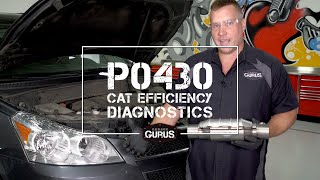
We Have This Part in Stock
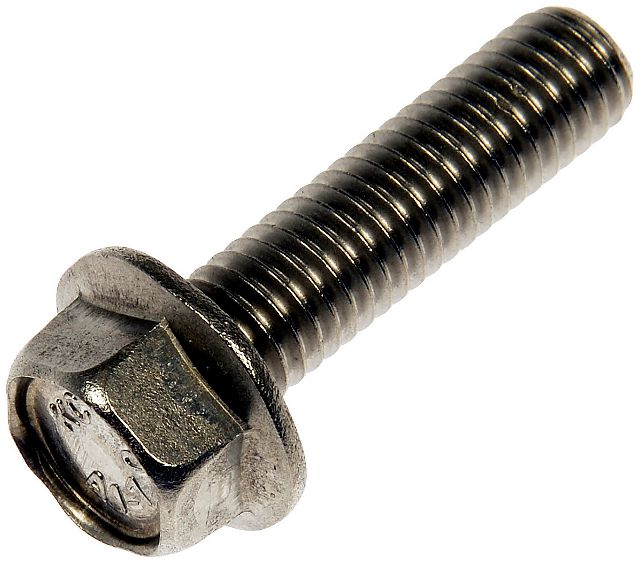
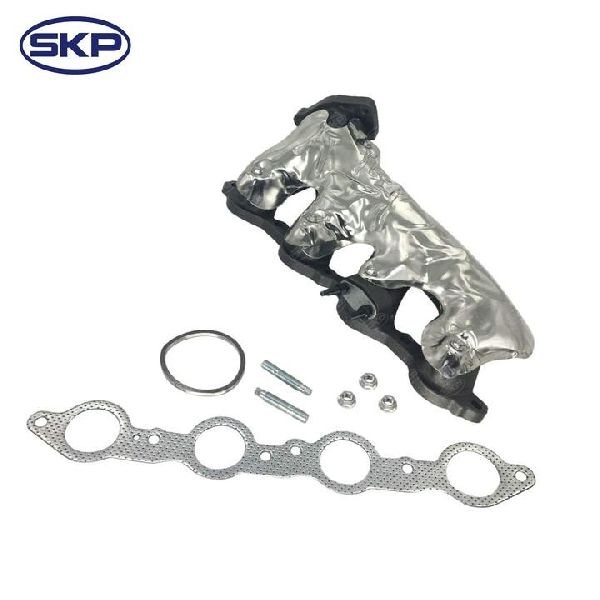
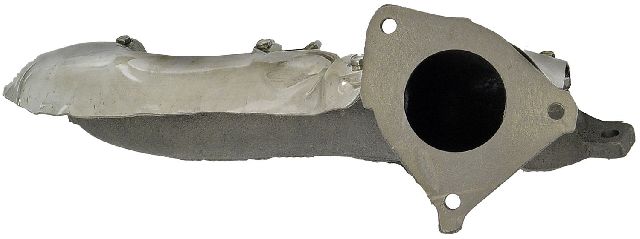


The information in this article is provided for general reference and educational purposes only. Vehicle specifications, procedures, and part compatibility can vary by production date, trim level, and region. Always consult your vehicle's factory service manual and verify part numbers before purchasing or performing repairs. Safety-critical components such as airbags, seat belts, and braking systems should be installed by a qualified professional.
- Gmc YUKON XL:
- 🎬 Helpful Videos
- 🛍️ Shop This Part
- What's Unique About the 2004-2011 Gmc YUKON XL
- Diagnostic Flowchart
- Symptoms You May Notice
- Most Likely Causes
- Rare But Worth Checking
- Diagnosis Steps
- Parts You'll Likely Need
- Related Codes That Often Appear With This One
- Technical Service Bulletins (TSBs) & Recalls
- Platform-Specific Known Issues
- Mechanic-Grade Diagnostic Values
- Hidden / Shadow Codes Worth Checking
- Scan Tool Commands That Help
- Wiring & Ground Locations
- Real Owner Repair Stories
- "I Checked Everything" — The Actual Cause
- When the Usual Fixes Don't Work
- OEM Part Supersession History
- Model Year Variations Within This Range
- 🎟️ Get 5% Off