

P0430 on 2007-2011 GMC Yukon Denali: Catalyst Efficiency Fixes
The P0430 code on a 2007-2011 GMC Yukon Denali almost always points to a failing Bank 2 catalytic converter. While an exhaust leak or faulty oxygen sensor are possible, the converter itself is the most common failure point. A very common and often overlooked cause is an exhaust leak from a broken rear exhaust manifold bolt. Expect to pay $300-$800+ for a replacement part.
- P0430 means the passenger-side catalytic converter is no longer cleaning the exhaust effectively.
- The most likely cause on a 2007-2011 Yukon Denali is a worn-out catalytic converter, especially over 100,000 miles.
- Before replacing the expensive converter, always check for exhaust leaks between the engine and the converter, as this is a common and much cheaper fix.
- Don't automatically replace the oxygen sensors; they are usually just reporting the problem, not causing it, unless a specific sensor code is also present.
What's Unique About the 2007-2011 Gmc YUKON DENALI

On these GMT900 platform trucks (which includes the Yukon, Tahoe, Escalade, Silverado, and Sierra), the P0430 and P0420 codes are extremely common as the vehicles age past 100,000 miles. The catalytic converters simply wear out. Another significant issue specific to these GM V8s is the tendency for exhaust manifold bolts to break, especially the rearmost ones near the firewall. This creates an exhaust leak that allows oxygen into the system, which tricks the sensors into setting a false P0430 code. Owners often chase the code by replacing sensors when the true cause is either the converter itself or a manifold leak. These trucks are also frequent targets for catalytic converter theft due to high ground clearance, which will also trigger the code.
Diagnostic Flowchart

Tap your situation to follow the diagnostic path that matches what you're seeing on this vehicle.
Symptoms You May Notice
- Check Engine Light is on
- Reduced engine power and sluggish acceleration (if clogged)
- Rotten egg or sulfur smell from the exhaust
- Failed emissions test
- A ticking or exhaust leak sound from the engine bay, especially when cold, which may indicate a broken manifold bolt.
- In many cases, no noticeable symptoms other than the Check Engine Light.
- Replacing the oxygen sensors when the catalytic converter is the actual problem. The O2 sensors are often doing their job correctly by reporting the inefficiency of the converter. Forum discussions are filled with owners who replaced sensors only to have the P0430 code return.
- Overlooking an exhaust leak from a broken manifold bolt. The resulting ticking noise might be dismissed, but the leak directly impacts the O2 sensor readings and is a very common root cause on these trucks.
Most Likely Causes

- Failing Catalytic Converter (Bank 2) 🔴 High Probability Catalytic converters have a finite lifespan and degrade over time. High mileage is the primary reason for failure on these vehicles. Underlying issues like engine misfires (sometimes related to AFM lifter issues on these engines) or burning oil can also send unburned fuel into the exhaust, destroying the converter.
How to confirm: A professional can use a scan tool to monitor the switching frequency of the upstream and downstream O2 sensors. A healthy converter shows slow, steady readings from the downstream sensor, while a failing one will have the downstream sensor switching rapidly, similar to the upstream one. Another method is to use an infrared temperature gun to measure the inlet and outlet temperatures of the converter; the outlet should be significantly hotter (at least 100°F) than the inlet on a working converter.
Typical fix: Replace the Bank 2 (passenger side) catalytic converter assembly. It is often recommended to replace them in pairs (Bank 1 and Bank 2) if they are of similar age and mileage.
Est. part cost: $300-$800 - Exhaust Leak (especially broken manifold bolts) 🔴 High Probability The steel exhaust manifold bolts on the aluminum cylinder heads of the 6.2L V8 are notorious for breaking due to thermal cycles. The rear bolts (closest to the firewall) are the most common to fail. This creates a leak that lets in unmetered oxygen, causing the downstream O2 sensor to send false readings that trigger a P0430 code.
How to confirm: Listen for a distinct 'ticking' sound from the engine bay, especially on a cold start, that may quiet down as the engine warms up and the metal expands. Visually inspect the exhaust manifold on the passenger side, particularly the rearmost bolt. You may see black soot trails near the leak. A smoke test can definitively identify the location of any leaks.
Typical fix: The proper fix is to extract the broken bolt and replace the manifold gasket. However, this is often very difficult due to the bolt's location. A popular and effective alternative is to install an 'exhaust manifold bolt repair clamp'. This bracket bolts onto the cylinder head and presses against the manifold to seal the leak without requiring bolt extraction.
Est. part cost: $20-$100 for gaskets or a repair clamp. - Faulty Oxygen (O2) Sensor ⚪ Low Probability While O2 sensors do fail, they typically trigger their own specific trouble codes (e.g., P0155-P0161). It's uncommon for a faulty O2 sensor to cause a P0430 without an accompanying sensor code. Many owners replace sensors unnecessarily when the converter or an exhaust leak is the real issue.
How to confirm: Use a scan tool to graph the voltage of the Bank 2 downstream O2 sensor. If the sensor's reading is stuck at a specific voltage or does not respond to changes in engine conditions, it may be faulty. Swapping the downstream sensors from Bank 1 and Bank 2 to see if the code follows the sensor (e.g., changes to P0420) is a good diagnostic step.
Typical fix: Replace the Bank 2, Sensor 2 (downstream) oxygen sensor.
Est. part cost: $50-$120
Rare But Worth Checking
- Engine Misfires or Rich/Lean Fuel Condition: An unresolved engine issue, such as a bad spark plug, faulty fuel injector, vacuum leak, or an AFM (Active Fuel Management) lifter failure, can send unburned fuel into the exhaust, which can quickly overheat and destroy the catalytic converter. If you have other codes like P030x (misfire) or fuel trim codes, you must fix those first.
- PCM Software Issue: In some cases, the vehicle's Powertrain Control Module (PCM) may have overly sensitive parameters for triggering the code. A dealer may have an updated software calibration available. TSB PIP3119P also notes that new converters may need a 'break-in' period before the code will stay clear.
Diagnosis Steps
- Check for other DTCs. If any misfire (P030x), fuel system, or O2 sensor-specific codes are present, diagnose and repair them first, as they can be the root cause of converter failure.
- Inspect for Exhaust Leaks. Start the engine cold and listen for a 'ticking' noise near the passenger side exhaust manifold. Visually inspect the manifold bolts, especially the one closest to the firewall, for breakage or soot trails. Perform a smoke test if a leak is suspected but not visible.
- Analyze O2 Sensor Data. Use a scan tool to graph the live data for the upstream (Sensor 1) and downstream (Sensor 2) oxygen sensors for Bank 2. At a steady 2,500 RPM, the Bank 2 Sensor 1 voltage should fluctuate rapidly. The Bank 2 Sensor 2 voltage should remain relatively stable and smooth. If Sensor 2 is fluctuating rapidly like Sensor 1, the converter is not working.
- Test Converter Temperature. After the engine is fully warmed up, use an infrared thermometer to check the temperature of the pipe entering the catalytic converter and the pipe exiting it. The outlet should be at least 100°F hotter than the inlet. If it's not, the converter is not functioning chemically.
- If all other tests pass and no exhaust leaks are found, the catalytic converter is the confirmed culprit.
Parts You'll Likely Need

- Bank 2 Catalytic Converter
(OEM #19418958 (Verify with VIN; supersedes 20854457, 25904626, 25904629 for some years))— This is the most common cause of a P0430 code on high-mileage Yukon Denalis. The internal catalyst materials degrade over time. Be aware that cheap universal converters often lack the precious metal loading to satisfy the PCM, causing the code to return. A quality direct-fit aftermarket or OEM part is recommended.
Trusted brands: Walker, MagnaFlow, AP Exhaust, ACDelco (OEM)
OEM price range: $600-$1000+
Aftermarket price range: $300-$600 - Downstream Oxygen Sensor (Bank 2, Sensor 2) — While less common than a failed converter, a lazy or faulty O2 sensor can sometimes trigger this code. It's often replaced as a precaution when the converter is changed, but should not be the first part replaced for a P0430 code alone.
Trusted brands: Denso, Bosch, NGK/NTK, ACDelco (OEM)
OEM price range: $80-$150
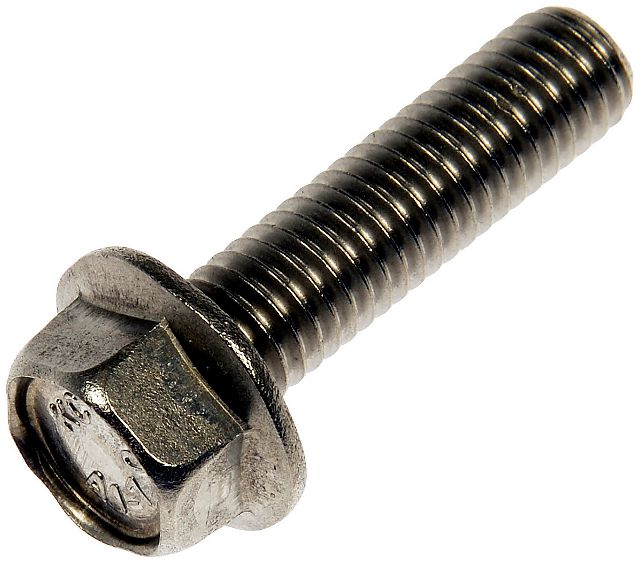
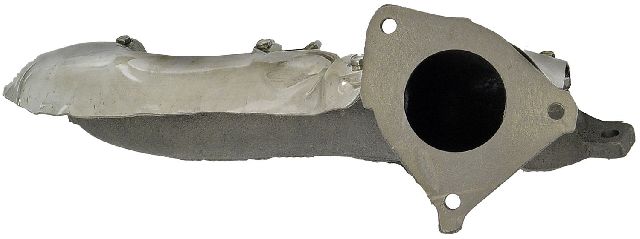
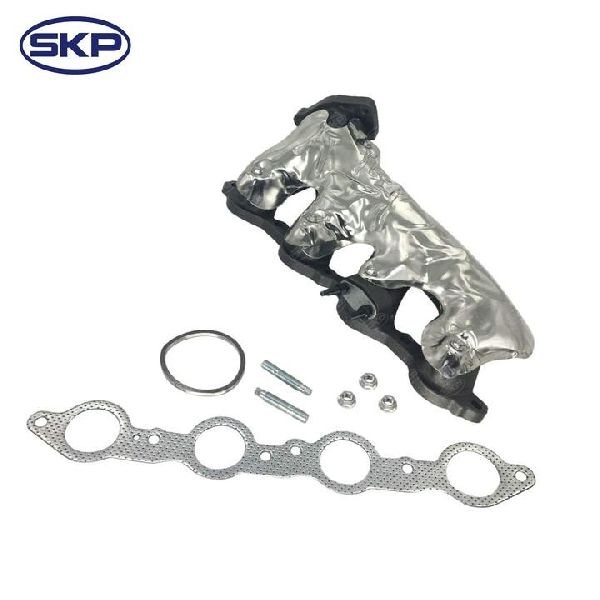
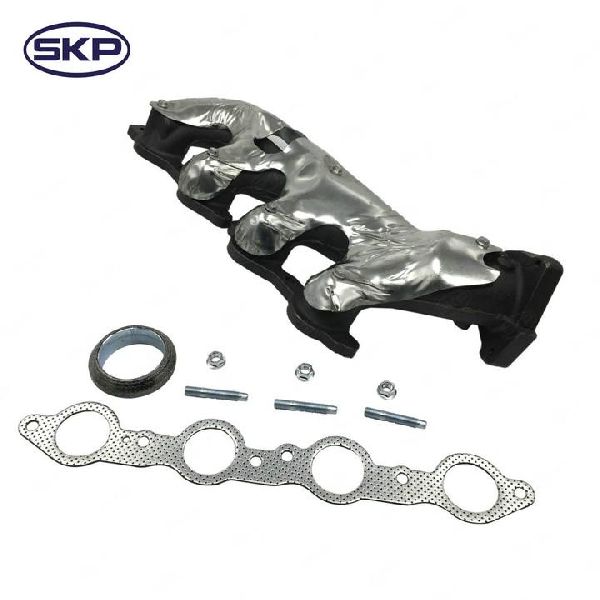
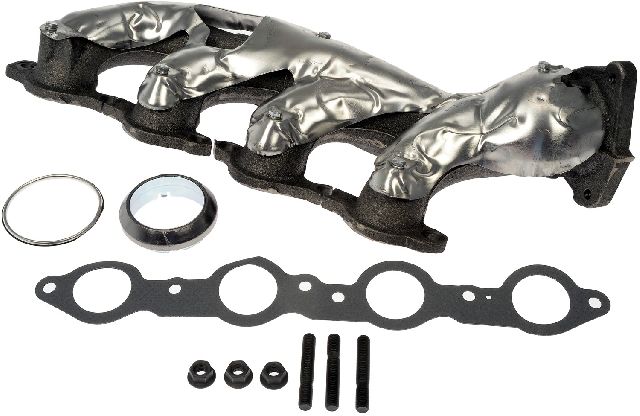
Aftermarket price range: $50-$100 - Exhaust Manifold Gasket / Bolt Repair Clamp — A leak at the exhaust manifold, often from a broken rear bolt, is a very common cause of a false P0430 code. Replacing the gasket or using a repair clamp can permanently fix the issue.
Trusted brands: Fel-Pro, ACDelco (OEM), Dorman, Kral Auto Parts
Aftermarket price range: $20-$100
Related Codes That Often Appear With This One
- P0420 — P0420 is the identical code for Bank 1 (driver's side). If both converters are of similar age and mileage, they often fail around the same time, causing both codes to appear.
- P0300-P0308 — These are misfire codes (P0300 for random, P0301-P0308 for specific cylinders). An engine misfire allows unburned fuel to enter the exhaust, which can quickly overheat and destroy the catalytic converter.
Technical Service Bulletins (TSBs) & Recalls
- PIP3119P: States that on some vehicles, the diagnostic for P0420/P0430 is disabled for the first hour of operation to prevent false codes.
- PIP3119M: Mentions a required 'break-in' period for newly installed catalytic converters to prevent the code from returning prematurely.
Platform-Specific Known Issues
- A known GM Technical Service Bulletin (TSB #PIP3119P) notes that on some vehicles, the P0420 and P0430 diagnostics are disabled for the first hour of operation to prevent false codes at low mileage. [Bulletin #PIP3119P]
- An updated version of the TSB (PIP3119M) mentions that new replacement converters may require a 'break-in' or 'seasoning' drive cycle at sustained highway speeds before the PCM can accurately measure their efficiency and keep the code from returning.
- An unofficial and not-recommended 'fix' discussed by owners involves installing a spark plug non-fouler between the exhaust pipe and the downstream O2 sensor. This pulls the sensor out of the direct exhaust stream to trick the computer, but it does not fix the underlying emissions problem and may be illegal.
Mechanic-Grade Diagnostic Values

- Upstream & Downstream Oxygen Sensor Voltage (Narrowband) — expected: A healthy, warm upstream (Sensor 1) sensor should fluctuate rapidly between 0.1 and 0.9 volts (100-900mV). A healthy downstream (Sensor 2) sensor should hold a relatively steady, high voltage, typically between 0.6 and 0.8 volts (600-800mV).. Failure: If the downstream sensor's voltage begins to fluctuate rapidly, mimicking the upstream sensor, it indicates the catalytic converter is not storing oxygen and is inefficient. A sensor that is stuck at a specific voltage or responds very slowly may be faulty itself.
Scan Tool Commands That Help
- Tech2 / GDS2: Catalyst System Test — This is a specific diagnostic routine in the GM factory scan tool that runs the engine at specific parameters to actively test the switching ratio of the front and rear O2 sensors to determine catalyst efficiency. It provides a more definitive pass/fail result than just observing live data during a drive.
- Tech2 / GDS2: O2 Sensor Response Test — This function can be used to command a rich or lean condition and observe how quickly the O2 sensor voltage responds. It is useful for isolating a slow or lazy sensor that might not have its own DTC but could be contributing to an incorrect catalyst efficiency reading.
Wiring & Ground Locations
- O2 Sensor Fuses — In the underhood fuse block, fuses F8 (labeled O2-A SNSR) and F18 (labeled O2-B SNSR) provide power to the oxygen sensor heater circuits.. A blown fuse for the Bank 2 sensor's heater circuit will prevent the sensor from reaching operating temperature quickly, causing slow response and potentially leading to an erroneous P0430 code before the sensor itself is fully functional.
- G103 — Located at the left rear of the engine compartment on the cowl, above the brake booster.. This is a critical ground for the Body Control Module (BCM) and the Data Link Connector (DLC). While not a direct ground for the O2 sensor signal (which grounds through the PCM), a poor connection here can cause a host of communication issues and erratic behavior in modules that interpret sensor data.
- G104 — Located on the back of the left (driver's side) cylinder head.. This ground strap connects the engine block to the chassis/firewall. A poor connection here can create ground offsets between the engine and the PCM, potentially affecting sensor readings that rely on a stable ground reference, including O2 sensors.
- O2 Sensor Harness — The wiring for the O2 sensors runs along the transmission and exhaust. The Bank 2 (passenger side) harness is particularly vulnerable to heat from the exhaust.. GM service information explicitly warns against repairing the pigtail wiring on a heated oxygen sensor. The sensor uses the air gap between the wire strands to get its clean air reference. Any soldering or improper crimping can block this reference path, degrading sensor performance and causing incorrect readings.
Real Owner Repair Stories
- Tahoe Yukon Forum (Year not specified, but GMT900 platform. Had an upper engine repair (heads pulled).) — P0430 code appeared after engine work and installation of new aftermarket catalytic converters.
❌ Tried (didn't work) Swapping downstream O2 sensors from Bank 1 to Bank 2 (code did not follow the sensor)., Considering that the new aftermarket cat was bad from the factory.
✅ What actually fixed it The owner discovered the rearmost exhaust manifold bolt on the passenger side (Bank 2) was broken off in the head. After replacing the aftermarket cats with known-good OEM cats and presumably fixing the manifold leak, the code was resolved. The final conclusion was that it could have been the manifold leak, the aftermarket cats, or both. - Chevy Tahoe Forum (2007 Tahoe (GMT900 platform)) — No exhaust leak sound, but the heads of the rearmost manifold bolts on both sides were broken off.
❌ Tried (didn't work) Attempting to access the driver's side ground strap bolt was extremely difficult without jacking up the transmission.
✅ What actually fixed it The owner successfully installed Kral brand exhaust manifold bolt repair clamps on both the passenger and driver sides. This sealed the potential leak without needing to extract the broken bolts. The passenger side took about 2 hours after removing the wheel and inner fender liner.
"I Checked Everything" — The Actual Cause
- A very small pinhole leak, especially downstream of the catalytic converter but before the rear O2 sensor, can sometimes be missed by a smoke test. This can create a Venturi effect, pulling fresh air into the exhaust stream as gases rush past, causing the downstream O2 sensor to read lean and potentially trigger a false catalyst code.
OEM Part Supersession History
25904626, 25904629, 20854457, and others→19418958— Part consolidation and potential design updates by GM over the model years.
Heads up: The listed part is an assembly that includes the front pipe and converter. While it fits a range of 6.2L applications, always verify the exact part number with the vehicle's VIN before ordering, as there can be differences between Federal and California emissions models, and between different chassis (e.g., Yukon vs. Yukon XL).
Model Year Variations Within This Range
- 2007-2008: The 6.2L V8 engine (RPO L92) in the 2007-2008 Yukon Denali did NOT have Active Fuel Management (AFM) or Displacement on Demand (DOD).
- 2009: The 6.2L V8 engine was updated to the L9H, which added Flex Fuel capability but still did not have AFM.
- 2010-2011: The 6.2L V8 engine was updated to the L94, which included both Flex Fuel capability and Active Fuel Management (AFM). AFM system failures (like stuck lifters) can lead to misfires, which in turn can destroy a catalytic converter, making these later models potentially more susceptible to P0430 as a secondary failure.
Helpful Videos
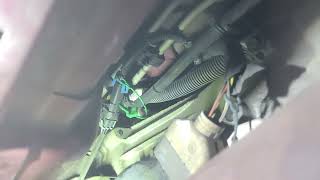
We Have This Part in Stock


The information in this article is provided for general reference and educational purposes only. Vehicle specifications, procedures, and part compatibility can vary by production date, trim level, and region. Always consult your vehicle's factory service manual and verify part numbers before purchasing or performing repairs. Safety-critical components such as airbags, seat belts, and braking systems should be installed by a qualified professional.
- Gmc YUKON DENALI:
- 🎬 Helpful Videos
- 🛍️ Shop This Part
- What's Unique About the 2007-2011 Gmc YUKON DENALI
- Diagnostic Flowchart
- Symptoms You May Notice
- Most Likely Causes
- Rare But Worth Checking
- Diagnosis Steps
- Parts You'll Likely Need
- Related Codes That Often Appear With This One
- Technical Service Bulletins (TSBs) & Recalls
- Platform-Specific Known Issues
- Mechanic-Grade Diagnostic Values
- Scan Tool Commands That Help
- Wiring & Ground Locations
- Real Owner Repair Stories
- "I Checked Everything" — The Actual Cause
- OEM Part Supersession History
- Model Year Variations Within This Range
- 🎟️ Get 5% Off