

P0430 on 2004-2011 GMC Yukon: Catalyst Efficiency Causes and Fixes
On a 2004-2011 GMC Yukon, the P0430 code almost always means the Bank 2 catalytic converter has failed. Before replacing this expensive part, check for exhaust leaks between the engine and the rear O2 sensor, especially from broken exhaust manifold bolts. A new converter can cost from $300 for an aftermarket part to over $900 for an OEM assembly.
- P0430 on a 2004-2011 Yukon points strongly to a failed passenger-side (Bank 2) catalytic converter.
- Before spending money on a new converter, you must rule out exhaust leaks between the engine and the rear O2 sensor.
- Do not replace O2 sensors to fix this code unless you have proven they are faulty through testing (e.g., swapping them side-to-side).
- If you have any engine misfire codes, you must fix the cause of the misfire before replacing the catalytic converter, or the new one will be quickly destroyed.
What's Unique About the 2004-2011 Gmc YUKON
On these GMT800 and GMT900 platform trucks, owner and technician experience overwhelmingly suggests the P0430 code is a very reliable indicator of a failed catalytic converter, assuming no exhaust leaks are present. Unlike on some other vehicles where an oxygen sensor is a common culprit, on the Yukon, a bad sensor will typically set its own specific code. Additionally, GM issued a Technical Service Bulletin (TSB #PIP3119N) for some vehicles, noting that the diagnostic test for this code is intentionally disabled for the first hour of engine operation to prevent false positives on new vehicles or after a converter replacement. [⭐]
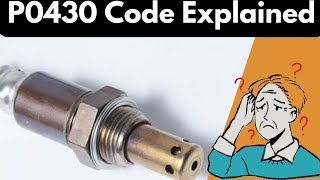
🎬 Watch: P0430 code explained including common causes and symptoms.Diagnostic Flowchart
Tap your situation to follow the diagnostic path that matches what you're seeing on this vehicle.
Generation note: This range covers two Yukon generations: the second generation (GMT800, 2004-2006) and the third generation (GMT900, 2007-2011). The meaning, causes, and diagnostic approach for P0430 are consistent across both generations as they share similar V8 engine architecture and emissions systems. The GMT900 models with Active Fuel Management (AFM) can be more prone to oil consumption, which can contaminate and ruin converters if not addressed.
Symptoms You May Notice
- Check Engine Light is on.
- No noticeable change in performance (very common).
- Reduced engine power and sluggish acceleration, especially if the converter is clogged.
- Decreased fuel economy.
- A sulfur or "rotten egg" smell from the exhaust.
- Failing a state emissions test.
- Rattling noise from under the vehicle if the internal catalyst has broken apart.
- Replacing the oxygen sensors without proper diagnosis. On GM trucks, P0430 is very often the converter itself, not the sensor.
- Replacing the catalytic converter without checking for exhaust leaks first. A simple gasket leak or broken manifold bolt can trigger this code and is much cheaper to fix.
Most Likely Causes
- Failing Catalytic Converter 🔴 High Probability Catalytic converters have a finite lifespan and degrade over time due to heat and mileage. On higher-mileage Yukons, the precious metals inside simply wear out, losing their ability to catalyze exhaust gases.
How to confirm: Use a scan tool to monitor live O2 sensor data. If the downstream (Post-Cat) sensor for Bank 2 switches rapidly like the upstream (Pre-Cat) sensor, the converter is not working. An infrared thermometer can also be used; a healthy, fully warmed-up converter should be at least 20-100°F hotter at its outlet than its inlet. If the temperatures are similar or the inlet is hotter, the converter has failed.
Typical fix: Replace the Bank 2 catalytic converter assembly. It is often part of a Y-pipe that includes the Bank 1 converter as well.
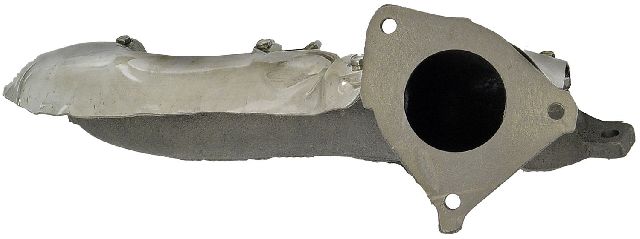
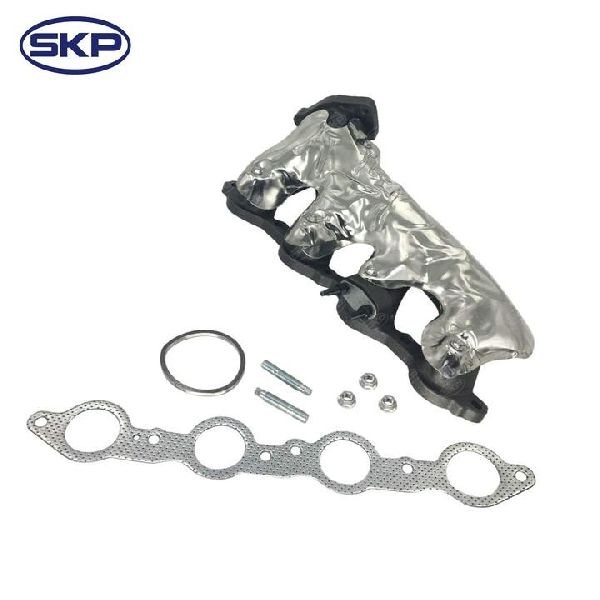
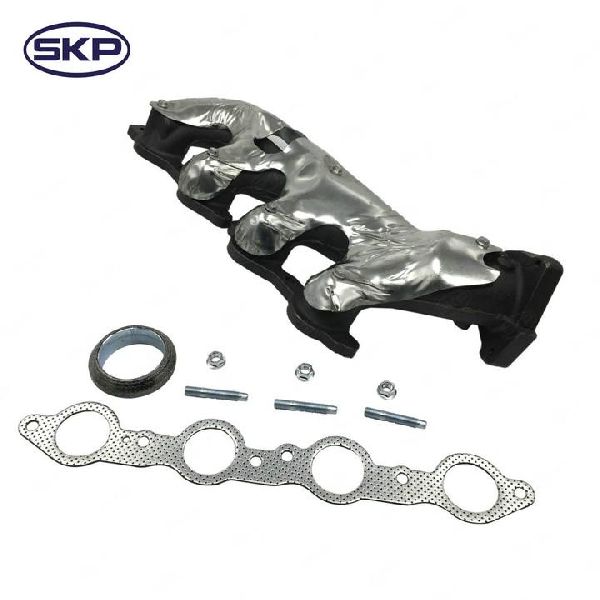
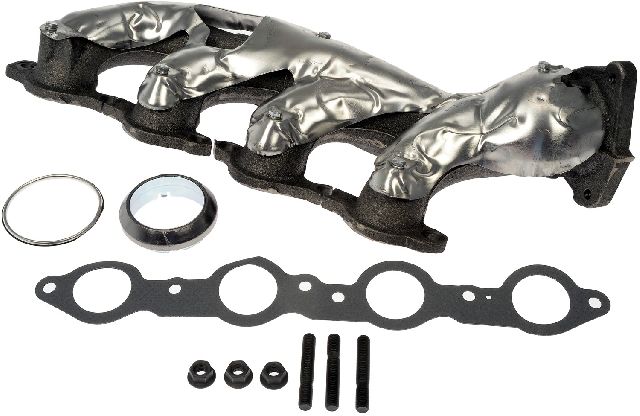
Est. part cost: $300-$1200+ - Exhaust System Leak 🟡 Medium Probability Exhaust manifold bolts on GM trucks are notorious for breaking off at the cylinder head, especially the rearmost bolts. This creates a leak that allows oxygen into the exhaust stream, confusing the O2 sensors and triggering a false P0430. Gaskets at the manifold-to-pipe flange can also fail.
How to confirm: Visually inspect the exhaust system from the engine to the rear O2 sensor for black soot trails, cracks, or holes, particularly around the exhaust manifold flanges. Listen for an audible ticking or hissing noise that is loudest when the engine is cold and may quiet down as it warms up. A smoke test is the most effective way to pinpoint hard-to-see leaks.
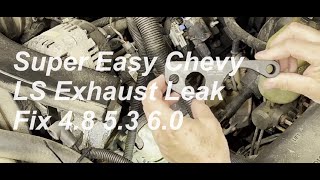
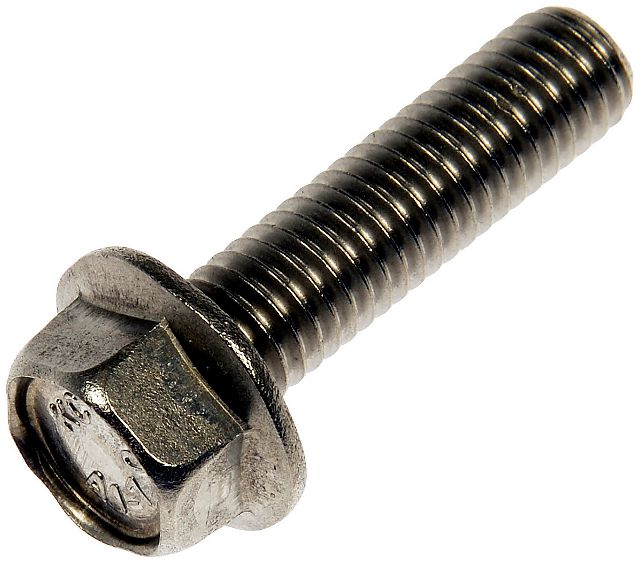
Typical fix: Replace broken exhaust manifold bolts (specialty clamp kits like the Kral KAP-161 exist for this common repair) and/or replace the failed gasket. Weld any small holes or replace the affected pipe section.
Est. part cost: $20-$200 - Failing Downstream Oxygen Sensor ⚪ Low Probability While O2 sensors do fail, on these trucks they tend to set their own performance or heater circuit codes (e.g., P0155-P0161). It is uncommon for a sensor to fail in a way that it only triggers a P0430 without its own code. Owners frequently replace sensors only to have the P0430 code return.
How to confirm: Swap the Bank 1 and Bank 2 downstream O2 sensors. Clear the codes and drive the vehicle. If the code changes to P0420 (for Bank 1), the sensor is bad. If the P0430 code returns, the sensor is good and the converter is the problem.
Typical fix: Replace the Bank 2, downstream (post-catalyst) oxygen sensor.
Est. part cost: $50-$150
Rare But Worth Checking
- Engine Misfires or Fuel System Issues: If you have other codes like P0300-P0308 (misfires) or fuel trim codes, these are the root cause. Unburned fuel from a misfire will superheat and destroy a new catalytic converter, often in a short amount of time. Always fix these issues first.
- Internal Engine Problems (Oil/Coolant Burning): An engine that burns excessive oil or coolant will contaminate and clog the catalytic converter. On 2007+ models with Active Fuel Management (AFM), issues with piston rings or the PCV system can cause significant oil consumption, leading to premature converter failure. This is a serious issue that must be repaired before replacing the converter.
- Illicit O2 Sensor Spacer/Non-Fouler: Some owners install a spacer, often a modified spark plug non-fouler, between the downstream O2 sensor and the exhaust pipe. This pulls the sensor out of the direct exhaust stream to trick the PCM and clear the code without fixing the root cause. While this may extinguish the light, it is illegal for on-road vehicles and masks the underlying problem.
Diagnosis Steps
- Scan for any other DTCs. If misfire (P030x), fuel system, or other sensor codes are present, diagnose and fix them first.
- Thoroughly inspect the entire exhaust system for leaks. Pay close attention to the exhaust manifold-to-head flange for signs of soot from broken bolts, and check the gaskets and any welded joints between the engine and the rear O2 sensor.
- Use a scan tool with live data capability. Graph the voltage of the Bank 2 upstream (Sensor 1) and downstream (Sensor 2) oxygen sensors.
- With the engine fully warmed up and holding a steady 2,000-2,500 RPM, observe the graphs. The upstream sensor should show rapid, frequent fluctuations (typically 0.1V to 0.9V). The downstream sensor should show a slow, relatively steady voltage (typically above 0.5V).
- If the downstream sensor's graph mimics the rapid switching of the upstream sensor, the catalytic converter is not functioning and needs to be replaced.
- Perform a temperature check with an infrared thermometer. Measure the pipe temperature at the inlet and outlet of the converter. A working converter should be at least 20-100°F hotter at the outlet. If temperatures are similar or the outlet is cooler, the converter has failed.
- If diagnosis is still inconclusive, swap the downstream O2 sensors between Bank 1 and Bank 2. If the code follows the sensor (changes to P0420), the sensor is faulty. If P0430 returns, the converter is confirmed to be the issue.
Parts You'll Likely Need
- Catalytic Converter Assembly (Bank 2 or Y-Pipe)
(OEM #19418939 (Example for 2007 5.3L, check VIN for exact fit))— This is the most frequent cause of P0430 on a higher-mileage Yukon. The internal catalyst materials have degraded.
Trusted brands: Walker, MagnaFlow, AP Exhaust, ACDelco (OEM)
OEM price range: $800-$1200+
Aftermarket price range: $300-$700 - Downstream Oxygen Sensor (Bank 2, Sensor 2)
(OEM #ACDelco 213-4229 (cross-references to Denso 234-4668))— Replaced when diagnosis confirms the sensor is faulty, which is a less common cause for this specific code on this vehicle.
Trusted brands: Denso, Bosch, NTK, ACDelco (OEM)
OEM price range: $80-$150
Aftermarket price range: $50-$100 - Exhaust Manifold to Pipe Gasket
(OEM #Fel-Pro 61323 (Example, check specific application))— A common source of exhaust leaks that can trigger a false P0430 code.
Trusted brands: Fel-Pro, ACDelco (OEM)
OEM price range: $20-$40
Aftermarket price range: $10-$25 - Exhaust Manifold Bolt Repair Clamp — A specialty part used to repair a leaking exhaust manifold caused by broken bolts, a very common issue on these GM V8 engines.
Related Codes That Often Appear With This One
- P0420 — P0420 is the identical code for Bank 1 (driver's side). It's common for both converters to fail around the same time due to age and mileage, often resulting in both codes appearing together. []
- P0300-P0308 — These are misfire codes (P0300 for random, P0301-P0308 for specific cylinders). A persistent misfire allows unburned fuel to enter the exhaust, which superheats and melts the internal structure of the catalytic converter, causing it to fail.
Technical Service Bulletins (TSBs) & Recalls
- Bulletin #PIP3119P: This bulletin, which supersedes PIP3119N, advises technicians that on new low-mileage vehicles OR on vehicles that have just had a catalytic converter replaced, the P0420/P0430 diagnostics are disabled for the first hour of engine run time to allow for a proper break-in period. A battery disconnect or power loss could reset this timer and cause a false code to set before the new converter is fully broken in.
Platform-Specific Known Issues
- An owner reported that shortly after installation of a new component, their check engine light turned on with codes P0420 and P0430, highlighting how sensitive the system can be. [ODI #11657669]
- These trucks are high-risk targets for catalytic converter theft due to their high ground clearance, which can also lead to a P0430 code if only one side is stolen or improperly replaced.
- Owners on forums frequently report chasing the P0430 code by replacing O2 sensors, only to find the code returns, confirming the original catalytic converter was the actual failure point.
- Broken exhaust manifold bolts, particularly the one at the rear of the passenger side head, are a very common cause of an exhaust leak that mimics the symptoms of a failed converter.
Mechanic-Grade Diagnostic Values
- Downstream O2 Sensor (Bank 2 Sensor 2) Voltage — expected: A steady voltage, typically around 0.45V to 0.7V, on a healthy, warm converter at steady RPM.. Failure: Voltage rapidly switching between ~0.1V and ~0.9V, mimicking the upstream sensor's pattern, indicates a failed converter.
- Long Term Fuel Trim (LTFT) — expected: Ideally close to 0%, but generally acceptable within +/- 10%.. Failure: Consistently high positive trims (e.g., > +10%) can indicate a vacuum or exhaust leak, while high negative trims can indicate a rich condition (e.g., leaking injector) that could damage the converter.
- Mode $06 Catalyst Monitor Test (TID $81) — expected: The test value should be below the maximum threshold specified by the manufacturer in the scan tool data.. Failure: If the test value exceeds the maximum limit, it indicates the catalyst efficiency test has failed, even if a DTC has not yet matured.
Scan Tool Commands That Help
- GM Tech 2 / GDS2: Catalyst System Test or Service Bay Test — This is a guided diagnostic function that runs the engine at specific parameters to force the catalyst monitor to run. It provides a definitive pass/fail result without extensive driving, which is useful for verifying a repair.
- GM Tech 2 / GDS2: Bi-Directional Control — Allows a technician to command components like the EVAP purge or vent solenoids on and off to test their function, helping to rule out related EVAP system faults that can sometimes accompany catalyst codes.
Wiring & Ground Locations
- G103 / G104 — G103 is typically located on the front of the right cylinder head. G104 can be on the rear of the left cylinder head. Locations vary slightly by year and engine.. These are primary engine grounds. A poor connection at these points can cause erratic behavior and incorrect readings from engine sensors, including the oxygen sensors, potentially leading to a false P0430 code.
- Bank 2 Sensor 2 Connector — On the passenger side of the vehicle, following the exhaust pipe downstream from the catalytic converter. The connector is typically attached to a frame rail or crossmember.. This is the direct connection for the sensor that triggers the P0430 code. The wiring harness is exposed to road debris and heat, and should be inspected for damage, melting, or corrosion at the connector pins.
Real Owner Repair Stories
- Tahoe Yukon Forum User (2015 Tahoe (similar GMTK2XX platform with AFM)) — P0420 and P0430 codes appearing.
❌ Tried (didn't work) Replacing catalytic converters, Replacing upstream O2 sensors, Replacing spark plugs, wires, and coil packs, Replacing coolant temp sensor, battery, crankshaft position sensor, MAF sensor, and EVAP canister/sensor.
✅ What actually fixed it The user was advised to check for exhaust leaks and to specifically diagnose the downstream O2 sensors, which had not yet been replaced. The implication is that either an exhaust leak was missed or the downstream sensors were the final culprits after all other parts were replaced. - GM TSB #10-06-01-008J (2007-2014 Yukon/Tahoe/Silverado/Sierra with Active Fuel Management (AFM)) — Excessive oil consumption (more than 1 quart per 2000-3000 miles), potentially with SES light and rough running.
❌ Tried (didn't work) Simply replacing the catalytic converter without addressing the oil consumption.
✅ What actually fixed it The official GM procedure involves installing an updated valve cover, an AFM shield in the oil pan to prevent oil spray, and cleaning or replacing pistons and rings due to deposit formation. This addresses the root cause of oil contamination that destroys the catalytic converters.
Model Year Variations Within This Range
- 2007-2011 (GMT900): The introduction of Active Fuel Management (AFM) on V8 engines is the most significant difference from the earlier GMT800 platform. AFM systems can be prone to excessive oil consumption due to issues with the PCV system, piston rings, or an AFM pressure relief valve in the crankcase. This oil burning is a primary cause of premature catalytic converter failure on these specific model years, a problem not as prevalent on the 2004-2006 models.
Helpful Videos

We Have This Part in Stock


The information in this article is provided for general reference and educational purposes only. Vehicle specifications, procedures, and part compatibility can vary by production date, trim level, and region. Always consult your vehicle's factory service manual and verify part numbers before purchasing or performing repairs. Safety-critical components such as airbags, seat belts, and braking systems should be installed by a qualified professional.
- Gmc YUKON:
- 🎬 Helpful Videos
- 🛍️ Shop This Part
- What's Unique About the 2004-2011 Gmc YUKON
- Diagnostic Flowchart
- Symptoms You May Notice
- Most Likely Causes
- Rare But Worth Checking
- Diagnosis Steps
- Parts You'll Likely Need
- Related Codes That Often Appear With This One
- Technical Service Bulletins (TSBs) & Recalls
- Platform-Specific Known Issues
- Mechanic-Grade Diagnostic Values
- Scan Tool Commands That Help
- Wiring & Ground Locations
- Real Owner Repair Stories
- Model Year Variations Within This Range
- 🎟️ Get 5% Off