

P0430 on 2014-2018 GMC Sierra Denali: Catalyst Efficiency Causes and Fixes
On a 2014-2018 GMC Sierra, code P0430 most often points to a failing catalytic converter on Bank 2 (passenger side), but the root cause is critical. Before replacing the converter, inspect the air filter box for a poor seal as per GM Technical Service Bulletin #16-NA-111. This is a known issue where ingested sand/debris contaminates O2 sensors and clogs the catalytic converter, leading to premature failure. Addressing this and any other engine issues (misfires, oil consumption) is mandatory to p
- For a P0430 on a 2014-2018 Sierra, your first step should be to inspect the air filter box for a bad seal, per GM TSB #16-NA-111, before buying any parts.
- The P0430 code almost always means the catalytic converter on the passenger side has failed, but the converter is usually the victim, not the cause.
- The true cause is often an engine misfire, excessive oil consumption, an exhaust leak, or a fuel system problem that must be fixed to prevent destroying a new converter.
- Do not automatically replace the O2 sensors; use a scan tool to confirm their operation. A bad converter is a more common cause for this code than a bad sensor.
What's Unique About the 2014-2018 Gmc SIERRA DENALI

For the 2014-2018 GMC Sierra and its platform mates (Silverado, Yukon, Tahoe), a key factor for P0430 is a known issue with the air intake system. General Motors issued Technical Service Bulletin #16-NA-111 because the air filter box may not seal properly, allowing sand and other debris to bypass the air filter. This abrasive material can contaminate the oxygen sensors and physically clog the catalytic converters, leading directly to a P0430 code. This makes inspecting the airbox a critical first step before assuming other parts have failed. Additionally, some of the 5.3L and 6.2L engines in these trucks can suffer from excessive oil consumption due to issues with the Active Fuel Management (AFM) system, which can also poison the catalytic converter over time.
Diagnostic Flowchart

Tap your situation to follow the diagnostic path that matches what you're seeing on this vehicle.
Symptoms You May Notice
- Check Engine Light is on
- Reduced engine power and sluggish acceleration
- Rotten egg or sulfur smell from the exhaust.
- Rattling noise from underneath the vehicle if the converter's internal structure has broken apart.
- Vehicle will fail an emissions test.
- Reduced fuel economy
- Replacing the oxygen sensors without checking for the root cause. While an O2 sensor can fail, the P0430 code is often an accurate indication of a bad catalytic converter, which itself is failing due to another problem.
- Replacing the catalytic converter without addressing underlying engine issues like misfires, oil consumption, or the airbox seal issue. The new converter will be quickly destroyed.
- Using cheap, poor-quality aftermarket O2 sensors or catalytic converters that do not meet OEM specifications, leading to the code returning.
Most Likely Causes

- Failing or Degraded Catalytic Converter 🔴 High Probability Often a consequence of other issues like misfires, oil consumption, or contamination from a faulty airbox seal. Raw fuel from misfires or oil burning in the exhaust will destroy the converter's internal structure.
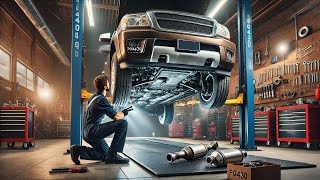
How to confirm: Use a scan tool to graph the Bank 2 upstream (B2S1) and downstream (B2S2) oxygen sensors. If the B2S2 waveform mirrors the B2S1 waveform, the converter is not functioning. 🎬 Watch: Real-world diagnosis and fix for a P0430 code. An infrared thermometer can also be used; the outlet of a working converter should be at least 100°F hotter than the inlet after the engine is fully warmed up.
Typical fix: Replace the Bank 2 catalytic converter. It is critical to fix the root cause (misfires, leaks, airbox seal) before replacing the converter, or the new one will fail prematurely.
Est. part cost: $400-$2500 - Poorly Sealing Air Filter Housing 🟡 Medium Probability This is a documented issue covered by GM Technical Service Bulletin #16-NA-111, which applies to 2014-2018 Sierra/Silverado and 2015-2018 Yukon/Tahoe models.
How to confirm: Inspect the air filter housing cover for missing or broken tabs and fasteners. Remove the air filter and check for signs of dirt, sand, or debris bypassing the air filter seal and accumulating in the clean side of the airbox and the air cleaner outlet duct.
Typical fix: Replace the air filter and, if the housing itself is warped or damaged, replace the entire air cleaner assembly to ensure a proper seal. Clean any debris from the intake tube and MAF sensor.
Est. part cost: $25-$250 - Faulty Oxygen (O2) Sensor or Wiring 🟡 Medium Probability Sensors can fail with age or become contaminated by oil from consumption issues or debris from a faulty airbox seal. Using cheap aftermarket sensors is a common cause for repeat codes.
How to confirm: Inspect wiring for damage, especially from heat or impact. Graph sensor voltage with a scan tool; the downstream sensor (B2S2) should have a relatively steady voltage. A lazy or erratic downstream sensor can be a cause, though it's less common than a bad converter.
Typical fix: Replace the faulty oxygen sensor, typically the downstream (post-cat) one. Use quality OEM brands like ACDelco or Denso to avoid compatibility issues.
Est. part cost: $50-$150 - Engine Misfires or Fuel System Issues ⚪ Low Probability Faulty spark plugs, ignition coils, or leaking fuel injectors can dump unburned fuel into the exhaust, which superheats and destroys the catalytic converter. A P219B code (Bank 2 fuel trim imbalance) often precedes P0430 if an injector is the root cause.
How to confirm: Check for other trouble codes, especially misfire codes (P0300-P0308) or fuel trim codes (P0171, P0174, P219B). Monitor fuel trims and misfire counters with a scan tool.
Typical fix: Address the root cause of the misfire or fuel issue, which may involve replacing spark plugs, ignition coils, or fuel injectors.
Est. part cost: $50-$800 - Exhaust Leak ⚪ Low Probability
How to confirm: Visually inspect the exhaust system from the engine to the rear O2 sensor for cracks, rust, or loose flange bolts, especially at the manifold and converter flanges. A smoke machine test is the most effective way to find small leaks that can trick the O2 sensors.
Typical fix: Replace the leaking gasket or damaged exhaust pipe section.
Est. part cost: $20-$300
Rare But Worth Checking
- Excessive oil consumption from Active Fuel Management (AFM) lifter issues or piston rings can 'poison' the catalytic converter with burnt oil deposits.
Diagnosis Steps
- Read all stored fault codes with an OBD-II scanner. Note any other codes present (misfire, fuel trim, etc.), as they can point to the root cause. Address these first.
- Crucial Step for this vehicle: Inspect the air filter housing for a proper seal per GM TSB #16-NA-111. Check for broken tabs on the cover and look for dirt/sand/debris in the intake tube past the filter. If found, this is a likely cause of contamination.
- Visually inspect the exhaust system for any obvious leaks, cracks, or damage, especially at gaskets and flanges between the engine and the rear O2 sensor. A cold start can make leaks audible.
- Use a scan tool with live data capability. Graph the voltage of the Bank 2 upstream (B2S1) and downstream (B2S2) O2 sensors with the engine fully warmed up and running at a steady 2000 RPM.
- Analyze the graph: If the downstream (B2S2) sensor's voltage reading is fluctuating rapidly and mimicking the upstream (B2S1) sensor, the catalytic converter has failed. A healthy downstream sensor will show a relatively steady, flat line.
- Perform a temperature test. Using an infrared thermometer on a fully warmed-up engine, measure the temperature of the exhaust pipe just before the catalytic converter and just after. The outlet should be at least 100°F (38°C) hotter than the inlet. If it's the same temperature or cooler, the converter is not working.
- If the converter appears to be bad but no other cause is obvious, investigate for excessive oil consumption, a known issue on some of these engines. Check for low oil levels and signs of blue smoke from the exhaust.
Parts You'll Likely Need

- Bank 2 Catalytic Converter
(OEM #23181123, 84405203 (Y-Pipe Assembly including both converters))— This is the part identified by the code as having failed. It is often sold as a Y-pipe assembly that includes both Bank 1 and Bank 2 converters. - Air Cleaner Assembly — If the original airbox is warped or has broken tabs, it must be replaced to fix the root cause of contamination outlined in TSB #16-NA-111.
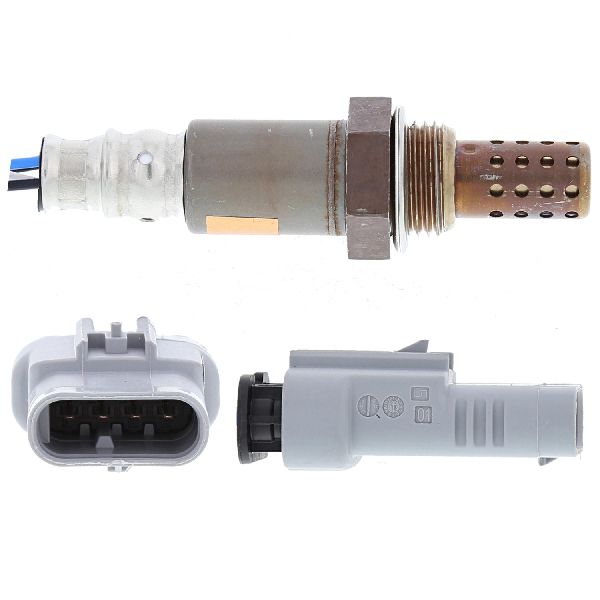
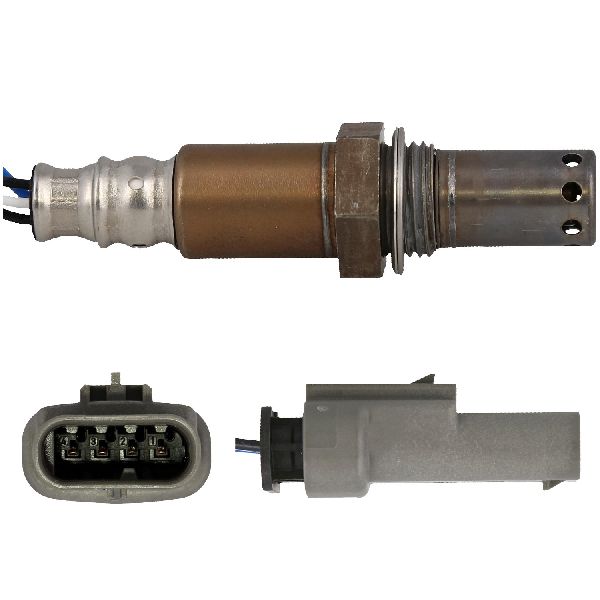
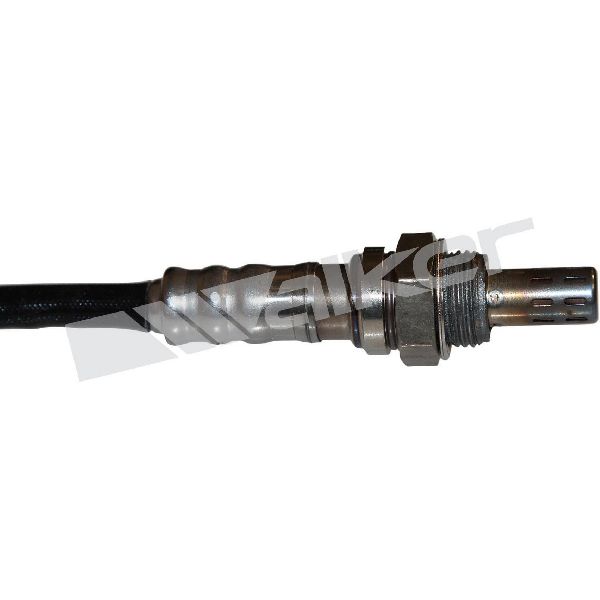
- Downstream Oxygen Sensor (Bank 2, Sensor 2) — May be replaced if it is determined to be faulty or contaminated, but it is often not the root cause.
Related Codes That Often Appear With This One
- P0420 — This is the identical code for Bank 1 (driver's side). If both appear, it suggests a systemic problem like the airbox seal issue, contaminated fuel, or severe engine performance problems affecting both banks.
- P0300-P0308 — These are misfire codes (P0300 for random, P0301-P0308 for specific cylinders). A misfire is a primary cause of catalytic converter failure, as it sends raw fuel into the exhaust. A flashing check engine light often accompanies these codes.
- P219B — This code indicates a fuel trim imbalance on Bank 2. It points to an underlying fuel delivery problem (like a bad injector) that can lead to converter damage and trigger P0430. It's common to see P0430 appear after fixing the injectors that caused P219B, because the catalyst monitor can finally run and detect the damage that was already done.
- P06DD — This code for the oil pressure control solenoid being stuck off can be an indicator of internal engine problems, including issues related to the AFM system that can lead to oil consumption, which in turn damages the catalytic converters.
Technical Service Bulletins (TSBs) & Recalls
- TSB #16-NA-111: "Information on Malfunction Indicator Light (MIL) Illuminated, DTC P0420 and P0430 Set." This bulletin directly addresses the issue of a poorly sealing air filter box allowing sand and debris to enter the intake, damaging O2 sensors and clogging catalytic converters. It instructs technicians to validate the airbox seal before replacing any parts.
Platform-Specific Known Issues
- Real-World Repair Story: The Chain of Failures: A technician on YouTube documented a 2015 GMC Sierra that first presented with P219B (fuel trim imbalance) and P0300 (random misfire) codes. After replacing the faulty fuel injectors and cleaning the intake valves, the truck ran much better. However, on the next drive cycle, a P0430 code appeared. This is a classic example of 'unmasking' a code; the catalyst monitor couldn't run with the active misfires, but once the fuel system was fixed, the monitor ran and immediately failed the already-damaged catalytic converter. This demonstrates that the converter failure was a direct consequence of the injector problem.
Mechanic-Grade Diagnostic Values
- Downstream O2 Sensor (B2S2) Voltage — expected: Relatively steady reading between 0.4 to 0.5 volts under normal, stable operating conditions.. Failure: Voltage fluctuates rapidly, mimicking the upstream (B2S1) sensor's 0.1V - 0.9V oscillations, indicating the catalyst is not storing oxygen.
- Short-Term and Long-Term Fuel Trims (Bank 2) — expected: Ideally within +/- 5%.. Failure: Consistently high positive values (e.g., > +10%) can indicate an exhaust leak before the upstream O2 sensor. Consistently high negative values can indicate a leaking injector, which can damage the converter.
- Mode $06 Catalyst Monitor Test (e.g., TID $81, CID $01) — expected: The measured value should be below the maximum threshold set by the manufacturer.. Failure: If the measured value exceeds the maximum limit, it indicates the catalyst's oxygen storage capacity is degraded, even if it hasn't yet set a P0430 code. This is useful for borderline cases.
Scan Tool Commands That Help
- GDS2 (GM Dealer Tool): Catalyst System Test — This is a guided diagnostic function that forces the catalyst monitor to run under controlled conditions, providing a definitive pass/fail result without extensive driving, helping to confirm a failed converter before replacement.
- GDS2 (GM Dealer Tool): O2 Sensor Heater Test — To verify the integrity of the oxygen sensor heater circuits. A failed heater can cause the sensor to respond slowly, potentially affecting catalyst monitoring, though it usually sets a specific heater circuit code.
Wiring & Ground Locations
- Fuse F46 or F50 (Underhood Fuse Block) — In the main engine compartment fuse block, located on the driver's side near the brake fluid reservoir.. These fuses power the heater circuits for the oxygen sensors. Fuse F46 and F50 are the primary fuses for the O2 sensor heaters on 2018 models, with the same locations used for 2014-2017 models. A blown fuse will cause the O2 sensor to be slow to respond, affecting readings and potentially setting codes.
- Bank 2 Sensor 2 (Downstream) Connector — The B2S2 sensor is on the passenger side exhaust pipe, after the catalytic converter. The wiring harness runs up to a connector mounted near the rear of the transmission, often on or near the crossmember.. This connector and its wiring are exposed to road debris and heat. Damage here can cause a loss of signal or short, directly impacting the reading the PCM uses to evaluate the catalyst.
Real Owner Repair Stories
- Reddit user Obvious-Ad2915 (2014 GMC Sierra 5.3L) — P0430 code returned after 1,500 miles of driving.
❌ Tried (didn't work) Replaced catalytic converter, Replaced fuel injectors, Replaced O2 sensors
✅ What actually fixed it The user reported the code returned even after replacing all common components, indicating a potential intermittent issue or a less common root cause that was not identified in the thread. This highlights the difficulty in diagnosing a recurring P0430.
OEM Part Supersession History
23181123→84405203— This is a common supersession for the Y-Pipe assembly which includes both catalytic converters. The change often reflects minor manufacturing updates, material changes, or consolidation of part numbers.
Model Year Variations Within This Range
- 2014-2018: The 6.2L V8 (L86) has a higher compression ratio (11.5:1) and GM recommends 91 octane fuel for optimal performance. The 5.3L V8 (L83) has an 11.0:1 compression ratio and is designed for 87 octane. Running lower octane fuel in the 6.2L can lead to knock, which the computer will counteract by adjusting timing, potentially affecting emissions performance over the long term.
- 2014-2018: Upstream and downstream oxygen sensors use different electrical connectors (male vs. female plugs) and are not interchangeable, even if they physically screw into the exhaust. Installing the wrong sensor in a location will prevent it from being connected.
- 2018: The underhood fuse box layout was slightly changed for the 2018 model year, but the O2 sensor heater fuses (46 and 50) remain in the same physical locations.
Helpful Videos
We Have This Part in Stock


The information in this article is provided for general reference and educational purposes only. Vehicle specifications, procedures, and part compatibility can vary by production date, trim level, and region. Always consult your vehicle's factory service manual and verify part numbers before purchasing or performing repairs. Safety-critical components such as airbags, seat belts, and braking systems should be installed by a qualified professional.
- Gmc SIERRA DENALI:
- 🎬 Helpful Videos
- 🛍️ Shop This Part
- What's Unique About the 2014-2018 Gmc SIERRA DENALI
- Diagnostic Flowchart
- Symptoms You May Notice
- Most Likely Causes
- Rare But Worth Checking
- Diagnosis Steps
- Parts You'll Likely Need
- Related Codes That Often Appear With This One
- Technical Service Bulletins (TSBs) & Recalls
- Platform-Specific Known Issues
- Mechanic-Grade Diagnostic Values
- Scan Tool Commands That Help
- Wiring & Ground Locations
- Real Owner Repair Stories
- OEM Part Supersession History
- Model Year Variations Within This Range
- 🎟️ Get 5% Off