

P0430 on 2003-2010 GMC Sierra 2500: Catalyst Efficiency Causes & Fixes
P0430 on a 2003-2010 GMC Sierra 2500 indicates that the catalytic converter on Bank 2 (driver's side) is failing. The most common fixes are replacing the catalytic converter itself or, less frequently, a faulty downstream oxygen sensor or repairing an exhaust leak. Broken exhaust manifold bolts are a very common source of leaks on these trucks that can set a false code.
- P0430 means the catalytic converter on the driver's side (Bank 2) is not working efficiently.
- Before replacing the expensive catalytic converter, ALWAYS inspect for exhaust leaks, especially from broken exhaust manifold bolts, a very common issue on these trucks.
- If you have any other codes, particularly for engine misfires (P030x), you must fix those problems first to avoid destroying a new catalytic converter.
- The most reliable way to confirm a bad converter is by using a scan tool to compare the upstream and downstream O2 sensor readings.
- On high-mileage (100k+) trucks, the catalytic converter itself is the most probable cause of the code, assuming leaks and sensor issues are ruled out.
What's Unique About the 2003-2010 Gmc SIERRA 2500
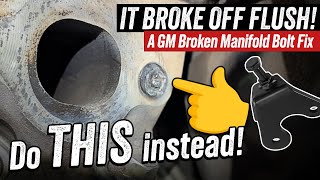
On these GMT800 and GMT900 platform trucks, P0430 is extremely common as they age past 100,000 miles, often indicating the catalytic converter has simply worn out. A very frequent and well-documented issue is broken exhaust manifold bolts 🎬 Watch: How to fix a broken manifold bolt yourself., which create leaks that allow oxygen into the exhaust, tricking the oxygen sensors and triggering a false P0430 code. Additionally, GM Technical Service Bulletin #PIP3119P notes that the diagnostic test for this code is disabled for the first hour of engine operation on new vehicles to prevent false codes during the converter's break-in period.
Diagnostic Flowchart
Tap your situation to follow the diagnostic path that matches what you're seeing on this vehicle.
Generation note: This range covers two generations: the first generation (GMT800, 2003-2006 and 2007 'Classic') and the second generation (GMT900, 2007-2010). While the diagnostic approach is similar, broken exhaust manifold bolts are a particularly well-known issue on the V8 engines used in both generations, frequently discussed in owner forums. For 2007+ models with Active Fuel Management (AFM), excessive oil consumption is a known problem that can contaminate and destroy a catalytic converter.
Symptoms You May Notice
- Check Engine Light is on
- Vehicle fails emissions testing
- Reduced engine power and sluggish acceleration, especially if the converter is clogged.
- Sulfur or "rotten egg" smell from the exhaust.
- Rattling noise from under the vehicle if the converter's internal ceramic substrate has broken apart.
- A ticking or hissing sound from the engine bay, especially on a cold start, which can indicate an exhaust manifold leak.
- Immediately replacing the catalytic converter without first checking for exhaust leaks, which are a very common and much cheaper fix on these trucks.
- Replacing the oxygen sensors when the catalytic converter is truly the part that has failed. Many forum users report this as a wasted expense.
- Ignoring other engine codes. If a misfire or fuel trim code is present, it MUST be fixed first, as it is the likely cause of the P0430.
Most Likely Causes
- Failing or Worn-Out Catalytic Converter (Bank 2) 🔴 High Probability Catalytic converters have a finite lifespan of around 100,000-150,000 miles and often fail on higher-mileage trucks. Engine issues like misfires, burning oil (common on AFM engines), or coolant leaks can drastically shorten this lifespan by contaminating the catalyst materials.
How to confirm: Use a scan tool to graph the downstream O2 sensor (Bank 2, Sensor 2). If its voltage reading fluctuates rapidly, mimicking the upstream sensor, the converter is bad. A properly working converter will result in a steady, flat voltage from the downstream sensor. An infrared thermometer can also be used; the converter's outlet should be at least 100°F hotter than its inlet on a fully warmed-up engine. If the temperature is the same or cooler, the catalyst is not working.
Typical fix: Replace the Bank 2 catalytic converter. It is critical to fix any underlying engine problems (like misfires, oil consumption, or rich/lean conditions) first, or the new converter will also fail prematurely.
Est. part cost: $400-$1200 - Exhaust System Leak 🔴 High Probability Broken exhaust manifold bolts are extremely common on the 4.8L, 5.3L, and 6.0L V8 engines in these trucks due to heat cycles and corrosion. This causes a leak between the cylinder head and the manifold, introducing oxygen that fools the O2 sensors. Gaskets and pipe flanges can also fail from age and rust.
How to confirm: Visually inspect the exhaust manifold on the driver's side. Look for black soot trails around the bolt heads or the gasket surface. A leak is often audible as a distinct 'ticking' sound when the engine is cold, which may quiet down as the metal expands with heat. Spraying soapy water on cool exhaust joints and looking for bubbles during a cold start can also reveal leaks.
Typical fix: Replace the broken exhaust manifold bolts and the manifold gasket. This often requires drilling out the broken bolt remnants, which can be a difficult job. The Dorman 03414B kit is a commonly used replacement hardware set.
Est. part cost: $20-$200 - Faulty Downstream Oxygen (O2) Sensor (Bank 2) 🟡 Medium Probability O2 sensors wear out over time due to constant exposure to high heat and exhaust gases. While a faulty sensor can cause P0430, forum wisdom suggests it's less common than a bad converter or an exhaust leak. Many owners replace sensors only to have the code return, indicating the sensor was not the root cause.
How to confirm: Test the sensor's function using a scan tool to observe its voltage readings. A healthy downstream sensor should show a relatively stable voltage above 0.5V. If the sensor's readings are stuck, erratic, or mirror the upstream sensor's rapid switching, it may be faulty. A common diagnostic trick is to swap the downstream sensors from Bank 1 and Bank 2. If the code changes to P0420 (Bank 1), the sensor is confirmed to be the problem.
Typical fix: Replace the Bank 2, Sensor 2 (downstream) oxygen sensor. An example part for GMT900 models is ACDelco 213-4229.
Est. part cost: $50-$150
Rare But Worth Checking
- Engine Misfires or Fuel Mixture Problems: While often a root cause of converter failure, sometimes fixing an existing misfire (P0300-P0308) or fuel trim issue (P0171, P0174) can resolve the P0430 if the converter is not yet permanently damaged. Raw fuel from a misfire will destroy a converter quickly.
- Contaminated Catalytic Converter: An internal engine problem, such as leaking piston rings or valve seals causing oil consumption (a known issue on 2007+ 5.3L/6.0L engines with AFM), can contaminate the catalytic converter with phosphorus and lead to failure.
- PCM Software or Wiring Issues: In rare cases, an issue with the Powertrain Control Module (PCM) software or a damaged wire to the O2 sensor could trigger the code. Wiggling the sensor connector while watching live data can sometimes reveal a bad connection.
Diagnosis Steps
- Check for any other stored DTCs. Address any misfire, fuel system, or O2 sensor codes before diagnosing the P0430.
- Thoroughly inspect the entire exhaust system on Bank 2 (driver's side) for leaks. Pay close attention to the exhaust manifold for broken bolts (a very common issue) and the flange gaskets. Listen for a 'tick' on a cold start.
- Using a scan tool with live data, warm the engine to operating temperature and hold the RPMs steady around 2,000-2,500.
- Observe the voltage graphs for the upstream (Bank 2, Sensor 1) and downstream (Bank 2, Sensor 2) oxygen sensors.
- A good catalytic converter will show the upstream sensor switching rapidly (approx. 0.1V-0.9V) while the downstream sensor remains relatively stable and steady (e.g., ~0.7V).
- If the downstream sensor's graph mirrors the rapid switching of the astream sensor, the converter is no longer storing oxygen and has likely failed.
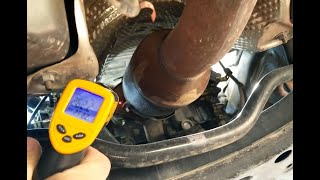
- If the cause is still unclear, use an infrared thermometer to measure the converter's inlet and outlet pipes. A working converter should be at least 100°F hotter at the outlet.
- As a final sensor test, consider swapping the Bank 1 and Bank 2 downstream O2 sensors. If the code changes to P0420, the sensor you moved is faulty.
Parts You'll Likely Need
- Catalytic Converter (Bank 2) — This is the most common direct cause for a confirmed P0430 code, especially on trucks with over 100,000 miles.
Trusted brands: Walker Exhaust, MagnaFlow, ACDelco
OEM price range: $900-$1800
Aftermarket price range: $400-$900 - Downstream Oxygen Sensor (Bank 2, Sensor 2)
(OEM #12579820 (Verify by VIN, example for GMT900 is ACDelco 213-4229))— A faulty or lazy downstream O2 sensor can send incorrect signals to the PCM, causing a false P0430 code. It is a common misdiagnosis for a bad converter.
Trusted brands: Denso, Bosch, ACDelco
OEM price range: $80-$180
Aftermarket price range: $50-$100 - Exhaust Manifold Bolt Kit
(OEM #Dorman 03414B (Aftermarket Kit))— Broken exhaust manifold bolts are a very frequent cause of exhaust leaks that trigger this code.
Related Codes That Often Appear With This One
- P0420 — This is the identical code for Bank 1 (passenger side). If both catalytic converters are the same age and mileage, they often fail around the same time.
- P0300-P0308 — These are misfire codes (P0300 for random, P0301-P0308 for specific cylinders). Unburned fuel from a misfiring cylinder enters the exhaust and overheats the catalytic converter, causing it to fail and trigger a P0430. The misfire must be fixed first.
- P0171 / P0174 — These codes indicate a lean fuel condition on Bank 1 and Bank 2, respectively. Running lean can increase combustion temperatures, which can damage the catalytic converter over time. An exhaust leak before the upstream O2 sensor can also cause these codes.
Technical Service Bulletins (TSBs) & Recalls
- PIP3119P: Service Engine Soon Malfunction Indicator Lamp on at low mileage. Technician may find Diagnostic Trouble Codes P0420 and or P0430 stored. Technician should be advised that the catalytic converter efficiency Diagnostic Trouble Codes P0420 and P0430 are disabled for the first hour of engine run time to allow break-in of the catalytic converter.
Platform-Specific Known Issues
- TSB #PIP3119P: This bulletin explains that on new vehicles or after a catalytic converter has been replaced, the monitor for P0420/P0430 is disabled for the first hour of engine run time to allow the converter's internal matting to 'break-in'. If a battery is disconnected on a very low-mileage vehicle, this timer can reset and cause a false code. A specific drive cycle (sustained highway driving) is recommended to complete the break-in and allow the monitor to run correctly.
- Broken Exhaust Manifold Bolts: This is arguably the most common issue on GMT800/900 trucks that leads to a false P0430 code. The rear-most bolt on the driver's side is a frequent failure point. The resulting leak introduces oxygen and causes the PCM to misinterpret catalyst efficiency.
- O2 Sensor Spacers / Non-Foulers: A non-standard 'fix' discussed in owner forums involves installing a spark plug non-fouler or a dedicated O2 sensor spacer on the downstream sensor. This pulls the sensor out of the direct exhaust stream, tricking it into seeing a lower oxygen content and preventing the code. This does not fix the underlying problem and will not pass a visual emissions inspection in many states.
Mechanic-Grade Diagnostic Values
- Exhaust Manifold Bolt Torque (First Pass) — expected: 11 ft-lbs. Failure: N/A - This is an installation specification.
- Exhaust Manifold Bolt Torque (Final Pass) — expected: 15-18 ft-lbs. Failure: N/A - This is an installation specification. Over-torquing can damage bolts or the cylinder head; under-torquing will cause leaks.
- Downstream O2 Sensor Voltage (Healthy Converter, Idle) — expected: Relatively stable voltage between 0.4V and 0.6V.. Failure: Voltage fluctuates rapidly, mimicking the upstream sensor, or is stuck high/low.
- Upstream O2 Sensor Voltage (Normal Operation) — expected: Rapidly fluctuating between ~0.1V (lean) and ~0.9V (rich).. Failure: Slow or no fluctuation, stuck at a specific voltage.
- Catalytic Converter Temperature Differential (Inlet vs. Outlet) — expected: Outlet should be at least 100°F hotter than the inlet on a fully warmed-up engine.. Failure: Outlet temperature is the same or cooler than the inlet, indicating the catalyst is not working.
- Intake Manifold Vacuum at Idle — expected: 16-21 inHg (inches of mercury). Failure: A low or slowly dropping vacuum reading at a steady 2500 RPM can indicate an exhaust restriction, such as a clogged catalytic converter.
Scan Tool Commands That Help
- Tech2 / GDS2: Catalyst System Test — This is a GM-specific diagnostic routine that forces the conditions required for the PCM to run the catalyst efficiency monitor. It can confirm a failure more quickly than waiting for the monitor to run during normal driving cycles.
- Advanced Scan Tool (e.g., Tech2): Mode $06, TID $81, CID $01 (example) — To check the raw test results from the catalyst monitor. This can show a borderline converter that is close to failing the threshold but hasn't set the code yet. A value approaching the maximum limit indicates a degrading converter.
Wiring & Ground Locations
- G103 — On the front of the passenger side cylinder head on GMT900 models. On older models, may be on the cowl above the brake booster.. This is a primary engine and sensor ground. A corroded or loose G103 can cause erratic voltage readings for multiple sensors, including oxygen sensors, leading to false codes.
- G104 — Located on the rear of the driver's side cylinder head.. This is the main ground point for the Bank 2 (driver's side) ignition coils and potentially the O2 sensor heater circuit. A poor connection here can affect sensor performance and cause misfires, which in turn can damage the catalytic converter.
- Under-hood Fuse Block — Located on the driver's side of the engine bay.. For GMT900 trucks, fuses #8 and #18 in this block power the heater circuits for the oxygen sensors. A blown fuse will cause the O2 sensor to respond slowly, especially when cold, which can affect the accuracy of the catalyst monitor test.
Real Owner Repair Stories
- Reddit user on r/gmcsierra (2018 GMC Sierra 5.3L with 44k miles) — Intermittent P0430 code for about a year. The Check Engine Light would not appear when an AFM (Active Fuel Management) disabler was plugged into the OBD-II port.
❌ Tried (didn't work) Dealership inspection found nothing wrong., Removing the AFM disabler and clearing the code; the code returned after 150 miles.
✅ What actually fixed it The user noted the code stopped appearing after resetting the ECM a few times and reinstalling the AFM disabler. A mechanic suggested the AFM system's operation (switching to 4-cylinders) might be causing the condition that triggers the code, and disabling it prevents the test from running under those specific parameters, effectively masking the code. This highlights a scenario where AFM operation contributes to the P0430 trigger.
Model Year Variations Within This Range
- 2007-2010: The introduction of Active Fuel Management (AFM) on V8 engines (RPOs LC9, LMG, LY5, etc.) created a common failure path for catalytic converters not seen on earlier models. TSB #10-06-01-008M details how oil consumption related to the AFM system can foul piston rings, leading to oil burning that contaminates and destroys the catalytic converters.
- 2003-2007 'Classic' (GMT800): These models do not have the AFM system, so oil-consumption-related converter failure is less common than on the GMT900s. On these trucks, P0430 is more likely due to age/mileage, exhaust leaks from broken manifold bolts, or upstream fuel/misfire issues.
Helpful Videos
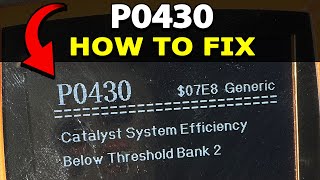


![How to Fix P0430 Error Code in 8 Minutes [7 DIY Methods / Only $5.97]](https://img.youtube.com/vi/KziSvVBjuEc/mqdefault.jpg)

We Have This Part in Stock
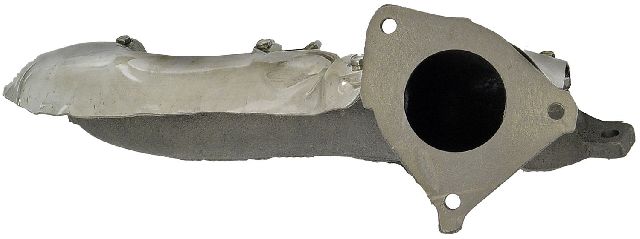

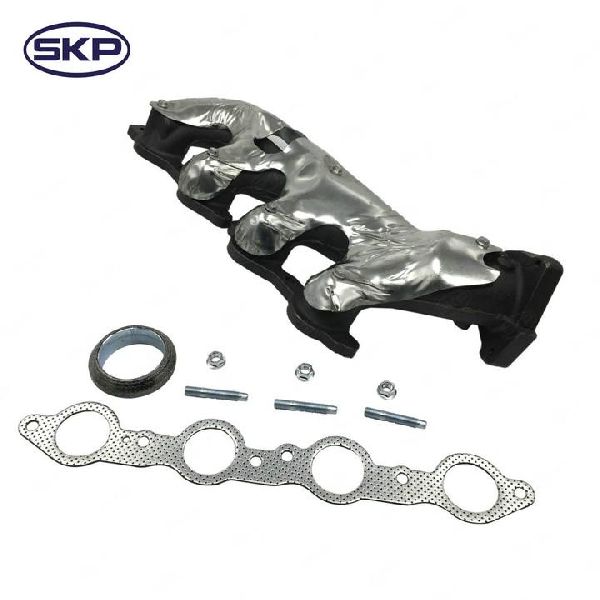
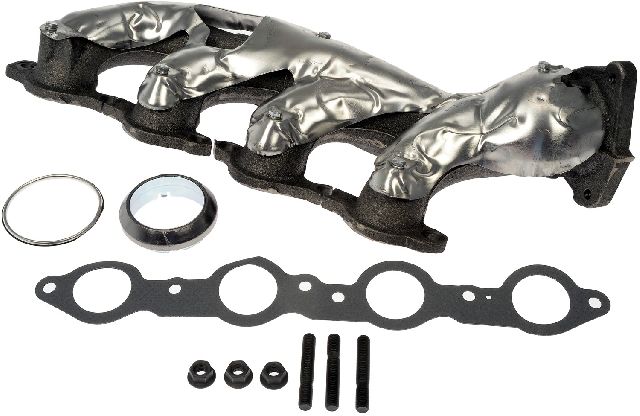


The information in this article is provided for general reference and educational purposes only. Vehicle specifications, procedures, and part compatibility can vary by production date, trim level, and region. Always consult your vehicle's factory service manual and verify part numbers before purchasing or performing repairs. Safety-critical components such as airbags, seat belts, and braking systems should be installed by a qualified professional.
- Gmc SIERRA 2500:
- 🎬 Helpful Videos
- 🛍️ Shop This Part
- What's Unique About the 2003-2010 Gmc SIERRA 2500
- Diagnostic Flowchart
- Symptoms You May Notice
- Most Likely Causes
- Rare But Worth Checking
- Diagnosis Steps
- Parts You'll Likely Need
- Related Codes That Often Appear With This One
- Technical Service Bulletins (TSBs) & Recalls
- Platform-Specific Known Issues
- Mechanic-Grade Diagnostic Values
- Scan Tool Commands That Help
- Wiring & Ground Locations
- Real Owner Repair Stories
- Model Year Variations Within This Range
- 🎟️ Get 5% Off