

P0430 on 2014-2017 GMC Sierra: Catalyst Efficiency Causes and Fixes
P0430 on a 2014-2017 Sierra indicates the passenger-side (Bank 2) catalytic converter is inefficient. Before replacing the expensive converter, inspect the air filter box for a poor seal, as per GM TSB #16-NA-111, which is a known issue causing this code. This allows debris to enter the intake, damaging sensors and clogging the converter. Also, check for exhaust leaks and test the O2 sensors.
- P0430 means the passenger-side catalytic converter is inefficient.
- ALWAYS inspect the air filter box for a bad seal (per TSB #16-NA-111) before buying any parts, as this is a known GM truck issue.
- Rule out cheaper fixes like exhaust leaks and faulty O2 sensors before condemning the expensive catalytic converter.
- If other engine codes are present (especially for misfires), they MUST be fixed first to prevent damaging a new converter.
- Use high-quality OEM (ACDelco) or reputable aftermarket parts, as cheap sensors and converters are known to cause the code to return.
What's Unique About the 2014-2017 Gmc SIERRA

For the 2014-2017 GMC Sierra and its GM K2XX platform mates, a significant and unique factor for the P0430 code is a known issue with the air intake system. GM issued Technical Service Bulletin #16-NA-111 because the air filter box may not seal correctly, allowing sand and other abrasive debris to bypass the filter. The TSB states this may cause "damage to the HO2 sensor element and the catalytic converter to become blocked with sand and debris particles." This makes inspecting the airbox a critical first diagnostic step before assuming other parts have failed.
Diagnostic Flowchart

Tap your situation to follow the diagnostic path that matches what you're seeing on this vehicle.
Symptoms You May Notice
- Check Engine Light is on
- Vehicle will fail an emissions test
- Reduced engine power and sluggish acceleration
- Decreased fuel economy
- Sulfur or "rotten egg" smell from the exhaust
- Remote start feature may be disabled by the PCM as a precaution
- Replacing the catalytic converter without first inspecting for the airbox seal issue (per TSB #16-NA-111), exhaust leaks, or testing the O2 sensors.
- Replacing the oxygen sensors without confirming they are faulty using scan tool data.
- Using cheap, poor-quality aftermarket catalytic converters. Owners report that some aftermarket brands may not have enough precious metal loading to satisfy the PCM's efficiency test, causing the code to return. Sticking to OEM/ACDelco is often recommended for a lasting fix.
Most Likely Causes

- Failing or Degraded Catalytic Converter 🔴 High Probability Often the 'victim' of other issues like misfires, oil consumption, or contamination from a faulty airbox seal. Converters are also a common failure item on higher-mileage trucks. The catalyst substrate can be poisoned by contaminants or physically damaged by excessive heat from unburned fuel.
How to confirm: After confirming no exhaust leaks and that O2 sensors are working correctly, use a scan tool to monitor O2 sensor data. A downstream sensor (Bank 2, Sensor 2) that fluctuates rapidly and mimics the upstream sensor indicates a bad converter. An infrared thermometer can also be used; a working converter should be significantly hotter at the outlet than the inlet, by at least 100°F.
Typical fix: Replace the Bank 2 catalytic converter. It is critical to fix the root cause (e.g., misfires, airbox seal) before replacement to prevent destroying the new part.
Est. part cost: $400-$900+ - Poorly Sealing Air Filter Housing 🔴 High Probability This is a documented issue covered by GM Technical Service Bulletin #16-NA-111 for 2014-2018+ Sierra/Silverado and other K2XX models. Debris bypassing the filter can damage O2 sensors and clog the converter.
How to confirm: Per the TSB, inspect the air filter housing cover for missing tabs or fasteners. Remove the cover and check the air filter's rubber seal and the housing's mating surface for any signs of dirt, dust, or sand trails that indicate debris is bypassing the filter and entering the clean intake duct.
Typical fix: Replace the air filter and clean any debris from the intake duct. If the housing itself is damaged, warped, or has broken clips, it must be replaced to ensure a proper seal.
Est. part cost: $20-$150 - Faulty Downstream Oxygen (O2) Sensor (Bank 2, Sensor 2) 🟡 Medium Probability Sensors can fail with age or become contaminated by oil (from AFM-related consumption issues) or debris from the faulty airbox seal issue.
How to confirm: Use a scan tool to graph the sensor's voltage. A healthy downstream sensor should show a relatively stable voltage (typically >0.6V). If it's stuck, flat, or slow to respond, it's likely faulty. Do not replace it without testing, as it's often misdiagnosed.
Typical fix: Replace the Bank 2, Sensor 2 (downstream) oxygen sensor.
Est. part cost: $40-$120 - Exhaust System Leak 🟡 Medium Probability Leaks from cracked exhaust manifolds, broken manifold bolts, or failed gaskets ahead of or near the catalytic converter can introduce oxygen into the exhaust stream, confusing the O2 sensors and triggering the code. Broken manifold bolts are a common issue on these trucks.
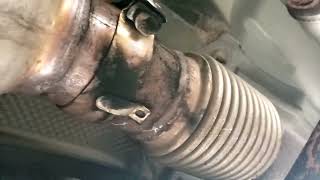
How to confirm: Visually inspect the exhaust manifolds, gaskets, and pipes for cracks or black soot trails indicating a leak. A professional smoke test is the most effective way to pinpoint the exact location 🎬 See how an exhaust leak can mimic a bad converter. of a small leak.
Typical fix: Replace the leaking gasket or repair/replace the cracked exhaust component.
Est. part cost: $20-$300
Rare But Worth Checking
- Engine Misfires or Fuel System Issues: If you have other codes like P0300-P0308 (misfires) or P0171/P0174 (lean condition), they must be addressed first. Unburned fuel from misfires can overheat and destroy a catalytic converter.
- Faulty Powertrain Control Module (PCM): Extremely rare, but not impossible. In one documented case, a dealer replaced the PCM after new GM catalytic converters did not resolve the P0420/P0430 codes. This should only be considered after all other possibilities have been exhausted.
Diagnosis Steps
- Scan for any other DTCs. Address any misfire (P030X), fuel system (P219B), or air/fuel ratio (P017X) codes before proceeding with P0430 diagnostics. Check if these codes were present recently, as they could be the root cause.
- CRITICAL FIRST STEP: Inspect the air filter housing for a proper seal, per TSB #16-NA-111. Check for missing clips, a warped housing, and any dirt or sand in the intake tube past the filter. If a leak is found, correct it and clean the intake before replacing any other parts.
- Thoroughly inspect the exhaust system from the engine to the rear O2 sensor for any leaks. Look for black soot trails, especially around the exhaust manifold and flange connections, which can indicate a leak from a broken manifold bolt. A smoke test is recommended for finding small leaks.
- Connect a scan tool and observe the live data for the Bank 2 oxygen sensors at operating temperature. The upstream sensor (Sensor 1) should fluctuate rapidly between approximately 0.1 and 0.9 volts. The downstream sensor (Sensor 2) should hold a much steadier, higher voltage (typically above 0.6-0.7 volts).
- If the downstream O2 sensor's voltage is mimicking the upstream sensor 🎬 Watch a real-world diagnosis of a P0430 code on this truck.'s rapid fluctuations, the catalytic converter is not storing oxygen and has failed.
- If the downstream O2 sensor's voltage is stuck (e.g., at 0V or 0.45V), flat, or very slow to respond, the sensor itself is likely faulty and should be tested and/or replaced.
- If all other checks pass, the catalytic converter has failed and requires replacement. Ensure the root cause of the failure has been identified and fixed.
Parts You'll Likely Need
- Catalytic Converter (Bank 2 - Passenger Side)
(OEM #19420276)— This is the most common definitive fix for P0430 after ruling out other causes. The original converter degrades over time or is damaged by other faults. Using a genuine GM/ACDelco part is often recommended to prevent the code from returning, as some aftermarket units may lack sufficient catalyst material.
Trusted brands: ACDelco (OEM), Walker, MagnaFlow
OEM price range: $600-$1000
Aftermarket price range: $400-$800 - Downstream Oxygen Sensor (Bank 2, Sensor 2)
(OEM #12659516)— A faulty downstream sensor can send incorrect data to the PCM, falsely triggering a P0430 code. It can also be contaminated by engine issues or debris from the airbox leak.
Trusted brands: ACDelco, Denso, Bosch
OEM price range: $70-$120
Aftermarket price range: $40-$80 - Air Cleaner Assembly Housing
(OEM #23170711)— If the original housing is warped or damaged (e.g., broken clips), it will not seal against the air filter, leading to debris ingestion that causes P0430, as noted in TSB #16-NA-111.
Trusted brands: ACDelco (OEM)
OEM price range: $100-$180
Aftermarket price range: $70-$120
Related Codes That Often Appear With This One
- P0420 — This is the identical code for Bank 1 (driver's side). If both converters are of a similar age and have been subjected to the same conditions (like debris from a bad airbox seal), they may fail around the same time.
- P0300-P0308 — These are cylinder misfire codes. A misfire allows unburned fuel to enter the exhaust, which can superheat and destroy the catalytic converter, leading to a P0430 code. The misfire is the root cause and must be fixed first.
- P219B — This code indicates a fuel trim imbalance on Bank 2, often from a faulty fuel injector. This condition can damage the converter over time. Critically, the presence of a code like P219B can prevent the catalyst monitor from running. After fixing the injector and clearing the codes, the monitor will run, and a P0430 may then appear, revealing the pre-existing damage to the converter.
Technical Service Bulletins (TSBs) & Recalls
- 16-NA-111: "Information on Malfunction Indicator Light (MIL) Illuminated, DTC P0420 and P0430 Set." This bulletin details the inspection procedure for the air filter housing seal as a primary cause for these codes on a wide range of GM trucks and SUVs.
- PIP3119P: An informational bulletin noting that catalyst efficiency DTCs (P0420/P0430) are disabled for the first hour of operation on new vehicles to allow for break-in, which is useful context but not a diagnostic aid for most owners.
Platform-Specific Known Issues

- TSB #16-NA-111 is the most critical vehicle-specific issue. It explicitly states the cause may be 'excessive sand and/or debris entering the air filter box and bypassing the seal of the air filter... causing damage to the HO2 sensor element and the catalytic converter to become blocked.' The TSB's primary instruction is 'Do not replace any of the parts until the air filter housing has been validated to be completely sealed.'
Mechanic-Grade Diagnostic Values
- Downstream O2 Sensor (Bank 2, Sensor 2) Voltage — expected: Relatively steady reading between 0.650V and 0.750V (650-750 mV) at stable operating conditions.. Failure: Voltage fluctuates rapidly, mimicking the upstream sensor's 0.1V - 0.9V oscillations, or is stuck low (under 300mV).
- Catalytic Converter Temperature Differential — expected: The outlet pipe should be at least 100°F hotter than the inlet pipe after the engine is fully warmed up.. Failure: The outlet temperature is the same as or cooler than the inlet temperature, indicating no chemical reaction is occurring.
- Mode $06 Catalyst Monitor Test (Bank 2) — expected: The test value (TID $A3 for GM) should be below the maximum threshold set by the manufacturer. A low value indicates high efficiency.. Failure: The test value exceeds the PCM's maximum allowable limit, which triggers the P0430 code. For example, a value of 0.9 on a scale where the max is 0.5 would indicate a failure.
- Bank 2 Fuel Trims (Short Term and Long Term) — expected: Ideally within +/- 5% at idle and steady cruise.. Failure: Consistently high positive values (e.g., > +10%) suggest a vacuum leak or other unmetered air issue, while high negative values suggest a rich condition (e.g., leaking injector). Both can lead to catalyst damage.
Scan Tool Commands That Help
- GDS2 (GM Techline Connect): Catalyst System Test — This is a guided diagnostic function that actively runs the catalyst monitor and provides a pass/fail result, which is more definitive than just watching live data. It's used to confirm a failure after visual inspections and O2 sensor checks are complete.
- GDS2 (GM Techline Connect): ECM Reprogramming (SPS) — In some cases, GM has issued calibration updates to address overly sensitive catalyst monitor thresholds. A TSB for other models (22-NA-042) indicates that reprogramming the ECM can be a fix for false P0420/P0430 codes. This should be checked if the converter and sensors appear to be functioning correctly.
Wiring & Ground Locations
- O2 Sensor Heater Fuses — In the underhood fuse block. Specifically, fuses F46 and F50 are the primary fuses for the O2 sensor heaters for the 2014-2017 model years.. A blown fuse will prevent the O2 sensor heater from working, causing the sensor to be slow to respond or provide inaccurate readings, especially during warm-up. This can lead to false catalyst efficiency codes.
- Bank 2 Sensor 2 Connector — The connector for the downstream passenger-side O2 sensor is typically mounted near the rear of the transmission, on or near the transmission crossmember.. This connector is exposed to road debris and moisture. Corrosion or damage to the pins or wiring at this location can cause an intermittent or lost signal from the sensor, triggering a P0430 code.
Real Owner Repair Stories
- Reddit user in r/AskMechanics (2014 GMC Sierra 5.3L) — P0430 code appeared about 1500 miles after major work.
❌ Tried (didn't work) The owner had already replaced the catalytic converter, fuel injectors, and O2 sensors (from AutoZone, not cheap Amazon parts) to fix previous codes.
✅ What actually fixed it The user reported that their scan tool (Torque app) showed the catalyst efficiency value dropping below the threshold intermittently. While a final fix wasn't posted in the thread, the immediate advice from mechanics was to meticulously inspect the wiring harness and connector for the Bank 2 downstream O2 sensor for damage or corrosion, as the new parts were unlikely to have failed so quickly.
OEM Part Supersession History
12637679→12659516— Standard part update/revision by GM.
Heads up: The new part number (12659516) is the correct replacement for the original and is used across a wide range of GM trucks and SUVs from 2014-2020. There are no known incompatibility issues when replacing the old number with the new one.
Model Year Variations Within This Range
- 2014-2017: The core engine options (4.3L V6, 5.3L V8, 6.2L V8) and emissions systems remained largely the same from 2014 through the 2017 model year. The K2XX platform was introduced for the 2014 model year. No significant changes affecting the diagnosis of P0430 have been documented within this specific year range, though minor ECM calibration updates may have occurred.
Helpful Videos

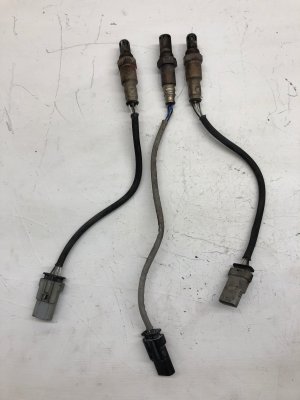
Used OEM Parts in Stock

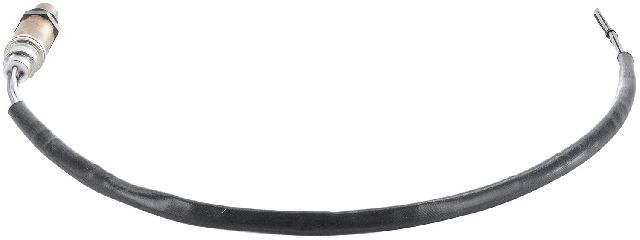
New Aftermarket Parts Available





The information in this article is provided for general reference and educational purposes only. Vehicle specifications, procedures, and part compatibility can vary by production date, trim level, and region. Always consult your vehicle's factory service manual and verify part numbers before purchasing or performing repairs. Safety-critical components such as airbags, seat belts, and braking systems should be installed by a qualified professional.
- Gmc SIERRA:
- 🎬 Helpful Videos
- 🛍️ Shop This Part
- What's Unique About the 2014-2017 Gmc SIERRA
- Diagnostic Flowchart
- Symptoms You May Notice
- Most Likely Causes
- Rare But Worth Checking
- Diagnosis Steps
- Parts You'll Likely Need
- Related Codes That Often Appear With This One
- Technical Service Bulletins (TSBs) & Recalls
- Platform-Specific Known Issues
- Mechanic-Grade Diagnostic Values
- Scan Tool Commands That Help
- Wiring & Ground Locations
- Real Owner Repair Stories
- OEM Part Supersession History
- Model Year Variations Within This Range
- 🎟️ Get 5% Off