

P0430 on 2009-2013 GMC Sierra: Causes and Fixes for Catalyst Efficiency Bank 2
P0430 on a 2009-2013 GMC Sierra indicates the passenger-side (Bank 2) catalytic converter is inefficient. While the converter itself is the most likely failure, first check for cheaper causes like exhaust leaks (especially broken manifold bolts) and faulty oxygen sensors. Underlying issues like oil consumption from the Active Fuel Management (AFM) system are a common root cause on these V8s.
- P0430 means the passenger side (Bank 2) catalytic converter is not working efficiently.
- **Do not** immediately replace the catalytic converter. It is expensive and often the victim of another problem.
- First, thoroughly inspect for exhaust leaks, especially broken exhaust manifold bolts, which are a very common problem on these trucks.
- Use a scan tool to check O2 sensor data and rule out a faulty sensor before condemning the converter.
- If any other codes are present, especially for engine misfires (P030x), they MUST be fixed first to avoid destroying a new catalytic converter.
What's Unique About the 2009-2013 Gmc SIERRA
On these GMT900 trucks, P0430 is a very common code, often pointing directly to a worn-out catalytic converter, especially on higher-mileage vehicles. A notorious issue on these V8 engines is the tendency for exhaust manifold bolts to break, creating leaks that can fool the oxygen sensors and falsely trigger a P0430 code. Furthermore, many of these 5.3L and 6.2L engines are equipped with Active Fuel Management (AFM), which can lead to excessive oil consumption. This oil burns and contaminates the catalytic converters, causing them to fail prematurely. A GM Technical Service Bulletin (TSB) also notes that the diagnostic test for this code may be disabled for the first hour of engine operation on some vehicles to prevent false codes at low mileage.
Diagnostic Flowchart
Tap your situation to follow the diagnostic path that matches what you're seeing on this vehicle.
Symptoms You May Notice
- Check Engine Light is on
- Vehicle fails an emissions test
- Reduced engine power or sluggish acceleration
- A sulfur or "rotten egg" smell from the exhaust
- Rattling noise from under the vehicle if the converter's internal structure has broken apart
- Increased fuel consumption
- Replacing the catalytic converter when the actual problem is an exhaust leak from a broken manifold bolt.
- Replacing the oxygen sensors when the catalytic converter has genuinely failed. The O2 sensor is often just accurately reporting the converter's inefficiency.
- Replacing any parts without first checking for and fixing other engine codes, such as for misfires (P030x) or lean/rich conditions (P017x). The new converter will be quickly destroyed if the root cause isn't fixed.
Most Likely Causes
- Failing Catalytic Converter (Bank 2) 🔴 High Probability Converters fail from age, but on these trucks, they are often victims of other issues. Excessive oil consumption from Active Fuel Management (AFM) systems can poison the catalyst materials. Unburned fuel from engine misfires can also overheat and destroy the converter's internal structure.
How to confirm: Use an infrared thermometer to measure the converter's inlet and outlet pipe temperatures when the engine is fully warm. The outlet should be at least 100°F hotter than the inlet. If temperatures are similar or the inlet is hotter, the converter is not working or is clogged. A scan tool showing the downstream O2 sensor voltage mimicking the upstream sensor's fluctuations also points to a bad converter.
Typical fix: Replace the Bank 2 catalytic converter assembly. It is critical to fix any underlying issues (like misfires or oil consumption) first, or the new converter will be damaged. Be aware that catalytic converters are covered by a federal emissions warranty for 8 years or 80,000 miles.
Est. part cost: $400-$1200 - Exhaust System Leak 🔴 High Probability These trucks are notorious for exhaust manifold bolts breaking off, especially at the front of the passenger side and rear of the driver's side. This creates a leak that allows oxygen into the exhaust stream before the O2 sensors, corrupting their readings and triggering a false P0430 code. Leaks can also occur at the flex pipe.
How to confirm: Listen for a ticking or hissing sound from the engine bay, especially when the engine is cold. Visually inspect the exhaust manifold bolts (especially the rearmost ones) and flange gaskets for signs of black soot or breakage. A smoke test is the most effective way to pinpoint a leak's exact location.
Typical fix: Replace the broken manifold bolts and the manifold gasket. Due to the difficulty of extracting broken bolts from the cylinder head, some companies like Dorman offer an 'Exhaust Manifold Bolt Repair Clamp' (e.g., Part 917-107) that creates a seal without requiring bolt extraction, saving significant time and effort. Leaking flex pipes must be welded or replaced.
Est. part cost: $20-$150 - Faulty Downstream Oxygen (O2) Sensor 🟡 Medium Probability O2 sensors degrade over time and can become contaminated by oil or carbon, causing them to send inaccurate or 'lazy' readings to the PCM. However, the PCM usually sets a specific O2 sensor code if the sensor itself fails, so this is more often a misdiagnosis than the actual cause.
How to confirm: Use a scan tool to graph the voltage of the Bank 2 downstream O2 sensor. A healthy sensor should show a relatively steady, flat voltage (around 0.5-0.8V). If it's switching rapidly like the upstream sensor, the converter is likely bad. If the voltage is stuck or unresponsive, the sensor may be faulty. Swapping the downstream sensors between Bank 1 and Bank 2 is a good test; if the code changes to P0420, the sensor is bad. 🎬 Watch: A mechanic's guide to diagnosing P0420 and P0430 codes.
Typical fix: Replace the Bank 2, Sensor 2 oxygen sensor. Using high-quality brands like Denso or ACDelco is recommended, as some owners report issues with cheaper sensors. The ACDelco part number for many of these trucks is 213-4229.
Est. part cost: $50-$120 - Underlying Engine Issues (Misfires, Fuel Mixture Problems) ⚪ Low Probability Issues like failing spark plugs, ignition coils, or fuel injectors can cause engine misfires. This sends unburned fuel into the exhaust, which can overheat and destroy the catalytic converter. Lean conditions (P0171/P0174) from vacuum leaks can also increase temperatures and damage the converter over time.
How to confirm: Check for other diagnostic trouble codes, specifically misfire codes (P0300-P0308) or fuel trim codes (P0171, P0174). Address these codes first, as they are the root cause of the converter failure.
Typical fix: Repair the root cause of the misfire or fuel mixture issue, which may involve replacing spark plugs, ignition coils, or fuel injectors. One owner reported a P0430 appeared immediately after replacing injectors, indicating the previous issue had already damaged the cat.
Est. part cost: $50-$500+
Rare But Worth Checking
- Damaged O2 Sensor Wiring: The wiring harness for the O2 sensor can be damaged by road debris or contact with hot exhaust components, causing a short or open circuit. A GM service caution notes that O2 sensor wires should not be repaired with solder, as the sensor uses the wire strands for its clean air reference; improper repairs can cause false codes.
- Powertrain Control Module (PCM) Software or Failure: In some cases, the PCM software may misinterpret sensor inputs, leading to a false code. Checking for available software updates with a dealer is a valid step. In a rare instance documented on a forum, a faulty PCM itself was the cause of recurring P0420/P0430 codes even after the converters were replaced.
Diagnosis Steps
- Check for any other stored DTCs with a scan tool. Address any misfire (P030x), fuel system (P017x), or specific O2 sensor circuit codes first.
- Visually inspect the exhaust system from the engine to the rear O2 sensor for any signs of leaks, cracks, or damage. Pay close attention to the exhaust manifold gaskets and bolts, looking for soot trails indicating a leak.
- Use a scan tool to observe the live data stream for the upstream and downstream O2 sensors for Bank 2. The upstream (Sensor 1) voltage should fluctuate rapidly between ~0.1V and ~0.9V. The downstream (Sensor 2) voltage should be relatively stable and high (e.g., >0.5V). If the downstream sensor voltage mimics the upstream sensor, the converter is likely bad.
- If an exhaust leak is suspected, perform a smoke test to confirm its location. This is more reliable than a visual or audio check alone.
- If the O2 sensors are suspected, test their function and wiring. Consider swapping the downstream sensors from Bank 1 and Bank 2 to see if the trouble code follows the sensor (changes to P0420).
- Use an infrared thermometer to measure the temperature of the catalytic converter's inlet and outlet pipes. The outlet should be significantly hotter (at least 100°F) than the inlet on a fully warmed-up engine.
- Check engine oil level. If it is low, the truck may have an oil consumption issue related to the AFM system, which is a known root cause of converter failure.
- If all other tests pass, the catalytic converter is the most likely culprit.
Parts You'll Likely Need
- Catalytic Converter (Bank 2)
(OEM #15896591, 19419599)— This is the most common direct cause of P0430 after ruling out leaks and sensor issues, typically failing due to age or contamination from oil or unburned fuel. Bank 2 is the passenger side.
Trusted brands: Walker Exhaust, MagnaFlow, ACDelco (OEM)
OEM price range: $800-$1500
Aftermarket price range: $400-$900 - Downstream Oxygen Sensor (Bank 2, Sensor 2)
(OEM #12609457, 12583804)— A faulty sensor can send incorrect data, falsely triggering the P0430 code. It's a common misdiagnosis but is sometimes the actual problem.
Trusted brands: Denso (e.g., 234-4668), Bosch, ACDelco (OEM), NTK
OEM price range: $80-$150
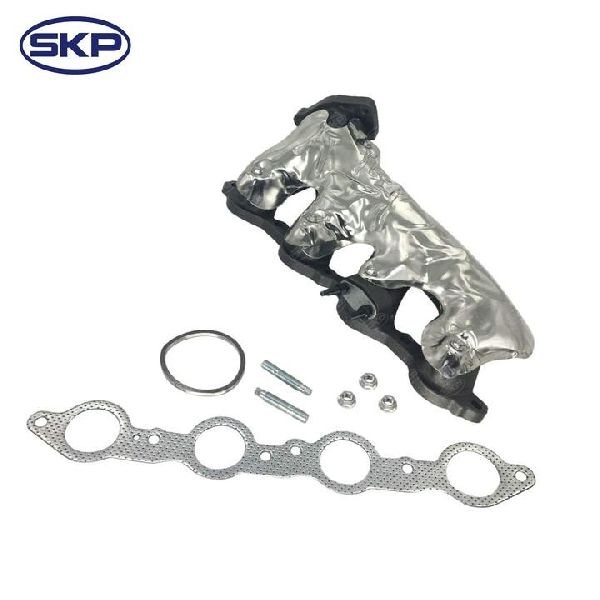
Aftermarket price range: $50-$120 - Exhaust Manifold Gasket and Bolt Kit — Required when fixing an exhaust leak at the manifold, which is a very common cause of a false P0430 code on these trucks due to broken bolts.
Trusted brands: Dorman (e.g., 03413), Fel-Pro, ACDelco (OEM)
OEM price range: $50-$100
Aftermarket price range: $20-$60
Related Codes That Often Appear With This One
- P0420 — This is the identical code for Bank 1 (driver's side). If both catalytic converters are the same age and subjected to the same conditions (like oil consumption), they may fail around the same time.
- P0300-P0308 — These are misfire codes. Unburned fuel from a misfire is a primary cause of catalytic converter failure. If you have a misfire, you must fix it before replacing the converter.
- P0171 / P0174 — These codes indicate a lean fuel condition. A lean mixture can be caused by an exhaust leak before the O2 sensor (a common cause of P0430) or a vacuum leak, and can increase combustion temperatures, which can damage the catalytic converter over time.
Technical Service Bulletins (TSBs) & Recalls
- PIP3119N: Notes that the diagnostic test for P0420/P0430 may be disabled for the first hour of engine operation on some vehicles to prevent false codes at low mileage.
Platform-Specific Known Issues
- Broken Exhaust Manifold Bolts: The V8 engines in this generation of Sierra are well-known for snapping exhaust manifold bolts, causing leaks that trigger catalyst codes.
- Catalytic Converter Theft: Due to high ground clearance and the value of the precious metals, these trucks are a prime target for catalytic converter theft.
Mechanic-Grade Diagnostic Values
- Upstream O2 Sensor (Bank 2, Sensor 1) Voltage — expected: Rapidly fluctuating between ~0.1V and ~0.9V on a warm engine at steady RPM.. Failure: Slow, non-responsive, or flat-lined voltage.
- Downstream O2 Sensor (Bank 2, Sensor 2) Voltage — expected: Relatively stable between 0.5V and 0.8V on a warm engine with a good converter.. Failure: Voltage rapidly fluctuates, mirroring the upstream sensor, indicating a failed converter. A stuck or unresponsive voltage may indicate a failed sensor.
- Key-On, Engine-Off O2 Sensor Voltage — expected: All four O2 sensors should show a bias voltage of approximately 0.44V - 0.45V.. Failure: A sensor reading 0V or a significantly different voltage may have a wiring or heater circuit issue.
- Long Term Fuel Trim (LTFT) — expected: Ideally between -10% and +10%.. Failure: Consistently high positive numbers (e.g., >+10%) suggest the engine is compensating for a lean condition, which could be caused by an exhaust leak fooling the O2 sensors.
- Mode $06 Catalyst Monitor Test — expected: A passing value according to the manufacturer's threshold.. Failure: For GM, Monitor IDs (MID) $A2-$AF often correspond to catalyst efficiency. A test value for a specific Test ID (TID) that is below the minimum or above the maximum threshold indicates a borderline converter, even if the P0430 code hasn't set yet.
Hidden / Shadow Codes Worth Checking
- Mode $06, TID $21-$22, MID $A2-$AF: These are not DTCs but raw test results from the PCM's self-tests. For GM vehicles, Monitor IDs (MID) from $A2 to $AF often relate to catalyst and oxygen sensor tests. A failing value here can be an early warning of a degrading catalytic converter before the P0430 code is triggered. (see via A professional scan tool capable of displaying Mode $06 data.)
Wiring & Ground Locations
- G103 / G104 — G103 is on the front of the right (passenger side) cylinder head. G104 is on the rear of the left (driver side) cylinder head.. These are primary engine ground points. Corrosion or a loose connection at G103 can directly impact the electrical reference for sensors on Bank 2, potentially causing erratic readings and false codes.
- O2 Sensor Heater Fuse — In the under-hood fuse box, fuses F46 (EMISSIONS 1) and F50 (EMISSIONS 2) are typically 15A fuses that power the heater circuits for the oxygen sensors.. A blown fuse for the Bank 2 sensor heater will prevent the sensor from reaching operating temperature quickly, causing it to perform poorly and potentially trigger catalyst or sensor codes.
- Bank 2 Downstream O2 Sensor Connector — Located on the passenger side of the vehicle, after the catalytic converter. The connector is typically clipped to the frame or a wire loom above the sensor.. This connector is exposed to the elements. Wiggling the connector while observing live data can reveal intermittent connections. Corrosion on the pins can alter voltage signals, leading to a misdiagnosis.
Real Owner Repair Stories
- YouTube channel 'Rainman Ray's Repairs' (2011 Chevrolet Silverado (GMT900 platform)) — P0430 code present.
❌ Tried (didn't work) Initial diagnosis pointed towards a bad catalytic converter.
✅ What actually fixed it A smoke test revealed a significant leak at the Bank 2 flex pipe, just before the downstream O2 sensor. Repairing the flex pipe leak resolved the P0430 code without needing to replace the catalytic converter.
OEM Part Supersession History
12609457→ACDelco 213-4229— Standard part lifecycle replacement.
Heads up: This is the GM Genuine Parts / ACDelco OE replacement for the downstream (post-cat) oxygen sensor for many 2008-2013 Sierra models. While other brands fit, using OE parts is often recommended to avoid compatibility issues.
Model Year Variations Within This Range
- 2010-2013: The Active Fuel Management (AFM) system, a primary contributor to oil consumption that fouls catalytic converters, was a known issue. GM made incremental improvements starting around 2011, including updated valve covers and oil control measures, which may reduce the frequency of failure in later models within this range compared to 2009-2010 trucks.
Helpful Videos
We Have This Part in Stock




The information in this article is provided for general reference and educational purposes only. Vehicle specifications, procedures, and part compatibility can vary by production date, trim level, and region. Always consult your vehicle's factory service manual and verify part numbers before purchasing or performing repairs. Safety-critical components such as airbags, seat belts, and braking systems should be installed by a qualified professional.
- Gmc SIERRA:
- 🎬 Helpful Videos
- 🛍️ Shop This Part
- What's Unique About the 2009-2013 Gmc SIERRA
- Diagnostic Flowchart
- Symptoms You May Notice
- Most Likely Causes
- Rare But Worth Checking
- Diagnosis Steps
- Parts You'll Likely Need
- Related Codes That Often Appear With This One
- Technical Service Bulletins (TSBs) & Recalls
- Platform-Specific Known Issues
- Mechanic-Grade Diagnostic Values
- Hidden / Shadow Codes Worth Checking
- Wiring & Ground Locations
- Real Owner Repair Stories
- OEM Part Supersession History
- Model Year Variations Within This Range
- 🎟️ Get 5% Off