

P0430 on 2006-2013 GMC Sierra 1500: Bank 2 Catalyst Efficiency Causes and Fixes
P0430 on a GMC Sierra indicates the passenger-side (Bank 2) catalytic converter is inefficient. While the converter itself may have failed, the root cause is often a cheaper fix like an exhaust leak from a broken manifold bolt or a faulty oxygen sensor. Always diagnose these first before replacing the expensive converter.
- P0430 means the passenger-side catalytic converter is underperforming, but don't assume the converter is the problem.
- Your first and most important diagnostic step is to check for exhaust leaks, especially from broken exhaust manifold bolts.
- Test the downstream O2 sensor by checking its live data or swapping it with the driver's side sensor before buying any parts.
- If you have any other codes, especially for engine misfires (P030x), you must fix those problems first or you will destroy a new catalytic converter.
- Be aware of generation-specific issues: broken manifold bolts on 2006-2007 models and oil consumption on 2007-2013 V8s.
What's Unique About the 2006-2013 Gmc SIERRA 1500
This generation of Sierra trucks is known for two common issues that directly trigger the P0430 code. On earlier GMT800 models (2006-2007 Classic), broken exhaust manifold bolts are a frequent problem, creating exhaust leaks that trick the sensors into setting this code. On the newer GMT900 trucks (2007-2013), oil consumption related to the Active Fuel Management (AFM) system can contaminate and ruin the catalytic converters over time, leading to an accurate P0430 code. Therefore, diagnosing the root cause is critical before replacing parts.
Diagnostic Flowchart
Tap your situation to follow the diagnostic path that matches what you're seeing on this vehicle.
Generation note: The 2006-2013 year range covers two generations: the GMT800 'Classic' (2006 and some early 2007 models) and the GMT900 (late 2007-2013). While the code's meaning is the same, common causes differ. GMT800s are particularly prone to exhaust manifold bolt failures causing leaks, while GMT900s with V8s often suffer from oil consumption issues (AFM/DOD) that can destroy the converters, as documented in GM TSBs like 10-06-01-008.
Symptoms You May Notice
- Check Engine Light is on
- Vehicle fails an emissions test.
- Reduced engine power and sluggish acceleration, especially if the converter is clogged.
- A sulfur or "rotten egg" smell from the exhaust.
- Rattling noise from under the vehicle if the internal structure of the converter has broken apart.
- Ticking noise from the engine bay, especially when cold, which can indicate an exhaust manifold leak.
- Replacing the catalytic converter without first checking for exhaust leaks. A leak from a broken manifold bolt before or near the upstream O2 sensor can easily cause a false P0430 code.
- Replacing the catalytic converter when the actual fault is a less expensive downstream O2 sensor.
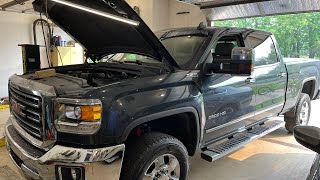
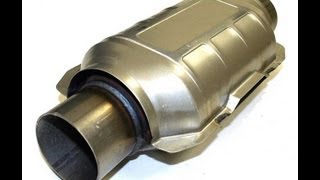
- Replacing O2 sensors when the catalytic converter is genuinely bad. A scan tool showing a downstream O2 sensor mimicking the upstream sensor 🎬 Watch: How to diagnose P0420 and P0430 codes like a pro. is a strong indicator the converter has failed.
Most Likely Causes
- Failing Catalytic Converter (Bank 2) 🔴 High Probability Converters have a finite life and are often damaged by other issues common to these trucks, like misfires or oil consumption, especially on higher-mileage vehicles. The AFM system in GMT900 V8s is a known contributor to oil burning that poisons the converters.
How to confirm: After ruling out exhaust leaks and O2 sensor failure, use an infrared thermometer to measure the converter's inlet and outlet pipes. A working converter should be at least 100-200°F hotter at the outlet. If temperatures are similar or the inlet is hotter, the converter is likely bad or clogged.
Typical fix: Replace the Bank 2 (passenger side) catalytic converter assembly. It is critical to fix any underlying engine issues (misfires, oil burning, exhaust leaks) first, or the new converter will be quickly damaged.
Est. part cost: $400-$900 - Exhaust System Leak 🔴 High Probability Broken exhaust manifold bolts are extremely common, especially on the GMT800/GMT900 generations, causing leaks between the cylinder head and manifold. The rear-most bolts near the firewall are notoriously prone to snapping due to heat cycles.
How to confirm: Perform a visual inspection for black soot trails near the exhaust manifold or flanges. You may also hear a ticking or hissing sound that is loudest on a cold start and may quiet down as the engine warms up. A smoke test is the most definitive way to find a leak.
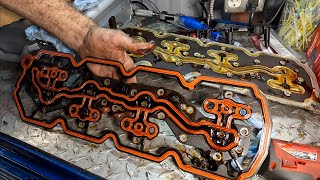
Typical fix: If a manifold bolt is broken, the manifold must be removed to extract the broken bolt and replace it, along with a new gasket. In some cases, special brackets are available to clamp the manifold without removing the broken bolt. 🎬 See this easy fix for broken exhaust manifold bolts. Leaking flange gaskets must be replaced.
Est. part cost: $20-$150 - Faulty Downstream Oxygen (O2) Sensor 🟡 Medium Probability O2 sensors operate in a harsh environment and wear out over time. A lazy or biased sensor can send incorrect data to the PCM, falsely indicating a converter problem.
How to confirm: Use a scan tool to monitor live O2 sensor data. A good downstream sensor (Bank 2, Sensor 2) should show a relatively steady voltage between 0.6V and 0.8V when the engine is warm and at a steady RPM. The best test is to swap the downstream sensors between Bank 1 and Bank 2. Clear the codes and drive the vehicle. If the code changes to P0420 (Bank 1), the sensor is faulty.
Typical fix: Replace the Bank 2, Sensor 2 (downstream, passenger side) oxygen sensor.
Est. part cost: $50-$120
Rare But Worth Checking
- Engine Misfires or Fuel System Issues: An engine that is misfiring or running excessively rich will dump raw fuel into the exhaust, which rapidly overheats and destroys the catalytic converter. If you have any misfire codes (P0300-P0308) or fuel trim codes (P0171, P0174), you MUST fix these problems before replacing a catalytic converter.
- Internal Engine Wear / Oil Consumption: Particularly on GMT900 models with Active Fuel Management (AFM), issues like stuck piston rings or faulty valve seals can cause excessive oil consumption. This oil contaminates the catalytic converter, leading to failure. GM issued multiple TSBs (e.g., 10-06-01-008G, 19-NA-036) addressing this issue, which may require a new valve cover, an AFM oil deflector, or even piston and ring replacement in severe cases.
Diagnosis Steps
- Check for any other stored trouble codes. Address any misfire, fuel trim, or O2 sensor heater circuit codes before proceeding with P0430 diagnosis.
- Visually inspect the exhaust system from the engine to the tailpipe. Look for cracks, holes, or black soot marks indicating a leak, paying close attention to the exhaust manifold-to-head connection for broken bolts, especially the rear-most ones.
- Use a scan tool to observe the live data streams for the upstream and downstream O2 sensors for both banks at operating temperature. The upstream (Sensor 1) voltage should fluctuate rapidly between ~0.1V and ~0.9V. A good downstream (Sensor 2) voltage should be relatively stable and high (e.g., >0.6V).
- If the Bank 2 downstream sensor voltage is fluctuating similarly to the astream sensor, it confirms the converter is not working. If the voltage is stuck or slow to respond, the sensor itself may be bad.
- To confirm a bad O2 sensor, swap the downstream sensors from Bank 1 and Bank 2. Clear the codes and drive the vehicle. If the trouble code returns as P0420 (Bank 1), the sensor you moved is the problem.
- If the O2 sensors appear to be working correctly and no exhaust leaks are found, use an infrared thermometer to check the catalytic converter's temperature. The outlet pipe should be at least 100°F hotter than the inlet pipe after the engine is fully warmed up.
- If the temperature test fails and all other causes have been ruled out, the catalytic converter has failed and requires replacement. Investigate the root cause of failure (age, oil consumption, misfires) to prevent damaging the new part.
Parts You'll Likely Need
- Catalytic Converter (Bank 2)
(OEM #15896591 (superseded by 19419599 for some applications))— This is the component that has failed when a P0430 code is confirmed to be accurate. It is the most common definitive fix after ruling out leaks and sensor issues.
Trusted brands: ACDelco (OEM), Walker Exhaust (e.g., 50363), MagnaFlow
OEM price range: $600-$1100
Aftermarket price range: $400-$900 - Downstream Oxygen Sensor (Bank 2, Sensor 2)
(OEM #12609457 (ACDelco #213-4229))— A faulty O2 sensor can send incorrect data, causing a misdiagnosis. It's a common failure point and should be tested before condemning the converter.
Trusted brands: ACDelco (OEM), Denso (e.g., 234-4668 for some models), Bosch
OEM price range: $80-$150
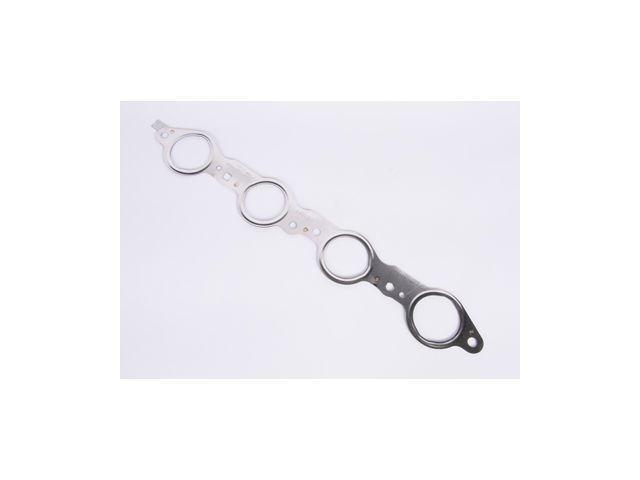
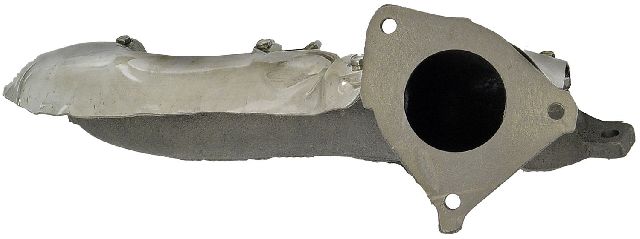
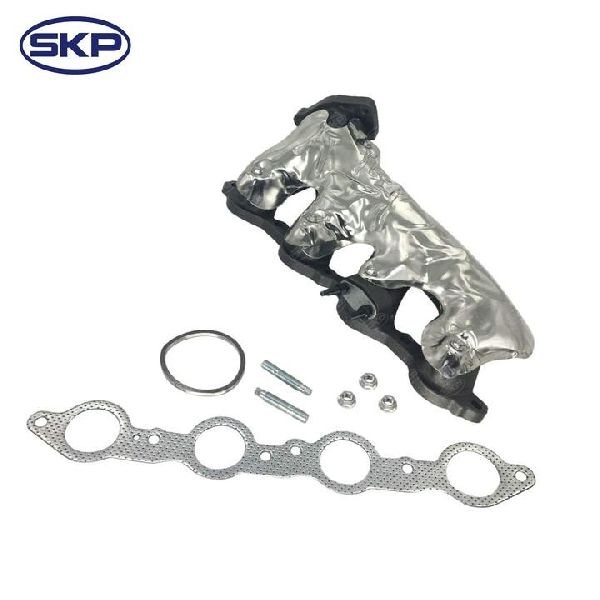
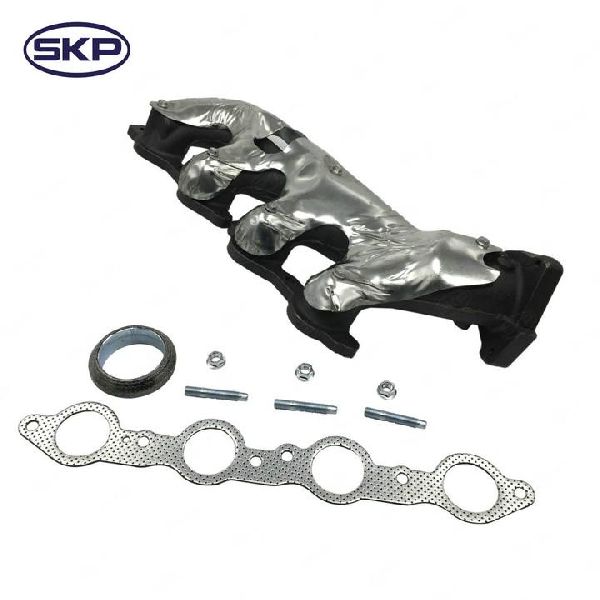
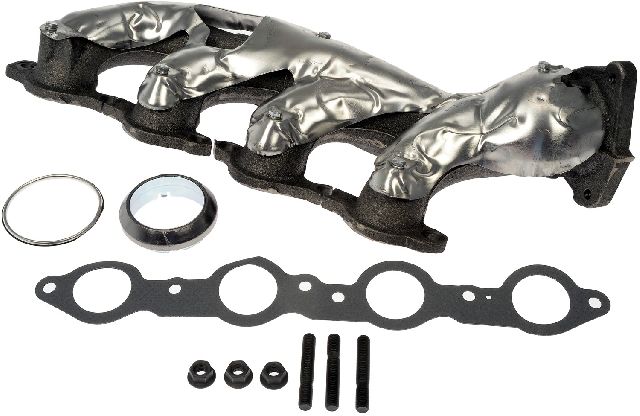
Aftermarket price range: $50-$120 - Exhaust Manifold Gasket & Bolt Kit — Required to fix exhaust leaks caused by failed gaskets or notoriously broken manifold bolts. This is a critical first check. Kits from brands like Dorman are widely available.
Trusted brands: Fel-Pro, Dorman, ACDelco
OEM price range: $40-
Related Codes That Often Appear With This One
- P0420 — This is the identical code for Bank 1 (driver's side). If both catalytic converters are the same age and have been subjected to the same conditions (like oil consumption), they often fail around the same time.
- P0300-P0308 — These are misfire codes. A misfire is a primary cause of catalytic converter failure because it sends unburned fuel into the exhaust, which superheats and melts the converter's internal structure.
- P2099 — This code for "Post Catalyst Fuel Trim System Too Rich Bank 2" can point to an exhaust leak or a faulty downstream O2 sensor, which are both primary diagnostic steps for P0430.
Technical Service Bulletins (TSBs) & Recalls
- PIP3119P: Notes that on new or low-mileage vehicles, the P0420/P0430 diagnostic is disabled for the first hour of engine run time to allow for converter break-in. A battery disconnect could reset this, potentially causing a false code.
- 10-06-01-008G (and related versions): Addresses excessive engine oil consumption on AFM-equipped V8s. Details causes (PCV system, AFM pressure relief valve oil spray) and fixes, which can include a redesigned valve cover, an AFM shield, and piston/ring replacement. This is a critical TSB for diagnosing the root cause of converter failure on GMT900s.
- 01-06-01-011P: General bulletin on engine oil consumption guidelines, defining the acceptable rate as 1 quart per 2000 miles for many GM vehicles under specific conditions.
Platform-Specific Known Issues
- Broken Exhaust Manifold Bolts: Owners frequently report a 'ticking' noise from the engine bay, especially on cold starts, which is a tell-tale sign of an exhaust leak from a broken manifold bolt. The bolts, particularly the one at the rear of the passenger-side manifold, are prone to snapping from thermal stress. One owner on a YouTube repair video demonstrated a special clamp bracket (Dorman makes similar products) that can be used to re-seal the manifold against the head without having to go through the difficult process of extracting the broken bolt from the cylinder head.
- AFM Oil Consumption Leading to Converter Failure: Many owners of 2007-2013 models with Active Fuel Management (AFM) report a connection between oil consumption and recurring P0420/P0430 codes. An owner on a GM truck forum noted that after getting the P0430 code, his mechanic identified heavy oil fouling on the spark plugs for cylinders on Bank 2 and recommended an oil consumption test before replacing the catalytic converter, referencing TSB 10-06-01-008. The fix often involves disabling the AFM system with a tuner and/or performing the repairs outlined in the TSB to stop the oil burning before replacing the damaged converter.
Mechanic-Grade Diagnostic Values
- Downstream O2 Sensor (Bank 2, Sensor 2) Voltage — expected: Relatively stable between 0.6V and 0.8V (or 600-800mV) at steady RPM on a fully warmed engine.. Failure: Voltage fluctuating rapidly, mirroring the upstream sensor, indicates a bad converter. Voltage that is flat, stuck, or slow to respond suggests a failed sensor.
- Upstream O2 Sensor (Bank 2, Sensor 1) Voltage — expected: Rapidly fluctuating between approximately 0.1V and 0.9V (100-900mV) on a warm engine.. Failure: A slow, lazy, or non-responsive sensor reading.
- Long-Term Fuel Trim (LTFT) Bank 2 — expected: Within a range of -5% to +5%.. Failure: Values consistently outside of +/-10% indicate an underlying fuel mixture problem (rich or lean) that must be addressed, as it can damage the catalytic converter.
Wiring & Ground Locations
- G103 — On the front of the passenger side cylinder head.. This is a primary engine ground. Poor contact due to corrosion or looseness can introduce electrical noise and cause erratic readings from sensors on that bank, including the oxygen sensors.
- G104 — On the rear of the driver's side cylinder head.. This ground is for the driver's side of the engine (Bank 1). While not directly for Bank 2, a bad ground here can affect the PCM's ability to get clean comparative data from Bank 1 sensors, complicating diagnosis.
- O2 Sensor Harness — Runs along the exhaust system underneath the truck.. The wiring is susceptible to heat damage from the exhaust pipes or physical damage from road debris. A visual inspection and a 'wiggle test' of the harness while watching live sensor data can reveal intermittent shorts or open circuits.
Real Owner Repair Stories
- Reddit user in r/MechanicAdvice (2014 GMC Sierra 5.3L) — P0430 code returned 1500 miles after major parts replacement.
❌ Tried (didn't work) Replaced catalytic converter, Replaced fuel injectors, Replaced O2 sensors
✅ What actually fixed it The user's code returned intermittently after replacing all major components, indicating a potential underlying issue not yet resolved, such as a hairline crack in a manifold or a wiring issue. The thread highlights that even after replacing parts, the problem can persist. - 2CarPros Forum User (Unknown Year, V6 Engine) — P0430 code, rough running, and exhaust fumes.
❌ Tried (didn't work) Patching the hole in the exhaust manifold (still leaked).
✅ What actually fixed it The definitive cause was a large hole that had rusted through the exhaust manifold. This massive pre-O2 sensor exhaust leak was the root cause of the P0430 code. The fix required replacing the entire exhaust manifold.
OEM Part Supersession History
Varies→12609457 (ACDelco 213-4229)— Part consolidation and design updates for downstream O2 sensors.
Heads up: This sensor is listed for many 2008-2016 GM trucks as a downstream sensor (Left Rear, Right Rear). While it may physically fit older models, using the wrong sensor can cause incorrect readings. Always verify the part number with the vehicle's VIN.
Model Year Variations Within This Range
- 2006-2007 ('Classic' GMT800): These models did not have Active Fuel Management (AFM). Therefore, P0430 causes are less likely to be related to oil consumption from collapsed lifters and more likely due to normal aging, misfires, or the platform's notorious broken exhaust manifold bolts.
- 2007.5-2013 (GMT900): These models introduced Active Fuel Management (AFM) on V8s, which is a primary contributor to oil consumption issues that poison and destroy catalytic converters. GM issued TSB 10-06-01-008 to address this with fixes like a redesigned valve cover and an oil deflector shield.
- 2007: This was a split year. GM sold both the older GMT800 platform as the 'Classic' and the new GMT900. They are visually distinct (headlights, fender flares) and have different components. It is critical to correctly identify the platform before ordering parts.
Helpful Videos
We Have This Part in Stock


The information in this article is provided for general reference and educational purposes only. Vehicle specifications, procedures, and part compatibility can vary by production date, trim level, and region. Always consult your vehicle's factory service manual and verify part numbers before purchasing or performing repairs. Safety-critical components such as airbags, seat belts, and braking systems should be installed by a qualified professional.
- Gmc SIERRA 1500:
- 🎬 Helpful Videos
- 🛍️ Shop This Part
- What's Unique About the 2006-2013 Gmc SIERRA 1500
- Diagnostic Flowchart
- Symptoms You May Notice
- Most Likely Causes
- Rare But Worth Checking
- Diagnosis Steps
- Parts You'll Likely Need
- Related Codes That Often Appear With This One
- Technical Service Bulletins (TSBs) & Recalls
- Platform-Specific Known Issues
- Mechanic-Grade Diagnostic Values
- Wiring & Ground Locations
- Real Owner Repair Stories
- OEM Part Supersession History
- Model Year Variations Within This Range
- 🎟️ Get 5% Off