

P0430 on 2007-2011 GMC Savana: Catalyst Efficiency Causes and Fixes
P0430 on a 2007-2011 GMC Savana indicates that the catalytic converter on Bank 2 (passenger side) is no longer working efficiently. While this often means the catalytic converter needs replacement, it's crucial to first rule out cheaper fixes like exhaust leaks, a faulty downstream oxygen sensor, or underlying engine issues before spending money on a new converter.
- P0430 means the catalytic converter on the passenger side (Bank 2) is inefficient.
- Before replacing the expensive catalytic converter, always check for exhaust leaks and test the downstream (Bank 2, Sensor 2) oxygen sensor.
- If other engine codes are present, especially for misfires, fix those problems first to avoid damaging a new catalytic converter.
- A scan tool that can display live O2 sensor data is the most valuable tool for diagnosing this code correctly.
- On 2011 models, be aware that the code may not set during short trips due to a built-in diagnostic delay. [Bulletin #PIP3119P]
What's Unique About the 2007-2011 Gmc SAVANA
For the GMC Savana and its twin, the Chevrolet Express, the P0430 code is a common emissions issue. There are no major platform-specific design flaws that make these vans uniquely prone to this code. However, their use as work vehicles often involves heavy loads and prolonged idling, which can contribute to carbon buildup and stress on the exhaust system. Rust is also a significant factor, leading to exhaust leaks at manifold flanges or pipe seams that can trigger a false P0430 code. A Technical Service Bulletin (TSB) for 2011 models notes that the diagnostic test for this code is disabled for the first hour of operation to prevent false codes at low mileage, which is an important diagnostic consideration.
Diagnostic Flowchart
Tap your situation to follow the diagnostic path that matches what you're seeing on this vehicle.
Symptoms You May Notice
- Check Engine Light is on.
- Reduced fuel economy.
- Sluggish acceleration or lack of power, especially if the converter is clogged.
- A sulfur or "rotten egg" smell from the exhaust, indicating the converter is not properly breaking down hydrogen sulfide.
- Rattling noise from under the vehicle if the converter's internal structure has broken apart.
- Increased exhaust noise if the code is caused by an exhaust leak.
- Immediately replacing the catalytic converter without checking for exhaust leaks or testing the oxygen sensors first. A faulty O2 sensor or an exhaust leak are much cheaper repairs and common causes of this code.
- Replacing the wrong bank's components. P0430 is for Bank 2, which is the passenger side on the Savana/Express.
Most Likely Causes
- Failing Catalytic Converter 🔴 High Probability Catalytic converters have a finite lifespan and can fail from age. On work vans like the Savana, they are also frequently damaged by underlying engine problems like misfires, leaking fuel injectors, or burning oil which send unburned fuel or contaminants into the exhaust, overheating and destroying the converter substrate.
How to confirm: After ruling out other causes, a temperature test using an infrared thermometer can confirm failure; a working converter should be significantly hotter (at least 100°F) at the outlet than the inlet. A clogged converter will be hotter at the inlet. If scan tool data shows the downstream O2 sensor voltage mirroring the upstream sensor's fluctuations, the converter is not storing oxygen and has failed.
Typical fix: Replace the Bank 2 (passenger side) catalytic converter assembly.
Est. part cost: $250-$700 - Faulty Downstream Oxygen (O2) Sensor 🟡 Medium Probability O2 sensors age and can become slow to respond or send inaccurate voltage readings, tricking the computer into thinking the converter is bad. It is a common misdiagnosis to replace the converter when only the sensor was at fault.
How to confirm: Use a scan tool to observe the live data for the Bank 2, Sensor 2. A healthy downstream sensor should show a relatively stable and flat voltage reading (typically above 0.5V). If it's switching rapidly like the upstream sensor, the converter is likely bad. If the signal is stuck, erratic, or unresponsive, the sensor itself has likely failed.
Typical fix: Replace the Bank 2, Sensor 2 (downstream) oxygen sensor. A common ACDelco part number is 213-4229 (GM 12609457).
Est. part cost: $40-$100 - Exhaust System Leak 🟡 Medium Probability Due to age and exposure to the elements, rust can cause leaks at gaskets or welds. Common failure points on these vans are the exhaust manifold to cylinder head (broken bolts are frequent) and the flanges before the catalytic converter. A leak allows outside oxygen to be drawn into the exhaust, which fools the downstream O2 sensor and triggers a false P0430 code.
How to confirm: Visually inspect the exhaust system for black soot marks, cracks, or holes. Listen for an audible ticking or hissing noise. A definitive method is to use a smoke machine to pressurize the exhaust and watch for smoke escaping from leaks, especially around the flex pipe and manifold gaskets.
Typical fix: Repair the leak. This may involve replacing a gasket (e.g., Fel-Pro), welding a crack, or replacing a section of pipe or the exhaust manifold itself.
Est. part cost: $10-$200 - Engine Performance Issues ⚪ Low Probability Underlying issues like engine misfires (P0300-P0308), leaking fuel injectors, or a rich/lean fuel condition (P0171, P0174) can send unburned fuel or contaminants into the exhaust, overheating and destroying the catalytic converter. These must be fixed before replacing the converter, or the new one will quickly fail.
How to confirm: Check for other diagnostic trouble codes (DTCs). If misfire or fuel trim codes are present, they are the root cause. Diagnose and fix these issues first.
Typical fix: Address the root cause (e.g., replace spark plugs, ignition coils, or fuel injectors) before replacing the catalytic converter.
Est. part cost: $50-$500
Rare But Worth Checking
- Carbon Buildup / Ignition Coil Grounds:
Diagnosis Steps
- Scan for any other DTCs. If misfire (P030x) or fuel system codes (P0171/P0174) are present, diagnose and fix them first as they are the likely root cause of converter failure.
- Visually and audibly inspect the entire exhaust system for leaks, from the exhaust manifolds to the post-converter piping. Pay close attention to manifold gaskets and flange connections.
- For a definitive leak test, use a smoke machine connected to the tailpipe and look for smoke escaping from any cracks or bad gaskets.
- With the engine running, use a scan tool to monitor the live data stream for the Bank 2 oxygen sensors. Compare the upstream (Sensor 1) and downstream (Sensor 2) signals.
- A good catalytic converter will show a rapidly fluctuating signal for Sensor 1 and a steady, flat signal for Sensor 2 (typically >0.5V).
- If the Sensor 2 signal mimics the Sensor 1 signal, the converter is likely inefficient. If the Sensor 2 signal is flat but stuck at a low voltage or doesn't respond, the sensor itself may be faulty or there could be a wiring issue.
- If sensors and exhaust integrity are good, perform a temperature test on the catalytic converter using an infrared thermometer. The outlet pipe should be at least 100°F hotter than the inlet pipe on a fully warmed-up engine.
- If the outlet is cooler or the same temperature as the inlet, the converter is not working and needs to be replaced.
Parts You'll Likely Need
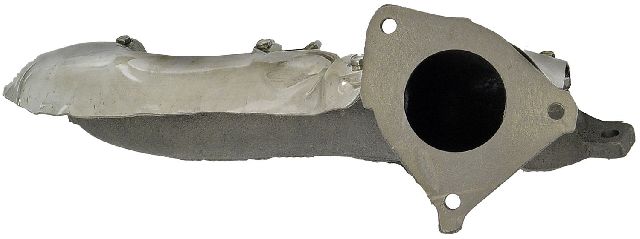
- Catalytic Converter (Bank 2)
(OEM #19418932 (replaces 25824121 for some models))— This is the most common direct cause for the P0430 code, indicating the part has reached the end of its service life or has been damaged by an engine issue.
Trusted brands: Walker Exhaust (e.g., 16468, though fitment varies), MagnaFlow (e.g., 447267 for CARB states), ACDelco (OEM)
OEM price range: $500-$900
Aftermarket price range: $250-$700 - Oxygen Sensor (Bank 2, Sensor 2)
(OEM #ACDelco 213-4229 (GM 12609457))— A faulty downstream O2 sensor can send incorrect data, falsely triggering the P0430 code. It's a common point of failure and should be tested before replacing the more expensive converter.
Trusted brands: Denso, Bosch, ACDelco (OEM), NGK
OEM price range: $80-$150
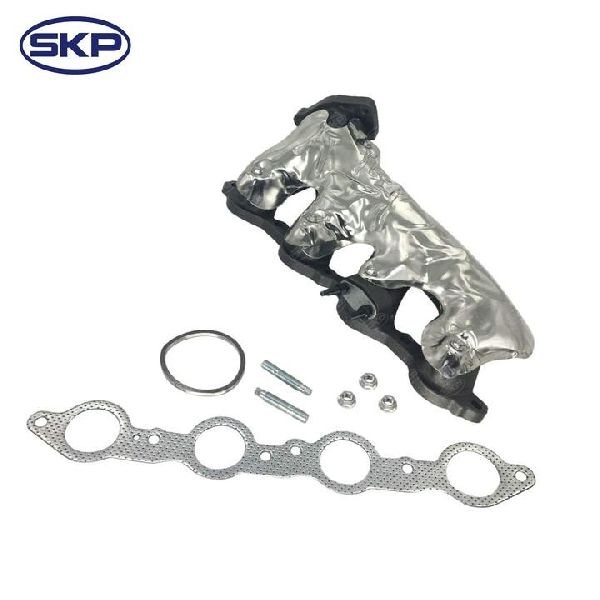
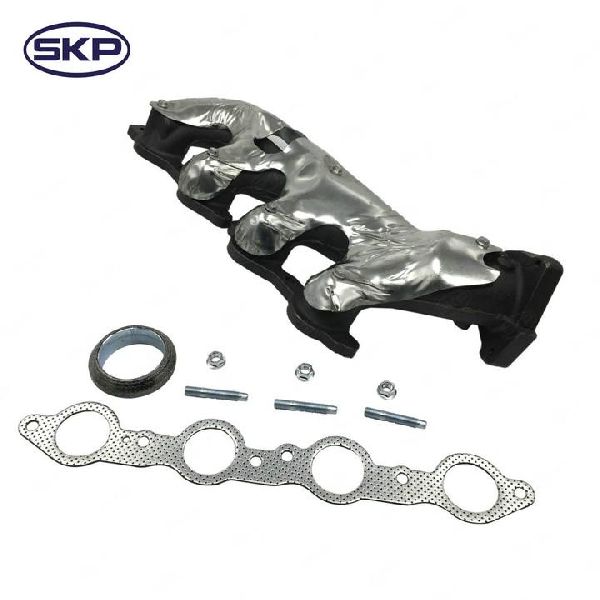
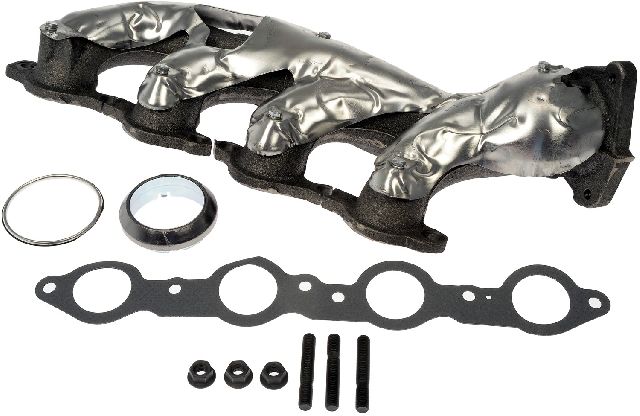
Aftermarket price range: $40-$100 - Exhaust Manifold Gasket — Exhaust leaks frequently occur at the manifold-to-head connection due to rust and broken bolts. A leak here can introduce oxygen and cause a false P0430 code.
Trusted brands: Fel-Pro, ACDelco, Victor Reinz (e.g., 71-14058-00)
Aftermarket price range: $15-$50
Related Codes That Often Appear With This One
- P0420 — This is the identical code for Bank 1 (driver's side). If both appear, it may suggest a systemic issue like poor fuel quality, a contaminated batch of fuel, or a common engine problem affecting both banks, rather than two simultaneous converter failures.
- P0300-P0308 — These are misfire codes. An engine misfire allows unburned fuel to enter the exhaust, which can quickly overheat and destroy the catalytic converter, leading to a P0430 code. The misfire MUST be fixed before replacing the converter.
Technical Service Bulletins (TSBs) & Recalls
- PIP3119P: Notes that on some 2011 models, the check for P0420/P0430 is disabled for the first hour of operation. It also details a break-in procedure for new converters to prevent false codes.
- PIP5232C: Referenced by an aftermarket parts supplier as related to P0420/P0430 codes, potentially involving diagnosis steps beyond the basics.
- 19-NA-044: Also referenced by an aftermarket parts supplier, suggesting additional diagnostic considerations like checking ignition coil grounds and performing engine decarbonization.
Platform-Specific Known Issues
- A Technical Service Bulletin for 2011 models, #PIP3119P, mentions that the P0430 diagnostic test is disabled for the first hour of engine operation to prevent false codes from being set at low mileage. The TSB also provides a specific drive cycle procedure to 'break-in' a new catalytic converter to prevent a false code from returning immediately after replacement.
- These vans are highly susceptible to catalytic converter theft due to their high ground clearance.
- Exhaust manifold bolts are known to rust and break, causing an exhaust leak that can trigger a false P0430 code.
Mechanic-Grade Diagnostic Values
- Downstream O2 Sensor (Bank 2, Sensor 2) Voltage at Idle — expected: A relatively stable voltage, typically between 0.4V and 0.6V on a fully warmed-up engine.. Failure: Voltage rapidly fluctuating in a similar pattern to the upstream sensor, or a voltage that is stuck low (e.g., below 0.2V).
- Downstream O2 Sensor (Bank 2, Sensor 2) Voltage at 2000 RPM (steady state) — expected: A stable voltage, typically holding steady around 0.65V to 0.75V.. Failure: Voltage does not rise and hold steady, or it fluctuates rapidly, mimicking the upstream sensor.
- Long-Term Fuel Trim (Bank 2) — expected: Within +/- 5%. Values approaching +/- 10% or more indicate a fuel mixture problem that must be fixed before replacing the converter.. Failure: Consistently high positive values (e.g., +10% or more) suggest a vacuum leak, while high negative values suggest a rich condition (e.g., leaking injector).
Scan Tool Commands That Help
- Tech2/GDS2: Catalyst System Test — To manually initiate the catalyst efficiency monitor test after a repair, rather than performing a full drive cycle. This can provide a quicker verification of the fix.
- Generic OBD-II Scanner with Drive Cycle Functions: GM Drive Cycle / Emissions Readiness Monitor Reset — After a repair, the catalyst monitor must be run to completion to verify the fix and turn off the check engine light. A specific GM drive cycle is required: 1) Cold start. 2) Idle for 2.5 minutes with A/C and rear defrost on. 3) Drive at a steady 55 MPH for 5 minutes to run the catalyst monitor.
Wiring & Ground Locations
- G102 — On the left rear of the engine block.. This is the primary ground for all eight ignition coils. A poor connection here can cause weak spark, leading to incomplete combustion, misfires, and eventual catalytic converter damage.
- G103 (Gasoline Engine) — On the right rear of the engine.. A service bulletin for other GM models identifies G103 at the rear of the cylinder head as a critical ground connection; poor contact can cause various MILs. While not directly for P0430, ensuring this ground is clean and tight is a good practice for any engine management issue.
- G101 — Located at the right front of the engine, lower block.. This ground point serves the Engine Control Module (ECM) and Transmission Control Module (TCM). A faulty ground here can cause erratic sensor readings and incorrect diagnostic trouble codes.
Real Owner Repair Stories
- Ford Truck Enthusiasts Forums (2010 Ford E-Series (similar powertrain architecture)) — Coolant leak from a cracked intake manifold gasket caused severe misfires and bogging. After repairing the gasket and plugs, a P0430 code appeared.
❌ Tried (didn't work) The user was concerned the new code meant the new converter was needed immediately.
✅ What actually fixed it The root cause was determined to be the original coolant leak from the intake manifold. The coolant contaminated and destroyed the catalytic converter on Bank 2. The ultimate fix required replacing the catalytic converter after the initial engine repair was completed.
OEM Part Supersession History
25824121, 15127419→19418932— Part consolidation and potential design updates by the manufacturer.
Heads up: The new part number 19418932 is the current GM Genuine replacement for the earlier numbers on 2007-2010 models.
Model Year Variations Within This Range
- 2011: As noted in TSB #PIP3119P, the diagnostic test for P0420 and P0430 is disabled for the first hour of engine operation on 2011 models. This was implemented to prevent false codes at low mileage and is a key diagnostic consideration, as the code will not set on a short test drive.
Helpful Videos
![How to Fix P0430 Error Code in 8 Minutes [7 DIY Methods / Only $5.97]](https://img.youtube.com/vi/KziSvVBjuEc/mqdefault.jpg)
We Have This Part in Stock



The information in this article is provided for general reference and educational purposes only. Vehicle specifications, procedures, and part compatibility can vary by production date, trim level, and region. Always consult your vehicle's factory service manual and verify part numbers before purchasing or performing repairs. Safety-critical components such as airbags, seat belts, and braking systems should be installed by a qualified professional.
- Gmc SAVANA:
- 🎬 Helpful Videos
- 🛍️ Shop This Part
- What's Unique About the 2007-2011 Gmc SAVANA
- Diagnostic Flowchart
- Symptoms You May Notice
- Most Likely Causes
- Rare But Worth Checking
- Diagnosis Steps
- Parts You'll Likely Need
- Related Codes That Often Appear With This One
- Technical Service Bulletins (TSBs) & Recalls
- Platform-Specific Known Issues
- Mechanic-Grade Diagnostic Values
- Scan Tool Commands That Help
- Wiring & Ground Locations
- Real Owner Repair Stories
- OEM Part Supersession History
- Model Year Variations Within This Range
- 🎟️ Get 5% Off