

P0430 on 2002-2006 GMC Savana: Catalyst Efficiency Fixes
P0430 on a 2002-2006 GMC Savana indicates the catalytic converter on Bank 2 (driver's side) is failing. While the converter itself is the most common cause, always check for exhaust leaks and failing oxygen sensors first to avoid a costly misdiagnosis. These vans are also high-risk targets for converter theft. A replacement converter can cost several hundred dollars.
- P0430 means the driver's side (Bank 2) catalytic converter is not working efficiently.
- Before replacing the expensive converter, always rule out cheaper fixes like exhaust leaks and bad oxygen sensors.
- If you have any engine misfire codes (P030x) or rich fuel codes (P0172/P0175), you must fix those problems first, or you will destroy the new converter.
- On these vans, Bank 2 refers to the driver's side of the engine.
- Due to high ground clearance, these vans are a target for catalytic converter theft; consider an anti-theft shield after replacement.
What's Unique About the 2002-2006 Gmc SAVANA
GMC Savana vans are workhorses, often accumulating high mileage which naturally leads to catalytic converter wear. 🎬 Watch: P0430 meaning, symptoms, and common fixes explained. Their high ground clearance also makes them a prime target for catalytic converter theft. A notable issue for these vehicles is documented in a Technical Service Bulletin (TSB), which states that the diagnostic for code P0430 is intentionally disabled for the first hour of engine operation on new vehicles to prevent false codes from being set before the system is fully broken in. This can also affect newly replaced converters if a specific break-in drive cycle is not performed.
Diagnostic Flowchart
Tap your situation to follow the diagnostic path that matches what you're seeing on this vehicle.
Generation note: This range covers the GMC Savana's major update in 2003, but the fundamental powertrain and exhaust designs (Vortec V8s) related to this code remained consistent. The advice in this guide applies to all 2002-2006 models.
Symptoms You May Notice
- Check Engine Light is on
- Reduced engine power and sluggish acceleration, especially under load or going uphill.
- A rotten egg or sulfur smell from the exhaust.
- Rattling noise from underneath the vehicle if the converter's internal ceramic honeycomb has broken apart.
- Failing a state emissions test.
- A sudden, extremely loud exhaust noise, which is a primary indicator that the converter has been cut out and stolen.
- Immediately replacing the catalytic converter without checking for exhaust leaks or faulty O2 sensors first. An exhaust leak between the two O2 sensors is a very common cause of a false P0430 code.
- Replacing the O2 sensor hoping for a cheap fix when scan tool data clearly shows a bad converter (downstream O2 mirroring upstream).
Most Likely Causes
- Failing or Inefficient Catalytic Converter 🔴 High Probability High mileage and long-term wear are common on these work vans, leading to the natural degradation of the precious metals inside the converter. They can also be damaged by unresolved engine misfires or rich fuel conditions.
How to confirm: After ruling out other causes, use a scan tool to watch the upstream and downstream O2 sensor data. If the downstream sensor (Bank 2, Sensor 2) voltage fluctuates rapidly, mirroring the upstream sensor, the converter is not storing oxygen and has failed. An infrared thermometer can also be used; the outlet of a working converter should be significantly hotter (by 100°F or more) than the inlet. A clogged converter will be hotter at the inlet.
Typical fix: Replace the Bank 2 (driver's side) catalytic converter. Many are direct-fit units that include the Y-pipe.
Est. part cost: $250-$700 - Exhaust Leak 🟡 Medium Probability Corrosion from age, road salt, and heat cycles can cause leaks at gaskets or cracks in the pipes. Flanges, especially where the exhaust manifold meets the Y-pipe, are common leak points. Even a small pinhole leak can introduce enough oxygen to fool the O2 sensors.
How to confirm: Visually inspect the exhaust system from the engine manifold to the rear O2 sensor for black soot, cracks, or holes. Listen for an audible ticking or hissing sound that is louder when the engine is cold. A shop can use a smoke machine to pinpoint leaks.
Typical fix: Replace the leaking gasket (e.g., exhaust manifold or flange gasket) or repair/replace the damaged section of the exhaust pipe.
Est. part cost: $20-$150 - Faulty Oxygen (O2) Sensor 🟡 Medium Probability O2 sensors are wear items and can become slow, biased, or contaminated with age, sending incorrect data to the ECM. However, replacing the sensor for a P0430 code is less often the solution than replacing the converter itself.
How to confirm: Use a scan tool to graph the sensor's voltage. A healthy downstream sensor should show a relatively stable voltage (typically >0.45V). If it's stuck high, low, or switching rapidly like the upstream sensor, it may be faulty. Swapping the Bank 1 and Bank 2 downstream sensors can also help; if the code changes to P0420 (Bank 1), the sensor is bad.
Typical fix: Replace the downstream (post-catalyst) oxygen sensor on Bank 2. It's often recommended to replace them with the converter.
Est. part cost: $50-$120 - Engine Misfires or Rich Fuel Condition ⚪ Low Probability Neglected maintenance like old spark plugs, faulty ignition coils, or leaking fuel injectors can cause misfires or a rich condition. Unburnt fuel enters the exhaust and superheats the converter, melting its internal structure.
How to confirm: Check for other trouble codes, especially misfire codes (P0300-P0308) or fuel trim codes (P0172, P0175). Address these codes first, as they are the root cause of the converter failure. A new converter will be quickly destroyed if the underlying misfire is not fixed.
Typical fix: Perform a full tune-up: replace spark plugs, ignition coils, or faulty fuel injectors as needed. This must be done before replacing the catalytic converter to prevent damage to the new part.
Est. part cost: $50-$400
Rare But Worth Checking
- Incorrect Converter Break-In:
Diagnosis Steps
- Scan for all stored DTCs. If any misfire (P030x), fuel system (P017x), or O2 sensor heater codes are present, diagnose and fix them before addressing P0430.
- Thoroughly inspect the entire exhaust system for leaks, especially at manifold flanges and pipe welds between the upstream and downstream O2 sensors. Listen for hissing or ticking noises when cold.
- With the engine at operating temperature, use a scan tool to graph the live data for the upstream and downstream O2 sensors for Bank 2 (driver's side).
- The upstream O2 sensor (Sensor 1) voltage should fluctuate rapidly between approximately 0.1V and 0.9V.
- The downstream O2 sensor (Sensor 2) voltage should be relatively steady and stable, typically above 0.45V.
- If the downstream O2 sensor's voltage is fluctuating rapidly and mirroring the pattern of the upstream sensor, it confirms the catalytic converter is not functioning correctly.
- If the downstream sensor's voltage is stuck (not changing) or shows erratic behavior not related to the upstream sensor, the sensor itself or its wiring is likely faulty.
- If no exhaust leaks are found and the O2 sensors are functioning correctly per the scan tool, the catalytic converter is the confirmed cause of the code and requires replacement.
Parts You'll Likely Need
- Catalytic Converter (Bank 2, Driver's Side)
(OEM #Varies by specific engine/chassis. A common direct-fit assembly part number is 19370442 (ACDelco). Always verify with VIN.)— This is the most common cause of P0430, as the internal materials degrade over time or are damaged by engine problems.
Trusted brands: Walker, MagnaFlow, ACDelco, AP Exhaust
OEM price range: $500-$900
Aftermarket price range: $250-$600 - Downstream Oxygen Sensor (Bank 2, Sensor 2)
(OEM #ACDelco 213-4229 (GM 12609457))— A faulty sensor can send incorrect readings, causing a false P0430 code. It is also good practice to replace the sensors when replacing a high-mileage converter.
Trusted brands: ACDelco, Denso, Bosch, NTK
OEM price range: $80-$150
Aftermarket price range: $50-$120 - Exhaust Manifold or Flange Gasket — A leak at the exhaust manifold or Y-pipe flange is a common cause that allows oxygen to enter the exhaust, leading to a false P0430 code.
Trusted brands: Fel-Pro, ACDelco
OEM price range: $30-$60
Related Codes That Often Appear With This One
- P0420 — This is the identical code for Bank 1 (passenger side). It's common for both converters to fail around the same time on a high-mileage vehicle.
- P0300-P0308 — These are misfire codes (P0300 for random, P0301-P0308 for specific cylinders). Unburnt fuel from a misfire can enter the exhaust and overheat the catalytic converter, destroying it. Always fix misfires before replacing a converter.
- P0172 / P0175 — These codes indicate a rich fuel condition on Bank 1 and Bank 2, respectively. A constant rich mixture from issues like a leaking fuel injector can overwhelm and damage the catalytic converter over time.
Technical Service Bulletins (TSBs) & Recalls
- PIP3119P: Notes that the P0420 and P0430 diagnostics are disabled for the first hour of operation on new vehicles. Also provides a specific drive-cycle procedure to properly break-in a new catalytic converter to prevent a false code from returning after replacement.
Platform-Specific Known Issues
- Per TSB #PIP3119P, the diagnostic test for P0430 (and P0420) is disabled for the first hour of engine operation on new vehicles to prevent setting a false code on a cold catalyst system.
- This TSB also applies to newly replaced converters. If the code returns shortly after replacement, the converter may not have completed its break-in cycle. A specific drive cycle must be performed to clear the code properly.
- Due to high ground clearance, these vans are a significant target for catalytic converter theft. A sudden loud exhaust is a tell-tale sign of theft. Consider installing an anti-theft shield or cage when replacing the converter.
Mechanic-Grade Diagnostic Values
- Fuel Pressure (Key On, Engine Off) — expected: 55-65 PSI. Failure: Pressure below 55 PSI can indicate a weak fuel pump or faulty regulator. For some Vortec engines, pressure below 50 PSI can cause a no-start condition.
- Fuel Pressure (Engine Idling) — expected: 50-55 PSI. Failure: Pressure dropping significantly below 50 PSI at idle suggests a fuel delivery problem that could lead to a lean condition, damaging the converter.
- Upstream O2 Sensor (Bank 2, Sensor 1) Voltage — expected: Rapidly fluctuating between ~0.1V (lean) and ~0.9V (rich).. Failure: A slow or non-responsive sensor will not provide accurate data for the catalyst monitor.
- Downstream O2 Sensor (Bank 2, Sensor 2) Voltage (Good Converter) — expected: Relatively stable voltage, typically between 0.45V and 0.75V.. Failure: Voltage rapidly switching and mirroring the upstream sensor indicates a failed converter. Voltage stuck high (>0.9V) or low (<0.1V) points to a sensor or wiring issue.
- Long Term Fuel Trim (LTFT) — expected: Within +/- 10%.. Failure: Values consistently above +10% indicate the engine is compensating for a vacuum leak or other lean condition. Values below -10% indicate a rich condition. Either can damage the converter.
Hidden / Shadow Codes Worth Checking
- Mode $06, TID $05, CID $02: This refers to the raw test data for the Catalyst Monitor Bank 2. A technician can view the measured value from the last drive cycle and compare it to the manufacturer's maximum allowable threshold. If the measured value is close to or exceeds the limit, it confirms the converter is failing, even before the P0430 code becomes permanent. (see via A professional scan tool with Mode $06 capabilities (e.g., Tech2, Autel, Launch).)
Scan Tool Commands That Help
- Tech2 / GDS2: Catalyst System Test — This is a guided diagnostic procedure within the factory scan tool that actively runs the catalyst monitor test. It forces the required engine conditions (RPM, temperature) to get a definitive pass/fail result for the converter, which is more reliable than just observing O2 sensor data on a short test drive.
- Tech2 / GDS2: Snapshot / Data Capture — When diagnosing an intermittent P0430, a technician can use the snapshot feature to record live data when the fault occurs. This is especially useful for capturing the state of O2 sensors, fuel trims, and engine load at the exact moment the ECM flags the converter as inefficient.
Wiring & Ground Locations
- G102 — On the left rear of the engine block/cylinder head.. This is a primary engine ground. A poor connection here can affect various sensors, including the Crankshaft Position Sensor and potentially the O2 sensors, leading to erratic signals and incorrect diagnostic data.
- G103 — On the right rear of the engine block/cylinder head.. Similar to G102, this is another critical engine ground. Since Bank 2 is on the driver's side (left), G102 is more likely to be a direct cause, but any poor engine ground can introduce electrical noise that affects sensor readings.
- PCM Connector C2 (Green) — At the Powertrain Control Module (PCM), located in the engine compartment on the left inner fender.. Pin 65 (Tan/White wire) is the Low Signal and Pin 25 (Purple/White wire) is the High Signal for the Bank 2, Sensor 2 (downstream) oxygen sensor. These pins should be checked for continuity and voltage when diagnosing a potential wiring or PCM issue.
- O2B Fuse — In the under-hood fuse block.. This fuse (typically 15A) provides power to the heater circuit for the Bank 2 oxygen sensors. If this fuse is blown, the sensors won't heat up properly, leading to slow response and potentially triggering catalyst efficiency codes.
Model Year Variations Within This Range
- 2003-2006: The 2003 model year marked a significant update for the Savana, including the introduction of the Gen III Vortec V8 engines (4.8L, 5.3L, 6.0L). These engines use a different PCM (P59 controller) and have different connector pinouts compared to the 2002 and earlier models. The diagnostic approach is similar, but wiring diagrams and specific pin locations for testing will differ.
Helpful Videos
![How to Fix P0430 Error Code in 8 Minutes [7 DIY Methods / Only $5.97]](https://img.youtube.com/vi/KziSvVBjuEc/mqdefault.jpg)
We Have This Part in Stock

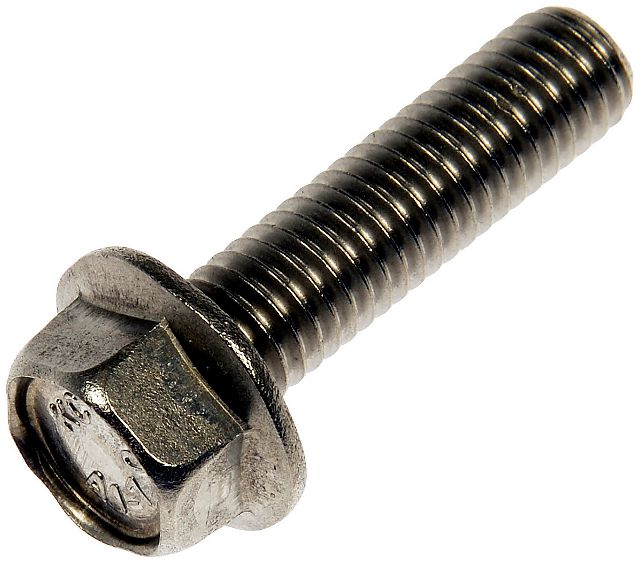


The information in this article is provided for general reference and educational purposes only. Vehicle specifications, procedures, and part compatibility can vary by production date, trim level, and region. Always consult your vehicle's factory service manual and verify part numbers before purchasing or performing repairs. Safety-critical components such as airbags, seat belts, and braking systems should be installed by a qualified professional.
- Gmc SAVANA:
- 🎬 Helpful Videos
- 🛍️ Shop This Part
- What's Unique About the 2002-2006 Gmc SAVANA
- Diagnostic Flowchart
- Symptoms You May Notice
- Most Likely Causes
- Rare But Worth Checking
- Diagnosis Steps
- Parts You'll Likely Need
- Related Codes That Often Appear With This One
- Technical Service Bulletins (TSBs) & Recalls
- Platform-Specific Known Issues
- Mechanic-Grade Diagnostic Values
- Hidden / Shadow Codes Worth Checking
- Scan Tool Commands That Help
- Wiring & Ground Locations
- Model Year Variations Within This Range
- 🎟️ Get 5% Off