

P0430 on 2017-2020 Ford Fusion 2.7L EcoBoost: Catalyst Efficiency Causes and Fixes
P0430 on a Fusion Sport 2.7L means the Bank 2 catalytic converter is failing. Bank 2 is the converter on the radiator side of the engine. While an O2 sensor or exhaust leak is possible, the converter itself is the most common failure point. Before replacing the costly converter, check for relevant TSBs and perform the 'de-sulfate' drive cycle, as sulfur in fuel can sometimes trigger this code.
- P0430 on the Fusion Sport 2.7L points to a failing catalytic converter on the radiator side of the engine.
- Before replacing the very expensive converter, you must rule out exhaust leaks and a faulty downstream O2 sensor.
- A simple diagnostic test is to swap the downstream O2 sensors between the two banks; if the code changes to P0420, you only need to replace the sensor.
- Root causes like engine misfires or oil consumption must be fixed to prevent repeat failure of a new converter.
- The federal emissions warranty covers catalytic converters for 8 years or 80,000 miles, whichever comes first. Check if your vehicle is still covered before paying for repairs.
What's Unique About the 2017-2020 Ford Fusion
The 2.7L EcoBoost is a twin-turbocharged, direct-injection engine. While powerful, these technologies can contribute to conditions that shorten catalyst life. Carbon buildup is a known issue with direct-injection engines, and any turbocharger oil seal leaks or known platform oil pan leaks can contaminate the catalytic converters. While no specific TSBs for the Fusion Sport exist for this code, Ford has issued bulletins for the same engine in the F-150 and Expedition (TSB 22-2260) related to premature converter failure and PCM sensitivity, suggesting the catalyst system on this engine platform can be problematic and sometimes fixed with a specific drive-cycle procedure.
Symptoms You May Notice
- Check Engine Light is on
- Failure to pass an emissions test
- Slightly reduced fuel economy or engine performance
- In severe cases of clogging, a noticeable loss of power and acceleration.
- A sulfur or "rotten egg" smell from the exhaust, though this is less common.
- Immediately replacing the oxygen sensors without performing diagnostic checks. If the converter is bad, new sensors will not fix the P0430 code.
- Replacing the catalytic converter without first attempting the de-sulfation drive cycle outlined in related TSBs, which can sometimes clean the catalyst and resolve the code.
Most Likely Causes
- Failed Catalytic Converter (Bank 2) 🔴 High Probability Catalytic converters can fail due to age, sulfur contamination from fuel, or damage from underlying engine issues. Forum discussions for the 2.7L EcoBoost platform show P0420/P0430 codes are a known issue. Ford's TSB 22-2260 for the same engine in other models acknowledges that converters can be defective or fouled by sulfur, sometimes requiring replacement even at low mileage.
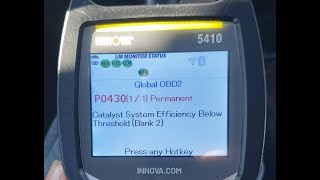
How to confirm: Use a scan tool to monitor O2 sensor data; 🎬 Watch: How to diagnose P0430 codes on the 2.7L engine the Bank 2 downstream sensor (O2S22) voltage should be steady, not mirroring the upstream sensor (O2S12). An infrared temperature gun can also be used; the outlet of a working converter should be significantly hotter than the inlet. A cooler outlet suggests it's not working, while a much hotter inlet suggests a clog.
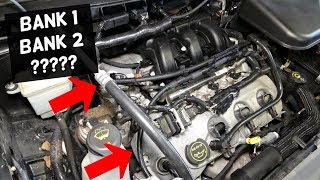
Typical fix: Replace the Bank 2 catalytic converter assembly. This is the converter located on the front (radiator) side of the engine bay. 🎬 See this video to confirm Bank 1 vs Bank 2 Before replacement, a de-sulfation procedure should be attempted per TSB 22-2260.
Est. part cost: $400-$1500+ - Faulty Downstream Oxygen Sensor (Bank 2, Sensor 2) 🟡 Medium Probability O2 sensors can become lazy or biased with age, sending incorrect data to the PCM. While less common than converter failure, it's a frequent misdiagnosis and a much cheaper part to replace first.
How to confirm: Observe the sensor's live data on a scan tool. If it's stuck at a certain voltage or responds very slowly compared to the other bank's downstream sensor, it is suspect. The easiest test is to swap the downstream sensors between Bank 1 and Bank 2. If the code changes to P0420 (Bank 1), the sensor is bad.
Typical fix: Replace the Bank 2 downstream oxygen sensor (O2S22).
Est. part cost: $50-$150 - Exhaust System Leak ⚪ Low Probability
How to confirm: Visually inspect the exhaust manifold, gaskets, and pipes from the engine to the catalytic converter for cracks or black soot trails. A smoke test is the most effective way to find small leaks. An exhaust leak can allow oxygen to enter the system, fooling the downstream O2 sensor and triggering the code.
Typical fix: Replace the leaking gasket or repair/replace the cracked exhaust component.
Est. part cost: $20-$300
Rare But Worth Checking
- Underlying Engine Issue: A misfire, leaking fuel injector, or engine burning oil/coolant can destroy a new catalytic converter quickly. These issues must be addressed before replacing the converter. Check for other codes like P030x (misfire) or P017x (fuel trim). Coolant leaks into the exhaust are a known, though uncommon, issue on this platform. A manufacturer report for a similar engine platform, NHTSA ODI #10587634, describes a stumble or misfire on acceleration in humid conditions that can trigger DTCs P0304, P0305, P0306, or P0430.
Diagnosis Steps
- Check for TSBs and Recalls: Contact a Ford dealer with your VIN to see if any software updates or service bulletins (like TSB 22-2260) apply to your vehicle for P0430.
- Check for other DTCs. If any misfire, fuel system, or O2 sensor heater circuit codes are present, diagnose and repair them first.
- Visually inspect the exhaust system for leaks, paying close attention to the exhaust manifold and converter gaskets. Repair any leaks found.
- Use a scan tool to view live data. Compare the Bank 2 upstream O2 sensor (O2S12) and downstream O2 sensor (O2S22).
- A good converter will show O2S12 fluctuating rapidly between ~0.1V and ~0.9V, while O2S22 remains steady above 0.5V.
- If O2S22 is fluctuating in a similar pattern to O2S12, the converter is not working efficiently.
- If O2S22 appears stuck or slow to respond, consider swapping it with the Bank 1 downstream sensor to see if the fault moves to Bank 1 (P0420). If it does, the sensor is faulty.
- Attempt De-Sulfation Procedure: If no other faults are found, perform the drive cycle from TSB 22-2260. This involves warming the engine, performing several wide-open-throttle accelerations from ~30 mph to ~65 mph, followed by steady highway driving. 🎬 Watch: How to perform a Ford emissions drive cycle Clear the code and see if it returns.
- If the code returns after the de-sulfation procedure and all other checks are negative, the catalytic converter requires replacement.
Parts You'll Likely Need
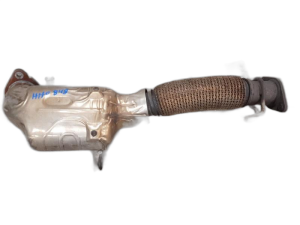
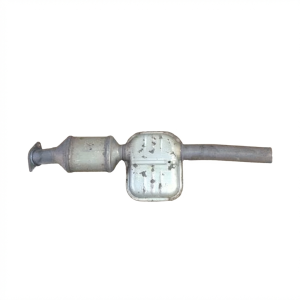
- Bank 2 Catalytic Converter
(OEM #F2GZ-5E212-G)— This is the most common direct cause for code P0430 when other issues like leaks or sensor faults have been ruled out. Verify part number with dealer VIN before ordering.
Trusted brands: Motorcraft (OEM), Walker, Magnaflow, Eastern Catalytic
OEM price range: $1000-$1800+
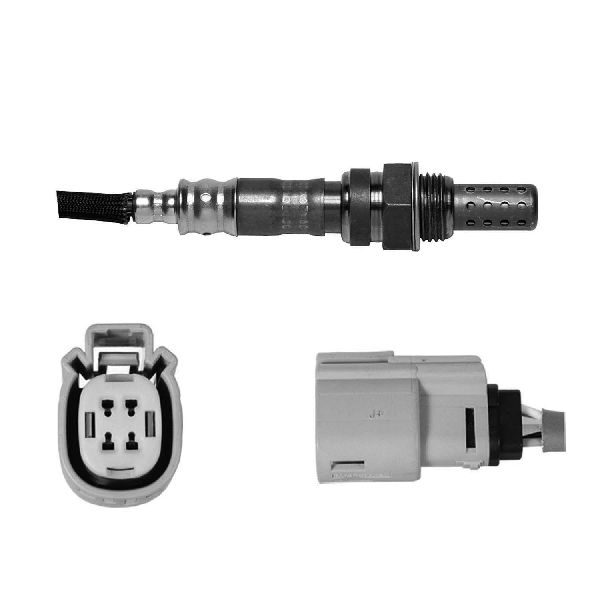
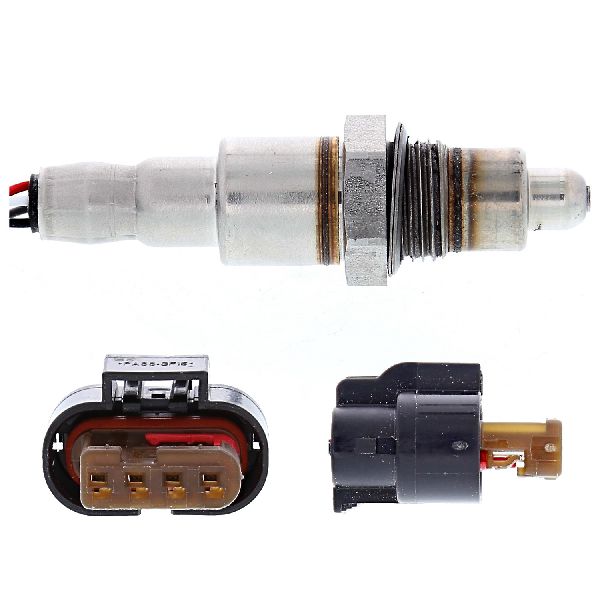
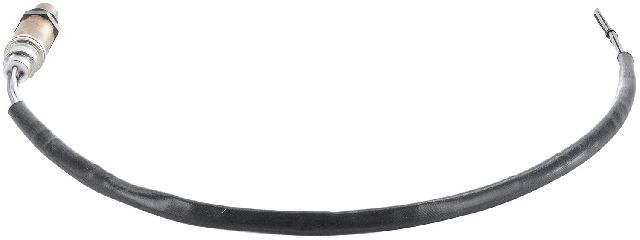
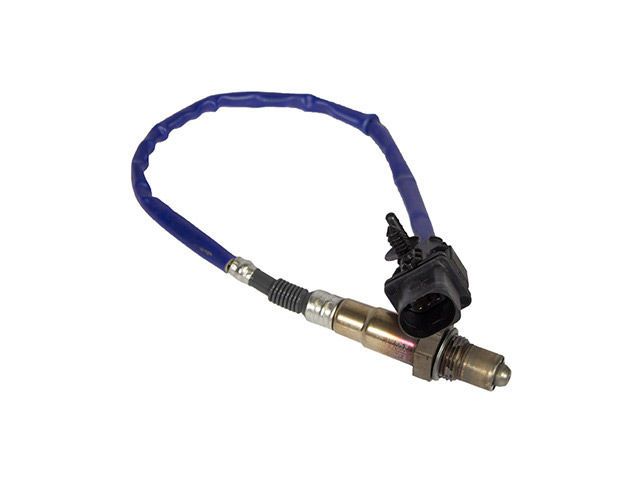
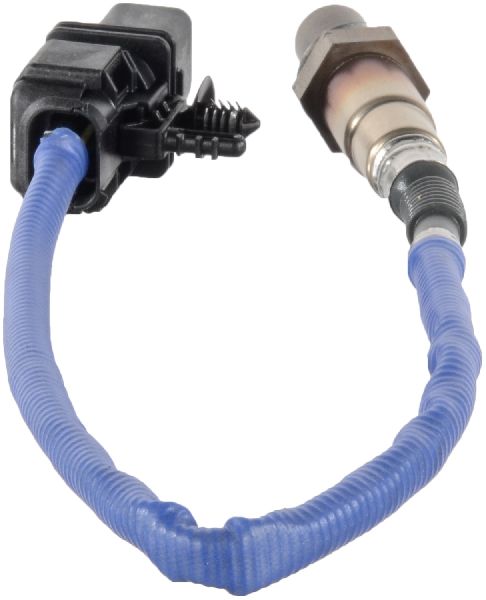
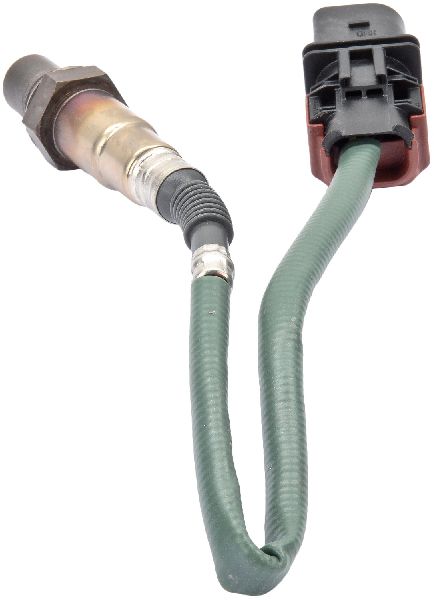
Aftermarket price range: $400-$900 - Downstream Oxygen Sensor (Bank 2)
(OEM #DS7Z-9F472-B)— A faulty sensor can send incorrect data, falsely triggering the P0430 code. It's a critical diagnostic step to rule this out before replacing the expensive converter.
Trusted brands: Motorcraft, Bosch, Denso, NGK
OEM price range: $80-$150
Aftermarket price range: $50-$100
Related Codes That Often Appear With This One
- P0420 — If both P0420 (Bank 1) and P0430 (Bank 2) are present, it points towards a systemic issue affecting both converters, such as contaminated fuel, excessive carbon buildup, or a PCM software issue.
- P0300, P0304, P0305, P0306 — Misfire codes on Bank 2 (cylinders 4, 5, or 6) can cause unburnt fuel to enter the exhaust, overheating and damaging the catalytic converter. The misfire is the root cause and must be fixed first.
Technical Service Bulletins (TSBs) & Recalls
- TSB 22-2260 (F-150/Expedition): Mentions early catalytic converter failure on some 2.7L EcoBoost engines due to manufacturing defects or high-sulfur fuel. Prescribes a de-sulfation drive cycle before replacement.
- TSB 21-2381 (Expedition/Navigator): An earlier version of the above TSB, also describing the de-sulfation procedure for P0420/P0430 codes.
- Emission Recall 24E12 (F-150): A PCM update for 2018-2020 F-150 2.7L engines that has anecdotally been linked to P0430 codes appearing post-update.
- TSB 19-2387 (Fusion/Edge/Lincoln): Specifically addresses a common oil pan leak on 2018-2019 Fusion Sports with the 2.7L engine, which is a critical known issue for this platform.
Platform-Specific Known Issues
- While not a recall on the Fusion, Ford issued TSB 22-2260 for some 2018-2020 F-150s with the 2.7L engine due to defective or sulfur-fouled catalytic converters, indicating potential manufacturing and sensitivity issues for this engine platform.
- Ford also issued TSB 21-2381 for other models, suggesting a specific 'de-sulfation' drive cycle procedure be performed before replacing converters. The procedure involves hard acceleration and sustained highway speeds to burn off sulfur deposits. If this fails, replacement is necessary.
- Owners of 2.7L EcoBoost vehicles on forums sometimes report success in clearing intermittent P0420/P0430 codes by performing an "Italian tune-up" - driving the vehicle aggressively at high RPMs once fully warm to burn off deposits, which is similar in principle to the official de-sulfation procedure.
Mechanic-Grade Diagnostic Values
- Downstream O2 Sensor (HO2S) Voltage — expected: Steady voltage, typically above 0.5V-0.7V when the catalyst is working efficiently.. Failure: Voltage fluctuates rapidly, mimicking the upstream O2 sensor's pattern (0.1V to 0.9V). This indicates the catalyst is not storing oxygen.
- Engine Oil Pressure (EOP) - via FORScan — expected: The Gen 1 2.7L EcoBoost has a true EOP sensor. At hot idle, pressure may drop to 10-15 PSI by design. Under load, it should rise significantly.. Failure: Extremely low pressure (e.g., 2-3 psi) when stopping or braking could indicate a problem, though low pressure at hot idle is normal for this engine. This is not a direct cause of P0430 but is a critical engine health parameter to check, as oil consumption/leaks can damage the catalyst.
- Short-Term Fuel Trim (Bank 2) — expected: Should hover close to 0%, typically within +/- 10%.. Failure: Consistently high positive values (e.g., +25% or higher) can indicate a vacuum leak, which introduces unmetered air and can lead to a lean condition that the PCM might misinterpret, sometimes contributing to a P0430 code.
Scan Tool Commands That Help
- FORScan: Live PID Monitoring — FORScan can access Ford-specific PIDs that generic OBD-II scanners cannot. For P0430, this is critical for monitoring parameters like Engine Oil Pressure (EOP) on the 2.7L EcoBoost, which has a real sensor, and comparing detailed O2 sensor switching characteristics between banks.
- FORScan / Ford IDS: PCM Reset / Clear KAM (Keep Alive Memory) — After performing a repair, such as replacing an O2 sensor or fixing an exhaust leak, clearing the KAM is crucial. This forces the Powertrain Control Module (PCM) to discard learned fuel trims and catalyst operating parameters and start fresh, which can be necessary to prevent the code from returning incorrectly.
Wiring & Ground Locations
- G101 / G107 / G108 — Various locations in the engine compartment, typically on the left front, left rear, or right rear of the engine bay, often bolted to the frame or engine block.. These are primary engine bay ground points. A corroded or loose ground at these locations can cause erratic voltage signals for critical sensors, including the PCM and oxygen sensors, potentially leading to false P0430 codes or other sensor-related faults.
- G201 / G202 — Located inside the cabin, on the left and right sides of the dash respectively.. These grounds serve various interior modules and can be related to the instrument panel cluster (IPC) and Data Link Connector (DLC). While less likely to directly cause P0430, a poor ground here could affect communication with the PCM or scan tool.
- O2 Sensor Harness Connector — The Bank 2 downstream O2 sensor is located on the catalytic converter on the radiator side of the engine. The harness connector will be nearby, clipped to the chassis or a heat shield.. This connector and its wiring are exposed to high heat and road debris. Check for melted plastic, corroded pins, or chafed wires. A poor connection here is a common point of failure that can mimic a bad sensor.
Real Owner Repair Stories
- Reddit user in r/Ford (Ford Van (model not specified, but P0430 is generic)) — Intermittent P0430 Check Engine Light. Sometimes comes on after 30 miles, other times will go 400+ miles with no code. Mostly happens when restarting a hot engine. No noticeable performance issues.
❌ Tried (didn't work) Mechanics wanted to replace the catalytic converter for $2000+ without further diagnosis., Replaced O2 sensors.
✅ What actually fixed it The owner was able to pass an emissions test by adding fuel system cleaner, resetting the codes, and completing a full drive cycle before the CEL returned. This suggests the issue was marginal, likely due to minor carbon or sulfur deposits on the catalyst. - Ford F150 Forum user (2005 F150 5.4L (different vehicle but illustrates a relevant diagnostic path)) — High short-term fuel trims on Bank 2 (up to +50%), followed by a P0430 code after other issues were resolved.
❌ Tried (didn't work) Replacing intake manifold gaskets., Using a smoke machine to find a vacuum leak (it did not find the leak).
✅ What actually fixed it The user had an unresolved massive vacuum leak that was not detectable with a smoke machine. After fixing an unrelated fuel contamination issue which caused an exhaust leak at a pipe joint, sealing that exhaust leak, the P0174 (Bank 2 Lean) code disappeared and was replaced by P0430. This implies the unmetered air from the vacuum leak was skewing sensor readings and likely contributed to the catalyst code.
Documented NHTSA Reports
- An owner reported in NHTSA ODI #11642766 that faulty software caused an improper diagnosis of catalytic converter efficiency, triggering P0430/P0420 codes and preventing the vehicle from passing emissions testing.
- According to NHTSA ODI #11669228, a diagnostic scan identified a stored P0430 code, which corresponds to the catalytic converter on the left side of the engine.
- In NHTSA ODI #11546795, an owner scanning for a Check Engine Light found code P0430 and referenced Customer Satisfaction Program #19M01 as a potential resolution for the exhaust safety issue.
- NHTSA ODI #11703219 describes a situation where dealerships simply cleared the P0430 code without mentioning relevant service campaigns, leading the owner to replace numerous components like spark plugs while the error persisted.
"I Checked Everything" — The Actual Cause
- A large vacuum leak from a poorly seated intake manifold can introduce enough unmetered air to cause high fuel trims and eventually trigger a P0430 code, even if a smoke test does not reveal the leak. The PCM's attempt to compensate for the lean condition can affect exhaust composition and lead to a catalyst efficiency code.
OEM Part Supersession History
F2GZ-5E212-C→F2GZ-5E212-G— Standard part revision and update by the manufacturer. Reasons can include minor design changes, different materials, or a change in supplier.
Heads up: The parts are interchangeable. F2GZ-5E212-G is the current replacement for F2GZ-5E212-C.
Model Year Variations Within This Range
- 2017-2018 vs 2019: There are no significant mechanical differences reported for the 2.7L EcoBoost powertrain between the 2017 and 2018 model years. The major change occurred for the 2020 model year, when Ford discontinued the Fusion Sport trim, meaning the 2.7L V6 was no longer offered.
- 2017-2020: The second-generation Fusion received its first facelift for the 2017 model year, which introduced the 2.7L Sport model. A second, minor facelift occurred for 2019, but it did not involve powertrain changes for the 2.7L engine. Therefore, diagnosis and parts for P0430 should be consistent across the 2017-2019 range for the Sport trim.
Diagnostic Flowchart
Other Known Issues on This Vehicle
Issues unrelated to this code that are worth knowing about as an owner of this generation:
- Engine Oil Pan Leak 🔴 High — Very common, especially on 2017-2019 models. The original RTV sealant fails, requiring replacement with an updated pan that uses a physical gasket. (Ref: TSB 19-2387)
- Coolant Intrusion / Head Gasket Failure 🔴 High — Less common than oil leaks, but documented by owners. Can present as unexplained coolant loss or white exhaust smoke. Some owners allege a cylinder head design flaw.
- Intake Valve Carbon Buildup 🟠 Medium — A common long-term issue for all direct-injection engines, including the 2.7L EcoBoost. Typically becomes noticeable after 60,000+ miles, causing reduced performance and rough idle.
- AWD Power Transfer Unit (PTU) Failure 🟠 Medium — The PTU can overheat due to low fluid capacity and lack of cooling, leading to fluid breakdown and eventual failure. Noted by owners who drive aggressively or live in hot climates.
Used vs. New Parts: Buying Guide for This Vehicle
When a used part is the smart pick: For this repair, buying used parts is generally not recommended for the catalytic converter itself, but can be a viable option for related components. A used oxygen sensor could be used for temporary diagnosis (like swapping sensors to see if a code moves) but is not a recommended long-term fix. A used exhaust pipe or manifold from a low-mileage, non-rusted donor could be a cost-effective fix for a leak.
Donor-vehicle mileage cap: roughly under 75000 miles for the part to have meaningful remaining life.
What to inspect on the donor part:
- For Catalytic Converters: Avoid. There is no reliable way to visually inspect the remaining life of the catalyst material. Used converters have a high risk of being near the end of their life or already inefficient.
- For Oxygen Sensors: Check for physical damage, heavy soot, or melted connectors. Only consider from a very low-mileage wreck.
- For Exhaust Components (Pipes/Manifolds): Inspect for cracks, especially near welds and flanges. Check for heavy rust, particularly in vehicles from the salt belt, which can hide cracks or cause new leaks.
OEM-only on this vehicle (don't cheap out):
- Catalytic Converter: While expensive, the OEM Motorcraft converter is the most reliable option. Many aftermarket converters, especially cheaper universal ones, may not have enough precious metal loading to satisfy the Ford PCM's strict monitoring parameters, leading to the P0430 code returning quickly.
Aftermarket brands forum-validated for this vehicle:
- Oxygen Sensors: Bosch, NTK, and Denso are reputable OEM suppliers and their aftermarket sensors are generally considered high quality and reliable.
- Catalytic Converters: If OEM is not an option, direct-fit converters from high-quality brands like MagnaFlow or Walker are a better choice than universal models, but success is not guaranteed. Ensure they are rated for your vehicle's specific emissions standards (EPA or CARB).
Brands owners have reported issues with on this vehicle:
- Unbranded/"Cheapest" Catalytic Converters: Very low-cost converters found on sites like eBay or Amazon often fail within a year or don't work well enough to keep the check engine light off from the start.
Real Owner Stories
Aggregated from forums and TSBs cited above. Mileages and costs reflect what owners reported in those sources.
2020 Ford F-150 2.7L EcoBoost — 30000 miles
Symptoms: Received a P0430-related warning; the owner referenced TSB 22-2260 regarding catalytic converter failure.
What fixed it: The source indicates the converter required replacement, following the guidelines of TSB 22-2260.
Source hint: Ford F150 Forum (f150forum.com) thread titled 'Catalytic Converter Needs Replacement'
2015-2018 Ford Edge Sport 2.7L EcoBoost
Symptoms: Check engine light with a P0430 code.
What fixed it: Dealer diagnosis confirmed catalytic converter failure, requiring replacement of the assembly.
Source hint: Platform mate data for 2015-2018 Ford Edge Sport
Related OBD-II Codes
Frequently Asked Questions
Does TSB 22-2260 apply to my 2017-2020 Ford Fusion with the 2.7L EcoBoost?
What is the 'de-sulfation' procedure mentioned for the 2.7L EcoBoost?
Where is the Bank 2 catalytic converter located on my Fusion 2.7L?
Could my P0430 code be related to the recent 24E12 Emission Recall?
Is there a cheaper alternative to replacing the converter on my Fusion Sport?
Can an oil leak cause my P0430 code?
Helpful Videos
Used OEM Parts in Stock

New Aftermarket Parts Available

The information in this article is provided for general reference and educational purposes only. Vehicle specifications, procedures, and part compatibility can vary by production date, trim level, and region. Always consult your vehicle's factory service manual and verify part numbers before purchasing or performing repairs. Safety-critical components such as airbags, seat belts, and braking systems should be installed by a qualified professional.
- Ford Fusion:
- 🎬 Helpful Videos
- 🛍️ Shop This Part
- What's Unique About the 2017-2020 Ford Fusion
- Symptoms You May Notice
- Most Likely Causes
- Rare But Worth Checking
- Diagnosis Steps
- Parts You'll Likely Need
- Related Codes That Often Appear With This One
- Technical Service Bulletins (TSBs) & Recalls
- Platform-Specific Known Issues
- Mechanic-Grade Diagnostic Values
- Scan Tool Commands That Help
- Wiring & Ground Locations
- Real Owner Repair Stories
- Documented NHTSA Reports
- "I Checked Everything" — The Actual Cause
- OEM Part Supersession History
- Model Year Variations Within This Range
- Diagnostic Flowchart
- Other Known Issues on This Vehicle
- Used vs. New Parts: Buying Guide for This Vehicle
- Real Owner Stories
- 2020 Ford F-150 2.7L EcoBoost — 30000 miles
- 2015-2018 Ford Edge Sport 2.7L EcoBoost
- Related OBD-II Codes
- Frequently Asked Questions
- 🎟️ Get 5% Off