

P0430 on 2018-2020 Ford F-150 2.7L EcoBoost: Causes, Fixes, and TSBs
On a 2018-2020 F-150 with the 2.7L EcoBoost, code P0430 is frequently caused by sensitive PCM software, not a bad catalytic converter. Before replacing any parts, check with a dealer for applicable software updates or TSBs, as this is often the real, and cheaper, fix. Emission Recall 24E12 is a key factor, often triggering the code on a marginally-performing converter.
- First, check for software updates. Before buying any parts, call a Ford dealer with your VIN to see if a PCM reflash under a TSB or recall (like 24E12) is needed.
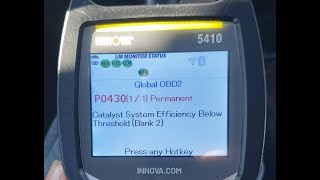
- P0430 means catalyst inefficiency on the driver's side (Bank 2).
- Don't automatically blame the O2 sensors. While possible, it's less common than software issues or actual converter failure on this truck. Swapping sensors side-to-side is a cheap way to verify.
- If you must replace the catalytic converter, use an OEM (Motorcraft) part. Aftermarket converters frequently fail to meet Ford's strict standards and will cause the code to return.
- Be aware that a recent PCM update may have made the computer's monitoring more sensitive, causing a P0430 code on a converter that was previously considered 'good enough'.
What's Unique About the 2018-2020 Ford F-150

Unlike many vehicles where P0430 almost guarantees a bad catalytic converter, the 2018-2020 F-150 2.7L EcoBoost is known for software-related triggers. Ford has issued multiple Technical Service Bulletins (TSBs) and an Emission Recall (24E12) acknowledging that the PCM calibration can be overly sensitive, falsely setting the code. Many owners on forums like Reddit and F150Forum.com report the P0430 code appearing immediately after the mandatory 24E12 PCM update, suggesting the new software has stricter monitoring parameters that a marginal or aging converter cannot meet. This makes checking for software updates a critical first step before assuming the expensive converter has failed.
Symptoms You May Notice
- Check Engine Light is on
- Failing a state emissions inspection
- Slight decrease in fuel economy (often not noticeable).
- Reduced engine power (rare, usually only if the converter is physically clogged).
- Slight engine hesitation at highway speeds has been reported by some owners prior to the code appearing.
- Immediately replacing the catalytic converter without checking for TSBs or software updates. This is a very expensive mistake on this specific vehicle, especially given Emission Recall 24E12.
- Replacing the oxygen sensors when the catalytic converter is actually at the end of its life. While swapping sensors is a good diagnostic step, they are not always the root cause.
- Ignoring the possibility of high-sulfur fuel as noted in TSB 22-2260, which can be resolved with a specific drive cycle rather than parts replacement.
Most Likely Causes

- Powertrain Control Module (PCM) Software Calibration 🔴 High Probability Ford has issued multiple TSBs and recalls (like 24E12 and TSB 22-2260) for this specific engine and year range due to overly sensitive emissions monitoring parameters in the software. TSB 24-2184 explicitly states that P0430 may be due to calibration and controls sensitivity. The update can either fix a false code or cause a true code by applying stricter standards to an aging converter.
How to confirm: Contact a Ford dealership with your VIN and ask them to check for any open recalls or available TSBs related to emissions or PCM updates. Specifically mention Emission Recall 24E12 and TSBs 22-2260 or 24-2184.
Typical fix: The dealer reprograms (reflashes) the PCM with the latest Ford software. This is often covered under emissions warranty or recall programs.
Est. part cost: $0 - Failing or Degraded Catalytic Converter (Bank 2) 🟡 Medium Probability While software is a primary suspect, the catalytic converters can still fail. The issue is often that a PCM update (like 24E12) makes the monitoring so strict that a previously acceptable, but aging, converter now fails the test. Some owners report repeated failures even after replacement. NHTSA ODI #11677073 describes a situation where an owner had to replace both catalytic converters after the truck started throwing codes at 81,000 miles.
How to confirm: After ruling out software, O2 sensors, and exhaust leaks, the converter is the likely cause. A technician can use a scan tool to monitor O2 sensor data; if the downstream sensor (B2S2) mimics the upstream sensor (B2S1), the converter is not working. A non-contact pyrometer can also be used; a good converter should have a higher outlet temperature than inlet, while a clogged one will be hotter at the inlet.
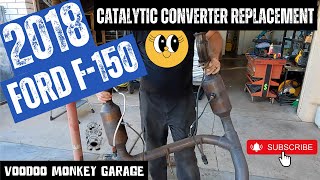
Typical fix: Replacement of the Bank 2 (driver's side) catalytic converter assembly. It is highly recommended to use an OEM Ford/Motorcraft part, as aftermarket converters often fail to meet Ford's strict efficiency thresholds and can cause the code to return.
Est. part cost: $800-$1500 - Faulty Downstream Oxygen (O2) Sensor (Bank 2, Sensor 2) ⚪ Low Probability O2 sensors are wear items and can become 'lazy' or biased over time, sending incorrect data to the PCM that mimics a failing converter. It's a common wear item.
How to confirm: A simple diagnostic test is to swap the downstream O2 sensors between Bank 1 and Bank 2. Clear the codes and drive the vehicle. If the code changes to P0420 (Bank 1), the sensor is faulty. If P0430 returns, the sensor is likely not the issue.
Typical fix: Replace the Bank 2, Sensor 2 (downstream, driver's side) oxygen sensor. Use reputable brands like Bosch, Denso, or NTK, or an OEM Motorcraft part.
Est. part cost: $50-$100 - Exhaust Leak ⚪ Low Probability Leaks in the exhaust system between the engine and the catalytic converter can introduce oxygen, skewing O2 sensor readings and tricking the PCM into thinking the converter is bad. Check manifold gaskets and flange connections.
How to confirm: Perform a visual inspection of the exhaust manifolds, gaskets, and downpipes for any signs of black soot, cracks, or rust. A smoke test is the most effective way to find small leaks.
Typical fix: Repair the leak by replacing the faulty gasket or component.
Est. part cost: $20-$300
Rare But Worth Checking
- High Sulfur Fuel: TSB 22-2260 specifically notes that high sulfur content in fuel can temporarily coat the catalyst and cause P0430 on 2018-2020 F-150s with the 2.7L engine. The fix is a specific dealer-performed 'de-sulfate' drive cycle procedure, which involves several wide-open throttle accelerations.
- Underlying Engine Issues: Persistent engine misfires (P030x codes) or leaking fuel injectors can send unburned fuel into the exhaust, which can overheat and permanently damage the catalytic converter. These issues must be fixed before replacing the converter.
Diagnosis Steps

- Check for TSBs and Recalls: Before doing anything else, contact a Ford dealer with your VIN. Ask about Emission Recall 24E12 and TSBs 22-2260 or 24-2184. A PCM reflash may be required and could be the entire fix, or the cause of the code appearing.
- Scan for Other Codes: Check for any other codes, especially those related to engine misfires (P030x) or other O2 sensor circuits. Address these codes first as they can be the root cause.
- Inspect for Exhaust Leaks: Visually inspect the exhaust system from the engine to the catalytic converter on the driver's side. Look for cracks, rust, or black soot marks at gaskets and welds. A smoke test is the most reliable method.
- Analyze O2 Sensor Data: Using a capable OBD-II scanner, graph the voltage of the Bank 2 oxygen sensors (B2S1 and B2S2). B2S1 (upstream) should fluctuate rapidly between ~0.1V and ~0.9V. B2S2 (downstream) should hold a relatively steady voltage. If B2S2's graph mirrors B2S1's, 🎬 See this guide on how to diagnose and fix P0430 the converter is not working.
- Test the O2 Sensor: If sensor data is inconclusive, swap the downstream O2 sensors from Bank 1 and Bank 2. If the code changes to P0420, the sensor you moved is bad.
- Consider the De-Sulfate Procedure: If you suspect fuel quality issues or if recommended by TSB 22-2260, have a dealer perform the de-sulfate drive cycle. This involves a series of WOT accelerations to 65 mph and other specific driving patterns.
- Condemn the Catalytic Converter: If all other steps have been exhausted and the diagnostics point to inefficiency, the Bank 2 catalytic converter needs to be replaced. This is especially likely if the code appeared shortly after the 24E12 recall was performed.
Parts You'll Likely Need
- Bank 2 Catalytic Converter
(OEM #JL3Z-5E212-C (or superseding part numbers like FL3Z-5E212-E, GL3Z-5E212-A, HL3Z-5E212-B, JL3Z-5E212-A). Note: Bank 1 (Passenger side) is JL3Z-5E212-K.)— This is the ultimate fix if software updates and sensor checks don't resolve the code. It's often failing marginally and a PCM update makes the failure apparent.
Trusted brands: Motorcraft (OEM - Highly Recommended), Walker Exhaust
OEM price range: $1000-$1500
Aftermarket price range: $500-$800 - Downstream Oxygen Sensor (Bank 2, Sensor 2)
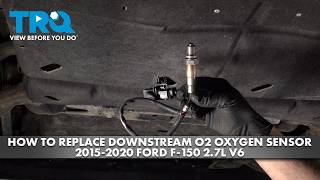
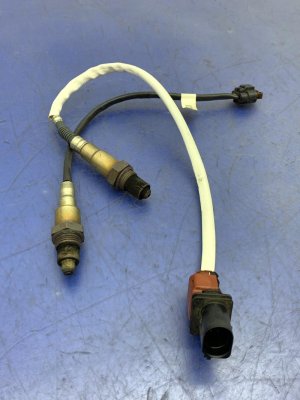
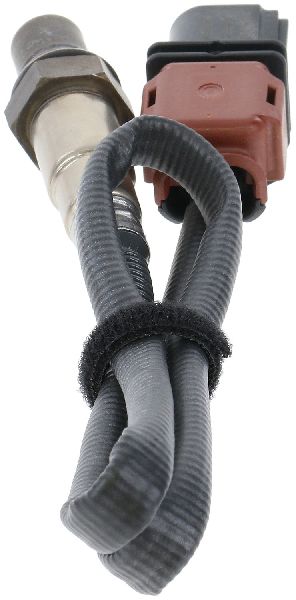
(OEM #Motorcraft DY1412 (or superseding part number))— A faulty sensor can send incorrect data, mimicking a bad converter. It's a relatively inexpensive part to replace as a diagnostic step or fix. 🎬 Watch: Step-by-step downstream O2 sensor replacement for the 2.7L
Trusted brands: Motorcraft, Bosch, Denso, NTK
OEM price range: $80-$120
Aftermarket price range: $50-$90
Related Codes That Often Appear With This One
- P0420 — This is the identical code for Bank 1 (passenger side). If both appear, it could point to a systemic issue like a PCM software problem, fuel quality issues (as noted in TSB 22-2260), or both converters failing around the same time.
- P0300, P0306 — Misfire codes (P0300 for random, P0306 for cylinder 6 on Bank 2) can cause the P0430 code. Unburned fuel from a misfire can damage the catalytic converter, so the misfire must be addressed first.
Technical Service Bulletins (TSBs) & Recalls
- Emission Recall: Powertrain Control Module Reprogramming: A mandatory PCM software update for 2018-2020 F-150s with the 2.7L engine. While intended to correct emissions monitoring, it is widely reported by owners to be the trigger for P0430 codes by enforcing stricter efficiency standards.
- TSB 22-2260: Illuminated MIL With DTC P0420 And/Or P0430: Supersedes TSB 22-2137. States that on 2018-2020 F-150 2.7L, these codes may be due to high sulfur content in fuel. Prescribes a specific 'de-sulfate' drive cycle involving WOT accelerations before replacing converters.
- TSB 24-2184: Illuminated MIL With DTC P0420 And/Or P0430: Addresses false P0420/P0430 codes on 2018-2020 2.7L EcoBoosts due to PCM calibration sensitivity. The fix is a PCM reprogram and a catalyst stabilization drive cycle.
Platform-Specific Known Issues
- Code Appears Immediately After 24E12 Recall: Multiple owners report that their truck had no issues until the dealer performed the mandatory Emission Recall 24E12 PCM update. Days later, a P0430 code appears. The consensus is that the new software has stricter monitoring parameters, causing a marginally efficient (but previously passing) catalytic converter to now fail the test. In these cases, a new converter is the only fix.
- Repeated Converter Failures: One owner on a popular forum reported going through multiple catalytic converters, suggesting that underlying issues or overly sensitive monitoring can make this a recurring problem. Using non-OEM converters is a common reason for the code to return quickly.
Mechanic-Grade Diagnostic Values
- Mode $06 Catalyst Efficiency Test (TID $81, CID $02) — expected: The test value should be below the maximum threshold set by the PCM. For example, a healthy converter might have a value of 0.660 while the PCM limit is 0.785.. Failure: The measured value exceeds the maximum limit stored in the PCM. A reported failing value was 0.805 when the upper limit was 0.785.
- Downstream O2 Sensor (B2S2) Voltage at Idle/Cruise — expected: A relatively steady voltage, typically between 0.6V and 0.8V, with slow fluctuations.. Failure: Voltage fluctuates rapidly, mimicking the upstream O2 sensor's (B2S1) pattern. This indicates the catalyst is not storing oxygen.
- Upstream O2 Sensor (B2S1) Voltage — expected: Rapidly fluctuating between approximately 0.1V (lean) and 0.9V (rich) during closed-loop operation.. Failure: A sensor that is stuck high (rich) or low (lean) or is slow to respond can indicate a sensor fault or another engine issue, which should be addressed before diagnosing the converter.
- Catalytic Converter Temperature Differential — expected: The outlet pipe temperature should be significantly hotter (e.g., 100°F or more) than the inlet pipe temperature when the engine is at operating temperature.. Failure: The outlet temperature is the same as or cooler than the inlet temperature, indicating the catalytic reaction is not happening.
Scan Tool Commands That Help
- Ford IDS, FORScan, or equivalent professional scanner: Catalyst Efficiency Test — This is an on-demand test that forces the PCM to run the catalyst monitor. It's useful to confirm a failure after a repair or to see if the monitor will pass without having to complete a full drive cycle.
- Ford IDS, FORScan, or equivalent professional scanner: Live Data Graphing (PIDs: O2S12, O2S22) — This is the primary diagnostic method. Graphing the upstream (O2S12) and downstream (O2S22) oxygen sensors for Bank 2 on the same screen allows for a direct visual comparison. A failing converter will show the downstream sensor's waveform mirroring the upstream sensor's waveform.
Wiring & Ground Locations

- PCM Grounds — On the firewall of the engine bay. Depending on the model year and engine, there may be one or two ground points.. The PCM controls and interprets the signals from the oxygen sensors. A poor ground at the PCM can cause erratic behavior and incorrect readings, potentially leading to false codes. Ensuring these grounds are clean and tight is a crucial step in diagnosing any sensor-related DTC.
- O2 Sensor Harness Routing — The wiring harness for the oxygen sensors runs along the engine and transmission towards the exhaust.. There have been reports on F-150s of the O2 sensor harness being improperly secured from the factory, allowing it to get too close to the hot exhaust pipes. This can melt the wiring insulation, causing shorts or open circuits that trigger O2 sensor and catalyst codes.
Real Owner Repair Stories
- Reddit user Upst8M in r/FordF150 (2018 Ford F-150 2.7L with 90,000 miles) — Check Engine Light with code P0430 appeared two days after the dealer performed the 24E12 PCM recall update. No other drivability issues.
❌ Tried (didn't work) Arguing with the dealership, who initially denied responsibility for the code appearing after the update.
✅ What actually fixed it Replacement of the driver's side (Bank 2) catalytic converter. The user concluded the PCM update enforced stricter emissions parameters that the marginal, aging converter could no longer meet. Contacting Ford Customer Care resulted in some financial assistance for the repair. - Reddit user Ok-Strawberry-5684 (2018 Ford F-150 2.7L) — Check Engine Light with P0430 appeared 3 days after the 24E12 PCM recall was performed. No issues were present before the recall.
❌ Tried (didn't work) Having the dealer diagnose the code, which only resulted in a recommendation to replace the catalytic converter.
✅ What actually fixed it The user was advised by others to try replacing the O2 sensor first as a cheaper diagnostic step, though the final resolution was not posted. This story is valuable as it corroborates the pattern of the code appearing post-recall. - NHTSA ODI #11719515 — An owner reported that prior to the 24E12 recall repair, the truck had intermittent P0420/P0430 codes where the check engine light would illuminate and then clear on its own.
- NHTSA ODI #11650289 — An owner reported that while traveling at approximately 20 MPH, the check engine warning light illuminated with DTC P0430. A mechanic advised that a catalytic converter cleaner should be added.
OEM Part Supersession History
FL3Z-5E212-E, GL3Z-5E212-A, HL3Z-5E212-B→JL3Z-5E212-C— Standard part number updates and revisions by the manufacturer over time.
Heads up: These part numbers are generally interchangeable for the specified application, but it is always best to confirm fitment with a VIN at a Ford dealership.
Model Year Variations Within This Range
- 2018-2020: The 2018 model year marked the introduction of the second-generation 2.7L EcoBoost, which included significant updates over the 2015-2017 version. This new engine featured both port and direct fuel injection (PFI/DI), a new 10-speed automatic transmission, higher torque (400 lb-ft vs 375), and internal changes to reduce friction. For the purposes of P0430 diagnosis, the 2018, 2019, and 2020 models are functionally identical and are all subject to the same TSBs and the 24E12 recall.
Diagnostic Flowchart
Other Known Issues on This Vehicle
Issues unrelated to this code that are worth knowing about as an owner of this generation:
- Leaking Plastic Oil Pan 🟠 Medium — Common on 2018-2019 models built before May 21, 2019. The original RTV sealant fails, causing oil seepage or drips. (Ref: TSB 19-2189 instructs dealers to replace the original pan (which used an RTV seal) with an updated pan that uses a more reliable press-in-place gasket.)
- Harsh/Erratic Shifting (10R80 Transmission) 🔴 High — A widespread, well-documented issue affecting many 2017-2020 F-150s with the 10-speed automatic transmission. Symptoms include harsh shifts (especially 3rd-5th), clunking, jerking, and delayed engagement. (Ref: Multiple TSBs exist, including 21-2145, which involves a PCM re-calibration. However, many owners report that software fixes do not resolve the issue, which can stem from internal hardware like the valve body or CDF drum. Several class-action lawsuits have been filed over this issue.)
- Valve Guide Defects & Oil Consumption (Earlier Models) 🔴 High — Primarily affects 2.7L EcoBoost engines built from April 2016 to January 2017, but relevant for owners of early-production 2018 models to be aware of. Leads to excessive oil consumption and blue smoke from the exhaust. (Ref: TSB 19-2384 addresses this, often requiring cylinder head replacement.)
- Fracturing Intake Valves (Later Models) 🔴 High — A major issue investigated by the NHTSA affecting 2021-2022 models, but the underlying cause (brittle valves from a specific material) is a known concern for the engine family. A valve fracture leads to catastrophic engine failure. (Ref: A recall was issued for over 700,000 2.7L and 3.0L EcoBoost engines. The failure typically occurs at very low mileage (under 10,000 miles).)
Used vs. New Parts: Buying Guide for This Vehicle
When a used part is the smart pick: For this repair, using used parts is generally not recommended. A used oxygen sensor has unknown life remaining and is a critical sensor for engine management. A used catalytic converter is illegal to sell or install in many jurisdictions and carries a high risk of being just as inefficient as the one being replaced.
Donor-vehicle mileage cap: roughly under 50000 miles for the part to have meaningful remaining life.
What to inspect on the donor part:
- For a catalytic converter, look for a donor vehicle from a dry, salt-free climate to minimize rust.
- Check for any signs of physical damage, dents, or crushed pipes.
- Avoid converters with any rattling sounds, which indicates a broken internal substrate.
OEM-only on this vehicle (don't cheap out):
- Catalytic Converter: This is the most critical part to buy OEM (Motorcraft). The PCM's monitoring strategy is calibrated specifically for the efficiency and oxygen storage capacity of the OEM converter. Aftermarket converters frequently fail to meet these specific parameters, leading to the P0430 code returning within a few hundred miles.
Aftermarket brands forum-validated for this vehicle:
- Oxygen Sensors: NTK, Denso, and Bosch are reputable OEM suppliers and are considered reliable alternatives to Motorcraft-branded sensors.
Brands owners have reported issues with on this vehicle:
- Unbranded or 'no-name' catalytic converters from online marketplaces.
- Some forum users have reported issues with lower-cost aftermarket O2 sensor brands, requiring multiple replacements before a quality brand resolved the issue.
Real Owner Stories
Aggregated from forums and TSBs cited above. Mileages and costs reflect what owners reported in those sources.
2018 Ford F-150 2.7L EcoBoost
Symptoms: The Check Engine Light appeared exactly one day after a mobile service technician performed the 24E12 PCM recall update.
What fixed it: Replacement of the catalytic converter, as the new software enforced stricter efficiency standards the old converter could not meet.
Source hint: Reddit: 2018 F150 2.7L PCM Recall
2018 Ford F-150 2.7L EcoBoost — 117000 miles
Symptoms: P0430 code appeared immediately after a dealer recall was performed. Swapping the post-cat O2 sensor only provided a temporary fix before the light returned.
What fixed it: Replacement of the Bank 2 catalytic converter.
Source hint: F150Forum: 2018 f150 2.7 ecoboost P0430
2019 Ford F-150 2.7L EcoBoost — 41000 miles
Symptoms: Check Engine Light with code P0430 on a recently purchased vehicle.
What fixed it: Diagnosis following TSB guidelines; the context suggests PCM recalibration or converter replacement are the standard paths for this mileage.
Source hint: F150Forum: 2019 2.7l ecoboost P0430
Related OBD-II Codes
Frequently Asked Questions
Why did my P0430 code appear immediately after the 24E12 recall update?
Can high sulfur fuel cause a P0430 code on my 2.7L EcoBoost?
Is there a specific TSB for false P0430 codes on the 2018-2020 F-150 2.7L?
Should I use an aftermarket catalytic converter to fix my P0430 code?
How can I tell if my Bank 2 downstream O2 sensor is actually the problem?
What is the 'de-sulfate' procedure mentioned in Ford service bulletins?
Helpful Videos

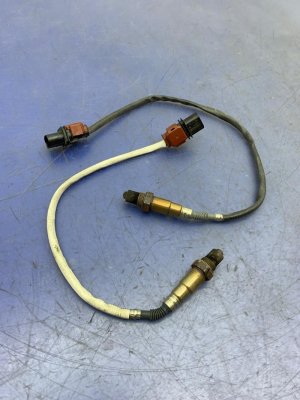
Used OEM Parts in Stock
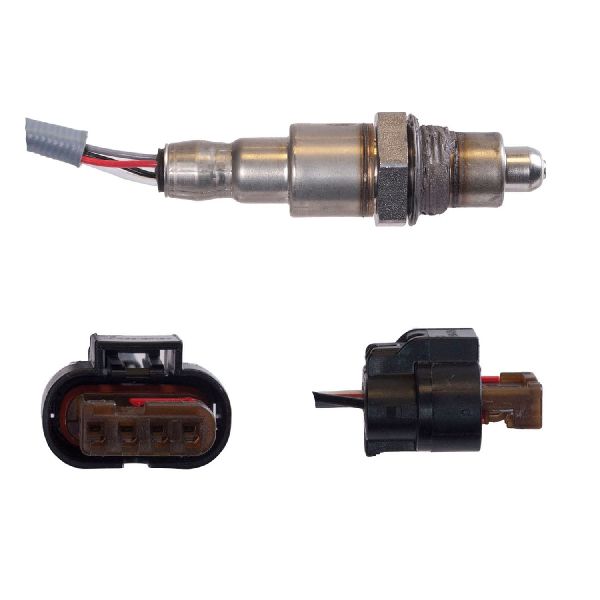
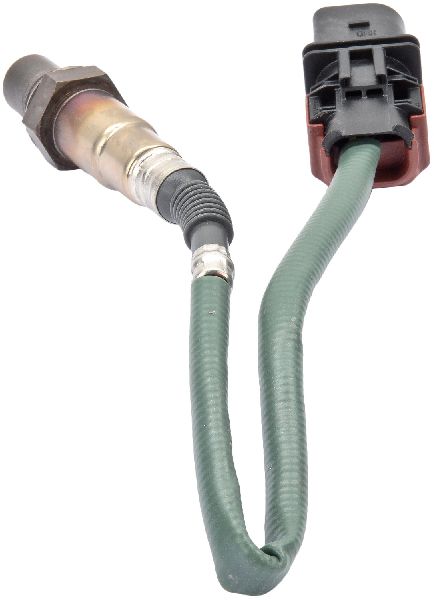
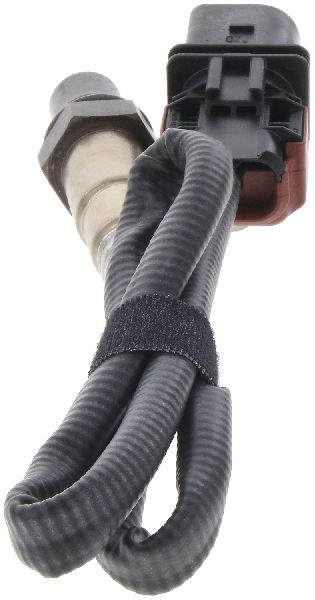
New Aftermarket Parts Available



The information in this article is provided for general reference and educational purposes only. Vehicle specifications, procedures, and part compatibility can vary by production date, trim level, and region. Always consult your vehicle's factory service manual and verify part numbers before purchasing or performing repairs. Safety-critical components such as airbags, seat belts, and braking systems should be installed by a qualified professional.
- Ford F-150:
- 🎬 Helpful Videos
- 🛍️ Shop This Part
- What's Unique About the 2018-2020 Ford F-150
- Symptoms You May Notice
- Most Likely Causes
- Rare But Worth Checking
- Diagnosis Steps
- Parts You'll Likely Need
- Related Codes That Often Appear With This One
- Technical Service Bulletins (TSBs) & Recalls
- Platform-Specific Known Issues
- Mechanic-Grade Diagnostic Values
- Scan Tool Commands That Help
- Wiring & Ground Locations
- Real Owner Repair Stories
- OEM Part Supersession History
- Model Year Variations Within This Range
- Diagnostic Flowchart
- Other Known Issues on This Vehicle
- Used vs. New Parts: Buying Guide for This Vehicle
- Real Owner Stories
- 2018 Ford F-150 2.7L EcoBoost
- 2018 Ford F-150 2.7L EcoBoost — 117000 miles
- 2019 Ford F-150 2.7L EcoBoost — 41000 miles
- Related OBD-II Codes
- Frequently Asked Questions
- 🎟️ Get 5% Off