

P0430 on 2020-2021 Ford Expedition: Catalyst Efficiency Causes and Fixes
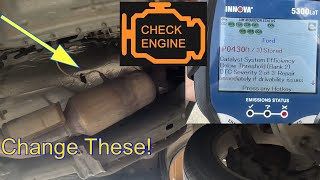
On a 2020-2021 Expedition, P0430 is often caused by a software issue or fuel quality, not a failed catalytic converter. Check for Emission Recall 24E13 first, which is a free PCM software update. If that doesn't apply or fix it, TSBs suggest a special 'de-sulfation' procedure before replacing any parts. However, be aware that some owners report the P0430 code appearing for the first time immediately after the recall update, as the new software has stricter parameters.
- **Check for Recall 24E13 first.** Before spending any money, contact a Ford dealer with your VIN to see if your Expedition needs a free software update to fix a false P0430 code.
- Don't immediately assume the catalytic converter is bad. On this specific vehicle, software glitches, fuel quality, and faulty O2 sensors are very common causes.
- Bank 2 is the driver's side of the engine.
- If you see both P0420 and P0430, it's highly unlikely both converters failed at once. This strongly points to a software or fuel-related issue affecting the whole system.
What's Unique About the 2020-2021 Ford EXPEDITION
For the 2020-2021 Expedition, a P0430 code is uniquely complicated by manufacturer-acknowledged issues. Ford has issued both Technical Service Bulletins (TSBs) and an Emission Recall because the code can be triggered falsely. TSBs 22-2260 and 22-2137 state that high sulfur content in fuel can temporarily reduce catalyst efficiency, and a specific drive cycle may be needed to 'clean' the converter. More importantly, Emission Recall 24E13 was issued for 319,160 vehicles from 2018-2021 because the original OBD system software was too sensitive and could falsely trigger the P0430 code when no repair was needed.
Diagnostic Flowchart
Tap your situation to follow the diagnostic path that matches what you're seeing on this vehicle.
Symptoms You May Notice
- Check Engine Light is on
- Reduced fuel economy
- Possible sluggish acceleration or lack of power if the converter is clogged
- A sulfur or 'rotten egg' smell from the exhaust
- Immediately replacing the catalytic converter without checking for recalls, TSBs, or testing the O2 sensors. This is a very expensive mistake, especially on this vehicle where software and fuel issues are documented causes.
Most Likely Causes
- PCM Calibration/Software Issue 🔴 High Probability Ford issued Emission Recall 24E13 for 2018-2021 Expeditions built from March 14, 2017, through December 27, 2021, because the OBD system can falsely set a P0430 code.
How to confirm: Contact a Ford dealership with your VIN or check the NHTSA website to see if recall 24E13 is open for your vehicle. This should be the very first step before any repairs.
Typical fix: The dealership will update the Powertrain Control Module (PCM) software free of charge under the recall. Some owners on forums have reported the P0430 code appearing for the first time *after* a PCM update, suggesting the new parameters are stricter.
Est. part cost: $0 - High Sulfur Content in Fuel 🟡 Medium Probability TSB 22-2260 and TSB 22-2137 were issued for this specific problem on 2020-2021 Expeditions and Navigators.
How to confirm: This is diagnosed after confirming the PCM software is up to date. If the code returns, a technician performs a specific drive cycle to de-sulfate the catalysts.
Typical fix: Perform the de-sulfation drive cycle as outlined in TSB 22-2260. The procedure involves: 1. Warming the engine. 2. From 30 mph or less, accelerate at Wide Open Throttle (WOT) to 65 mph. 3. Drive for 5 minutes, alternating between 50 mph and 65 mph with light acceleration/deceleration. 4. Repeat this WOT and drive cycle 3-4 times. 5. Let the engine idle for 1 hour. If the code returns, the TSB advises converter replacement.
Est. part cost: $0 - Failing or Faulty Oxygen (O2) Sensor 🟡 Medium Probability O2 sensors are wear-and-tear items. A lazy or inaccurate downstream (post-catalyst) sensor can send false data to the PCM, triggering the code. Forum users often suggest replacing the O2 sensor before condemning the expensive converter.
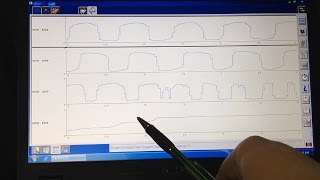
How to confirm: A mechanic can use a scan tool to graph the voltage of the upstream and downstream O2 sensors. The downstream sensor's voltage should be relatively stable, while the upstream sensor's voltage fluctuates rapidly. If the downstream sensor is fluctuating wildly like the upstream one, it points towards a bad converter. A common DIY method is to swap the downstream sensors from Bank 1 and Bank 2 to see if the code changes to P0420 (Bank 1). If it does, the sensor is bad.
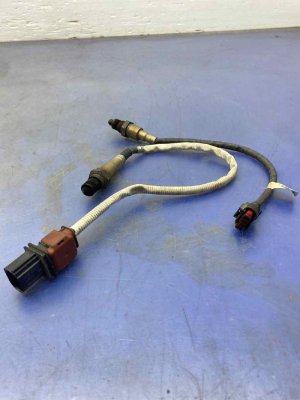
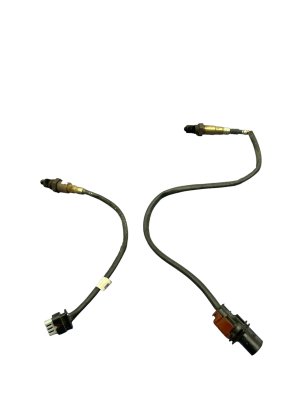
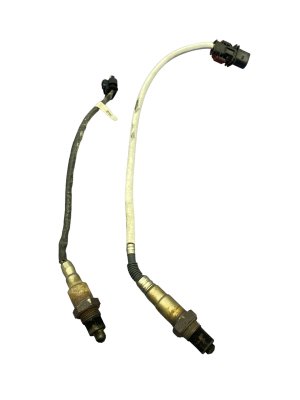
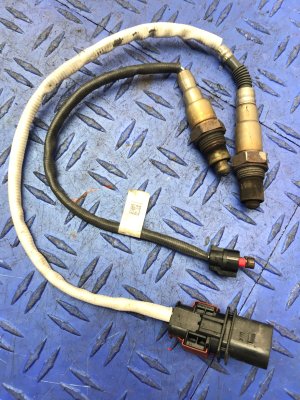
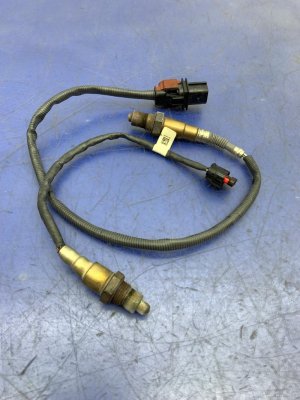
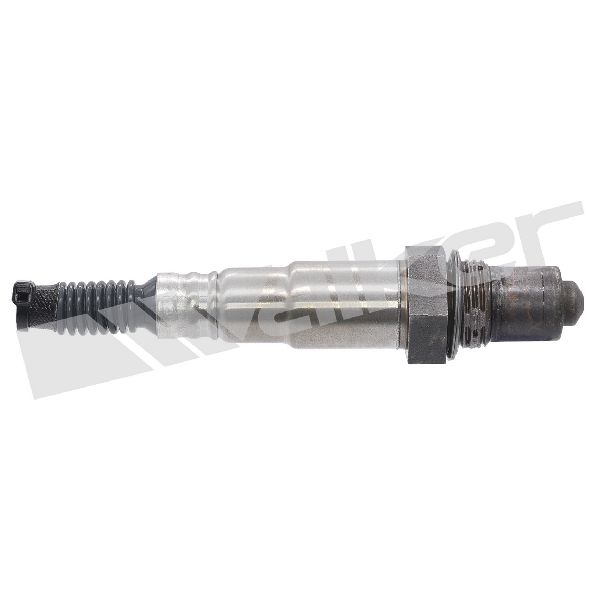
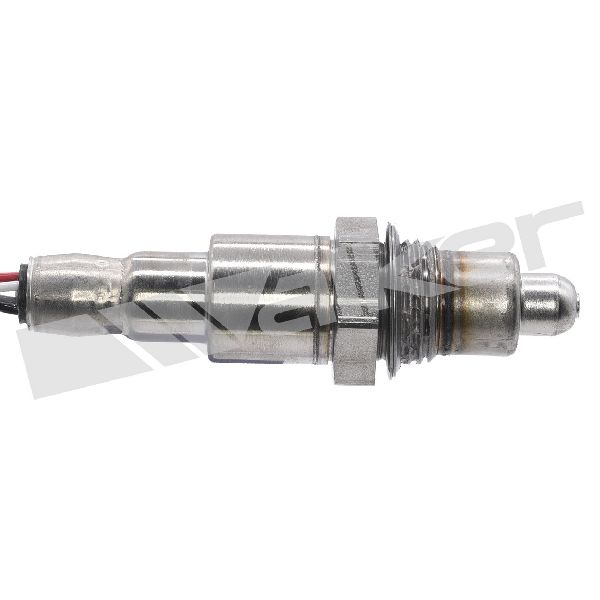
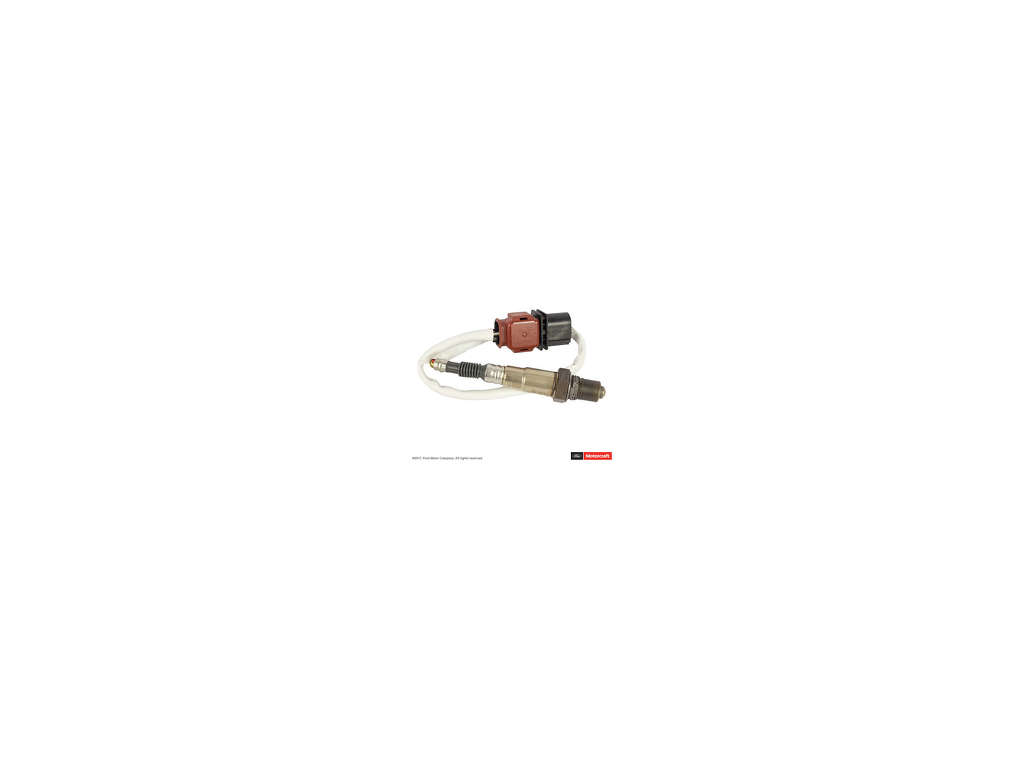
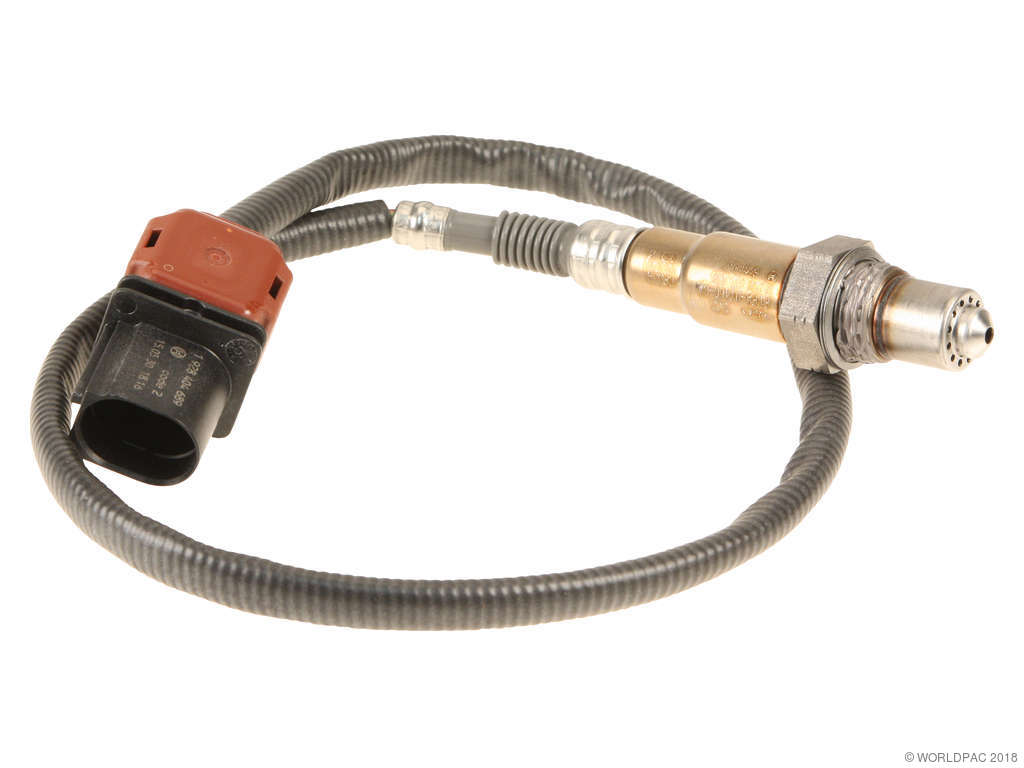
Typical fix: Replace the downstream oxygen sensor on Bank 2 (driver's side). The Motorcraft part number may be GK4Z-9G444-H 🎬 Watch: How to locate and replace the Bank 2 O2 sensors. (service part number DY-1627).
Est. part cost: $50-$150 - Failing Catalytic Converter ⚪ Low Probability While less likely than software or sensor issues on this model, converters can fail. Owners on forums have confirmed needing converter replacements even at low mileage. In one case, a user on an Expedition forum had the code return immediately after a dealer replaced the converter, suggesting a misdiagnosis or a faulty new part.
How to confirm: This is usually the last resort after ruling out software, fuel issues, O2 sensors, and exhaust leaks. A temperature gun can be used to measure the inlet and outlet pipes of the converter; the outlet should be significantly hotter (at least 100°F) than the inlet on a working converter.
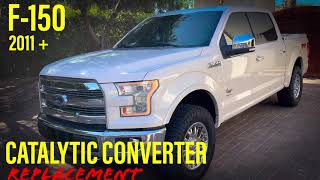
Typical fix: Replace the Bank 2 (driver's side) catalytic converter assembly. The OEM part is confirmed to be JL7Z-5E212-R. 🎬 See this walkthrough for replacing the catalytic converter assembly.
Est. part cost: $700-$1500 - Exhaust System Leak ⚪ Low Probability
How to confirm: Visually inspect the exhaust system from the engine to the tailpipe for cracks, holes, or loose flange connections, especially around the O2 sensor bungs and converter flanges. A shop may use a smoke machine to find small leaks. An exhaust leak can introduce oxygen into the exhaust stream, confusing the O2 sensors.
Typical fix: Repair the leak by replacing the gasket or welding the cracked component.
Est. part cost: $20-$200
Rare But Worth Checking
- Engine Misfires: If your engine is misfiring, unburnt fuel can enter the exhaust and overheat the catalytic converter, causing permanent damage. This would typically be accompanied by misfire codes (e.g., P0300, P0306).
- Weak Battery: In one owner account on Reddit, a persistent P0430 code was ultimately resolved by replacing a weak battery that was causing issues with the vehicle's auto start-stop system. The erratic voltage may have affected sensor readings.
Diagnosis Steps
- Check for Recalls: Contact a Ford dealer or use the NHTSA website with your VIN to check for open Emission Recall 24E13. If it's active, have the PCM reprogrammed. This is the most important first step.
- Scan for Other Codes: Use an OBD-II scanner to check for any other codes, especially misfire (P03xx) or O2 sensor heater circuit codes (P0155, P0161). Address these codes first.
- Inspect for Exhaust Leaks: Visually and audibly inspect the entire exhaust system for leaks, paying close attention to the manifold, downpipe, and catalytic converter flanges.
- Analyze O2 Sensor Data: Using a capable scan tool, graph the voltage signals from the Bank 2 upstream (Sensor 1) and downstream (Sensor 2) O2 sensors. The downstream sensor's reading should be steady. If it mirrors the fluctuating reading of the upstream sensor, the converter is likely not working.
- Test the O2 Sensor: If sensor data is inconclusive, consider swapping the downstream O2 sensors between Bank 1 and Bank 2. Clear the codes and drive the vehicle. If the code returns as P0420, the O2 sensor you moved is faulty.
- Perform TSB De-sulfation Procedure: If no other cause is found and the PCM is updated, perform the drive cycle outlined in TSB 22-2260 to attempt to clean the catalyst. This involves several WOT accelerations to 65 mph followed by periods of highway driving.
- Test the Catalytic Converter: If all else fails, a temperature test can help confirm a dead converter. Measure the temperature of the pipe entering the converter and the pipe exiting it. The outlet should be at least 100°F hotter. If it's the same temperature or cooler, the converter is not functioning.
Parts You'll Likely Need
- Downstream Oxygen Sensor (Bank 2)
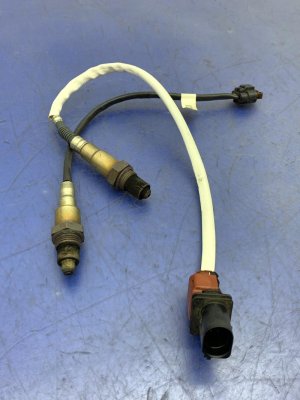
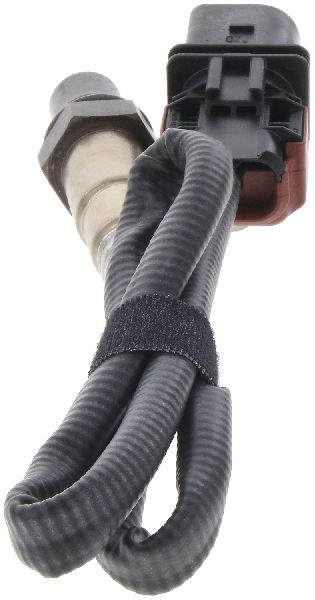
(OEM #GK4Z-9G444-H (or Motorcraft DY-1627))— A faulty downstream O2 sensor can send incorrect data, falsely triggering the P0430 code. It's a common wear item and much cheaper to replace than the converter.
Trusted brands: Motorcraft, Bosch, Denso, NTK
OEM price range: $80-$150
Aftermarket price range: $50-$100 - Catalytic Converter (Bank 2, Driver's Side)
(OEM #JL7Z-5E212-R)— This is the final step if all other diagnostics fail or if the converter is physically damaged or clogged. On this vehicle, it should only be replaced after verifying the PCM software is updated and O2 sensors are functional. This part is known to be on backorder at times.
Trusted brands: Motorcraft (OEM)
OEM price range: $1000-$1500
Aftermarket price range: $700-$1200
Related Codes That Often Appear With This One
- P0420 — This is the identical code but for Bank 1 (passenger side). Seeing both P0420 and P0430 together strongly points towards a systemic issue like the PCM software problem or fuel quality, as noted in TSBs 22-2260 and 22-2137, rather than two converters failing simultaneously.
- P0300, P0301-P0306 — These are misfire codes. An engine misfire allows raw fuel to enter the exhaust, which can quickly destroy the catalytic converter. The misfire is the root cause that must be fixed first to prevent repeat failure of a new converter.
Technical Service Bulletins (TSBs) & Recalls
- TSB 22-2260
- TSB 22-2137
- Emission Recall 24E13
Platform-Specific Known Issues
- Emission Recall 24E13: The PCM software on 2018-2021 models is overly sensitive and may falsely trigger a P0430 code. A free software update from a Ford dealer is the required fix.
- TSB 22-2260 / TSB 22-2137: These bulletins address P0430 codes caused by high sulfur content in fuel. A special drive cycle procedure is recommended to de-sulfate and restore the catalytic converters before replacement is considered.
Mechanic-Grade Diagnostic Values
- Downstream O2 Sensor (Bank 2, Sensor 2) Voltage at Idle/Cruise — expected: Relatively stable voltage between 0.4V and 0.6V.. Failure: Voltage fluctuates rapidly, mimicking the upstream sensor's pattern (typically 0.1V to 0.9V).
- Mode 6 Catalyst Monitor Test ($81 for Bank 1, $82 for Bank 2) — expected: The calculated switch ratio or index ratio should be below the manufacturer's threshold (e.g., a value near 0.0 is highly efficient).. Failure: The calculated ratio approaches 1.0, indicating the downstream sensor is switching almost as frequently as the upstream sensor.
- Catalyst Monitor Entry Conditions — expected: ECT: 71-121°C, IAT: -6.7-60°C, Fuel Level > 15%, Air Mass > 2.0 lb/min.. Failure: If these conditions are not met, the catalyst efficiency monitor will not run, and the code status will not update.
Hidden / Shadow Codes Worth Checking
- Mode 6, TID $82: This is not a DTC, but a Test ID within the Mode 6 diagnostic data. It represents the Catalyst Efficiency Monitor for Bank 2. Viewing this data allows a technician to see the raw catalyst efficiency value (often as a switch ratio) that the PCM uses to determine if it should set the P0430 code. (see via A professional scan tool or advanced OBD-II app (like Forscan or Torque Pro) that can display Mode 6 test results.)
Scan Tool Commands That Help
- Ford IDS / Forscan: Clear/Reset Keep Alive Memory (KAM) — After replacing a component like an O2 sensor or catalytic converter, resetting the KAM forces the PCM to erase long-term fuel trim adaptations and other learned values. This ensures the system relearns based on the new, functional parts.
- Ford IDS: SCR Parameter Reset — While specifically for diesel (SCR) systems, a similar named function may exist for gasoline catalyst systems in the dealer software. It is used to reset onboard data following a catalyst replacement.
Wiring & Ground Locations
- G103 (example) — Located at the left front corner of the engine compartment on similar Ford platforms.. This is a major engine compartment ground point. Corrosion or a loose connection here can cause incorrect or noisy voltage readings from the oxygen sensors, leading to a false P0430 code.
- Connector C139 (example) — On similar Ford platforms (like the F-150), this connector is located at the front of the engine and serves as a junction for both downstream O2 sensor harnesses.. Water intrusion or corrosion at a shared harness connector can cause issues with O2 sensor signals for both banks simultaneously, which is a strong indicator of a wiring issue rather than a component failure.
- Connector C175B — This is a primary connector for the Powertrain Control Module (PCM).. The O2 sensor signal and heater circuit wires run to this connector. A pushed-out pin or corrosion in this specific connector could interrupt the signal and trigger the code. A technician would use a pinout diagram for this connector to test for continuity and voltage directly at the PCM.
Real Owner Repair Stories
- Reddit user Upst8M (2018 Ford F-150 2.7L (similar engine family and PCM logic), 90,000 miles) — Check Engine Light with code P0430 appeared two days after the vehicle received a PCM recall update (24E12, similar to 24E13). No prior issues.
❌ Tried (didn't work) Arguing with the dealership that the update caused the issue.
✅ What actually fixed it The user ultimately had to replace the driver's side (Bank 2) catalytic converter. They were told the PCM update included stricter parameters that revealed the pre-existing, borderline failure of the cat. After contacting Ford Customer Care, they received some financial assistance for the repair. - Ford F150 Forum user poofyo101 (2016 F-150 EcoBoost 3.5L, 138,000 miles) — Initially got P0420 (Bank 1). After replacing the Bank 1 cat, the code cleared, but a P0430 (Bank 2) appeared 30 miles later.
❌ Tried (didn't work) Replacing only the Bank 1 catalytic converter.
✅ What actually fixed it The consensus from other forum members was that at high mileage, if one catalytic converter fails, the other is likely degraded as well. The implied fix was to replace the second (Bank 2) catalytic converter and consider replacing the O2 sensors at the same time.
When the Usual Fixes Don't Work
- While Pass 2 correctly identifies Emission Recall 24E13 as a primary diagnostic step and potential free fix, a significant amount of owner feedback suggests a crucial counterpoint. Multiple owners of affected Ford vehicles (including F-150s with similar recalls) have reported that the P0430 code appeared for the very first time only days after the recall's PCM software update was performed. The theory is that the original software had lenient parameters, while the updated software enforces stricter emissions thresholds. This change can cause a previously 'passing' but borderline-efficient catalytic converter to suddenly fail the PCM's test, triggering the code. Therefore, while the recall should always be performed, owners should be aware that it may uncover an imminent converter failure that the old software was ignoring, leading to an unexpected repair.
OEM Part Supersession History
JL7Z-5E212-A, JL7Z-5E212-K→JL7Z-5E212-R— Standard part revision by the manufacturer, likely for improvements in design, materials, or manufacturing process.
Helpful Videos
Used OEM Parts in Stock
New Aftermarket Parts Available

The information in this article is provided for general reference and educational purposes only. Vehicle specifications, procedures, and part compatibility can vary by production date, trim level, and region. Always consult your vehicle's factory service manual and verify part numbers before purchasing or performing repairs. Safety-critical components such as airbags, seat belts, and braking systems should be installed by a qualified professional.
- Ford EXPEDITION:
- 🎬 Helpful Videos
- 🛍️ Shop This Part
- What's Unique About the 2020-2021 Ford EXPEDITION
- Diagnostic Flowchart
- Symptoms You May Notice
- Most Likely Causes
- Rare But Worth Checking
- Diagnosis Steps
- Parts You'll Likely Need
- Related Codes That Often Appear With This One
- Technical Service Bulletins (TSBs) & Recalls
- Platform-Specific Known Issues
- Mechanic-Grade Diagnostic Values
- Hidden / Shadow Codes Worth Checking
- Scan Tool Commands That Help
- Wiring & Ground Locations
- Real Owner Repair Stories
- When the Usual Fixes Don't Work
- OEM Part Supersession History
- 🎟️ Get 5% Off