

P0430 on 2012-2014 Dodge Avenger 3.6L: Catalyst Efficiency Bank 2 Causes & Fixes
On a 2012-2014 Dodge Avenger with the 3.6L V6 engine, code P0430 almost always means the Bank 2 catalytic converter has failed. While a bad oxygen sensor or exhaust leak are possibilities, the converter itself is the most common point of failure. Bank 2 is the catalytic converter assembly on the front side of the engine, closer to the radiator.
- P0430 on the 3.6L V6 Avenger points to the catalytic converter on the front (radiator) side of the engine.
- The most likely cause is a failed catalytic converter, not a sensor.
- Before replacing the expensive converter, rule out exhaust leaks and faulty oxygen sensors.
- Always check for and fix any engine misfire codes (P030x) first, as they are a root cause of converter failure.
- A DIY replacement is possible for those with moderate mechanical skill and the right tools, like an O2 sensor socket.
What's Unique About the 2012-2014 Dodge AVENGER
The P0430 code on the 3.6L Pentastar V6 in the Avenger is straightforward and typically points to a worn-out catalytic converter. This engine is used across many Chrysler, Dodge, and Jeep vehicles, and catalyst failure is a common issue as the vehicles age. The provided NHTSA Technical Service Bulletin (#1810216) shows that P0430 can appear alongside codes for misfires (P0300) and slow O2 sensor response (P0153), indicating that engine performance issues can directly contribute to and accelerate the failure of the catalytic converter. The Bank 2 converter (front/radiator side) is significantly easier to replace than the Bank 1 converter (rear/firewall side), which often requires more extensive disassembly.
Diagnostic Flowchart
Tap your situation to follow the diagnostic path that matches what you're seeing on this vehicle.
Symptoms You May Notice
- Check Engine Light is on
- Failure to pass an emissions inspection
- Reduced engine power and sluggish acceleration, especially if the converter is clogged.
- A rotten egg or sulfur smell from the exhaust.
- A rattling sound from under the vehicle if the internal parts of the converter have broken apart.
- Decreased fuel economy because the engine has to work harder.
- Replacing the oxygen sensor when the catalytic converter is the actual point of failure. It is a common first step due to the lower cost, but if the converter is bad, the code will almost certainly return.
- Replacing the catalytic converter without addressing the root cause of its failure, such as engine misfires, oil/coolant leaks, or a rich fuel condition. This will lead to premature failure of the new converter.
Most Likely Causes
- Failed Catalytic Converter (Bank 2) 🔴 High Probability Catalytic converters have a finite lifespan and fail from age and contamination. Unaddressed engine issues like misfires, or burning oil/coolant can drastically shorten their life by sending unburnt fuel or other contaminants into the exhaust, which overheats and melts the internal structure.
How to confirm: Use an infrared thermometer to measure the temperature of the exhaust pipe before and after the converter. A working converter should be at least 100°F hotter at the outlet than the inlet. If temperatures are similar or the inlet is hotter, the converter is likely bad. A visual inspection may also reveal discoloration from overheating or physical damage.
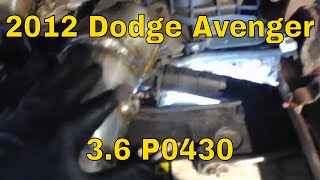
Typical fix: Replace the Bank 2 catalytic converter. On this vehicle, it is the converter assembly on the radiator side of the engine. 🎬 See a step-by-step guide to replacing the Bank 2 converter. Many owners warn against using cheap, low-quality aftermarket converters as they may not fit correctly or last long.
Est. part cost: $250-$700 - Faulty Downstream Oxygen Sensor (Bank 2, Sensor 2) 🟡 Medium Probability Oxygen sensors wear out over time and can send inaccurate readings to the computer, falsely triggering a P0430 code. However, many technicians note that it takes a *good* O2 sensor to correctly identify a bad converter, and replacing the sensor alone often doesn't fix the code.
How to confirm: Use a scan tool to graph the voltage of the Bank 2 downstream O2 sensor. It should be relatively stable (around 0.6-0.8V) when the engine is warm and at a steady RPM. If it's fluctuating rapidly like the upstream sensor, or is stuck at a very low or high voltage, it may be faulty.
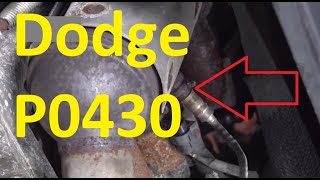
Typical fix: Replace the Bank 2, Sensor 2 (downstream) oxygen sensor. This is often attempted first due to the lower cost, but the P0430 code frequently returns if the converter is the true cause. 🎬 Watch: How to fix the P0430 code on your Dodge.
Est. part cost: $40-$150 - Exhaust Leak ⚪ Low Probability Rust can cause leaks at exhaust flanges, gaskets, or in the flex pipe, especially in regions that use road salt. A leak between the upstream and downstream O2 sensors can draw in outside air, skewing the downstream sensor's reading and tricking the PCM into setting a P0430 code. A cracked exhaust manifold can also be a cause.
How to confirm: Visually inspect the exhaust system from the engine to the catalytic converter for black soot marks, which indicate a leak. Listen for ticking or hissing sounds from the engine bay, especially when the engine is cold.
Typical fix: Replace the leaking gasket or exhaust component. Exhaust putty can be a temporary fix for small pinholes.
Est. part cost: $20-$200 - Engine Misfires or Rich Fuel Condition ⚪ Low Probability Ignored issues like bad spark plugs, faulty ignition coils, or leaking fuel injectors can dump raw fuel into the exhaust, which will destroy a catalytic converter. The TSB #1810216 specifically lists P0430 with misfire codes, highlighting the connection.
How to confirm: Check for other diagnostic trouble codes, especially in the P0300-P0306 range (misfires) or fuel trim codes (P0172, P0175). Address these codes *before* replacing the converter to prevent repeat failure.
Typical fix: Perform a full engine tune-up, including spark plugs and ignition coils, or replace faulty fuel injectors.
Est. part cost: $100-$500
Rare But Worth Checking
- PCM Software Issue: In some cases, the vehicle's computer may have overly sensitive parameters for triggering the code. TSB #1810216 suggests a PCM software update may be available from a dealer, which can address this and other codes simultaneously. Check for any available PCM software updates, especially if the converter and sensors seem to be in good condition.
- Contaminated Fuel or Additives: Using improper fuel or certain aftermarket fuel additives can leave deposits that contaminate the oxygen sensors and the catalytic converter, reducing its efficiency.
Diagnosis Steps
- Scan for all stored DTCs. Address any misfire (P030x), fuel system (P017x), O2 sensor circuit, or thermostat (P0128) codes *before* diagnosing P0430.
- Visually inspect the Bank 2 exhaust system (front/radiator side) for any signs of leaks, cracks, or damage, paying close attention to the manifold and converter flanges. A common failure point is the gasket between the converter and the exhaust pipe.
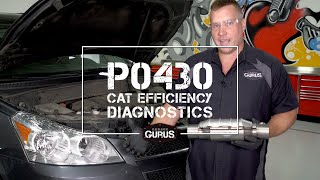
- Using a scan tool with live data, graph the voltage signals from Bank 2 Sensor 1 (upstream) and Bank 2 Sensor 2 (downstream). At a steady 2500 RPM, Sensor 1 should switch rapidly between ~0.1V and ~0.9V. Sensor 2 should remain relatively stable and high (~0.7V). If Sensor 2 mirrors Sensor 1's rapid switching, the converter has failed. 🎬 Watch this professional walkthrough of P0430 diagnostic graphing techniques.
- If scan tool data is inconclusive, perform a temperature test. Use an infrared thermometer to measure the converter's inlet and outlet pipe temperatures after the engine is fully warmed up. The outlet should be at least 100°F hotter than the inlet. If not, the converter is not working.
- Check for engine-related issues that could have caused the failure. Inspect for coolant leaks (a common issue on the 3.6L is the oil filter housing, which can leak coolant into the engine valley) and excessive oil consumption.
- As a final check, if the sensors are identical part numbers, you can swap the downstream sensors between Bank 1 and Bank 2. If the code changes to P0420 (Bank 1), the O2 sensor is faulty. If the P0430 code returns, the Bank 2 converter is confirmed to be the problem.
Parts You'll Likely Need
- Bank 2 Catalytic Converter — This is the most common failure item for code P0430 on the 3.6L Avenger. Bank 2 is the assembly on the front (radiator) side of the engine. Aftermarket part numbers vary by brand, such as Walker 53988 (for a similar platform) or Magnaflow 51356.
Trusted brands: Walker, MagnaFlow, AP Exhaust, Dorman
OEM price range: $1100-$3600
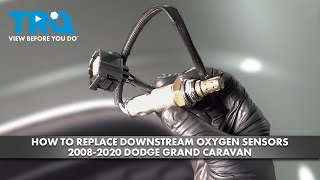
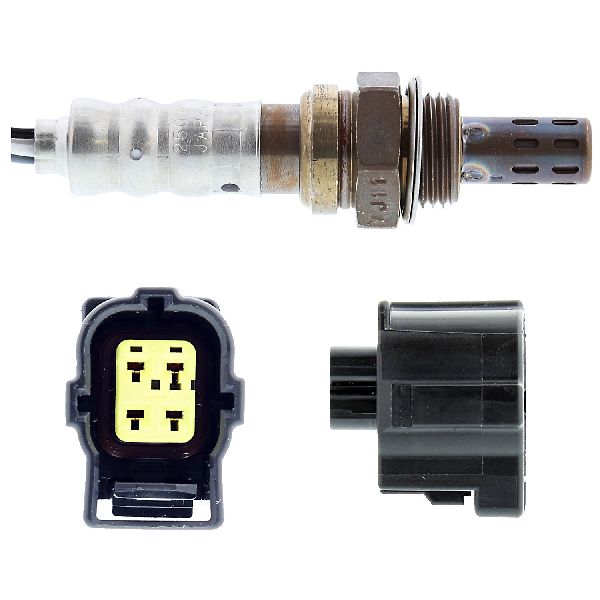
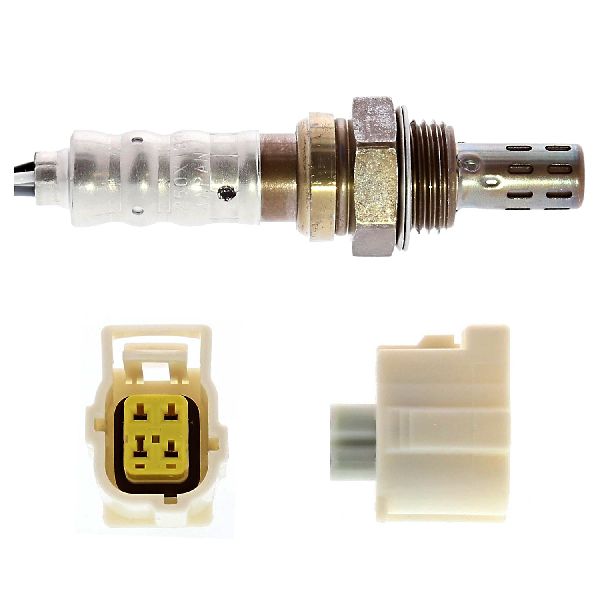
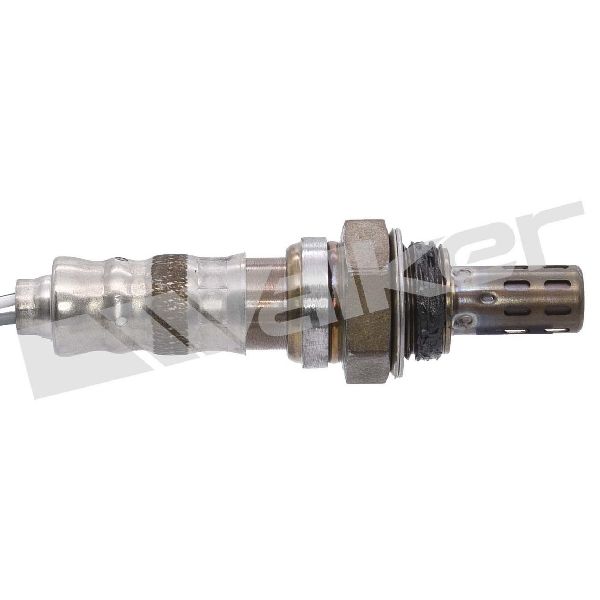
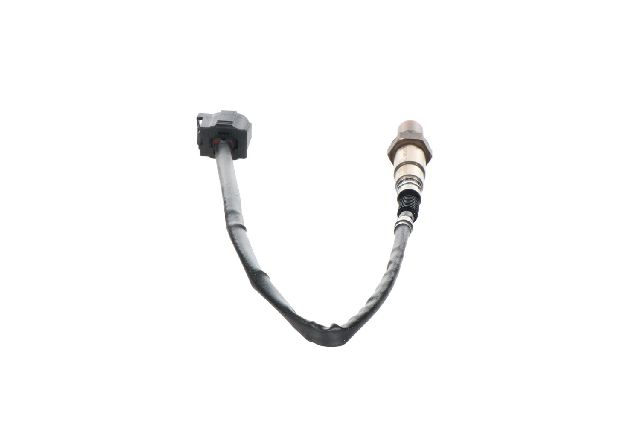
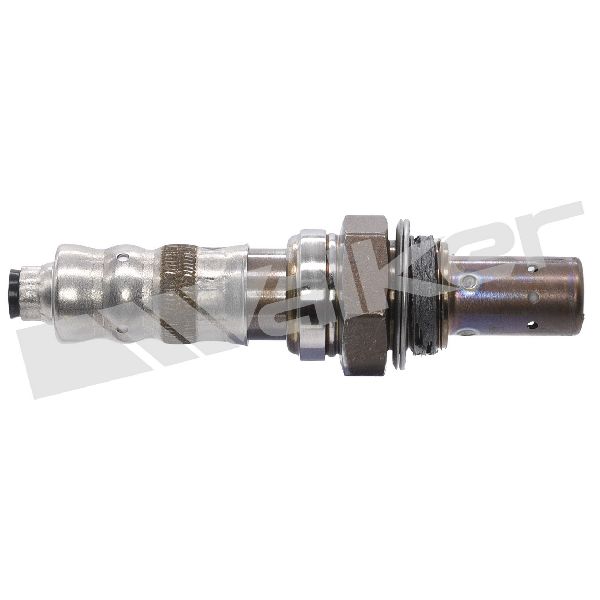
Aftermarket price range: $250-$700 - Downstream Oxygen Sensor (Bank 2, Sensor 2) — This is the second most likely part to fail or be replaced. It monitors the converter's efficiency. Bank 2 Sensor 2 is located after the front catalytic converter.
Trusted brands: NTK, Denso, Bosch, Mopar
OEM price range: $80-$160
Aftermarket price range: $40-$100
Related Codes That Often Appear With This One
- P0420 — This is the same catalyst efficiency code but for Bank 1 (the firewall side). It's common for both converters to fail around the same time, especially on higher mileage vehicles.
- P0300, P0302, P0304, P0306 — These are misfire codes for Bank 2 cylinders (2, 4, 6). Unburnt fuel from misfires is a primary cause of catalytic converter failure. This link is noted in TSB #1810216.
- P0153 — This code indicates a slow response from the upstream oxygen sensor on Bank 2. A slow sensor can affect fuel control and contribute to conditions that damage the converter, as seen in TSB #1810216.
- P0128 — This code for 'Thermostat Rationality' indicates the engine is not reaching operating temperature correctly. A stuck-open thermostat can cause the engine to run rich, which over time can foul the catalytic converter and trigger a P0430.
Technical Service Bulletins (TSBs) & Recalls
- 1810216: Notes that code P0430 can be set along with various other codes including those for misfires (P0300), EVAP system (P0441), and slow O2 sensor response (P0153), suggesting a PCM software update may address multiple issues at once. This TSB applies to a range of Chrysler vehicles with the 3.6L engine and indicates the PCM may be overly sensitive.
Platform-Specific Known Issues
- Ease of Replacement for Bank 2 vs. Bank 1: Multiple owner accounts and repair videos confirm that replacing the Bank 2 (front) converter is a very manageable DIY job. Access is straightforward from the top and bottom of the engine bay. In contrast, the Bank 1 (rear) converter is significantly more difficult, requiring more time and potentially the removal of other components to access.
- Warning on Cheap Aftermarket Converters: A detailed repair video for a 2012 Avenger with a P0430 code documented a failed attempt to install a cheap, 'eBay special' catalytic converter. The pipe diameter was incorrect and the flanges did not line up, forcing the mechanic to purchase a more expensive, higher-quality brand to complete the job. This highlights the risk of poor fitment with budget parts.
Mechanic-Grade Diagnostic Values
- Exhaust Back Pressure — expected: 1.0 PSI or less at idle.. Failure: Pressure exceeding 1.5 PSI at 2,500 RPM suggests a clogged catalytic converter.
- O2 Sensor Heater Circuit Resistance — expected: Typically between 5 and 15 ohms, but can vary by manufacturer. Should be well under 200 ohms.. Failure: An open circuit (infinite resistance) or a dead short (zero resistance) indicates a failed heater element inside the sensor.
- Engine Coolant Temperature (ECT) Sensor Resistance — expected: 2000-3000 Ω at 20°C (68°F); 200-300 Ω at 90°C (194°F).. Failure: Readings significantly outside these ranges can cause incorrect fueling, leading to catalyst damage over time.
- Engine Coolant Temperature (ECT) Sensor Voltage — expected: ~2.0V on a cold engine, ~0.5V on a fully warmed engine.. Failure: Incorrect voltage (e.g., 1.5V cold, 1.25V warm) can indicate a skewed sensor that won't set its own code but will cause rich running conditions.
Hidden / Shadow Codes Worth Checking
- Mode $06, TID $A9, MID $21 (example): This is not a DTC, but the raw test data from the PCM's catalyst efficiency monitor. It provides a numerical value for the converter's oxygen storage capacity, rather than just a pass/fail. Technicians can compare this value against manufacturer limits to see if the converter is truly degraded or only marginal. (see via Requires an advanced scan tool capable of displaying Mode $06 data. The specific Test ID (TID) and Monitor ID (MID) can vary by exact model and year.)
Wiring & Ground Locations
- PCM Connector C1 & C3 (Bank 2, Sensor 2) — The Powertrain Control Module (PCM) is located in the engine bay, typically on the driver's side near the firewall or shock tower.. For testing sensor wiring integrity directly at the computer, the following pins are used for the Bank 2 downstream O2 sensor (based on a similar 3.6L Pentastar application): Signal Out to C1 Pin 33, Signal Return to C1 Pin 32, and Heater Control to C3 Pin 10.
- G320 — Located on the left side of the engine compartment.. This is a primary engine compartment ground point. A loose or corroded connection here can cause erratic behavior and incorrect readings from various engine sensors, including the oxygen sensors, potentially leading to a false P0430 code.
Real Owner Repair Stories
- 2CarPros forum user (Dodge with 3.6L V6) — P0430 code, rough running, exhaust fumes.
❌ Tried (didn't work) Patching the hole with exhaust putty.
✅ What actually fixed it The user discovered a large hole in the Bank 2 (driver's side) exhaust manifold. Replacing the cracked manifold is the required fix to stop the leak that was causing the incorrect O2 sensor readings and triggering the P0430 code. - RamForum.com user (Dodge truck with P0430 (similar diagnostic logic)) — P0430 code.
❌ Tried (didn't work) Replacing the catalytic converter with a 49-state federal version on a California emissions vehicle., Swapping downstream O2 sensors between banks (code did not move)., Installing non-foulers with steel wool (this changed the code to P2098 - Post Catalyst Fuel Trim Too Lean).
✅ What actually fixed it The user concluded the issue was likely a corrupted or damaged PCM, as direct part swaps and modifications did not resolve the P0430 code but did alter the symptoms, pointing away from the hard parts themselves.
OEM Part Supersession History
68105583AE (example)→68105583AF (and later revisions)— This is the OEM part number for the failure-prone plastic oil filter/cooler housing. Later revisions aimed to improve durability. Aftermarket all-aluminum versions (e.g., Dorman 926-876, 926-959) are a popular upgrade to prevent repeat failures.
Heads up: When replacing, ensure the new housing comes with the correct sensors for your specific model year, as sensor types changed. Some aftermarket kits may require swapping over your original sensors.
Helpful Videos
We Have This Part in Stock


The information in this article is provided for general reference and educational purposes only. Vehicle specifications, procedures, and part compatibility can vary by production date, trim level, and region. Always consult your vehicle's factory service manual and verify part numbers before purchasing or performing repairs. Safety-critical components such as airbags, seat belts, and braking systems should be installed by a qualified professional.
- Dodge AVENGER:
- 🎬 Helpful Videos
- 🛍️ Shop This Part
- What's Unique About the 2012-2014 Dodge AVENGER
- Diagnostic Flowchart
- Symptoms You May Notice
- Most Likely Causes
- Rare But Worth Checking
- Diagnosis Steps
- Parts You'll Likely Need
- Related Codes That Often Appear With This One
- Technical Service Bulletins (TSBs) & Recalls
- Platform-Specific Known Issues
- Mechanic-Grade Diagnostic Values
- Hidden / Shadow Codes Worth Checking
- Wiring & Ground Locations
- Real Owner Repair Stories
- OEM Part Supersession History
- 🎟️ Get 5% Off