

P0430 on 2002-2009 Chevrolet Tahoe: Catalyst Efficiency Bank 2 Causes and Fixes
P0430 on a Tahoe almost always means the catalytic converter on Bank 2 (driver's side) is failing. Before replacing it, check for exhaust leaks (especially broken manifold bolts) and failing oxygen sensors, which are less expensive potential causes. A new converter is the most common fix, but underlying issues like oil consumption must be addressed first.
- P0430 points to a problem with the catalytic converter on the driver's side (Bank 2).
- The most likely fix is replacing the catalytic converter, especially on vehicles with over 100,000 miles.
- Before buying a new converter, rule out cheaper possibilities: inspect for exhaust leaks and test the oxygen sensors.
- If other engine codes are present, especially for misfires, fix those problems first to avoid damaging a new catalytic converter.
- The 2002-2009 range spans two generations (GMT800 and GMT900); ensure you buy parts specific to your model year.
What's Unique About the 2002-2009 Chevrolet TAHOE

The V8 engines in this era of Tahoe are known for their longevity, but high mileage can lead to eventual catalytic converter wear. A key piece of information for these vehicles is TSB #PIP3119P, which notes that the diagnostic test for codes P0420 and P0430 is intentionally disabled for the first hour of engine operation on new vehicles to prevent false codes from being set during the converter's break-in period. Furthermore, the 5.3L V8 in the GMT900 models (2007-2009) introduced Active Fuel Management (AFM), which is known in some cases to lead to increased oil consumption. This oil can contaminate and destroy the catalytic converter, making it a critical root cause to investigate.
Diagnostic Flowchart

Tap your situation to follow the diagnostic path that matches what you're seeing on this vehicle.
Generation note: The 2002-2009 year range covers two distinct Tahoe generations. The 2002-2006 models are part of the GMT800 platform, while the 2007-2009 models belong to the newer GMT900 platform. While the underlying cause and meaning of P0430 are the same for both, parts like catalytic converters and O2 sensors are not interchangeable between these generations. The GMT900 introduced rack-and-pinion steering and a more refined interior, while the GMT800 is known for its mechanical simplicity. Always verify parts by your vehicle's specific year and emissions requirements (Federal vs. California/CARB).
Symptoms You May Notice
- Check Engine Light is on
- Failure to pass an emissions inspection
- Reduced fuel economy
- Sluggish acceleration or lack of power if the converter is clogged
- A sulfur or "rotten egg" smell from the exhaust, especially under heavy acceleration
- Rattling noise from underneath the vehicle if the internal catalyst substrate has broken apart
- Immediately replacing the catalytic converter without checking for exhaust leaks (especially broken manifold bolts) or testing the oxygen sensors first.
- Replacing the oxygen sensors when the catalytic converter is actually the component that has failed. Many forum users report doing this, only for the P0430 code to return.
- Replacing the catalytic converter without fixing an underlying engine misfire or rich/lean condition, which will cause the new converter to fail quickly.
- Using a cheap, low-quality aftermarket catalytic converter that cannot meet the PCM's efficiency standards, causing the code to return.
Most Likely Causes

- Failing Catalytic Converter 🔴 High Probability Catalytic converters have a finite lifespan and degrade over time, especially on higher-mileage vehicles. Forum discussions consistently point to the converter itself being the ultimate failure point after 150k+ miles. Oil consumption, a known issue on some 5.3L engines, can also poison the catalyst material, accelerating failure.
How to confirm: Use a scan tool to monitor the downstream O2 sensor voltage on Bank 2. If it fluctuates rapidly, mimicking the upstream sensor, the converter is not working. A professional can perform a backpressure test. An infrared thermometer can also be used: a healthy converter should be significantly hotter at the outlet than the inlet. If temperatures are similar or the inlet is hotter, the converter has failed or is clogged.
Typical fix: Replace the Bank 2 catalytic converter. On these Tahoes, this is often part of a 'Y-pipe' assembly that includes the Bank 1 converter and bolts to both exhaust manifolds. 🎬 See this step-by-step catalytic converter assembly replacement walkthrough. It is critical to fix any underlying engine issues (like misfires or oil burning) before replacing the converter, or the new one will fail prematurely.
Est. part cost: $300-$800 for an aftermarket assembly, $900+ for OEM. - Faulty Oxygen (O2) Sensor 🟡 Medium Probability O2 sensors are wear items and can fail, sending incorrect data to the PCM. A lazy or biased downstream sensor (Bank 2, Sensor 2) can falsely trigger a P0430 code. However, many owners replace sensors only to have the code return, indicating the converter was the real issue. It's a common misdiagnosis, but worth checking due to the lower cost.
How to confirm: Use a scan tool to graph the O2 sensor voltage. The downstream sensor (Bank 2, Sensor 2) should show a relatively steady voltage (typically 0.6-0.8V) on a healthy, warm engine at steady RPM. If it's stuck, flat-lining, or fluctuating wildly like the upstream sensor, it may be faulty. Swapping the downstream sensors from Bank 1 and Bank 2 is a common diagnostic trick; if the code changes to P0420, the sensor is bad.
Typical fix: Replace the Bank 2 downstream oxygen sensor. Using OEM (ACDelco) or high-quality OE-style (Denso) sensors is highly recommended, as these trucks can be sensitive to aftermarket sensor performance.
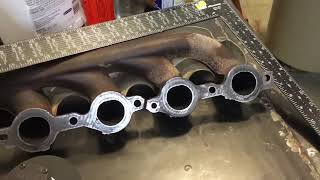
Est. part cost: $50-$120 per sensor. - Exhaust System Leak 🟡 Medium Probability A very common issue on the 4.8L, 5.3L, and 6.0L V8s is for the exhaust manifold bolts, particularly the rearmost ones, to break off. This creates a leak between the cylinder head and the manifold, allowing oxygen to enter the exhaust stream. This extra oxygen fools the O2 sensors into reporting an inefficient converter.
How to confirm: Listen for a ticking or tapping sound from the engine bay, especially when the engine is cold, that may quiet down as it warms up. Visually inspect the exhaust manifold on the driver's side for black soot trails around the ports, which indicates a leak. A missing or broken bolt head at the rear of the manifold is a dead giveaway. A smoke machine test can confirm smaller leaks.
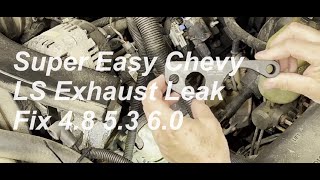
Typical fix: If a manifold bolt is broken, the manifold must be removed, the broken bolt extracted, and a new bolt and gasket installed. Special clamp-style repair kits are also available that fix the leak without requiring bolt extraction. 🎬 Watch: An easy way to fix broken exhaust manifold bolts.
Est. part cost: $20-$150 depending on the repair method (gasket and bolts vs. clamp kit). - Engine Running Condition (Misfires, Rich/Lean) ⚪ Low Probability Underlying engine problems can destroy a catalytic converter. Unburned fuel from misfires (e.g., from bad plugs or coils) can enter the exhaust and overheat the converter, while issues like leaking injectors can contaminate it. These issues must be resolved before replacing a converter.
How to confirm: Check for other trouble codes related to misfires (P0300-P0308) or fuel trim (P0171, P0172, P0174, P0175). Address these codes first before suspecting the converter. A history of misfires is a strong indicator of what killed the converter.
Typical fix: Fix the root cause, which could be worn spark plugs, faulty ignition coils, dirty fuel injectors, or a vacuum leak.
Est. part cost: $50-$500+ depending on the underlying issue.
Rare But Worth Checking
- Excessive Oil or Coolant Consumption: As noted in NHTSA complaint #10663266, excessive engine oil or coolant burning can contaminate and clog the catalytic converter, leading to a P0430 code. This indicates a more serious engine problem (like failing piston rings, valve seals, or head gaskets) that must be addressed to prevent repeat converter failure.
- PCM Software Issues: In some cases, the parameters for triggering the code may be too sensitive. A dealer can check if any software updates are available for the Powertrain Control Module (PCM). However, this is less common than a mechanical fault.
Diagnosis Steps
- Check for any other stored DTCs. If misfire or fuel trim codes are present, diagnose and repair them first.
- Visually and audibly inspect the entire exhaust system for leaks, especially between the engine and the Bank 2 catalytic converter. Pay close attention to the driver's side exhaust manifold for broken rear bolts and tell-tale soot marks.
- Use a scan tool with live data capability. Monitor the voltage readings for the upstream (Bank 2, Sensor 1) and downstream (Bank 2, Sensor 2) oxygen sensors with the engine fully warmed up and running at a steady 2000-2500 RPM.
- Analyze the O2 sensor data: The upstream sensor should fluctuate rapidly between approximately 0.1 and 0.9 volts. The downstream sensor should show a much more stable, steady voltage (typically 0.6-0.8V).
- If the downstream O2 sensor's voltage is fluctuating rapidly and mimicking the upstream sensor, the catalytic converter is not storing oxygen and has likely failed.
- If the downstream O2 sensor voltage is flat or unresponsive, test the sensor itself.
Parts You'll Likely Need

- Catalytic Converter (Bank 2 or Y-Pipe Assembly)
(OEM #19420124 (Example for 2007-2008 GMT900 Y-Pipe Assembly))— This is the most common cause of P0430, as the converter's internal materials have degraded and are no longer efficient.
Trusted brands: Walker, MagnaFlow, AP Exhaust, ACDelco (OEM)
OEM price range: $900+
Aftermarket price range: $300-$800 - Downstream Oxygen Sensor (Bank 2, Sensor 2)
(OEM #ACDelco 213-4229 or Denso 234-4668 (Example for GMT800) / Denso 234-4260 (Example for GMT900))— A faulty O2 sensor can send incorrect readings, triggering the code. It's a common first step in diagnosis due to lower cost, but often not the final fix.
Trusted brands: Denso (O.E. Manufacturer), ACDelco (OEM), NTK
OEM price range: $70-$120
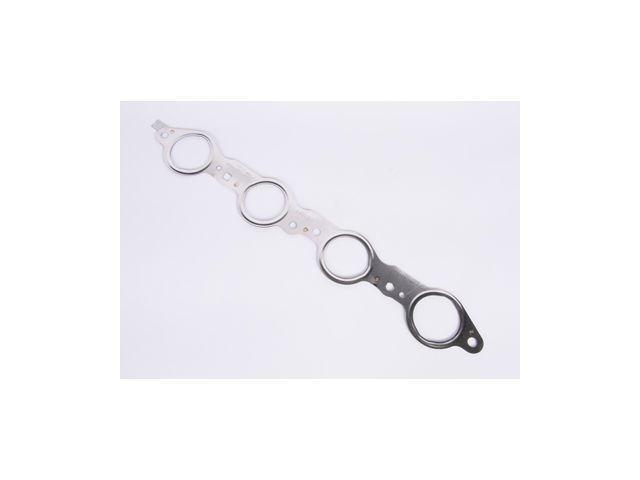
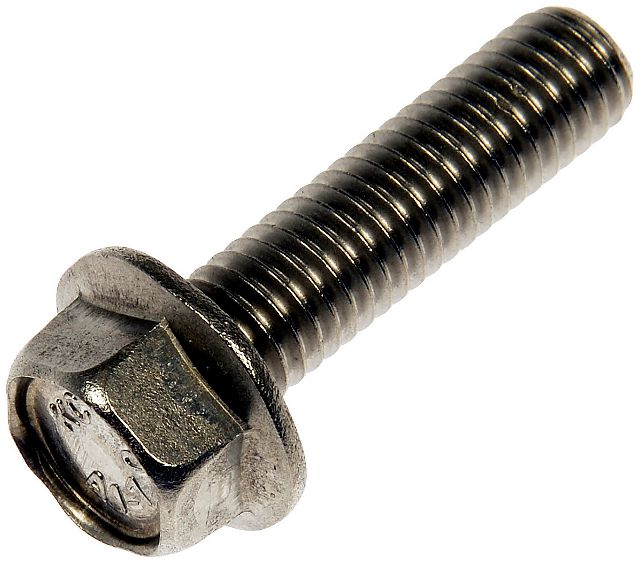
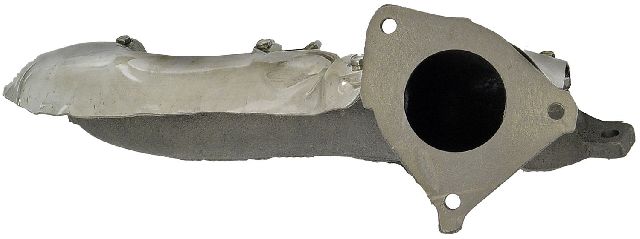
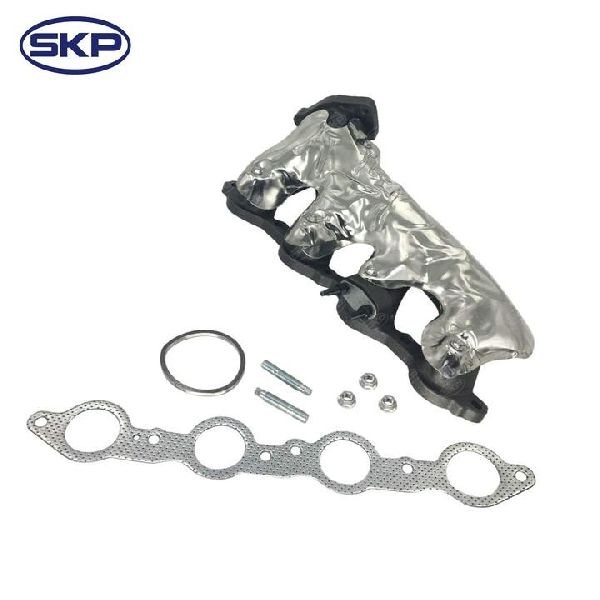
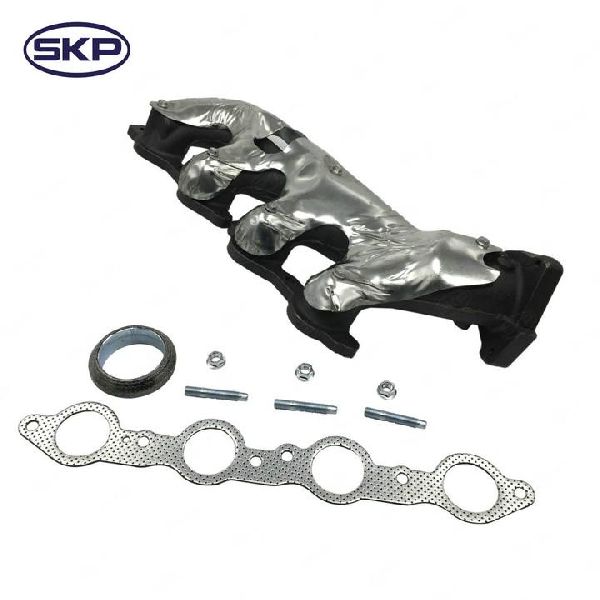
Aftermarket price range: $50-$90 - Exhaust Manifold Gasket & Bolts / Repair Clamp — Needed to fix an exhaust leak from a broken manifold bolt, a very common underlying cause for this code on GM V8s.
Trusted brands: Fel-Pro (Gaskets), Dorman (Bolts/Clamps), Kral Auto Parts (Repair Clamp)
OEM price range: $40-$80
Aftermarket price range: $20-$60
Related Codes That Often Appear With This One
- P0420 — This is the identical code for Bank 1 (passenger side). It's common for both converters to fail around the same time on a high-mileage vehicle, or for an exhaust leak to be present on both sides.
- P0300-P0308 — These are misfire codes (P0300 for random, P0301-P0308 for specific cylinders). An engine misfire allows unburned fuel to enter the exhaust, which can quickly overheat and destroy the catalytic converter. The misfire is the root cause that must be fixed.
- P0171, P0174 — These codes indicate a lean fuel condition (too much air). This can be caused by an exhaust leak before the upstream O2 sensor (like a broken manifold bolt) or a vacuum leak, both of which can contribute to a P0430 reading.
Technical Service Bulletins (TSBs) & Recalls
- Bulletin #PIP3119P: Notes that the diagnostic tests for P0420 and P0430 may be disabled for the first hour of engine operation to prevent false codes.
Platform-Specific Known Issues

- NHTSA TSB #PIP3119P notes that on some vehicles, the diagnostic for P0420/P0430 is disabled for the first hour of operation to prevent false codes at low mileage.
- Owner complaints, such as NHTSA ODI #10663266, link P0430 to high oil or coolant usage, which can ruin a new catalytic converter if not addressed.
Mechanic-Grade Diagnostic Values
- Downstream O2 Sensor (Bank 2, Sensor 2) Voltage — expected: A steady reading around 0.45V to 0.8V when the engine is at operating temperature and at a steady RPM.. Failure: Voltage fluctuates rapidly between 0.1V and 0.9V, mimicking the upstream sensor's behavior, indicating the catalyst is not storing oxygen.
- Catalytic Converter Temperature Differential — expected: The outlet pipe of the converter should be significantly hotter than the inlet pipe.. Failure: The inlet pipe temperature is equal to or hotter than the outlet pipe temperature, suggesting the converter is clogged or inactive.
Hidden / Shadow Codes Worth Checking
- Mode $06, Test ID for Catalyst Monitor: Mode $06 data provides the results of the PCM's self-tests for various components. For the catalyst monitor, it will show a test value and compare it against minimum and maximum thresholds. This allows a technician to see if the converter is borderline or has definitively failed the test, even before the P0430 code is set. (see via A professional scan tool with Mode $06 capability is required. The specific Test ID (TID) and Component ID (CID) for the Bank 2 catalyst monitor must be referenced from the vehicle's service information.)
Scan Tool Commands That Help
- GM Tech2 / GDS2: Catalyst System Test or Idle Catalyst Monitor — This is a specific service function that forces the PCM to run the catalyst efficiency monitor test. It can be used to verify a repair without having to perform a full, lengthy drive cycle. The tool will command specific air/fuel ratio changes and observe the O2 sensor responses to determine catalyst health.
- GM Tech2 / GDS2: Reset Fuel Trims / Adaptives — After replacing a catalytic converter, O2 sensors, or fixing a major vacuum/exhaust leak, resetting fuel trims is crucial. This forces the PCM to relearn the air/fuel mixture strategy from a baseline, ensuring the new components operate under correct parameters and preventing the new converter from being damaged by a pre-existing rich or lean condition.
Wiring & Ground Locations
- G102 — Located at the left rear of the engine; grounds the 8 ignition coils.. A poor ground here can cause weak spark or intermittent misfires, which can lead to unburned fuel entering the exhaust and damaging the catalytic converter, eventually causing a P0430 code.
- G103 — On GMT800 models, located on the cowl above the brake booster. On some GMT900 models, it's part of the main negative battery cable harness at the left front of the engine block.. This is a critical ground for the Engine Control Module (ECM/PCM). A poor connection at G103 can cause erratic sensor readings and incorrect data processing, potentially leading to false diagnostic codes, including P0430.
- Bank 2 Sensor 2 O2 Sensor Connector — On the driver's side of the vehicle, on the exhaust pipe after the catalytic converter. The connector is typically attached to a bracket on the transmission crossmember or vehicle frame.. This is the primary sensor for this code. The connector and its wiring are exposed to road debris and heat. Checking for corrosion, damage, or loose pins at this connector is a key diagnostic step before replacing the sensor.
Real Owner Repair Stories
- Reddit user in r/MechanicAdvice (2002 Chevy Tahoe LS 5.3L 4WD with 297,000 miles) — P0430 code present, known issue with oil burning.
❌ Tried (didn't work) Confirmed O2 sensors were good.
✅ What actually fixed it The consensus from other mechanics was that the long-term oil burning problem had contaminated and destroyed the catalytic converter, requiring its replacement. - Tahoe Yukon Forum user (2007 Tahoe PPV 5.3L with 250,000 miles) — Intermittent P0430 code that would appear and then clear itself. Vehicle ran and drove fine.
❌ Tried (didn't work) Clearing the code with a scanner.
✅ What actually fixed it The final diagnosis was a failing catalytic converter that was still marginally functional, causing the diagnostic test to fail intermittently. The permanent fix was to replace the catalytic converter. - Tahoe Yukon Forum user (2008 Tahoe with new aftermarket catalytic converters) — P0430 code appeared after major engine work (lifter/cam replacement) and installation of new aftermarket cats.
❌ Tried (didn't work) Swapping the downstream O2 sensors between Bank 1 and Bank 2; the code remained P0430, ruling out a bad sensor.
✅ What actually fixed it The final conclusion was that the new aftermarket catalytic converter for Bank 2 was faulty from the factory and not efficient enough to satisfy the PCM's monitoring parameters.
OEM Part Supersession History
ACDelco GM OE (Various)→GM Genuine Parts (e.g., AFS106 / 19355306 for some applications)— Branding change and potential minor updates to materials and technology.
Heads up: While many aftermarket sensors are available, these vehicles are known to be sensitive to O2 sensor performance. Using a sensor other than the specified GM Genuine/ACDelco part can sometimes cause the P0430 code to persist even if the sensor is new.
Model Year Variations Within This Range
- 2007-2009 (GMT900): The introduction of Active Fuel Management (AFM) on 5.3L V8s can be a root cause of P0430. AFM-related oil consumption can foul catalytic converters. Diagnosis on these years should include checking for excessive oil use, which was not a design factor on most GMT800 engines.
- 2002-2006 (GMT800) vs 2007-2009 (GMT900): The exhaust systems, while conceptually similar, are not interchangeable. The GMT900 platform features different chassis mounting points and pipe configurations. Furthermore, the GMT900 trucks have rack-and-pinion steering, which provides a different driving feel but is unrelated to the P0430 code itself.
Helpful Videos

We Have This Part in Stock


The information in this article is provided for general reference and educational purposes only. Vehicle specifications, procedures, and part compatibility can vary by production date, trim level, and region. Always consult your vehicle's factory service manual and verify part numbers before purchasing or performing repairs. Safety-critical components such as airbags, seat belts, and braking systems should be installed by a qualified professional.
- Chevrolet TAHOE:
- 🎬 Helpful Videos
- 🛍️ Shop This Part
- What's Unique About the 2002-2009 Chevrolet TAHOE
- Diagnostic Flowchart
- Symptoms You May Notice
- Most Likely Causes
- Rare But Worth Checking
- Diagnosis Steps
- Parts You'll Likely Need
- Related Codes That Often Appear With This One
- Technical Service Bulletins (TSBs) & Recalls
- Platform-Specific Known Issues
- Mechanic-Grade Diagnostic Values
- Hidden / Shadow Codes Worth Checking
- Scan Tool Commands That Help
- Wiring & Ground Locations
- Real Owner Repair Stories
- OEM Part Supersession History
- Model Year Variations Within This Range
- 🎟️ Get 5% Off