

P0430 on 2004-2010 Chevrolet Silverado 2500: Catalyst Efficiency Fixes
On a 2004-2010 Silverado, P0430 often points to a failing catalytic converter on the passenger side (Bank 2), but a very common cause is an exhaust manifold leak from a broken bolt. Always check for exhaust leaks before replacing the expensive converter. This issue is shared with its platform-mates like the GMC Sierra 2500 and other GM trucks with the same V8 engines.
- P0430 means the catalytic converter on the passenger side (Bank 2) is not working efficiently.
- **BEFORE** replacing the catalytic converter, thoroughly inspect the passenger-side exhaust manifold for leaks, often caused by broken bolts. This is a very common issue on these trucks and can save you from a costly misdiagnosis.
- If no leaks are found, the next most likely causes are a failed catalytic converter or a bad downstream oxygen sensor.
- If you have any misfire codes (P030x), you must fix the cause of the misfire first, or you will destroy the new catalytic converter.
What's Unique About the 2004-2010 Chevrolet SILVERADO 2500
For this generation of Silverado, while a failing catalytic converter is a possibility, a very common underlying cause for a P0430 code is an exhaust leak, specifically at the exhaust manifold due to broken or missing bolts. The cast iron manifolds and steel bolts expand and contract at different rates, causing the bolts, especially the rearmost ones, to shear off over time. This allows outside air to be sucked into the exhaust stream, which confuses the oxygen sensors and tricks the computer into thinking the catalytic converter has failed. Many owners have spent hundreds or thousands on a new converter only to find the real problem was a simple exhaust leak that should have been checked first.
Diagnostic Flowchart
Tap your situation to follow the diagnostic path that matches what you're seeing on this vehicle.
Generation note: This range covers the first generation GMT800 (2004-2006, and 2007 'Classic') and the second generation GMT900 (2007-2010). The causes, particularly exhaust manifold leaks due to broken bolts and eventual catalyst failure, are common to the V8 engines (like the 6.0L LQ4 and LY6) used across both generations and their platform mates. However, parts like the catalytic converter Y-pipe assembly are not interchangeable between the generations.
Symptoms You May Notice
- Check Engine Light is on
- A ticking noise from the engine bay, especially when cold, that goes away as the engine warms up, indicating an exhaust manifold leak.
- Reduced engine power and acceleration if the converter is clogged.
- A smell of sulfur or 'rotten eggs' from the exhaust.
- Failed emissions test.
- Rough idle or stalling in severe cases of clogging.
- Replacing the catalytic converter when the actual problem is an exhaust manifold leak. This is a very common and expensive mistake on these trucks.
- Replacing the O2 sensor without confirming it has failed. While sensors can go bad, they are often correctly reporting a problem with the converter or an exhaust leak.
Most Likely Causes
- Exhaust Leak (before or near Bank 2 O2 sensors) 🔴 High Probability The V8 engines in these trucks are notorious for breaking exhaust manifold bolts due to heat cycles and dissimilar metals (cast iron manifold, steel bolts). The rearmost bolts on either side are the most common to fail.
How to confirm: Listen for a distinct 'ticking' sound from the passenger side engine bay, particularly on a cold start, which often disappears as the manifold heats up and expands. Visually inspect the exhaust manifold for black soot trails or missing bolt heads. A common diagnostic method is to use a shop vacuum in 'blower' mode at the tailpipe and spray soapy water on the manifold to look for bubbles.
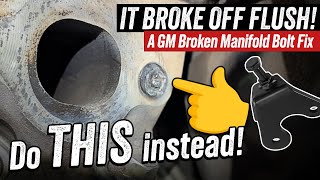
Typical fix: Replace the broken manifold bolts and the exhaust manifold gasket. If the bolt is broken flush with the cylinder head, the common professional method is to weld a nut onto the broken stud to back it out. Some owners opt for 🎬 Watch: Full repair guide for removing broken manifold bolts. a clamp-style repair kit as a less invasive, though potentially temporary, solution.
Est. part cost: $20-$100 - Failing Catalytic Converter (Bank 2) 🔴 High Probability Catalytic converters are wear items that degrade over time and with high mileage. Their internal materials (platinum, palladium, rhodium) lose effectiveness after many years of service. They can also be damaged by unresolved engine issues like misfires or burning oil.
How to confirm: After confirming no exhaust leaks or sensor issues, use a scan tool to watch O2 sensor data. If the 🎬 See how to test your catalytic converter with a scanner. Bank 2 downstream sensor (Sensor 2) voltage switches rapidly and mirrors the upstream sensor (Sensor 1), the converter is bad. Alternatively, an infrared thermometer should show the converter's outlet temperature is at least 100°F hotter than the inlet; if not, it's not working.
Typical fix: Replace the Bank 2 catalytic converter. This is often a single assembly with the Y-pipe. 🎬 Watch: Step-by-step walkthrough for replacing the catalytic converter assembly.
Est. part cost: $400-$1200 - Faulty Oxygen Sensor (Bank 2, Downstream) 🟡 Medium Probability Oxygen sensors are exposed to extreme heat and contaminants and have a finite lifespan. They can become 'lazy' or biased, sending incorrect data to the ECM. Wiring can also be damaged from heat and vibration.
How to confirm: Use a scan tool to graph the sensor's voltage. A healthy downstream sensor should show a relatively stable voltage (typically 0.6-0.8V) when the engine is warm and at a steady cruise. If it's stuck low, high, or not responding, it's likely bad. A good diagnostic trick is to swap the downstream sensors from Bank 1 and Bank 2. If the code changes to P0420, the sensor is confirmed to be the problem. Wiggle the wiring harness while watching the live data; any jumps or dropouts indicate a wiring fault.
Typical fix: Replace the Bank 2, Sensor 2 oxygen sensor. A common OEM part number is ACDelco 213-4229.
Est. part cost: $40-$90
Rare But Worth Checking
- Engine Misfires or Fuel System Issues: If you have other codes like P030x (misfire) or P017x (fuel trim), these must be fixed first. An engine running rich or misfiring can dump raw fuel into the exhaust, which rapidly overheats and destroys the catalytic converter's internal structure.
- Poorly Sealing Air Filter Housing: A GM TSB for later models (TSB #16-NA-111) notes that a bad seal on the air filter box can allow dirt and sand to be ingested, damaging O2 sensors and clogging the converter. While for a newer generation, it's worth checking if the truck is operated in very dusty environments.
- Internal Engine Problems: Coolant or oil leaking into the combustion chamber can contaminate and 'poison' the catalytic converter, leading to premature failure. This is known as converter poisoning.
Diagnosis Steps
- Check for other DTCs. Fix any misfire (P030x), fuel trim (P017x), or other engine performance codes before addressing P0430.
- Inspect for Exhaust Leaks. This is the most critical first step. Start the engine cold and listen for a ticking noise from the passenger side of the engine. Visually inspect the exhaust manifold for broken bolts or black soot marks. Confirm with a smoke test or by spraying soapy water on the manifold while blowing air into the tailpipe.
- Analyze Oxygen Sensor Data. Use a scan tool to graph the voltage of all four O2 sensors. At a steady 2,500 RPM, the upstream sensors (Bank 1 Sensor 1, Bank 2 Sensor 1) should fluctuate rapidly between ~0.1V and ~0.9V. The downstream sensors (Bank 1 Sensor 2, Bank 2 Sensor 2) should hold a relatively steady, high voltage (~0.6-0.8V). If Bank 2 Sensor 2 is fluctuating just like Bank 2 Sensor 1, and you've ruled out exhaust leaks, the converter has failed.
- Test the Oxygen Sensor and Wiring. If the sensor's readings are erratic, stuck, or slow to respond, it may be the sensor itself. Inspect its wiring and connector for melting, corrosion, or damage. Wiggle the harness with the engine running to see if the live data on a scan tool jumps, indicating a bad connection.
- Check Converter Temperature. Use an infrared temperature gun to measure the pipe temperature just before and just after the catalytic converter when the engine is fully warm. The outlet should be at least 100°F hotter than the inlet. If it's not, the catalyst is not chemically active.
- Inspect for a Clogged Converter. If the truck has low power, you can perform a backpressure test. A crude method is to temporarily loosen the exhaust pipe before the converter to see if power is restored; this indicates a physical blockage.
Parts You'll Likely Need
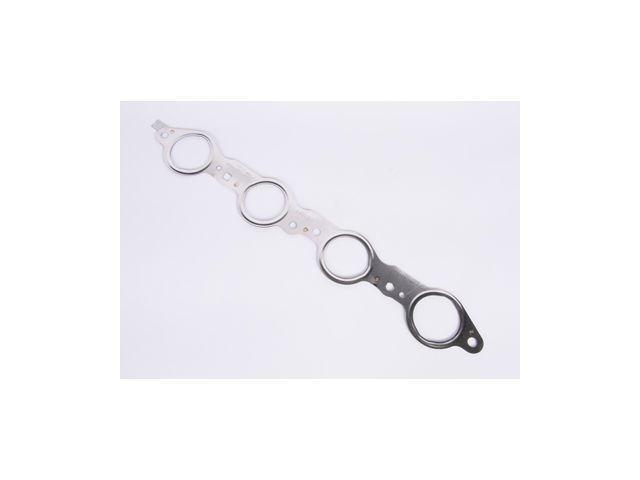
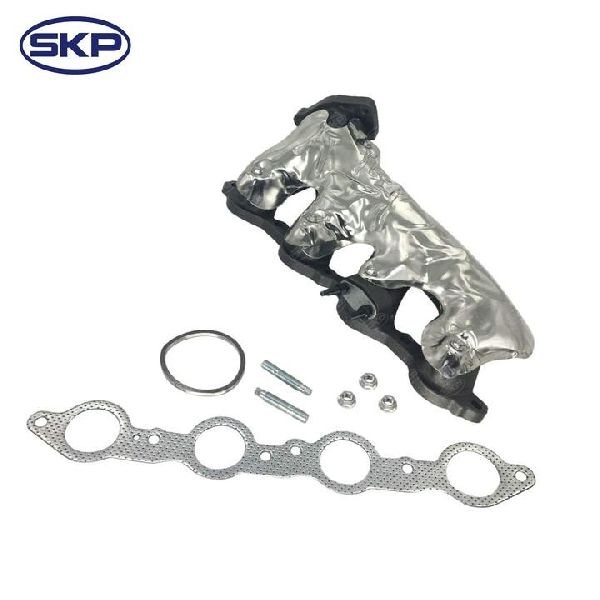
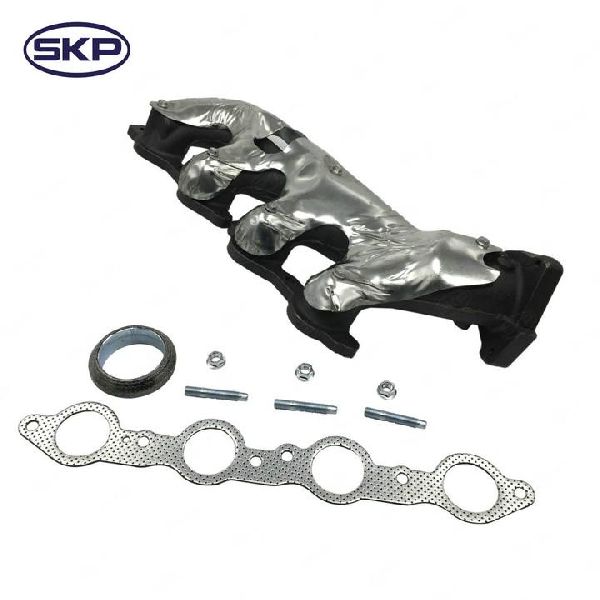
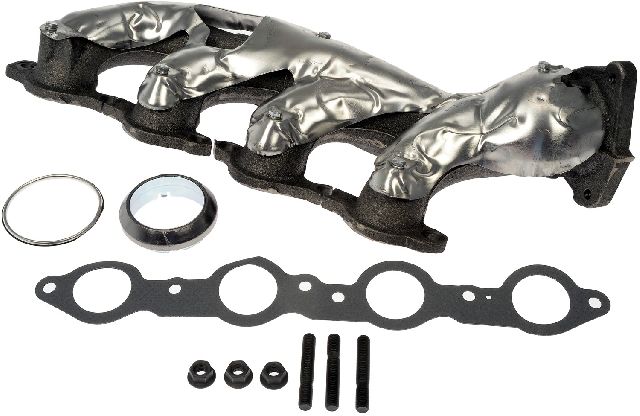
- Exhaust Manifold Bolt Kit & Gasket — A very common cause of a false P0430 code on these trucks is a leak from broken manifold bolts. It is highly recommended to fix this first.
Trusted brands: Dorman (e.g., 03415B), Fel-Pro (e.g., MS 98016 T), ACDelco
OEM price range: $40-$80
Aftermarket price range: $20-$50 - Bank 2 Catalytic Converter Assembly
(OEM #ACDelco 19420277)— This is the most common direct cause for the code if exhaust leaks and sensor issues are ruled out. The internal catalyst material has degraded.
Trusted brands: Walker, MagnaFlow, AP Exhaust, ACDelco
OEM price range: $800-$1500
Aftermarket price range: $400-$800
Related Codes That Often Appear With This One
- P0420 — This is the identical code but for Bank 1 (driver's side). It's common for both converters to fail around the same time due to age and mileage. It can also appear with P0430 if there are exhaust leaks on both sides.
- P0300-P0308 — These are misfire codes (P0300 for random, P0301-P0308 for specific cylinders). A persistent misfire is a catalyst killer and must be the primary repair focus to prevent repeat failure of a new converter.
Technical Service Bulletins (TSBs) & Recalls
- Notes that on new or low-mileage vehicles (or after a converter replacement), the P0420/P0430 diagnostic is disabled for the first hour of engine run time to allow for catalyst break-in. If power was lost, this diagnostic might run prematurely and set a false code. A specific drive cycle is recommended to complete the break-in if this occurs.
- Applies to a later generation (2014+) but is relevant context. It describes how a poorly sealing air filter housing can allow debris to enter, damaging O2 sensors and clogging the catalytic converter, leading to P0420/P0430 codes.
Platform-Specific Known Issues
- Broken Exhaust Manifold Bolts: This is the single most important vehicle-specific issue. Owners on forums like Chevroletforum.com and Reddit consistently report a cold-start 'tick' that disappears when warm, followed by a P0420 or P0430 code. The repair often involves difficult extraction of the broken bolt, with welding a nut to the remaining stud being the preferred professional method.
- Forum Discussion on Repair Costs: A Reddit thread in r/Silverado discussed a repair estimate of $850 for a single broken exhaust manifold bolt and gasket replacement, highlighting the labor-intensive nature of the fix. Another owner on a forum reported a shop quote of $100-$200, but this can vary greatly depending on the difficulty of extraction.
Mechanic-Grade Diagnostic Values
- Downstream O2 Sensor (Bank 2, Sensor 2) Voltage — expected: Relatively stable voltage between 0.4V and 0.6V at a steady RPM when warm.. Failure: Voltage rapidly fluctuates, mirroring the upstream sensor, or is stuck near 0V or 1V.
- O2 Sensor Heater Circuit Resistance — expected: Between 3 and 25 ohms when the sensor is cold. A typical good reading is 4-6 ohms.. Failure: An open circuit (infinite resistance) or a short circuit (near zero resistance).
- Mode $06 Catalyst Test Bank 2 — expected: Test value should be above the minimum threshold specified by the scan tool.. Failure: A test value below the specified minimum limit indicates a failing test for the catalyst monitor.
Hidden / Shadow Codes Worth Checking
- Mode $06, TID $05/$06, CID $0C/$60: These are not DTCs but Test IDs (TID) and Component IDs (CID) within Mode $06 data. They represent the results of the non-continuous catalyst efficiency monitor for Bank 2. A value below the minimum threshold indicates the test failed, which is what ultimately triggers the P0430 code. (see via A professional scan tool capable of displaying Mode $06 data.)
Scan Tool Commands That Help
- GM Tech 2: Service Bay Test (for EVAP) — While primarily for the EVAP system, running the Service Bay Test can also force the catalyst monitor to run and complete its diagnostic cycle more quickly after a repair or clearing codes. This helps verify if the P0430 fix was successful without extensive driving.
Wiring & Ground Locations
- G102 — On the left rear of the engine (GMT800) or front of the passenger side cylinder head (GMT900).. This ground is for the ignition coil pack. A poor ground here can cause weak spark, leading to incomplete combustion and misfires that can damage the catalytic converter over time.
- G103 / G104 — On the rear of the cylinder heads (driver and passenger side, respectively). They are often small wires bolted to the back of the head.. These are primary sensor and PCM grounds. Corrosion or looseness at these points can introduce electrical noise and voltage offsets, causing erratic O2 sensor readings and potentially triggering a false P0430 code.
- Bank 2 Sensor 2 Connector — 4-Way Metri-Pack 150 series connector, typically black (BK), located on the passenger side exhaust pipe after the catalytic converter.. Pin D (Pink wire) should have Ignition 1 Voltage. Pins A (Tan/White) and B (Purple/White) are the high and low signal wires back to the ECM. Checking for voltage and signal integrity at these pins is crucial for diagnosing a faulty sensor versus a wiring issue.
Real Owner Repair Stories
- Reddit user in r/MechanicAdvice (2007 Silverado 1500, 140k miles) — Initially had a P0420 code with a known severe exhaust leak on the driver's side and poor MPG.
❌ Tried (didn't work) The owner assumed the code was only from the leak.
✅ What actually fixed it After fixing the driver's side exhaust manifold leak (which required replacing the manifold due to a broken stud), the truck immediately threw both P0420 and P0430 codes. This indicates that the rich condition caused by the original leak likely damaged both catalytic converters over time. The next step was replacing the Y-pipe with integrated converters.
"I Checked Everything" — The Actual Cause
- In some cases, a smoke test may not reveal a bad engine ground (like G103 or G104). A faulty ground can cause incorrect O2 sensor readings, mimicking a catalyst efficiency problem. GM issued TSB PIP5232C for other models describing this exact scenario, where electrical issues, not leaks, were the root cause.
OEM Part Supersession History
25811714→19420277— Part number consolidation and potential design updates over the vehicle's service life.
Heads up: Part number 19420277 also replaces 23268768, 23405521, 84053221, and 84053222. Always verify fitment with VIN as there are variations based on cab and bed configuration.
Model Year Variations Within This Range
- 2004-2007 'Classic' (GMT800): These trucks are part of the previous generation. While they share the V8 engines and the propensity for exhaust manifold leaks, their frames, wiring, and specific exhaust components (like the Y-pipe/converter assembly) are different from the newer GMT900 platform.
- 2007-2010 (GMT900): This is the newer body style, completely redesigned from the ground up. The catalytic converters were moved closer to the engine manifolds. The 6.0L engine is the LY6 (or L76), which uses a more advanced E38 ECM. While the P0430 code's meaning is the same, diagnostic paths and part numbers are specific to this platform.
Helpful Videos

We Have This Part in Stock


The information in this article is provided for general reference and educational purposes only. Vehicle specifications, procedures, and part compatibility can vary by production date, trim level, and region. Always consult your vehicle's factory service manual and verify part numbers before purchasing or performing repairs. Safety-critical components such as airbags, seat belts, and braking systems should be installed by a qualified professional.
- Chevrolet SILVERADO 2500:
- 🎬 Helpful Videos
- 🛍️ Shop This Part
- What's Unique About the 2004-2010 Chevrolet SILVERADO 2500
- Diagnostic Flowchart
- Symptoms You May Notice
- Most Likely Causes
- Rare But Worth Checking
- Diagnosis Steps
- Parts You'll Likely Need
- Related Codes That Often Appear With This One
- Technical Service Bulletins (TSBs) & Recalls
- Platform-Specific Known Issues
- Mechanic-Grade Diagnostic Values
- Hidden / Shadow Codes Worth Checking
- Scan Tool Commands That Help
- Wiring & Ground Locations
- Real Owner Repair Stories
- "I Checked Everything" — The Actual Cause
- OEM Part Supersession History
- Model Year Variations Within This Range
- 🎟️ Get 5% Off