

P0430 on 2014-2017 Chevrolet Silverado: Catalytic Converter and Other Causes
Code P0430 on a 2014-2017 Silverado means the Bank 2 (passenger side) catalytic converter's efficiency is low. While this often points to a failed converter, first check for exhaust leaks from broken manifold bolts and inspect the air filter box seal, as GM Technical Service Bulletin (TSB #16-NA-111) identifies a poor seal as a primary cause of sensor and converter damage. Also, consider a faulty downstream oxygen sensor before replacing the expensive converter.
- P0430 means the passenger side (Bank 2) catalytic converter is not working efficiently.
- Before replacing the expensive catalytic converter, thoroughly inspect for exhaust leaks, especially broken exhaust manifold bolts.
- On this specific Silverado, check the air filter box for a bad seal, as per GM TSB #16-NA-111.
- A faulty downstream (Bank 2, Sensor 2) oxygen sensor is a common and much cheaper potential fix.
- If other codes are present, especially for engine misfires (P030x), they must be fixed first to prevent damaging a new converter.
What's Unique About the 2014-2017 Chevrolet SILVERADO

For this generation of Silverado (K2XX) and its platform mates (Sierra, Tahoe, Yukon), General Motors issued a specific Technical Service Bulletin (TSB #16-NA-111). It warns that the air filter housing may not seal correctly, allowing abrasive debris like sand to bypass the filter. This debris can directly damage the oxygen sensor elements and physically block the catalytic converter's internal passages. This makes inspecting the 'clean' side of the airbox for dirt a critical and unique first step for this truck, potentially saving you from a costly and unnecessary catalytic converter replacement. Additionally, broken exhaust manifold bolts are extremely common, causing leaks that are a frequent root cause of a false P0430 code. Another TSB, #PIP3119P, notes that on some low-mileage vehicles, the P0420 and P0430 diagnostics are disabled for the first hour of engine operation to prevent false codes during the converter's break-in period.
Diagnostic Flowchart

Tap your situation to follow the diagnostic path that matches what you're seeing on this vehicle.
Symptoms You May Notice
- Check Engine Light is on
- Reduced engine power and acceleration
- Rotten egg or sulfur smell from the exhaust
- Vehicle may fail an emissions test
- Rough idle, especially when cold
- Audible 'ticking' or 'puffing' noise from the engine bay, which may quiet down as the engine warms up (indicates an exhaust leak)
- Immediately replacing the catalytic converter without first thoroughly checking for exhaust leaks, faulty O2 sensors, or the air filter seal issue mentioned in TSB #16-NA-111.
- Replacing the oxygen sensor with a cheap aftermarket brand, which may not function to OEM specifications and fail to resolve the code.
Most Likely Causes


- Failed Catalytic Converter (Bank 2) 🔴 High Probability Converters can fail from age or contamination from engine issues (like burning oil or coolant). A persistent engine misfire is a primary killer, as it sends raw fuel into the exhaust which overheats and melts the converter's internal structure.
How to confirm: A mechanic can use an infrared thermometer to check the inlet and outlet temperatures of the converter; a working converter should be significantly hotter at the outlet. Another method is to use a scan tool to observe that the downstream O2 sensor voltage is fluctuating rapidly, mimicking the upstream sensor, instead of holding steady.
Typical fix: Replace the Bank 2 catalytic converter. This is often part of a 'Y-pipe' assembly that may include the Bank 1 converter as well. It is critical to fix the root cause (misfire, leak, etc.) first.
Est. part cost: $400-$1200 - Faulty Downstream Oxygen Sensor (Bank 2, Sensor 2) 🟡 Medium Probability Oxygen sensors are wear items and can become slow, biased, or fail entirely, sending incorrect data to the ECM. Several owners have reported that replacing the downstream O2 sensor resolved the P0430 code, but it's often misdiagnosed. Using cheap aftermarket sensors can also fail to fix the issue.
How to confirm: Use a scan tool to monitor the live voltage data from the Bank 2 Sensor 2. It should show a relatively steady voltage around 0.7V-0.8V on a warm engine at steady RPM. If it's fluctuating rapidly like the upstream sensor, is stuck at a specific voltage, or shows no activity, the sensor is likely bad.
Typical fix: Replace the Bank 2, Sensor 2 (downstream) oxygen sensor. Use of an OEM/ACDelco sensor is highly recommended.
Est. part cost: $50-$150 - Exhaust System Leak 🟡 Medium Probability Exhaust manifold bolts on these V8 engines are notorious for breaking, especially the rearmost bolts closest to the firewall. This creates a leak that draws in outside air, which confuses the oxygen sensors and triggers the code long before the catalytic converter has actually failed.
How to confirm: Listen for a distinct ticking noise from the engine bay, especially when cold. Visually inspect the exhaust manifolds for broken bolt heads (the rear ones are hardest to see) and black soot trails indicating a leak.
Typical fix: Replace broken exhaust manifold bolts and gaskets. In many cases, a special aftermarket clamp bracket can be installed to seal the leak without having to extract the broken bolt.
Est. part cost: $20-$200 - Improperly Sealing Air Filter Housing ⚪ Low Probability As per TSB #16-NA-111, the air filter box may warp or have broken tabs, preventing a proper seal. This allows sand and fine dirt to be ingested by the engine, which then acts as an abrasive in the exhaust, damaging the delicate surfaces of the O2 sensors and clogging the fine passages of the catalytic converter.
How to confirm: Open the air filter housing and inspect for dirt/debris in the 'clean' side of the airbox and in the intake tube leading to the engine. Check that all tabs and fasteners on the housing cover are intact and that it sits flush.
Typical fix: Replace the air filter and clean the intake tube. If the air cleaner assembly is warped or damaged, it must be replaced to ensure a proper seal.
Est. part cost: $30-$250
Rare But Worth Checking
- Faulty Upstream Oxygen Sensor (Bank 2, Sensor 1): A failing upstream (air-fuel ratio) sensor can cause an incorrect air-fuel mixture, which can overwork and damage the catalytic converter over time, eventually leading to a P0430 code.
- Engine Misfires or Fuel System Issues: Unburnt fuel from a misfiring cylinder will enter the exhaust and destroy the catalytic converter. If you have other codes like P0300-P0308 (misfires) or P219B (fuel imbalance), you MUST address those first or you will ruin a new converter.
Diagnosis Steps
- Scan for other DTCs. If misfire codes (P030x), fuel trim codes (P017x), or other sensor codes are present, diagnose them first. A catalyst is the victim, not the cause.
- Inspect the air intake system per TSB #16-NA-111. Open the airbox. Look for any sand or dirt on the 'clean' side of the filter. Ensure the housing cover is not warped and all clips are functional.
- Inspect the exhaust system for leaks. Start the engine when cold and listen for a 'ticking' or 'puffing' sound from the passenger-side engine area. Visually check the exhaust manifold bolts (especially the rearmost one) for breakage and look for black soot trails around flanges.
- Analyze O2 sensor data with a scan tool. Warm up the engine to operating temperature. At a steady 2000 RPM, the Bank 2 Sensor 1 (upstream) voltage should fluctuate rapidly between ~0.1V and ~0.9V. The Bank 2 Sensor 2 (downstream) voltage should remain relatively stable and high, typically around 0.7V-0.8V. If the downstream sensor voltage mirrors the upstream, the converter is confirmed to be inefficient.
- Test the oxygen sensors. If the downstream sensor's readings are stuck, erratic, or flat-lined, it may be faulty. Consider swapping the Bank 1 and Bank 2 downstream sensors (if they are the same part number) to see if the code follows the sensor (e.g., a P0420 appears and P0430 is gone).
- Test the catalytic converter. If all other components check out, the converter is the likely culprit. An infrared temperature gun can confirm this; the outlet should be at least 100°F hotter than the inlet on a fully warmed-up, working converter. An inlet temp higher than the outlet confirms a dead converter.
- If the converter is confirmed bad, replace it. Be sure to address the root cause (e.g., misfire, airbox leak, exhaust leak) if one was found, or the new converter will fail prematurely.
Parts You'll Likely Need
- Catalytic Converter (Bank 2 or Y-Pipe Assembly)
(OEM #GM 84089793 (Example for 5.3L, Y-Pipe Assembly))— This is the most common direct cause for a confirmed P0430 code after other possibilities have been ruled out.
Trusted brands: Walker Exhaust, MagnaFlow, ACDelco (OEM)
OEM price range: $800-$1500
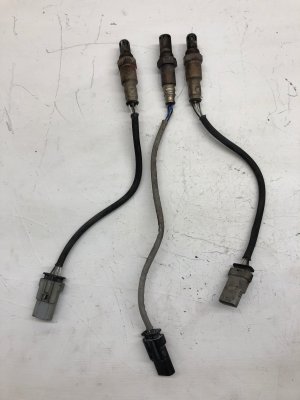
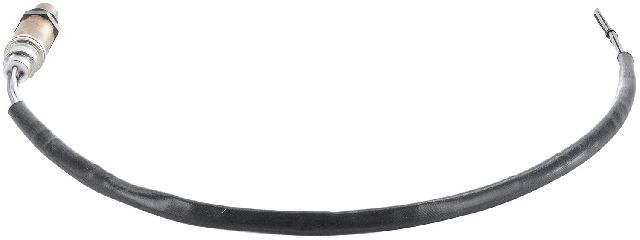
Aftermarket price range: $400-$900 - Oxygen Sensor (Bank 2, Sensor 2 - Downstream)
(OEM #ACDelco 12673325 (Example for 5.3L))— A faulty sensor can send incorrect data, falsely triggering the P0430 code. It's a common wear item and a frequent misdiagnosis.
Trusted brands: ACDelco (OEM), Denso, Bosch
OEM price range: $70-$150
Aftermarket price range: $40-$90
Related Codes That Often Appear With This One
- P0420 — This is the identical code but for Bank 1 (driver's side). If both appear, it strongly points to a common issue like a fuel system problem, a major exhaust leak, or the airbox seal issue affecting both banks.
- P0300-P0308 — These are misfire codes. An engine misfire is a root cause of catalytic converter failure, as it allows raw fuel to enter the exhaust and overheat the converter. These must be fixed first.
Technical Service Bulletins (TSBs) & Recalls
- TSB #16-NA-111: "Information on Malfunction Indicator Light (MIL) Illuminated, DTC P0420 and P0430 Set." This bulletin is critical for this platform. It states the cause may be "excessive sand and/or debris entering the air filter box and bypassing the seal of the air filter... causing damage to the HO2 sensor element... and the catalytic converter to become blocked with sand and debris particles." It explicitly tells technicians not to replace any parts until the air filter housing has been validated to be completely sealed.
- TSB #PIP3119P: Notes that on some low-mileage vehicles, the diagnostic tests for P0420 and P0430 are disabled for the first hour of engine operation to prevent false codes during the initial break-in period.
Platform-Specific Known Issues
- The Misdiagnosis Money Pit: A common story on forums involves owners or shops immediately replacing the catalytic converter, only for the P0430 code to return. A technician on YouTube shared a case of a 2014 Silverado where one shop replaced the converters, a second shop replaced the O2 sensors, and a third wanted to replace the injectors. The final diagnosis was that the aftermarket O2 sensors were of poor quality and not communicating correctly. Replacing them with OEM sensors finally fixed the issue, highlighting the importance of proper diagnosis and using quality parts.
- The 'Chevy Tick' and Manifold Bolt Clamps: The sound of an exhaust leak on these trucks, often a 'ticking' noise that's loudest on a cold start, is a very common symptom of a broken rear exhaust manifold bolt. Because replacing the bolt can be difficult (sometimes requiring drilling), a popular DIY fix discussed on forums and YouTube is an aftermarket exhaust manifold clamp or bracket. This device bolts to existing holes on the cylinder head and applies pressure to the manifold, resealing the gasket without needing to extract the broken bolt.
Mechanic-Grade Diagnostic Values
- Downstream O2 Sensor (B2S2) Voltage — expected: Relatively steady reading between 0.4V to 0.8V under stable operating conditions.. Failure: Voltage fluctuates rapidly, mimicking the upstream (B2S1) sensor's 0.1V - 0.9V oscillations.
- Mode $06 Catalyst Monitor Test (TID $81) — expected: The measured value from the scan tool should be below the maximum threshold set by the manufacturer.. Failure: If the measured value exceeds the maximum limit, it indicates the catalyst's oxygen storage capacity is degraded, confirming inefficiency.
- Low-Side Fuel Pressure (Key On, Engine Off) — expected: Approximately 55-62 psi.. Failure: Significantly lower pressure (e.g., 40-45 psi) may indicate a weak in-tank fuel pump, which can affect engine performance and indirectly lead to catalyst issues.
- High-Side Fuel Pressure (Direct Injection, at idle) — expected: Highly variable, but typically 500-700 psi at idle, rising with engine load.. Failure: Erratic readings or pressure that doesn't respond to load can indicate a failing high-pressure fuel pump (HPFP), potentially causing fuel trim issues that damage the converter.
Scan Tool Commands That Help
- GM GDS2: Catalyst System Test — This is a guided diagnostic function that forces the catalyst monitor to run under controlled conditions, providing a definitive pass/fail result without needing to complete a full drive cycle. It's used to confirm a failed converter before replacement.
- GM GDS2: O2 Sensor Heater Test — To verify the integrity of the oxygen sensor heater circuits. A failed heater can cause the sensor to respond slowly, affecting catalyst monitoring, though it usually sets its own specific heater circuit code.
- GM GDS2: Clear All DTCs — After a repair, this function is used to clear the P0430 code. The catalyst monitor will then need to run again via a drive cycle to confirm the fix.
Wiring & Ground Locations
- G103 / G107 — G103 is on the front of the passenger side cylinder head. G107 is on the rear of the driver's side cylinder head, near the firewall. These are primary engine-to-harness grounds.. A poor engine ground can cause erratic voltage signals from sensors, including the oxygen sensors. The ECM may misinterpret this noise as a sensor or component failure, potentially triggering a false P0430. Cleaning these grounds is a critical step in resolving persistent, hard-to-diagnose electrical issues.
- O2 Sensor Fuses (e.g., F46, F50) — Located in the main underhood fuse block on the driver's side of the engine bay.. These fuses power the heater circuits for the oxygen sensors. While a blown fuse typically sets a specific heater circuit code, an intermittent failure could cause slow sensor response, impacting the accuracy of the catalyst efficiency test.
- Bank 2 Sensor 2 Connector — The downstream O2 sensor is located on the passenger side exhaust pipe, just after the catalytic converter. The wiring harness runs up the firewall side of the engine.. The wiring and connector are exposed to significant heat and road debris. Physical damage, corrosion, or melting can cause intermittent signal dropouts or shorts, leading to a false P0430 code.
Real Owner Repair Stories
- YouTube user 'Automotive Diagnostic & Repair' (Vehicle exhibiting a P0430 code.) — Check Engine Light with P0430.
❌ Tried (didn't work) Initial diagnosis pointed towards a potentially bad catalytic converter.
✅ What actually fixed it A smoke test revealed a leak in the flex pipe section of the exhaust, located before the downstream O2 sensor. Repairing the flex pipe leak resolved the P0430 code without needing to replace the catalytic converter. - YouTube user 'Real Life Auto Repair' (Chevrolet Silverado with P0430.) — Check Engine Light was on, scan revealed P0430.
❌ Tried (didn't work) Visual inspection of wiring harness and connector appeared fine.
✅ What actually fixed it Live data showed intermittent dropouts from the Bank 2 Sensor 2. A multimeter test confirmed a lack of continuity within the sensor itself. Replacing the Bank 2, Sensor 2 (downstream) oxygen sensor and clearing the codes permanently fixed the issue.
Model Year Variations Within This Range
- 2016-2017: For 2016, an 8-speed automatic transmission (8L90) became available with the 5.3L V8 on LTZ and High Country trims, and was standard with the 6.2L V8. This replaced the previous 6-speed. While not directly related to the P0430 cause, different transmission software and shift points can subtly alter engine load and exhaust characteristics.
- 2014 vs 2018: While outside the primary range, it's notable that swapping engines between early (2014) and late (2018) K2XX trucks is complex. There are differences in the fuel rail sensors and wiring harnesses, even for the same L83 5.3L engine, which can cause codes if not properly accounted for.
Helpful Videos


Used OEM Parts in Stock

New Aftermarket Parts Available





The information in this article is provided for general reference and educational purposes only. Vehicle specifications, procedures, and part compatibility can vary by production date, trim level, and region. Always consult your vehicle's factory service manual and verify part numbers before purchasing or performing repairs. Safety-critical components such as airbags, seat belts, and braking systems should be installed by a qualified professional.
- Chevrolet SILVERADO:
- 🎬 Helpful Videos
- 🛍️ Shop This Part
- What's Unique About the 2014-2017 Chevrolet SILVERADO
- Diagnostic Flowchart
- Symptoms You May Notice
- Most Likely Causes
- Rare But Worth Checking
- Diagnosis Steps
- Parts You'll Likely Need
- Related Codes That Often Appear With This One
- Technical Service Bulletins (TSBs) & Recalls
- Platform-Specific Known Issues
- Mechanic-Grade Diagnostic Values
- Scan Tool Commands That Help
- Wiring & Ground Locations
- Real Owner Repair Stories
- Model Year Variations Within This Range
- 🎟️ Get 5% Off