

P0430 on 2009-2013 Chevrolet Silverado: Catalyst Efficiency Causes and Fixes
P0430 on a 2009-2013 Silverado most often means the driver's side (Bank 2) catalytic converter is failing. Before replacing it, check for broken exhaust manifold bolts, as leaks are a very common cause. Also, consider if Active Fuel Management (AFM) oil consumption has damaged the converter. A new converter can cost $400-$900+.
- P0430 means the driver's side catalytic converter is not working efficiently.
- Before buying any parts, thoroughly check for exhaust leaks, especially broken bolts on the driver's side exhaust manifold.
- The most likely part to have failed is the catalytic converter itself, often due to high mileage or oil contamination from the engine's AFM system.
- Do not replace the O2 sensor as a first step; it is more likely a symptom or a misdiagnosis than the root cause.
- If you replace the converter, be aware that it may fail again if an underlying engine issue like oil consumption or misfires is not resolved.
What's Unique About the 2009-2013 Chevrolet SILVERADO

On this generation of Silverado (GMT900), P0430 is frequently caused by two specific, well-documented issues. First, the exhaust manifold bolts, particularly the rearmost ones near the firewall or the front-most on the passenger side, are known to break due to thermal stress. This causes an exhaust leak that draws in fresh air, fooling the oxygen sensors and triggering the code. Second, V8 engines equipped with Active Fuel Management (AFM) can consume excess oil due to issues with piston rings and the PCV system, which contaminates and eventually destroys the catalytic converters over time. A GM Technical Service Bulletin (PIP3119N) also notes that on new or low-mileage vehicles, the P0420/P0430 codes can be disabled for the first hour of engine run time to allow for a catalytic converter break-in period.
Diagnostic Flowchart
Tap your situation to follow the diagnostic path that matches what you're seeing on this vehicle.
Symptoms You May Notice
- Check Engine Light is on
- Vehicle will fail an emissions test
- Reduced engine power or sluggish acceleration, especially if the converter is clogged
- A sulfur or "rotten egg" smell from the exhaust.
- A distinct ticking or hissing sound from the engine bay, especially on a cold start, which often goes away as the engine warms up and the metal expands. This is a classic sign of a broken exhaust manifold bolt.
- Replacing the oxygen sensors when the actual problem is a bad catalytic converter or an exhaust leak. The O2 sensor is often doing its job by reporting the inefficiency.
- Replacing the catalytic converter without fixing the underlying problem (like an engine misfire, AFM oil consumption, or a coolant leak) that caused it to fail in the first place. The new converter will likely fail again quickly.
Most Likely Causes

- Failing Catalytic Converter (Bank 2) 🔴 High Probability Often a secondary failure caused by oil consumption from AFM systems or persistent engine misfires fouling the catalyst material. High mileage also contributes to natural wear. The catalyst substrate can also be damaged by physical impact or road debris.
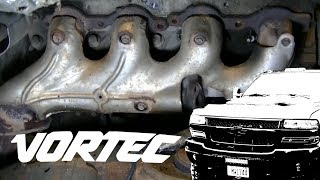
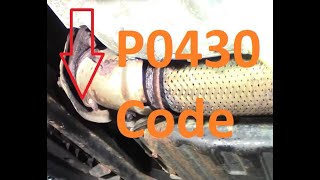
How to confirm: Use a scan tool to watch O2 sensor data; if the downstream sensor voltage graph mimics the upstream sensor, the cat is bad. 🎬 Watch: A deep dive into P0430 causes and diagnostic tests. Alternatively, use an infrared thermometer; the outlet of the converter should be significantly hotter (at least 100°F) than the inlet on a fully warmed engine.
Typical fix: Replace the Bank 2 (driver's side) catalytic converter assembly. It is critical to address any root causes like misfires or oil consumption first to prevent destroying the new converter.
Est. part cost: $400-$900 - Exhaust Leak (especially at Manifold) 🔴 High Probability The exhaust manifold bolts on GM trucks of this era are notorious for breaking from thermal cycles. The front bolt on the passenger side and the rear bolt on the driver's side are the most common failures. This creates a leak that allows oxygen into the exhaust, skewing O2 sensor readings and falsely triggering a P0430/P0420 code.
How to confirm: Visually inspect the exhaust manifolds for broken bolt heads or black soot trails indicating a leak. Listen for a distinct ticking or hissing noise when the engine is cold that may disappear as it warms up. A smoke machine can definitively identify small leaks.
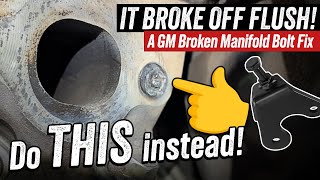
Typical fix: Replace the broken manifold bolts and the exhaust manifold gasket. This can be a difficult job due to the location of the bolts, often requiring drilling and extracting the broken stud. In some cases, an aftermarket clamp bracket can be used as a quicker fix without removing the bolt. 🎬 See how to use an aftermarket clamp for broken bolts.
Est. part cost: $20-$80 - Faulty Downstream Oxygen Sensor (Bank 2) 🟡 Medium Probability
How to confirm: After confirming no exhaust leaks, test the sensor's operation with a scan tool. A healthy downstream sensor should show a steady, relatively flat voltage (e.g., 0.6-0.8V) when the converter is hot. If it's switching rapidly like the upstream sensor or is stuck at a low voltage, it may be faulty. However, mechanics often warn against replacing O2 sensors for this code, as the sensor is usually reporting the problem correctly.
Typical fix: Replace the Bank 2, Sensor 2 (downstream) oxygen sensor. Use penetrating oil and a proper O2 sensor socket.
Est. part cost: $50-$120 - Engine Misfires or Rich/Lean Fuel Condition ⚪ Low Probability Ignition system wear or fuel delivery problems can cause unburnt fuel to enter the exhaust, which quickly overheats and damages the catalytic converter. AFM lifter failure can also cause a persistent misfire on a single cylinder.
How to confirm: Check for other diagnostic trouble codes, such as P0300-P0308 (misfires) or P0171/P0174 (lean) and P0172/P0175 (rich). Address these codes first.
Typical fix: Diagnose and repair the root cause of the other codes first (e.g., replace spark plugs, ignition coils, fuel injectors, or address AFM lifter issues) before addressing the P0430.
Est. part cost: $50-$500
Rare But Worth Checking
- Contaminated Fuel: Using leaded fuel (if available) or fuel with improper additives can poison the catalytic converter.
- Internal Engine Coolant Leak: A leaking head gasket can allow coolant into the exhaust, which will contaminate and destroy the catalytic converter.
Diagnosis Steps
- Scan for any other trouble codes. If misfire (P030x) or fuel trim (P017x) codes are present, diagnose and fix them first, as they are the root cause.
- Perform a thorough visual inspection of the exhaust system. Pay extremely close attention to the Bank 2 (driver's side) exhaust manifold for signs of leaks, such as black soot trails or broken/missing bolt heads, especially the rearmost bolt. Listen for a cold-start tick.
- If an obvious leak is not visible, consider using a smoke machine to pressurize the exhaust system and reveal any small pinhole leaks that could be drawing in air.
- If no leaks are found, use a scan tool to graph the voltage of the upstream (Sensor 1) and downstream (Sensor 2) oxygen sensors for Bank 2.
- With the engine warm and at a steady 2,500 RPM, observe the graphs. The upstream sensor should switch rapidly between ~0.1V and ~0.9V. A healthy converter will show a slow, relatively steady voltage from the downstream sensor (typically >0.6V). If the downstream sensor graph mimics the upstream sensor's rapid switching, the converter has failed.
- As a secondary check, use an infrared temperature gun to measure the temperature of the pipe going into and out of the catalytic converter. The outlet should be at least 100°F hotter than the inlet.
- If the converter tests good but the code persists, test the downstream O2 sensor and its wiring for faults, but be aware that unnecessary sensor replacement is a common misdiagnosis.
Parts You'll Likely Need
- Catalytic Converter (Bank 2, Driver's Side) — This is the most common part to fail and directly cause the P0430 code, especially on higher mileage vehicles or those with oil consumption issues.
Trusted brands: ACDelco, Walker Exhaust, MagnaFlow 🎬 Watch: Step-by-step walkthrough for replacing your catalytic converter.
OEM price range: $700-$1200
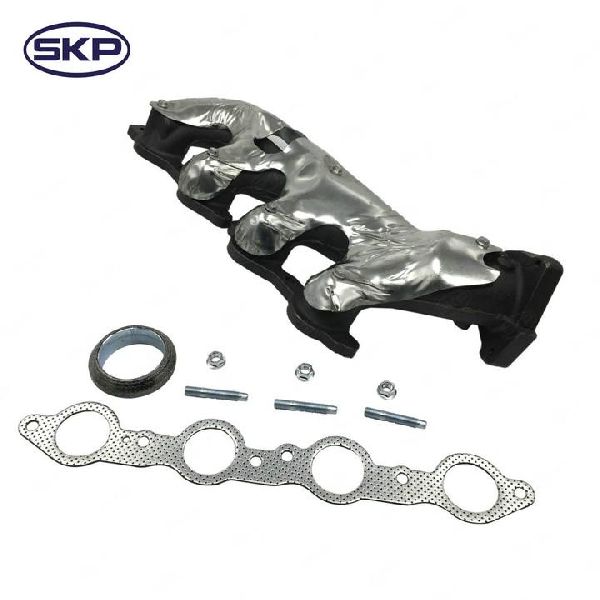
Aftermarket price range: $400-$900 - Exhaust Manifold Bolt and Gasket Kit
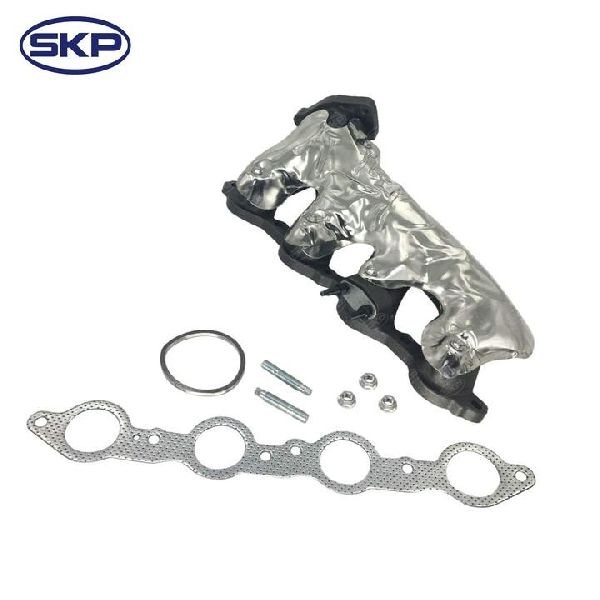
(OEM #Gasket: ACDelco 12617944; Bolt/Stud Kit: Dorman 03414B)— Fixes the very common issue of exhaust leaks at the manifold flange, which is a frequent root cause of P0430 on these trucks. The Dorman kit is a common aftermarket solution.
Trusted brands: ACDelco, Fel-Pro, Dorman
OEM price range: $40-$100
Aftermarket price range: $20-$60 - Downstream Oxygen Sensor (Bank 2, Sensor 2)
(OEM #ACDelco 213-4229 (cross-references to 12609457, 12611165))— May be replaced if it is determined to be faulty after ruling out exhaust leaks and converter failure, but is often replaced unnecessarily.
Trusted brands: ACDelco, Denso, Bosch
OEM price range: $80-$150
Aftermarket price range: $50-$120
Related Codes That Often Appear With This One
- P0420 — This is the identical code for Bank 1 (passenger side). If the root cause is systemic (like oil consumption, high mileage, or warped manifolds), both converters may fail around the same time.
- P0300-P0308 — These are cylinder misfire codes. A misfire allows raw fuel to enter the exhaust, which superheats and destroys the catalytic converter, directly causing the P0430 code.
- P0521 — This is an Engine Oil Pressure Sensor code. It can be related to the excessive oil consumption from the AFM system that also leads to the catalytic converter failure.
Technical Service Bulletins (TSBs) & Recalls
- PIP3119N: Notes that on some vehicles, the diagnostic for codes P0420 and P0430 is disabled for the first hour of operation to prevent false codes from being set at low mileage.
- 10-06-01-008I (and previous versions): Details the diagnosis and repair for excessive engine oil consumption related to the Active Fuel Management (AFM) system. Fixes include installing an AFM oil deflector and potentially an updated valve cover.
Platform-Specific Known Issues

- Active Fuel Management (AFM) Oil Consumption: The 5.3L and other V8 engines in this generation can consume significant oil due to issues with piston rings and the PCV system. This oil burns in the combustion chamber and sends contaminants down the exhaust, which 'poisons' the catalyst material, reducing its efficiency and eventually causing a P0430 or P0420 code. It is a primary root cause for premature converter failure on these trucks.
Mechanic-Grade Diagnostic Values

- Downstream O2 Sensor (Bank 2, Sensor 2) Voltage — expected: A steady reading between 0.65V and 0.75V on a healthy, warm converter at steady RPM. Some sources suggest a normal range can be as wide as 0.4V to 0.8V.. Failure: Voltage fluctuates rapidly between approximately 0.1V and 0.9V, mimicking the upstream sensor's pattern.
- Short-Term Fuel Trim (STFT - Bank 2) — expected: Should be within +/- 5% at idle on a healthy engine.. Failure: Consistently high positive or negative values can indicate underlying fuel mixture problems (vacuum leaks, injector issues) that can damage the converter.
- O2 Sensor Heater Resistance — expected: While specific OEM values are not consistently published, a typical 4-wire O2 sensor heater circuit will have a resistance between 2 and 30 ohms. A reading of infinity (OL) indicates an open circuit, while zero indicates a short.. Failure: A reading outside the typical range, especially an open circuit (OL), means the sensor cannot heat up properly to provide accurate readings, though this usually sets a specific heater circuit code.
Scan Tool Commands That Help

- GM GDS2/Tech2 or equivalent professional scan tool: Catalyst System Test — This is a guided diagnostic function that runs the engine at specific RPMs and loads to automatically evaluate the switching ratio of the upstream and downstream O2 sensors, providing a Pass/Fail result for catalyst efficiency. It is the most definitive, non-invasive test.
- Any OBD-II Scanner: Clear/Reset DTCs — Per GM TSB PIP3119P, if a P0430 code appears on a very low mileage vehicle or immediately after a converter replacement, the code should be cleared. A specific drive cycle must then be performed to allow the new converter to 'break-in' before the diagnostic will run accurately.
Wiring & Ground Locations
- Bank 2 Sensor 2 (Downstream) O2 Sensor — Under the vehicle on the driver's side, located in the exhaust pipe just after the catalytic converter.. This sensor provides the direct measurement of post-converter oxygen levels. Its signal, and the integrity of its wiring back to the ECM, is what the computer uses to determine if the converter is working. Damaged wiring can mimic a failed converter.
- Engine to Chassis Ground Straps — There are multiple grounds. Key locations include a strap from the back of the driver's side cylinder head to the firewall and another from the engine block to the frame on the passenger side.. GM TSB PIP5232C identifies poor engine ground connections as a potential cause of premature catalytic converter failure on some GM trucks. A bad ground can cause electrical issues that affect sensor readings and overall engine performance, indirectly leading to conditions that damage the converter.
Real Owner Repair Stories
- Garage Gurus (YouTube) (2012 Chevrolet Traverse (similar GM platform and diagnostics)) — Check Engine Light with code P0430.
❌ Tried (didn't work) Initial diagnosis pointed towards a bad catalytic converter.
✅ What actually fixed it A smoke test revealed a small pinhole leak in the exhaust flex pipe, downstream of the Bank 2 O2 sensor. The leak created a venturi effect, pulling fresh air into the exhaust and fooling the sensor. Replacing the Y-pipe assembly, which included the flex pipe, resolved the code without needing to replace the catalytic converter. - 2CarPros Forum User (Vehicle make/model not specified, but GM V6) — P0430 code, rough running, exhaust fumes.
❌ Tried (didn't work) Scanner only showed P0430 after previously showing a cylinder 5 misfire.
✅ What actually fixed it The user discovered a large hole in the Bank 2 (driver's side) exhaust manifold. The fix required replacing the exhaust manifold. The exhaust leak was the direct cause of the P0430 code, not the catalytic converter itself.
When the Usual Fixes Don't Work
- While the most common causes are the catalytic converter or manifold leaks, a significant number of documented cases show that small, hard-to-find exhaust leaks elsewhere are the true culprit. In one case involving a similar GM vehicle, a smoke test revealed a pinhole leak in the flex pipe was pulling in air and causing a false P0430. The catalytic converter was functioning perfectly. This highlights the critical need to perform a comprehensive exhaust smoke test before condemning an expensive converter.
OEM Part Supersession History
12609457→ACDelco 213-4229— Standard part number consolidation and updates by GM.
Heads up: ACDelco 213-4229 is the current GM Genuine Parts number for the downstream sensor for many 2009-2013 Silverado models, but always verify fitment with VIN.
Helpful Videos

We Have This Part in Stock




The information in this article is provided for general reference and educational purposes only. Vehicle specifications, procedures, and part compatibility can vary by production date, trim level, and region. Always consult your vehicle's factory service manual and verify part numbers before purchasing or performing repairs. Safety-critical components such as airbags, seat belts, and braking systems should be installed by a qualified professional.
- Chevrolet SILVERADO:
- 🎬 Helpful Videos
- 🛍️ Shop This Part
- What's Unique About the 2009-2013 Chevrolet SILVERADO
- Diagnostic Flowchart
- Symptoms You May Notice
- Most Likely Causes
- Rare But Worth Checking
- Diagnosis Steps
- Parts You'll Likely Need
- Related Codes That Often Appear With This One
- Technical Service Bulletins (TSBs) & Recalls
- Platform-Specific Known Issues
- Mechanic-Grade Diagnostic Values
- Scan Tool Commands That Help
- Wiring & Ground Locations
- Real Owner Repair Stories
- When the Usual Fixes Don't Work
- OEM Part Supersession History
- 🎟️ Get 5% Off