

P0430 on 2004-2008 Chevrolet Silverado: Catalyst Efficiency Causes and Fixes
P0430 on a Silverado usually means the passenger-side catalytic converter is failing. Before replacing it, check for broken exhaust manifold bolts (a very common issue causing leaks) and, on 2007-2008 models, check for excessive oil consumption from the Active Fuel Management (AFM) system, which is a known root cause of converter failure.
- P0430 means the passenger-side catalytic converter is inefficient, but the converter itself may not be the only problem.
- Before buying any parts, thoroughly inspect the passenger-side exhaust manifold for broken bolts and listen for a ticking exhaust leak.
- If you have a 2007-2008 model, you must determine if your engine is consuming excessive oil before replacing the catalytic converter.
- Do not replace oxygen sensors unless diagnostic testing proves they are faulty; they are often misdiagnosed for this code.
What's Unique About the 2004-2008 Chevrolet SILVERADO

On these Silverado models, P0430 is frequently caused by two major platform-specific issues. First, broken exhaust manifold bolts are extremely common, creating an exhaust leak that allows oxygen into the exhaust, tricking the sensors into setting a false code. Second, the 2007-2008 GMT900 models with the 5.3L or 6.0L V8 feature Active Fuel Management (AFM), which is known to cause excessive oil consumption that can poison and destroy the catalytic converters. GM issued Technical Service Bulletin #10-06-01-008H to address this oil consumption issue. Addressing these potential root causes is critical before replacing an expensive converter.
Diagnostic Flowchart

Tap your situation to follow the diagnostic path that matches what you're seeing on this vehicle.
Generation note: This range covers two Silverado generations. The 2004-2006 and 2007 "Classic" models are the GMT800 platform. The 2007 (new body style) and 2008 models are the GMT900 platform. The most significant difference is that GMT900 V8s often have Active Fuel Management (AFM), a known cause of oil consumption that leads to this code. The exhaust manifold bolt breakage issue is common across both generations.
Symptoms You May Notice

- Check Engine Light is on
- A ticking noise from the engine bay, especially when cold, which points to an exhaust manifold leak
- Reduced engine power and sluggish acceleration if the converter is clogged
- Vehicle will fail an emissions test
- A sulfur or "rotten egg" smell from the exhaust
- Replacing the oxygen sensors when the true cause is an exhaust manifold leak or a failed catalytic converter.
- Replacing the catalytic converter without first fixing an underlying problem like an exhaust leak, engine misfire, or excessive oil consumption, which will cause the new converter to fail again.
Most Likely Causes

- Failed Catalytic Converter (Bank 2) 🔴 High Probability Converters fail from normal aging over 100,000+ miles. However, failure is often accelerated by underlying issues like oil consumption on AFM engines (2007-2008) or unaddressed engine misfires that send raw fuel into the exhaust, overheating the catalyst.
How to confirm: After ruling out exhaust leaks and O2 sensor issues, use a scan tool to watch O2 sensor data. If the downstream sensor (Bank 2, Sensor 2) reading fluctuates rapidly like the upstream sensor, the converter is not working. An infrared thermometer should also show the converter outlet is significantly hotter (at least 50-100°F) than the inlet on a fully warmed-up engine.
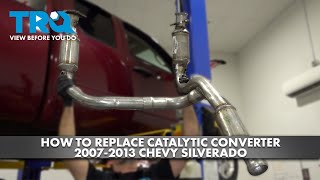
Typical fix: Replace the Bank 2 catalytic converter assembly. 🎬 Watch this step-by-step guide to replacing your catalytic converter. It is critical to fix the root cause (e.g., oil consumption, misfires) first, or the new converter will fail prematurely.
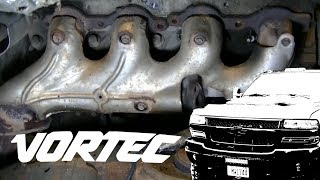
Est. part cost: $300-$900 - Exhaust Leak (Broken Manifold Bolts) 🔴 High Probability The steel exhaust manifold bolts frequently break where they thread into the aluminum cylinder heads due to thermal expansion and contraction. The rear-most and front-most bolts are the most common to fail.
How to confirm: Listen for a distinct ticking sound from the engine bay that may quiet down as the engine warms up. Visually inspect the exhaust manifold on the passenger side for bolt heads that are snapped off. You may also see black soot trails around the leak.
Typical fix: The broken bolt must be extracted and replaced, along with a new manifold gasket. This can be a difficult DIY job. An alternative is using a Dorman Exhaust Manifold Repair Clamp (e.g., part #917-107) which brackets onto the head and holds the manifold tight, avoiding bolt extraction.
Est. part cost: $20-$100 - Excessive Oil Consumption (2007-2008 AFM Engines) 🟡 Medium Probability The Active Fuel Management (AFM) system on 5.3L and 6.0L V8s can have issues with piston rings or the PCV system, leading to oil being burned. This oil contaminates the catalytic converter, coating the catalyst materials and preventing them from working. GM TSB #10-06-01-008H addresses this.
How to confirm: Monitor engine oil levels closely. If you are adding more than one quart of oil every 2,000-3,000 miles, you likely have an oil consumption issue that is the root cause of the P0430 code.
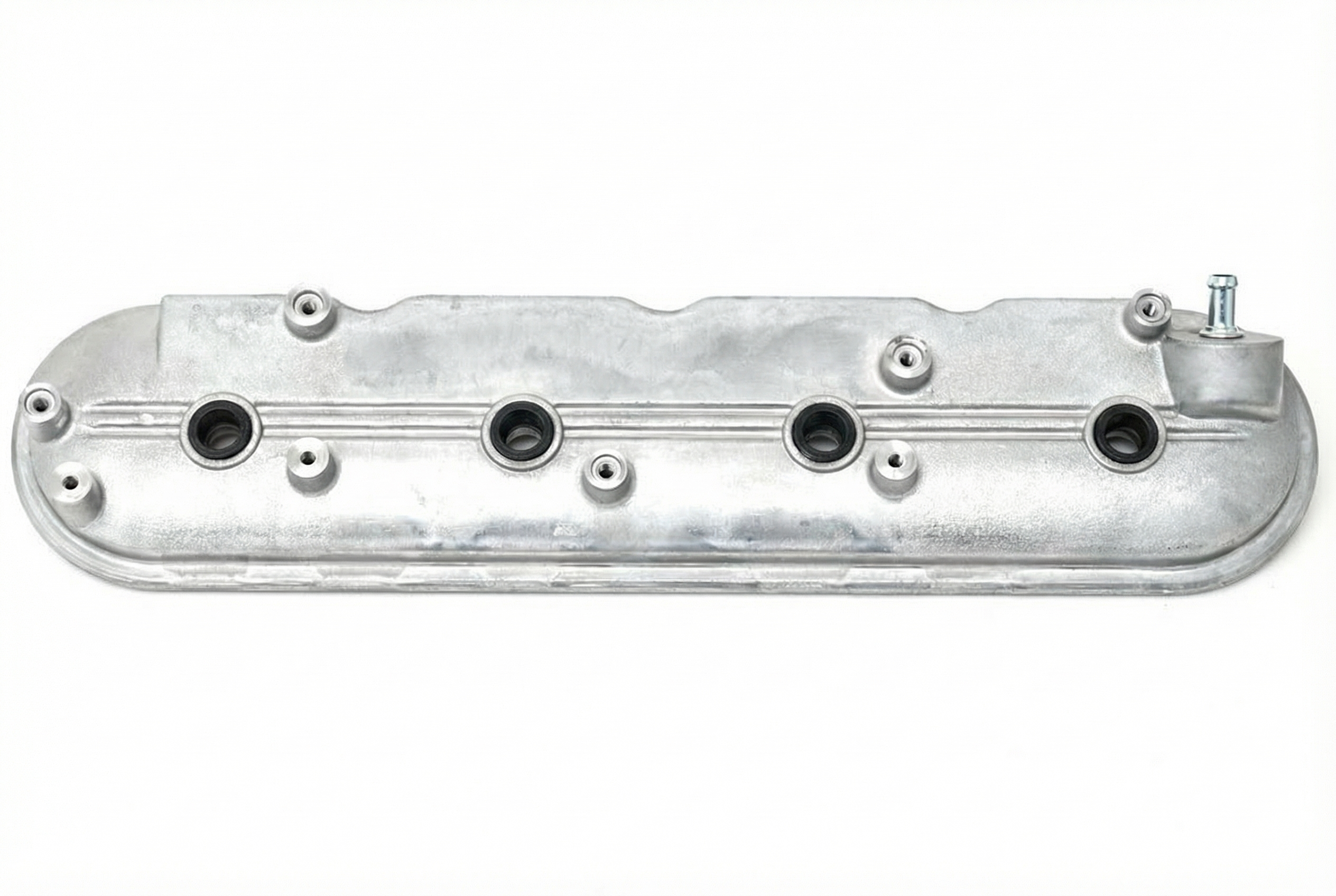
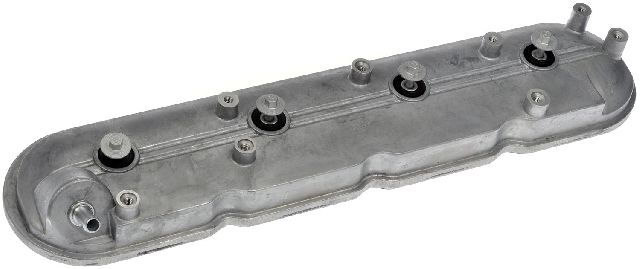
Typical fix: This is a major engine repair. Per TSB #10-06-01-008H, fixes can include installing an updated left-side valve cover with a redesigned PCV baffle (ACDelco #12642655), cleaning pistons, and in severe cases, replacing pistons and rings. This must be fixed before replacing the catalytic converter.
Est. part cost: $100-$2500+ - Faulty Oxygen Sensor (Bank 2, Sensor 2) ⚪ Low Probability While O2 sensors can fail, they are often replaced unnecessarily for this code. On these trucks, an exhaust leak or a bad converter are more probable causes. A faulty sensor will typically set its own specific trouble code.
How to confirm: Use a scan tool to monitor the sensor's voltage. A healthy downstream sensor should show a relatively stable voltage around 0.6V-0.8V. If the voltage is stuck, erratic, or mirrors the rapid switching of the upstream sensor, it may be faulty.
Typical fix: Replace the downstream oxygen sensor on Bank 2 (passenger side, after the catalytic converter).
Est. part cost: $40-$100
Rare But Worth Checking
- Engine Misfires or Fuel System Issues: If you have other codes like P0300 (misfire) or P0171/P0174 (lean condition), you must fix those first. Unburnt fuel from a misfire can enter the exhaust and overheat the catalytic converter, destroying it quickly.
Diagnosis Steps
- Scan for other DTCs. Address any misfire (P030x), fuel trim (P017x), or engine sensor codes before proceeding with P0430 diagnosis.
- Inspect for Exhaust Leaks: Start the cold engine and listen for a ticking noise near the passenger-side exhaust manifold. Visually inspect the manifold bolts for any that are broken or missing, especially the front and rear positions. Check all exhaust flanges and gaskets between the engine and the rear O2 sensor.
- (2007-2008 models) Assess Oil Consumption: Check the oil level and service records. If the truck consumes more than 1 quart of oil per 2,000 miles, this is the likely root cause that must be addressed per TSB #10-06-01-008H.
- Analyze Oxygen Sensor Data: Using a scan tool, graph the voltage for Bank 2 Sensor 1 (upstream) and Bank 2 Sensor 2 (downstream). At a steady 2,000 RPM, Sensor 1 should fluctuate rapidly between ~0.1V and ~0.9V. A healthy Sensor 2 should hold a much steadier, higher voltage (~0.6V-0.8V). If Sensor 2 is mirroring Sensor 1's rapid switching, the converter has failed.
- Perform a Temperature Test: Use an infrared temperature gun to measure the temperature of the exhaust pipe just before the catalytic converter and just after. The outlet temperature should be at least 50-100°F hotter than the inlet on a fully warmed-up engine. If it's not, the converter is not working.
- If all other tests pass, consider a faulty Bank 2, Sensor 2 oxygen sensor or its wiring.
Parts You'll Likely Need
- Catalytic Converter (Bank 2)
(OEM #19420276 (replaces 20757674))— This is the most common direct failure for P0430, especially on trucks over 100,000 miles, though it's often caused by other issues.
Trusted brands: Walker Exhaust, MagnaFlow, ACDelco (OEM)
OEM price range: $600-$1200
Aftermarket price range: $300-$700 - Exhaust Manifold Bolt
(OEM #11518860 (superseded by 11547135))— Fixes the extremely common exhaust leaks from broken bolts that trigger a false P0430 code. Often replaced with the manifold gasket.
Trusted brands: Dorman, ACDelco (OEM)
OEM price range: $5-$10 per bolt
Aftermarket price range: $20-$40 for a kit - Exhaust Manifold Repair Clamp — An alternative to extracting broken manifold bolts. This clamp uses other holes in the cylinder head to secure the manifold. Dorman part 917-107 is a common example.
Trusted brands: Dorman
OEM price range: N/A
Aftermarket price range: $40-$70 - Updated Left Valve Cover (for AFM)
(OEM #12642655)— For 2007-2008 models with AFM oil consumption, this updated valve cover has a revised PCV baffle to reduce oil ingestion, as recommended by GM TSB #10-06-01-008H.
Trusted brands: ACDelco (OEM)
OEM price range: $80-$120
Aftermarket price range: N/A - Downstream Oxygen Sensor (Bank 2, Sensor 2)
(OEM #ACDelco 213-4229 or Denso 234-4668 (Varies by year/engine))— This sensor provides the reading that triggers the P0430 code. It can fail, but is often replaced unnecessarily. It should be tested before replacement.
Trusted brands: Denso, Bosch, ACDelco (OEM)
OEM price range: $60-$120
Aftermarket price range: $40-$100
Related Codes That Often Appear With This One
- P0420 — This is the identical code but for Bank 1 (driver's side). If both appear, it suggests a systemic issue like widespread exhaust leaks (e.g., broken manifold bolts on both sides) or severe oil/coolant contamination affecting both converters.
- P0300-P0308 — These are misfire codes. An engine misfire is a primary cause of catalytic converter failure, as it allows raw fuel to enter the exhaust and overheat the converter.
- P0174 — This code for a lean condition on Bank 2 can be caused by the same pre-catalyst exhaust leak that triggers P0430, as the leak allows unmetered air into the exhaust stream.
Technical Service Bulletins (TSBs) & Recalls

- PIP3119M: Notes that P0420/P0430 codes are disabled for the first hour of operation on some 2004 models.
- 10-06-01-008H: The primary TSB for addressing excessive oil consumption on 2007-2011 V8 engines with Active Fuel Management (AFM). It details diagnosis and repair steps including installing an updated valve cover, cleaning pistons, and potentially replacing piston rings.
- 01-06-01-011M: Provides GM's official guidelines for what constitutes acceptable engine oil consumption (generally 1 quart per 2,000 miles).
Platform-Specific Known Issues
- Owner Experience: Fixing the Manifold Tick: Multiple owners across forums describe the tell-tale 'tick-tick-tick' of a broken exhaust manifold bolt, especially on cold starts. One owner on Advance Auto Parts' review section for a Dorman repair clamp noted it fixed the tick on their 2004 Escalade and the truck ran much better, but installation was difficult with large hands, requiring removal of the front driveshaft and wheel well for access.
- Owner Experience: The AFM Oil Consumption Nightmare: A common story for 2007-2008 owners involves chasing the P0430 code, only to realize the truck is burning significant amounts of oil. TSB 10-06-01-008H confirms this is a known issue. The fix isn't just a new converter; it requires engine work to stop the oil consumption first, otherwise the new converter will be quickly destroyed.
Mechanic-Grade Diagnostic Values
- Downstream O2 Sensor (Bank 2, Sensor 2) Voltage — expected: Relatively steady voltage between 0.6V and 0.8V on a warm engine at a steady RPM.. Failure: Voltage rapidly switching in a pattern that mimics the upstream sensor, or a flatline/unresponsive voltage.
- Upstream O2 Sensor (Bank 2, Sensor 1) Voltage — expected: Rapidly fluctuating between approximately 0.1V and 0.9V on a warmed-up engine.. Failure: Slow, lazy, or no switching activity; voltage stuck high or low.
- Long Term Fuel Trim (Bank 2) — expected: Within +/- 10% at idle and steady cruise.. Failure: Consistently greater than +10%, which can indicate an exhaust or vacuum leak, or less than -10% (rich condition).
- Fuel Pressure (GMT800: 2004-2007 Classic) — expected: 55-62 PSI with key on, engine off (KOEO).. Failure: Low fuel pressure can cause a lean condition, while high pressure can cause a rich condition, both of which can damage the converter over time.
- Oxygen Sensor Torque Specification — expected: 31 ft-lb.. Failure: Improper torque can lead to exhaust leaks or damage to the sensor.
Hidden / Shadow Codes Worth Checking
- Mode $06, Test ID $A0, Monitor ID $22: This refers to the raw test data for the catalyst efficiency monitor. A scan tool capable of reading Mode $06 data can show the test value the PCM is generating. A value that exceeds the PCM's programmed maximum limit will trigger the P0430 code. (see via A professional-grade scan tool with Mode $06 functionality.)
Scan Tool Commands That Help
- Scan Tool (Tech2 or similar): Catalyst Monitor Drive Cycle — After a repair (like replacing a converter or O2 sensor) or clearing codes, the catalyst monitor must run to completion to verify the fix and turn off the Check Engine Light. A specific drive cycle is required. For many GM trucks, this involves holding a steady speed of 55 mph for 5-8 minutes after the engine is fully warm.
Wiring & Ground Locations
- G103 — On the front of the passenger side (Bank 2) cylinder head.. This is a primary engine ground. A poor connection here can introduce electrical noise and cause erratic readings from sensors on Bank 2, including the oxygen sensors, potentially leading to a false P0430 code.
- G104 — On the rear of the driver's side (Bank 1) cylinder head, where a ground strap from the firewall connects.. While on Bank 1, this is a critical engine-to-body ground. A fault here can affect the entire engine management system and sensor readings across both banks. TSB PIP5232C points to poor coil ground terminals as a potential cause for P0420/P0430.
- O2 Sensor Wiring Harness — Runs from the O2 sensors along the exhaust and frame rails to the main engine harness.. GM service information explicitly warns against soldering O2 sensor wires during a repair. The sensor requires a clean air reference that it receives through the wire strands themselves. Soldering can block this path and degrade sensor performance, leading to incorrect readings and codes. Use only OEM-style connectors for repairs.
"I Checked Everything" — The Actual Cause
- A common scenario reported by mechanics is a smoke test that reveals no leaks, yet the P0430 code persists. The actual cause is often a hairline crack in the exhaust manifold, typically near the rearmost bolt. This crack only opens enough to leak a significant amount of air when the manifold is hot and under load, a condition not replicated by a static, low-pressure smoke test.
Model Year Variations Within This Range
- 2004-2006 (GMT800): These models use a return-style fuel system with a vacuum-referenced fuel pressure regulator. Fuel pressure should be 55-62 PSI at KOEO. They do not have Active Fuel Management (AFM), so oil consumption is less likely to be the root cause compared to later models.
- 2007-2008 (GMT900): These models feature a returnless fuel system and, on V8s, often have Active Fuel Management (AFM), which is a known cause of oil consumption that can destroy catalytic converters. Diagnosing P0430 on these trucks must include an oil consumption test.
- 2004 (per TSB #PIP3119M): On some 2004 models, the diagnostic tests for P0420 and P0430 are disabled for the first hour of engine operation to prevent false codes during the initial break-in period of the catalytic converters. [⭐ MANUFACTURER TSB — highest authority]
Helpful Videos
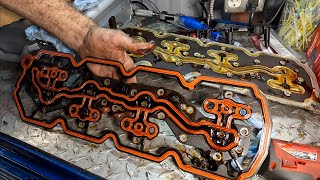
Used OEM Parts in Stock
New Aftermarket Parts Available



The information in this article is provided for general reference and educational purposes only. Vehicle specifications, procedures, and part compatibility can vary by production date, trim level, and region. Always consult your vehicle's factory service manual and verify part numbers before purchasing or performing repairs. Safety-critical components such as airbags, seat belts, and braking systems should be installed by a qualified professional.
- Chevrolet SILVERADO:
- 🎬 Helpful Videos
- 🛍️ Shop This Part
- What's Unique About the 2004-2008 Chevrolet SILVERADO
- Diagnostic Flowchart
- Symptoms You May Notice
- Most Likely Causes
- Rare But Worth Checking
- Diagnosis Steps
- Parts You'll Likely Need
- Related Codes That Often Appear With This One
- Technical Service Bulletins (TSBs) & Recalls
- Platform-Specific Known Issues
- Mechanic-Grade Diagnostic Values
- Hidden / Shadow Codes Worth Checking
- Scan Tool Commands That Help
- Wiring & Ground Locations
- "I Checked Everything" — The Actual Cause
- Model Year Variations Within This Range
- 🎟️ Get 5% Off